Key takeaways
- Most GEO platforms are monitoring dashboards. They show you that you're invisible in AI search but don't help you fix it.
- Promptwatch is the only platform in this comparison that closes the full loop: find gaps, generate content, track results.
- Profound and Scrunch are the strongest enterprise-grade alternatives, though both carry higher price points.
- Otterly.AI and Peec AI are solid entry points for teams that need monitoring without the complexity.
- Rankshift, Relixir, and Evertune are newer entrants worth watching, but each has meaningful gaps compared to the leaders.
The GEO space has exploded. Two years ago, "Generative Engine Optimization" wasn't even a phrase most marketing teams had heard. Now there are dozens of platforms claiming to help brands show up in ChatGPT, Perplexity, Google AI Overviews, and every other AI search surface that's eating into traditional organic traffic.
The problem: most of these tools do roughly the same thing. They run your brand name against a set of prompts, show you whether you appear in the AI response, and call it a day. That's useful information. But it's not optimization.
This guide covers ten platforms in depth -- what they actually do, what they're missing, and who they're best suited for. No vague quadrants, no marketing copy. Just a straight comparison.
The platforms at a glance
Before going deep on each tool, here's a feature comparison across the dimensions that actually matter for GEO work in 2026:
| Platform | Prompt tracking | Citation analysis | Multi-engine | Content generation | Crawler logs | Competitor benchmarking | Pricing starts at |
|---|---|---|---|---|---|---|---|
| Promptwatch | Yes | Yes | 10+ engines | Yes (AI agents) | Yes | Yes | $99/mo |
| Peec AI | Yes | Yes | Yes | Limited | No | Yes | ~$49/mo |
| Profound | Yes | Yes | Yes | No | Yes | Yes | ~$500/mo |
| Otterly.AI | Yes | Yes | Yes | No | Beta | Yes | ~$99/mo |
| AthenaHQ | Yes | Yes | Yes | No | No | Yes | Custom |
| Scrunch | Yes | Yes | Yes | Yes | Yes | Yes | Custom |
| Rankshift | Yes | Limited | Limited | No | No | Limited | ~$49/mo |
| Search Party | Yes | Yes | Yes | No | No | Partial | Custom |
| Relixir | Yes | Yes | Yes | Yes | No | Yes | Custom |
| Evertune | Yes | Yes | Yes | No | No | Yes | Custom |
Promptwatch
Promptwatch is the most complete platform in this comparison. It's the only one that covers the full workflow from visibility tracking through to content creation and result measurement.

The core differentiator is what Promptwatch calls the Action Loop. Most tools stop at step one -- they show you where you're invisible. Promptwatch goes further: Answer Gap Analysis identifies the specific prompts where competitors appear but you don't, Content Agents generate articles and briefs built around those gaps, and page-level tracking shows whether the new content is actually getting cited.
A few things worth calling out specifically:
The AI Crawler Logs are genuinely rare in this space. You can see in real time which AI crawlers (GPTBot, ClaudeBot, PerplexityBot, etc.) are hitting your site, which pages they're reading, and whether those pages are moving from crawled to cited. Most competitors don't offer this at all.
Prompt Intelligence adds volume estimates and difficulty scores to each prompt, so you can prioritize the ones worth winning rather than chasing every gap. Query fan-outs show how a single prompt branches into sub-queries -- useful for understanding the full surface area you need to cover.
The platform covers 10 AI engines including ChatGPT, Perplexity, Google AI Overviews, Google AI Mode, Claude, Gemini, Grok, DeepSeek, Mistral, and Copilot. It also tracks Reddit and YouTube as citation sources, which matters because AI models frequently pull from both.
Pricing: Essential at $99/mo (1 site, 50 prompts, 5 articles), Professional at $249/mo (2 sites, 150 prompts, 15 articles, crawler logs), Business at $579/mo (5 sites, 350 prompts, 30 articles). Agency and enterprise pricing available.
Best for: Marketing and SEO teams that want to actually improve AI visibility, not just measure it.
Peec AI
Peec AI is a clean, well-designed monitoring platform that covers the basics well. You get prompt tracking, citation analysis, multi-engine coverage, and competitor benchmarking -- enough to understand where you stand in AI search.

Where it falls short is on the action side. There's no content generation, no crawler logs, and no way to understand why AI models are or aren't citing you. The platform surfaces the problem but leaves the solution entirely to you.
That said, Peec AI is one of the more accessible entry points in this space. The interface is straightforward, setup is fast, and the pricing is reasonable for smaller teams that just need visibility data without a complex workflow.
Best for: Teams new to GEO that want a low-friction way to start tracking AI visibility.
Profound
Profound is the enterprise-grade option in this comparison. It has deep analytics, crawler log access, visitor attribution, and strong competitor benchmarking. The data quality is high and the platform is clearly built for organizations that take AI search seriously.
Profound

The main limitation is what it doesn't do: content generation. Profound will tell you exactly where your visibility gaps are, but you're on your own when it comes to fixing them. For large teams with dedicated content resources, that's fine. For smaller teams that need the full workflow in one place, it's a meaningful gap.
Pricing is also a consideration. Profound sits at the higher end of the market, which makes it harder to justify for teams that aren't already investing heavily in GEO.
Best for: Enterprise marketing teams with existing content operations who need deep analytics and attribution.
Otterly.AI
Otterly.AI has built a solid reputation in the GEO monitoring space. Multi-engine coverage, citation analysis, competitor benchmarking, and a recently launched MCP server that lets AI-native teams query their brand data directly -- that last feature is genuinely interesting and not something most competitors offer.
Otterly.AI

The platform is transparent about where it focuses: monitoring and analytics, not optimization. Crawler logs are in beta. Content generation isn't on the roadmap in any meaningful way. If you want to track your AI visibility with solid data, Otterly.AI delivers. If you want to act on that data within the same platform, you'll need to look elsewhere.
Best for: Teams that want reliable monitoring with good analytics depth and don't need built-in content tools.
AthenaHQ
AthenaHQ comes from a technical SEO background and it shows. The platform covers prompt tracking, citation analysis, multi-engine monitoring, and competitor benchmarking with a level of rigor that appeals to SEO-heavy teams.

The gaps are on the optimization side. No crawler logs, no content generation, no visitor analytics. AthenaHQ is a strong monitoring tool, but it's monitoring-only. The pricing is custom (enterprise-focused), which also limits accessibility for smaller teams.
Best for: Technical SEO teams at larger organizations that want rigorous AI visibility data.
Scrunch
Scrunch is one of the more complete platforms in this comparison. It covers monitoring, citation analysis, crawler logs, visitor analytics, and content generation -- a broader stack than most competitors. It was recently acquired by Sitecore, which adds enterprise credibility but also raises questions about where the product roadmap goes from here.
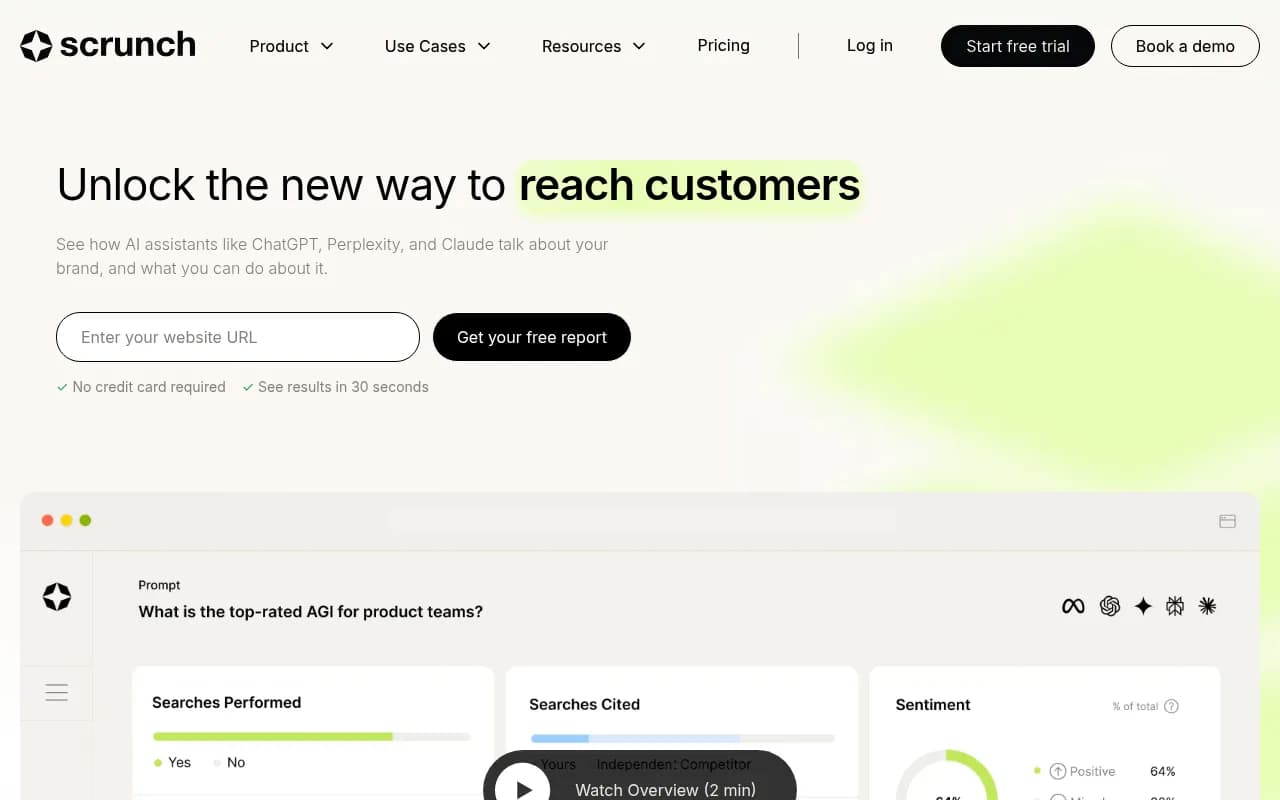
The platform's Agent Experience Platform (AXP) is worth noting -- it's designed to help brands optimize how AI agents interact with their websites, not just how they appear in AI responses. That's a slightly different angle than most GEO tools take, and it's interesting.
Pricing is custom and enterprise-focused, which puts it out of reach for many teams.
Best for: Enterprise brands that want a comprehensive platform and have the budget to match.
Rankshift
Rankshift is a lighter-weight option focused on tracking brand visibility across ChatGPT, Perplexity, and a handful of other AI search engines. The interface is clean and the setup is quick.

The feature set is limited compared to the leaders. No content generation, no crawler logs, limited competitor benchmarking, and narrower engine coverage than platforms like Promptwatch or Profound. It's a reasonable starting point for small teams or individuals who want basic AI visibility tracking without a significant investment.
Best for: Small teams or solo marketers who need basic AI visibility tracking at a low price point.
Search Party
Search Party takes an agency-oriented approach to GEO. The platform covers prompt tracking, citation analysis, and multi-engine monitoring with a workflow designed for managing multiple clients.
Search Party
The gaps are meaningful for non-agency users: no crawler logs, no content generation, and limited prompt metrics. If you're an agency managing AI visibility for multiple clients, Search Party's structure makes sense. If you're an in-house team, the platform's strengths don't align as well with what you need.
Best for: Digital agencies managing AI visibility for multiple clients.
Relixir
Relixir positions itself as an end-to-end GEO engine for enterprise brands. It covers monitoring, citation analysis, multi-engine tracking, competitor benchmarking, and some content generation capabilities.
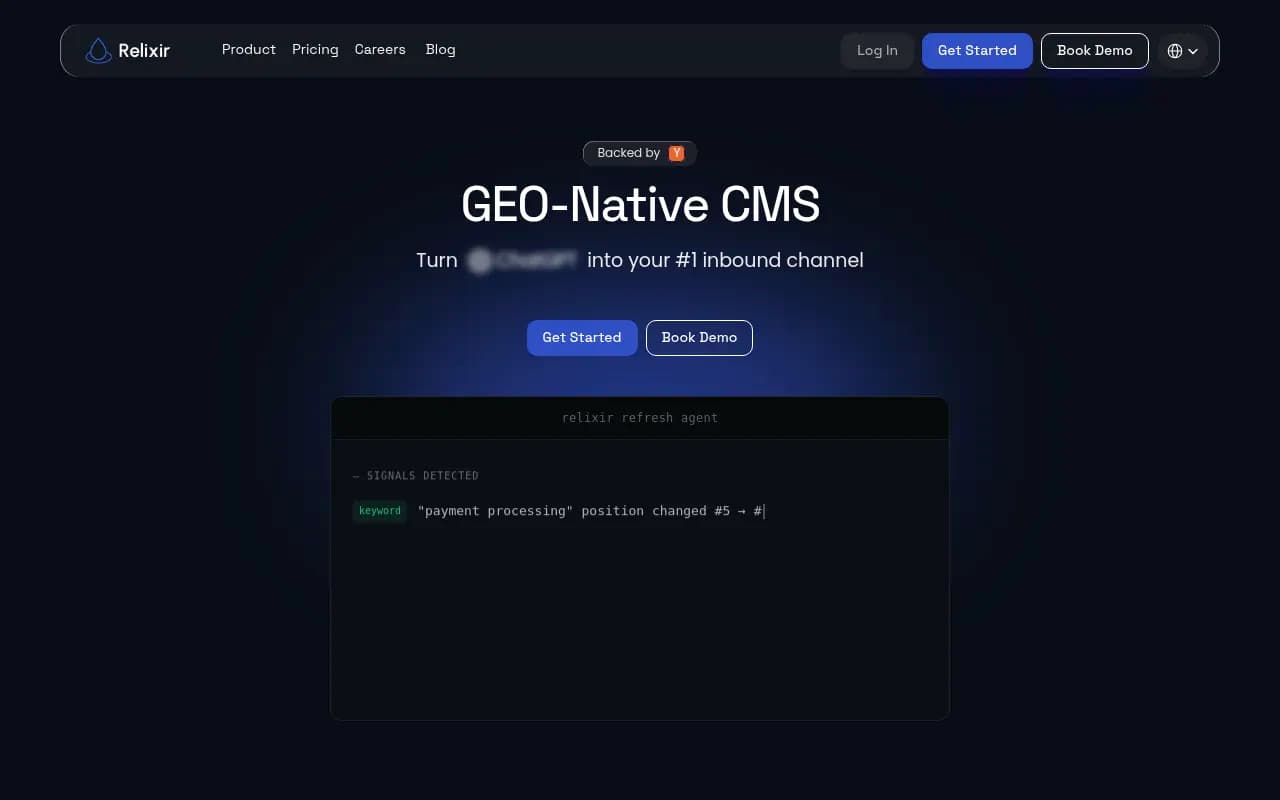
It's a newer entrant in this space, which means the platform is still maturing. The feature set is promising but not yet as deep as Promptwatch or Profound in some areas -- particularly around crawler logs and prompt intelligence. Worth watching as the product develops.
Best for: Enterprise teams looking for an emerging alternative with a broad feature set.
Evertune
Evertune is built for Fortune 500 brands and enterprise organizations. The platform covers AI visibility tracking, citation analysis, multi-engine monitoring, and competitor benchmarking at scale.
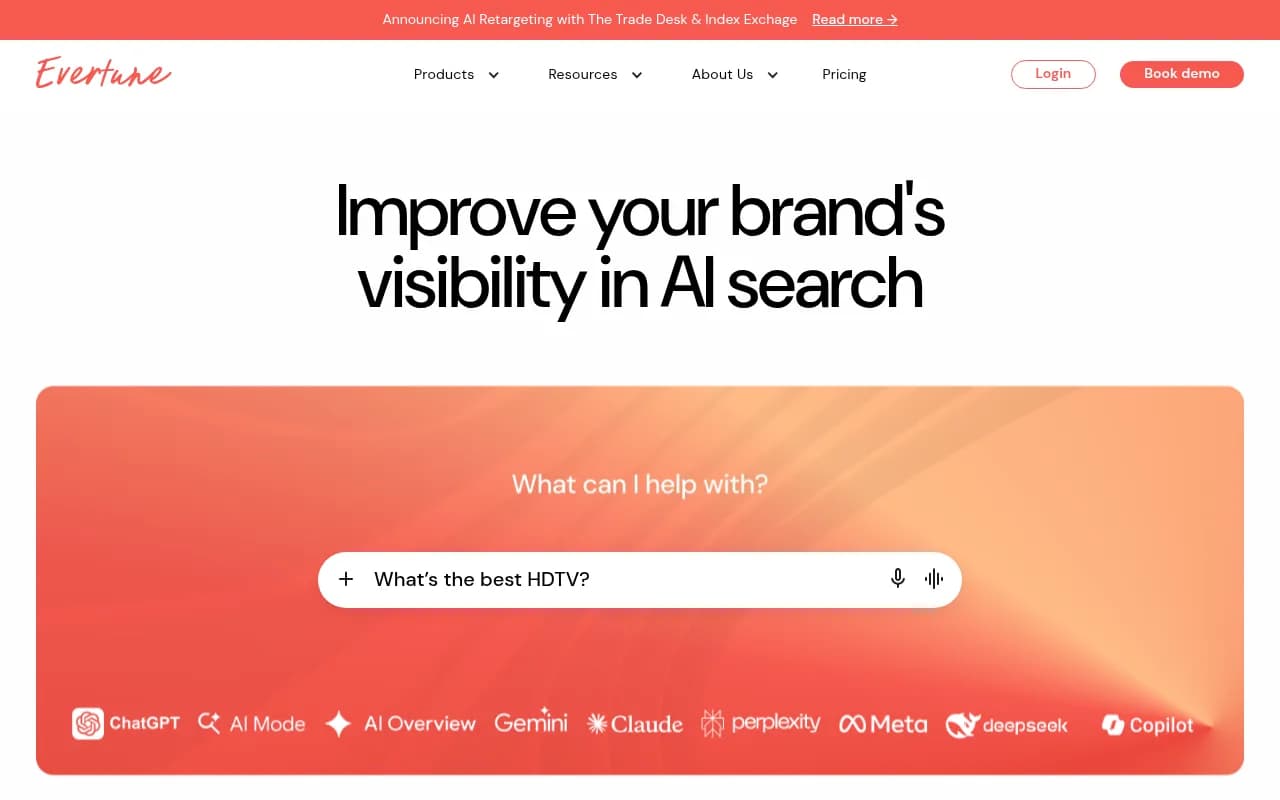
Like several others in this comparison, Evertune is primarily a monitoring platform. Content generation and crawler logs aren't core features. The enterprise focus also means pricing and onboarding are not designed for smaller teams.
Best for: Large enterprise brands that need AI visibility tracking at scale with dedicated support.
How to choose
The right platform depends on what you actually need to do.
If you need to understand your AI visibility quickly and cheaply, Peec AI or Rankshift get you there without much friction. If you're an agency managing multiple clients, Search Party's structure fits that workflow. If you're enterprise and need deep analytics with attribution, Profound or Evertune are worth evaluating.
But if you want to actually improve your AI visibility -- not just measure it -- the platform that covers the full loop is Promptwatch. The combination of Answer Gap Analysis, Content Agents, crawler logs, and page-level citation tracking is the only end-to-end workflow in this comparison. Every other platform in this list leaves you to figure out the "now what" on your own.
The monitoring-only approach made sense in 2024 when GEO was new and teams just needed to understand the problem. In 2026, the teams winning in AI search are the ones taking action on their data. The platform you choose should help you do that.
Final verdict
Ten platforms, one clear pattern: most of them show you the problem and stop there. That's not nothing -- visibility data is genuinely useful. But the gap between knowing you're invisible in AI search and actually fixing it is where most teams get stuck.
Promptwatch is the only platform in this comparison that closes that gap with a built-in workflow. For teams serious about AI search in 2026, that's the meaningful distinction.