Key takeaways
- Scrunch and Conductor are solid monitoring platforms, but both lean heavily toward tracking rather than helping you fix what's broken.
- Search Party takes a consultancy-first approach -- useful for bespoke automation work, but not a self-serve visibility platform.
- Promptwatch is the only platform in this comparison rated as a "Leader" across all categories in a 2026 review of 12 GEO platforms, largely because it closes the loop from gap analysis to content creation to traffic attribution.
- For agencies managing multiple clients, the critical differentiators are: white-label reporting, multi-site management, content generation, and crawler log access -- not just dashboard aesthetics.
If you're running AI visibility services for clients, you've probably noticed that the category has fractured into two camps. One camp sells you a monitoring dashboard and calls it a day. The other actually helps you do something with the data. The four platforms in this comparison sit at very different points on that spectrum.
Scrunch gets talked about a lot for its breadth. Conductor has enterprise credibility. Search Party is more of a consultancy than a product. And Promptwatch is the one that keeps showing up in 2026 comparisons as the platform that doesn't just show you the problem.
Let's get into it.
What agencies actually need from an AI visibility platform
Before comparing features, it's worth being clear about what "agency use case" actually means. A solo brand team and a 50-person agency have very different requirements.
Agencies need:
- Multi-client workspace management (not just multiple logins)
- White-label or client-facing reporting
- Enough prompt coverage to track meaningful visibility across industries
- Content tools that help them deliver tangible outputs, not just reports
- Traffic attribution so they can tie AI visibility to actual client revenue
- Pricing that scales without becoming a per-seat nightmare
Most platforms in this space were built for in-house brand teams first. Agency features got bolted on later, if at all. That shows.
Scrunch AI
Scrunch positions itself as an "AI visibility command center" -- a phrase that captures its actual strength pretty well. It covers a broad range of AI engines, tracks prompts daily, and gives you persona-based filtering that lets you segment visibility by audience type. For agencies that need to show clients a consistent weekly narrative ("here's where you showed up, here's where you didn't"), Scrunch delivers that cleanly.
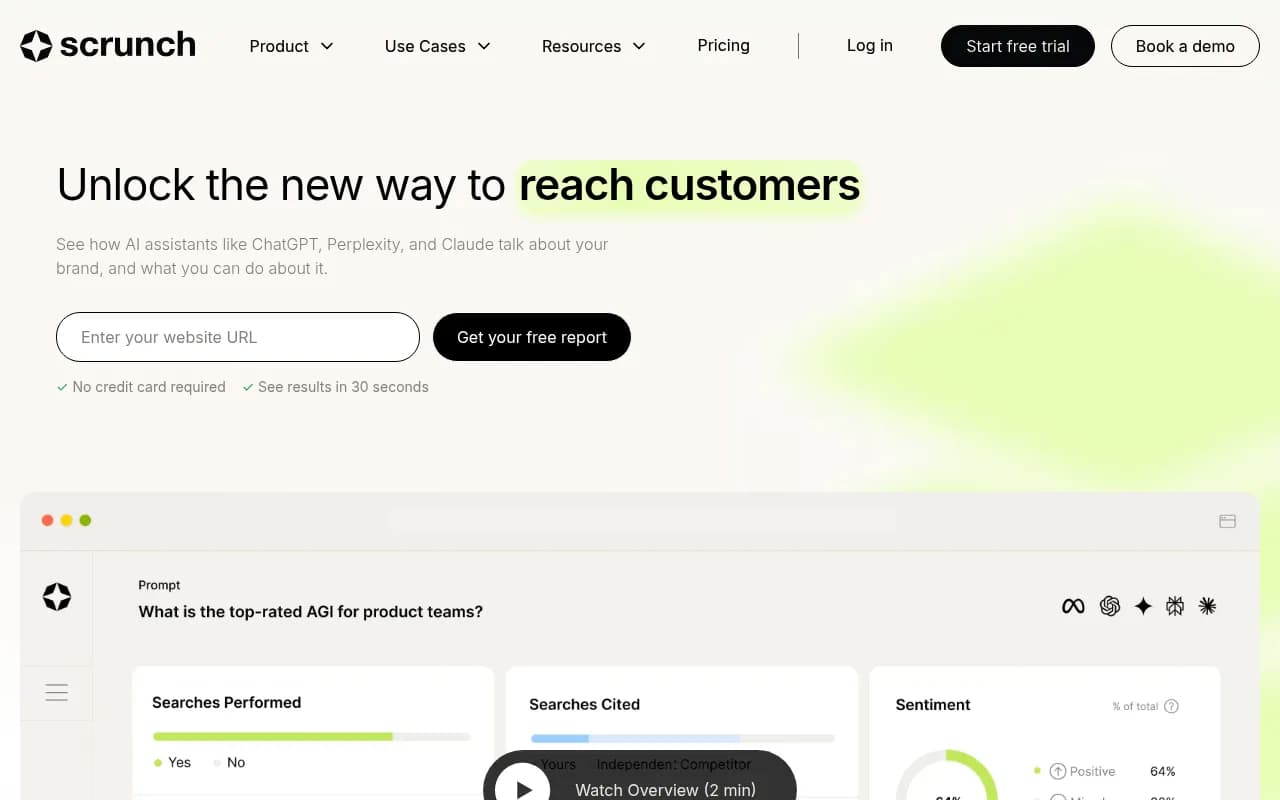
The platform tracks 7+ AI engines with prompt-level daily tracking, which is more granular than many competitors. The dashboards are stakeholder-friendly -- meaning you can hand a client a report without needing to explain what they're looking at.
Where Scrunch gets thinner: multiple reviews in 2026 note that it's stronger at monitoring than at prescriptive optimization. It shows you what's happening, but the "what to do next" layer is limited. There's no built-in content generation, no AI crawler log access, and the prompt intelligence (volume estimates, difficulty scoring) isn't as developed as some alternatives.
Pricing starts around $300/month for entry plans, scaling to $500+ for team plans. That's workable for agencies, but you'll want to check whether the prompt limits fit your client roster.
Best for: Agencies that need reliable, broad-coverage monitoring and clean reporting, and are comfortable handling the optimization work themselves.
Search Party
Search Party is a different animal entirely. It's less a self-serve SaaS platform and more an AI automation consultancy -- the kind of shop that builds custom workflows to eliminate manual processes for clients.
Search Party
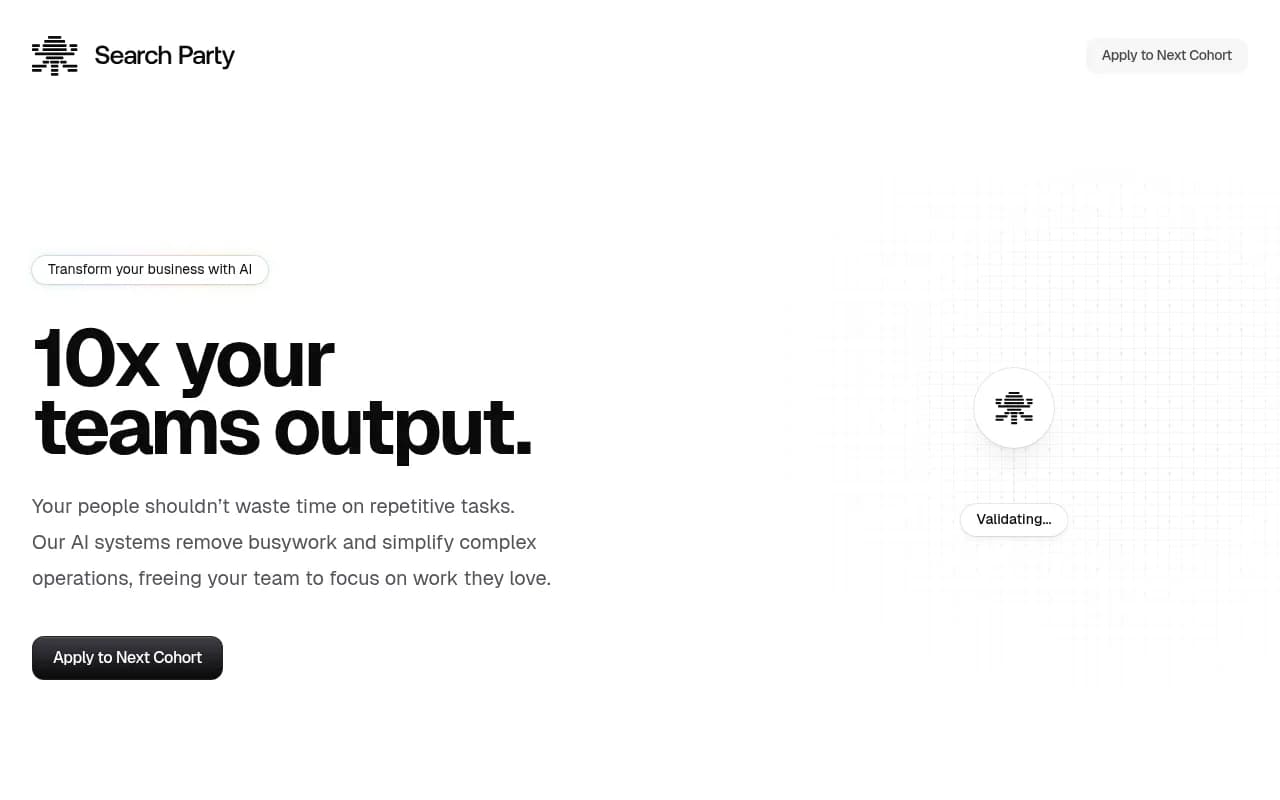
If you're looking for a dashboard you can log into every Monday to check client visibility scores, Search Party probably isn't what you want. It's oriented toward bespoke engagements, which means the value proposition is real but the scalability looks different. You're buying expertise and custom builds, not a repeatable product.
That said, for agencies with complex, enterprise-level clients who need tailored AI workflow automation, Search Party fills a gap that pure-play visibility trackers don't touch. The tradeoff is that it's harder to compare on a feature-by-feature basis -- there's no standard pricing page, no fixed prompt limits, no self-serve trial.
Best for: Agencies doing high-touch, custom AI automation work for enterprise clients. Not the right fit if you need a scalable, self-serve visibility platform.
Conductor
Conductor has been around the enterprise SEO space for years, and its AI visibility features are a more recent addition to a platform that was originally built for traditional search.
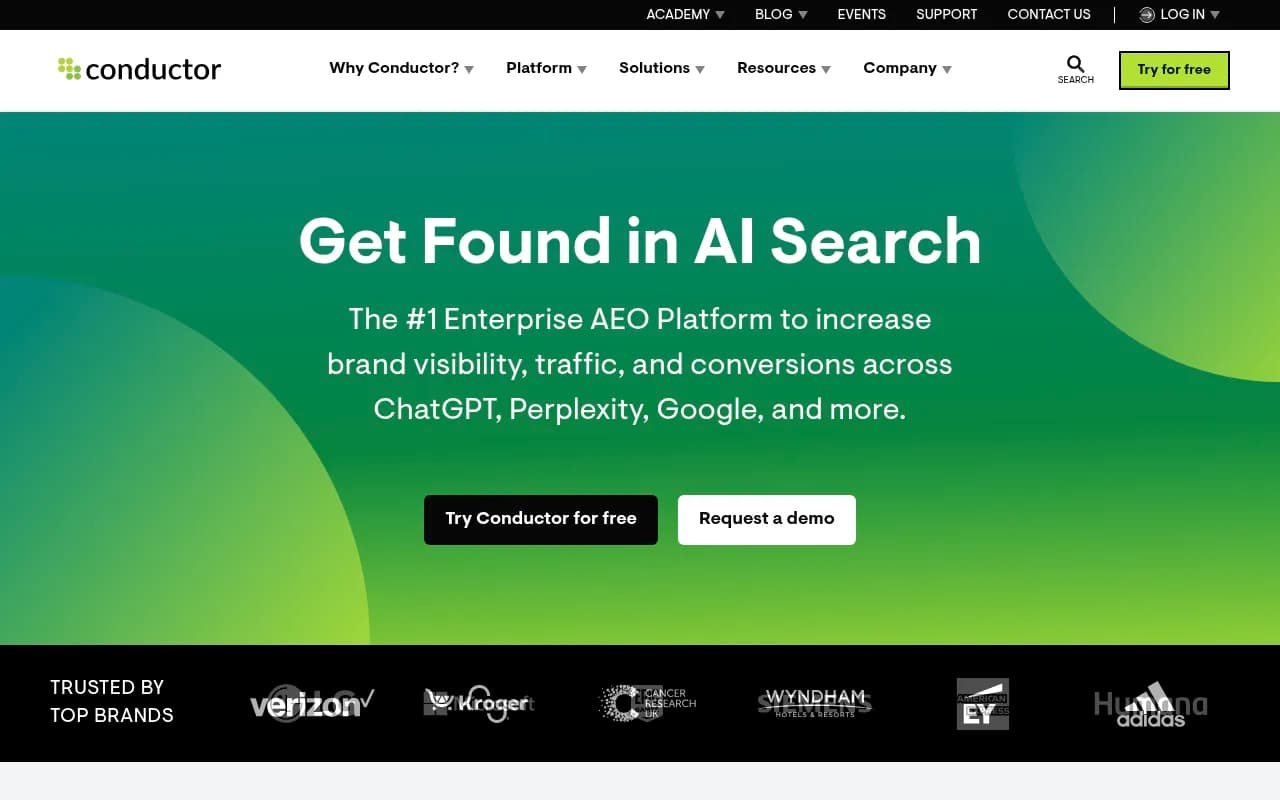
The platform now tracks brand authority and citations in AI search engines alongside its traditional SEO capabilities. For agencies already using Conductor for organic search work, the AI visibility layer is a natural extension -- you don't need to introduce another tool to the client stack.
The enterprise positioning means Conductor is genuinely strong on governance, workflow management, and integrations with larger tech stacks. It's built for teams where multiple stakeholders need access, approvals, and audit trails.
The limitation is that Conductor's AI visibility features feel like an add-on rather than a core product. The depth of prompt intelligence, competitor heatmaps, and content gap analysis you'd get from a purpose-built GEO platform isn't really there. And if you're an agency that needs to generate AI-optimized content as a deliverable, Conductor doesn't help you do that.
Pricing is enterprise-tier -- expect a sales conversation rather than a self-serve signup.
Best for: Enterprise agencies already embedded in the Conductor ecosystem who want AI visibility layered onto existing SEO workflows.
Promptwatch
Promptwatch is the platform that keeps coming up in 2026 comparisons as the one that actually closes the loop. In a comparison of 12 GEO platforms, it was the only one rated as a "Leader" across all categories -- and the reason cited consistently is that it doesn't stop at monitoring.
Promptwatch is built around a three-step cycle: find the gaps, create content that ranks in AI, and track the results. That sounds simple, but most competitors only do step one.

The Answer Gap Analysis shows you exactly which prompts competitors are visible for that you're not -- not just "you're missing coverage in this topic area" but the specific questions AI models are answering with competitor content instead of yours. From there, the built-in AI writing agent generates articles, listicles, and comparisons grounded in citation data from 880M+ citations analyzed. This isn't generic content -- it's engineered to get cited by ChatGPT, Claude, Perplexity, and other models.
For agencies specifically, a few capabilities stand out:
AI Crawler Logs show you in real time which pages AI crawlers (ChatGPT, Claude, Perplexity) are hitting on a client's site, which pages they're ignoring, and what errors they're encountering. Most competitors don't have this at all. It's the kind of diagnostic data that lets you actually fix indexing problems rather than just observe visibility scores.
Prompt Intelligence gives you volume estimates and difficulty scores for each prompt, plus query fan-outs that show how one prompt branches into sub-queries. For agencies pitching AI visibility services, this is how you prioritize -- high-value, winnable prompts first.
Traffic attribution connects AI visibility to actual revenue through a code snippet, GSC integration, or server log analysis. This is the thing clients actually care about, and it's what most monitoring-only platforms can't give you.
The platform monitors 10 AI models: ChatGPT, Perplexity, Google AI Overviews, Google AI Mode, Claude, Gemini, Meta/Llama, DeepSeek, Grok, and Mistral. Reddit and YouTube insights surface discussions that directly influence AI recommendations -- a channel most competitors ignore.
Pricing: Essential at $99/month (1 site, 50 prompts, 5 articles), Professional at $249/month (2 sites, 150 prompts, 15 articles, crawler logs), Business at $579/month (5 sites, 350 prompts, 30 articles). Agency and enterprise pricing is available on request. There's a free trial.
Best for: Agencies that need to deliver measurable AI visibility improvements, not just reports. The content generation and traffic attribution capabilities make it the most complete platform in this comparison for agencies that need to show ROI.
Feature comparison
| Feature | Scrunch | Search Party | Conductor | Promptwatch |
|---|---|---|---|---|
| AI engines tracked | 7+ | Custom/varies | Multiple (add-on) | 10 |
| Daily prompt tracking | Yes | Custom | Yes | Yes |
| Competitor visibility | Yes | Custom | Yes | Yes (heatmaps) |
| Content gap analysis | Limited | Custom | Limited | Yes (Answer Gap) |
| Built-in content generation | No | Custom | No | Yes |
| AI crawler logs | No | Unknown | No | Yes |
| Prompt volume/difficulty | No | Unknown | No | Yes |
| Reddit/YouTube insights | No | Unknown | No | Yes |
| Traffic attribution | No | Unknown | Limited | Yes |
| ChatGPT Shopping tracking | No | Unknown | No | Yes |
| Multi-language/region | Limited | Custom | Yes | Yes |
| White-label/agency plans | Yes | Yes | Yes | Yes (custom) |
| Self-serve signup | Yes | No | No | Yes |
| Starting price | ~$300/mo | Custom | Enterprise | $99/mo |
| Free trial | Yes | No | No | Yes |
How to choose
The honest answer is that the right platform depends on what you're actually selling to clients.
If your AI visibility service is primarily about reporting and monitoring -- showing clients where they appear across AI engines and how that changes over time -- Scrunch is a reasonable choice. It's reliable, broad, and produces clean reports.
If you're embedded in an enterprise Conductor account and want to add AI visibility without introducing a new tool, Conductor's add-on features will get you started, even if they're not as deep as purpose-built platforms.
If you're doing bespoke AI automation work for large clients and need custom-built workflows, Search Party is worth a conversation.
But if you're trying to build an AI visibility practice that delivers actual results -- improved citation rates, measurable traffic from AI search, content that gets picked up by ChatGPT and Perplexity -- you need a platform that goes beyond monitoring. The gap analysis, content generation, crawler logs, and traffic attribution in Promptwatch are what turn AI visibility from a reporting service into an optimization service. That's a meaningfully different thing to sell.
The broader market context matters here too. According to Semrush's 2026 data, AI-generated results are projected to overtake organic search traffic by 2028. Agencies that can demonstrate they move the needle on AI visibility -- not just track it -- will have a significant advantage in the next 18 months.
Bottom line
Scrunch is a competent monitoring platform. Conductor is a solid enterprise choice if you're already in their ecosystem. Search Party is a consultancy, not a product. Promptwatch is the only platform in this comparison that takes you from "here's where you're invisible" to "here's the content that will fix it" to "here's the revenue it generated."
For agencies building a scalable AI visibility practice in 2026, that full loop matters more than any individual feature.