Key takeaways
- All four platforms track AI search visibility, but they differ significantly in what they do after showing you the data
- Promptwatch is the only platform in this group with a complete action loop: gap analysis, AI content generation, and traffic attribution in one place
- Evertune targets Fortune 500 brand teams with enterprise-grade perception measurement, but pricing is custom and opaque
- Relixir is built as an end-to-end GEO engine with content generation, making it a closer competitor to Promptwatch than the others
- Searchable sits in the middle — more capable than basic trackers, but less comprehensive than Promptwatch or Relixir at scale
The GEO platform market has consolidated fast. Twelve months ago, most brands were still asking "should we track AI visibility?" Now the question is "which platform do we actually buy?" And for enterprise teams, the shortlist usually comes down to four names: Searchable, Promptwatch, Relixir, and Evertune.
Each has a different story. Evertune markets itself to Fortune 500 brand teams. Relixir calls itself an end-to-end GEO engine. Searchable pitches built-in content generation alongside tracking. Promptwatch has the largest dataset in the category and a workflow that goes from gap analysis to published content to traffic attribution.
This guide breaks down what each platform actually does, where each one falls short, and which one makes sense depending on your situation. No filler, no "exciting times ahead" — just a direct comparison.
What we're comparing and why it matters
AI search is no longer a side channel. Perplexity crossed 100 million monthly visits. Google AI Overviews appear on the majority of commercial queries. ChatGPT now has over 500 million weekly users. When someone asks an AI engine "what's the best [your category] tool," they get one answer with three to five citations. If your brand isn't in that answer, you don't exist to that buyer.
The platforms in this comparison all claim to help you fix that. But the gap between "monitoring" and "optimization" is enormous, and most enterprise buyers don't realize how wide it is until they've spent three months looking at dashboards that tell them they're invisible without telling them what to do about it.
The four platforms below represent the most serious options for enterprise brands in 2026. Here's how they compare.
Platform overviews
Promptwatch
Promptwatch is the most data-rich platform in this comparison. It monitors 10 AI models (ChatGPT, Perplexity, Claude, Gemini, Google AI Overviews, Google AI Mode, Grok, DeepSeek, Meta/Llama, Mistral, Copilot) and has processed over 1.1 billion citations, clicks, and prompts. That dataset matters because it's what powers the platform's content recommendations — they're grounded in what AI models actually cite, not guesses.
The core workflow is a three-step loop: find gaps, create content, track results. Answer Gap Analysis shows you exactly which prompts your competitors appear in but you don't. The built-in AI writing agent generates articles, listicles, and comparisons designed to get cited. Page-level tracking then shows which pages are being cited, by which models, and how often. Traffic attribution closes the loop by connecting AI visibility to actual revenue (via code snippet, GSC integration, or server log analysis).
What makes Promptwatch different from most competitors is that it doesn't stop at the dashboard. Most platforms show you a visibility score and leave you to figure out the rest. Promptwatch shows you the specific content your site is missing and helps you create it.
Additional capabilities worth noting: real-time AI crawler logs (which pages ChatGPT, Claude, and Perplexity are reading, and errors they encounter), prompt volume and difficulty scoring, query fan-outs showing how prompts branch into sub-queries, Reddit and YouTube insights, ChatGPT Shopping tracking, and competitor heatmaps.
Pricing is transparent: Essential at $99/month, Professional at $249/month, Business at $579/month. Agency and enterprise plans are available with custom pricing.

Evertune
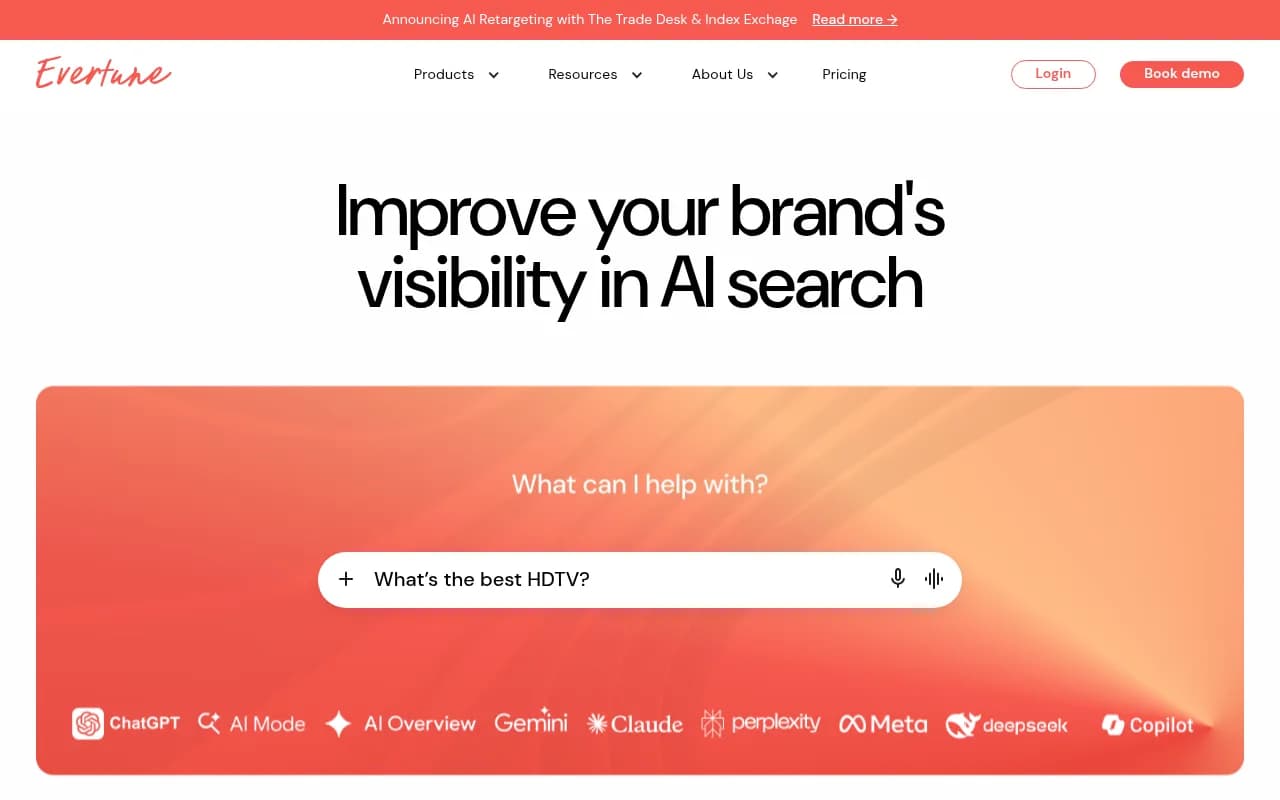
Evertune positions itself as the enterprise-grade AI brand perception platform for Fortune 500 teams. Multiple third-party reviews in 2026 describe it as the premium choice for large brand teams that need the broadest platform coverage and the most sophisticated brand perception measurement.
The platform's strength is depth of brand analysis. It goes beyond "are you mentioned?" to track sentiment, brand attributes, and how AI models characterize your brand relative to competitors. For a CMO at a global consumer brand who needs to understand whether ChatGPT is associating their brand with "premium" or "budget," Evertune has tools for that.
The tradeoff is accessibility. Pricing is custom (no public tiers), which typically means it's expensive and requires a sales conversation before you can evaluate it properly. The platform is also more oriented toward brand perception measurement than content optimization — it tells you how you're perceived, but the path from insight to action is less direct than with Promptwatch or Relixir.
Relixir
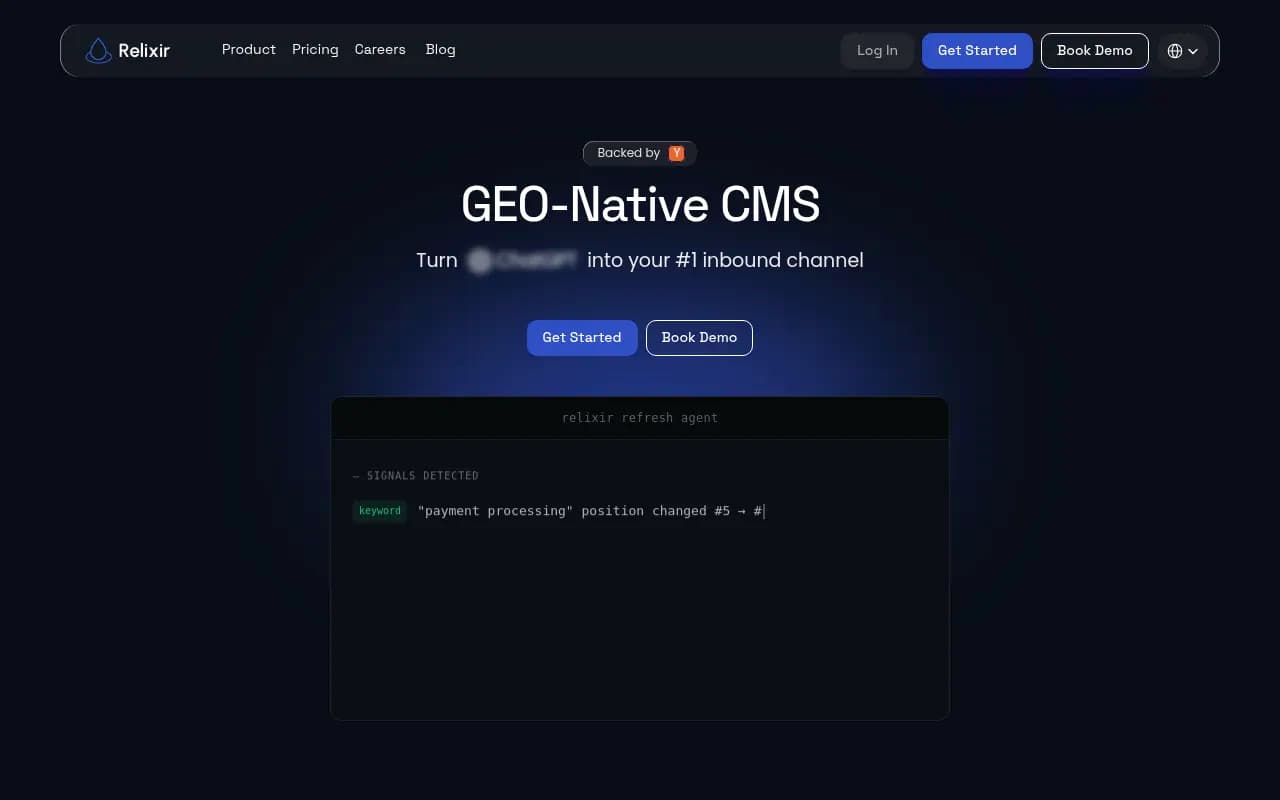
Relixir describes itself as an end-to-end GEO engine built for enterprise brands. Like Promptwatch, it includes content generation alongside tracking — so it's not just a monitoring dashboard. The platform focuses on identifying where your brand is missing from AI answers and generating content to fill those gaps.
Relixir is a newer entrant compared to Promptwatch, with less public review volume and a smaller dataset. The platform has attracted attention for its clean interface and its focus on the full optimization workflow rather than just reporting. For enterprise teams that want a GEO-native platform without the complexity of a larger suite, it's worth evaluating.
Where Relixir falls short relative to Promptwatch: it lacks the crawler log functionality, the Reddit/YouTube citation tracking, and the traffic attribution depth. The prompt intelligence layer (volume estimates, difficulty scores, query fan-outs) is also less developed. For teams where content generation is the primary need and attribution is secondary, that gap matters less.
Searchable
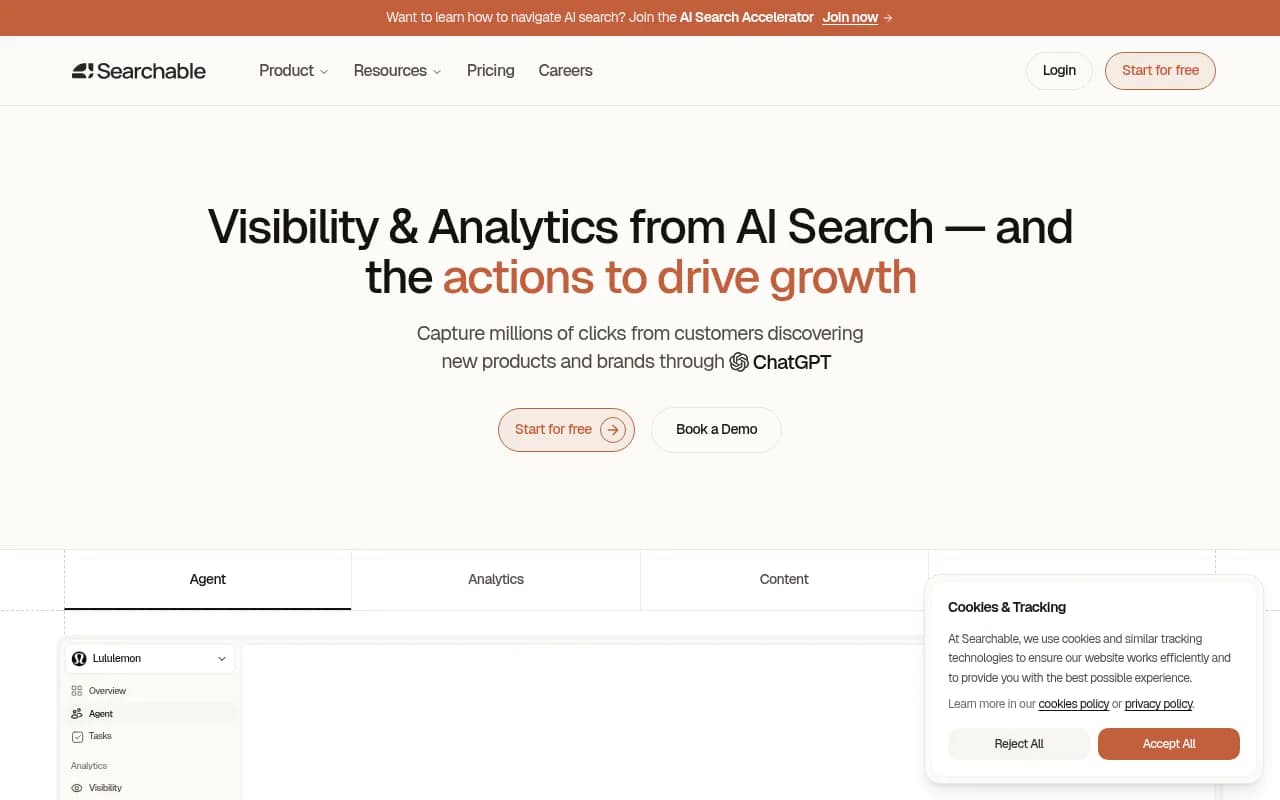
Searchable sits in an interesting position. It's more capable than basic monitoring tools like Otterly or Peec AI, and it includes content generation features. But it doesn't have the dataset depth, the attribution capabilities, or the breadth of AI model coverage that Promptwatch offers.
The platform works well for mid-market brands that want a single tool for tracking and content without the complexity of a full enterprise suite. It's accessible, reasonably priced, and covers the core use case. For a brand that's just getting started with GEO and needs to see results quickly, Searchable is a reasonable starting point.
The limitation shows up when you need to go deeper. Searchable lacks the crawler log visibility, the prompt-level intelligence, and the Reddit/YouTube tracking that matter for enterprise brands trying to understand the full picture of how AI models discover and cite their content.
Head-to-head comparison
| Feature | Promptwatch | Evertune | Relixir | Searchable |
|---|---|---|---|---|
| AI models monitored | 10 | Broad (undisclosed) | Multiple | Multiple |
| Answer gap analysis | Yes | Limited | Yes | Yes |
| AI content generation | Yes | No | Yes | Yes |
| Traffic attribution | Yes (3 methods) | No | Limited | No |
| AI crawler logs | Yes | No | No | No |
| Prompt volume/difficulty | Yes | No | Limited | No |
| Reddit/YouTube tracking | Yes | No | No | No |
| ChatGPT Shopping tracking | Yes | No | No | No |
| Competitor heatmaps | Yes | Yes | Limited | Limited |
| Brand perception analysis | Good | Excellent | Basic | Basic |
| Multi-language/region | Yes | Yes | Limited | Limited |
| Transparent pricing | Yes ($99-$579/mo) | No (custom) | Limited | Yes |
| Best for | Marketing/SEO teams, agencies | Fortune 500 brand teams | Enterprise GEO-first teams | Mid-market brands |
Where each platform wins
When Promptwatch is the right choice
Promptwatch makes the most sense for marketing and SEO teams that need to do something with their data, not just look at it. The combination of gap analysis, content generation, and traffic attribution in one platform means you can run a complete GEO program without stitching together multiple tools.
The crawler log feature is particularly valuable for enterprise brands. Knowing which pages ChatGPT is reading (and which ones it's ignoring or encountering errors on) is something most competitors don't offer at all. If you're investing in content to improve AI visibility, you need to know whether AI crawlers are actually finding it.
The dataset advantage also compounds over time. With 1.1 billion citations analyzed, the content recommendations are grounded in patterns that smaller platforms simply can't replicate. When the AI writing agent suggests a particular angle or format, it's drawing on real citation data — not generic SEO heuristics.
For agencies managing multiple brands, the multi-site plans and API access make it practical to run GEO programs at scale.
When Evertune is the right choice
If you're a Fortune 500 brand team and your primary concern is brand perception — how AI models characterize your brand, what attributes they associate with you, how your brand narrative compares to competitors — Evertune has the most sophisticated tooling for that.
This is a genuinely different use case from content optimization. A global consumer brand managing brand equity across markets needs to know whether Gemini describes their product as "reliable" or "outdated." That's not a content gap problem; it's a brand perception problem. Evertune is built for that.
The tradeoff is that you're paying for perception analysis without the content optimization loop. You'll know what's wrong, but fixing it requires other tools or teams.
When Relixir is the right choice
Relixir is worth considering for enterprise teams that want a GEO-native platform with content generation and don't need the full depth of Promptwatch's attribution and intelligence features. If your team's primary workflow is "identify gaps, generate content, publish," and you don't need crawler logs or Reddit tracking, Relixir covers that workflow cleanly.
It's also worth evaluating if you're specifically looking for a platform that was designed for GEO from day one, rather than a platform that expanded into GEO from traditional SEO monitoring.
When Searchable is the right choice
Searchable works best for brands that are earlier in their GEO journey and need a tool that's accessible without a steep learning curve. It covers the basics well and includes content generation, which puts it ahead of pure monitoring tools.
For enterprise brands with complex attribution needs, multi-language requirements, or a need to understand AI crawler behavior, Searchable will hit its limits quickly. But as a starting point for a team that's just beginning to take AI search seriously, it's a reasonable option.
What most enterprise buyers get wrong
The most common mistake is buying a monitoring platform and calling it a GEO strategy. A dashboard that shows your visibility score is useful for reporting. It's not useful for improving your position.
The second mistake is treating all AI models as equivalent. Different models cite different sources, respond to different content formats, and have different crawl behaviors. A platform that only tracks ChatGPT and Perplexity is missing a significant portion of the AI search landscape. Promptwatch's coverage of 10 models, including Google AI Overviews and Google AI Mode, matters because Google's AI products still drive the majority of search traffic.
The third mistake is ignoring attribution. Enterprise brands need to connect AI visibility to revenue, not just to visibility scores. If you can't trace an AI citation to a website visit to a conversion, you can't justify the investment or optimize toward what's actually working. Only Promptwatch offers three methods of traffic attribution (code snippet, GSC integration, server log analysis) in this comparison.
Pricing reality check
| Platform | Entry price | Enterprise pricing |
|---|---|---|
| Promptwatch | $99/month | Custom (agency/enterprise) |
| Evertune | Custom | Custom |
| Relixir | Not publicly listed | Custom |
| Searchable | Not publicly listed | Custom |
Promptwatch is the only platform in this group with fully transparent, self-serve pricing. That matters for enterprise procurement teams that need to evaluate ROI before a sales conversation. The Essential plan at $99/month covers one site and 50 prompts, which is enough to validate the platform before committing to a larger plan.
Evertune's custom pricing typically signals a higher price point, which is appropriate for its Fortune 500 target market but makes it harder to evaluate for teams without a clear budget.
The bottom line
For most enterprise marketing and SEO teams, Promptwatch is the strongest choice in 2026. The combination of the largest citation dataset in the category, a complete action loop (gap analysis to content generation to attribution), and transparent pricing makes it the most practical platform for teams that need to show results, not just reports.
Evertune is the right call if brand perception measurement is your primary need and you're working at Fortune 500 scale with budget to match. Relixir is worth evaluating if you want a GEO-native platform and don't need the full depth of Promptwatch's intelligence features. Searchable works for teams earlier in the GEO journey who want something accessible to start with.
The category is moving fast. Whatever platform you choose, the brands that will win in AI search are the ones that treat it as an optimization problem, not a monitoring problem.