Key takeaways
- Scrunch AI is an enterprise-grade monitoring platform with strong segmentation, SOC 2 compliance, and detailed prompt-level analytics — but it's expensive and primarily passive.
- Searchable is a mid-market alternative that bundles content generation with visibility tracking, making it more accessible for teams that want to act on data, not just read it.
- Neither platform offers AI crawler logs, Reddit/YouTube citation tracking, or deep traffic attribution out of the box.
- If you need to go beyond monitoring and actually fix your AI visibility gaps, platforms like Promptwatch close the loop from gap detection to content creation to citation tracking.
- Price matters here: Scrunch starts at $300/month with per-user pricing that scales fast; Searchable sits at a lower entry point with content tools included.
The GEO platform market has gotten crowded fast. Two years ago, most marketing teams had never heard of "AI search visibility." Now there are dozens of tools fighting for the same budget line, and the pitch is nearly identical across all of them: track your brand in ChatGPT, Perplexity, Google AI Overviews, and a handful of other models.
Scrunch AI and Searchable both sit in what you might call the mid-market tier — above the basic trackers, below the full enterprise suites. But they're built around different assumptions about what their users actually need. Scrunch bets that enterprise teams want deep analytics and governance. Searchable bets that most teams want to track and create content in one place.
This comparison breaks down both platforms honestly: what they do well, where they fall short, and whether either one is actually worth the money in 2026.
What Scrunch AI actually is
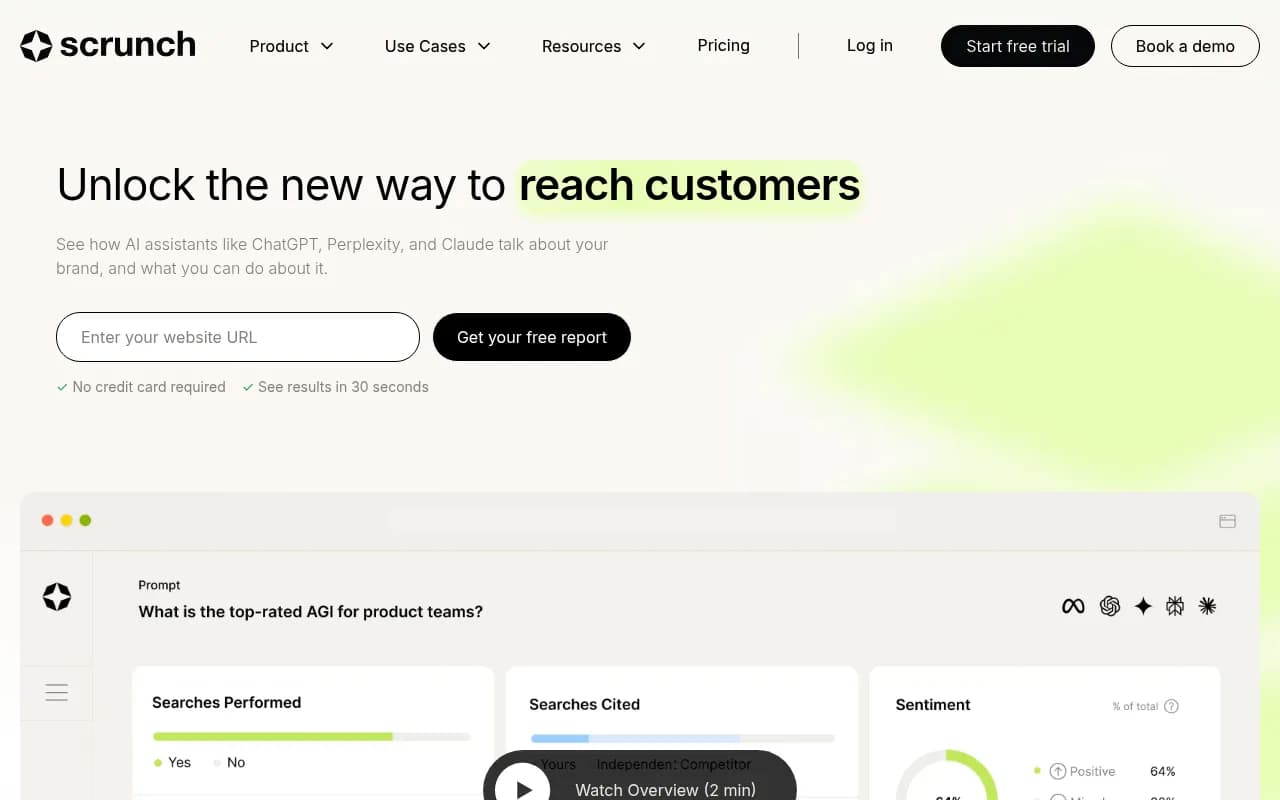
Scrunch launched in late 2024 and has moved upmarket quickly. It raised $19 million in funding and now serves 500+ brands including Lenovo and Penn State University. The pitch is enterprise-grade AI visibility monitoring with the kind of governance and compliance features that make IT departments happy.
The core product tracks how your brand appears across ChatGPT, Claude, Perplexity, Gemini, Google AI Overviews, Google AI Mode, and Meta AI. That's solid coverage. Where Scrunch differentiates itself is in the depth of what it shows you per prompt: funnel stage tagging, persona segmentation, sentiment analysis, share-of-voice breakdowns, and branded vs. unbranded intent labeling. For teams running structured, repeatable reporting cycles, this is genuinely useful.
Scrunch also has a GA4 integration for tracking AI referral traffic, and it's piloting an "Agent Experience Platform" (AXP) that serves AI-optimized content to crawlers. The SOC 2 Type II compliance is a real differentiator for enterprise buyers who need to clear security reviews.
Where Scrunch falls short
The pricing is the first thing that gives people pause. The Starter plan is $300/month for 350 prompts and 3 users. The Growth plan is $500/month. Per-user pricing means costs scale quickly as you add team members. There's no free trial.
More importantly, Scrunch is primarily a monitoring platform. It shows you what's happening with your brand in AI search. It doesn't help you fix it. There's no content generation, no content brief builder, no answer gap analysis that tells you which prompts your competitors are winning that you're missing. You get the data; you figure out what to do with it.
That's a real limitation in 2026, when the question most teams are asking isn't "how visible am I?" but "what do I need to publish to become more visible?"
What Searchable actually is
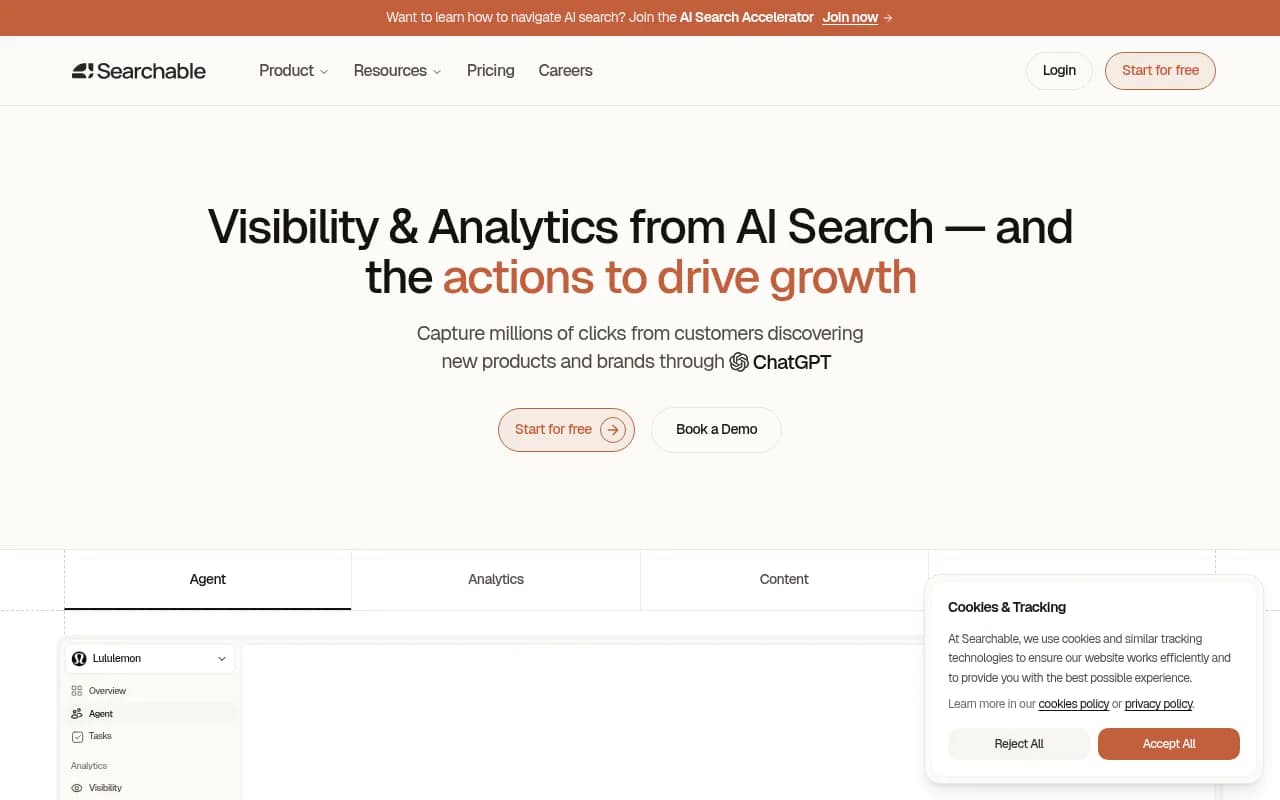
Searchable positions itself as an AI Search Visibility Platform with built-in content generation. The idea is that tracking and creating should live in the same tool — you see where you're missing, and you generate content to fill those gaps without switching platforms.
This is a meaningful distinction from Scrunch. Searchable is targeting teams that want an end-to-end workflow, not just a dashboard. The content generation component means marketers can move from insight to output without exporting data and handing it off to a separate writing tool.
Searchable tracks brand visibility across the major AI engines and provides competitive benchmarking, which is table stakes at this point. The content tools are what make it interesting.
Where Searchable falls short
Searchable is newer and less established than Scrunch. The depth of analytics — particularly around prompt segmentation, persona tagging, and enterprise governance — doesn't match what Scrunch offers. For teams that need SOC 2 compliance or detailed funnel-stage reporting, Scrunch is the more mature product.
The content generation quality also depends heavily on how well the platform has trained its models on real prompt and citation data. Generic AI content that isn't grounded in actual AI search behavior won't move the needle. Whether Searchable's content tools are genuinely engineered for AI citation or just a standard AI writer bolted on is worth pressure-testing before committing.
Side-by-side comparison
| Feature | Scrunch AI | Searchable |
|---|---|---|
| AI models tracked | 7 (ChatGPT, Claude, Perplexity, Gemini, Google AIO, Google AI Mode, Meta AI) | Major AI engines (exact coverage varies) |
| Prompt segmentation | Deep (persona, funnel stage, intent, sentiment) | Basic |
| Content generation | No | Yes |
| Answer gap analysis | Limited | Yes |
| AI crawler logs | No | No |
| Reddit/YouTube tracking | No | No |
| Traffic attribution | GA4 integration | Limited |
| SOC 2 compliance | Yes (Type II) | Not confirmed |
| Free trial | No | Limited |
| Starting price | $300/month | Lower entry point |
| Per-user pricing | Yes (scales quickly) | No |
| Best for | Enterprise teams needing governance + deep analytics | Mid-market teams wanting tracking + content in one tool |
The monitoring-only problem
Here's the thing neither platform fully solves: knowing you're invisible in AI search is only half the problem. The other half is knowing why and what to do about it.
Scrunch gives you excellent data about your current visibility. Searchable gives you content tools to try to improve it. But neither platform closes the full loop in a way that's grounded in real prompt behavior.
The gap analysis question — "which specific prompts are my competitors winning that I'm not even showing up for?" — is where most monitoring tools get vague. Scrunch can show you your share of voice. Searchable can generate content. But the connection between competitive prompt data and content that actually gets cited by AI models requires a more integrated approach.
This is where platforms like Promptwatch have a structural advantage. The Answer Gap Analysis shows you the exact prompts competitors are visible for that you're missing, then Content Agents generate articles grounded in that real prompt data. The AI crawler logs show you when AI engines are actually reading your new content and when it moves from crawl to citation. That's a different category of tool than either Scrunch or Searchable.

Pricing reality check
Scrunch's pricing deserves a closer look because it's easy to underestimate the real cost.
At $300/month for 3 users and 350 prompts, you're paying $3,600/year at the entry level. Add a fourth user and you're on Growth at $500/month ($6,000/year). For a 5-person marketing team, you're looking at significant spend before you've generated a single piece of content or made a single optimization.
Searchable's lower entry point is genuinely attractive for teams that don't need enterprise governance. If you're a mid-sized brand or agency that wants to track visibility and produce content without managing two separate tools, the economics make more sense.
That said, "lower price" only matters if the platform actually delivers. A cheaper tool that gives you shallow data and generic content is worse than a more expensive tool that tells you something actionable.
Who should use Scrunch
Scrunch makes sense if:
- You're an enterprise brand that needs SOC 2 compliance to get through security reviews
- Your team runs structured, repeatable reporting cycles and needs deep prompt-level segmentation
- You have a separate content team that can act on the data Scrunch surfaces
- Budget isn't the primary constraint and you're willing to pay for analytics depth
Scrunch is probably overkill if you're a 2-3 person marketing team or an agency managing multiple clients. The per-user pricing and minimum spend make it hard to justify unless you're using the full feature set.
Who should use Searchable
Searchable makes sense if:
- You want tracking and content generation in one platform without managing multiple tools
- You're a mid-market brand or growing startup that needs to act on AI visibility data, not just report on it
- Budget is a real constraint and you can't justify Scrunch's pricing
- Your team doesn't need enterprise governance or SOC 2 compliance
The caveat: validate that Searchable's content generation is actually grounded in real AI citation behavior before committing. Ask for examples of content the platform has generated and whether it's led to measurable citation improvements.
Other tools worth considering
If neither Scrunch nor Searchable feels like the right fit, the GEO platform market has expanded significantly in 2026. A few worth looking at depending on your needs:
For deeper analytics without the enterprise price tag:
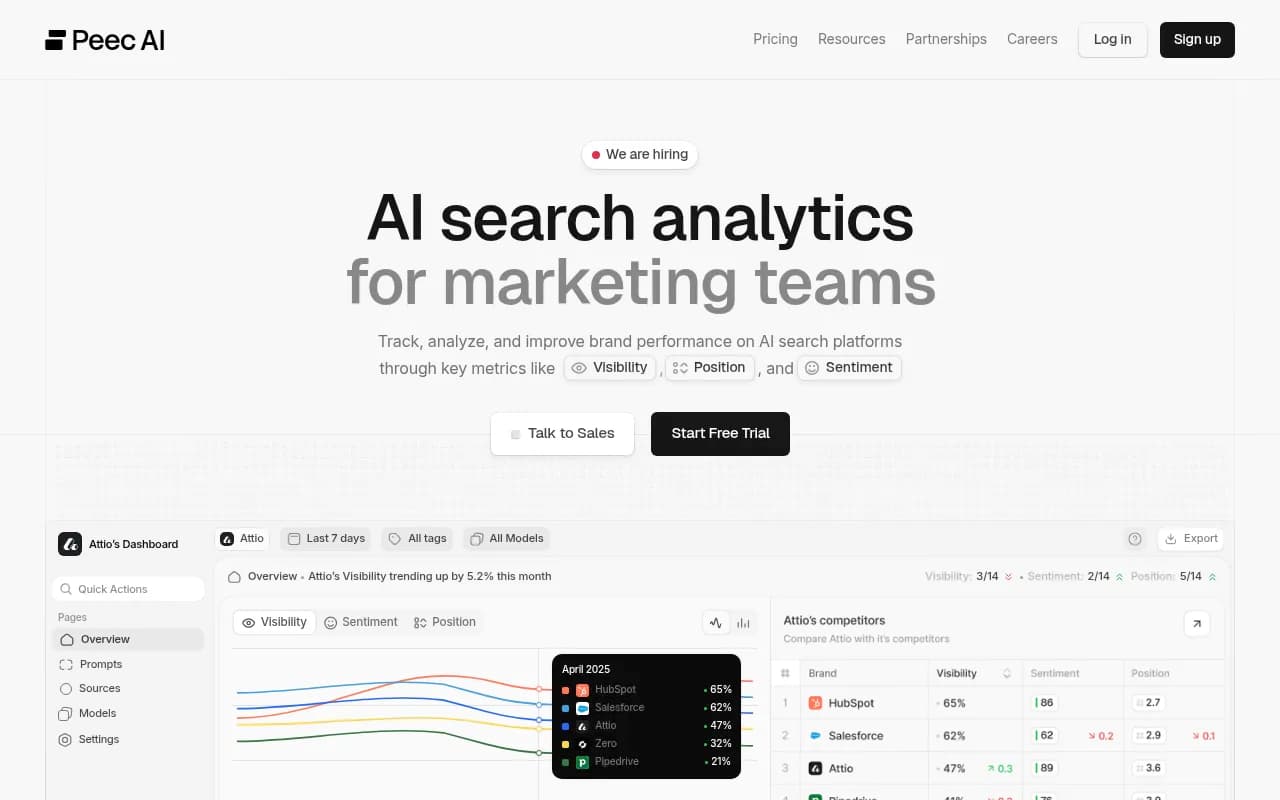
Otterly.AI

For content-focused workflows:
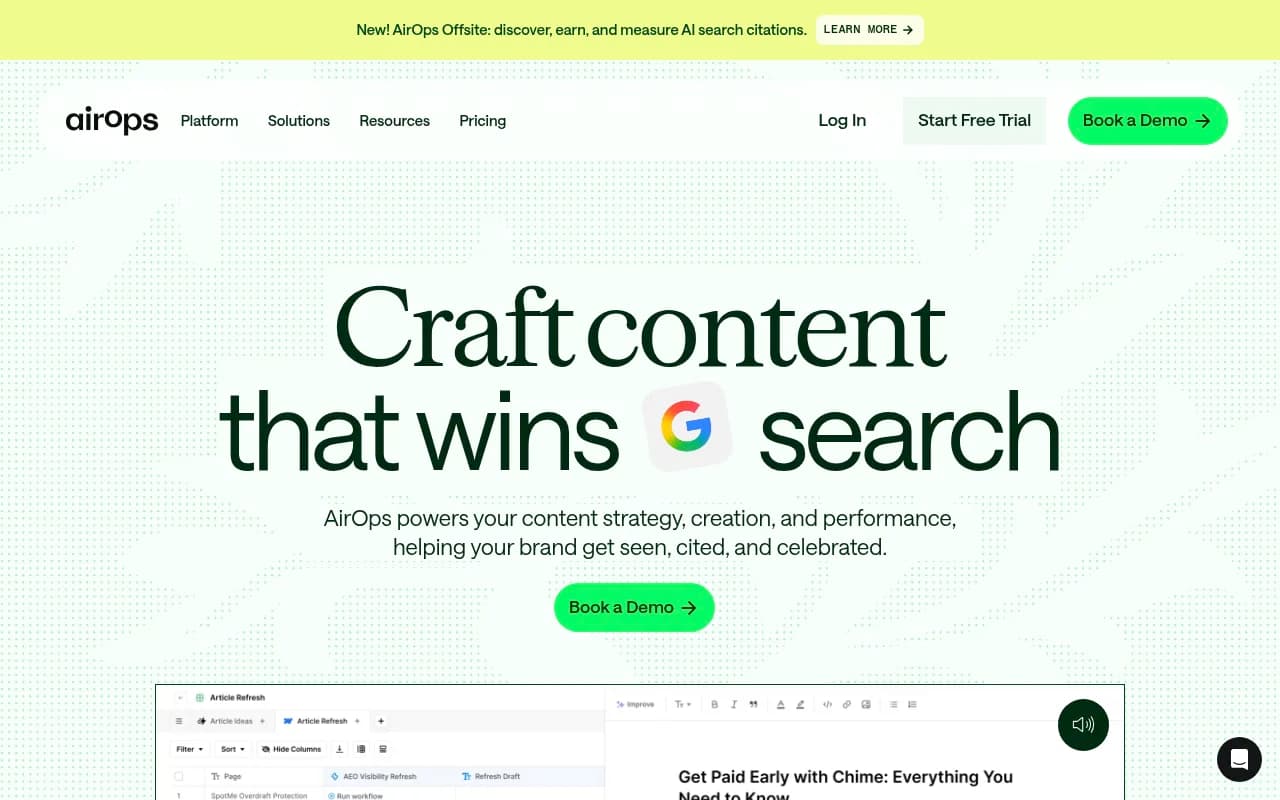
For agencies managing multiple clients:
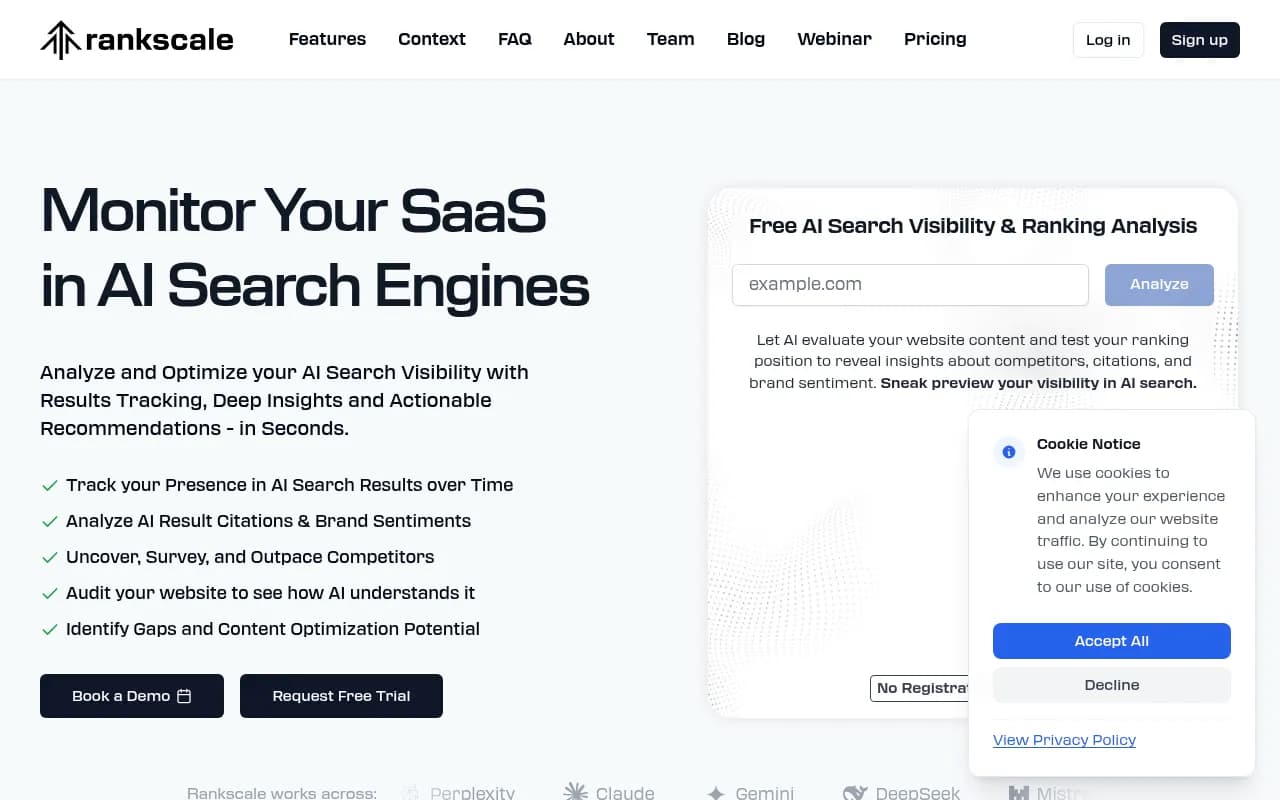
For teams that want traditional SEO and AI visibility in one platform:
The honest verdict
Scrunch and Searchable are solving real problems, but they're solving different ones. Scrunch is the right choice if analytics depth and enterprise governance matter more than content output. Searchable is the right choice if you want a more integrated workflow at a lower price point.
Neither platform is a complete GEO solution on its own. Scrunch leaves you with data and no clear path to acting on it. Searchable gives you content tools but may lack the analytical depth to tell you whether those tools are working.
The question to ask before choosing either one: do you need to understand your AI visibility, or do you need to improve it? If the answer is "both," you'll want a platform that treats those as the same problem.

The GEO platform market in 2026 has no shortage of options. The tools that will matter most are the ones that connect monitoring to action — showing you the gap, helping you fill it, and then confirming the fix worked. That's the standard both Scrunch and Searchable should be measured against.