
Key takeaways
- A platform answers "what do AI engines say about us?" An agency answers "who fixes it?" Most failed GEO programs bought one and expected the other.
- Test your existing SEO agency before hiring a second one. Add specialist GEO support only for a defined gap it cannot close.
- Five factors decide it: bandwidth, skill, budget, urgency and scale. If you score mixed, a hybrid model usually wins.
- Measurement across many prompts is a repeatable job for software. Fixing third-party descriptions, earning coverage and writing content is human or agent work.
- Nobody can guarantee a position in an AI answer. Treat any agency that does as a red flag.
The question behind the question
Most marketing leaders start this decision with a tab full of tools and a half-written Slack message to the CMO. The real question isn't "which tool?" It is "who owns the outcome?"
GEO (generative engine optimization) has two separate jobs hiding inside it. The first is measuring: which prompts you appear in, how you are described, which sources get cited, and who wins when you don't. The second is changing the answer: publishing pages, fixing facts, earning mentions on third-party sites, and making your site readable to AI crawlers.
Platforms are strong at the first job. Agencies are strong at the second. The mistake is buying a dashboard and assuming it will change anything, or hiring a retainer and never seeing the underlying data.
The urgency is real. G2's Answer Economy 2026 report found that 51% of B2B software buyers now begin research in an AI chatbot more often than Google, up from 29% in April 2025, and that 69% chose a different vendor than they had planned based on chatbot guidance. Conductor's State of AEO/GEO 2026 report says 94% of CMOs plan to increase AEO and GEO investment. That demand is also why nearly every SEO and content shop now has "GEO" on its homepage.
What each option actually gives you
What a platform gives you
A good platform runs a fixed set of buyer prompts on a schedule across ChatGPT, Gemini, Perplexity, Google AI Overviews and others, logs the full responses, and shows mentions, citations, sentiment and competitors over time. The better ones add AI crawler logs, AI traffic attribution and content tooling.
This matters because AI answers are probabilistic. Results shift between sessions, models and locations. One manual spot check tells you almost nothing. Promptwatch's data on unique domains per ChatGPT response (Sep 28 to Oct 4, 2026) found that 47.6% of responses cite 10 or more domains, and for organic prompts with no brand named it was 52.5%. You share every answer with a crowd, so you need to measure across many prompts and track how you are described, not only whether you are cited. Read the full unique domains per response report.
Citation sources also move fast. In Promptwatch's ChatGPT citation share report for November 2026, Reddit was the most cited popular site at 0.23% of citations, while in June 2026 it had led with 3.71%. Wikipedia fell from 0.56% to 0.03%. Review sites like G2, Gartner, Capterra and Trustpilot hold five of the top 10 spots. A one-off audit goes stale in weeks. That is the strongest argument for continuous monitoring.
What an agency gives you
An agency gives you people who have run GEO across several clients while the playbook changes every few months. That is hard to replicate with one new hire. They also do the work platforms can't: original research that earns press coverage, outreach to the sites AI engines trust, and rewriting pages so the answer sits in the first lines.
Fractl's own case studies show the pattern. One Texas electricity provider went from no AI Overview placements to a top-three cited brand in 10 months, and a student loan provider's AI Overview citations grew from 3,600 to 11,200 in six months, helped by coverage in major publications. Those are vendor-published results, so read them as examples of what to ask for, not as benchmarks. Still, they illustrate that earned authority feeds AI answers.
Agency pricing is mostly opaque
Most agencies don't publish prices, which is itself useful information. The published starting points that do exist vary wildly. Per Hawke Media's roundup, Ignite Visibility starts at $2,000 a month, WebFX and Optimist at $3,000, Perrill at $6,000, and Omniscient Digital at $120,000 a year. NoGood says its average retainer runs above $20,000 a month and iPullRank's programs start at $30,000. Fractl notes Digital Elevator's AI visibility program starts at $3,000.
Self-service monitoring software, by comparison, often starts below $100 a month, according to GoodFirms. Promptwatch's plans run from $95 a month (Essential) to $579 a month (Business), with agency plans from $199 a month. Confirm current numbers at promptwatch.com/pricing.
The gap is not a like-for-like gap, though. You are paying an agency for strategy, execution and reporting. You are paying a platform for data and, on some, agent-driven content. Compare total resources, not invoices.
Before you hire anyone: test your SEO agency
Onely makes a point worth borrowing here, even though it sells GEO services and says so: if you already have an SEO agency, give it a chance to own the answer work first. The technical, content and authority work overlaps heavily. Google's own guidance supports continuing core SEO.
Ask the incumbent for a work sample:
- A dated prompt and platform
- The full saved answer
- Brand and competitor mentions and the citations
- Any factual errors in the answer
- A proposed change and a named owner
- Why that question matters to a purchase
If the agency can produce that, you have a cheaper route than adding a specialist. If it can only produce a definition of GEO, you have found your gap. Also note the sobering click data cited by Onely: in one US browsing-panel study, clicks to sources cited in Google AI Overviews occurred in only about 1% of visits. An agency reporting only rankings and visits may be missing a form of visibility, but a missed form of visibility does not automatically justify a second retainer.
A five-factor scorecard
GoodFirms' build-or-hire framework is a useful skeleton. I would adapt it to three outcomes, not two, because a platform without staff and an agency without data are both half-solutions.
| Factor | Platform plus in-house points toward | Agency points toward |
|---|---|---|
| Bandwidth | Someone has real spare hours, not "we can probably squeeze it in" | The SEO lead already owns reporting, content, analytics and every Slack emergency |
| Skill | Existing SEO, content and analytics expertise | Significant ramp-up needed on prompts, citations and entity work |
| Budget | Staff capacity exists, cash is tight | A predictable outside retainer is available |
| Urgency | You can build and refine gradually | Leadership needs a working program this quarter |
| Scale | One brand, limited markets | Many brands, markets, products or languages |
Score each row honestly. Four or five in one column settles it. A split is the common case, and that points to the hybrid model below.
Bandwidth is the factor people lie about
If the person you assign already owns SEO, content strategy and reporting, your in-house program becomes a dashboard nobody updates. I have seen this more than any other failure. The software works fine. Nobody has Thursday afternoons free to act on it.
Skill gaps show up in prompt design
Bad prompt sets produce confident nonsense. A usable set has at least 50 buyer questions, includes comparison and brand-specific prompts, and is split by persona and market. Hawke Media's audit baseline asks for exactly that across ChatGPT, Gemini, AI Overviews, AI Mode, Perplexity and Copilot. If nobody on your team can build and maintain that, an agency's reps are worth paying for.
Urgency has a price
YesOptimist makes the blunt version of the argument: a single hire ramping for two quarters is two quarters of competitors getting recommended while you aren't. That is a vendor view, but the logic holds if your category is already contested in AI answers.
When a platform is the right call
Buy a platform first when:
- You have a content and SEO team that can ship work, and what they lack is data on where to point it.
- You need to prove the channel is worth investing in before committing to a retainer.
- You manage many markets or prompts, where manual tracking collapses.
- You want to attribute AI referrals and conversions, not just count mentions.
Platforms differ a lot, and the category splits into trackers that report a score and tools that help you act on it. Pure monitors answer "was my brand mentioned?" and stop. Tools like Promptwatch go further: they trace which pages get cited, show AI crawler activity on your site through IP-verified logs, attribute AI traffic, and include a Content Agent that writes and publishes pages against the gaps, then checks whether the fix worked.

Other names worth a look in the monitoring tier include Profound for enterprise buyers, plus Peec AI, Otterly.AI and Scrunch AI for lighter tracking. Here is how the options sit:
| Tool | Strength | Gap to check |
|---|---|---|
| Promptwatch | Monitoring plus content creation, crawler logs, traffic attribution | Content Agent starts on Business |
| Profound | Deep enterprise monitoring | Higher price, check agentic execution |
| Peec AI | Straightforward prompt tracking | Check crawler logs and content tools |
| Otterly.AI | Low-cost brand mention monitoring | Check traffic attribution and fixing |
| Semrush | Familiar SEO suite with AI tracking added | Check prompt flexibility and depth |
Profound

Otterly.AI

For a wider view of the category, the GEO software directory lists far more options than fit here.
When an agency is the right call
Hire an agency when the work you need is mostly human: earned media, original research, third-party profile cleanup, executive thought leadership, or multi-market rollouts. It is also the right call if your team can't absorb new work at all.
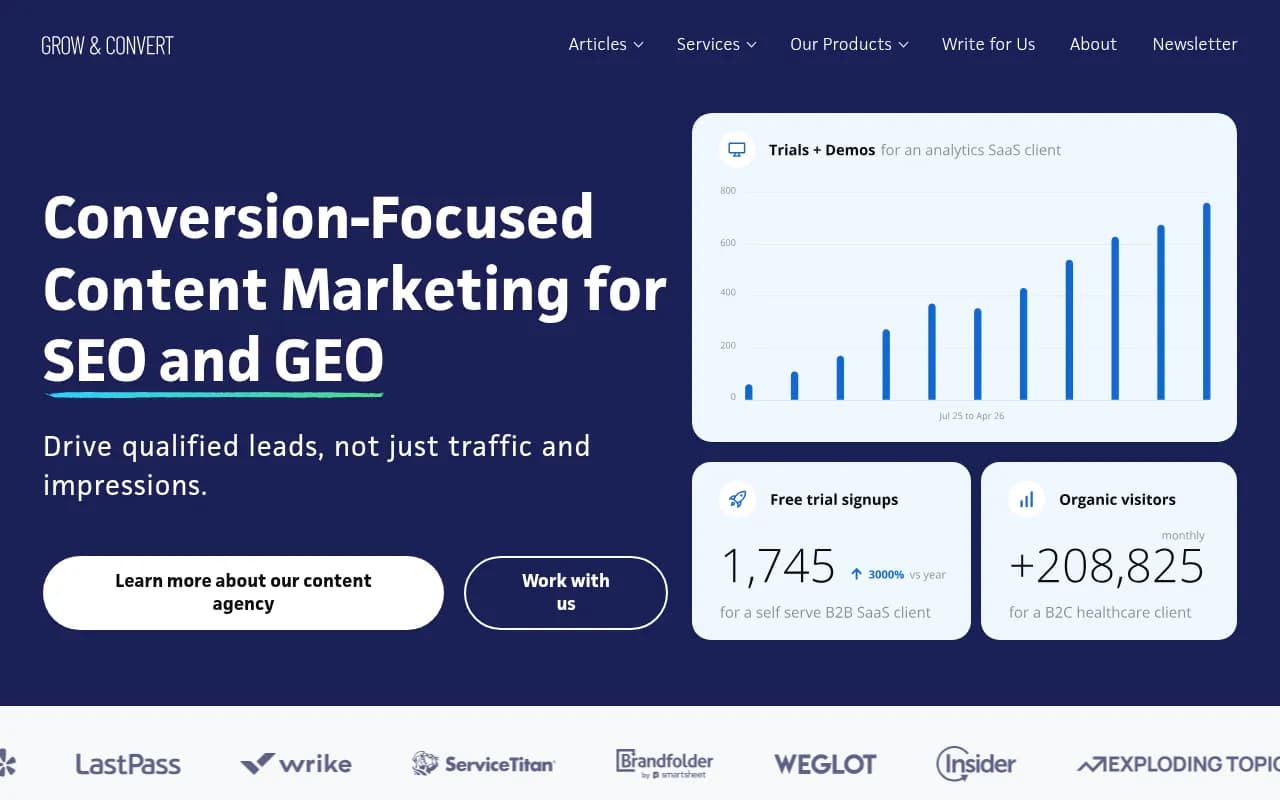
The agency market has real names behind the claims. Fractl leans on original research. Siege Media targets decision-stage content for SaaS, fintech and e-commerce. Directive focuses on B2B pipeline attribution. Single Grain runs GEO alongside paid media. Omniscient Digital and Grow and Convert are B2B-focused content shops that also work in this space.

A practical point from YesOptimist: the buyers who get the most from an agency are those who can execute briefs internally. If you need the agency to do everything including production, you are buying a more expensive engagement and should price it that way.
How to vet one
Fractl, TKX Media, Hawke Media and Optimist each publish their own ranking, so treat each list as marketing from an interested party. The criteria they share are sound, though:
- Named client results with a stated timeframe and a stated metric (citations, mentions or AI traffic are not the same thing).
- A clear answer on how AI referrals will show up in your analytics, including a GA4 channel group and a conversion comparison against organic.
- A scope that separates GEO work from your SEO agency's, so nobody bills twice for the same content or markup.
- A range, not a promise. First movement in citation share within a quarter is plausible. A guaranteed number one in ChatGPT is not.
- Methodology you can argue with. Published KPI frameworks are a good sign.
Red flags
- "GEO" appeared on the site this year with no published AI outcomes behind it.
- The lead metric is an AI visibility score with no link to pipeline, signups or demos.
- They treat GEO as separate from SEO, or tell you SEO is dead.
- Scope is vague and pricing is "custom everything" with no model.
- They promise a position in AI answers. Google says no one can guarantee a number one ranking, and AI answers vary even more by prompt, engine and date.
- They are secretive about what they plan to do.
One more cheap test: llms.txt. It costs almost nothing to add, but no major engine has confirmed it uses the file. Don't pay anyone to call it a strategy.
The hybrid model most teams land on
The pattern that keeps showing up in the research is this: use an agency to build the engine and prove the model, bring a coordinator in-house to run it, and keep a platform underneath as the source of truth. GoodFirms puts it as keeping routine tracking in-house and using specialists for strategy and big launches.
Here is how I would split responsibilities:
| Job | Best owner |
|---|---|
| Prompt tracking across models and markets | Platform |
| AI crawler access checks and site audits | Platform plus technical SEO |
| AI traffic and conversion attribution | Platform plus analytics team |
| Content gap analysis | Platform |
| Writing and publishing gap-filling pages | Platform content agent, in-house team or agency |
| Earned media and original research | Agency |
| Review site presence (G2, Capterra, Trustpilot) | In-house marketing or agency |
| Fixing wrong claims on third-party pages | Agency or in-house PR |
| Quarterly strategy and prioritization | Agency or senior in-house lead |
One reason to own the platform yourself even when an agency runs strategy: you keep the data if the relationship ends. An agency's private spreadsheet leaves with the agency. A platform subscription in your name doesn't.
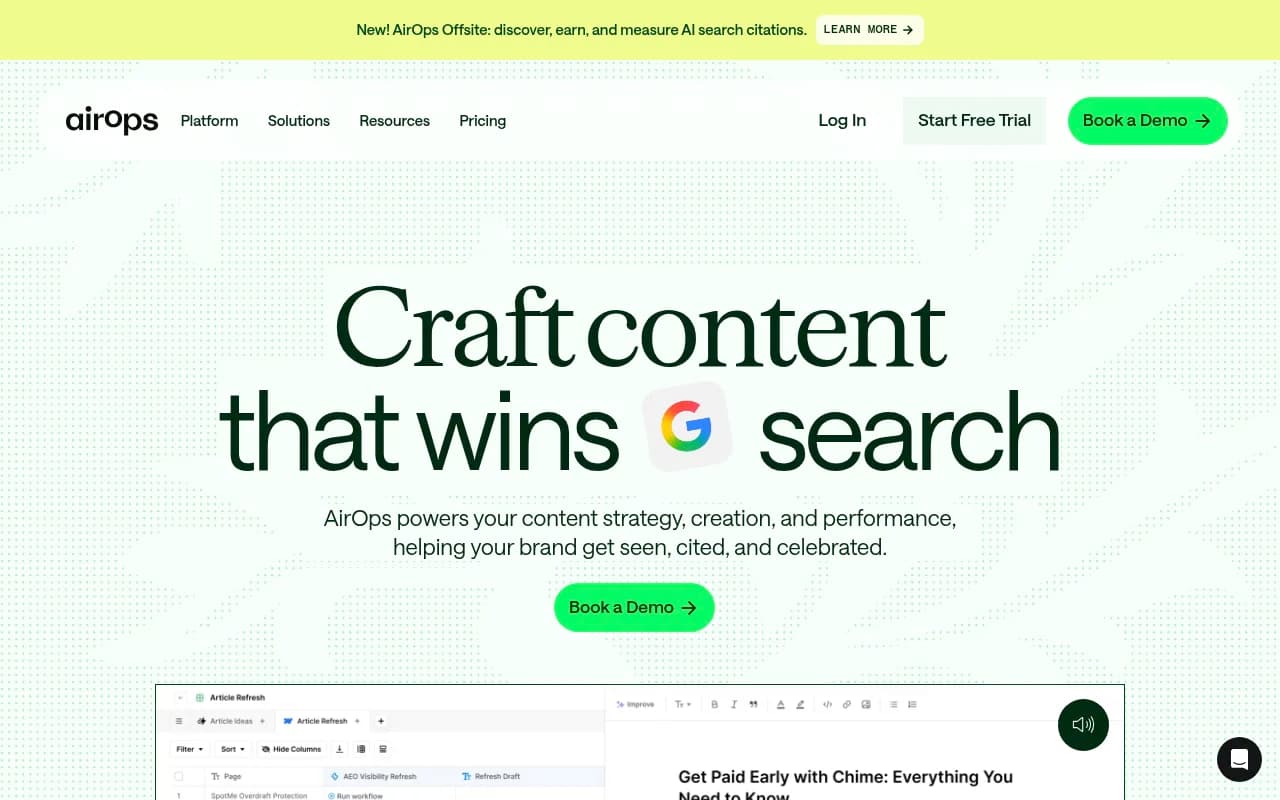
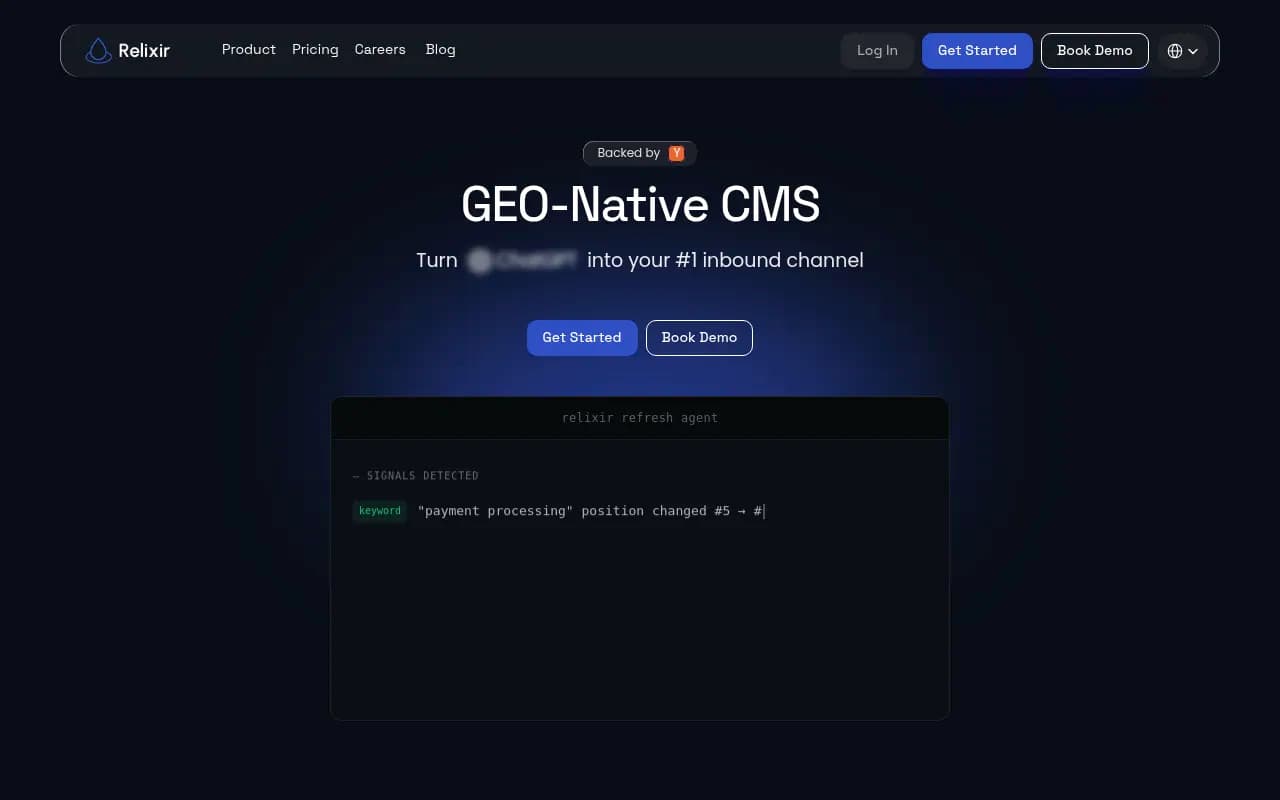
For teams that want fewer moving parts, look at tools that combine monitoring and execution, such as AirOps, Search Atlas and Relixir, alongside Promptwatch, and check how much they actually publish versus just recommend.
Common scenarios
Lean in-house team, small budget
Start with a platform. Build a 50-prompt baseline, find the three biggest citation gaps, and publish against them for a quarter. Use the Promptwatch free tier or a trial to see whether the data changes your priorities before spending more.
B2B SaaS with a busy marketing team and a mid-size budget
Platform plus a project-based agency engagement. Let the agency lead the research and earned-media work while your team ships briefs. Define scope in writing against your SEO agency.
Enterprise with many markets and brands
Platform with country and language tracking, plus an agency or a dedicated in-house lead. Local and multi-market monitoring is where manual approaches fall apart first.
An agency itself
If you are the agency, the question flips: build on a platform with agency plans rather than staffing manual tracking. 1001 SEO Media, which publishes this site, runs its own GEO programs on a platform for that reason, and it is a model worth copying if you serve several clients.
How to decide in one afternoon
- Run the work-sample test on your current SEO agency. Write down what it can and can't show.
- Score the five factors in the table above with your team, not for them.
- Run a free AI visibility check on your brand and two competitors to see how big the gap is.
- Pick the cheapest option that covers your largest gap. A platform trial costs days. An agency contract costs quarters.
- Set a review after one quarter for the trend and two quarters for the provider, as Hawke Media suggests. Define in advance what qualified demand from AI answers would look like.
The gap in most AI-generated advice on this topic is that nobody says who should do the work or connects being cited to customers. Don't repeat that gap in your own plan. Whoever you hire or buy, put a name next to every buyer question, and a date next to every check.
FAQ
Should I hire a GEO agency or buy a platform?
If you have staff who can execute, buy a platform first. If you have no capacity, hire an agency but still ask for platform data you own. Most teams end up with both.
Do I need a GEO agency if I already have an SEO agency?
Usually not at first. Ask the incumbent for a dated prompt, saved answer, citations and a proposed fix. Add a specialist only for a gap it can't close.
How much does a GEO agency cost?
Published starting prices range from about $2,000 to $3,000 a month at the low end to $20,000 or $30,000 a month at the high end, and many agencies don't publish prices at all.
Can anyone guarantee a ranking in ChatGPT?
No. Answers are probabilistic and change between sessions, models and locations. Expect ranges, not guarantees.
Does GEO replace SEO?
No. GEO adds prompt research, entity work, extraction-friendly structure and off-site citations on top of the SEO foundation.