Summary
- Budget-conscious brands can build a complete AI visibility stack for $99/month or less by choosing tools with strong core monitoring features and skipping enterprise add-ons
- The best entry-level platforms (Promptwatch Essential, Peec AI, Otterly.AI) offer 25-50 prompt tracking, multi-LLM coverage, and basic optimization features at accessible price points
- A practical $99/month stack includes: one core monitoring tool ($29-99), free supplementary tools (Google Search Console, Reddit tracking), and manual workflows to fill gaps
- Success at this budget tier requires focus -- track 25-50 high-impact prompts instead of hundreds, prioritize 2-3 AI engines over comprehensive coverage, and use free tools strategically
- The ROI case is straightforward: if AI search drives even 5% of your traffic, $99/month in monitoring pays for itself quickly by showing you exactly where you're invisible and what content to create
Why AI visibility matters in 2026 (and why you can't ignore it)
More people are getting answers from ChatGPT and Perplexity than ever before. When someone asks "best project management tools for remote teams" or "how to fix WordPress performance issues," AI engines decide which brands get mentioned and which disappear. If your brand isn't showing up in those responses, you're losing traffic and customers to competitors who are.
The problem: most AI visibility platforms are priced for enterprise budgets. Tools like Profound and Evertune start at $399-579/month. Semrush and Ahrefs bolt AI tracking onto existing $99-199/month SEO subscriptions. For bootstrapped startups, small agencies, and solo operators, those price tags are deal-breakers.
The good news: you don't need enterprise features to start tracking and improving your AI visibility. A handful of platforms offer real monitoring capabilities at $99/month or less. This guide shows you how to build a complete stack at that budget -- what to track, which tools to use, and how to fill gaps with free alternatives.
What you actually need in an AI visibility tool (and what you don't)
Before comparing specific tools, understand what matters at the $99/month budget tier.
Must-have features
Multi-LLM tracking: At minimum, you need coverage of ChatGPT, Perplexity, and Google AI Overviews. These three engines drive the majority of AI search traffic in 2026. Tools that only track one model give you an incomplete picture.
Prompt monitoring: The ability to define a list of prompts (questions your customers ask) and track whether your brand appears in responses. This is the core value proposition. Without it, you're flying blind.
Citation extraction: When your brand does appear, you need to see which pages, articles, or sources the AI cited. This tells you what content is working and what to create more of.
Basic competitor tracking: See which brands appear for your target prompts when you don't. This reveals content gaps and positioning opportunities.
Nice-to-have features (skip these to save money)
Unlimited prompts: Enterprise plans offer 500-1000+ tracked prompts. You don't need that. Focus on 25-50 high-impact prompts that represent your core customer questions.
Advanced sentiment analysis: Some platforms analyze the tone of brand mentions (positive, negative, neutral). Useful for large brands managing reputation at scale. Overkill for most small teams.
AI content generation: Tools like Promptwatch and Searchable include built-in AI writers that generate articles optimized for AI search. Powerful, but not essential if you already have a content workflow.

Multi-region tracking: Track AI responses from different countries and cities. Relevant for global brands, unnecessary if you serve a single market.
API access and white-label reporting: Agency features you can skip unless you're reselling AI visibility services to clients.
The best AI visibility tools under $99/month
Here are the platforms that offer real value at accessible price points.
Promptwatch Essential: $99/month
Promptwatch's Essential plan sits right at the $99 budget line and delivers more than most competitors at this tier. You get 50 prompts tracked weekly across 10 AI models (ChatGPT, Perplexity, Google AI Overviews, Claude, Gemini, Meta AI, DeepSeek, Grok, Mistral, Copilot). That's comprehensive coverage.
What makes Promptwatch different: it doesn't just show you where you're invisible -- it helps you fix it. The Answer Gap Analysis feature compares your visibility to competitors and shows exactly which prompts you're missing. The built-in AI writing agent then generates content grounded in 880M+ citations analyzed, designed to get cited by AI models.
You also get Google Docs and WordPress integration, so you can publish directly from the platform. For $99/month, this is the most complete solution available.
Best for: Brands that want monitoring + optimization in one tool. If you're serious about improving AI visibility (not just tracking it), this is the pick.
Peec AI: €89/month (~$95/month)
Peec AI offers strong monitoring at a slightly lower price point. You get multi-LLM tracking (ChatGPT, Perplexity, Claude, Gemini), citation analysis, and competitor benchmarking. The interface is clean and the data is reliable.
What's missing: content generation and optimization tools. Peec shows you the problem but doesn't help you solve it. You'll need to create content elsewhere and manually optimize for AI search.
Best for: Teams that already have a content workflow and just need visibility data.

Otterly.AI: $29/month
Otterly.AI is the budget champion. For $29/month, you get basic tracking across ChatGPT, Perplexity, and Google AI Overviews. The prompt limit is lower (around 25 prompts), but that's enough to cover your core customer questions.
The trade-off: Otterly is monitoring-only. No content gap analysis, no AI writer, no crawler logs. You see where you appear and where you don't. That's it.
Best for: Bootstrapped startups and solo operators who need to prove AI visibility matters before investing more.
Otterly.AI

Honorable mentions
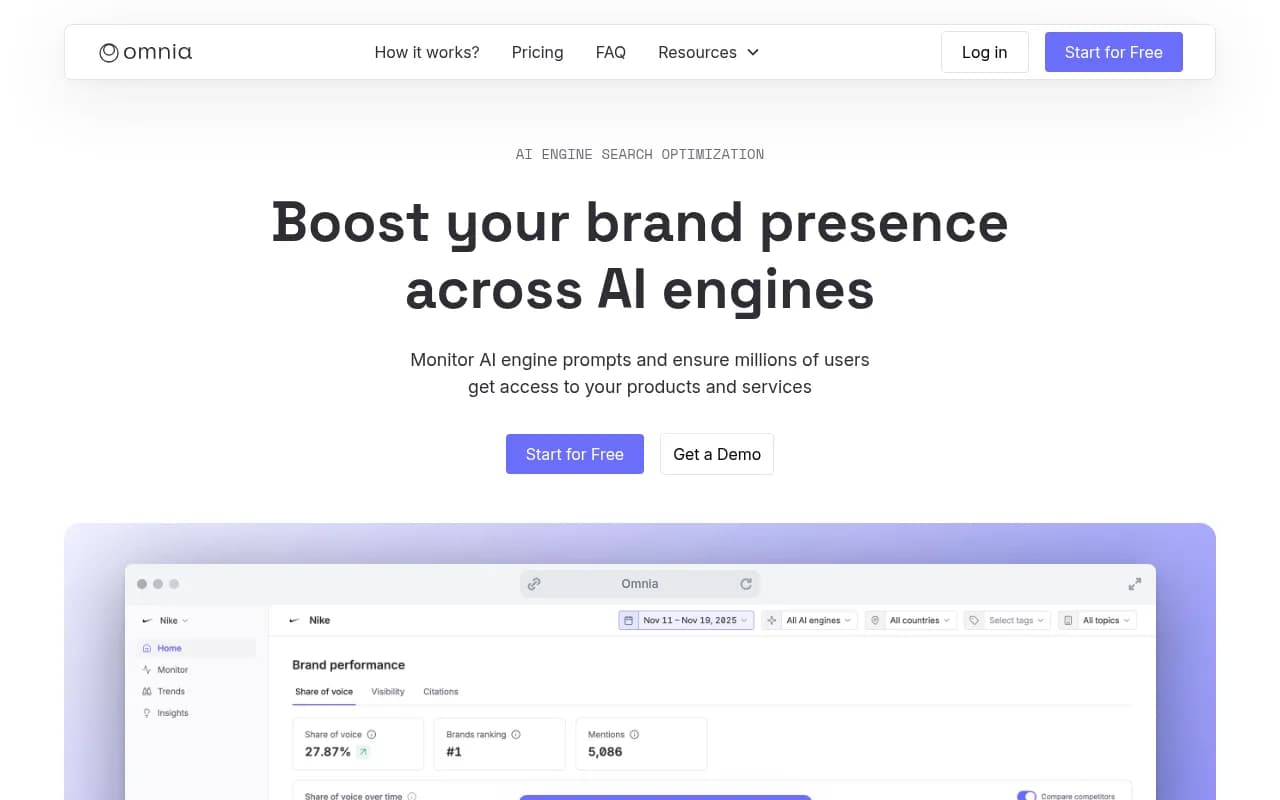
Rankshift and Omnia both offer entry-level plans around $99/month with solid feature sets. Rankshift focuses on brand tracking across AI engines. Omnia provides aggregated visibility scores and citation analysis. Both are worth evaluating if the top three don't fit your needs.

Tool comparison: features and pricing at a glance
| Tool | Price/month | Prompts tracked | AI engines covered | Content generation | Best for |
|---|---|---|---|---|---|
| Promptwatch Essential | $99 | 50 (weekly refresh) | 10 models | Yes (5 articles/month) | Teams wanting monitoring + optimization |
| Peec AI | €89 (~$95) | ~50 | 4 models | No | Teams with existing content workflows |
| Otterly.AI | $29 | ~25 | 3 models | No | Bootstrapped startups proving ROI |
| Rankshift | $99 | ~40 | 5 models | No | Brand-focused tracking |
| Omnia | $99 | ~50 | 6 models | No | Teams wanting aggregated visibility scores |
Building your $99/month AI visibility stack
Here's how to construct a complete system without exceeding budget.
Core monitoring tool: $29-99/month
Pick one platform from the list above based on your needs:
- If you want optimization tools built in: Promptwatch Essential ($99)
- If you just need monitoring and have content covered: Peec AI ($95) or Otterly.AI ($29)
This is your single source of truth for AI visibility data.
Supplementary free tools
Google Search Console (free): Track organic traffic from Google AI Overviews. Set up custom segments to isolate AI-driven clicks vs traditional search. This shows you the revenue impact of AI visibility.
Reddit and Quora manual searches (free): AI models cite Reddit threads and Quora answers heavily. Spend 30 minutes/week searching for discussions related to your prompts. See which threads appear in AI responses and contribute to them.
ChatGPT and Perplexity direct testing (free): Manually test your top 10 prompts in ChatGPT and Perplexity once a week. Screenshot the results. This gives you qualitative context your monitoring tool might miss.
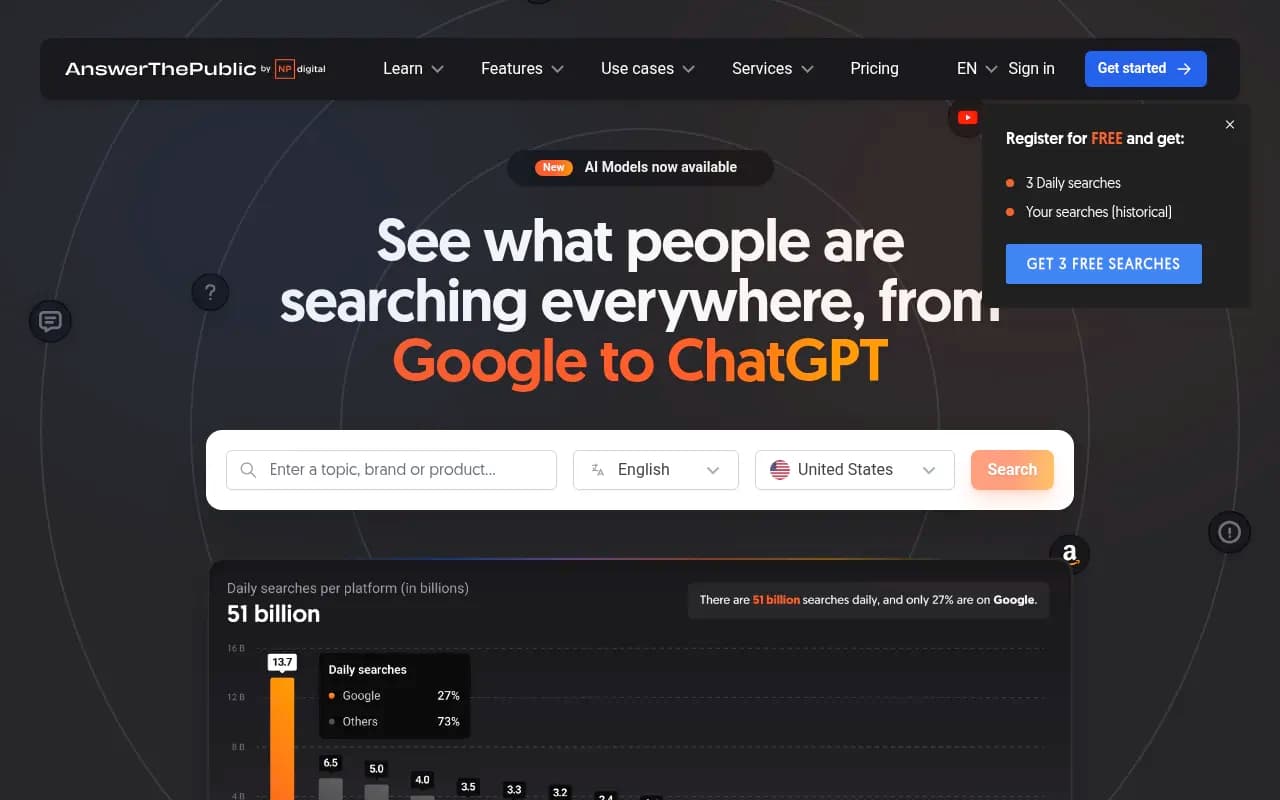
AnswerThePublic (free tier): Discover new prompts and questions people ask about your topic. Use these to expand your tracked prompt list strategically.
Total monthly cost
If you choose Otterly.AI ($29) + free tools, you're at $29/month. If you choose Promptwatch Essential ($99), you're at $99/month. Either way, you have a functional AI visibility stack.
Setting up your AI visibility tracking (step-by-step)
Once you've chosen a tool, follow this workflow to get actionable data fast.
Step 1: Define your core prompts (25-50 max)
Don't try to track everything. Focus on prompts that represent real customer intent:
- "Best [your category] for [use case]"
- "How to [solve problem your product addresses]"
- "[Your product] vs [competitor]"
- "[Your product] alternatives"
- "[Your product] review"
Use Google Search Console, your CRM, and customer support tickets to find the exact language people use. Aim for 25-50 prompts that cover your core positioning.
Step 2: Set up competitor tracking
Add 3-5 direct competitors to your monitoring tool. This gives you benchmarks and reveals content gaps. If a competitor appears for a prompt and you don't, that's a priority content opportunity.
Step 3: Establish a baseline
Run your first tracking cycle and document:
- How many prompts mention your brand (visibility rate)
- Which AI engines cite you most often
- Which pages/sources get cited
- Where competitors appear and you don't
This baseline shows you where you're starting. Track it weekly or bi-weekly.
Step 4: Identify content gaps
Look at prompts where competitors appear but you don't. What content do they have that you're missing? Common gaps:
- Comparison pages ("X vs Y")
- Use case guides ("Best X for [specific scenario]")
- How-to tutorials addressing specific problems
- Alternative/competitor roundups
Prioritize gaps based on prompt volume and business impact.
Step 5: Create and publish optimized content
If you're using Promptwatch, the AI writing agent generates content directly from gap analysis. If you're using a monitoring-only tool, write content manually with these principles:
- Answer the prompt directly in the first paragraph
- Include specific examples, data, and comparisons
- Link to authoritative sources AI models trust
- Structure content with clear headings and lists (AI models parse structured content better)
- Publish on your main domain, not a subdomain or separate blog
Step 6: Track changes over time
Re-run tracking weekly or bi-weekly. Watch for:
- New citations of your content
- Changes in visibility rate
- Shifts in which competitors appear
- New prompts where you're suddenly visible
Adjust your content strategy based on what's working.
Optimization tactics that work at the $99/month tier
You don't need enterprise tools to improve AI visibility. These tactics work with basic monitoring data.
Tactic 1: Target Reddit and Quora strategically
AI models cite Reddit and Quora heavily. Find threads related to your prompts and contribute genuinely helpful answers. Link to your content where relevant. This gets your brand into the citation pool AI models pull from.
Tactic 2: Optimize existing high-traffic pages
Use Google Search Console to identify pages that already get decent traffic. Then check if those pages appear in AI responses for related prompts. If not, update them:
- Add a clear, direct answer to the main question at the top
- Include comparison tables and structured data
- Link to authoritative external sources
- Add FAQ sections addressing related questions
AI models prefer pages that comprehensively answer questions.
Tactic 3: Create comparison and alternative pages
Prompts like "X vs Y" and "X alternatives" drive significant AI search volume. Create dedicated comparison pages for:
- Your product vs top 3 competitors
- Top alternatives to your product (yes, really -- this builds trust)
- Feature-by-feature comparisons
Be honest and specific. AI models cite pages that provide balanced, data-driven comparisons.
Tactic 4: Publish consistently
AI models favor sites that publish regularly. Aim for 2-4 new articles per month addressing prompts where you're currently invisible. Consistency signals authority.
Tactic 5: Monitor and respond to changes
AI model behavior shifts constantly. A prompt that cited you last week might not this week. When you lose visibility, investigate:
- Did a competitor publish new content?
- Did the AI model change its citation preferences?
- Is your content still relevant and up-to-date?
Adjust quickly.
Common mistakes to avoid
Tracking too many prompts: At the $99/month tier, you have limited prompt capacity. Don't waste it on low-value queries. Focus on prompts that represent real customer intent.
Ignoring citation sources: When your brand does appear, always check which page or source the AI cited. This tells you what content works. Double down on that format and topic.
Expecting instant results: AI visibility takes 4-8 weeks to shift meaningfully. Publish content, wait for AI models to crawl it, then track changes. Don't panic if you don't see movement in week one.
Skipping Google Search Console integration: AI visibility is meaningless if it doesn't drive traffic. Connect your monitoring tool to GSC (if supported) or manually track AI-driven traffic. Prove ROI early.
Copying competitor content: AI models penalize duplicate or near-duplicate content. Use competitor analysis to identify gaps, then create original content that's better.
When to upgrade beyond $99/month
You'll know it's time to invest more when:
- You're tracking 50+ prompts and need more capacity
- You want advanced features like crawler logs, multi-region tracking, or API access
- AI search drives 10%+ of your traffic and you need deeper optimization tools
- You're managing multiple brands or clients and need workspace/reporting features
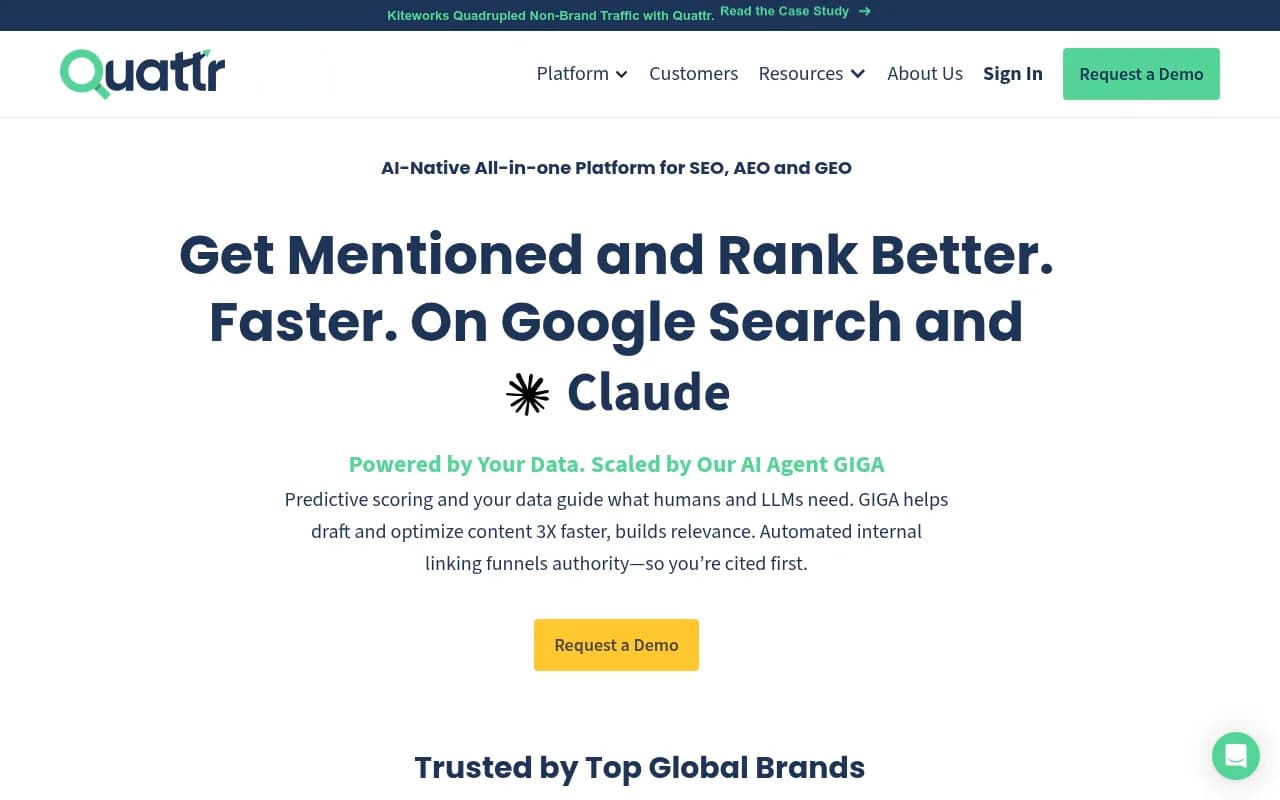
At that point, consider Promptwatch Professional ($249/month), Profound ($399/month), or Quattr (custom pricing). But start at $99/month and prove the ROI first.
Profound

The ROI case for $99/month AI visibility tracking
Here's the math: if AI search drives even 5% of your traffic, and your average customer value is $500, you need just one new customer per year from improved AI visibility to justify $99/month. That's 12 customers over 12 months, or one per month.
Most brands see AI visibility improvements within 8-12 weeks of consistent content creation. If you're currently invisible for 20 high-intent prompts and you become visible for 10 of them, the traffic impact is measurable.
The alternative -- ignoring AI search entirely -- means losing ground to competitors who are optimizing. By 2027, AI search will represent 15-20% of total search traffic. Starting now at $99/month is cheap insurance.
Your first 30 days with a $99/month AI visibility stack
Here's a practical 30-day plan to get results fast.
Week 1: Set up your monitoring tool, define 25-50 core prompts, add competitors, run your first tracking cycle. Document your baseline visibility rate.
Week 2: Identify the top 10 content gaps (prompts where competitors appear but you don't). Prioritize based on prompt volume and business relevance.
Week 3: Create and publish 2-3 pieces of content addressing your top gaps. Use comparison tables, structured headings, and direct answers. Link to authoritative sources.
Week 4: Re-run tracking. Check if your new content appears in AI responses. Manually test your top 10 prompts in ChatGPT and Perplexity. Adjust your content strategy based on what you see.
Repeat this cycle monthly. By month three, you should see measurable improvements in visibility rate and AI-driven traffic.
Final thoughts
You don't need enterprise budgets to start tracking and improving AI visibility. A $99/month stack built around Promptwatch Essential, Peec AI, or Otterly.AI gives you the core data you need. Supplement with free tools (Google Search Console, Reddit tracking, manual testing) and focus on creating content that answers real customer questions.
The brands winning in AI search in 2026 aren't the ones with the biggest budgets -- they're the ones who started early, tracked consistently, and optimized based on data. Start now at $99/month and prove the ROI. Upgrade later when you've earned it.