Key Takeaways
- AI models execute 8-10 hidden sub-queries per prompt — fan-out analysis reveals the exact questions, comparisons, and verification checks AI engines run before citing your content
- 95% of fan-out queries show zero search volume — traditional keyword tools miss the phrases that actually determine AI visibility
- A 90-day fan-out calendar targets winnable prompts — prioritize high-value queries where competitors have gaps and AI models need better sources
- Content clusters beat isolated articles — building interconnected content around fan-out patterns increases citation probability across multiple prompts
- Track results at the page level — monitor which articles get cited, by which models, and for which prompts to refine your next 90-day cycle
What Query Fan-Out Means for Content Planning in 2026
When a user asks ChatGPT "What's the best project management tool for remote teams?", the model doesn't just search once. Behind the scenes, it executes 8-10 parallel queries — checking reviews, comparing pricing, verifying recent updates, cross-referencing Reddit discussions, and hunting for "vs" comparisons. This process, called query fan-out, is invisible to the user but determines which brands get cited in the final answer.
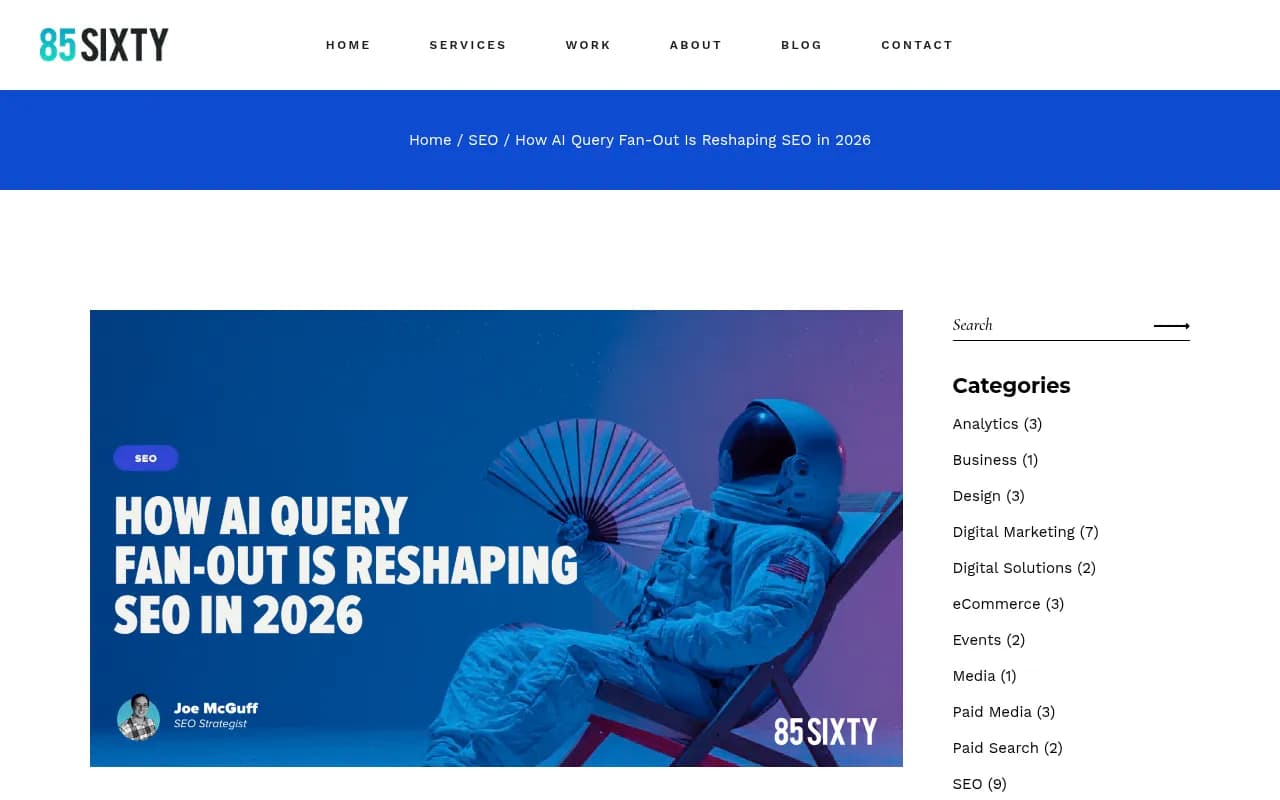
New data analyzing 72,000+ AI-generated queries across 8,700+ prompts reveals that high-consideration categories trigger deeper interrogation — software, healthcare, finance, and legal prompts average 10+ fan-outs, while lower-stakes topics still face 6+ hidden verification queries. The model is performing due diligence: it wants consensus from multiple angles before it feels confident enough to cite you.
Traditional content calendars built around keyword volume miss this entirely. A prompt like "CRM for startups" might fan out into:
- "CRM for startups under 10 employees"
- "CRM pricing comparison 2026"
- "HubSpot vs Pipedrive for small teams"
- "CRM with free tier Reddit"
- "CRM implementation time startups"
- "CRM integrations Slack Zapier"
Most of these sub-queries show zero monthly search volume in Ahrefs or Semrush. But if your content doesn't answer them, you won't get cited — even if you rank #1 for the original keyword.
Why Fan-Out Intelligence Changes Content Strategy
The shift from search engines to answer engines fundamentally changes what "rankable content" means. Google shows ten blue links and lets users decide. ChatGPT, Claude, Perplexity, and Gemini synthesize one answer and cite 3-5 sources. To be one of those sources, your content must survive the fan-out gauntlet.
This has three immediate implications for content planning:
1. Coverage beats depth for individual articles
A single 3,000-word guide on "project management tools" won't capture all the fan-out queries. You need a content cluster: a hub page plus supporting articles on pricing, integrations, use cases, comparisons, and implementation. AI models cross-reference these pages to build confidence.
2. Recency signals matter more than ever
6% of all fan-out queries include year qualifiers like "2026" or "latest". AI models actively hunt for fresh information. A 2024 article on "best CRMs" loses to a 2026 update, even if the older piece has more backlinks.
3. Comparison and verification content is non-negotiable
Fan-outs heavily favor "vs", "pros and cons", "reviews", and "complaints" queries. If you only publish promotional content, AI models will cite your competitors who provide balanced analysis.
The 90-Day Fan-Out Content Calendar Framework
Building a content calendar around fan-out intelligence requires a different planning process. Instead of starting with keyword volume, you start with prompt analysis — understanding which prompts your target audience asks, how those prompts fan out, and where your competitors have coverage gaps.
Here's the step-by-step framework:
Step 1: Identify Your Core Prompts (Week 1)
Start with 10-15 high-value prompts your ideal customers actually ask. These should be:
- Specific enough to trigger fan-outs — "What's the best CRM?" is too broad; "What's the best CRM for real estate agents under $50/month?" will fan out into actionable sub-queries
- Aligned with your product or service — if you sell project management software, focus on prompts where your tool is a legitimate answer
- High-intent — prioritize prompts that indicate buying readiness or problem urgency
You can source these prompts from:
- Sales call transcripts and support tickets
- Reddit threads and community forums in your niche
- "People Also Ask" boxes in Google
- Competitor content that ranks well
- Customer interviews asking "What did you search before finding us?"
Tools like Promptwatch can show you actual prompt volumes and difficulty scores, plus reveal which prompts your competitors are visible for but you're not.

Step 2: Map the Fan-Out Queries (Week 2)
For each core prompt, identify the 8-10 sub-queries AI models will execute. You can do this manually by:
- Asking ChatGPT, Claude, or Perplexity the prompt and analyzing which sources they cite
- Looking at the "Related searches" and "People also ask" sections
- Checking Reddit threads and Quora discussions on the topic
- Reviewing competitor content to see which angles they cover
Or you can use a platform with fan-out analysis built in. Promptwatch processes over 1.1 billion citations and shows you the exact sub-queries AI models generate, along with which sources get cited for each one.
Document your fan-outs in a spreadsheet:
| Core Prompt | Fan-Out Query 1 | Fan-Out Query 2 | Fan-Out Query 3 | ... |
|---|---|---|---|---|
| Best CRM for startups | CRM for startups under 10 employees | CRM pricing comparison 2026 | HubSpot vs Pipedrive | ... |
Step 3: Run a Content Gap Analysis (Week 3)
Now audit your existing content against the fan-out map. For each sub-query, ask:
- Do we have a page that directly answers this?
- Is that page recent (published or updated in 2025-2026)?
- Does it provide the specific information AI models are looking for (pricing, comparisons, pros/cons, implementation details)?
Mark gaps in red. These are your content opportunities.
Also audit your top 3-5 competitors. Which fan-out queries do they cover that you don't? Which ones do neither of you cover well? The latter are your easiest wins — AI models are actively looking for better sources.
Platforms like Promptwatch automate this with Answer Gap Analysis, showing you exactly which prompts competitors are visible for but you're not, and surfacing the specific content angles your site is missing.
Step 4: Prioritize and Assign Content (Week 4)
You now have a list of 80-150 potential articles (10-15 core prompts × 8-10 fan-outs each). You can't write them all in 90 days. Prioritize using these criteria:
High priority (write first 30 days):
- Fan-out queries where NO competitor has good coverage
- Queries with high prompt volume and low difficulty
- Queries directly tied to your product's core value prop
- Comparison content ("X vs Y") where you're one of the options
Medium priority (write days 31-60):
- Fan-out queries where competitors have weak or outdated coverage
- Supporting content that strengthens your hub pages
- Use case and implementation guides
Low priority (write days 61-90):
- Fan-out queries where competitors have strong coverage but you want a seat at the table
- Tangential topics that expand your topical authority
- Refresh and update existing content
Aim for 20-30 new articles in 90 days — roughly 2-3 per week. Assign each article to a writer with:
- The target fan-out query
- The core prompt it supports
- Required elements (pricing table, comparison chart, pros/cons list, etc.)
- Minimum word count (1,500-2,500 words for most topics)
- Internal linking requirements (link to hub page and related cluster content)
Step 5: Structure Content for Fan-Out Coverage
Each article should be engineered to answer the specific fan-out query while supporting the broader prompt cluster. Use this structure:
Title and H1: Match the fan-out query exactly. If the query is "CRM pricing comparison 2026", your title should be "CRM Pricing Comparison 2026: [Angle]"
Introduction (150-200 words): Directly answer the fan-out query in the first paragraph. AI models often pull from the intro for citations.
Body sections: Break down the answer with clear H2s and H3s. Use:
- Comparison tables for "vs" queries
- Bullet lists for "pros and cons" queries
- Step-by-step guides for "how to" queries
- Pricing breakdowns for cost-related queries
Evidence and sources: Link to authoritative sources, include data, and cite reviews or case studies. AI models favor content that demonstrates research.
Recency signals: Include the current year in the title, update dates, and mention recent changes or updates to the tools/topics you're covering.
Internal links: Link to your hub page and 2-3 related articles in the cluster. This helps AI models understand your topical authority.
FAQ section: Add 3-5 FAQs that address adjacent fan-out queries you couldn't fit in the main body.
Step 6: Publish on a Consistent Cadence
Consistency matters more than volume. Publishing 2-3 articles per week for 90 days builds momentum and signals to AI crawlers that your site is actively maintained.
Follow this weekly rhythm:
Monday: Publish a high-priority fan-out article targeting a competitive gap
Wednesday: Publish a comparison or "vs" piece
Friday: Publish a supporting article (use case, implementation guide, or FAQ expansion)
Batch your writing and editing so you're always 1-2 weeks ahead of the publishing schedule. This prevents last-minute scrambles and maintains quality.
Step 7: Track Page-Level Citations and Adjust
The only way to know if your fan-out calendar is working is to track which articles get cited by which AI models for which prompts. This requires page-level monitoring, not just domain-level visibility scores.
Set up tracking for:
- Citation frequency: How often does each article get cited across ChatGPT, Claude, Perplexity, Gemini, and Google AI Overviews?
- Prompt coverage: Which prompts is each article ranking for? Are you capturing the fan-out queries you targeted?
- Model preferences: Do certain models favor certain content types? (E.g., Claude might prefer long-form analysis while Perplexity favors data-heavy comparisons)
- Traffic attribution: Are AI citations driving actual visitors to your site? Use UTM parameters, server logs, or Google Search Console to connect visibility to traffic.
Platforms like Promptwatch provide page-level tracking and show exactly which articles are being cited, how often, and by which models. You can also see AI crawler logs to understand how ChatGPT, Claude, and Perplexity are discovering and indexing your content.
Review your data every 30 days and adjust:
- Double down on winners: If an article is getting cited frequently, create 2-3 related pieces to strengthen that cluster
- Refresh underperformers: If an article isn't getting cited after 45 days, update it with more recent data, better formatting, or additional fan-out coverage
- Identify new gaps: As you track competitor visibility, you'll spot new fan-out queries to target in your next 90-day cycle
Building Content Clusters Around Fan-Out Patterns
The most effective fan-out calendars don't treat articles as isolated pieces. They build interconnected content clusters where each article supports multiple prompts and fan-out queries.
Here's how to structure a cluster:
Hub page (pillar content): A comprehensive guide targeting the core prompt. Example: "The Complete Guide to CRM Software for Startups in 2026" (3,000-4,000 words)
Spoke articles (fan-out content): 8-12 focused pieces targeting specific fan-out queries:
- "CRM Pricing Comparison 2026: HubSpot vs Pipedrive vs Salesforce"
- "Best Free CRM Tools for Startups Under 10 Employees"
- "How to Implement a CRM in 30 Days: Step-by-Step Guide"
- "CRM Integrations: Connecting Slack, Zapier, and Google Workspace"
- "HubSpot vs Pipedrive: Which CRM is Better for Small Teams?"
- "CRM for Real Estate Agents: Features, Pricing, and Reviews"
- "Common CRM Implementation Mistakes and How to Avoid Them"
- "CRM ROI Calculator: Is It Worth the Investment?"
Supporting content (FAQ and use case expansions): 5-10 shorter pieces (800-1,200 words) addressing long-tail fan-outs:
- "Can you use a CRM with fewer than 5 employees?"
- "How long does CRM implementation take?"
- "Do I need a CRM if I use spreadsheets?"
- "CRM for solopreneurs: Is it overkill?"
Link the hub page to all spoke articles. Link spoke articles back to the hub and to 2-3 related spokes. This creates a web of topical authority that AI models can navigate to verify your expertise.
Common Mistakes to Avoid
Mistake 1: Writing for keywords instead of fan-outs
A keyword like "best CRM" might have 10,000 monthly searches, but if your article doesn't answer the 8-10 fan-out queries AI models actually execute, you won't get cited. Focus on fan-out coverage first, keyword volume second.
Mistake 2: Publishing promotional content only
AI models favor balanced, educational content. If every article is a sales pitch, you'll lose to competitors who provide objective comparisons and pros/cons analysis.
Mistake 3: Ignoring recency signals
AI models actively hunt for fresh information. A 2024 article will lose to a 2026 update, even if the older piece has more backlinks. Include the current year in titles and update existing content quarterly.
Mistake 4: Treating articles as isolated pieces
AI models cross-reference multiple pages to build confidence. A single article on "CRM pricing" won't rank as well as a cluster with a hub page, comparison articles, and use case guides all linking to each other.
Mistake 5: Not tracking page-level results
Domain-level visibility scores don't tell you which articles are working. You need page-level tracking to see which content gets cited, for which prompts, and by which models. Without this data, you're guessing.
Tools and Platforms for Fan-Out Content Planning
Building a fan-out calendar manually is possible but time-consuming. Here are tools that can accelerate the process:
For fan-out analysis and prompt intelligence:
Promptwatch is the only platform that combines fan-out analysis, prompt volumes, competitor gap analysis, and page-level citation tracking in one place. It also includes an AI writing agent that generates content grounded in real citation data.
For traditional keyword research:
Ahrefs and Semrush are still useful for understanding search volume and backlink profiles, though they miss most fan-out queries.
For content optimization:
Surfer SEO and Clearscope help optimize individual articles for traditional search, though they don't account for fan-out patterns.

For AI content generation:
Jasper, Copy.ai, and Writesonic can speed up first drafts, but you'll need to manually ensure fan-out coverage.


For project management:
Asana, Trello, or Notion work well for managing your 90-day content calendar and tracking article status.
Sample 90-Day Fan-Out Calendar Template
Here's a simplified example for a SaaS company selling project management software:
Days 1-30 (High Priority):
- Week 1: "Best Project Management Tools for Remote Teams 2026" (hub page)
- Week 2: "Asana vs Monday.com vs ClickUp: Which is Best for Small Teams?"
- Week 3: "Project Management Software Pricing Comparison 2026"
- Week 4: "Free Project Management Tools: Features and Limitations"
Days 31-60 (Medium Priority):
- Week 5: "How to Implement Project Management Software in 30 Days"
- Week 6: "Project Management Tool Integrations: Slack, Zapier, Google Drive"
- Week 7: "Best Project Management Software for Agencies"
- Week 8: "Common Project Management Software Mistakes and How to Avoid Them"
Days 61-90 (Low Priority + Refresh):
- Week 9: "Project Management Software for Startups: Do You Really Need It?"
- Week 10: "How to Choose Project Management Software: 10-Point Checklist"
- Week 11: "Project Management Software ROI Calculator"
- Week 12: Refresh and update hub page with new data and links to all spoke articles
Each article targets 1-2 specific fan-out queries while supporting the broader "best project management tools" prompt cluster.
Measuring Success: What to Track
A successful fan-out calendar should show measurable improvements in:
AI visibility metrics:
- Increase in total prompts where you're cited
- Increase in citation frequency across ChatGPT, Claude, Perplexity, Gemini, and Google AI Overviews
- Improved ranking position (e.g., moving from 5th cited source to 2nd)
Traffic and engagement:
- Increase in referral traffic from AI engines
- Increase in organic traffic from long-tail fan-out queries
- Improved engagement metrics (time on page, pages per session) as content better matches user intent
Competitive positioning:
- Closing the gap on competitor visibility scores
- Winning citations for prompts where competitors previously dominated
- Expanding into new prompt categories where competitors have no coverage
Track these metrics monthly and adjust your next 90-day cycle based on what's working. Most teams see meaningful visibility improvements within 60-90 days if they consistently publish high-quality, fan-out-optimized content.
Scaling Beyond 90 Days
Once you've completed your first 90-day cycle, you have three options:
Option 1: Expand to new prompt clusters
Identify 10-15 new core prompts and repeat the fan-out mapping process. This grows your total AI visibility footprint.
Option 2: Deepen existing clusters
Add more spoke articles and supporting content to your highest-performing clusters. This increases citation frequency for prompts you already rank for.
Option 3: Refresh and optimize
Update existing content with new data, better formatting, and additional fan-out coverage. This maintains your visibility as competitors publish new content.
Most teams do a mix of all three: 50% new content, 30% cluster deepening, 20% refresh and optimization.
Final Thoughts
The shift from search engines to answer engines requires a fundamental change in how we plan content. Keyword volume and backlinks still matter, but they're no longer sufficient. To rank in AI search, you need to understand how AI models verify answers — and that means mapping and covering the fan-out queries they execute behind the scenes.
A 90-day fan-out content calendar gives you a systematic, repeatable process for building AI visibility. It's not about gaming the system or tricking AI models. It's about creating the comprehensive, well-researched, interconnected content that AI engines are actively looking for.
Start with 10-15 core prompts. Map the fan-outs. Identify your gaps. Prioritize and publish consistently. Track page-level results. Adjust and repeat.
Do this for 90 days, and you'll see measurable improvements in AI citations, organic traffic, and competitive positioning. Do it for a year, and you'll build a content moat that's nearly impossible for competitors to replicate.