Key Takeaways
- 51% of web traffic is now automated AI agents making procurement decisions, researching vendors, and comparing products—if you're not in the model, you're not in the market
- Companies lose 20-40% of potential revenue by being invisible in AI search results across ChatGPT, Perplexity, Claude, and Google AI Overviews
- AI-generated answers replace traditional search results for most buyer research—rankings don't matter if the AI never cites you
- The "AI Search Visibility Tax" compounds over time: every quarter you wait, competitors embed themselves deeper into model training data while you fall further behind
- Fixing visibility requires action, not just monitoring: answer gap analysis, structured content creation, and optimization tools like Promptwatch turn invisibility into citations

The market changed while you were optimizing for Google
You spent years learning SEO. Keywords, backlinks, Core Web Vitals. You ranked on page one. Traffic looked good.
Then something shifted.
Your procurement manager mentioned she "asked ChatGPT for vendor recommendations" and your company wasn't on the list. A sales call fell through because the prospect's AI assistant had already shortlisted three competitors—none of them you. Your CFO wants to know why lead quality dropped 30% even though organic traffic held steady.
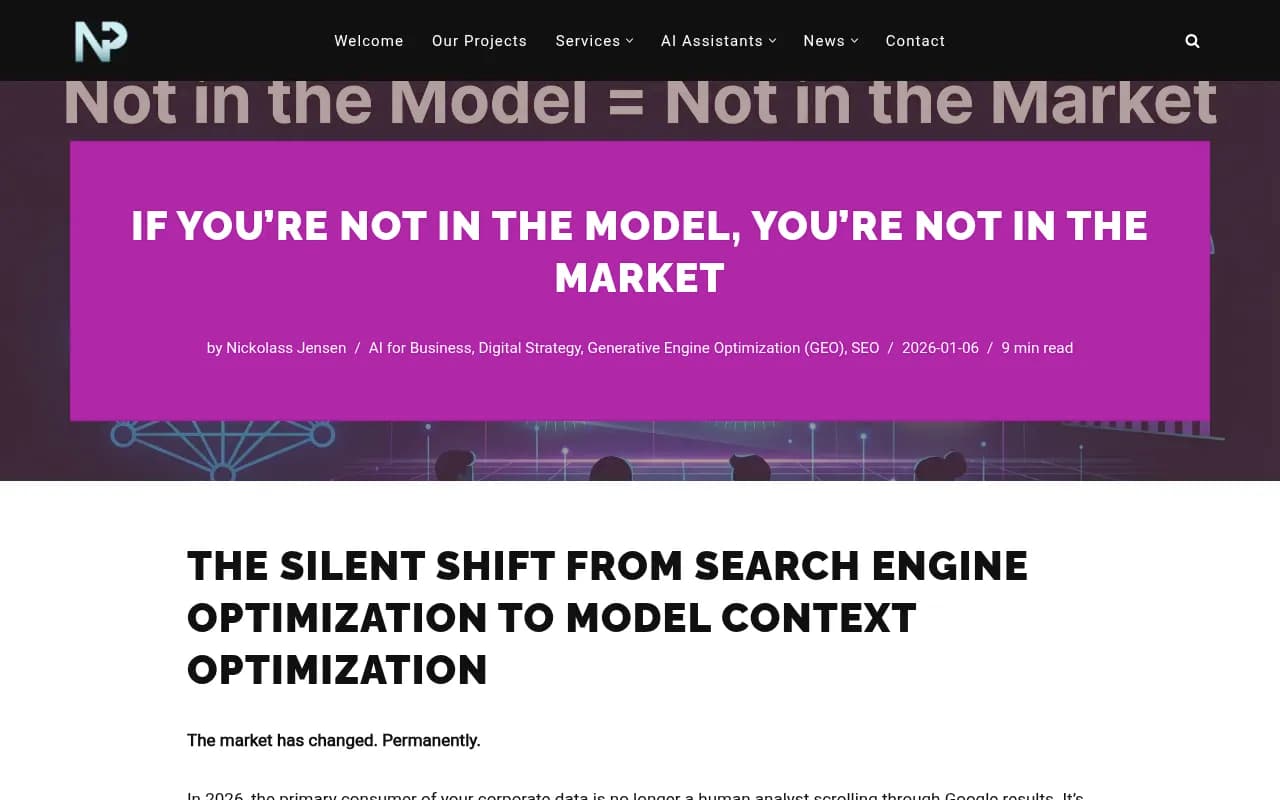
Welcome to 2026. The game isn't search engine optimization anymore. It's model context optimization—and if you're not in the model, you're not in the market.
What the AI Search Visibility Tax actually costs you
The numbers are uncomfortable but clear. According to research from multiple sources tracking AI search behavior:
- 51% of web traffic is now automated, with AI agents acting as gatekeepers to your revenue pipeline
- 20-40% of Google search volume in supply chain, B2B, and technical categories has shifted to LLM-based research
- Pages not cited by AI models lose 3× more visibility than those that are, creating a compounding disadvantage
But the real cost isn't traffic. It's trust arbitrage.
When ChatGPT recommends three vendors, it's already done the vetting. The user doesn't compare ten options—they pick from three. If you're not one of those three, you lost the deal before you knew it existed.
That's the AI Search Visibility Tax: revenue you never see because you were filtered out before a human ever searched for you.
The three invisibility traps keeping you out of AI results
Trap 1: The PDF Prison
Your best technical documentation lives in PDFs. White papers, spec sheets, implementation guides—all locked behind forms or buried in download links.
AI models can't read PDFs effectively. They can't cite what they can't parse. Your expertise is invisible.
The fix: Convert critical documentation to structured HTML with proper headings, schema markup, and semantic structure. Make it crawlable, citable, and machine-readable.
Trap 2: The Marketing Spin Cycle
Your website says you "empower businesses to streamline operations and unleash innovation." Cool. What does that mean?
AI models reward clarity over spin. They cite content that directly answers questions: "How much does X cost?" "What are the downsides of Y?" "How does Z compare to competitors?"
If your content dodges hard questions, the AI moves on to someone who doesn't.
The fix: Adopt the "They Ask, You Answer" framework. Answer pricing questions publicly. Acknowledge problems. Compare yourself to competitors honestly. AI models cite sources that provide complete, trustworthy information.
Trap 3: The Indexing Illusion
You think because Google indexed your site, AI models know about you. Wrong.
Google indexes content—catalogs it for later retrieval. AI models embed information during training and retrieve it contextually through RAG (Retrieval-Augmented Generation).
If your content isn't structured in a way AI can process, cite, and trust, you're non-existent in the decision-making layer that now drives half your market.
The fix: Optimize for embedding, not just indexing. Use structured data, clear hierarchies, and citation-worthy formatting. Monitor AI crawler logs to see which pages models are actually reading.
How AI models decide who to cite (and who to ignore)
AI models don't rank websites. They synthesize answers from sources they trust.
Here's what influences citation decisions:
| Factor | Why it matters | How to optimize |
|---|---|---|
| Content freshness | Pages not updated quarterly are 3× more likely to lose visibility | Refresh key pages every 90 days with new data, examples, or insights |
| Structural clarity | Sequential headings (H2 → H3) and clear hierarchies help models extract information | Use proper heading structure, bullet points, and tables |
| Answer completeness | Models prefer sources that fully answer a question without requiring additional research | Write comprehensive content that addresses follow-up questions |
| Citation history | Pages already cited by AI models are more likely to be cited again (network effects) | Track which pages get cited and double down on those topics |
| Schema markup | Structured data helps models understand context and relationships | Implement FAQ, HowTo, and Product schema where relevant |
| Crawl accessibility | If AI crawlers can't access your content, they can't cite it | Monitor crawler logs and fix access issues immediately |
Tools like Promptwatch show you exactly which pages AI models are citing, how often, and for which prompts—so you can optimize what's working and fix what's not.
The "They Ask, You Answer" framework for AI visibility
Marcus Sheridan's "They Ask, You Answer" methodology was built for human buyers. In 2026, it's the playbook for AI visibility.
The concept: buyers have questions. Answer them honestly, clearly, and publicly—especially the ones your sales team avoids.
No dodging. No "contact us for pricing." No spin.
The five question categories that drive AI citations
- Pricing and cost: "How much does X cost?" "What's included in the base price?" "Are there hidden fees?"
- Problems and limitations: "What are the downsides of X?" "When does X not work well?" "What complaints do customers have?"
- Comparisons: "X vs Y" "Best alternatives to X" "How does X compare to competitors?"
- Reviews and social proof: "Is X worth it?" "What do customers say about X?" "X reviews"
- Best-in-class: "Best X for Y" "Top X tools" "X recommendations"
AI models cite sources that address these questions directly. If your content library doesn't cover all five categories, you're leaving citations—and revenue—on the table.
How to calculate your AI Search Visibility Tax
Here's a back-of-the-napkin formula to estimate what invisibility costs you:
- Total addressable market (TAM): How many potential customers exist?
- AI-assisted research rate: Assume 51% of buyers now use AI for research
- Your AI visibility score: What percentage of relevant prompts cite you? (Use a tool like Promptwatch to measure this)
- Average deal value: What's a typical customer worth?
- Conversion rate: What percentage of cited brands convert to customers?
Formula: TAM × 0.51 × (1 - Your AI Visibility Score) × Average Deal Value × Conversion Rate = Annual Revenue Loss
Example:
- TAM: 10,000 potential customers
- AI-assisted research: 51% = 5,100 buyers
- Your AI visibility: 15% (you're cited in 15% of relevant prompts)
- Invisible to: 85% = 4,335 buyers
- Average deal value: $50,000
- Conversion rate: 5%
Annual revenue loss: 4,335 × $50,000 × 0.05 = $10,837,500
That's the AI Search Visibility Tax. And it compounds every quarter you wait.
The action loop: how to fix AI invisibility
Most AI visibility tools are dashboards. They show you data but leave you stuck.
The platforms that actually solve the problem follow an action loop:
1. Find the gaps
Answer Gap Analysis shows exactly which prompts competitors are visible for but you're not. You see the specific content your website is missing—the topics, angles, and questions AI models want answers to but can't find on your site.
Tools like Promptwatch analyze 880M+ citations to surface high-value, winnable prompts you're currently losing.
2. Create content that ranks in AI
Generic SEO content doesn't cut it. AI models cite content grounded in:
- Real citation data (what sources do models already trust?)
- Prompt volumes (which questions get asked most?)
- Persona targeting (who's asking and what do they care about?)
- Competitor analysis (what gaps can you fill?)
Platforms with built-in AI writing agents (like Promptwatch's content generator) create articles, listicles, and comparisons engineered to get cited by ChatGPT, Claude, Perplexity, and other models.
Other tools worth considering:

3. Track the results
See your visibility scores improve as AI models start citing your new content. Page-level tracking shows exactly which pages are being cited, how often, and by which models.
Close the loop with traffic attribution—code snippet, Google Search Console integration, or server log analysis—to connect visibility to actual revenue.
This cycle—find gaps, generate content, track results—is what separates optimization platforms from monitoring dashboards.
Comparison: AI visibility platforms in 2026
| Platform | Monitoring | Content Gap Analysis | AI Content Generation | Crawler Logs | Traffic Attribution | Starting Price |
|---|---|---|---|---|---|---|
| Promptwatch | 10 AI models | ✓ | ✓ | ✓ | ✓ | $99/mo |
| Otterly.AI | 3 AI models | ✗ | ✗ | ✗ | ✗ | $99/mo |
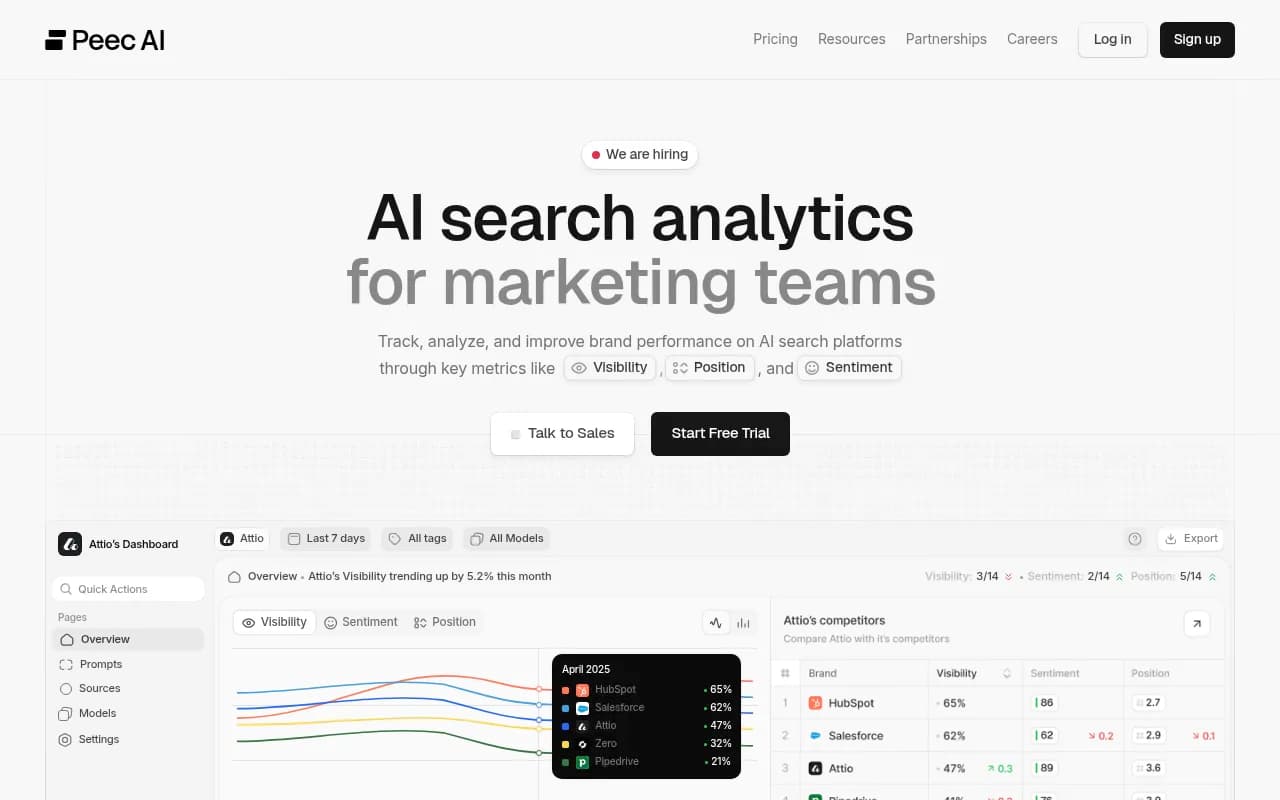
| Peec.ai | 5 AI models | ✗ | ✗ | ✗ | ✗ | $149/mo |
| AthenaHQ | 4 AI models | Limited | ✗ | ✗ | ✗ | $199/mo |
| Search Party | Custom | ✗ | ✗ | ✗ | ✗ | Custom |
| Semrush | Fixed prompts | ✗ | ✗ | ✗ | ✗ | $139/mo |
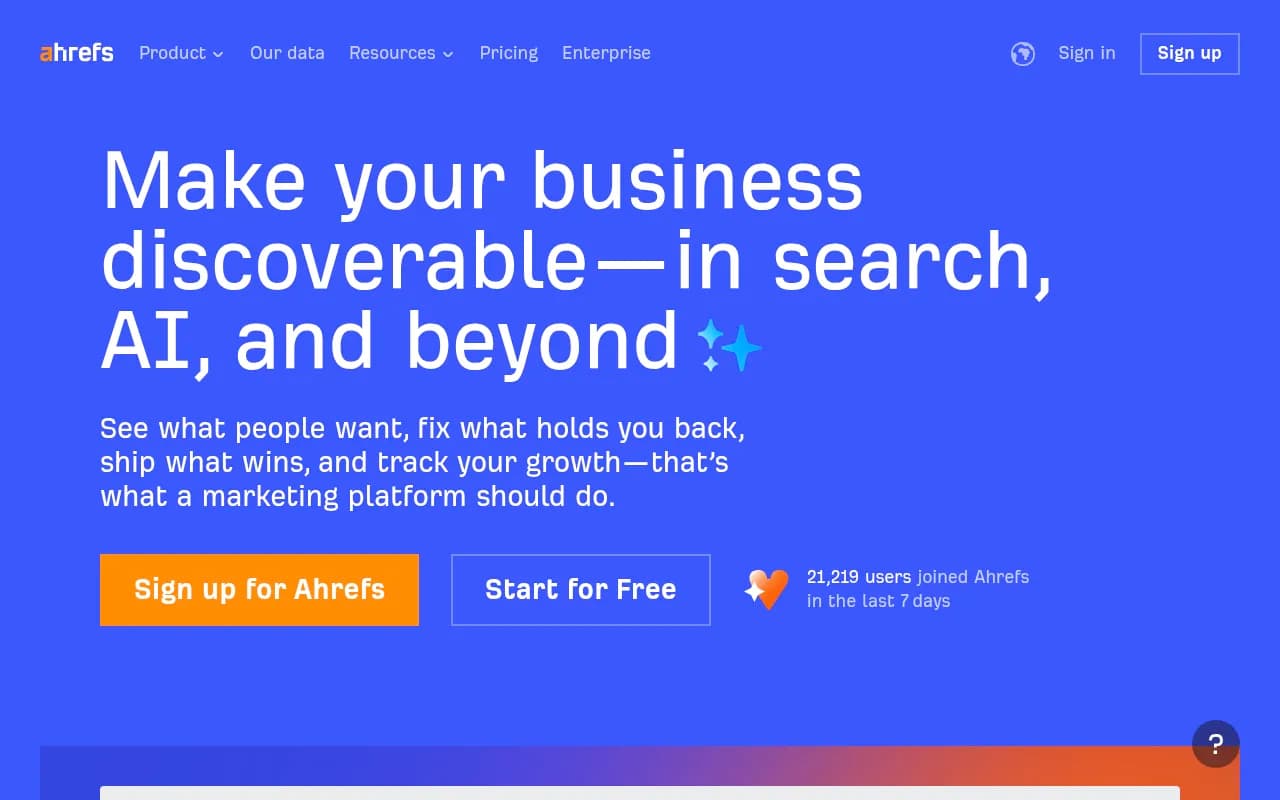
| Ahrefs Brand Radar | Fixed prompts | ✗ | ✗ | ✗ | ✗ | $249/mo |
Otterly.AI


What to do right now
The AI Search Visibility Tax compounds. Every quarter you wait, competitors embed themselves deeper into model training data while you fall further behind.
Here's your action plan:
Week 1: Measure your baseline
- Sign up for an AI visibility tracker (Promptwatch offers a free trial)
- Run a baseline audit: which prompts are you visible for? Which competitors are beating you?
- Calculate your estimated revenue loss using the formula above
Week 2: Identify quick wins
- Run an Answer Gap Analysis to find high-value prompts you're currently losing
- Prioritize prompts with high volume, low difficulty, and direct purchase intent
- Check AI crawler logs to see which pages models are already reading
Week 3: Create citation-worthy content
- Write or generate 3-5 pieces of content targeting your priority prompts
- Use the "They Ask, You Answer" framework: pricing, problems, comparisons, reviews, best-in-class
- Optimize for structure: clear headings, bullet points, tables, schema markup
Week 4: Track and iterate
- Monitor which new pages get cited by AI models
- Double down on what works—create more content in the same format and style
- Set up traffic attribution to connect AI visibility to revenue
The companies that win in 2026 aren't the ones with the best SEO. They're the ones AI models trust enough to cite.
If you're not in the model, you're not in the market. The question is: how much longer can you afford to be invisible?