Key Takeaways
- AI search operates on prompts, not keywords: Traditional keyword research misses the full-sentence, natural-language queries users ask ChatGPT, Perplexity, and Claude. Content coverage mapping identifies which prompts your site answers — and which ones competitors own.
- The gap is where the opportunity lives: Most brands have content that ranks in Google but gets ignored by AI models. The Content Coverage Method reveals exactly which topics, angles, and questions your website is missing.
- Measurement without action is just data: Tracking prompt visibility is step one. The real value comes from generating content grounded in citation data, prompt volumes, and competitor analysis — then closing the loop with traffic attribution.
- First-party content on your domain builds trust: AI models prioritize authoritative, first-party sources. Content hosted off-domain or behind extra layers struggles to earn citations. Deploy directly on your main domain.
- This is a repeatable system, not a one-time audit: Content coverage mapping is an ongoing cycle — find gaps, create content, track results, repeat. Brands that operationalize this process win in AI search.
Why Traditional Keyword Research Fails in AI Search
For two decades, SEO teams built their strategies around keywords. You'd pull search volume data from Google Keyword Planner, filter by difficulty, map keywords to pages, and track rankings in a dashboard. It worked because Google's algorithm was built around matching keywords to documents.
AI search engines don't work that way.
When someone asks ChatGPT "What's the best project management tool for remote teams under 50 people?" the model doesn't look for pages targeting "best project management tool" as a keyword. It synthesizes an answer by pulling from multiple sources — documentation, reviews, Reddit threads, comparison pages — and cites the ones it trusts most.
The unit of measurement isn't a keyword. It's a prompt.
Prompts are full-sentence, natural-language queries that reflect how real users talk to AI models. They include context, constraints, personas, and intent that keyword research never captured. "Project management software" is a keyword. "What's the best project management tool for remote teams under 50 people?" is a prompt.
If your content strategy is still built around keywords, you're optimizing for the wrong search behavior.
What Is the Content Coverage Method?
The Content Coverage Method is a systematic framework for mapping your existing website content against the prompts AI models actually respond to — then identifying and filling the gaps with content engineered to get cited.
It's not about creating more content. It's about creating the right content — the specific topics, angles, and answers AI models are looking for but can't find on your site.
The method has three core phases:
- Map existing coverage: Audit which prompts your current content already answers. See where you're visible in AI search and which pages are getting cited.
- Identify content gaps: Find the prompts competitors are visible for but you're not. Understand what's missing — the topics, questions, and angles your site doesn't cover.
- Generate and optimize: Create content specifically designed to fill those gaps, grounded in citation data and prompt intelligence. Track the results and iterate.
This isn't a one-time audit. It's a repeatable cycle that turns AI visibility into a predictable, scalable process.
Phase 1: Map Your Existing Content Coverage
Before you can fix the gaps, you need to know where you stand. Content coverage mapping starts with understanding which prompts your website already answers — and how AI models are (or aren't) citing your pages.
Step 1: Define Your Prompt Universe
Start by building a list of prompts relevant to your business. These should reflect the questions your target audience actually asks AI models.
Sources for prompt discovery:
- Customer conversations: Sales calls, support tickets, onboarding questions. What do people ask before they buy?
- Reddit and forums: Search for your product category on Reddit. What questions show up repeatedly?
- Competitor analysis: What prompts are competitors visible for? What topics do they cover that you don't?
- AI autocomplete: Start typing questions into ChatGPT, Perplexity, or Claude. The autocomplete suggestions reveal common queries.
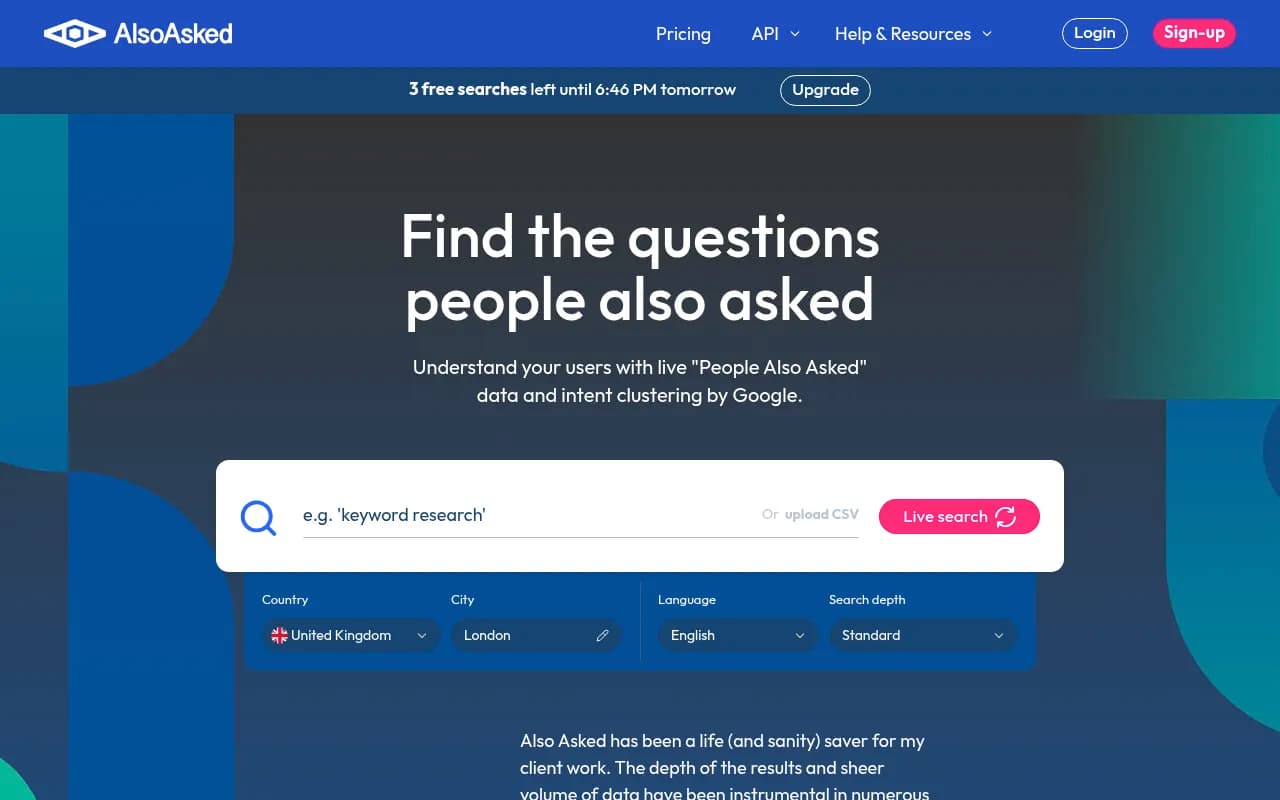
- Traditional keyword tools: Use tools like AnswerThePublic or AlsoAsked to surface question-based queries, then reframe them as full prompts.
Don't aim for perfection here. Start with 50-100 prompts that represent your core topics. You'll expand the list as you learn what works.
Step 2: Test Prompts Across AI Models
Once you have a prompt list, test each one across multiple AI models: ChatGPT, Perplexity, Claude, Gemini, Google AI Overviews. See which sources they cite in their responses.
Manual testing works for small lists, but it doesn't scale. If you're serious about AI visibility, you need a platform that automates this.
Tools like Promptwatch let you input a list of prompts and automatically track which sources get cited across 10+ AI models. You'll see:
- Which of your pages are being cited (if any)
- Which competitor pages are being cited instead
- Which Reddit threads, YouTube videos, or third-party sites AI models prefer
- How often each source appears and in what context

This data becomes your baseline. You now know where you're visible — and where you're invisible.
Step 3: Analyze Page-Level Performance
Not all pages perform equally in AI search. A blog post that ranks #1 in Google might get zero citations from ChatGPT. A product documentation page might get cited constantly.
Page-level tracking shows you:
- Which pages AI models trust: These are your high-authority pages. Double down on them.
- Which pages get ignored: Even if they rank in Google, AI models skip them. These need optimization or replacement.
- Which page types perform best: FAQs? Comparison tables? How-to guides? Learn what format AI models prefer for your niche.
Most AI visibility platforms stop at brand-level metrics. That's not enough. You need to know which specific pages are working — and why.
Phase 2: Identify Content Gaps
Mapping your existing coverage reveals where you're already visible. The next step is finding the gaps — the prompts competitors are visible for but you're not.
This is where the real opportunity lives.
Step 1: Run Competitor Heatmaps
A competitor heatmap shows you which prompts each competitor is visible for across AI models. It's like a SERP feature comparison, but for AI search.
You'll see patterns:
- Competitor A dominates prompts about pricing and ROI
- Competitor B owns how-to and implementation guides
- Competitor C is cited for integrations and technical specs
- You're missing from all three categories
These gaps represent content your website doesn't have — but should.
Step 2: Analyze Citation Sources
When AI models cite a competitor instead of you, dig into why. What content are they citing? What format is it in? What angle does it take?
Common citation patterns:
- Comparison pages: "X vs Y" pages get cited heavily because they answer direct comparison prompts
- FAQ sections: Structured Q&A formats are easy for AI models to parse and extract
- Use case pages: "How [company] uses [tool] to achieve [outcome]" stories build trust
- Reddit threads: Real user discussions often outrank official brand content for authenticity
- Documentation: Technical reference material gets cited for implementation questions
If competitors are getting cited for comparison pages and you don't have any, that's a gap. If Reddit threads about your product category are being cited and you're not participating in those discussions, that's a gap.
Step 3: Map Gaps to Content Types
Once you've identified the prompts you're missing, map them to specific content types. This turns abstract "gaps" into concrete deliverables.
Example gap analysis:
Gap: Competitor cited for "best [tool category] for [use case]" prompts Content type needed: Comparison listicle with use-case segmentation Deliverable: "Best Project Management Tools for Remote Teams in 2026" (with sections for different team sizes, industries, and budgets)
Gap: AI models cite Reddit threads when users ask "is [your product] worth it?" Content type needed: Honest, first-party review content that addresses common objections Deliverable: "Is [Product] Worth It? An Honest Review After 12 Months" (published on your blog, not hidden behind marketing fluff)
Gap: Competitor cited for integration and API questions Content type needed: Technical documentation with code examples Deliverable: "How to Integrate [Your Product] with [Popular Tool]" (step-by-step guide with screenshots and sample code)
This mapping exercise gives your content team a clear roadmap. No more guessing what to write next.
Step 4: Prioritize Based on Prompt Volume and Difficulty
Not all gaps are equal. Some prompts get asked thousands of times per month. Others are niche queries with low volume.
Prioritize gaps based on:
- Prompt volume: How often is this query asked? Higher volume = higher potential impact.
- Difficulty score: How competitive is this prompt? Are established players already dominating it, or is it wide open?
- Business value: Does this prompt align with your ICP and buying journey? A high-volume prompt that attracts the wrong audience is worthless.
- Quick wins: Are there low-difficulty, high-value prompts you can capture quickly? Start there to build momentum.
Platforms like Promptwatch provide prompt volume estimates and difficulty scores based on citation data from 880M+ analyzed citations. This takes the guesswork out of prioritization.
Phase 3: Generate and Optimize Content
Mapping gaps is valuable. Filling them is what drives results.
This phase is about creating content specifically engineered to get cited by AI models — not just rank in Google.
Step 1: Write for AI Parsing, Not Keyword Density
AI models don't care about keyword density or exact-match anchor text. They care about structure, clarity, and trust.
Content that gets cited in AI search:
- Uses clear headings and subheadings: H2s and H3s that directly answer questions make it easy for AI models to extract relevant sections
- Includes structured data: Schema markup (JSON-LD) helps AI models understand what your content is about
- Provides direct answers: Don't bury the answer in paragraph three. Lead with the answer, then explain.
- Uses lists, tables, and comparisons: Structured formats are easier for AI models to parse than dense paragraphs
- Cites sources: AI models trust content that references authoritative sources
- Avoids marketing fluff: Generic phrases like "industry-leading" or "cutting-edge" add no value. Be specific.
Step 2: Use AI Writing Agents Grounded in Citation Data
You can write this content manually. Or you can use AI writing agents trained on real citation data to generate drafts that are already optimized for AI visibility.
The difference: most AI writing tools (Jasper, Copy.ai, Writesonic) generate generic content based on GPT-4 or Claude. They don't know what AI models actually cite.
Platforms like Promptwatch include built-in AI writing agents that analyze 880M+ citations to understand what content formats, angles, and structures get cited most often. The output isn't generic SEO filler — it's content engineered to get cited by ChatGPT, Perplexity, and Claude.
This doesn't replace human editors. It gives them a head start. Instead of staring at a blank page, your team starts with a draft grounded in real data. They refine, add brand voice, and publish.
Step 3: Deploy Content on Your Main Domain
Where you host content matters.
AI models prioritize first-party, authoritative sources. Content published on your main domain (yoursite.com/blog/article) carries more trust than content hosted on a subdomain (blog.yoursite.com) or a separate CMS.
Avoid:
- Publishing content on Medium, LinkedIn, or third-party platforms (unless you're also publishing on your own site)
- Using separate domains for your blog or resource center
- Hosting content behind paywalls or login gates
AI models can't cite what they can't access. Make your content easy to find, easy to read, and clearly connected to your brand.
Step 4: Optimize Existing Pages
You don't always need to create new content. Sometimes, the gap is in how your existing content is structured.
Quick optimization wins:
- Add FAQ sections: Pull common questions from your prompt list and answer them directly on relevant pages
- Restructure with clear headings: Break dense paragraphs into scannable sections with descriptive H2s and H3s
- Add comparison tables: If you mention competitors, create a side-by-side comparison table
- Embed structured data: Use schema markup to help AI models understand what your page is about
- Update outdated content: AI models prefer recent, accurate information. Refresh old posts with current data.
These changes take minutes but can dramatically improve citation rates.
Phase 4: Track Results and Close the Loop
Content coverage mapping isn't a one-time project. It's an ongoing cycle.
Once you've created or optimized content to fill gaps, you need to track whether it's working — and iterate based on results.
Step 1: Monitor Citation Changes
After publishing new content, track how your citation rates change over time. Are AI models starting to cite your new pages? How long does it take for them to discover and trust your content?
Most AI visibility platforms update citation data daily or weekly. Watch for:
- New citations: Your new content starts appearing in AI responses
- Citation frequency: How often is your page cited compared to competitors?
- Citation context: Is your page cited as a primary source or a secondary mention?
If a new page isn't getting cited after 2-4 weeks, dig into why. Is the content too generic? Is the structure unclear? Is it missing key information AI models are looking for?
Step 2: Track AI Crawler Activity
AI models discover content through crawlers — ChatGPT's GPTBot, Perplexity's PerplexityBot, Claude's ClaudeBot. If these crawlers aren't visiting your site, AI models won't know your content exists.
AI crawler logs show:
- Which pages AI crawlers are reading
- How often they return
- Errors they encounter (404s, blocked robots.txt, slow load times)
- Which pages they're ignoring
If you publish new content and AI crawlers don't visit it, you have a discovery problem. Check your robots.txt, sitemap, and internal linking structure.
Most traditional SEO tools (Ahrefs, Semrush) don't track AI crawler activity. You need a platform built for AI search monitoring.
Step 3: Connect Visibility to Traffic and Revenue
The ultimate question: does AI visibility drive actual traffic and conversions?
Close the loop with traffic attribution:
- Code snippet tracking: Add a tracking script to your site that identifies visitors coming from AI search engines
- Google Search Console integration: See which queries drive traffic from Google AI Overviews
- Server log analysis: Analyze server logs to identify AI referral traffic
Once you can connect AI visibility to traffic, you can calculate ROI. How much revenue came from users who discovered you through ChatGPT? How does that compare to Google organic traffic?
This data justifies continued investment in AI search optimization — and helps you prioritize which prompts and content types drive the most value.
Common Mistakes to Avoid
The Content Coverage Method is straightforward, but teams make predictable mistakes:
Mistake 1: Treating AI Search Like Traditional SEO
AI search isn't just "SEO 2.0." The ranking factors are different. The content formats are different. The user behavior is different.
Don't just repurpose your existing SEO content strategy. Build a new strategy grounded in prompt research and citation analysis.
Mistake 2: Monitoring Without Action
Tracking your AI visibility is useful. But if you're not using that data to create or optimize content, you're just collecting dashboards.
The value isn't in the tracking — it's in the action loop. Find gaps, fill gaps, track results, repeat.
Mistake 3: Ignoring First-Party Content Hosting
Publishing content on Medium, LinkedIn, or third-party platforms might drive traffic. But it won't build your AI search authority.
AI models trust first-party sources. Publish on your own domain.
Mistake 4: Focusing Only on Brand Mentions
Most AI visibility tools track how often your brand name appears in AI responses. That's a vanity metric.
What matters is whether you're cited as a source — not just mentioned in passing. Focus on citation rates, not mention counts.
Mistake 5: Creating Generic Content
AI models don't cite generic, surface-level content. They cite specific, authoritative, well-structured content that directly answers user questions.
If your content reads like every other blog post in your niche, it won't get cited. Be specific. Be useful. Be different.
Tools to Support the Content Coverage Method
You can run the Content Coverage Method manually, but it's slow and doesn't scale. Here are tools that help:
For prompt research and gap analysis:
- Promptwatch — tracks prompt visibility, identifies content gaps, and generates AI-optimized content grounded in citation data
- AlsoAsked — surfaces related questions people ask about your topic
- AnswerThePublic — visualizes question-based queries from search autocomplete
For AI visibility tracking:
- Promptwatch — monitors 10 AI models, tracks citations at the page level, and provides AI crawler logs
- Profound — enterprise-level tracking across 9+ AI search engines
- Otterly.AI — basic monitoring for ChatGPT, Perplexity, and Google AI Overviews
For content creation:
- Promptwatch — built-in AI writing agent trained on 880M+ citations
- Clearscope — content optimization for traditional SEO
- Frase — AI-powered content briefs and writing
For structured data and technical optimization:
- Google's Rich Results Test — validates schema markup
- Screaming Frog — crawls your site to identify technical issues
- Yoast SEO or Rank Math — WordPress plugins for adding structured data

Real-World Example: Mapping Content Coverage for a SaaS Product
Let's walk through a real example.
Company: Project management SaaS targeting remote teams
Step 1: Define the prompt universe
The team starts with 75 prompts based on customer questions, Reddit discussions, and competitor analysis:
- "Best project management tool for remote teams"
- "Asana vs Monday vs ClickUp for small teams"
- "How to manage remote team projects without meetings"
- "Project management software with time tracking"
- "Is [Product] worth it for a 10-person team?"
Step 2: Test prompts across AI models
Using Promptwatch, they test all 75 prompts across ChatGPT, Perplexity, Claude, and Gemini. Results:
- Their brand is cited in 12 of 75 prompts (16% coverage)
- Competitors are cited in 58 of 75 prompts
- Reddit threads are cited in 23 prompts
- Their product documentation page is cited 8 times
- Their blog is cited 4 times
- Their pricing page is never cited
Step 3: Identify content gaps
Gap analysis reveals:
- Missing: Comparison pages ("X vs Y" format)
- Missing: Use case pages for specific industries (marketing agencies, software teams, etc.)
- Missing: Integration guides for popular tools (Slack, Google Drive, Zoom)
- Weak: Blog content is too generic and doesn't answer specific questions
Step 4: Generate and optimize content
The team creates:
- 5 comparison pages ("Asana vs [Product]", "Monday vs [Product]", etc.)
- 3 use case pages ("Best Project Management for Marketing Agencies", "Best PM Tool for Software Teams", etc.)
- 4 integration guides with step-by-step instructions and screenshots
- 10 FAQ-style blog posts answering specific prompts
All content is published on their main domain (product.com/blog/article) with structured data and clear headings.
Step 5: Track results
After 6 weeks:
- Citation coverage increases from 16% to 47%
- Their comparison pages are cited in 18 prompts
- Use case pages are cited in 9 prompts
- AI crawler activity increases 3x
- Traffic from AI search engines increases 127%
The team now runs this cycle quarterly — identifying new gaps, creating content, tracking results.
The Future of Content Coverage
The Content Coverage Method isn't static. As AI search evolves, the method will evolve with it.
Trends to watch:
1. Multi-modal prompts: Users will start asking AI models questions that include images, voice, or video. Content coverage will need to account for visual and audio content, not just text.
2. Personalized responses: AI models will tailor responses based on user history, preferences, and context. Content coverage will need to account for different personas and use cases.
3. Real-time data: AI models will start pulling real-time data (stock prices, weather, live scores) into responses. Content coverage will need to include dynamic, frequently updated content.
4. Agentic workflows: AI agents will start completing tasks on behalf of users (booking flights, ordering products, scheduling meetings). Content coverage will need to support these workflows with structured, machine-readable data.
The brands that win in AI search won't be the ones with the most content. They'll be the ones with the right content — mapped systematically against the prompts AI models actually respond to.
Start mapping your content coverage today. Find the gaps. Fill them. Track the results. Repeat.
That's how you win in AI search in 2026.