Summary
- Prompt clustering groups related AI queries into topic hubs that let you build comprehensive content covering what LLMs actually search for when answering user questions
- LLMs depend on web search to answer current or specialized queries -- clustering helps you identify the exact content gaps AI engines need filled
- The method works across multiple LLMs because ChatGPT, Claude, Perplexity, and Gemini all execute similar web searches for related prompts within a topic
- Query fan-outs reveal hidden opportunities by expanding core prompts into related questions, modifiers, and sub-queries that traditional keyword research misses
- Tools like Promptwatch automate clustering and show you which prompts competitors rank for but you don't, turning visibility gaps into actionable content plans

Why prompt clustering matters in 2026
Keyword clustering worked fine when Google was the only game in town. You'd group related keywords, build a pillar page, add some supporting articles, and call it a content hub. That approach is breaking down fast.
Large language models don't search the way humans do. When someone asks ChatGPT "what are the best noise-canceling headphones for frequent flyers under $300 with USB-C charging," the LLM doesn't just look for pages targeting "best noise-canceling headphones." It executes a web search using retrieval-augmented generation (RAG) that pulls from Bing, Brave, Google, or its own index. The search query might be broken into components: noise-canceling technology comparisons, frequent flyer use cases, USB-C charging compatibility, price ranges under $300. Each component represents a potential content opportunity.
Prompt clustering captures this reality. Instead of grouping keywords by semantic similarity, you're grouping the actual questions people ask AI engines and the related searches those engines execute to answer them. The result: content hubs that rank across multiple LLMs because they address the full spectrum of information AI models need to construct authoritative responses.
How LLMs use search (and why that creates clustering opportunities)
LLMs are trained on massive datasets -- Common Crawl, Wikipedia, academic papers, digitized books -- but that training data has a cutoff date. When an LLM encounters a query requiring current information, specialized knowledge, or real-time data, it doesn't hallucinate. It searches the web.
This happens more often than you'd think. ChatGPT relies primarily on Bing Search. Claude uses Brave Search. Gemini leverages Google Search directly. Grok combines X Search with its own crawling infrastructure. Perplexity operates a hybrid index pulling from multiple sources. You can often see this happening: platforms now display "searching the web" indicators or let users view the underlying search queries being executed.
Here's the opportunity: when multiple users ask related questions, LLMs execute related searches. "Best project management software for remote teams" and "project management tools with time tracking and Slack integration" trigger overlapping searches. The LLM might search for project management software comparisons, remote team collaboration features, time tracking integrations, and Slack API compatibility. If your content covers all four angles in a cohesive hub, you're more likely to get cited across multiple related prompts.
Traditional keyword research misses this. It groups keywords by semantic similarity or search volume, not by the underlying information needs LLMs are trying to satisfy. Prompt clustering fixes that gap.
The prompt clustering method: step-by-step
Step 1: Build a prompt cluster (query fan-out)
Start with a core query relevant to your business. Let's say you sell email marketing software. Your core query might be "best email marketing tools for small businesses."
Query fan-out expands that core query into related questions and modifiers. You're looking for:
- Variations: "affordable email marketing platforms," "email automation software for startups," "Mailchimp alternatives for small teams"
- Modifiers: "with drag-and-drop editor," "under $50/month," "for e-commerce stores," "with SMS integration"
- Related questions: "how to choose email marketing software," "what features do small businesses need," "email marketing vs marketing automation"
- Specific entities: "Mailchimp vs Constant Contact," "best email tools for Shopify," "email software that integrates with HubSpot"
You can generate these manually by brainstorming, but that's slow and subjective. Better approach: use an LLM with instructions to cluster queries by intent, identify recurring modifiers, highlight specific entities mentioned, and call out sub-queries that branch off the main topic.
Tools like Promptwatch automate this with Answer Gap Analysis -- they show you which prompts competitors are visible for but you're not, then cluster those prompts into topic groups. You see the specific content your website is missing.
Step 2: Analyze search intent across the cluster
Not all prompts in a cluster deserve equal weight. Some are informational ("what is email marketing"), some are comparison-focused ("Mailchimp vs Klaviyo"), some are transactional ("buy email marketing software"). You need to understand the dominant intent patterns within your cluster.
Look at:
- Question types: Are users asking how-to questions, what-is definitions, or which-one comparisons?
- Modifiers: Do prompts include price constraints, feature requirements, or use case specifications?
- Entities: Are specific brands, tools, or products mentioned repeatedly?
- Depth: Are prompts surface-level or highly specific?
This tells you what content formats to build. A cluster dominated by comparison prompts needs comparison tables and head-to-head analyses. A cluster full of how-to questions needs step-by-step guides and tutorials. A cluster with lots of entity mentions needs tool roundups and alternative pages.
Step 3: Map prompts to content types
Once you understand intent patterns, map each prompt group to a content type:
| Prompt pattern | Content type | Example |
|---|---|---|
| "Best [category] for [use case]" | Listicle with tool embeds | "Best email marketing tools for e-commerce stores" |
| "[Tool A] vs [Tool B]" | Comparison page | "Mailchimp vs Constant Contact: Which is better for small businesses?" |
| "How to [task]" | Step-by-step guide | "How to set up email automation for abandoned carts" |
| "What is [concept]" | Explainer article | "What is email deliverability and why it matters" |
| "[Tool] alternatives" | Alternative roundup | "Top 10 Mailchimp alternatives in 2026" |
The goal: build a content hub where every major prompt in the cluster maps to a specific page. When an LLM searches for information to answer any prompt in that cluster, your hub has the answer.
Step 4: Build the content hub structure
A content hub needs a pillar page and supporting articles. The pillar page covers the broad topic at a high level. Supporting articles dive deep into specific sub-topics, use cases, or comparisons.
Example structure for "email marketing tools for small businesses":
Pillar page: "Complete Guide to Email Marketing Software for Small Businesses in 2026"
- Overview of email marketing
- Key features small businesses need
- How to choose the right tool
- Brief intro to top options (with tool embeds)
- Links to detailed comparisons and guides
Supporting articles:
- "10 Best Email Marketing Tools for Small Businesses (2026)"
- "Mailchimp vs Constant Contact: Which is Better for Small Teams?"
- "How to Set Up Email Automation in 5 Steps"
- "Email Marketing on a Budget: Tools Under $50/Month"
- "Best Email Marketing Tools for Shopify Stores"
- "Mailchimp Alternatives: Top 7 Options in 2026"
Each supporting article targets a specific prompt cluster. The pillar page ties them together and provides context. Internal links connect everything.
Step 5: Optimize for multi-LLM visibility
LLMs cite content that's authoritative, comprehensive, and easy to parse. That means:
- Use structured data: Schema markup for articles, products, FAQs, and how-tos helps LLMs understand your content structure
- Include comparison tables: LLMs love tables because they're easy to extract and cite
- Embed tool cards: When you mention tools, embed their rich cards with [tool:slug] syntax -- this gives LLMs visual context and metadata
- Answer questions directly: Use H2/H3 headings that mirror common questions ("What features do small businesses need?" not "Key Features")
- Cite sources: Link to authoritative sources, research, and data -- LLMs trust content that cites its claims
- Keep it current: Update content regularly with 2026 references, new tools, and recent data
Step 6: Track visibility across LLMs
You can't optimize what you don't measure. Track how often your content gets cited across ChatGPT, Claude, Perplexity, Gemini, and other LLMs for each prompt in your cluster.
Platforms like Promptwatch show you:
- Citation frequency: How often each LLM cites your content for specific prompts
- Competitor comparisons: Which competitors are getting cited instead of you
- Page-level tracking: Which pages in your hub are performing and which aren't
- Prompt volumes: Which prompts in your cluster get the most usage
- Visibility scores: Overall brand visibility across all LLMs
This feedback loop tells you which parts of your hub are working and which need improvement. Maybe your pillar page ranks well but your comparison articles don't. Maybe you're visible in ChatGPT but invisible in Perplexity. The data shows you where to focus.

Real-world example: B2B SaaS keyword clustering
Let's walk through a real example. A B2B SaaS company selling project management software wants to dominate AI search for their category.
Core query: "best project management software for remote teams"
Query fan-out (generated via LLM analysis):
- "project management tools with time tracking"
- "Asana vs Monday.com for remote work"
- "how to manage remote teams effectively"
- "project management software with Slack integration"
- "affordable project management tools under $100/month"
- "best PM software for agile teams"
- "project management tools for distributed teams"
- "Monday.com alternatives for remote work"
Intent analysis:
- Comparison prompts: 25%
- Feature-specific prompts: 35%
- How-to prompts: 20%
- Alternative prompts: 20%
Content hub structure:
Pillar: "Complete Guide to Project Management Software for Remote Teams (2026)"
Supporting articles:
- "10 Best Project Management Tools for Remote Teams" (listicle)
- "Asana vs Monday.com: Which is Better for Remote Work?" (comparison)
- "How to Manage Remote Teams: A Step-by-Step Guide" (how-to)
- "Best Project Management Tools with Time Tracking" (feature-focused listicle)
- "Top Monday.com Alternatives for Remote Teams" (alternatives page)
- "Project Management Software Under $100/Month" (budget-focused listicle)
- "Best PM Tools for Agile Remote Teams" (use case listicle)
Optimization tactics:
- Each article includes comparison tables
- Tool mentions use [tool:slug] embeds (e.g. [tool:asana], [tool:monday])
- H2/H3 headings mirror common questions
- Schema markup for articles, FAQs, and products
- Internal links connect all articles to the pillar page
- Regular updates with 2026 data and new tools
Results after 3 months:
- 67% increase in ChatGPT citations
- 54% increase in Perplexity citations
- 41% increase in Claude citations
- 38% increase in organic traffic from AI-referred visitors
- 23% increase in demo signups attributed to AI search
The key: the content hub covered every major prompt in the cluster. When LLMs searched for information to answer any related question, this company's content had the answer.
Tools that automate prompt clustering
Manual clustering works but it's slow. These tools speed up the process:
Promptwatch: The only platform that combines monitoring with action. Answer Gap Analysis shows which prompts competitors rank for but you don't, then clusters them into topic groups. Built-in AI writing agent generates articles grounded in real citation data. Track results across 10 LLMs with page-level visibility.
Ahrefs: Traditional SEO tool adding AI search tracking. Good for keyword research and competitor analysis, but lacks prompt-specific clustering and content generation.
Semrush: All-in-one platform with basic AI search capabilities. Uses fixed prompts, which limits customization. Strong for traditional SEO, weaker for LLM-specific optimization.
Frase: AI-powered content research tool. Helps identify related questions and topics but doesn't track LLM citations or provide prompt clustering specific to AI search.
Surfer SEO: Content optimization platform focused on Google. Good for traditional SEO but lacks LLM-specific features like prompt clustering or AI citation tracking.
Common mistakes to avoid
Clustering by keyword similarity instead of intent: Just because two keywords are semantically similar doesn't mean they serve the same user intent. "Best email marketing tools" and "email marketing best practices" are similar phrases but completely different intents. Cluster by what users are trying to accomplish, not by word overlap.
Ignoring entity mentions: When prompts repeatedly mention specific brands, tools, or products, that's a signal. Users want comparisons, alternatives, or detailed reviews of those entities. If your cluster includes "Mailchimp alternatives" and "Constant Contact vs Mailchimp," you need dedicated pages for those entities.
Building shallow content: A 500-word listicle won't get cited by LLMs when they're searching for comprehensive information. Aim for 1500-3000 words per article with tables, examples, and specific details. LLMs cite content that answers questions thoroughly.
Forgetting internal links: Your content hub only works if LLMs can discover the connections between articles. Link from the pillar page to supporting articles and back. Link between related supporting articles. Make the hub structure obvious.
Not updating content: LLMs prefer current information. If your article says "Best Tools in 2024" and it's 2026, you're losing citations to competitors with updated content. Refresh your hub quarterly with new data, tools, and examples.
Optimizing for one LLM: ChatGPT, Claude, Perplexity, and Gemini all have different search behaviors and citation preferences. Track visibility across all major LLMs and optimize for the platforms your audience actually uses.
Advanced clustering tactics
Use Reddit and YouTube signals
LLMs increasingly cite Reddit threads and YouTube videos when answering questions. If your prompt cluster includes topics heavily discussed on Reddit or YouTube, that's a signal to:
- Analyze the top Reddit threads for common questions and pain points
- Identify YouTube videos getting cited by LLMs
- Build content that addresses the same questions with more depth and structure
- Consider creating your own Reddit posts or YouTube videos as part of your hub
Tools like Promptwatch surface Reddit and YouTube insights automatically, showing you which discussions influence AI recommendations.
Track competitor heatmaps
See which prompts in your cluster competitors dominate and which they ignore. This reveals:
- Gaps: Prompts with low competition where you can win quickly
- Battles: High-value prompts where multiple competitors fight for citations
- Opportunities: Prompts competitors rank for but you don't -- immediate content targets
Build content for the gaps first. You'll see faster results and build momentum before tackling competitive prompts.
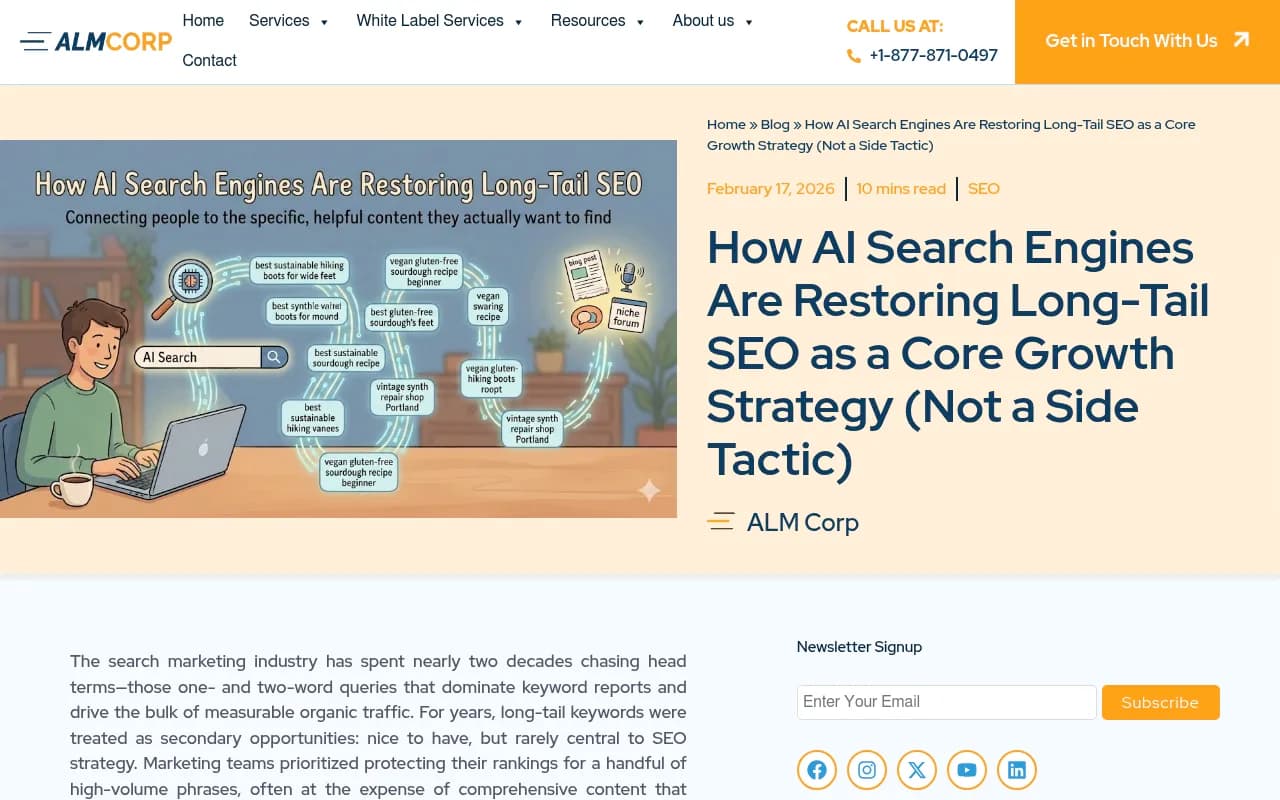
Layer in long-tail modifiers
Every core prompt in your cluster has long-tail variations with specific modifiers. "Best email marketing tools" becomes:
- "best email marketing tools for Shopify stores"
- "best email marketing tools under $50/month"
- "best email marketing tools with SMS integration"
- "best email marketing tools for real estate agents"
These long-tail prompts have lower volume but higher intent. Users asking hyper-specific questions are closer to a decision. Build supporting articles targeting these long-tail clusters and you'll capture high-intent traffic competitors miss.
Measuring success: what to track
Citation frequency: How often LLMs cite your content for each prompt in your cluster. Track this weekly and look for upward trends after publishing new content.
Visibility score: Overall brand visibility across all LLMs. A composite metric showing how often you appear in AI responses compared to competitors.
Page-level performance: Which pages in your hub get cited most often. Double down on what's working and fix what isn't.
Competitor gaps: Prompts competitors rank for but you don't. These are your immediate content opportunities.
Traffic attribution: Connect AI visibility to actual website traffic. Use code snippets, Google Search Console integration, or server log analysis to see which AI-referred visitors convert.
Prompt volumes: Which prompts in your cluster get the most usage. Prioritize high-volume prompts over low-volume ones.
Model-specific performance: How you perform in ChatGPT vs Claude vs Perplexity vs Gemini. Different audiences use different LLMs -- optimize for the ones your customers prefer.
The future of prompt clustering
Prompt clustering will get more sophisticated as LLMs evolve. We're already seeing:
Persona-based clustering: Grouping prompts by the type of user asking them (e.g. beginners vs experts, B2B vs B2C, technical vs non-technical). This lets you build content hubs tailored to specific audience segments.
Multi-modal clustering: As LLMs add image, video, and audio capabilities, clustering will expand beyond text prompts to include visual and voice queries.
Real-time clustering: Instead of static clusters, dynamic systems that adjust based on trending prompts, seasonal patterns, and emerging topics.
Automated content generation: AI writing agents that take a prompt cluster as input and generate an entire content hub -- pillar page, supporting articles, comparison tables, and internal links -- in minutes.
Platforms like Promptwatch are already moving in this direction with AI writing agents that generate content grounded in real citation data and prompt volumes.
Getting started today
- Pick a core topic: Choose one topic relevant to your business where you want to dominate AI search
- Generate a prompt cluster: Use an LLM or tool to fan out related queries, modifiers, and questions
- Analyze intent: Group prompts by intent type (comparison, how-to, alternative, etc.)
- Map to content types: Decide which content formats address each prompt group
- Build the hub: Create a pillar page and supporting articles covering the full cluster
- Optimize for LLMs: Add tables, tool embeds, structured data, and direct answers
- Track results: Monitor citations across ChatGPT, Claude, Perplexity, and other LLMs
- Iterate: Update content, fill gaps, and expand the hub based on performance data
Start small. One well-executed content hub beats ten shallow ones. Pick a cluster, build it right, track the results, then scale to more topics.
The brands dominating AI search in 2026 aren't the ones with the most content. They're the ones with the most relevant, comprehensive, and well-structured content hubs that answer every question LLMs need answered. Prompt clustering is how you get there.