Key takeaways
- Peec AI is a solid monitoring tool for tracking brand visibility across ChatGPT, Perplexity, and Google AI Overviews — but it stops at diagnosis
- Knowing you're invisible in AI search is only half the problem; the other half is understanding why and knowing what to do about it
- Most AI visibility platforms share this limitation: they show you the gap but don't help you close it
- The tools that go further — with content gap analysis, AI writing, crawler logs, and prompt intelligence — give you a real path to improving your citations
- If you're serious about AI search visibility, you need a platform that completes the loop from "I'm invisible" to "here's what I published to fix it"
Peec AI does one thing well: it tells you whether your brand shows up when someone asks ChatGPT or Perplexity a question in your category. For a lot of marketing teams, that's a genuinely useful starting point. Before tools like this existed, you'd have to manually prompt a dozen AI engines and hope you were paying attention.
But here's the thing. Knowing you're invisible isn't the same as knowing why. And knowing why isn't the same as being able to fix it. In 2026, with AI search eating into traditional Google traffic faster than most teams anticipated, the difference between a monitoring tool and an optimization platform is the difference between a smoke alarm and a fire extinguisher.
This guide is about what Peec AI leaves on the table — and which tools actually help you close the gap.
What Peec AI actually does (and does well)
To be fair to Peec AI, it's a legitimate product with real use cases. It tracks share of voice and citation rate across large language models using UI scraping to simulate real user queries. You get dashboards showing how often your brand appears, which competitors are getting cited instead of you, and how that changes over time.

Pricing starts around $100/month, which is reasonable for a monitoring-only tool. The setup is relatively quick, and for B2B marketing leaders who just need to answer "are we visible in AI search?" — it works.
The Discovered Labs review of Peec AI (updated May 2026) puts it plainly: "Peec AI stops at diagnosis. It tracks mentions but doesn't write content, build authority signals, or implement technical optimizations needed to improve your numbers."
That's not a knock on Peec AI specifically — it's a description of the entire category of monitoring-only tools. The problem is that most teams buy a monitoring tool and then wonder why their numbers aren't improving.
The visibility gap Peec AI doesn't explain
There are several distinct reasons a brand might be invisible in AI search. Peec AI can confirm the invisibility. It can't reliably tell you which of these is causing it:
Your content doesn't exist for the prompts that matter
AI models like ChatGPT and Perplexity cite sources. If your website doesn't have a page that answers the specific question a user is asking, you won't be cited — full stop. The question isn't "do we have good content?" It's "do we have content that directly addresses the prompts our buyers are using?"
Most companies don't know which prompts are driving AI recommendations in their category. Peec AI shows you citation rates, but it doesn't show you the specific content gaps — the prompts where competitors are getting cited and you're not, and what you'd need to write to compete.
AI crawlers can't read your site properly
This one surprises a lot of teams. If your website is JavaScript-heavy, or if you have crawl errors, or if AI crawlers are being blocked or rate-limited, the content you've already written may never make it into the training or retrieval pipeline.
Peec AI has no crawler log analysis. You can have a perfectly written article that ChatGPT simply never reads because GPTBot hit a 403 error on your site three months ago and never came back.
Your content exists but isn't structured for AI citation
There's a difference between content that ranks in Google and content that gets cited by AI models. AI systems tend to cite pages that directly answer specific questions, use clear factual claims, and have signals of authority (backlinks, mentions in other cited sources, structured data). A page that's optimized for a broad keyword cluster may not be the thing an LLM reaches for when answering a specific question.
You're losing to Reddit, YouTube, and third-party sources
AI models don't only cite brand websites. A significant portion of citations come from Reddit threads, YouTube videos, review sites, and industry publications. If your competitors are active on those channels and you're not, you're losing visibility to sources you don't control — and Peec AI won't tell you that's what's happening.
What the research actually shows about AI content risks
One thing Peec AI does address in their own blog is the risk of low-quality AI-generated content. Their GEO expert Tomek Rudzki wrote in February 2026 that companies chasing AI mentions by publishing raw AI output at scale are often hurting themselves: "Evidence shows that low-quality AI content can tank your online visibility. Google and Bing have advanced detection algorithms that can manually adjust rankings or completely remove websites from search results."

This is worth taking seriously. Since LLMs use search engines during their grounding process, a Google penalty for thin AI content can cascade into reduced AI search visibility. The irony is that some tools are selling AI content generation as the fix for AI visibility — without any quality controls or citation data grounding the output.
The implication: you need content that's genuinely useful, not just content that exists. And you need a tool that generates content based on real citation data, not just keyword density.
The tools that go further
Here's where the market splits. A handful of platforms have moved beyond monitoring into what you might call the full optimization loop: find the gaps, create the content, track the results.
Promptwatch: the full loop
Promptwatch is the clearest example of a platform built around action, not just observation. Where Peec AI shows you your citation rate, Promptwatch shows you the specific prompts where competitors are visible and you're not — and then helps you do something about it.

The Answer Gap Analysis feature identifies exactly which prompts your competitors are getting cited for that you're missing. The built-in AI writing agent then generates articles, listicles, and comparisons grounded in 880M+ real citations — not generic SEO content, but content engineered to get cited by ChatGPT, Claude, Perplexity, and others.
Critically, Promptwatch also includes AI crawler logs: real-time records of when GPTBot, ClaudeBot, and PerplexityBot hit your site, which pages they read, and what errors they encounter. This is the piece that explains the "why" behind invisibility that monitoring tools can't surface.
Pricing starts at $99/month (Essential), with Professional at $249/month adding crawler logs, page-level tracking, and city/state monitoring.
Profound: strong enterprise monitoring
Profound

Profound has a solid feature set for enterprise teams — it monitors across 9+ AI engines and has good competitive analysis. The limitation is that it's still primarily a monitoring platform. It doesn't generate content or provide crawler-level insights. Pricing is higher than Peec AI, which makes the monitoring-only positioning harder to justify at scale.
Otterly.AI: simple but shallow
Otterly.AI

Otterly.AI is a clean, easy-to-use monitoring tool. If you just need basic citation tracking across ChatGPT, Perplexity, and Google AI Overviews, it works. But it has no content generation, no crawler logs, no Reddit or YouTube tracking, and no prompt volume data. It's a good starting point for teams new to AI visibility, not a long-term solution.
AthenaHQ: monitoring-focused

AthenaHQ is monitoring-focused with decent competitive analysis. Like most in this category, it stops before the content creation and optimization layer. Good for tracking, less useful for improving.
ZipTie: contextual depth
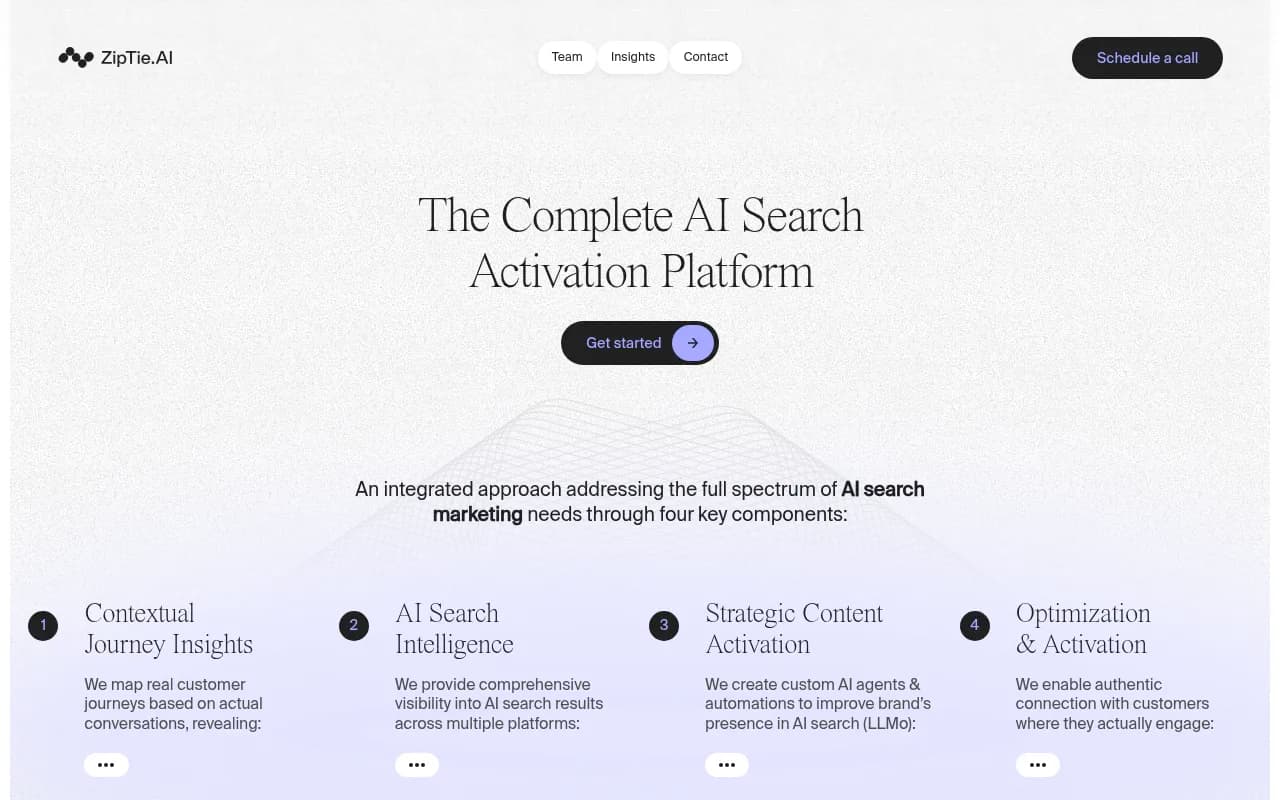
ZipTie takes an interesting approach by combining AI visibility data with historical competitive data, keyword history, and intent analysis. It's more analytically rich than basic monitoring tools and gives you more context for why you're visible or not. Still primarily an analysis tool rather than an optimization platform.
Scrunch AI: tracking with some optimization signals
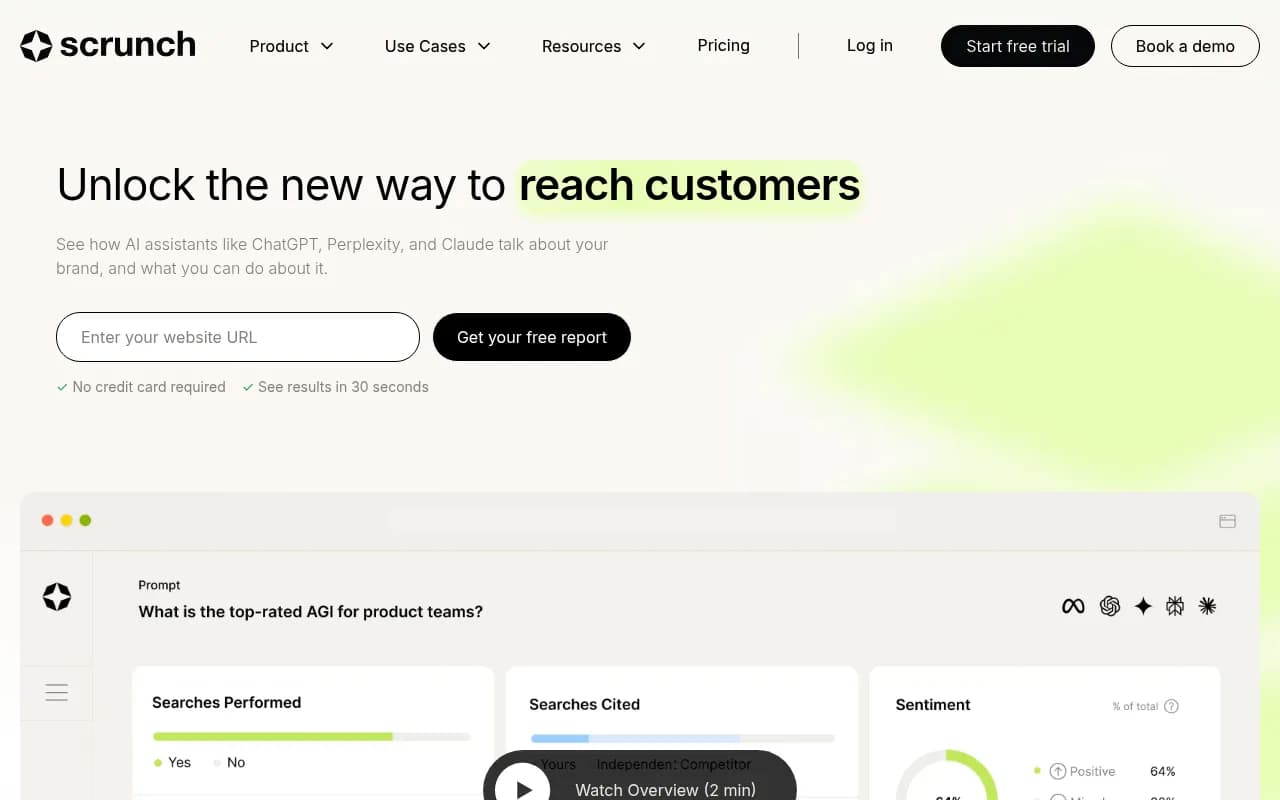
Scrunch AI offers AI search visibility tracking with some optimization guidance. It's a step up from pure monitoring but doesn't have the content generation or crawler log capabilities that would make it a full-loop platform.
Feature comparison: what each tool actually covers
| Feature | Peec AI | Promptwatch | Profound | Otterly.AI | AthenaHQ |
|---|---|---|---|---|---|
| AI citation tracking | Yes | Yes | Yes | Yes | Yes |
| Competitor share of voice | Yes | Yes | Yes | Basic | Yes |
| Content gap analysis | No | Yes | No | No | No |
| AI content generation | No | Yes | No | No | No |
| AI crawler logs | No | Yes | No | No | No |
| Prompt volume/difficulty | No | Yes | Limited | No | No |
| Reddit/YouTube tracking | No | Yes | No | No | No |
| ChatGPT Shopping tracking | No | Yes | No | No | No |
| Traffic attribution | No | Yes | No | No | No |
| Page-level citation tracking | No | Yes | Limited | No | No |
| Starting price | ~$100/mo | $99/mo | Higher | Lower | Mid |
The practical question: what should you actually do?
If you're using Peec AI right now and frustrated that your numbers aren't improving, the issue probably isn't the tool — it's that monitoring alone was never going to move the needle.
Here's a more useful workflow:
Step 1: Identify the specific prompts where you're losing. Not just "we have low share of voice" but the exact questions buyers are asking where competitors are cited and you're not. This requires prompt-level analysis, not just aggregate scores.
Step 2: Audit what AI crawlers are actually seeing. Before creating new content, check whether existing content is being crawled at all. Crawler log analysis will surface errors, blocked pages, and crawl frequency issues that explain gaps your monitoring dashboard can't.
Step 3: Create content grounded in citation data. The content you publish to improve AI visibility needs to be built around the specific prompts and questions AI models are trying to answer — not just SEO keywords. Generic AI-generated content at scale is actively risky (see the Peec AI blog post above).
Step 4: Track at the page level. Once you've published, you need to know which specific pages are getting cited, by which models, and how often. Aggregate visibility scores don't tell you whether your new article is working.
Step 5: Connect visibility to traffic. AI citations that don't drive traffic are a vanity metric. Close the loop with actual attribution — either via a code snippet, GSC integration, or server log analysis.
A note on the Reddit conversation
There's a thread on r/seogrowth from 2026 comparing AI visibility tools where someone from Peec AI's team noted they had recently released an "Actions" feature to address the "telling you what to do" criticism. That's worth watching. The monitoring-only limitation is something the whole category is aware of, and platforms are iterating.
But as of mid-2026, the gap between monitoring and full optimization is still significant. An "actions" feature that recommends what to do is different from a platform that actually helps you do it — with content generation grounded in real citation data, crawler log analysis, and page-level tracking to close the loop.
Bottom line
Peec AI is a reasonable tool for teams that need to answer "are we visible in AI search?" and nothing more. It's honest about what it is, the pricing is fair, and the setup is quick.
But if you're trying to actually improve your AI search visibility — not just measure it — you need a platform that completes the loop. The gap between knowing you're invisible and knowing why, and between knowing why and publishing content that fixes it, is where most teams get stuck.
The tools that close that gap are the ones worth paying for in 2026.