Key takeaways
- Peec AI is a solid entry-level AI visibility tracker, but it stops at monitoring — it doesn't help you fix what's broken
- Eight specific missing features actively limit your ability to improve AI rankings: no content generation, no crawler logs, no Reddit/YouTube tracking, no traffic attribution, limited prompt intelligence, no ChatGPT Shopping tracking, restricted multi-region support, and no answer gap analysis
- Several alternatives address these gaps, ranging from lightweight trackers to full optimization platforms
- If you want to move from "we can see we're invisible" to "we fixed it," you need a platform built around action, not just dashboards
Peec AI does one thing well: it shows you whether your brand appears in AI-generated answers across ChatGPT, Perplexity, Claude, and Google AI Overviews. For teams just waking up to the reality that AI search is eating their organic traffic, that's a useful starting point.
But here's the problem. Knowing you're invisible doesn't make you visible. And in 2026, with 29% of B2B buyers starting research on ChatGPT before they ever touch Google, "we can see the gap" is not a strategy.
This guide breaks down the eight specific Peec AI limitations that keep your AI rankings stuck — and which tools actually solve each one.

1. No content generation to close citation gaps
This is the biggest one. Peec AI shows you which prompts your competitors appear for and you don't. Then it stops. There's no built-in way to create the content that would actually get you cited.
That means you're exporting data, writing a brief, handing it to a writer, and hoping the resulting article happens to match what ChatGPT wants to cite. That process is slow, and it's mostly guesswork.
The alternative is a platform that connects the gap analysis directly to content creation. Promptwatch has a built-in AI writing agent that generates articles, listicles, and comparisons grounded in real citation data — not generic SEO filler. It analyzes 880M+ citations to understand what AI models actually cite, then writes content engineered to get picked up.

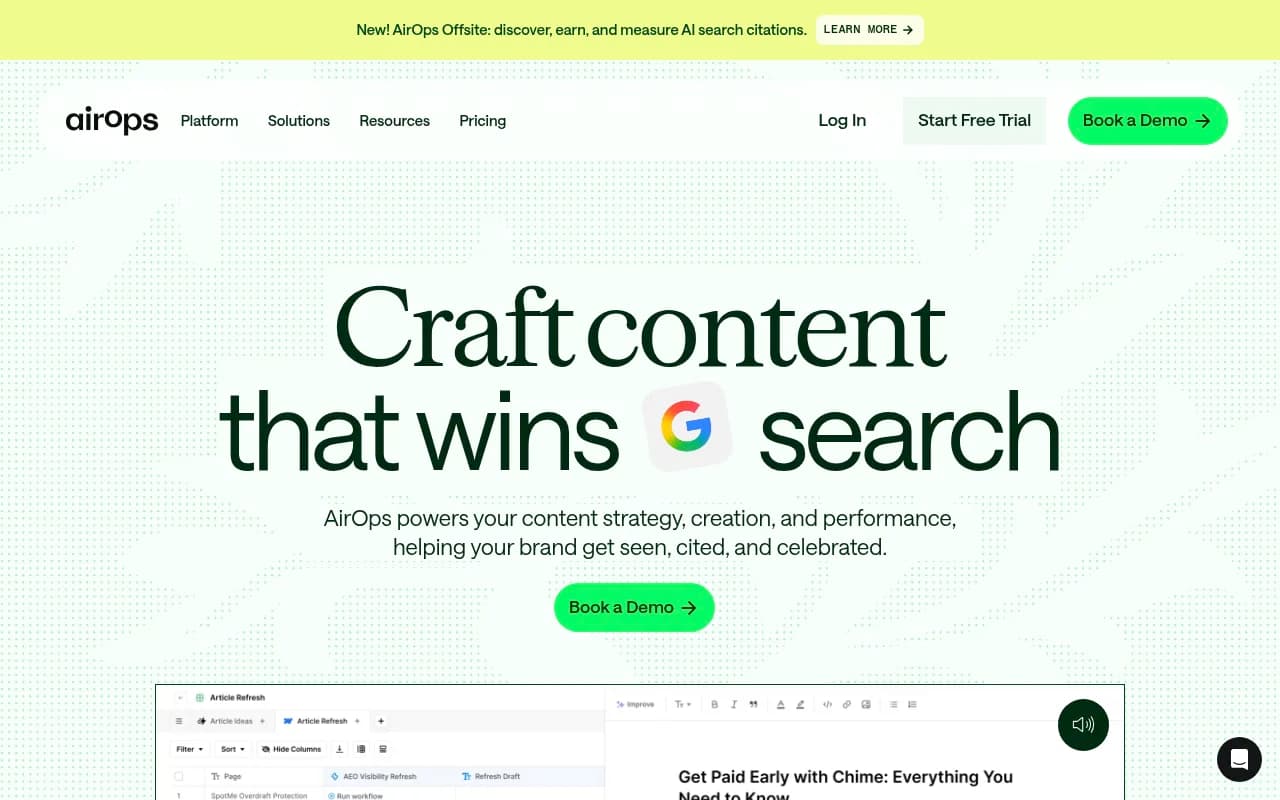
AirOps takes a similar approach from the content engineering angle, letting teams build structured workflows around AI-generated content at scale.
2. No AI crawler logs
When ChatGPT's crawler visits your site, what does it actually read? Which pages does it skip? Are there errors that prevent it from indexing your content at all?
Peec AI can't answer any of these questions. It monitors outputs (what AI models say about you) but has no visibility into inputs (how AI crawlers interact with your site).
This matters more than most teams realize. If Perplexity's crawler hits a JavaScript-rendered page and gets a blank response, that content simply doesn't exist for AI purposes — no matter how good it is. You'd never know from a visibility dashboard alone.
Crawler log analysis is one of the more technically demanding features to build, which is why most monitoring-only tools skip it. Promptwatch includes real-time AI crawler logs showing which pages each model's crawler reads, what errors it encounters, and how frequently it returns. That's the kind of data that lets you fix indexing problems, not just observe ranking problems.
3. No answer gap analysis
Peec AI tells you your share of voice. It doesn't tell you why competitors have more of it, or specifically which content topics are driving their citations.
Answer gap analysis is the difference between "we appear in 12% of relevant prompts and competitors appear in 34%" and "here are the 47 specific prompts your competitors rank for that you don't, grouped by topic, with the exact content angles that are getting them cited."
The second version is actually actionable. The first is just a number that makes your CMO nervous.
Tools like Promptwatch and AthenaHQ both offer some form of gap analysis, though the depth varies significantly. Promptwatch's Answer Gap Analysis shows you the specific content your website is missing — the topics, angles, and questions AI models want answers to but can't find on your site.

4. No Reddit and YouTube tracking
Here's something most teams don't think about: AI models don't just cite brand websites. They cite Reddit threads, YouTube videos, forum discussions, and third-party review sites. A lot.
If a Reddit thread is telling ChatGPT that your product has poor customer support, that narrative gets baked into AI responses whether you know about it or not. Peec AI monitors what AI models say about you, but it doesn't surface the Reddit discussions and YouTube content that are shaping what AI models say.
This is a genuinely underappreciated channel. Knowing that a specific Reddit thread is being cited in Perplexity responses about your category gives you something concrete to act on — whether that's engaging in the community, creating content that addresses the same questions, or understanding why that thread is resonating.
Promptwatch surfaces Reddit discussions and YouTube content that directly influence AI recommendations. Most competitors ignore this entirely.
5. No traffic attribution
You've improved your AI visibility score. Great. Did it actually drive more traffic? More leads? More revenue?
Peec AI doesn't connect the dots. It shows you citation rates and share of voice, but there's no mechanism to tie those metrics to actual website visits or business outcomes. That makes it very hard to justify the investment to stakeholders, and harder still to know which visibility improvements are worth pursuing.
Traffic attribution for AI search is genuinely tricky — AI responses don't always generate direct clicks the way traditional search results do. But there are a few approaches: a JavaScript snippet that captures AI-referred sessions, Google Search Console integration, or server log analysis.
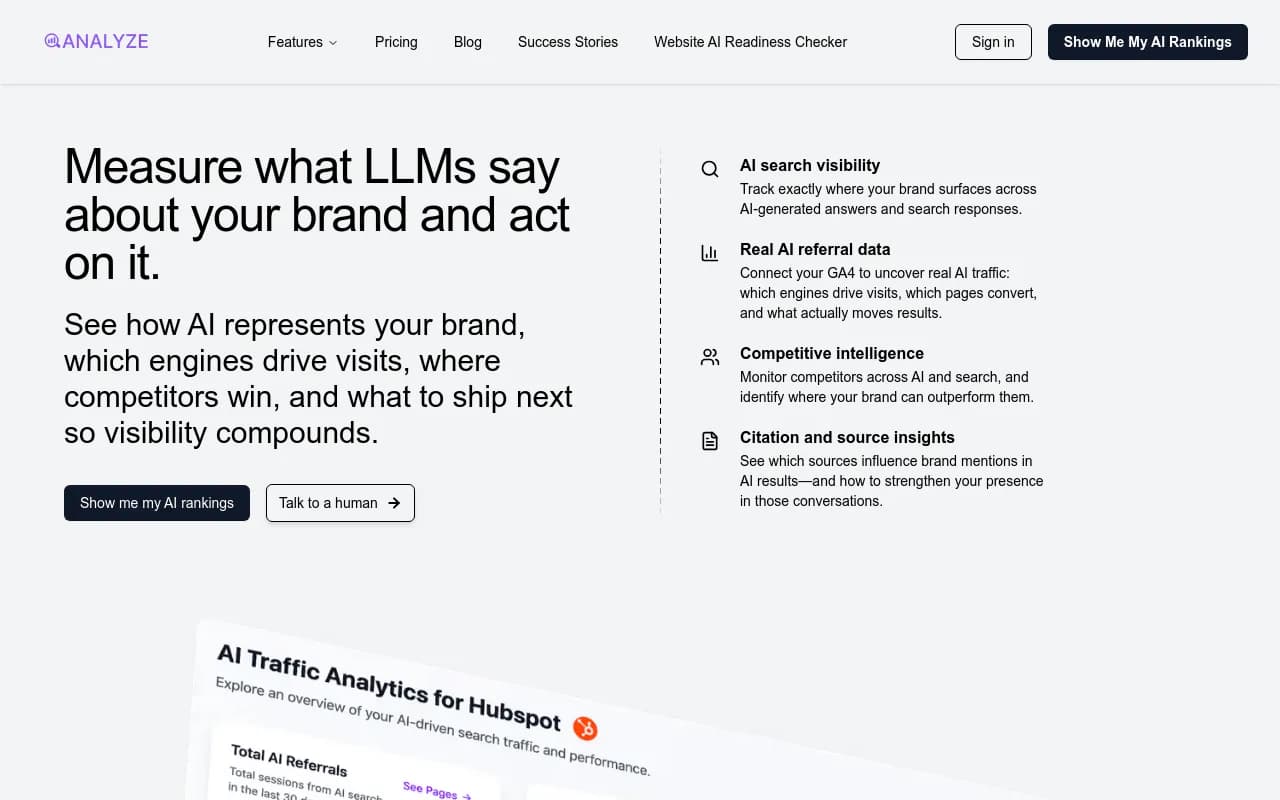
Promptwatch supports all three methods, letting you connect AI visibility to actual revenue. Analyze AI is another tool worth looking at for teams that want to tie AI search visibility to real traffic data.
6. Weak prompt intelligence
Not all prompts are equal. Some are asked by millions of people every month. Some are niche queries with almost no volume. Some are easy to rank for in AI search; others are dominated by Wikipedia, major publications, and brands with years of citation history.
Peec AI lets you track prompts, but it doesn't give you meaningful data on which prompts are worth pursuing. There's no volume estimation, no difficulty scoring, and no query fan-out analysis showing how one prompt branches into related sub-queries.
Without that data, teams end up tracking prompts that feel important but have no real volume, or chasing visibility on queries where they have no realistic chance of breaking through.
Promptwatch includes volume estimates and difficulty scores for each prompt, plus query fan-outs. That's the difference between a prioritized roadmap and a list of things to track.
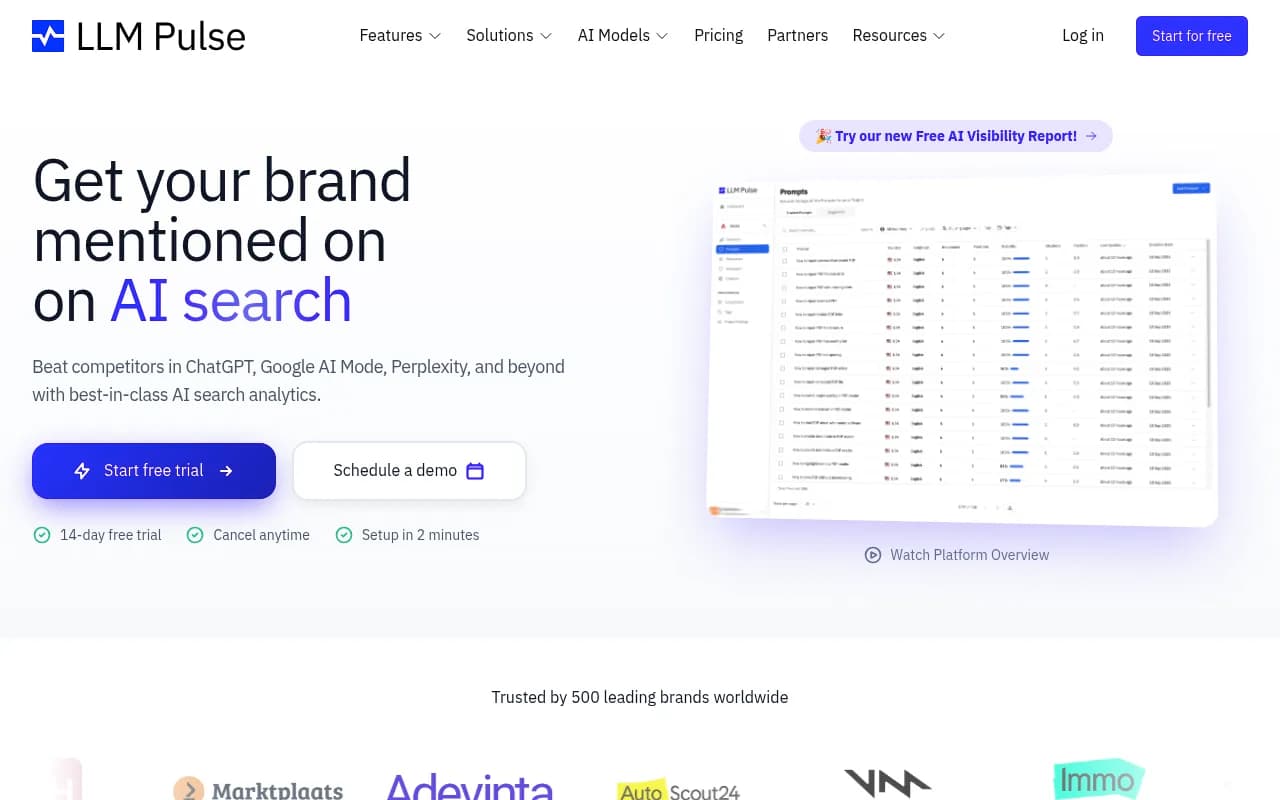
LLM Pulse also provides useful prompt-level data for teams that want a lighter-weight option focused specifically on prompt intelligence.
7. No ChatGPT Shopping tracking
ChatGPT's shopping and product recommendation features have become a meaningful purchase influence channel, particularly for consumer brands and B2B software. When someone asks ChatGPT "what's the best project management tool for a 10-person team," the response often includes product cards with specific recommendations.
Peec AI doesn't track whether your brand appears in these shopping carousels or product recommendation responses. That's a real blind spot for e-commerce brands and SaaS companies.
This is a relatively new feature in the GEO tracking space, and few tools have it. Promptwatch monitors ChatGPT Shopping appearances alongside standard citation tracking.
8. Limited multi-region and multi-language support
AI models give different answers depending on where the user is located and what language they're using. A brand that dominates AI recommendations in the US might be nearly invisible in Germany or Japan — and the reasons are often different enough that they require different content strategies.
Peec AI's regional tracking is limited, and adding more regions typically means additional cost. For global brands or agencies managing international clients, this becomes a significant constraint.
Promptwatch supports monitoring in any language, from any country, with customizable personas that match how actual customers in each market prompt. That's genuinely useful for international teams, not just a checkbox feature.
How the alternatives compare
Here's a quick comparison of how the main alternatives stack up against Peec AI's limitations:
| Feature | Peec AI | Promptwatch | AthenaHQ | Otterly.AI | Profound |
|---|---|---|---|---|---|
| AI visibility monitoring | Yes | Yes | Yes | Yes | Yes |
| Content generation | No | Yes | No | No | No |
| Answer gap analysis | No | Yes | Partial | No | Partial |
| AI crawler logs | No | Yes | No | No | No |
| Reddit/YouTube tracking | No | Yes | No | No | No |
| Traffic attribution | No | Yes | No | No | No |
| Prompt volume/difficulty | No | Yes | No | No | No |
| ChatGPT Shopping tracking | No | Yes | No | No | No |
| Multi-region/language | Limited | Full | Limited | Limited | Partial |
| Free trial | Yes | Yes | Yes | Yes | No |
A few other tools worth knowing about:
Otterly.AI is a clean, focused monitoring tool. Good for teams that genuinely only need tracking and don't want to pay for features they won't use.
Otterly.AI

Profound has strong enterprise features and predictive insights, though it's priced accordingly and still doesn't offer content generation.
Profound

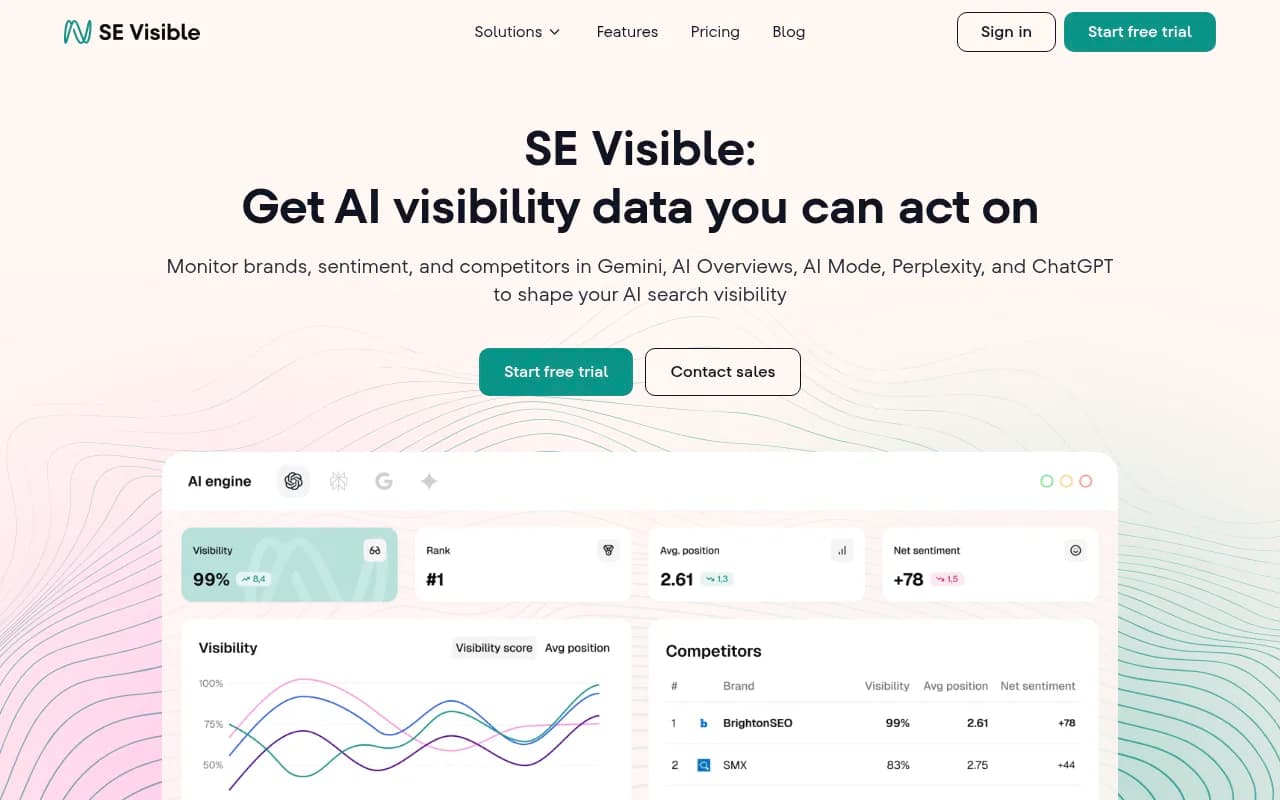
SE Visible (SE Ranking's AI visibility module) is worth considering if you're already in the SE Ranking ecosystem and want AI tracking without switching platforms.
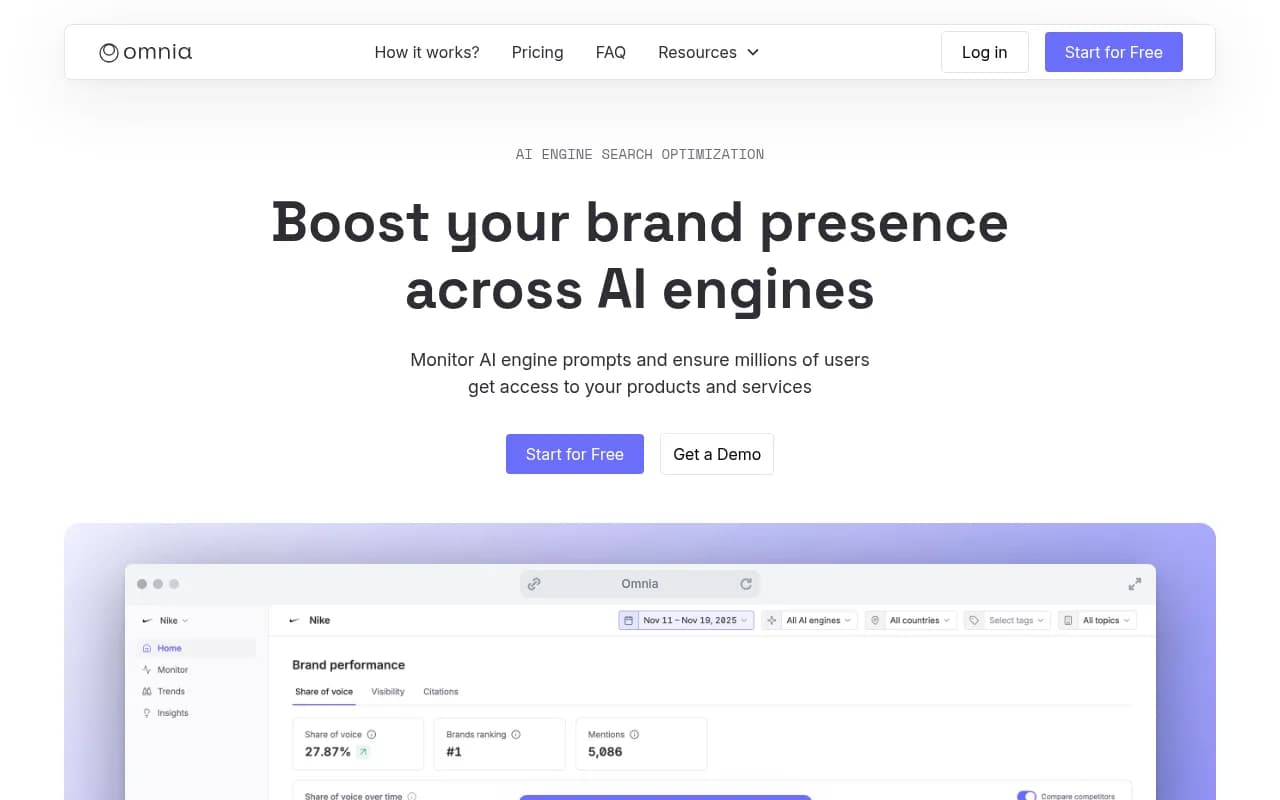
Omnia is a solid option for scaleups that want region-based tracking without per-region surcharges.
When Peec AI is actually fine
To be fair: Peec AI is not a bad tool. If your team is in the early stages of understanding AI search visibility, just getting started with tracking, and not yet ready to invest in optimization workflows, Peec AI does what it says on the tin.
The €89/month Starter plan gives you prompt tracking, citation monitoring, and competitive share of voice data across the major AI engines. For a small team that wants to answer "are we visible in AI search?" — it works.
The limitations bite when you're ready to move from observation to action. When your CMO asks why the numbers aren't improving. When you need to justify the investment with traffic data. When you're running campaigns across multiple regions and need accurate local data. When you want to actually create content that gets cited, not just watch your competitors do it.
That's when you need a platform built around the full loop: find gaps, create content, track results.
The bottom line
Peec AI is a monitoring tool. That's not a criticism — monitoring is a real and necessary function. But in 2026, monitoring alone doesn't move the needle.
The eight gaps above aren't edge cases. They're the difference between a team that can see they're losing in AI search and a team that's actively winning it. Content generation, crawler logs, answer gap analysis, traffic attribution, Reddit tracking, prompt intelligence — these are the features that turn data into rankings.
If you're hitting these walls with Peec AI, the most complete solution is a platform like Promptwatch that's built around the full optimization loop rather than just the dashboard. But depending on your specific gaps, any of the tools above might be the right fit.
The key question to ask any tool you evaluate: "After you show me the gap, what do you help me do about it?" If the answer is "nothing — that's up to you," you're still just buying a dashboard.