Key takeaways
- Jasper and Copy.ai are solid AI writing tools, but they were built for a world where Google was the only search engine that mattered.
- In 2026, AI models like ChatGPT, Perplexity, and Google AI Overviews are answering questions directly — and your content needs to be structured to get cited, not just ranked.
- The gap between "AI writing tool" and "GEO optimization platform" is real and growing. One helps you produce content faster; the other helps you become the source AI models recommend.
- There are clear signals that tell you when you've outgrown a writing assistant and need a full optimization platform.
- The upgrade path isn't all-or-nothing — you can layer tools strategically depending on your team's maturity.
There's a question making the rounds in marketing Slack channels and Reddit threads right now: are tools like Jasper still useful for SEO in 2026?
The honest answer is: it depends on what you're trying to do.
If you need to produce a product description, a landing page variant, or a first draft of a blog post, Jasper and Copy.ai are still perfectly capable. They've both added features over the past year, and neither is going away.
But if your goal is to show up when someone asks ChatGPT "what's the best [product category] for [use case]" — which is increasingly how people are finding things — then you're using the wrong tool for the job. Writing faster doesn't help if the content isn't structured to get cited by AI models.
That's the core of the upgrade question. Let's break it down properly.
What Jasper and Copy.ai were actually built for
Both tools launched in the early 2020s when the goal was simple: help marketers write more content, faster, for Google. They're good at that.
Jasper has evolved into more of a marketing platform with agent workflows, brand voice controls, and campaign management features. Copy.ai has leaned into GTM automation and sales-marketing alignment. Both have added SEO integrations over time.
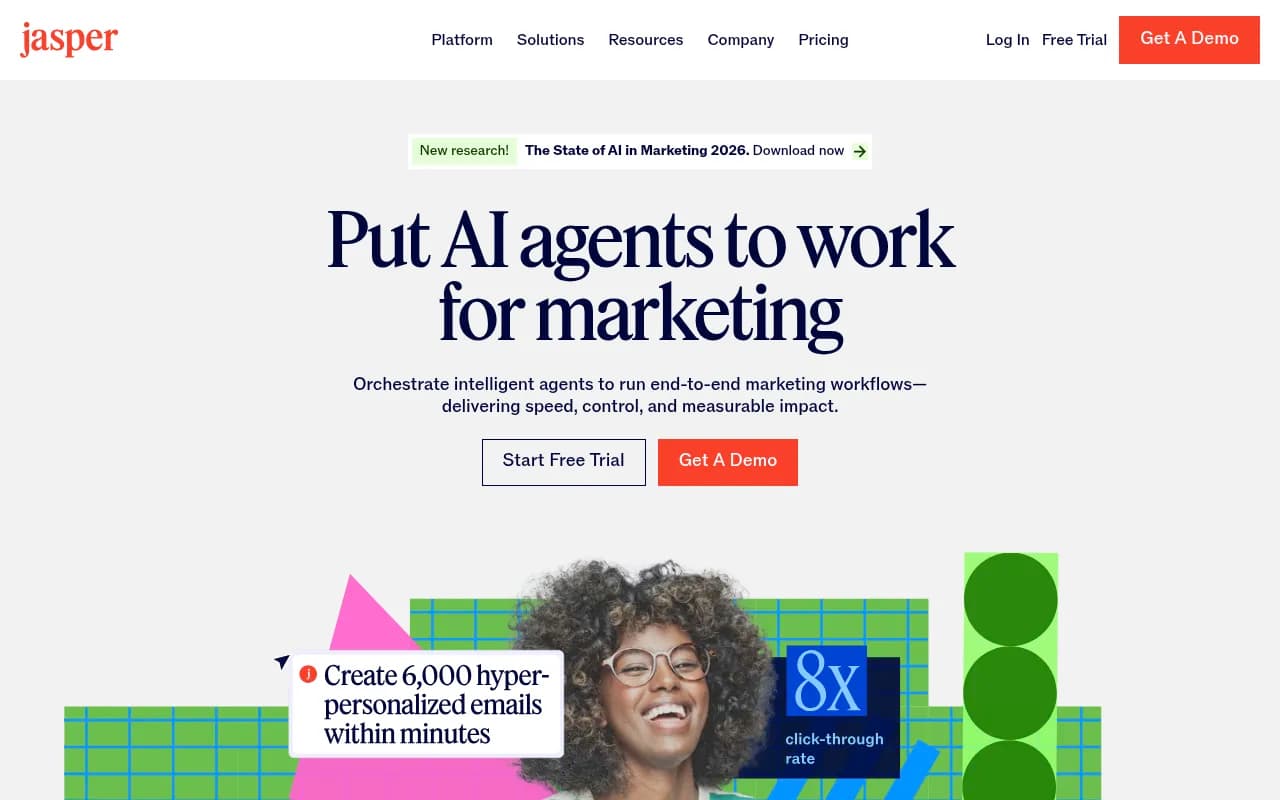

But here's the structural problem: neither tool was designed around the question "will an AI model cite this content?" They optimize for human readability and keyword inclusion. That's a different problem than GEO (Generative Engine Optimization), which is about making your content the authoritative source that ChatGPT, Claude, Perplexity, and Google AI Overviews pull from when answering user queries.
The distinction matters because AI search doesn't work like traditional search. There's no page-two. Either your brand is cited in the answer, or it isn't. And the factors that determine citation — topical authority, structured answers to specific questions, entity clarity, source credibility signals — are not the same factors that determine a Google ranking.
The real cost of staying on a writing-only tool
Tool fragmentation is a genuine problem. Research from Averi AI puts the coordination overhead of running multiple disconnected tools at 15-20 hours per week for marketing teams. That's not a small number.
But there's a subtler cost that's harder to measure: the visibility gap. If your team is using Jasper to produce content and then hoping it ranks in AI search, you're flying blind. You don't know:
- Which prompts your competitors are being cited for that you're not
- Whether AI crawlers are even reading your pages
- Which of your existing pages are getting cited (and which aren't)
- What content gaps are costing you mentions in AI-generated answers
Writing tools don't tell you any of this. They help you produce output. The question of whether that output is working in AI search is a completely separate problem — and in 2026, it's the more important one.
Signs you've outgrown a writing assistant
Here are the specific signals that suggest it's time to move beyond Jasper or Copy.ai:
Your brand doesn't appear in AI answers for your core category. If you search for your product category in ChatGPT or Perplexity and your brand isn't mentioned — but competitors are — that's not a content volume problem. It's a GEO problem. Writing more content with Jasper won't fix it.
You're producing content but can't connect it to AI traffic. Traditional Google Analytics shows you organic traffic, but it doesn't tell you how much of your traffic is coming from AI search referrals. If you can't answer "is our content being cited by AI models?", you're missing a growing traffic channel.
You're guessing at what to write. If your content calendar is built on keyword research alone, you're optimizing for a search paradigm that's losing share. The prompts people type into ChatGPT are different from Google queries — longer, more conversational, more specific. Without prompt intelligence data, you're writing for the wrong questions.
Competitors are appearing in AI answers and you don't know why. This is the most frustrating position to be in. You're producing content, it looks fine, but somehow other brands keep getting cited. The answer is almost always that they've structured their content to answer specific questions clearly, built topical authority in a defined area, or earned citations from sources that AI models trust (Reddit threads, YouTube, authoritative publications).
You're managing multiple tools with no unified view. If your stack looks like: Jasper for writing + Semrush for keywords + some manual checking of ChatGPT + Google Analytics for traffic, you're spending more time coordinating tools than acting on insights.
What a GEO optimization platform actually does differently
A GEO platform isn't just a fancier writing tool. The architecture is different.
Where Jasper starts with "what do you want to write?", a GEO platform starts with "where are you invisible, and why?" That's a fundamentally different starting point.
The workflow looks like this:
- Find the gaps: Which prompts are AI models answering in your category? Which competitors are being cited for those prompts? What content do you have that addresses those questions, and what's missing?
- Create content that gets cited: Not generic articles, but content specifically engineered around the questions AI models are being asked, grounded in citation data and structured to be extractable.
- Track whether it's working: Page-level visibility scores, citation frequency by AI model, traffic attribution back to actual revenue.
That loop — find gaps, create content, track results — is what separates an optimization platform from a writing assistant.
Promptwatch is the platform that's built most explicitly around this cycle. Its Answer Gap Analysis shows exactly which prompts competitors rank for that you don't, the built-in writing agent generates content grounded in 880M+ real citations, and page-level tracking closes the loop by showing which pages are getting cited and by which AI models. It also includes AI crawler logs — real-time data on which AI bots are reading your pages and which ones are hitting errors — which is something most competitors don't offer at all.

The middle ground: layering tools before a full switch
Not every team needs to rip out their writing tools immediately. There's a reasonable intermediate path.
If you're a small team or early-stage company, the priority is getting visibility data first. You need to know whether you have a GEO problem before investing in fixing it. A basic AI visibility tracker can tell you whether your brand is appearing in AI answers for your core queries.
Tools like Otterly.AI or Peec AI can give you a starting read on your AI visibility without a major commitment.
Otterly.AI


Once you have that data and you can see the gap, the question becomes: do you want to fix it manually (using your existing writing tools with a new content strategy), or do you want a platform that helps you fix it systematically?
For teams producing fewer than 10 pieces of content per month, manual is probably fine. For teams with real content operations — agencies, mid-market brands, companies with multiple product lines — the manual approach doesn't scale.
How the tools compare
Here's a direct comparison of the main categories of tools you might be choosing between:
| Tool type | Example tools | Writes content | Tracks AI visibility | Finds content gaps | Attributes traffic |
|---|---|---|---|---|---|
| AI writing assistant | Jasper, Copy.ai | Yes | No | No | No |
| SEO content optimizer | Surfer SEO, Clearscope | Yes (assisted) | No | Partial (keyword gaps) | No |
| AI visibility tracker (basic) | Otterly.AI, Peec AI | No | Yes | No | No |
| GEO optimization platform | Promptwatch | Yes (AI agent) | Yes | Yes | Yes |
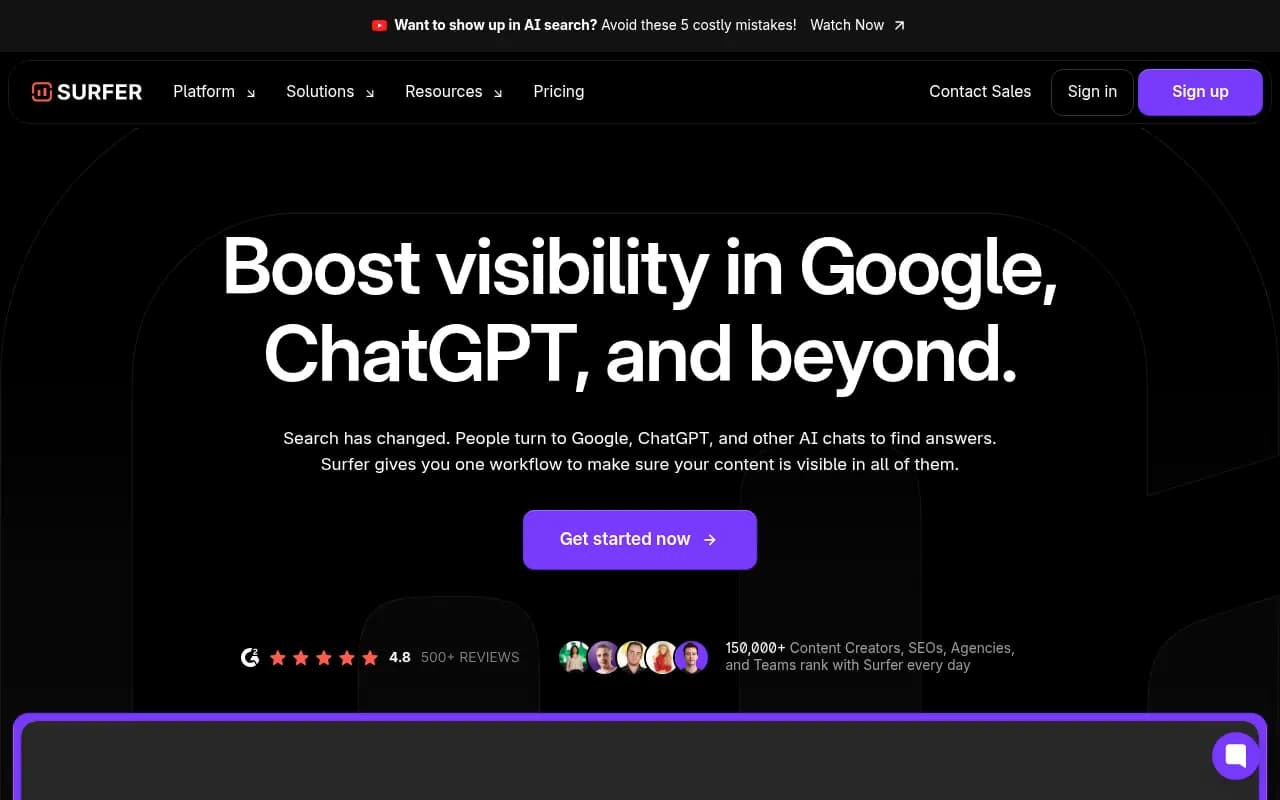

The table makes the gap obvious. Writing tools and SEO optimizers help you produce content. Visibility trackers tell you where you stand. Only a full GEO platform does all of it — and connects the output to actual results.
What the upgrade path looks like in practice
Here's a realistic progression for different team types:
Solo marketers and small teams
Start with your existing writing tools. Add a basic AI visibility tracker to get a baseline. If you see significant gaps (competitors appearing for your core queries and you're not), that's your signal to upgrade. At this stage, a platform like Promptwatch at the Essential tier ($99/mo) gives you monitoring, gap analysis, and content generation in one place — which is cheaper than the fragmented stack you'd otherwise build.
Mid-market marketing teams
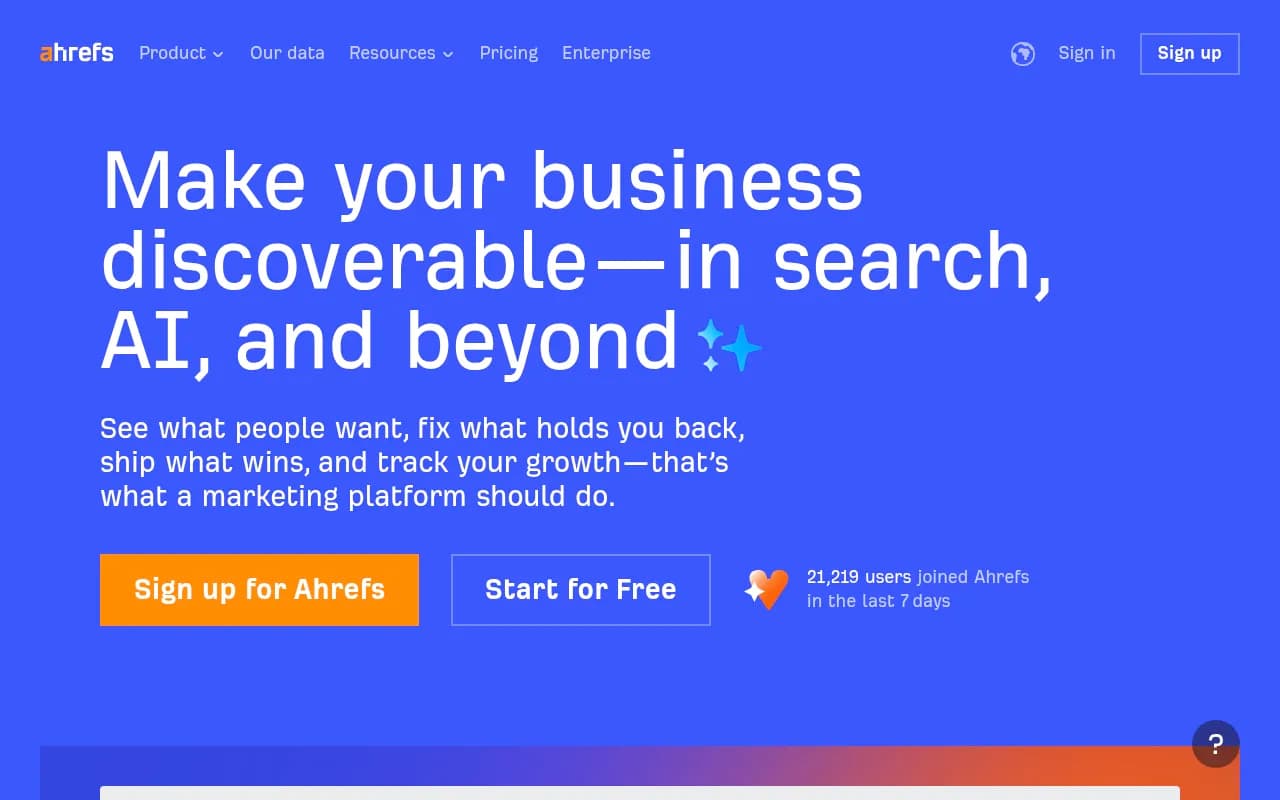
You're probably already running Jasper or Copy.ai alongside Semrush or Ahrefs. The missing piece is almost always AI visibility data and content gap analysis. The question to ask: how much of your content production is going toward AI search vs. traditional Google? If you can't answer that, you need better tracking before you need more content.
Agencies
The fragmentation problem is worst at agencies, where you're managing multiple clients with different tools and reporting requirements. A unified platform that tracks AI visibility across clients, generates content, and produces reports is a significant operational advantage. The alternative — running separate tools for each client — is the 15-20 hours/week coordination overhead problem mentioned earlier.
The content strategy shift that matters more than the tool
Switching tools is the easy part. The harder shift is strategic.
Traditional SEO content is optimized for keywords and backlinks. GEO content is optimized for questions and citations. That means:
- Writing content that directly answers specific questions (not just covering a topic broadly)
- Building topical authority in a defined area rather than spreading thin across many topics
- Structuring content so AI models can extract clear, quotable answers
- Publishing in formats and on platforms that AI models trust (your own site, but also Reddit discussions, YouTube, authoritative publications)
A GEO platform helps you execute this strategy systematically. But if you switch platforms without changing the underlying approach, you'll get the same results with a more expensive tool.
The teams seeing real gains in AI visibility in 2026 are doing both: using better tools and writing differently.
The bottom line
Jasper and Copy.ai are fine tools for what they were built to do. If your content operation is primarily about producing volume for traditional search, they're still reasonable choices.
But if you're asking "why isn't my brand showing up in ChatGPT answers?" — that's not a question a writing tool can answer. You need visibility data, gap analysis, and content specifically engineered to get cited by AI models.
The upgrade path isn't complicated: get visibility data first, identify your gaps, then decide whether to fix them manually or with a platform built for the job. For most teams with real content operations, the platform approach wins on both time and results.
The brands that figure this out in 2026 will have a compounding advantage. AI models tend to cite the same authoritative sources repeatedly — once you're in the citation loop, staying there is easier than getting in. The cost of waiting is that your competitors get there first.