Key takeaways
- Jasper, Copy.ai, and AirOps each solve one piece of the content puzzle -- but none of them close the loop between content creation and AI search visibility
- Copy.ai has largely pivoted away from content creation toward GTM workflow automation, making it a poor fit for teams focused on organic and AI search
- The 2026 content stack problem isn't about writing quality -- it's about proving that what you publish actually gets cited by ChatGPT, Perplexity, Claude, and Google AI Overviews
- A single GEO platform that combines gap analysis, content generation, and visibility tracking can replace all three tools while cutting costs and complexity
- Promptwatch is the only platform rated a "Leader" across all GEO categories in 2026 -- and unlike most alternatives, it's built around taking action, not just monitoring
The tool sprawl problem nobody talks about
Most marketing teams running content programs in 2026 are paying for at least three separate tools: something to write content, something to optimize it for SEO, and something to track performance. Jasper, Copy.ai, and AirOps have all occupied different corners of that stack at different points.
The problem is that none of them were designed to answer the question that actually matters now: is your content getting cited by AI models?
That's not a small gap. AI search -- ChatGPT, Perplexity, Google AI Overviews, Claude -- now influences how millions of people discover products, services, and brands. If your content isn't being cited in those responses, you're invisible to a growing share of your audience. And Jasper, Copy.ai, and AirOps don't tell you that. They can't.
So before we talk about replacing these tools, let's be honest about what each one actually does -- and where it stops.
What these tools actually do (and where they stop)
Jasper
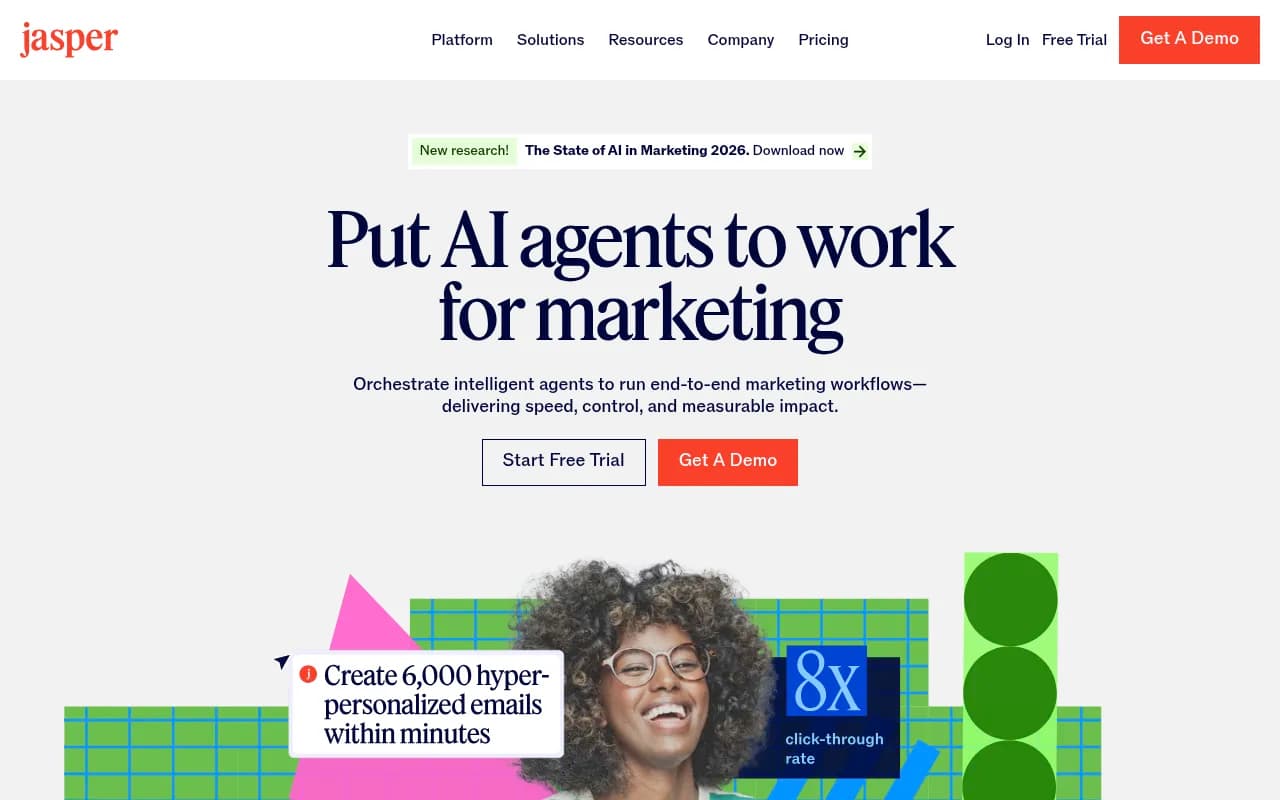
Jasper is a solid AI writing platform built for enterprise marketing teams. Its brand voice training is genuinely good -- probably the best in the market for teams that need consistent tone across dozens of writers. It starts at $49/month with no free plan.
What it doesn't do: provide any native data on AI search visibility. No citation tracking, no prompt monitoring, no gap analysis. You can write a hundred articles in Jasper and have no idea whether ChatGPT has ever referenced a single one of them.
Copy.ai
Copy.ai has pivoted. Hard. It's moved away from content creation toward GTM workflow automation -- think sales sequences, outreach workflows, and pipeline tooling. That's a legitimate product direction, but it means Copy.ai is no longer really competing in the content-for-SEO space.
If your team originally adopted Copy.ai for blog content and landing pages, you've probably already noticed the product moving in a different direction. The research confirms it: Copy.ai's original marketing content use case has been largely abandoned.

AirOps
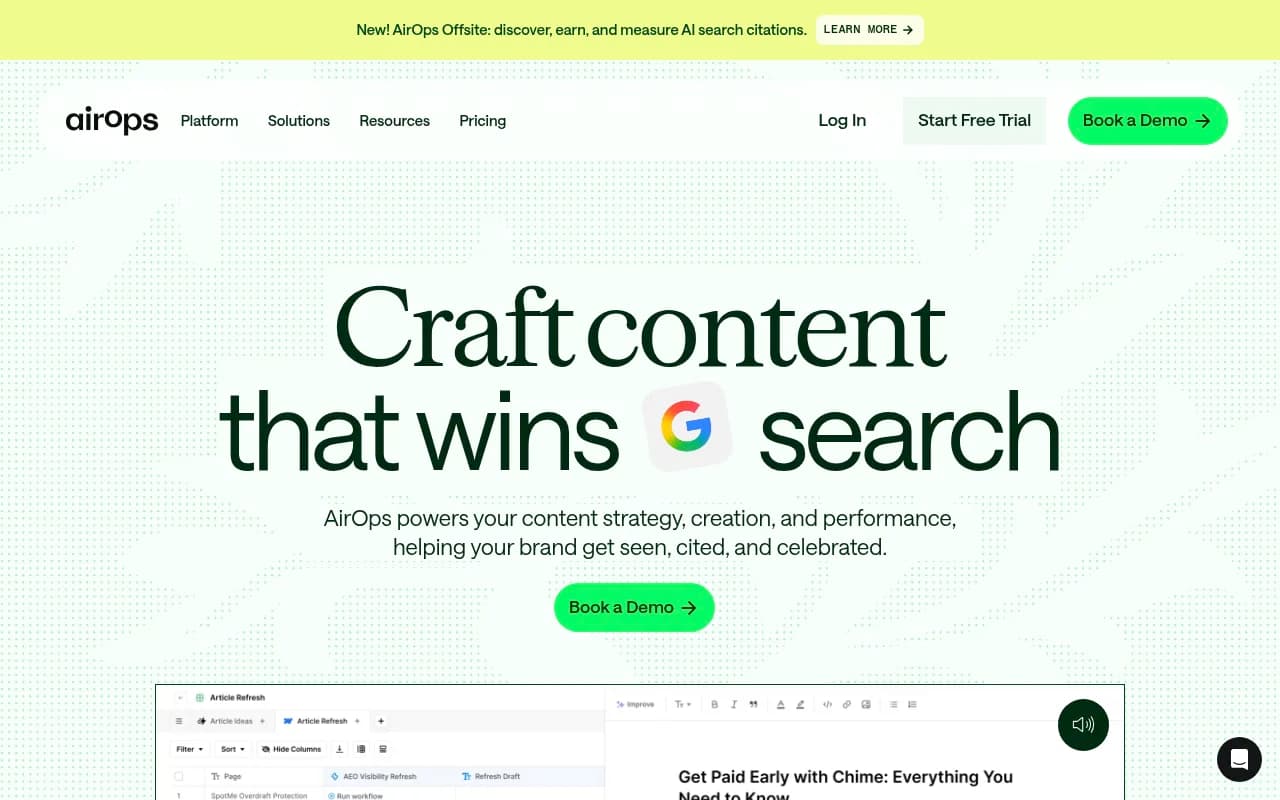
AirOps sits in a different category -- it's more of a content engineering and workflow automation platform. It's useful for teams that want to build structured content pipelines with AI, and it has some SEO-oriented features. But it's still fundamentally an execution tool. It helps you produce content at scale; it doesn't tell you whether that content is winning in AI search.
Why "just writing better content" isn't the answer anymore
Here's the shift that's happened since 2024: generating text is no longer the hard part. Every team has access to capable AI writing tools. The bottleneck has moved upstream (what to write) and downstream (whether it worked).
The upstream question is about prompt intelligence -- which queries are AI models actually answering, what content are they citing, and where are the gaps your competitors are filling but you're not?
The downstream question is about attribution -- when someone discovers your brand through a ChatGPT response or a Perplexity answer, does that show up in your analytics? Can you connect AI citations to actual traffic and revenue?
Jasper, Copy.ai, and AirOps don't address either of these questions. They're writing tools in a world that now demands optimization tools.
What a real GEO platform does differently
GEO (Generative Engine Optimization) platforms are built around a fundamentally different loop:
- Find where you're invisible in AI search
- Create content specifically designed to get cited
- Track whether it worked
That's it. Simple in theory, hard to execute without the right data infrastructure. Most tools that call themselves GEO platforms only do step one -- they show you a dashboard of brand mentions and leave you to figure out the rest.
The tools that actually move the needle close all three steps.
The replacement options worth considering
Here's how the main alternatives stack up for teams looking to consolidate their content and GEO stack:
| Platform | Content generation | AI visibility tracking | Gap analysis | Citation data | Traffic attribution |
|---|---|---|---|---|---|
| Promptwatch | Yes (AI writing agent) | Yes (10 AI models) | Yes | Yes (880M+ citations) | Yes |
| AirOps | Yes | Partial | No | No | No |
| Writesonic | Yes | Basic | No | No | No |
| Surfer SEO | Yes | No | No | No | No |
| Frase | Yes | No | No | No | No |
| Averi AI | Yes | Basic | No | No | No |
| Jasper | Yes | No | No | No | No |
The pattern is clear. Most tools handle content generation reasonably well. Almost none of them close the loop on AI visibility.
Promptwatch
Promptwatch is the most complete option for teams that want to replace all three tools with one platform. It monitors 10 AI models (ChatGPT, Perplexity, Claude, Gemini, Google AI Overviews, DeepSeek, Grok, Copilot, Meta AI, Mistral), runs Answer Gap Analysis to show exactly which prompts competitors appear in but you don't, and has a built-in AI writing agent that generates content grounded in real citation data.
The key difference from monitoring-only tools: Promptwatch shows you what's missing, then helps you fix it. The writing agent doesn't produce generic SEO filler -- it generates articles, listicles, and comparisons based on 880M+ citations analyzed, prompt volumes, and competitor visibility data. Then page-level tracking shows whether your new content is actually getting cited.
Traffic attribution closes the loop -- you can connect AI citations to actual visits and revenue through a code snippet, Google Search Console integration, or server log analysis.

Writesonic
Writesonic has evolved from a simple copy tool into something closer to a GEO platform. It combines AI writing with some visibility tracking features, making it a reasonable mid-tier option for teams on tighter budgets. It's not as deep on the tracking side as Promptwatch, but it's more capable than pure writing tools like Jasper.

Surfer SEO
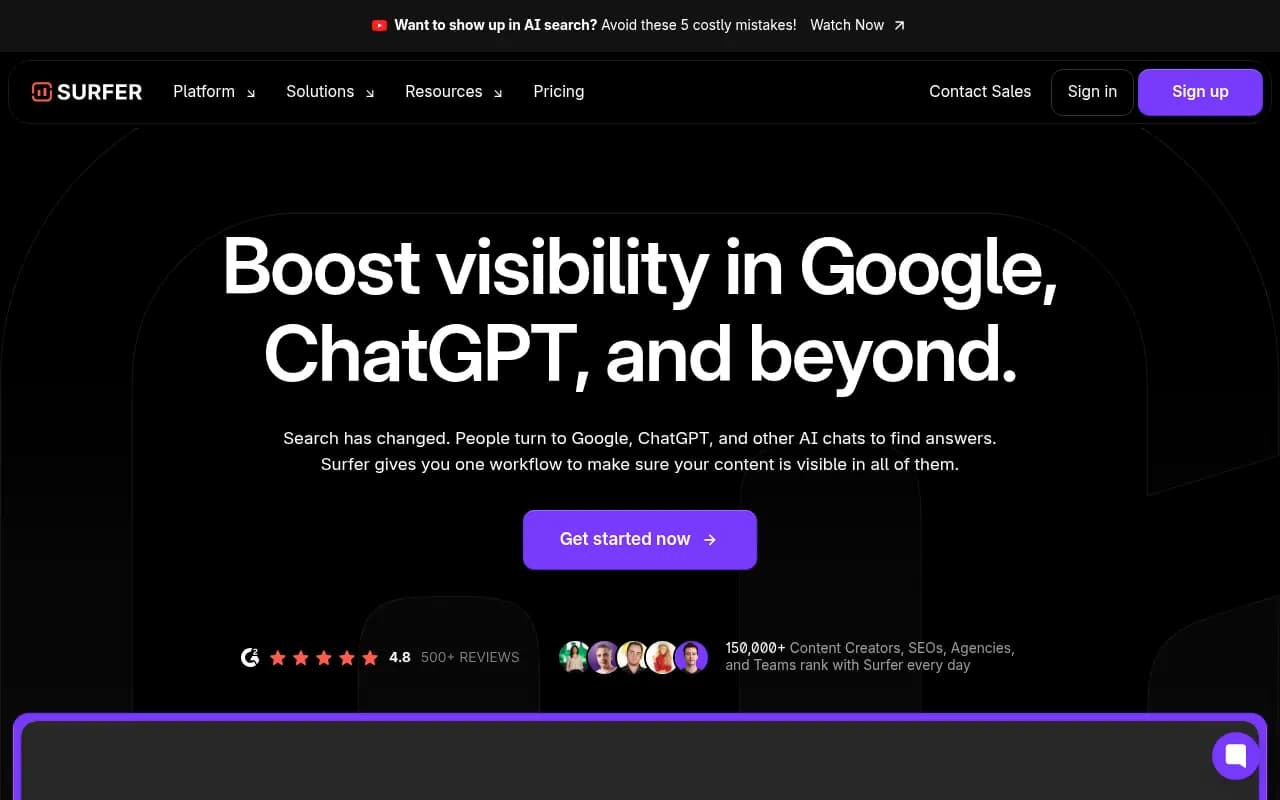
Surfer remains one of the better options for traditional SEO content optimization. Its content editor and SERP analysis are genuinely useful. But it's built for Google rankings, not AI citations -- if your goal is to appear in ChatGPT responses, Surfer doesn't get you there.
Frase
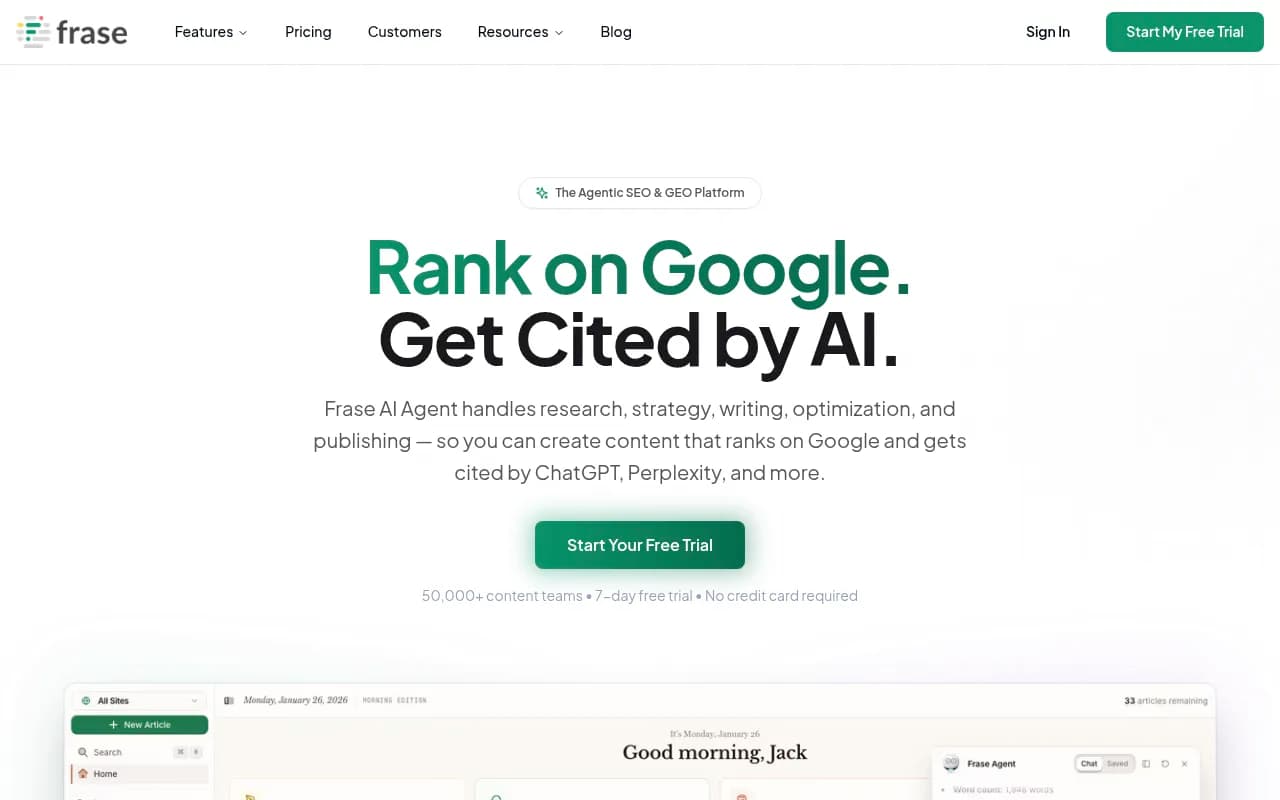
Frase is strong for research-first content workflows. It's good at pulling together what's already ranking and helping you build comprehensive content briefs. Like Surfer, it's optimized for traditional search rather than AI search visibility.
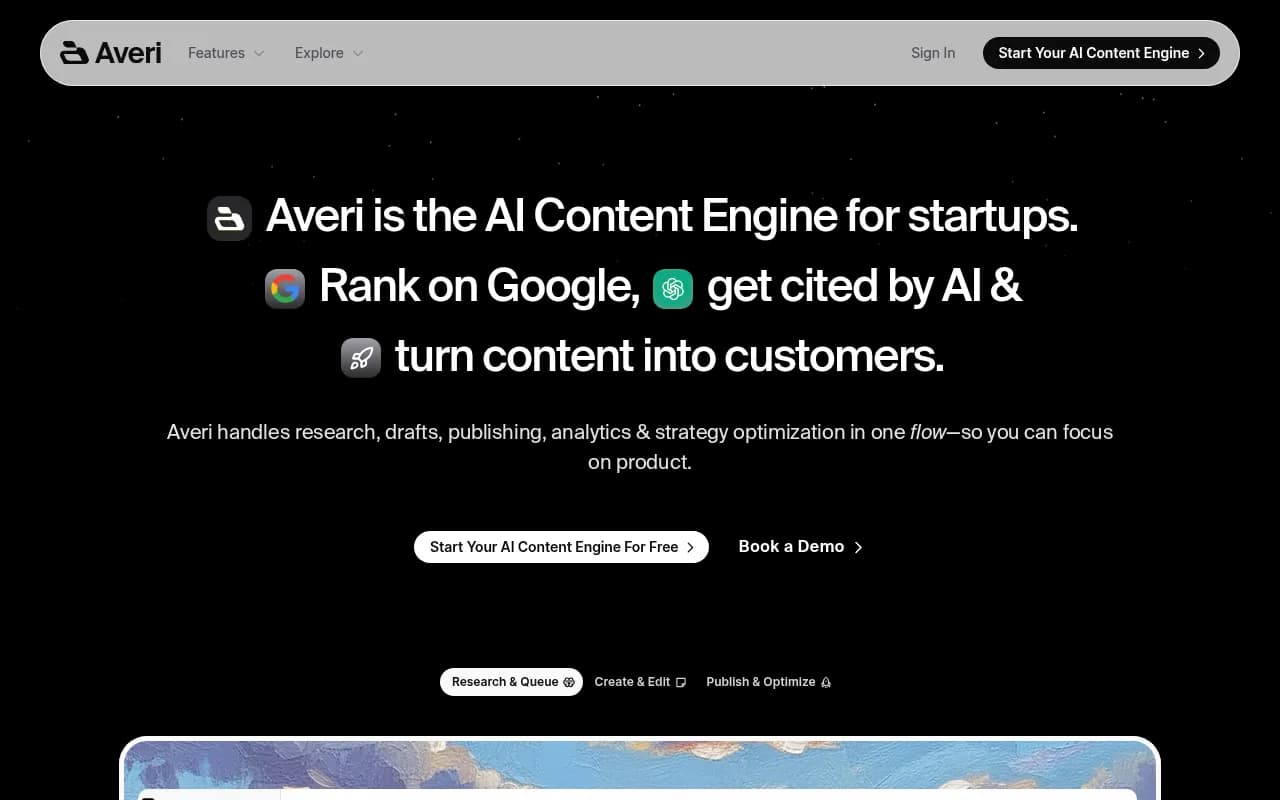
Averi AI
Averi positions itself as a full content engine (strategy through publishing) and has some AI citation features. It's worth evaluating for teams that want an end-to-end content operations platform, though its AI visibility tracking is less mature than dedicated GEO tools.
How to actually make the switch
Replacing three tools with one isn't just a purchasing decision -- it's a workflow change. Here's a practical sequence for teams making this transition.
Step 1: audit what you're actually using
Before canceling anything, map out which features of Jasper, Copy.ai, and AirOps your team actually uses week to week. In most cases, you'll find that 80% of usage falls into two categories: drafting long-form content and running it through an SEO checklist. Everything else is rarely touched.
Step 2: run a visibility baseline
Before switching tools, get a baseline of your current AI search visibility. Which prompts is your brand appearing in? Which competitors are outranking you in AI responses? This baseline is what you'll measure improvement against.
Tools like Promptwatch can generate this baseline quickly -- you input your brand, your competitors, and a set of relevant prompts, and it shows you where you stand across all major AI models.
Step 3: identify your top 10 content gaps
The most valuable output from any GEO platform is the gap list: prompts where competitors are visible but you're not. Prioritize these by prompt volume and difficulty. Your first batch of new content should target the highest-volume, most winnable gaps.
This is where the action loop starts to pay off. Instead of writing content based on keyword research and hoping it ranks, you're writing content based on specific prompts that AI models are already answering -- and targeting the gaps where you're absent.
Step 4: generate and publish content grounded in citation data
Generic AI content doesn't get cited. Content that directly answers the questions AI models are being asked, structured the way AI models prefer to cite sources, does.
A platform with built-in content generation (like Promptwatch's AI writing agent) can produce this kind of content faster than starting from scratch in Jasper. The difference is the underlying data: citation analysis, prompt volumes, competitor visibility scores, and persona targeting all feed into what gets written.
Step 5: track page-level citations and close the loop
After publishing, set up page-level tracking to see which specific pages are being cited, by which AI models, and how often. This is the measurement layer that Jasper, Copy.ai, and AirOps completely lack.
When you can see that a specific article you published three weeks ago is now being cited in 12% of Perplexity responses for a target prompt, you have proof that the strategy is working. That's the kind of evidence that justifies the content investment to leadership.
What about the cost comparison?
Running Jasper ($49+/mo), a separate SEO tool like Surfer ($89+/mo), and AirOps (custom pricing, typically $200+/mo for meaningful usage) adds up fast. You're looking at $300-400+/month minimum for a fragmented stack that still doesn't answer the AI visibility question.
Promptwatch's Professional plan is $249/month and covers 2 sites, 150 prompts, 15 AI-generated articles per month, crawler logs, and traffic attribution. The Business plan at $579/month covers 5 sites with 350 prompts and 30 articles.
For most mid-sized marketing teams, the Professional plan replaces all three tools at a lower total cost -- and adds capabilities none of the three had.
The tools that only monitor (and why that's not enough)
A quick note on the monitoring-only category. Several platforms have emerged that track AI brand mentions -- they show you a dashboard of where your brand appears in ChatGPT or Perplexity responses. That's useful data. But it's step one of a three-step process.
Tools like Otterly.AI, Peec.ai, and AthenaHQ are in this category. They'll tell you that you're invisible for a given prompt. They won't help you fix it.
Otterly.AI



If you're evaluating GEO tools, the question to ask is: "After I see the gap, what does this platform help me do about it?" If the answer is "nothing -- you have to go to another tool for that," you're looking at a monitoring dashboard, not an optimization platform.
The honest bottom line
Jasper is a good writing tool. Copy.ai made a strategic pivot that left content teams behind. AirOps is useful for workflow automation but doesn't close the AI visibility loop. None of them were built for the world where ChatGPT and Perplexity are meaningful discovery channels.
The teams winning in AI search right now aren't using more tools -- they're using fewer, better-integrated ones. They know which prompts they're missing, they're creating content specifically designed to fill those gaps, and they're tracking citations back to revenue.
That's the loop. Find the gap, create the content, prove the result. The tools that can't complete all three steps are going to become harder to justify as AI search keeps growing.