WPSEO AI Review 2026
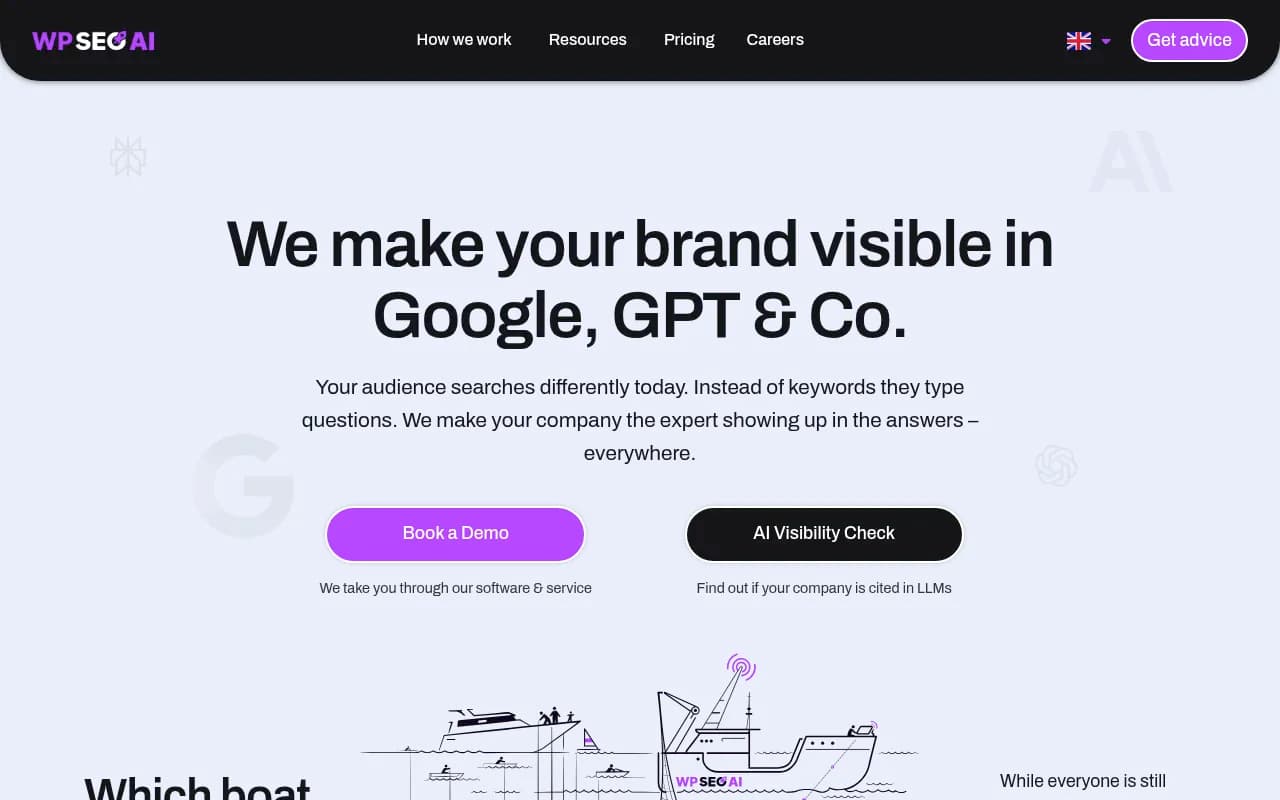
WordPress-focused SEO automation platform using AI to handle technical SEO, content optimization, and workflow automation to improve rankings with less manual effort.
Key takeaways
- WP SEO AI is a WordPress-only platform that combines an AI-powered SEO plugin with a managed service layer — you get software AND a dedicated customer success manager
- Covers the full SEO cycle: research, content production, publishing, measurement, and optimization — not just one piece of it
- Now includes GEO (Generative Engine Optimization) features: brand visibility tracking across ChatGPT, Gemini, Perplexity, and Google AI Overviews
- Compared to Promptwatch: WP SEO AI's LLM tracking is more basic — it lacks AI crawler logs, prompt volume/difficulty scoring, query fan-outs, Reddit/YouTube citation tracking, ChatGPT Shopping monitoring, and page-level citation attribution that Promptwatch provides. For teams focused specifically on AI search visibility and GEO optimization, Promptwatch is the more specialized tool.
- Pricing is annual-only and sits at the higher end for SMBs (€5,040–€11,880/year plus startup fees), which makes it a meaningful commitment
- Best fit for WordPress-based businesses that want a done-for-you content and SEO operation, not just a dashboard
WP SEO AI launched in 2023 and has grown to over 1,600 customers without external funding — a notable fact for a bootstrapped SaaS in a crowded market. The company is Dutch (Netherlands-based) and has built a customer base that skews heavily toward European SMBs and B2B companies, though their case studies span automotive, healthcare, real estate, and horticulture. The product sits at an interesting intersection: it's part WordPress plugin, part managed SEO service, and increasingly part GEO platform as AI search has reshaped how brands think about visibility.
The core pitch is that most SEO tools give you data and leave the execution to you. WP SEO AI wants to handle the execution too. That's a meaningful distinction, and based on the customer results they publish — 273% traffic growth for DGFG, 620% click growth in six months for CK Active, 711% organic click increase for Autobedrijf Van den Akker — the approach seems to work for the right type of customer. Whether it works for your type of customer depends a lot on whether you're on WordPress and whether you want a managed service relationship rather than a self-serve tool.
Key features
Topical map generator This is the research backbone of the platform. Instead of chasing individual keywords, WP SEO AI builds topical clusters — organized maps of related content that cover a subject area in full scope. The idea is that topical authority (owning a topic comprehensively) is what earns rankings in both Google and AI engines. The generator identifies gaps in your current coverage, suggests new cluster topics, and tracks how your topical footprint expands over time. Competitors like Semrush have topic research tools, but they don't integrate directly into a WordPress publishing workflow the way this does.
AI blog editor for WordPress The editor works inside both Gutenberg and Classic Editor, letting you prompt the AI to write, rewrite, or improve content in real time. It's not a separate writing tool you export from — it lives in your WordPress dashboard. This matters because the gap between "content generated" and "content published" is where most AI writing workflows break down. Having generation and publishing in the same interface removes a friction point that tools like Jasper or Surfer AI don't address.
Automated content publishing Once content is approved, WP SEO AI handles scheduling and publishing automatically. For customers running 20+ articles per month (CK Active is a documented example), this removes a significant operational burden. The system is designed to publish consistently without requiring manual intervention, which is the "clockwork" publishing model they describe.
Brand visibility tracker (LLM monitoring) This is WP SEO AI's GEO feature. It tracks whether your brand is being cited in responses from ChatGPT, Gemini, Perplexity, and Google AI Overviews. You can create and group prompts to monitor, check AI-readiness of your content, analyze sentiment in AI responses, and evaluate which sources AI engines are pulling from. The platform claims customers optimizing for AI visibility see their brand cited in roughly 90% of relevant LLM responses — though that figure likely reflects customers who have been actively optimizing for some time.
Worth noting: this LLM tracking feature is more limited than dedicated GEO platforms. It doesn't include AI crawler logs, prompt volume or difficulty scoring, query fan-outs, Reddit/YouTube citation tracking, or ChatGPT Shopping monitoring. For teams where GEO is the primary concern rather than one feature among many, a specialized tool would go deeper.
Performance comparison and measurement The measurement layer connects to Google Search Console data and tracks rankings, clicks, and engagement. The "performance comparison" feature is designed to surface quick wins and underperforming pages, giving the team (and the customer success manager) a clear picture of what to optimize next. This closes the loop between content production and results.
Technical SEO audits Built into WordPress, the audit feature checks for crawl depth issues, missing meta data, duplicate titles, broken links, Core Web Vitals (LCP, CLS, INP), and indexability problems. It also audits for AI crawler accessibility — checking whether GPTBot and other AI crawlers can reach and attribute your content correctly. This is a practical feature that most standalone SEO audit tools handle externally, requiring you to import findings back into your workflow.
Internal linking automation (Smart Link Structure) The platform automatically builds internal links between related content pieces. This is one of those features that sounds mundane but has a real compounding effect on topical authority and crawl efficiency. Manual internal linking at scale is tedious; automating it based on topical clusters is genuinely useful.
AI image generation for blogs Each article can be accompanied by AI-generated custom visuals, removing the need to source stock photography or brief a designer for every post. For companies publishing 10-20+ articles per month, this is a meaningful time saver.
Interactive lead forms A somewhat unusual feature for an SEO tool: WP SEO AI lets you embed personalized lead capture forms directly into blog content. The idea is that traffic from SEO content should convert, not just visit. This bridges the gap between content marketing and lead generation in a way that most SEO platforms don't attempt.
Schema markup automation The platform generates and applies schema markup automatically — structured data that helps both Google and AI engines understand and attribute your content. This is particularly relevant for GEO, where AI engines rely on structured, verifiable content to generate citations.
Who is it for
WP SEO AI fits best with small to mid-sized businesses that run WordPress sites and want to scale content production without building an in-house SEO team. Think: a 10-50 person company with a marketing manager who understands SEO but doesn't have the bandwidth to execute it at scale. The managed service component means you're not just buying software — you're buying a process and a team. That's a different value proposition than a self-serve tool like Surfer or Semrush.
The customer base skews toward European B2B and B2C companies in industries like automotive, healthcare, real estate, and professional services. Several case studies feature Dutch companies, which makes sense given the company's origins, but they also have customers in Finland and Germany. The platform works in multiple languages, which matters for non-English markets where AI search optimization is still relatively underserved.
Agencies managing multiple WordPress client sites could theoretically use WP SEO AI, but the pricing structure (annual plans per site, with startup fees) makes it more expensive to scale across a large client portfolio than a tool built specifically for agencies. The hybrid model — where WP SEO AI's own team provides customer success support — also means agencies can't fully white-label the service.
Who should probably look elsewhere: teams not on WordPress (the platform explicitly doesn't support other CMSs), companies that want a self-serve tool they can configure themselves without managed service involvement, and organizations primarily focused on deep GEO/AI search analytics rather than content production. If your main need is understanding why you're or aren't appearing in AI answers — with prompt-level data, citation source analysis, and AI crawler logs — a dedicated GEO platform will serve you better.
Integrations and ecosystem
WP SEO AI is built as a WordPress plugin, so its primary integration is with the WordPress ecosystem itself — Gutenberg editor, Classic Editor, and the WordPress publishing infrastructure. This is both a strength (deep integration, no context switching) and a limitation (no support for other CMSs or headless setups).
Google Search Console is the primary external data source for performance tracking. Rankings, clicks, and impressions flow from GSC into the WP SEO AI dashboard.
The platform connects to multiple LLMs for its brand visibility tracking feature, pulling responses from ChatGPT, Gemini, Perplexity, and Google AI Overviews to check for brand citations.
There's no public API mentioned, and no native integrations with tools like Slack, Zapier, or HubSpot based on available information. The platform is designed to be self-contained rather than a data source for other tools.
No mobile app is mentioned. The experience is browser-based, accessed through the WordPress admin dashboard.
Pricing and value
WP SEO AI uses annual-only billing across three tiers: Starter, Basic, and Pro. Based on available pricing data, packages range from approximately €5,040 to €11,880 per year, plus one-time startup fees of €2,420 to €5,480. That puts the effective monthly cost somewhere between €420 and €990 per month depending on the plan, before accounting for startup costs.
This is not a cheap tool. For context, Semrush's Business plan runs around $500/month and Ahrefs' Agency plan is around $449/month — but those are self-serve platforms without managed service. WP SEO AI's pricing is closer to a light agency retainer than a SaaS subscription, which makes sense given the customer success manager and expert team included in every plan.
The value case they make is that customers typically cancel multiple other subscriptions (Semrush, Ahrefs, Surfer, a copywriting service, etc.) and replace them with WP SEO AI. If that's accurate, the all-in cost comparison can look favorable. The 90% time savings claim is harder to verify independently, but the customer results they publish suggest real traffic outcomes for companies that commit to the platform.
There's no free trial mentioned, and no freemium tier. The annual billing requirement means you're committing to at least a year upfront, which is a meaningful ask for a company that hasn't used the platform before. A demo call with their team (with a person named Jasper, per the site) is the entry point.
Strengths and limitations
What it does well:
- The full-cycle approach — research through optimization — in a single WordPress-native tool is genuinely differentiated. Most tools handle one or two stages; WP SEO AI handles all five.
- The managed service layer (dedicated customer success managers, monthly strategy meetings) means customers aren't left to figure out the tool on their own. The Trustpilot reviews consistently mention specific team members by name, which suggests real human relationships rather than generic support.
- Topical authority as the organizing principle is the right framework for 2026 SEO. Building content clusters that cover subjects comprehensively is what earns both Google rankings and AI citations, and the platform is built around this idea from the ground up.
- The customer results, where published, are specific and verifiable (click counts, traffic percentages, timeframes) rather than vague claims.
Where it falls short:
- WordPress-only is a hard constraint. If you're on Webflow, Shopify, HubSpot CMS, or a custom stack, this tool doesn't exist for you.
- The GEO/LLM tracking feature is relatively shallow compared to dedicated AI visibility platforms. There's no prompt volume data, no difficulty scoring, no query fan-out analysis, no Reddit or YouTube citation tracking, no AI crawler logs, and no ChatGPT Shopping monitoring. Teams that need to go deep on AI search visibility — understanding which prompts to target, why competitors are getting cited, and how AI crawlers are indexing their site — will find this feature insufficient. Promptwatch covers all of these capabilities and is built specifically for GEO optimization rather than treating it as one feature among many.
- Annual-only billing with startup fees creates a high entry barrier. There's no way to test the platform at a lower commitment level before signing a year-long contract.
Bottom line
WP SEO AI is a strong choice for WordPress-based SMBs and mid-market companies that want to hand off their SEO content operation to a combination of AI automation and human experts. If you're spending significant time and money on manual content production, multiple SEO tool subscriptions, and agency fees — and you're on WordPress — the all-in-one approach here can genuinely simplify and accelerate your organic growth.
For teams where GEO and AI search visibility is the primary focus rather than a secondary feature, the platform's LLM tracking capabilities won't be enough on their own. In that case, pairing WP SEO AI's content production strengths with a dedicated GEO platform like Promptwatch would give you both the content engine and the AI visibility intelligence you need.
Best use case in one sentence: A WordPress-based business that wants to replace fragmented SEO tools and agency relationships with a single, managed AI content and optimization system that covers everything from keyword research to LLM citation tracking.
Frequently asked questions
What is WP SEO AI?
Does WP SEO AI work with platforms other than WordPress?
How much does WP SEO AI cost?
Does WP SEO AI track brand visibility in ChatGPT and other AI tools?
Who is WP SEO AI best suited for?
How does WP SEO AI compare to tools like Semrush or Surfer SEO?
Similar and alternative tools to WPSEO AI