Key takeaways
- No single WordPress plugin handles both classic SEO and AI search visibility well. The winning setup in 2026 is a two-layer stack: one traditional SEO plugin for technical hygiene, plus a GEO layer for AI readability and measurement.
- Rank Math and Yoast remain the strongest all-rounders for on-page SEO. SEOPress is the best value and the only major free plugin shipping llms.txt support.
- Be skeptical of GEO marketing claims. Promptwatch's data shows markdown files make up just 0.05% of AI search citations, so llms.txt generation is hygiene, not a visibility lever.
- Product pages are now ChatGPT's most-cited content format, which changes what your plugin's schema and content tools should be doing for you.
- Plugins can optimize your pages, but they cannot tell you whether AI engines are actually citing you. That measurement layer needs a dedicated AI visibility platform.
Why your current SEO plugin isn't enough anymore
For twenty years, the job of a WordPress SEO plugin was simple: help your pages rank in a list of ten blue links. Meta tags, sitemaps, schema, redirects. Yoast, Rank Math, and AIOSEO all do this well and have for years.
The job has changed. ChatGPT now handles over a billion searches a month, Perplexity has passed 100 million active users, and Google's AI Overviews show up on a majority of informational queries. The goal is no longer ranking a page. It's becoming the cited source inside an AI-generated answer.
Here's the uncomfortable part: there are far fewer seats at that table. ChatGPT cites roughly 5 sources per web-search answer, about half of Google's citation inventory, according to Promptwatch's analysis of sources per response. Every citation slot is contested. And the content AI engines prefer is shifting under our feet. Product pages became ChatGPT's most-cited format in July 2026 at roughly a third of all citations, nearly double their Q1 share, per Promptwatch's ChatGPT citation type data. If your plugin treats product pages as pure conversion assets with no optimization support, that's a problem.
The good news: AI citations are far less winner-take-all than Google rankings. In June 2026, even Reddit, the single most-cited domain in ChatGPT, held only 3.71% of citation share, and it dropped about 40% from the prior month, per Promptwatch's ChatGPT citation share report. Mid-sized sites with well-structured, specific content are getting cited. Your plugin choices matter here.
What to look for in an AI SEO plugin in 2026
Before the reviews, here's my evaluation framework. A plugin worth installing in 2026 should do most of the following:
- Clean technical SEO: meta tags, sitemaps, schema, redirects, breadcrumbs. Table stakes.
- AI crawler management: sensible defaults for GPTBot, ClaudeBot, PerplexityBot, and OAI-SearchBot, or at least the ability to configure them without touching robots.txt by hand.
- Structured, extractable content: FAQ blocks, schema types that match how AI engines actually parse answers, and support for the content formats AI cites most (product pages, comparisons, how-tos).
- AI-assisted workflows: bulk meta generation, content scoring, internal linking suggestions. Useful, not magical.
- Honest GEO claims: a per-page GEO score or llms.txt file is fine. A promise that a file will get you cited is not.
The best WordPress plugins for AI SEO and GEO
Rank Math
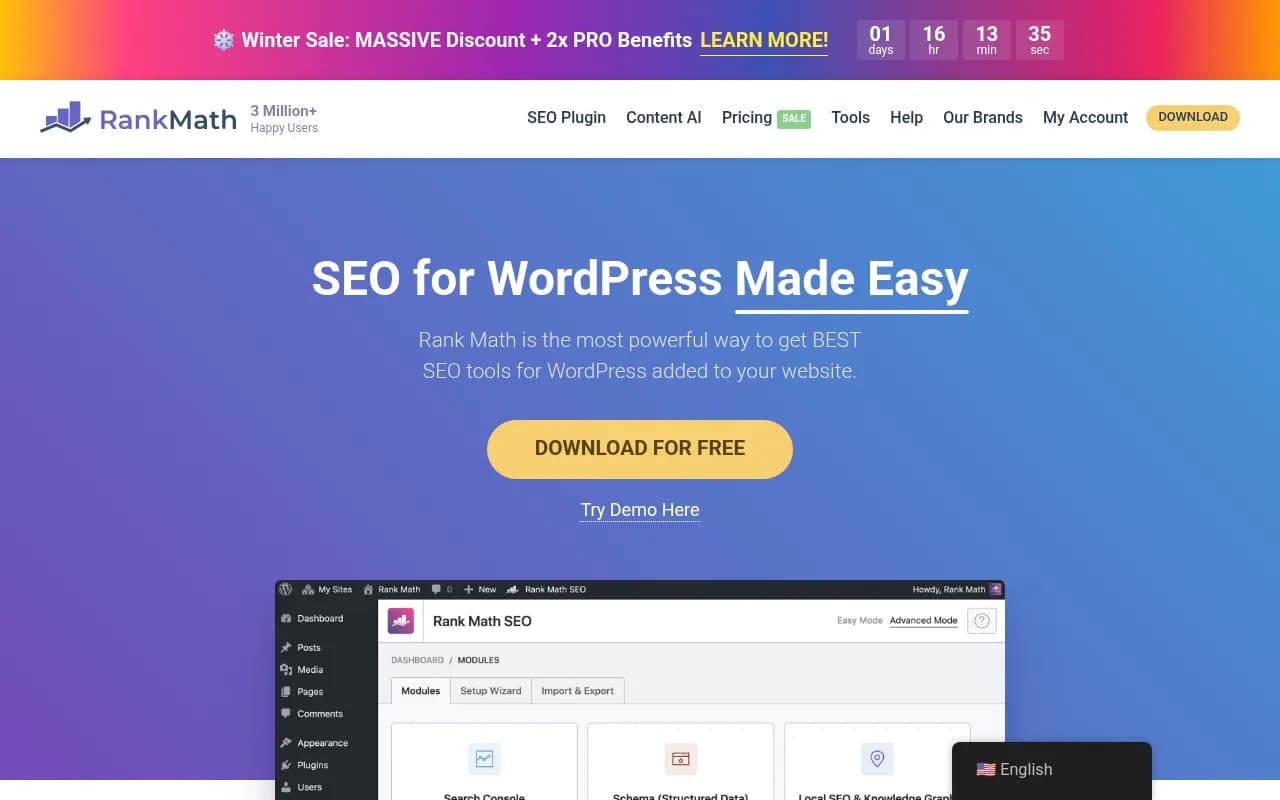
Rank Math is the plugin I recommend most often. The free version covers meta tags, 20+ schema types, sitemaps, redirections, and 404 monitoring, and the modular interface means you can switch off anything you don't need. The PRO plan runs $95.88/year with unlimited personal sites and 500 tracked keywords.
The AI story is decent but fragmented. Content AI handles title/meta generation, search intent hints, and content scoring, but it's sold as a separate subscription from the SEO plugin, with the SEO plan only including a 15-day trial. There's no dedicated GEO tracking. If you want AI-assisted writing ongoing, budget for both.
Best for: bloggers, technical SEO practitioners, and anyone who wants the most features per dollar in the free tier.
Yoast SEO
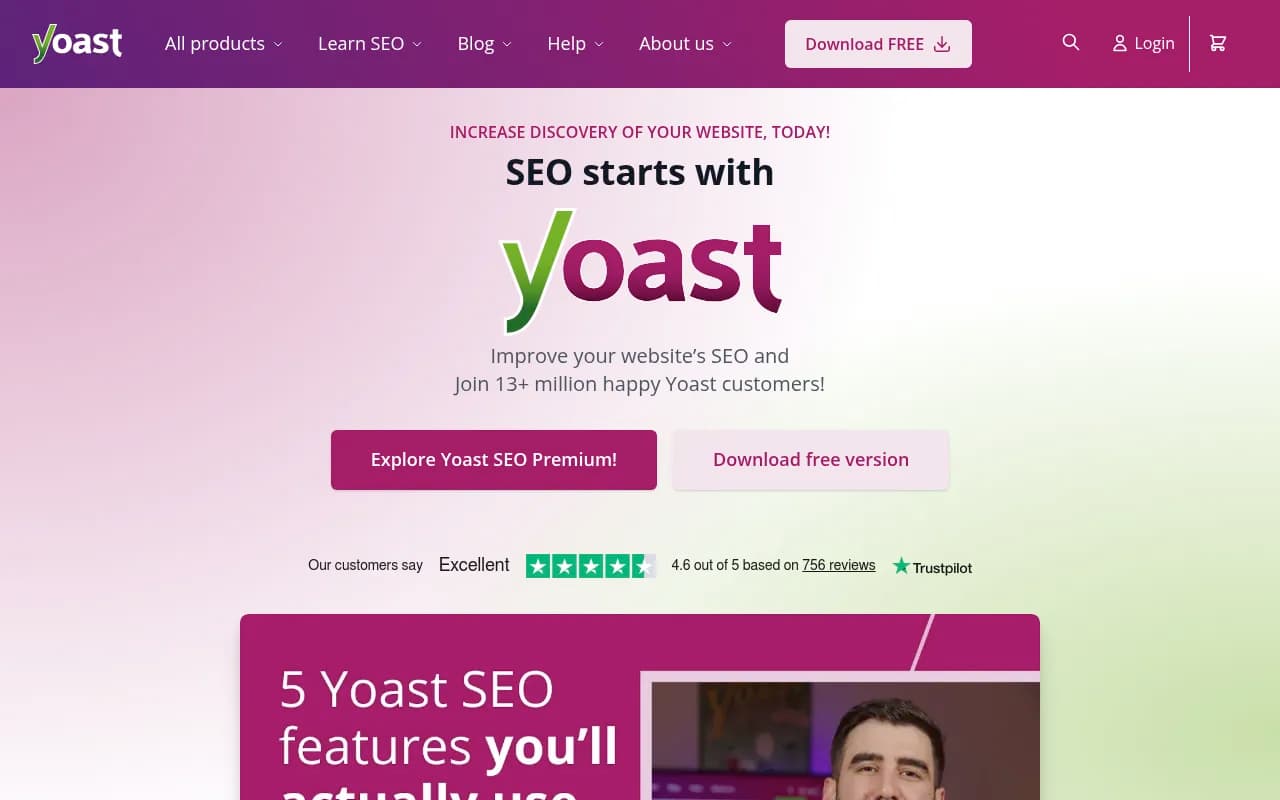
Yoast is still the most trusted name in WordPress SEO, and its readability analysis remains the best training wheels a beginner can install. Premium costs $118.80/year and now bundles Local SEO, Video SEO, and News SEO, plus AI-generated titles and meta descriptions.
Yoast has moved faster on AI-readiness than most of its peers, which surprised me. Premium now includes schema aggregation, which collects all your structured data into one deduplicated graph so an AI agent gets a complete picture in a single request, and a Bot Blocker toggle for choosing which AI systems may crawl your content. The AI+ bundle ($358.80/year) adds Yoast AI Brand Insights for monitoring brand mentions across ChatGPT, Claude, Perplexity, and Gemini. That's a real GEO feature, though the price stings for small sites.
Best for: beginners, and anyone who wants a guided on-page workflow with the option to add brand monitoring later.
All in One SEO (AIOSEO)
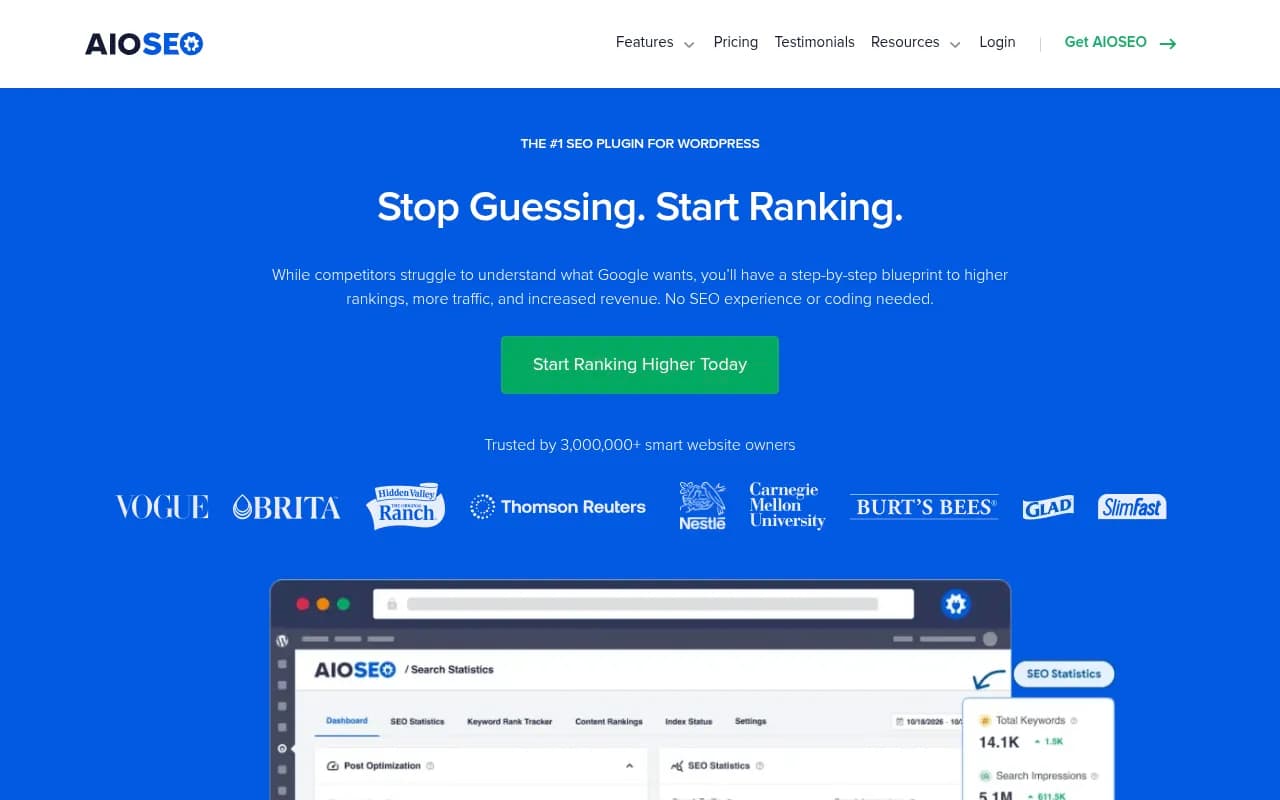
AIOSEO is the easiest setup-and-forget option. Its guided onboarding wizard is genuinely good for non-technical users, and the plugin has leaned into AI features: bulk AI meta generation, a built-in llms.txt generator, and strong WooCommerce schema support. Introductory pricing starts at $49.50/year for one site with 10,000 AI credits, though renewals run at roughly double.
The WooCommerce angle matters more than it used to. Shopping features in ChatGPT concentrate heavily on commercial, transactional prompts rather than the all-prompt average, per Promptwatch's ChatGPT shopping usage data. Complete Product schema, accurate pricing, and clean availability data are what feed those product cards. AIOSEO handles this well out of the box.
Best for: beginners, WooCommerce stores, and people who want AI features without managing separate subscriptions.
SEOPress
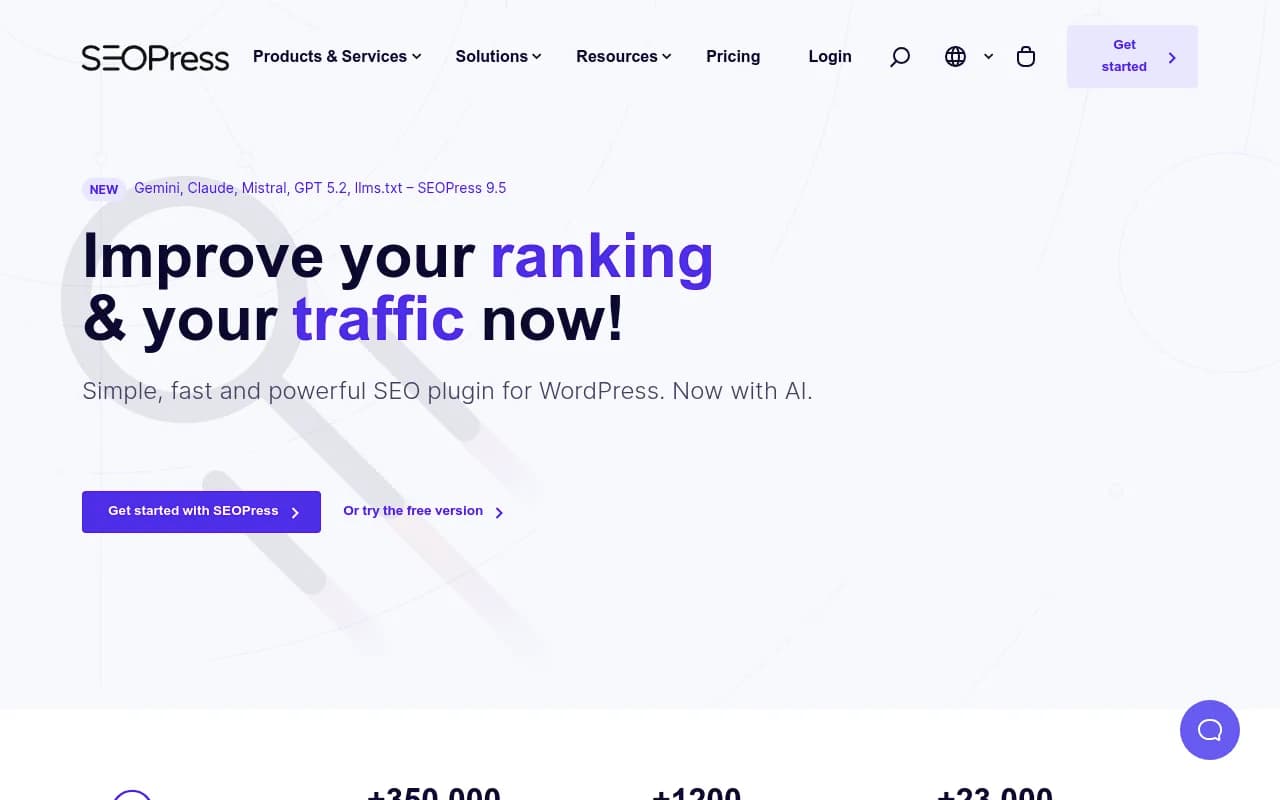
SEOPress is the quiet value pick. PRO is $49/year for one site or $149/year for unlimited sites, with no ads in the free version and no agency tax. It's the GDPR-friendly choice for European teams.
Its AI features are practical rather than flashy: bulk generation of titles, descriptions, and image alt text using OpenAI, Gemini, Claude, Mistral, or DeepSeek, plus 14 schema types with live JSON-LD preview. And as of version 9.8, SEOPress ships llms.txt support in the free version, which makes it the cheapest way to add basic AI-agent readiness to a WordPress site.
Best for: agencies, multi-site owners, and privacy-conscious teams.
Squirrly SEO
Squirrly takes a different approach: instead of a checklist, it works as an assistant that gives you next-step focus pages and marketing tasks. It's AI-powered in the sense that it scores content and suggests actions, and it's a reasonable option for solopreneurs who find Yoast's traffic-light system too passive.
It's not GEO-focused, though. Like Rank Math and AIOSEO, it was built for the link-indexing era. Fine as your only plugin if you love the workflow, but don't expect AI visibility features.
Slim SEO and The SEO Framework
Worth a quick mention for the performance-minded. Slim SEO automates the basics (meta tags, schema, sitemaps, breadcrumbs) with almost no settings panel, and The SEO Framework does automated SEO with zero upsells or ads. Neither has AI features to speak of. If your site is fast, lean, and you handle content strategy elsewhere, either is a solid, bloat-free base layer.
WordLift
WordLift is the most interesting niche option here. It adds a knowledge graph layer to WordPress, tagging your content with entities and wiring them into structured data so AI systems can understand relationships between your topics, not just individual pages. If you publish a lot of interconnected content and schema feels too manual, WordLift automates the entity work that most plugins leave to you.
WP SEO AI (managed service)
Not really a plugin in the traditional sense. WP SEO AI is a fully managed SEO and GEO service built around WordPress, with pricing from roughly €5,040/year plus setup fees, including content production, translation, and monthly audits. You're buying an outcome and a customer success manager, not a tool. For teams with budget and no in-house SEO capacity, it removes the plugin-configuration problem entirely. For everyone else, it's overkill.
Comparison table
| Plugin | Free tier | Paid (from) | AI/GEO features | Best for |
|---|---|---|---|---|
| Rank Math | Yes, generous | $95.88/yr (PRO) | Content AI (separate sub), no GEO tracking | Bloggers, technical users |
| Yoast SEO | Yes, limited | $118.80/yr (Premium) | Schema aggregation, Bot Blocker, AI Brand Insights in AI+ bundle | Beginners, guided workflows |
| AIOSEO | Yes, limited | $49.50/yr intro | AI meta generation, llms.txt, WooCommerce schema | Beginners, e-commerce |
| SEOPress | Yes, no ads | $49/yr | Bulk AI metadata, llms.txt in free version, 14 schema types | Agencies, multi-site, EU teams |
| Squirrly SEO | Yes, partial | Paid plans | AI focus pages and task assistant | Solopreneurs |
| Slim SEO | Yes | Modest paid | None to speak of | Lean, fast sites |
| WordLift | Limited | Paid | Entity knowledge graph, structured data automation | Content-heavy publishers |
| WP SEO AI | No | ~€5,040/yr + setup | Full managed GEO workflow | Teams outsourcing everything |
The gap no plugin fills: measuring whether AI actually cites you
Here's the honest limitation of every plugin above: they optimize your pages, but none of them can tell you whether ChatGPT, Perplexity, or Gemini is actually citing those pages, which prompts you're invisible for, or whether AI crawlers are even reaching your site without errors.
That's a measurement job, not an optimization job, and it needs a dedicated platform. Promptwatch is the one I'd point WordPress users to, for one very practical reason: alongside tracking your citations and visibility across ChatGPT, Claude, Gemini, Perplexity, and Google AI Overviews, it logs the AI crawlers hitting your site, generates GEO-optimized content, and can publish that content straight back into WordPress. The measurement layer and the optimization layer talk to each other, which plugins fundamentally can't do.

If you want to browse what else exists in this category, the GEO software directory at bestgeosoftware.com is a good starting point.
Three pitfalls that quietly kill AI visibility on WordPress
1. Accidentally blocking AI crawlers
This one is more common than you'd think. Some robots.txt management plugins ship with "AI bot restrictions" enabled by default, which disallows GPTBot and friends without telling you clearly. Site owners have discovered their AI traffic vanished overnight because of a default setting. Check your robots.txt for Disallow rules against GPTBot, OAI-SearchBot, ClaudeBot, and PerplexityBot, and manage each crawler individually rather than as one group. Also note that Google-Extended (Gemini training) is separate from Googlebot, so blocking it does not affect your Search or AI Overviews visibility.
2. Believing llms.txt will get you cited
Lots of plugins now market llms.txt generation as a GEO feature. Here's the reality: across 1.6 million+ analyzed citations, HTML pages account for 99.94% of AI search citations and markdown files just 0.05%, a ratio of roughly 2,000 to 1, per Promptwatch's markdown in AI search research. llms.txt and .md files matter for AI coding agents reading your documentation, not for consumer AI search visibility. Generate one if you like, it costs nothing, but don't mistake it for a citation strategy.
3. Assuming schema alone moves the needle
Schema is table stakes, and you should have it. But Ahrefs ran a controlled test in May 2026 on 1,885 pages that added JSON-LD schema and found AI citations barely moved, with AI Overview citations actually dropping 4.6% in their tests. The correlational stat you'll see everywhere, that cited pages are ~3x more likely to have schema, is real but backwards: good pages tend to have both. Schema makes you eligible, not citable. What makes you citable is content that directly answers the prompts your buyers actually type into AI engines.
Recommended stacks
Different sites, different needs. Here's how I'd combine the pieces:
- Small blog or local business: Rank Math free (or SEOPress free for the llms.txt support) plus disciplined content that answers real questions. Add an AI visibility tracker once you have 20+ pages of substance.
- WooCommerce store: AIOSEO for product schema and shopping readiness, plus content that covers comparison and "best X for Y" prompts, since product pages and comparisons are now the formats AI cites most.
- Agency or multi-site: SEOPress unlimited, a visibility platform with white-label reporting for client deliverables, and Yoast AI Brand Insights only when a client explicitly asks for brand monitoring in AI answers.
- Content-heavy publisher: The SEO Framework or Slim SEO as the lean base, WordLift for entity structuring, and a GEO platform to measure which pages actually earn citations.
One last thought. The best plugin is the one you configure properly and keep updated, and the same goes for the GEO layer. Install the stack, then spend your actual energy on the thing no plugin can generate for you: content that answers specific questions better than anyone else in your niche. That's what AI engines are choosing between when they decide who gets one of those five citation slots.