Key Takeaways
- For AI search visibility: Promptwatch is the only platform that goes beyond monitoring to actually help you create content that ranks in ChatGPT, Claude, and Perplexity -- with content gap analysis, AI writing tools, and crawler logs. Semrush and Ahrefs added AI tracking but lack optimization features.
- For traditional SEO on a budget: SE Ranking ($103/mo) and Mangools ($29/mo) deliver comprehensive toolsets at half the price of Ahrefs or Semrush, with better UX than Ubersuggest.
- For enterprise SEO: Semrush ($165/mo) and Ahrefs ($83/mo) offer the deepest data and most integrations, but their AI features are basic monitoring dashboards.
- For competitor PPC intelligence: SpyFu ($33/mo) reveals every ad your competitors have ever run -- something Ubersuggest barely touches.
- For agencies: Serpstat ($69/mo) and SE Ranking offer white-label reporting and multi-client management at prices that don't destroy margins.
Ubersuggest carved out a niche as Neil Patel's "free" keyword tool with lifetime plans. It works fine if you're just starting out and need basic keyword ideas. But the limitations pile up fast: shallow data compared to Ahrefs or Semrush, clunky interface, and almost no help with the biggest shift in search since Google launched -- AI search engines like ChatGPT, Perplexity, and Claude.
The real question isn't whether Ubersuggest is bad. It's whether you've outgrown it. If you're still relying on 3 free searches per day or a $290 lifetime plan that hasn't been updated in months, you're probably missing opportunities. Here's what else is out there.
Promptwatch

Promptwatch is the market-leading AI Search Visibility platform used by 6,700+ brands including Booking.com, Center Parcs, and Wortell. It tracks how your brand appears in ChatGPT, Claude, Perplexity, Gemini, Grok, DeepSeek, Copilot, Mistral, Meta AI, and Google AI Overviews -- then helps you fix the gaps.
The core difference vs every other tool on this list: Promptwatch doesn't just show you where you're invisible. It helps you create content that actually gets cited by AI models. The workflow is simple: Answer Gap Analysis shows which prompts competitors rank for but you don't. The built-in AI writing agent generates articles grounded in 880M+ citations analyzed, prompt volumes, and competitor data. Then you track visibility improvements with page-level citation tracking and traffic attribution.
Most competitors (Semrush, Ahrefs, Otterly.AI, Peec.ai) stop at monitoring. Promptwatch closes the loop with content generation and optimization tools. You also get AI crawler logs (see which pages ChatGPT and Claude are reading, plus errors they hit), Reddit and YouTube insights (surface discussions that influence AI recommendations), ChatGPT Shopping tracking, competitor heatmaps, and multi-language/multi-region monitoring.
Pricing starts at $99/mo (Essential: 1 site, 50 prompts, 5 AI-generated articles), $249/mo (Professional: 2 sites, 150 prompts, 15 articles, crawler logs), and $579/mo (Business: 5 sites, 350 prompts, 30 articles). Agency and Enterprise plans available. Free trial included.
Best for: Marketing teams and agencies that want to rank in AI search, not just monitor it. If you're creating content to get cited by ChatGPT or Perplexity, this is the only platform built around that workflow.
Trade-offs: Promptwatch is focused on AI visibility. If you need traditional SEO tools (backlink analysis, site audits, PPC research), you'll pair it with Semrush or Ahrefs. But for AI search optimization, nothing else comes close.
Semrush
Semrush is the 800-pound gorilla of SEO platforms. It's used by 10M+ marketers and 35% of Fortune 500 companies. The platform covers everything: keyword research, backlink analysis, site audits, rank tracking, content optimization, PPC research, social media management, and local SEO. Recently they added AI visibility tracking for ChatGPT, Perplexity, and Gemini.
The strength is breadth. You get 8 toolkits in one subscription. The keyword database is massive (43 billion keywords), the backlink index is solid (43 trillion links), and the integrations are everywhere (Google Analytics, Search Console, Looker Studio, etc.). If you're managing a large site or multiple clients, Semrush has the depth you need.
The AI features are new and limited. You can track brand mentions in ChatGPT, Perplexity, and Gemini, but it's a monitoring dashboard -- no content gap analysis, no AI writing tools, no crawler logs. Semrush uses fixed prompts (you can't add custom ones), and there's no traffic attribution to connect AI visibility to revenue. For traditional SEO, it's excellent. For AI search optimization, it's a starting point.
Pricing: $165/mo (Starter), $290/mo (Pro+), $580/mo (Advanced). Enterprise custom pricing. 7-day free trial.
Best for: Established businesses and agencies that need a full-stack SEO platform with traditional tools (backlinks, audits, rank tracking) plus basic AI monitoring.
Trade-offs: Expensive. The AI features are shallow compared to Promptwatch. The interface is dense -- there's a learning curve. And if you're a small team, you're paying for tools you won't use.
SE Ranking
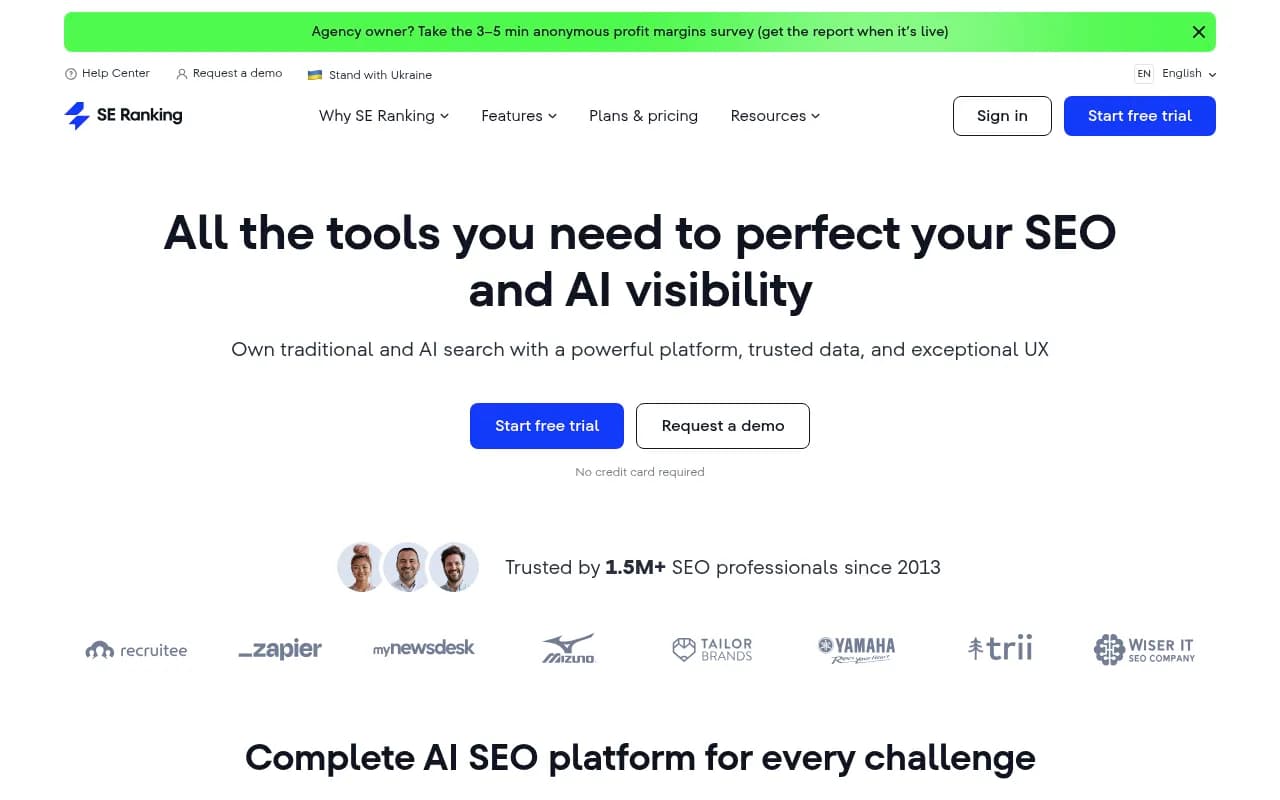
SE Ranking is the underdog that punches above its weight. It's been around since 2013, trusted by 1.5M+ users, and offers nearly everything Semrush does at half the price. You get rank tracking, keyword research (5.4B keywords across 188 countries), site audits, backlink monitoring, content optimization, and white-label reporting for agencies.
The standout feature is the UX. SE Ranking is easier to navigate than Semrush or Ahrefs. The reports are clean, the dashboards are intuitive, and the white-label options are solid for agencies. They recently added an AI Search add-on ($71/mo) that tracks brand mentions in ChatGPT, Perplexity, and Gemini -- though like Semrush, it's monitoring-only.
The keyword database is smaller than Ahrefs or Semrush, and the backlink index isn't as deep. But for most teams, it's enough. The pricing is flexible: you pay per project, so you're not locked into a flat rate that wastes money if you only manage a few sites.
Pricing: $103/mo (Core plan, annual billing), $223/mo (Growth plan). Add-ons: Agency Pack $69/mo, AI Search $71/mo. 14-day free trial, no credit card required. 20% discount on annual billing.
Best for: Small to mid-sized teams and agencies that want comprehensive SEO tools without the Semrush price tag. The white-label reporting makes it a strong pick for agencies.
Trade-offs: The AI Search add-on is basic (no content generation or optimization). The backlink index is smaller than Ahrefs. And if you need cutting-edge features, Semrush and Ahrefs ship updates faster.
Ahrefs
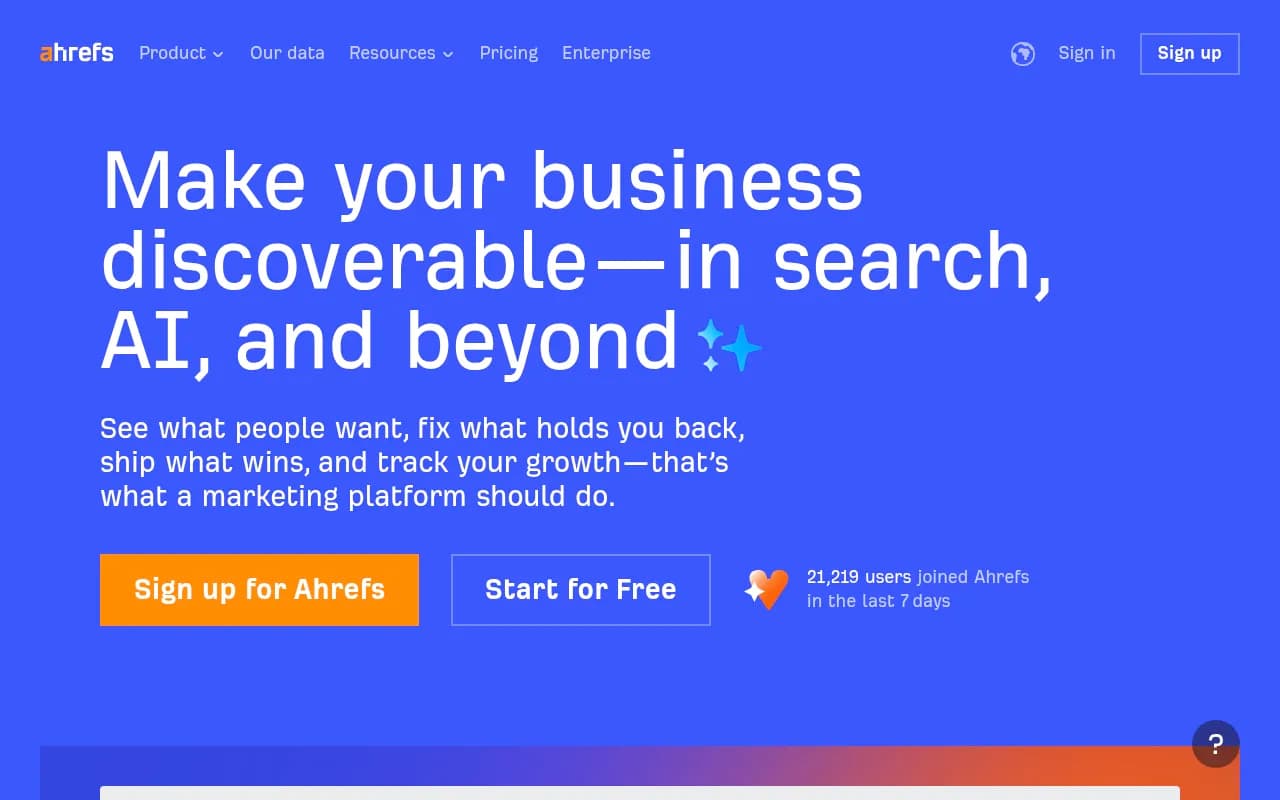
Ahrefs is the other heavyweight, used by 44% of Fortune 500 companies. It's known for having the largest backlink index on the web (43 trillion links) and a keyword database that rivals Semrush (24.9 billion keywords). The platform covers site audits, rank tracking, content gap analysis, PPC research, and social media management. They recently launched Brand Radar to track AI search mentions.
The strength is data quality. Ahrefs crawls the web constantly, so their backlink data is fresher than competitors. The Site Explorer tool is the gold standard for analyzing competitor backlinks and organic traffic. The Content Explorer helps you find top-performing content in any niche.
Brand Radar is their AI search tracking feature, but it's limited. You can monitor brand mentions in AI engines, but there's no traffic attribution, no content gap analysis, and no optimization tools. It's a monitoring dashboard, not an optimization platform. The fixed prompts mean you can't track custom queries that matter to your business.
Pricing: $83/mo (Lite), $166/mo (Standard), $333/mo (Advanced). Enterprise custom pricing. Annual billing saves 20%. Free trial available.
Best for: SEO professionals and agencies that prioritize backlink analysis and competitor research. If you're doing serious link building, Ahrefs is the best tool.
Trade-offs: Expensive. The AI features (Brand Radar) are shallow. The interface is powerful but not beginner-friendly. And like Semrush, you're paying for a lot of tools you might not need.
Moz Pro
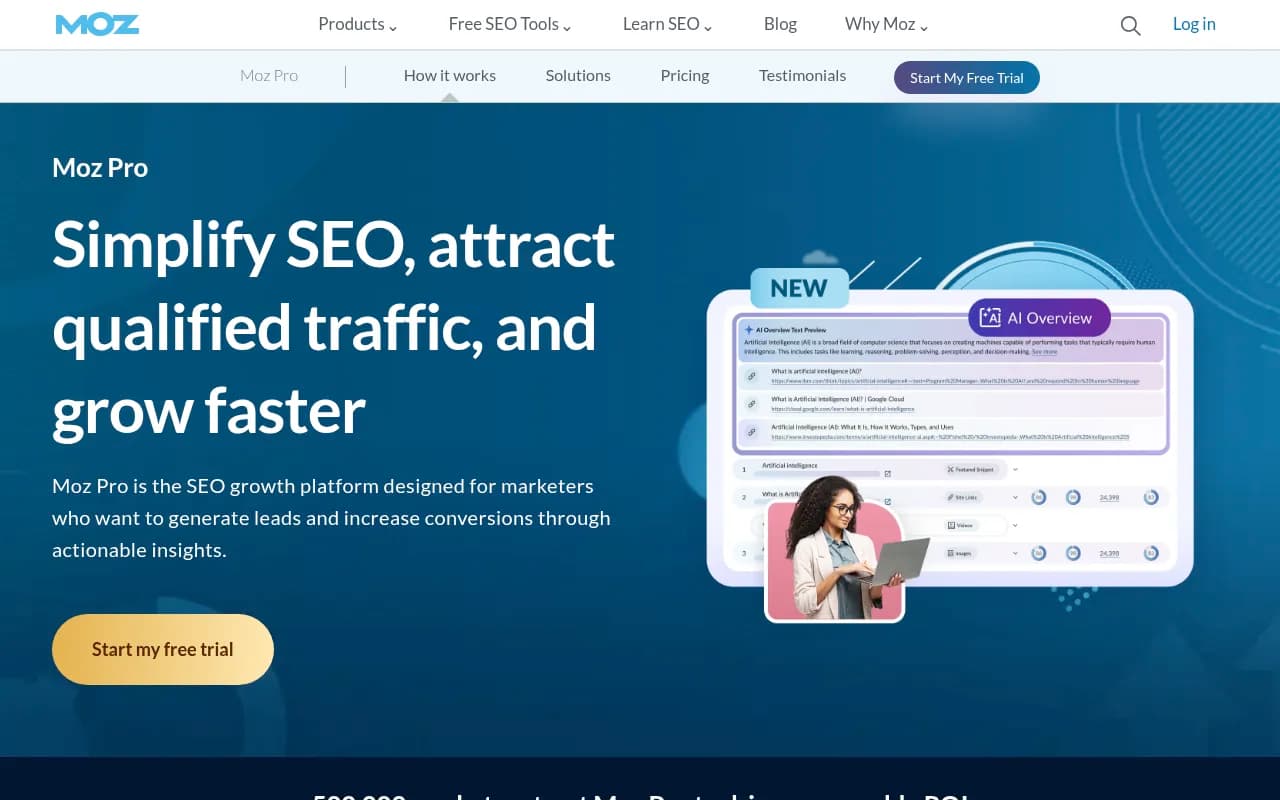
Moz Pro is the OG SEO platform, trusted by 500,000+ marketers. It offers keyword research (Keyword Explorer), rank tracking, site audits, backlink analysis (Link Explorer), and on-page optimization (On-Page Grader). Moz's proprietary metrics -- Domain Authority (DA) and Page Authority (PA) -- are industry standards for evaluating link quality.
The standout feature is link opportunity discovery. Moz's Link Explorer surfaces backlink opportunities competitors have that you don't, making it easier to prioritize outreach. The On-Page Grader gives actionable recommendations to improve rankings. And the UX is cleaner than Semrush or Ahrefs.
The downsides: the keyword database is smaller (1.25 billion keywords vs 43 billion for Semrush), the backlink index is smaller (44 trillion links vs 43 trillion for Ahrefs), and there's no AI search tracking at all. Moz is playing catch-up on features that Semrush and Ahrefs shipped years ago.
Pricing: $49/mo (Starter, currently $39/mo with promotion), $99/mo (Standard), $179/mo (Medium), $299/mo (Large). Annual billing saves 20%. 30-day free trial.
Best for: Small teams and freelancers who want a simpler, more affordable SEO platform with strong link-building tools.
Trade-offs: Smaller databases. No AI search tracking. Slower feature updates compared to Semrush and Ahrefs. If you're managing enterprise sites, you'll outgrow it.
SpyFu
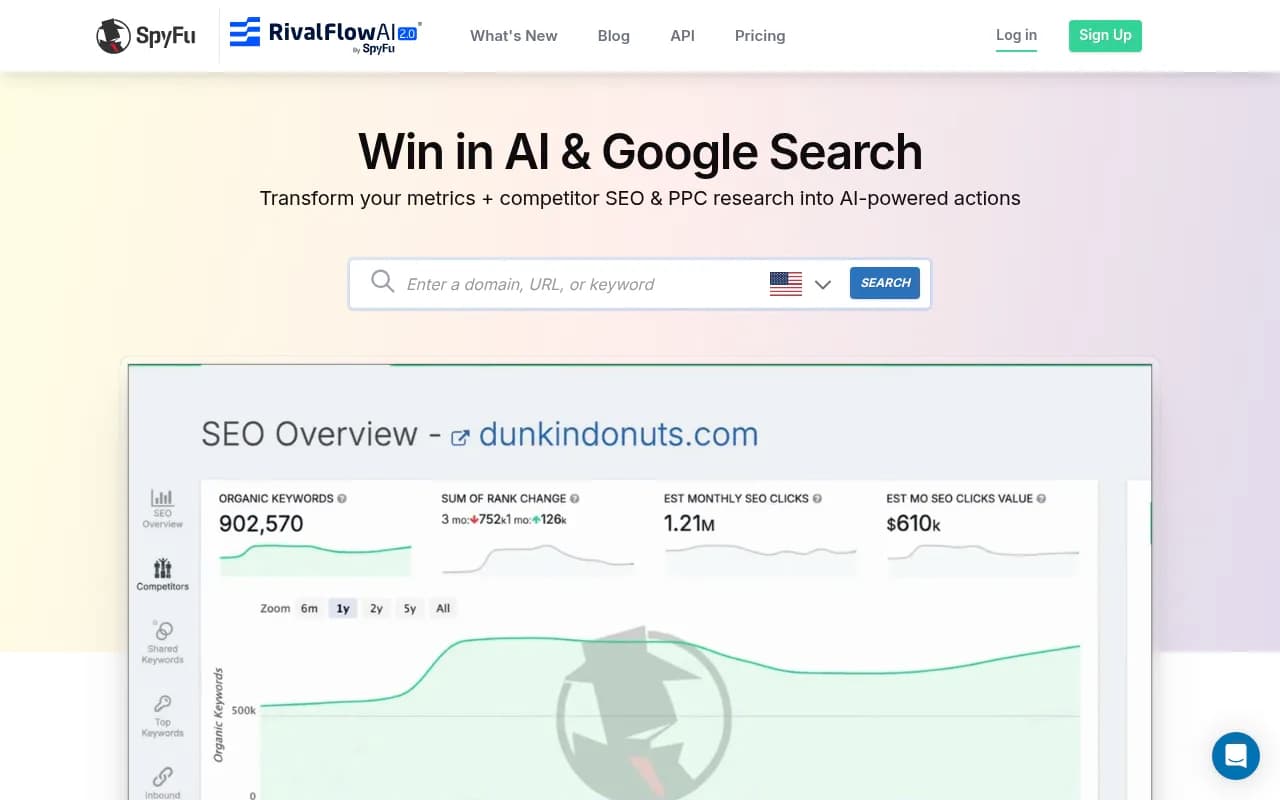
SpyFu is the competitor intelligence specialist. It reveals every keyword your competitors rank for, every ad they've run, and how much they're spending on PPC. You can download their entire keyword list, see their ad copy history, and identify gaps in your own strategy.
The strength is PPC research. SpyFu shows you which ads are working for competitors, how long they've been running, and which keywords they're bidding on. This is invaluable if you're managing Google Ads campaigns. The SEO side is solid too -- you get rank tracking, backlink analysis, and keyword research.
The downside: SpyFu is narrower than Semrush or Ahrefs. There's no site audit tool, no content optimization, and no AI search tracking. It's a specialist tool, not an all-in-one platform. But if competitor intelligence is your priority, it's the best at what it does.
Pricing: $33/mo (annual) or $39/mo (monthly). Professional $58/mo annual, Team/Agency $199/mo annual. All plans include unlimited searches and downloads. 30-day money-back guarantee.
Best for: PPC managers and SEO teams that need deep competitor intelligence. If you're reverse-engineering competitor strategies, SpyFu is unmatched.
Trade-offs: No site audits, no content tools, no AI tracking. You'll pair it with another platform for full-stack SEO.
Mangools
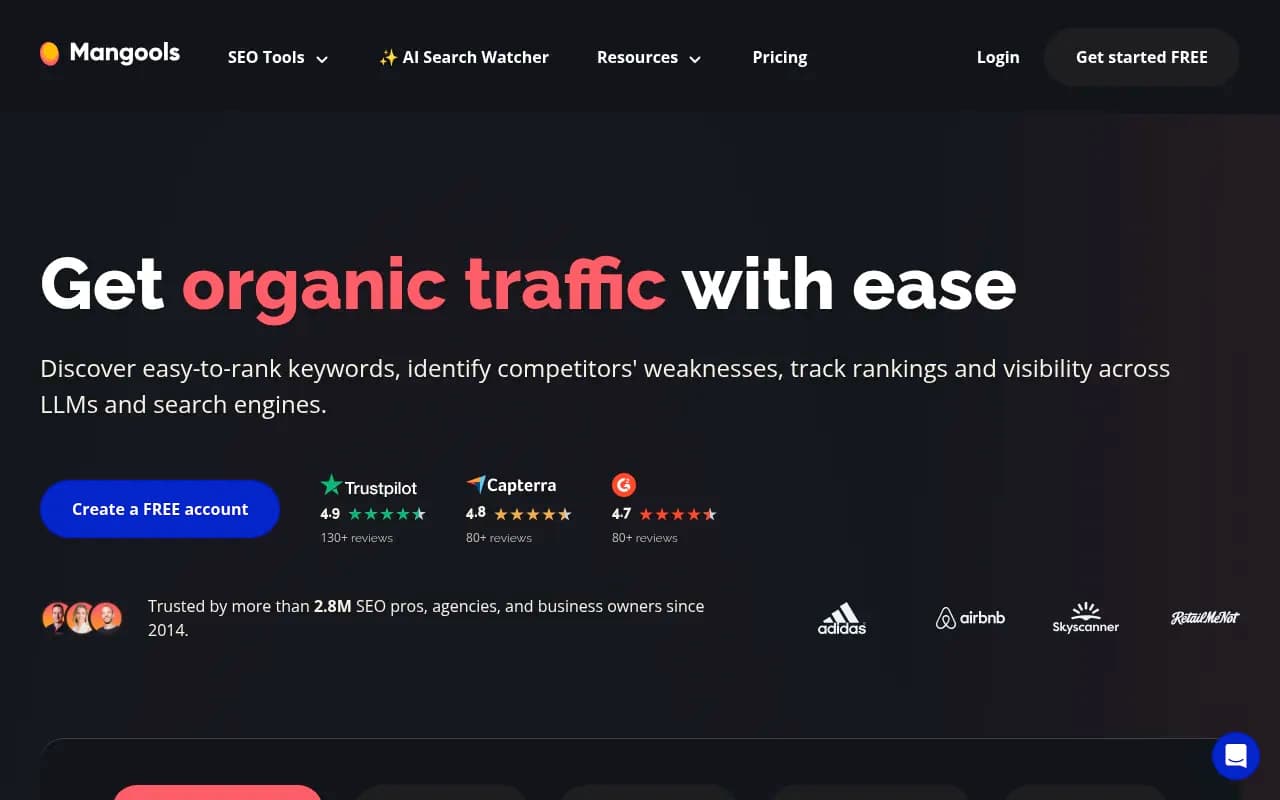
Mangools is the budget-friendly SEO suite. It includes KWFinder (keyword research), SERPChecker (SERP analysis), SERPWatcher (rank tracking), LinkMiner (backlink analysis), and SiteProfiler (competitor analysis). The pricing starts at $29/mo, making it the cheapest comprehensive SEO platform on this list.
The strength is simplicity. Mangools is easier to use than Semrush, Ahrefs, or even Ubersuggest. The interface is clean, the reports are straightforward, and the learning curve is minimal. KWFinder's keyword difficulty scores are accurate, and the SERP analysis shows you exactly what's ranking and why.
The downsides: smaller databases (2.5 billion keywords vs 43 billion for Semrush), limited features (no site audits, no content optimization), and no AI search tracking. Mangools is a starter platform. If you're managing large sites or multiple clients, you'll outgrow it.
Pricing: $29/mo (Basic), $52/mo (Premium), $97/mo (Agency). Annual billing. 10-day free trial, 48-hour money-back guarantee.
Best for: Freelancers, small teams, and beginners who want affordable SEO tools with a simple interface.
Trade-offs: Limited features. Smaller databases. No AI tracking. If you need depth, you'll upgrade to SE Ranking or Semrush.
Serpstat
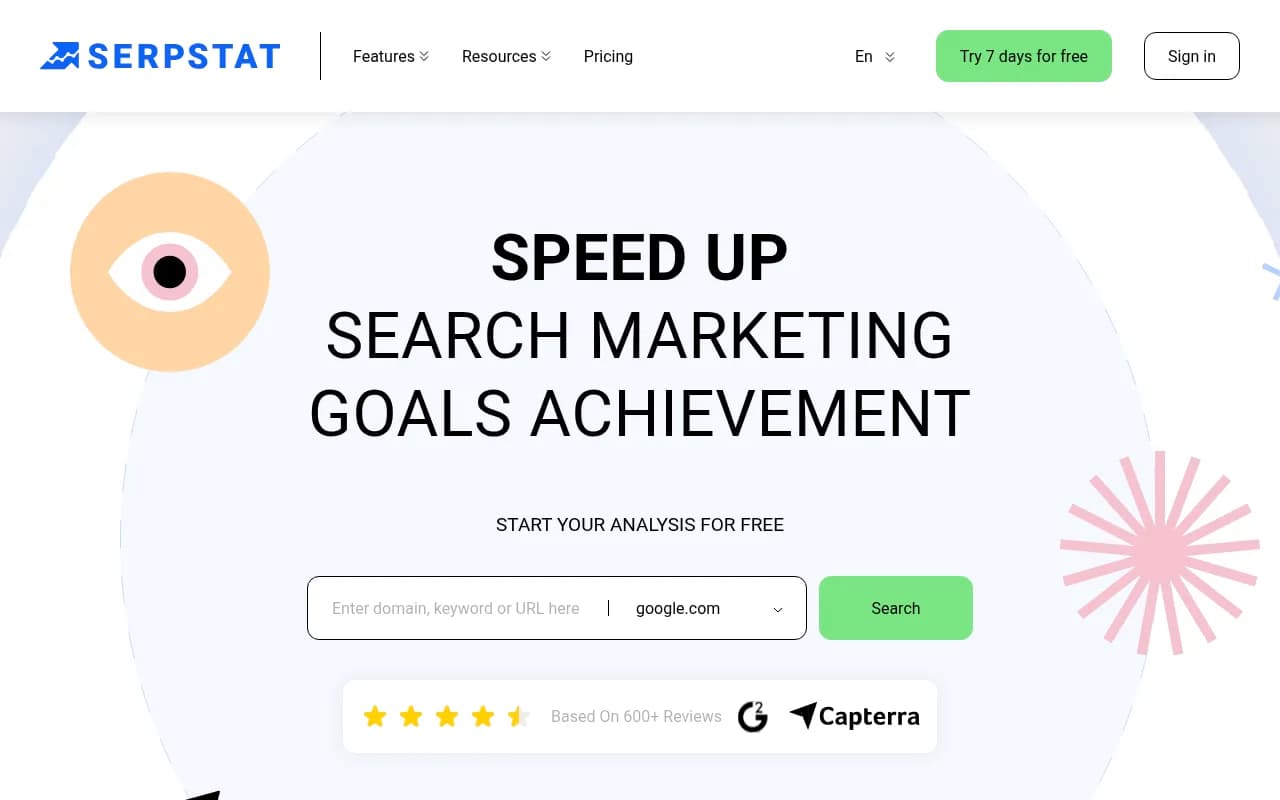
Serpstat is the all-in-one SEO platform for agencies and in-house teams managing multiple clients. It offers keyword research (8.62 billion keywords across 230 countries), rank tracking, site audits, backlink analysis, and competitor intelligence. The pricing is aggressive -- starting at $69/mo, it undercuts Semrush and Ahrefs by a wide margin.
The strength is multi-client management. Serpstat's white-label reporting and project organization make it easy to manage dozens of clients. The keyword clustering feature groups related keywords automatically, saving hours of manual work. And the API access (available on all plans) lets you build custom workflows.
The downsides: the interface feels dated compared to SE Ranking or Mangools. The backlink index is smaller than Ahrefs. And there's no AI search tracking. Serpstat is a workhorse platform -- it gets the job done, but it's not flashy.
Pricing: $69/mo (Lite), $149/mo (Standard), $299/mo (Advanced), $499/mo (Enterprise). Lifetime deals occasionally available. Free 7-day trial.
Best for: Agencies and in-house teams managing multiple clients who need comprehensive SEO tools at a lower price point.
Trade-offs: Dated interface. Smaller backlink index. No AI tracking. If UX matters, SE Ranking is a better pick.
Which Ubersuggest alternative should you choose?
If you're optimizing for AI search (ChatGPT, Perplexity, Claude), Promptwatch is the only platform that helps you create content that ranks, not just monitor where you're invisible. The content gap analysis, AI writing tools, and crawler logs make it the clear leader for Generative Engine Optimization.
For traditional SEO on a budget, SE Ranking ($103/mo) delivers the best balance of features and price. It's cheaper than Semrush and Ahrefs but more capable than Mangools or Serpstat.
If you need enterprise-grade SEO tools and have the budget, Semrush ($165/mo) and Ahrefs ($83/mo) are the safest bets. Their AI features are basic, but their traditional SEO tools are best-in-class.
For competitor PPC intelligence, SpyFu ($33/mo) is unmatched. For agencies managing multiple clients, Serpstat ($69/mo) and SE Ranking offer white-label reporting at prices that don't destroy margins.
Ubersuggest is fine if you're just starting out. But if you're serious about SEO -- and especially if you care about AI search -- you've outgrown it.