Byword Review 2026
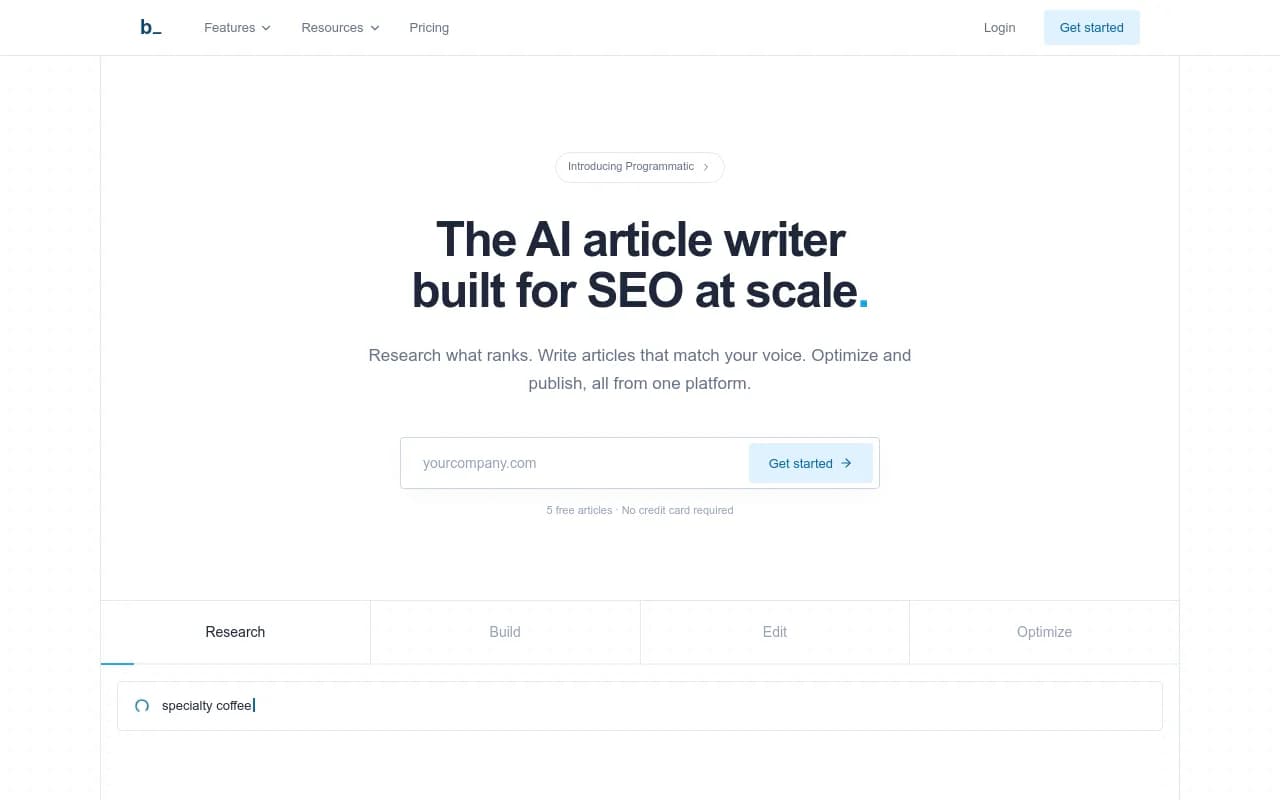
Byword is an end-to-end AI article writer trusted by 85,000+ content teams to generate SEO-optimized articles at scale. Research keywords, match your brand voice, optimize for search intent, and publish directly to WordPress, Webflow, Shopify, and 5,000+ integrations. From keyword discovery to publi
Key Takeaways:
• Complete content workflow: Byword handles keyword research, SERP analysis, AI generation, SEO optimization, and CMS publishing in one platform—no switching between tools • Voice matching that actually works: Upload existing content once and Byword learns your brand voice permanently, eliminating the need to re-explain tone and style with every article • Built for scale: 3M+ articles generated, 6.1B words written, with proven results at agencies managing 100+ articles/month and enterprises running programmatic SEO campaigns • Real SEO intelligence: Analyzes top-ranking competitors, extracts SERP signals, identifies content gaps, and structures articles to match search intent—not generic AI filler • Honest limitations: Premium pricing ($99-$999/mo) puts it out of reach for hobbyists, and the platform assumes you already know SEO fundamentals—it won't teach you content strategy
Byword is an AI article writer and SEO content platform built specifically for teams that need to produce high-quality, search-optimized articles at scale. Launched as one of the first dedicated AI content platforms, it's now trusted by 85,000+ users and has generated over 3 million articles totaling 6.1 billion words across 47 languages. The platform is used by content teams at Coursera, Capgemini, Chanel, Blinkist, n8n, and Ramp, as well as hundreds of SEO agencies managing client portfolios.
Unlike generic AI writing tools that require constant prompting and manual optimization, Byword is purpose-built for the entire SEO content workflow: keyword research, competitor analysis, AI generation with brand voice matching, real-time SEO scoring, and one-click publishing to your CMS. The core value proposition is speed and consistency—most users go from keyword to published article in under 2 minutes, with voice and quality that stays consistent across thousands of articles.
Research Intelligence (Keyword Discovery & SERP Analysis)
Byword's research module analyzes search engine results pages to identify what's actually ranking and why. Enter a seed keyword and it returns a list of related opportunities with monthly search volume, keyword difficulty scores, 12-month trend data, search intent classification (informational, commercial, navigational), and competition level. The SERP analysis pulls top 10 results, People Also Ask questions, and identifies content gaps—topics competitors are ranking for that you haven't covered.
The platform surfaces "signals" from top-ranking pages: common heading structures, content depth (word count ranges), featured snippet opportunities, and semantic keywords that appear across multiple results. This isn't just keyword volume data—it's actionable intelligence about what Google rewards for each specific query. For agencies managing 20+ client sites, this eliminates hours of manual SERP research and spreadsheet wrangling.
Keyword clustering groups related terms automatically, helping you identify pillar content opportunities and avoid keyword cannibalization. The 12-month trend graphs show seasonality and growth trajectories, so you can prioritize topics gaining momentum rather than declining searches. Difficulty scoring considers domain authority requirements, content depth, and backlink profiles of ranking pages—giving you realistic win probability before you invest time writing.
AI Generation (Brand Voice Matching & Intelligent Structure)
Byword's generation engine is where it separates from ChatGPT and generic AI writers. Upload 2-3 existing articles from your site and the platform analyzes sentence structure, vocabulary choices, formatting patterns, and tone to create a permanent voice profile. Every article generated afterward matches that voice automatically—no need to paste style guides or re-explain your brand in every prompt.
The generation process offers multiple title options with estimated click-through rates, then scaffolds article structure based on SERP analysis. You see proposed H2 and H3 headings before generation starts, with the option to add, remove, or reorder sections. The platform suggests content blocks like comparison grids, quick picks, FAQ sections, and product tables based on what's working for top-ranking competitors.
Generation speed is 60-90 seconds for most articles, 2-3 minutes for research-intensive pieces with citations and competitor analysis. You can queue dozens of articles simultaneously—the platform generates them in parallel and notifies you when ready. Custom templates let you define reusable structures for listicles, how-to guides, product reviews, comparison posts, and category pages. For programmatic SEO campaigns (generating hundreds of location or product-specific pages), Byword offers CSV upload with variable insertion and bulk generation.
The quality control system runs four checks before finalizing each article: intent match (does the content answer the search query), coverage (are all important subtopics addressed), originality (plagiarism detection and AI content scoring), and readability (Flesch-Kincaid grade level). Articles scoring below 85% on any metric get flagged for review.
Smart Optimization (Real-Time SEO Scoring)
The built-in editor provides real-time SEO feedback as you write or edit AI-generated content. Keyword density tracking shows primary and secondary keyword usage with recommendations to increase or decrease frequency. Heading structure analysis ensures proper H1/H2/H3 hierarchy and flags missing subheadings. Readability scoring uses Flesch-Kincaid and Hemingway metrics to identify complex sentences, passive voice, and grade-level issues.
Internal linking suggestions scan your existing content and recommend relevant articles to link to, with anchor text proposals. The platform tracks which pages you've already linked from each article to avoid over-optimization. Meta title and description fields show character counts and preview how your snippet will appear in search results. Image alt text reminders ensure accessibility and SEO best practices.
The optimization module also checks for thin content (articles under 800 words), keyword stuffing, broken outbound links, and missing schema markup opportunities. For e-commerce sites, it validates product schema, pricing data, and availability status. The scoring system is opinionated—it will tell you when an article isn't ready to publish, not just give you a percentage and let you decide.
Seamless Publishing (CMS Integrations & Automation)
Byword connects directly to WordPress, Webflow, Shopify, Ghost, Wix, HubSpot, Medium, Contentful, and Notion with one-click publishing. Authenticate once and articles push to your CMS as drafts or published posts, with featured images, categories, tags, and custom fields mapped automatically. For WordPress, it supports custom post types, ACF fields, Yoast SEO data, and Rank Math integration.
The Zapier and Make integrations connect Byword to 5,000+ apps, enabling workflows like: generate article → send to Slack for approval → publish to WordPress → notify team in Asana → add to Google Sheets tracking. Webhooks and API access let developers build custom integrations or trigger generation from external systems. The API supports bulk operations, voice profile management, and programmatic publishing.
For agencies, the platform offers client workspaces with separate domains, voice profiles, and billing. Team seats allow multiple users to collaborate on the same account, with role-based permissions (admin, editor, viewer). The Airtable integration is particularly popular with agencies—sync keyword lists, track article status, and manage editorial calendars without leaving Airtable.
Who Is Byword For?
Byword is built for three primary audiences: in-house content teams at SaaS companies or e-commerce brands producing 50-200 articles per month, SEO agencies managing 10-50 client sites with varying content needs, and enterprise marketing teams running programmatic SEO campaigns (500+ pages targeting location, product, or category variations).
For in-house teams, the typical user is a content marketer or SEO manager who previously relied on freelancers or spent 4-6 hours per article writing manually. Byword lets them scale from 10 articles/month to 100+ without hiring, while maintaining consistent voice and quality. The research module helps junior marketers identify opportunities they'd miss manually, and the optimization scoring ensures articles meet SEO standards before publication.
Agencies use Byword to protect margins on content retainers. Instead of paying freelancers $150-300 per article, they generate drafts for $3-4 each, then have editors polish and fact-check. This typically cuts content production costs by 60-70% while increasing output. The client workspace feature lets agencies manage multiple brands with separate voice profiles, domains, and billing—critical for maintaining brand consistency across a portfolio.
Enterprise teams running programmatic SEO campaigns (think Zillow's city pages or Yelp's business category pages) use Byword's CSV upload and bulk generation to create thousands of unique, SEO-optimized pages in days instead of months. The Unlimited plan ($1,999/mo platform fee + ~$0.10 per article with your own API keys) makes this economically viable at scale.
Byword is NOT ideal for: bloggers or solopreneurs publishing 5-10 articles per month (the $99/mo entry price is steep for that volume), content teams that need heavy fact-checking or expert-level accuracy (AI-generated content requires human review for technical or medical topics), or anyone expecting the tool to teach them SEO strategy (it assumes you already know what keywords to target and why).
Integrations & Ecosystem
Direct CMS integrations: WordPress, Webflow, Shopify, Ghost, Wix, HubSpot, Medium, Contentful, Notion. Automation platforms: Zapier, Make (Integromat). Productivity tools: Slack, Asana, Trello, Monday, Airtable, Google Sheets. E-commerce: Shopify, WooCommerce (via WordPress). The API supports custom integrations for enterprise users.
The WordPress integration is the most mature, supporting custom post types, taxonomies, featured images, Yoast/Rank Math SEO data, and scheduled publishing. Webflow integration handles CMS collections, rich text fields, and image uploads. Shopify integration creates blog posts and product descriptions with proper schema markup.
Webhooks allow real-time notifications when articles finish generating, enabling custom workflows like auto-publishing to staging environments for review before production. The API rate limits are generous (1,000 requests/hour on paid plans), and the documentation includes code examples in Python, JavaScript, and cURL.
Pricing & Value
Byword offers four pricing tiers, all billed monthly or annually (17% discount for annual):
Starter ($99/mo): 25 articles/month, $3.50 per extra article, solo use (1 seat), 5 domains, all integrations. Best for: freelance content marketers or small businesses testing AI content.
Standard ($299/mo): 80 articles/month, $3.00 per extra article, 3 team seats, unlimited domains, all integrations. Best for: in-house content teams at SaaS or e-commerce companies producing 50-100 articles/month.
Scale ($999/mo): 300 articles/month, $2.50 per extra article, 10 team seats, unlimited domains, priority support. Best for: agencies managing 10+ clients or enterprises with high content volume.
Unlimited ($1,999/mo): Unlimited articles with your own OpenAI API keys (~$0.10 per article in API costs), unlimited seats, unlimited domains, custom integrations, dedicated support. Best for: agencies generating 500+ articles/month or enterprises running programmatic SEO campaigns.
All plans include a 5-article free trial with no credit card required. The trial gives full access to research, generation, optimization, and publishing features—you can test the entire workflow before paying.
Value assessment: At $3-4 per article, Byword is 10-20x cheaper than hiring freelancers ($150-300 per article) but requires human editing and fact-checking. For agencies, the ROI is clear—if you're producing 100 articles/month for clients, Byword saves $10,000-25,000/month in freelancer costs while increasing speed and consistency. For in-house teams, the value depends on your content volume—if you're only publishing 10 articles/month, the $99 entry price is expensive compared to using ChatGPT directly.
Compared to competitors: Jasper AI charges $49-125/mo but lacks research and publishing features. Surfer SEO ($89-219/mo) offers similar optimization but weaker generation. Frase ($15-115/mo) is cheaper but doesn't match Byword's voice consistency or CMS integrations. Content at Scale ($250-1,000/mo) is comparable in features but more expensive per article.
Strengths & Limitations
Byword excels at: (1) Voice consistency across thousands of articles—the voice matching actually works, unlike most AI writers that drift between generic and overly formal. (2) End-to-end workflow integration—research, write, optimize, publish in one platform eliminates tool-switching and manual copy-pasting. (3) SERP intelligence that goes beyond keyword volume—understanding what's ranking and why saves hours of manual analysis. (4) CMS publishing that actually works—WordPress, Webflow, and Shopify integrations are reliable and support advanced features like custom fields and schema. (5) Bulk generation for programmatic SEO—CSV upload and parallel processing make it viable to generate hundreds of pages in a day.
Honest limitations: (1) Premium pricing excludes hobbyists and small bloggers—$99/mo is steep if you're only publishing 10 articles/month. (2) Requires SEO knowledge—the platform assumes you know what keywords to target and why; it won't teach you content strategy. (3) AI-generated content needs human review—fact-checking, brand alignment, and creative polish still require editors. (4) Limited multilingual voice matching—voice profiles work best in English; other languages are less consistent. (5) No built-in image generation—you'll need to source or create images separately (though it integrates with Unsplash and Pexels).
Missing features competitors offer: Surfer SEO's content editor provides more granular on-page optimization suggestions. Frase offers a chatbot-style research assistant. Jasper includes built-in image generation via DALL-E. Content at Scale has more advanced plagiarism detection.
Bottom Line
Byword is the best AI content platform for teams that need to produce 50+ SEO-optimized articles per month without sacrificing quality or brand voice. The research-to-publication workflow eliminates hours of manual work, the voice matching ensures consistency at scale, and the CMS integrations make publishing effortless. Agencies managing multiple clients and enterprises running programmatic SEO campaigns will see immediate ROI.
If you're a solo blogger publishing 5-10 articles per month, the pricing doesn't justify the value—stick with ChatGPT or a cheaper tool like Frase. If you need expert-level accuracy for technical or medical content, plan to budget for human fact-checkers—AI-generated content is a starting point, not a finished product.
Best use case in one sentence: SEO agencies and in-house content teams that need to 10x their article output while maintaining consistent brand voice and search optimization.
Tags:
Frequently asked questions
What is Byword AI and what does it do?
How much does Byword cost?
Is Byword free to use?
Who is Byword best suited for?
What CMS platforms does Byword integrate with?
How does Byword's brand voice matching work?
How long does it take to create an article with Byword?
How does Byword compare to other AI writing tools like Jasper or Surfer SEO?
Does Byword support multiple languages?
What SEO features does Byword include?
What are the limitations of Byword?
How many articles has Byword generated?
Similar and alternative tools to Byword