Key Takeaways
- Amionai is agency-focused with white-label solutions starting at $375/mo for 5 clients, while GeoGen targets individual brands with plans from €20/mo
- GeoGen covers 5 AI models (ChatGPT, Perplexity, Gemini, Grok, Copilot), while Amionai's LLM coverage isn't clearly specified on their site
- Amionai provides weekly action plans and competitor analysis, positioning itself as a hands-on service for agencies managing multiple clients
- GeoGen offers more transparent pricing tiers (Micro, Starter, Growth, Pro) with 20% annual discounts, making it easier to budget
- Neither platform offers a free trial, which is a gap compared to competitors that let you test before committing
- If you're an agency managing 5+ clients, Amionai's white-label model makes more sense. If you're a single brand or small team, GeoGen's lower entry point is the better fit.
Overview
Amionai
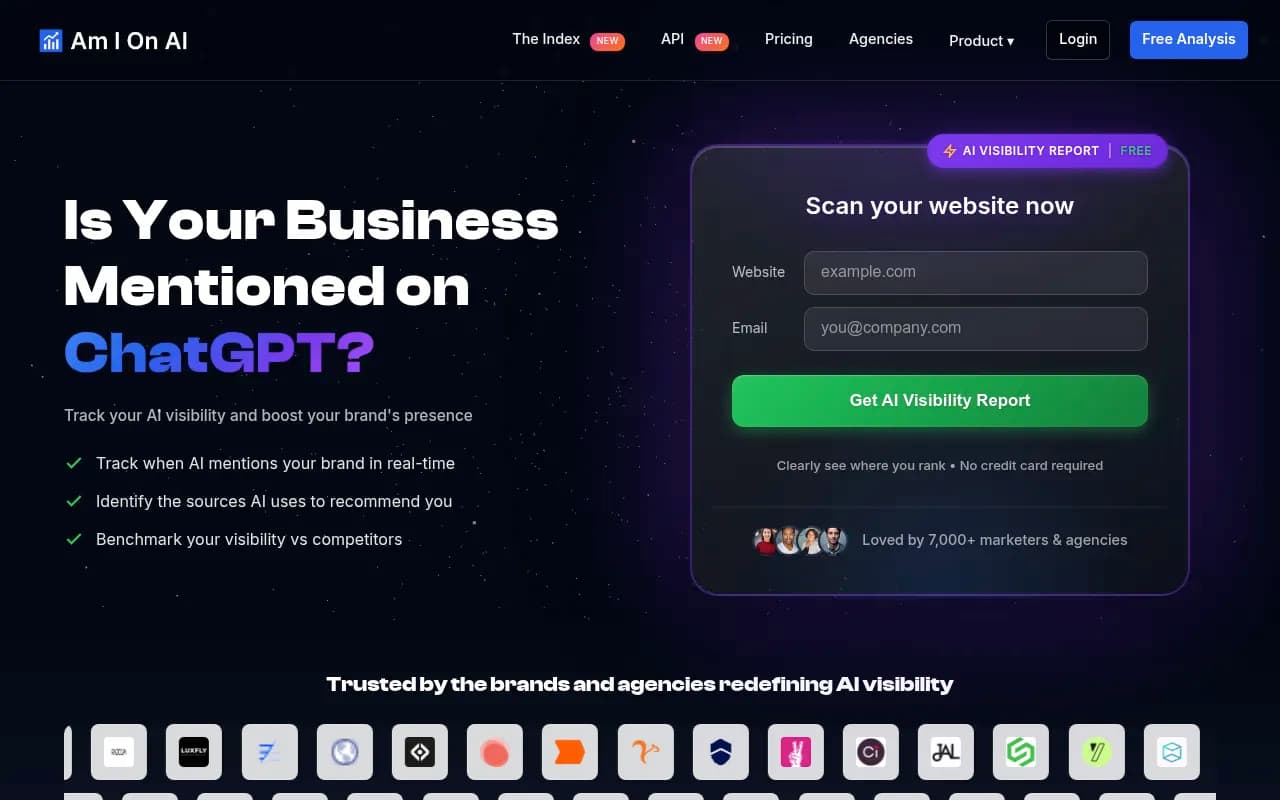
Amionai positions itself as an AI visibility monitoring platform built for agencies and brands that want to track how they appear in AI-powered search results. The platform promises weekly action plans, competitor analysis, and white-label solutions for agencies managing multiple clients. They've attracted clients like Ceragon, Vultr, Bookaway, and Mindshare -- a mix of B2B tech companies and agencies.
The agency-first approach is clear from the pricing: plans start at $375/mo for 5 clients and scale to $670/mo for 10 clients. There's no obvious self-service option for individual brands, which tells you who they're targeting.
GeoGen
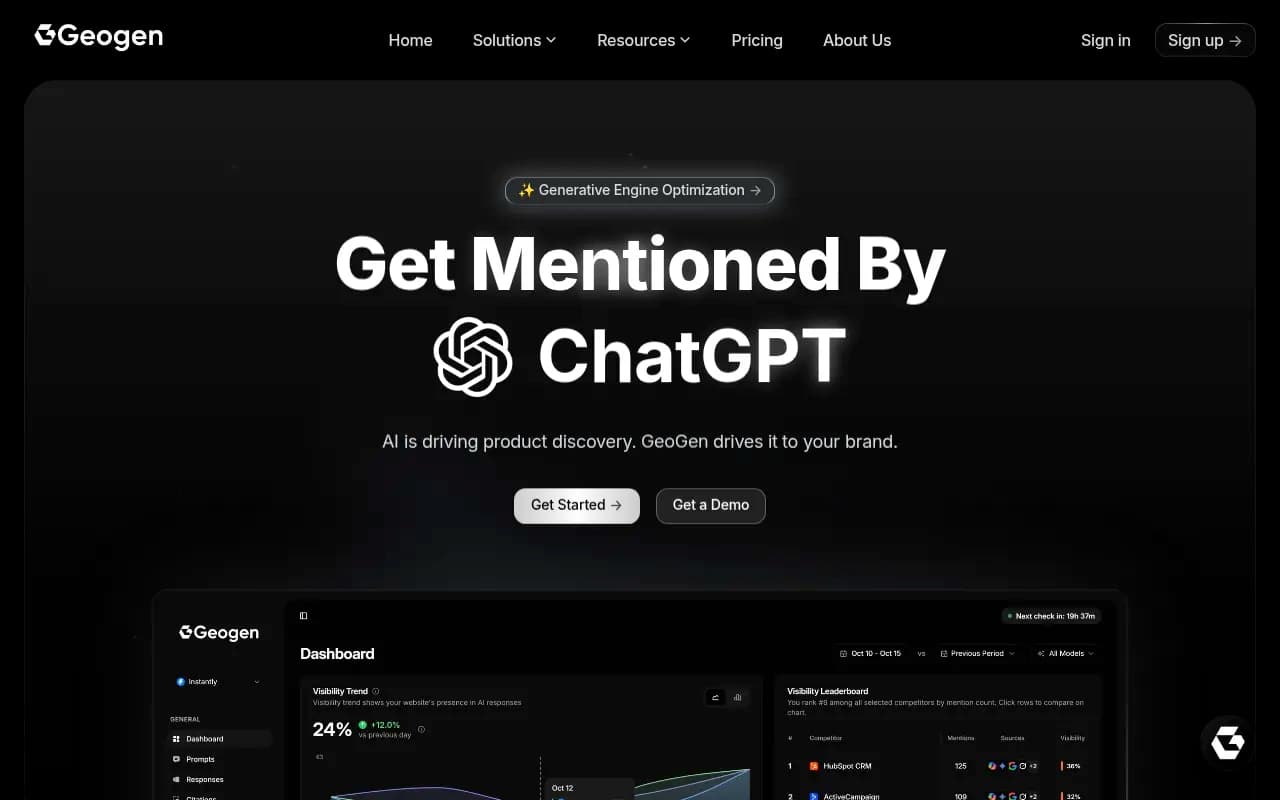
GeoGen takes a different angle. It's a Generative Engine Optimization (GEO) platform that tracks brand mentions across ChatGPT, Perplexity, Gemini, Grok, and Microsoft Copilot. The focus is on visibility analytics and content optimization for AI-powered search engines. They explicitly list 5 LLMs on their site, which gives you a clear picture of what you're monitoring.
Pricing is more granular, starting at €20/mo for a Micro plan and scaling to €399/mo for Pro, with custom enterprise pricing available. The lower entry point and transparent tier structure suggest they're going after individual brands and smaller teams, not just agencies.
Both platforms are chasing the same problem -- brands being invisible in AI search results -- but they're solving it for different customer segments.
Side-by-side comparison
| Feature | Amionai | GeoGen |
|---|---|---|
| Starting price | $375/mo (5 clients) | €20/mo (Micro) |
| Target audience | Agencies, multi-client management | Individual brands, small-mid teams |
| LLM coverage | Not clearly specified | 5 models: ChatGPT, Perplexity, Gemini, Grok, Copilot |
| Free trial | No | No |
| White-label | Yes | Not mentioned |
| Weekly action plans | Yes | Not mentioned |
| Competitor analysis | Yes | Yes (mentioned) |
| Annual discount | Not mentioned | 20% off |
| Enterprise pricing | Not mentioned | Custom |
| Client count | 7,000+ marketers/agencies | Not specified |
| Pricing transparency | Low (agency-only tiers) | High (4 clear tiers) |
Pricing breakdown
Pricing is where these two platforms diverge sharply.
Amionai pricing
Amionai's pricing is structured around agency use cases:
| Plan | Price | Client count |
|---|---|---|
| Agency Starter | $375/mo | 5 clients |
| Agency Growth | $670/mo | 10 clients |
There's no mention of a single-brand plan, free trial, or annual billing discount. The per-client math works out to $75/mo per client on the starter plan and $67/mo per client on the growth plan. If you're managing fewer than 5 clients or you're a single brand, you're paying for capacity you don't need.
GeoGen pricing
GeoGen offers four tiers with clear monthly pricing:
| Plan | Price (monthly) | Price (annual, 20% off) |
|---|---|---|
| Micro | €20/mo | €16/mo |
| Starter | €99/mo | €79.20/mo |
| Growth | €199/mo | €159.20/mo |
| Pro | €399/mo | €319.20/mo |
| Enterprise | Custom | Custom |
The Micro plan at €20/mo is a real entry point for small brands testing AI visibility. The annual discount is a nice touch if you're committing long-term. GeoGen doesn't break down what you get at each tier on their homepage, which is frustrating -- you have to sign up or contact sales to see feature limits.
Verdict: GeoGen wins on pricing flexibility and transparency. Amionai's agency-only structure locks out individual brands and small teams.
LLM coverage and tracking
This is where you'd expect both platforms to shine, but the details are uneven.
Amionai's LLM coverage
Amionai mentions tracking "ChatGPT, Perplexity, Claude, and other LLMs" in their description, but their website doesn't list specific models or show how many they monitor. The homepage talks about "AI platforms like ChatGPT" without naming the full roster. This vagueness is a red flag -- if you're paying $375/mo, you should know exactly which models you're tracking.
GeoGen's LLM coverage
GeoGen is explicit: ChatGPT, Perplexity, Gemini, Grok, and Microsoft Copilot. That's 5 models, clearly listed. No mention of Claude, DeepSeek, or Mistral, which some competitors track. The focus seems to be on the most popular consumer-facing AI search engines rather than comprehensive LLM coverage.
Verdict: GeoGen wins on transparency. Amionai needs to publish a clear list of supported models.
Worth noting: if you need deeper LLM coverage (10+ models including Claude, DeepSeek, Mistral, Meta AI) plus crawler logs and prompt intelligence, Promptwatch tracks a wider range of AI engines and gives you more granular data on how AI models interact with your content.

Features and capabilities
Amionai's feature set
Amionai highlights:
- Real-time brand mention tracking
- Source identification (what content AI uses to recommend you)
- Competitor benchmarking
- Weekly action plans (a differentiator -- most platforms just show data)
- White-label solutions for agencies
- Multi-language and multi-country support
The weekly action plans are interesting. Most AI visibility tools dump data on you and leave you to figure out what to do next. Amionai claims to give you specific next steps each week, which could be valuable if you don't have a dedicated SEO or content team.
The white-label capability is the main agency hook. You can rebrand the platform and resell it to clients under your own name.
GeoGen's feature set
GeoGen emphasizes:
- Brand mention tracking across 5 LLMs
- Competitor ranking analysis
- Recommendations to improve AI search presence
- Generative Engine Optimization (GEO) focus
- Dashboard for visibility analytics
GeoGen's homepage is lighter on feature details. They mention "recommendations" but don't specify if those are automated, manual, or just generic tips. The GEO framing suggests they're thinking about content optimization, not just monitoring, but the execution details are unclear.
Verdict: Amionai has more defined features (weekly action plans, white-label), but GeoGen's GEO positioning hints at optimization capabilities that aren't fully explained. Both platforms need better feature documentation.
User experience and interface
Neither platform offers a free trial, so you can't test the interface before paying. That's a miss -- competitors like Promptwatch offer trials so you can see if the dashboard fits your workflow.
Amionai's interface
Amionai's website shows a clean dashboard with brand mentions, competitor comparisons, and source breakdowns. The screenshots suggest a focus on visual reporting -- good for agencies presenting to clients. The "advanced settings" section on their homepage (brand, country, language, keywords) implies some customization, but it's not clear how deep that goes.
GeoGen's interface
GeoGen's homepage shows three dashboard screenshots with visibility scores, LLM breakdowns, and trend graphs. The interface looks modern and data-dense. The emphasis on "AI Visibility analytics" suggests they're leaning into charts and metrics rather than actionable recommendations.
Verdict: Both interfaces look competent from the screenshots, but without hands-on testing, it's hard to judge usability. The lack of a free trial is a barrier to making an informed choice.
Competitor analysis
Both platforms mention competitor analysis, but the depth varies.
Amionai's competitor analysis
Amionai explicitly calls out "competitor benchmarking" and "identify the sources AI uses to recommend you." The implication is that you can see where competitors are being cited and compare your visibility to theirs. This is table-stakes for any AI visibility tool in 2026.
GeoGen's competitor analysis
GeoGen mentions "analyze competitor rankings" but doesn't elaborate. Do you get side-by-side comparisons? Can you see which prompts competitors rank for? The feature exists, but the details are thin.
Verdict: Amionai seems more explicit about competitor analysis as a core feature. GeoGen mentions it but doesn't sell it hard.
Agency and white-label capabilities
This is where Amionai pulls ahead if you're an agency.
Amionai for agencies
Amionai's entire pricing model is built around agencies managing multiple clients. The white-label solution lets you rebrand the platform, which is critical if you're selling AI visibility monitoring as a service. The 5-client and 10-client tiers suggest they've thought through the agency workflow -- you're not paying per-seat, you're paying per client.
The weekly action plans also fit the agency model. You can deliver those to clients as part of your retainer without doing the analysis yourself.
GeoGen for agencies
GeoGen doesn't mention white-label or multi-client management. The pricing tiers (Micro, Starter, Growth, Pro) suggest single-brand use cases. If you're an agency, you'd need to buy separate accounts for each client, which gets expensive fast.
Verdict: Amionai is the clear winner for agencies. GeoGen isn't built for that use case.
Reporting and insights
Amionai's reporting
Amionai promises weekly action plans, which implies regular reporting cadence. The website mentions "actionable insights" and "full visibility on how you rank," but doesn't show sample reports or explain what metrics you're tracking week-to-week.
GeoGen's reporting
GeoGen focuses on "visibility analytics" and dashboard views. The screenshots show trend lines and LLM breakdowns, but there's no mention of automated reports or scheduled insights. It feels more like a self-service analytics tool than a managed reporting platform.
Verdict: Amionai's weekly action plans give it an edge if you want regular, structured insights. GeoGen is better if you prefer to explore the data on your own.
Content optimization and recommendations
This is where both platforms get vague.
Amionai's optimization approach
Amionai talks about "weekly action plans" but doesn't specify if those include content recommendations, technical fixes, or just monitoring updates. The focus on "sources AI uses to recommend you" suggests they're identifying content gaps, but the next step (creating or optimizing content) isn't clearly addressed.
GeoGen's optimization approach
GeoGen uses the term "Generative Engine Optimization" and mentions "recommendations to improve your AI search presence." That's promising, but the website doesn't explain what those recommendations look like. Are they automated? Do they include keyword suggestions, content briefs, or just generic tips?
Verdict: Both platforms hint at optimization but don't deliver clear details. If you want a platform that actually helps you create content that ranks in AI search (not just monitor it), you're looking at a gap here. Tools like Promptwatch go further by showing you content gaps and generating AI-optimized articles based on citation data and prompt analysis.
Support and onboarding
Neither platform provides much detail on support.
Amionai's support
No mention of support tiers, onboarding, or documentation on the website. For a $375/mo product, you'd expect some level of white-glove onboarding, especially for agencies, but it's not advertised.
GeoGen's support
GeoGen offers a "Get a Demo" option, which suggests they do some level of onboarding for higher-tier customers. No mention of live chat, email support, or knowledge base.
Verdict: Both platforms need to be more transparent about support. At these price points, customers expect clear SLAs and onboarding paths.
Pros and cons
Amionai pros
- Built for agencies with white-label and multi-client management
- Weekly action plans provide regular, structured insights
- Competitor benchmarking is a core feature
- Client roster includes recognizable B2B brands
Amionai cons
- No pricing for individual brands or small teams
- LLM coverage not clearly specified
- No free trial to test the platform
- Pricing starts at $375/mo, which is steep for small agencies
- Limited transparency on features and reporting
GeoGen pros
- Low entry point at €20/mo makes it accessible for small brands
- Clear LLM coverage (5 models listed)
- 20% annual discount for long-term commitment
- Transparent pricing tiers
- GEO focus suggests content optimization angle
GeoGen cons
- No white-label or multi-client management for agencies
- Feature details are sparse on the website
- No free trial
- Recommendations and optimization capabilities are vague
- Smaller LLM coverage compared to some competitors (5 vs 10+)
Who should choose Amionai
Amionai makes sense if:
- You're an agency managing 5+ clients and need white-label capabilities
- You want weekly action plans delivered automatically so you can focus on execution
- You're comfortable with higher pricing in exchange for a more hands-on service model
- Your clients are in B2B tech or industries where AI visibility is becoming a competitive issue
Amionai is not a good fit if:
- You're a single brand or small team with a limited budget
- You want to test the platform before committing $375/mo
- You need detailed transparency on which LLMs you're tracking
Who should choose GeoGen
GeoGen makes sense if:
- You're an individual brand or small team with a budget under $100/mo
- You want clear visibility into 5 major AI search engines (ChatGPT, Perplexity, Gemini, Grok, Copilot)
- You prefer self-service analytics over managed reporting
- You're willing to commit annually to get the 20% discount
GeoGen is not a good fit if:
- You're an agency managing multiple clients and need white-label solutions
- You want comprehensive LLM coverage beyond the big 5
- You need detailed content optimization recommendations, not just monitoring
Final verdict
Amionai and GeoGen are solving the same problem for different audiences. Amionai is an agency platform with white-label capabilities, multi-client management, and weekly action plans. It's expensive ($375/mo minimum) but built for agencies that need to resell AI visibility monitoring. GeoGen is a self-service platform for individual brands, with transparent pricing starting at €20/mo and clear LLM coverage.
If you're an agency with 5+ clients, Amionai's white-label model and structured reporting justify the higher price. If you're a single brand or small team, GeoGen's lower entry point and transparent tiers make more sense.
Both platforms have gaps: neither offers a free trial, both are vague on content optimization, and both could be more transparent about features and support. If you need deeper LLM coverage (10+ models), crawler logs, content gap analysis, and AI-powered content generation to actually improve your visibility (not just track it), you're looking at a different category of tool altogether.