Key takeaways
- LLM Pulse is a solid AI search visibility tracker used by 2,500+ brands, with support for 10+ AI models including ChatGPT, Perplexity, Gemini, and Google AI Mode
- Its strengths are in citation analysis, competitor benchmarking, and sentiment tracking -- it gives you more response detail than most entry-level tools
- The platform follows a track-analyze-optimize loop, but the "optimize" step relies on AI-powered recommendations rather than built-in content generation
- Pricing starts around the mid-market range; a 14-day free trial is available with no credit card required
- For teams that need to go beyond monitoring and actually fix visibility gaps with content, more full-featured platforms like Promptwatch offer deeper optimization workflows
What is LLM Pulse?
LLM Pulse is a web-based AI search visibility platform that monitors how brands appear in responses from large language models. The core idea is straightforward: you feed it prompts that your target customers might ask, and it tracks how AI models respond to those prompts over time -- whether your brand gets mentioned, cited, or recommended.
The platform supports over 10 AI models, including ChatGPT, Perplexity, Gemini, Google AI Mode, Google AI Overviews, DeepSeek, Grok, Claude, Copilot, and more. That's a reasonably comprehensive list for 2026.
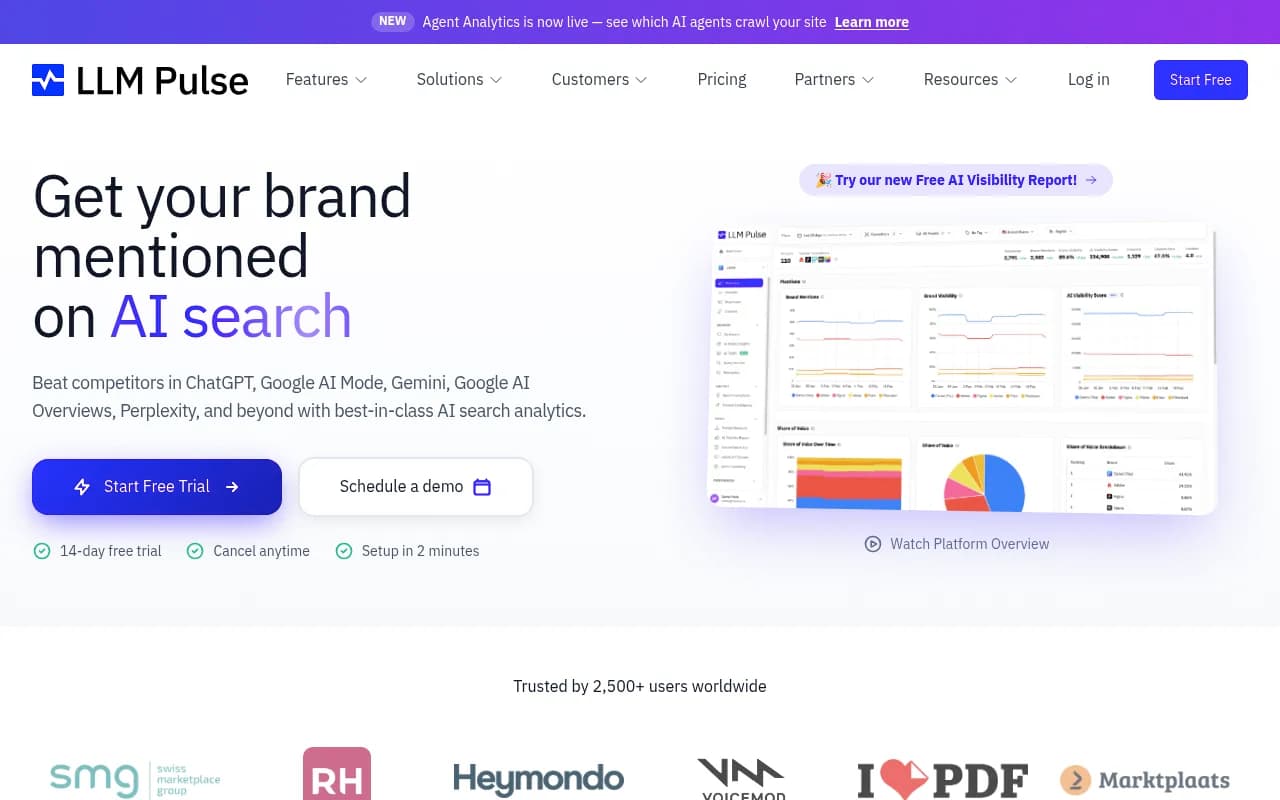
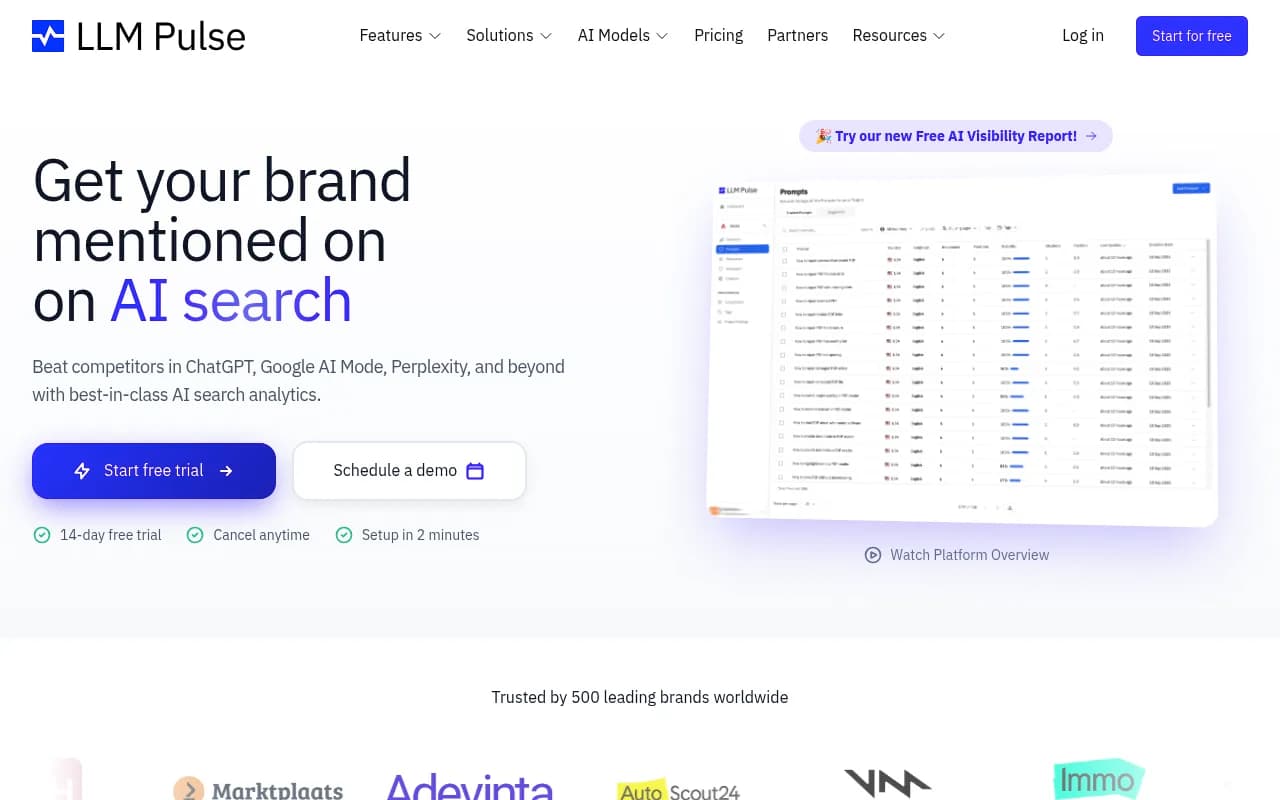
According to Capterra's listing (last updated March 2026), LLM Pulse delivers "detailed response analysis including citation information and competitor comparisons, while allowing users to organize tracked prompts with customizable tags for improved data management." That's a fair summary of what the tool does well.
The company claims 2,500+ users worldwide, with customers including iLovePDF, Voicemod, Volkswagen, AutoScout24, ImmoScout24, and Softonic. That's a decent roster for a mid-market tool.
How LLM Pulse works
The platform is built around a three-step loop:
Track -- You set up prompts (the questions your customers ask AI models), and LLM Pulse queries those prompts weekly across the AI engines you've selected. It logs the full response, whether your brand was mentioned, and what sources were cited.
Analyze -- You get a visibility score, citation rate, sentiment analysis, and share of voice. You can benchmark your performance against competitors and spot trends over time.
Optimize -- The platform surfaces AI-powered recommendations to improve how you appear in LLM responses.
This is a sensible structure, and the first two steps are genuinely well-executed. The tracking is reliable, the dashboards are clean, and the citation data gives you more context than a simple "mentioned/not mentioned" binary.
The third step -- optimization -- is where things get more nuanced. LLM Pulse provides recommendations, but it doesn't generate the actual content for you. You get guidance on what to fix; the execution is up to you.
What LLM Pulse does well
Citation and response analysis
This is the standout feature. When LLM Pulse tracks a prompt, it doesn't just tell you whether your brand appeared -- it shows you the full response, which sources were cited, and how your brand was framed. That level of detail is genuinely useful for understanding why you're visible (or not) for a given query.
Most basic monitoring tools give you a mention count. LLM Pulse gives you the context around those mentions, which is a meaningful step up.
Competitor benchmarking
You can track how your brand performs against specific competitors across the same prompts. This is particularly useful for understanding share of voice -- not just "did I appear?" but "did I appear more or less than [Competitor X]?" The competitor heatmap view makes this comparison easy to scan.
Prompt organization and tagging
Customizable tags let you group prompts by topic, funnel stage, product line, or whatever taxonomy makes sense for your business. For teams managing dozens or hundreds of prompts, this kind of organizational structure matters. It's a small thing, but it's the kind of UX detail that separates tools built for real workflows from ones built for demos.
Multi-model coverage
Supporting 10+ AI models is genuinely useful in 2026, when your customers might be using any combination of ChatGPT, Perplexity, Gemini, or Google AI Mode. Seeing how your visibility varies across models -- and which models are most likely to recommend you -- helps prioritize where to focus.
Agent analytics
LLM Pulse recently launched "Agent Analytics," which tracks which AI agents are crawling your site. This is a newer feature that puts it closer to the crawler log functionality that more advanced platforms offer. It's not as deep as dedicated crawler monitoring, but it's a step in the right direction.
Where LLM Pulse falls short
No built-in content generation
The biggest gap. LLM Pulse can tell you that you're not appearing for a prompt, and it can suggest what kind of content might help -- but it won't write that content for you. For teams that want a tighter loop between "identifying gaps" and "fixing them," this means jumping to a separate tool.
This isn't a fatal flaw, but it does mean LLM Pulse is primarily a monitoring and analysis tool rather than a full optimization platform.
Weekly tracking cadence
Prompts are tracked weekly by default. For fast-moving categories or competitive markets, that cadence can feel slow. If a competitor publishes a piece of content that starts getting cited by ChatGPT, you might not know about it for days.
Optimization recommendations are general
The AI-powered recommendations are useful as a starting point, but they tend toward the generic. "Publish more authoritative content on this topic" is technically correct advice, but it doesn't tell you exactly what to write, which angle to take, or which specific questions to answer. Teams that need more prescriptive guidance will want more.
No traffic attribution
LLM Pulse shows you visibility in AI search, but it doesn't connect that visibility to actual website traffic or revenue. You can see that ChatGPT is mentioning your brand, but you can't see whether those mentions are driving clicks or conversions. For teams that need to justify GEO investment to finance or leadership, this is a real limitation.
Pricing
LLM Pulse offers a 14-day free trial with no credit card required and claims a 2-minute setup time. Specific pricing tiers aren't publicly listed in detail, but the platform positions itself in the mid-market range. The free AI Visibility Report on their website is a good way to get a sense of your current standing before committing.
How LLM Pulse compares to alternatives
The AI visibility tracking space has gotten crowded fast in 2026. Here's how LLM Pulse stacks up against the tools most teams are evaluating alongside it:
| Tool | AI models tracked | Citation analysis | Content generation | Traffic attribution | Free trial |
|---|---|---|---|---|---|
| LLM Pulse | 10+ | Yes | No | No | Yes (14 days) |
| Promptwatch | 10+ | Yes | Yes (built-in) | Yes | Yes |
| Otterly.AI | ~5 | Basic | No | No | Yes |
| Profound | 9+ | Yes | No | Limited | Yes |
| AthenaHQ | ~6 | Yes | No | No | Yes |
| Peec AI | ~5 | Basic | No | No | Yes |
LLM Pulse sits comfortably above the basic monitoring tier (Otterly, Peec AI) in terms of response depth and citation detail. It's roughly comparable to Profound in terms of tracking breadth, though Profound has stronger enterprise features.
Where it loses ground is against platforms that close the full optimization loop. Promptwatch -- which processes over 880 million citations and is used by 6,700+ brands including Booking.com and Center Parcs -- includes a built-in AI writing agent that generates content specifically engineered to get cited by AI models, plus traffic attribution that connects visibility to actual revenue. For teams that want to move from "we know we have a visibility gap" to "we fixed it," that matters.

That said, not every team needs the full optimization stack. If your primary goal is monitoring and competitive benchmarking, LLM Pulse delivers that well.
Who should use LLM Pulse
LLM Pulse is a good fit for:
- Marketing teams that want to understand their AI search visibility without a steep learning curve
- Brands that are just starting to take GEO seriously and need a clear picture of where they stand
- Teams that already have a content workflow and just need better data to inform it
- Agencies managing a handful of clients who need clean, shareable dashboards
It's probably not the right fit for:
- Teams that need to generate and publish AI-optimized content at scale
- Brands that want to connect AI visibility to traffic and revenue attribution
- Enterprise teams that need deep crawler log analysis or custom API integrations
- Organizations that need more than weekly tracking frequency
Alternatives worth considering
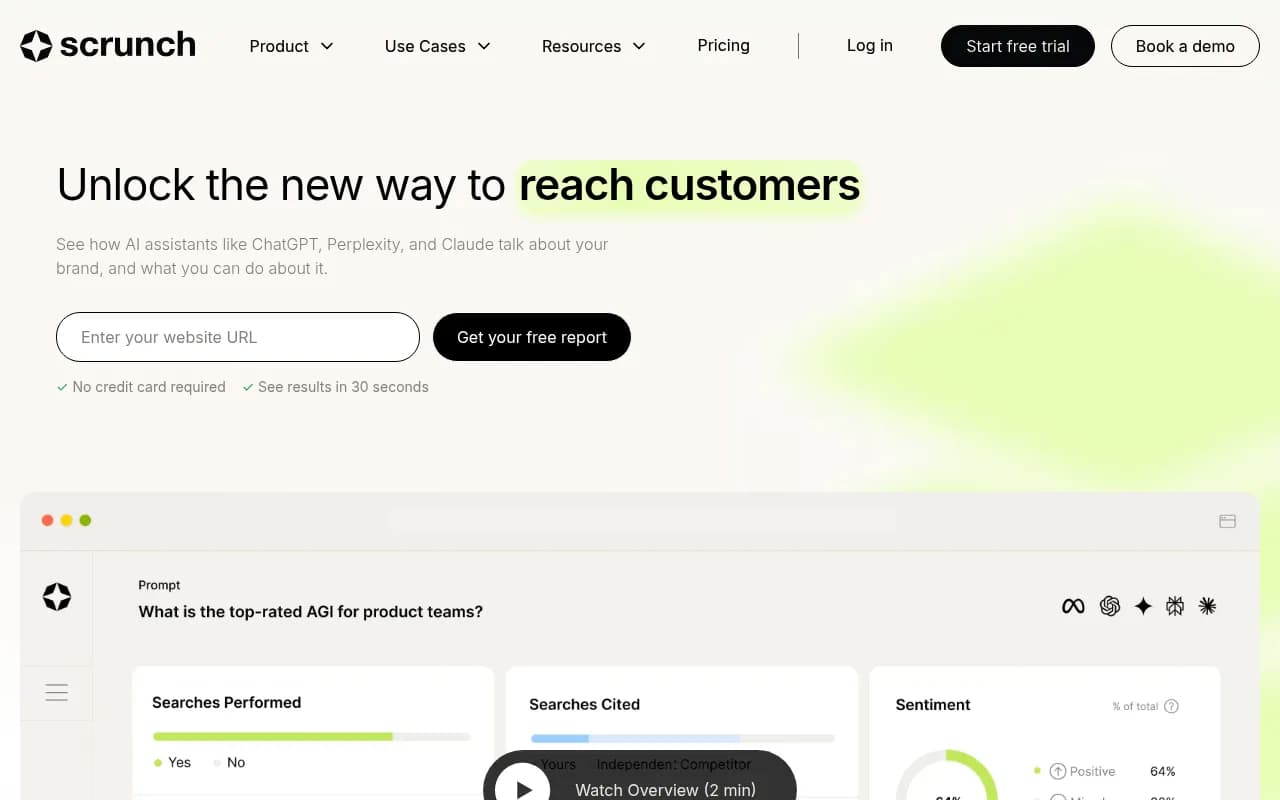
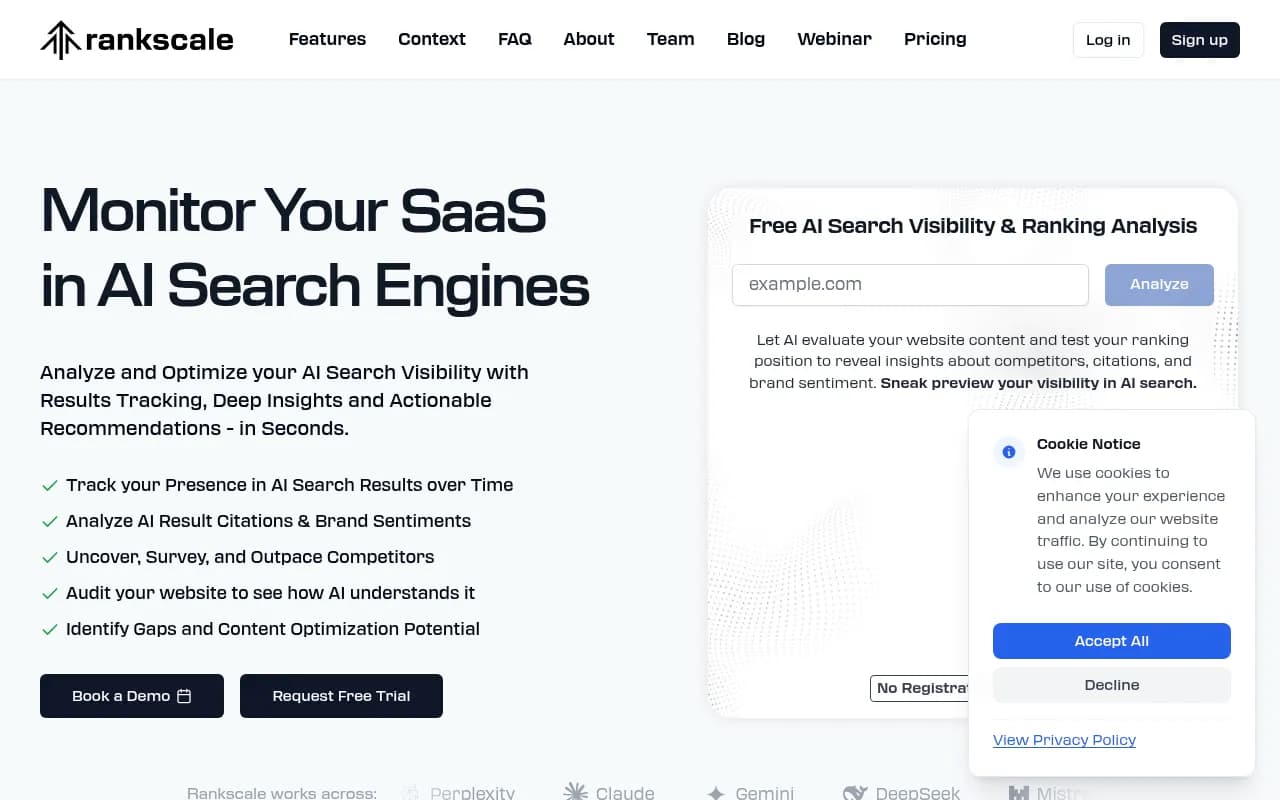
If LLM Pulse doesn't quite fit your needs, here are a few other tools worth evaluating:
For deeper monitoring with enterprise features:
Profound

For monitoring-focused teams on a tighter budget:
Otterly.AI


For full-cycle optimization (monitoring + content generation + traffic attribution):
For agency-focused workflows:
Final verdict
LLM Pulse is a capable, well-designed tool for teams that want more than surface-level AI visibility tracking. The citation analysis is genuinely good, the competitor benchmarking is useful, and the multi-model coverage is solid for 2026.
The honest limitation is that it stops at the analysis layer. It shows you the problem but doesn't help you solve it -- no content generation, no traffic attribution, no way to close the loop between "we're invisible for this prompt" and "we fixed it." For teams that are serious about improving their AI search visibility rather than just measuring it, that gap will eventually push them toward a more complete platform.
If you're evaluating LLM Pulse, the 14-day free trial is a low-risk way to test whether the depth of its analysis justifies the subscription. Start with 10-15 of your most important prompts, run a competitor comparison, and see whether the citation data tells you something you didn't already know. That's the real test.