Key takeaways
- Most AI visibility tools only monitor -- they show you data but don't help you act on it. Know which category a tool falls into before you buy.
- Your team type (solo marketer, agency, enterprise) matters more than feature lists when choosing a platform.
- The core question to ask: do you need to track visibility, or do you need to improve it? Those are different problems requiring different tools.
- Budget is a real filter: free and entry-level tools exist, but serious optimization work requires a platform with content gap analysis and citation data.
- A small number of platforms cover the full loop from gap identification to content creation to traffic attribution -- most stop at step one.
The AI visibility tool market has exploded. In 2024 there were maybe a dozen platforms worth considering. By mid-2026, there are well over a hundred, ranging from free Chrome extensions to six-figure enterprise contracts. Most of them do roughly the same thing: they send prompts to ChatGPT, Perplexity, and a handful of other models, check whether your brand appears, and put a number on a dashboard.
That's useful. But it's also table stakes.
The harder question isn't "which tool tracks AI visibility?" It's "which tool is actually right for my situation?" A solo content marketer at a 20-person SaaS company has completely different needs from an agency managing 40 client accounts, or an enterprise SEO team at a Fortune 500 brand trying to justify budget to a CMO.
This guide is structured as a decision tree. Work through the questions in order and you'll land on a shortlist that fits your actual situation -- not just the one with the best marketing.
Step 1: What problem are you actually trying to solve?
Before looking at any tool, be honest about what you need.
There are really only three jobs these tools do:
- Monitoring: "Is my brand appearing in AI responses? How often? Compared to competitors?"
- Optimization: "Why am I not appearing, and what do I do about it?"
- Attribution: "Is my AI visibility actually driving traffic and revenue?"
Most tools do job 1. A smaller number do job 2. Very few do all three.
If you just need to answer "are we showing up in ChatGPT?" for a quarterly board slide, a basic monitoring tool is fine. If you need to systematically improve your AI visibility over time and connect it to business outcomes, you need something that goes further.
Keep this in mind as you move through the rest of the decision tree.
Step 2: What's your team type?
Solo marketer or small team (1-3 people)
You probably don't have a dedicated analyst. You need something that's fast to set up, doesn't require a lot of configuration, and gives you clear direction on what to do next. You also have a limited budget -- probably under $200/month.
Good options to evaluate:
Otterly.AI -- Clean interface, covers ChatGPT, Perplexity, and Google AI Overviews. Good for getting a baseline read on your visibility without a steep learning curve.
Otterly.AI

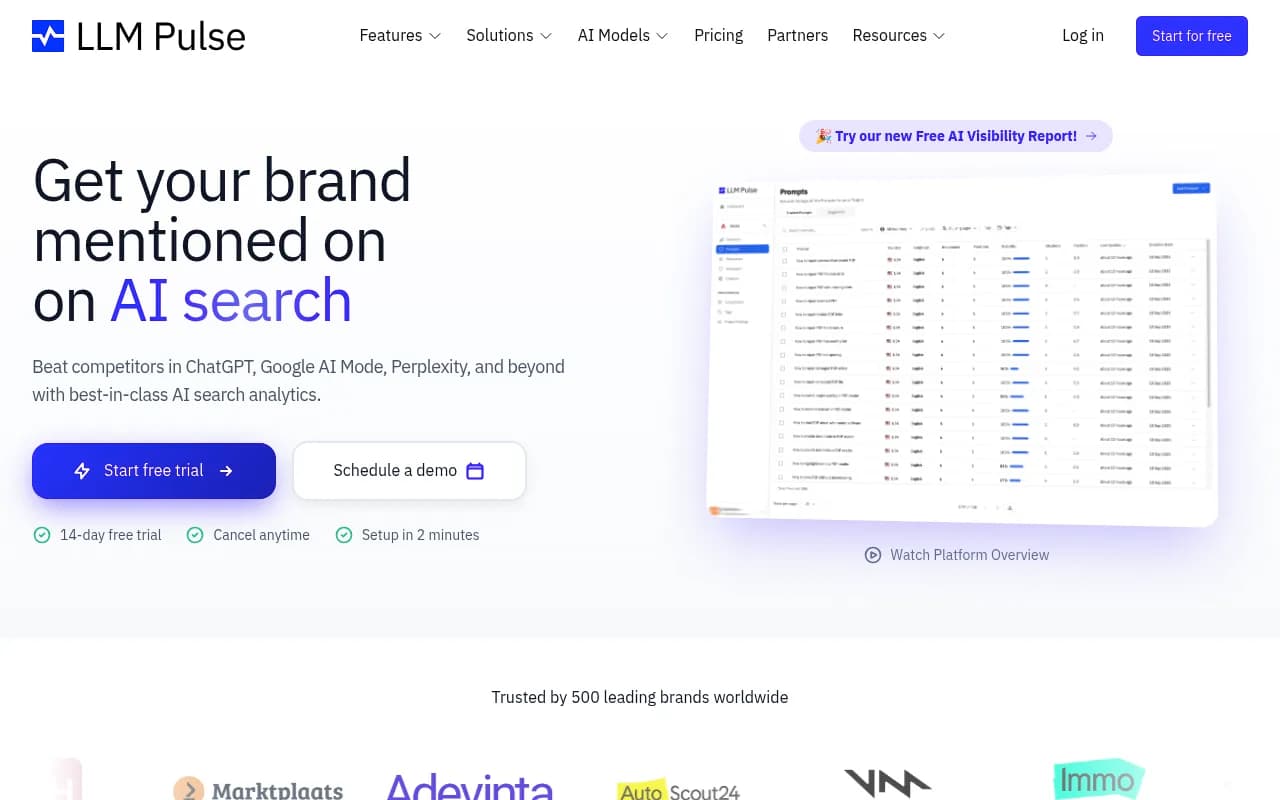
LLM Pulse -- Lightweight tracking across multiple AI models. Works well if you just need to monitor a handful of prompts and don't need deep competitive analysis.
Rankshift -- Tracks brand visibility across ChatGPT and Perplexity. Simple setup, good for teams that want a quick answer without a complex onboarding process.

The honest limitation here: these tools will tell you where you stand. They won't tell you what to do about it. If you want to actually move the needle, you'll need either a more capable platform or a willingness to do the gap analysis manually.
Marketing agency (managing multiple clients)
Agency use cases are genuinely different. You need multi-client workspaces, white-label reporting, the ability to benchmark clients against their specific competitors, and ideally a partner program with volume pricing.
The tools built for individual brands often fall apart at scale. Watch for platforms that charge per brand/domain -- costs add up fast when you're managing 20+ clients.
Profound is one of the more agency-friendly options in this space. It has workspace management, solid competitive benchmarking, and a reasonable agency tier. The trade-off is that it's primarily a monitoring platform -- it shows you data well but leaves the "what to do" question to you.
Profound

Promptwatch has an agency/enterprise tier with multi-site management and white-label reporting. What makes it different for agencies is the content gap analysis and built-in AI writing -- you can actually deliver optimization work to clients, not just reports. The 880M+ citation dataset means content recommendations are grounded in what AI models actually cite, not guesswork.

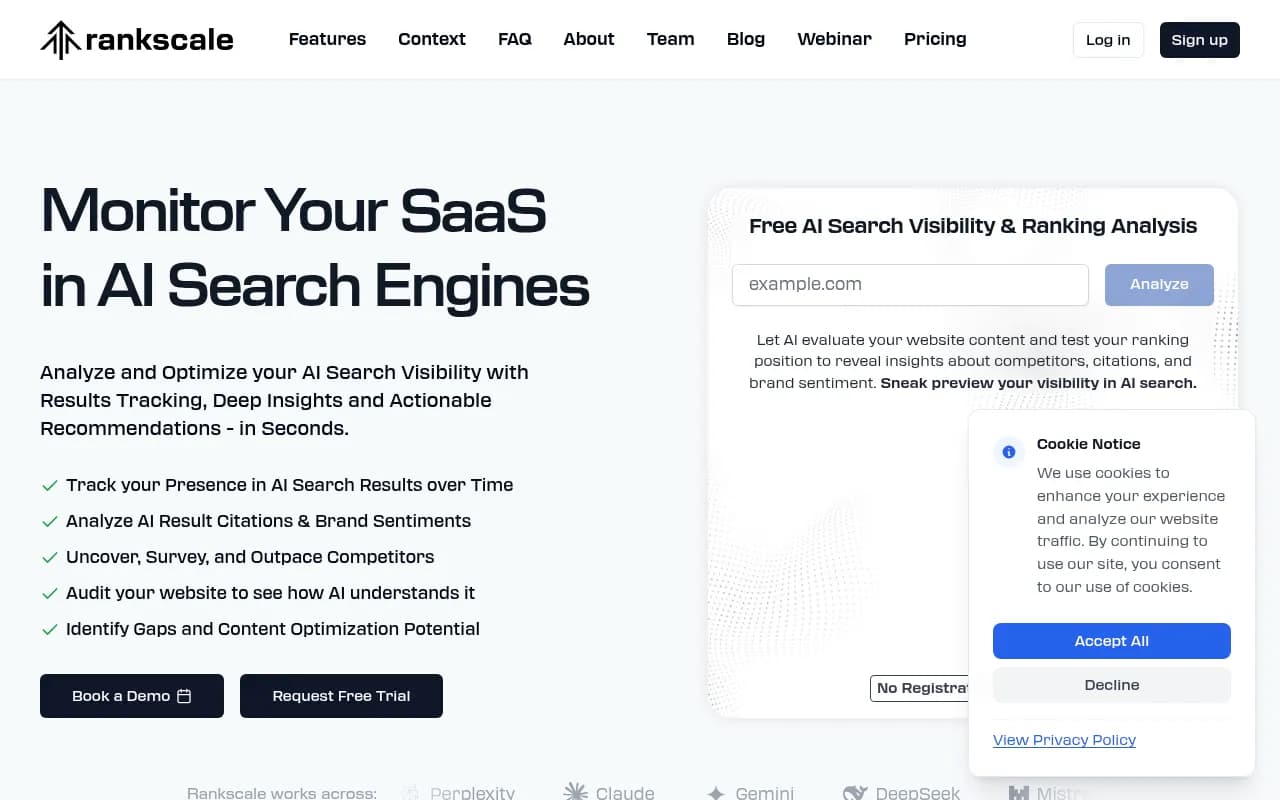
Rankscale is worth a look if you're running a smaller agency and want a more budget-conscious option with decent multi-client support.
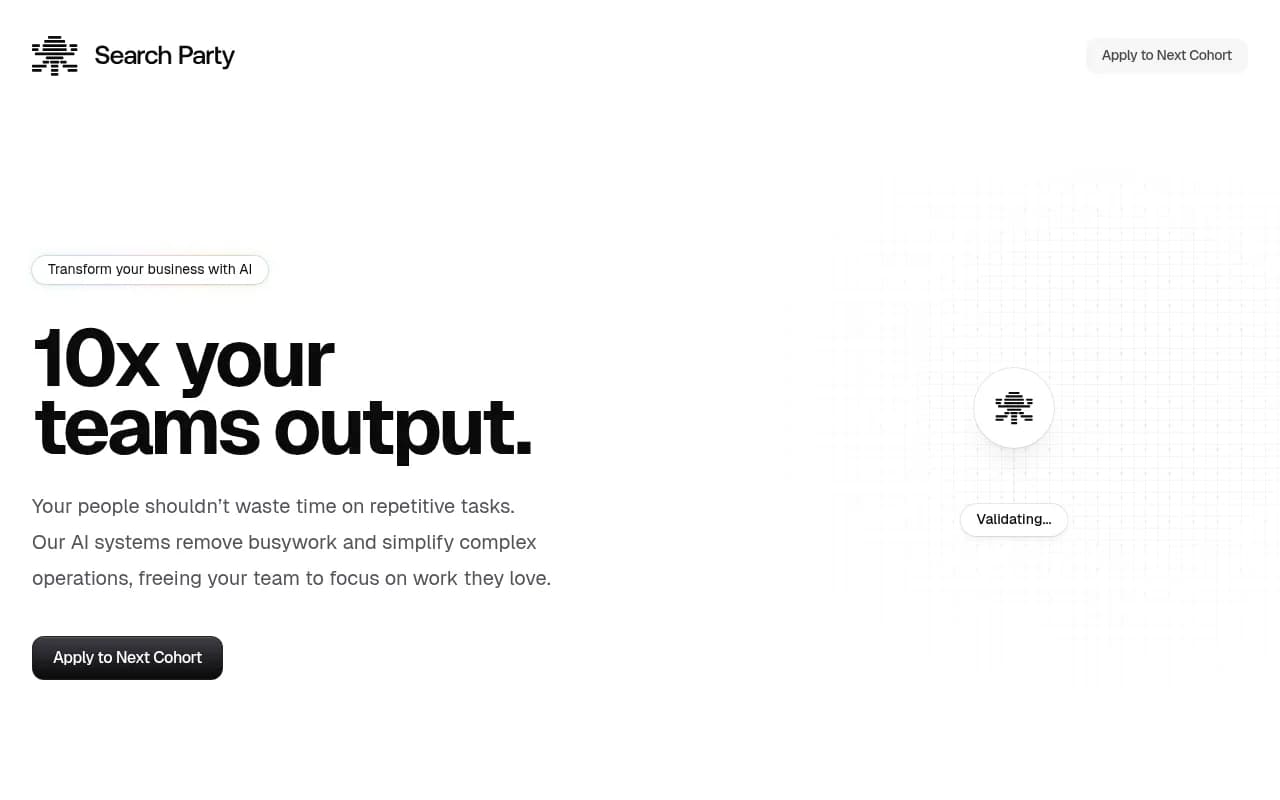
Search Party takes a different angle -- more consultancy-oriented, building custom AI workflows rather than off-the-shelf dashboards. Better fit for agencies that want to differentiate on methodology.
Search Party
For agencies, the key question is: what are you selling to clients? If you're selling monitoring reports, any decent tracking tool works. If you're selling AI visibility improvement (which is where the real value is), you need a platform that helps you create and optimize content, not just measure it.
In-house marketing team at a mid-size company
You have more budget than a solo marketer, a few people who can actually use the tool, and a boss who wants to see ROI. You probably care about competitive benchmarking ("how do we compare to [Competitor X]?") and you need to be able to show progress over time.
This is where the market gets interesting, because you have real options.
AthenaHQ has strong competitive intelligence features and a clean interface that non-technical marketers can use. It's monitoring-focused, which is fine if you have a content team that can act on the insights independently.

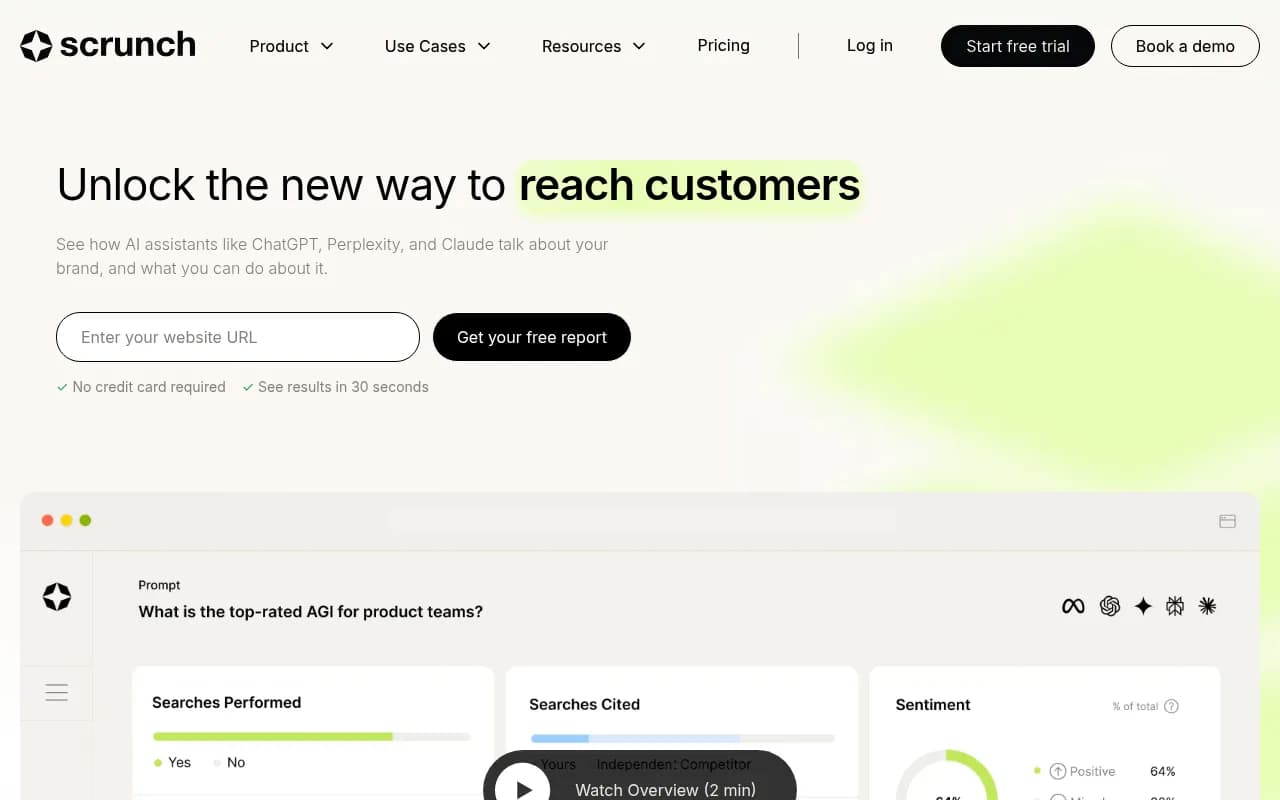
Scrunch AI covers a good range of AI models and has decent competitor comparison features.
Promptwatch is worth serious consideration here. The answer gap analysis -- which shows you exactly which prompts competitors rank for that you don't -- is genuinely useful for a team that can act on it. The built-in content generation means you don't need to hand off insights to a separate writing workflow; you can go from "we're missing visibility for this topic" to "here's a draft article" in the same platform.
Enterprise team (100+ person company, complex requirements)
Enterprise needs are different in kind, not just degree. You need SSO, API access, custom reporting, dedicated support, multi-region/multi-language monitoring, and the ability to integrate with existing data infrastructure. You also need to be able to justify the spend with hard numbers.
Evertune positions itself at the Fortune 500 end of the market. Strong GEO insights, enterprise-grade infrastructure. Worth evaluating if you're at that scale.
Profound has an enterprise tier with more customization. Good if you need deep prompt volume data and competitive benchmarking at scale.
Promptwatch covers enterprise requirements with API access, Looker Studio integration, server log analysis for traffic attribution, and custom agency/enterprise pricing. The crawler logs feature -- real-time logs of AI bots (ChatGPT, Claude, Perplexity, etc.) hitting your site -- is something most competitors don't offer at all. For an enterprise team trying to understand why AI models aren't citing their content, that's a meaningful diagnostic tool.
Semrush and Ahrefs are worth mentioning here because many enterprise teams already pay for them. Both have added some AI visibility features.
The honest assessment: Semrush uses fixed prompts for its AI tracking, which limits how useful it is for brand-specific monitoring. Ahrefs Brand Radar has similar constraints and no AI traffic attribution. If you're already paying for these platforms, use the AI features as a supplement -- but don't rely on them as your primary AI visibility solution.
Step 3: What AI models matter most to you?
This is a more tactical question, but it matters.
If your audience primarily uses Google, you need strong Google AI Overviews and Google AI Mode coverage. If you're in a research-heavy B2B category, Perplexity visibility might matter more than ChatGPT. If you're targeting younger consumers, Grok and Meta AI are increasingly relevant.
Most platforms cover ChatGPT, Perplexity, and Google AI Overviews. Coverage of Claude, Gemini, Grok, DeepSeek, Mistral, Meta AI, and Copilot varies significantly.
Before committing to any platform, ask them specifically: which models do you query, how often, and do you support custom personas? The persona question matters because "best project management software" gets different answers depending on whether the AI thinks you're a freelancer or an enterprise IT director.
Step 4: Do you need content creation, or just tracking?
This is the fork in the road that most buyers don't think about clearly enough.
Monitoring tools are cheaper and faster to set up. They tell you your visibility score, show you competitor comparisons, and let you track trends over time. That's genuinely useful -- you need a baseline before you can improve anything.
But visibility scores don't improve themselves. At some point, someone has to figure out what content to create, write it, publish it, and then check whether it moved the needle. Most monitoring tools leave all of that to you.
The platforms that close this loop are fewer:
- Promptwatch has the most complete answer gap-to-content-creation workflow. The AI writing agent generates articles grounded in citation data -- it knows what sources AI models actually cite, so the output is engineered for AI search, not just keyword density.
- AirOps takes a content engineering angle, building workflows for AI search visibility. More technical, better for teams with developer resources.
- Searchable has built-in content generation alongside its tracking features.
If you're evaluating tools and content creation matters to you, ask for a demo of the content workflow specifically. The quality of AI-generated content varies enormously between platforms.
Step 5: How do you measure success?
This is where a lot of teams get stuck. AI visibility scores are interesting, but they don't directly tell you whether your efforts are driving business results.
The attribution question is genuinely hard. AI models often don't send referral traffic the way Google does -- users read an AI response and then navigate directly to a brand's website, which shows up as direct traffic in GA4. Traditional analytics miss this entirely.
A few approaches:
Code snippet / JS tag: Some platforms (including Promptwatch) offer a JavaScript snippet that detects AI-referred visits by analyzing session patterns and referrer data. Not perfect, but better than nothing.
Google Search Console integration: Correlating AI visibility improvements with GSC traffic changes gives you a reasonable proxy for impact.
Server log analysis: The most accurate method. If your platform can analyze server logs, you can see exactly which AI crawlers are hitting which pages and correlate that with visibility scores. Promptwatch supports this; most competitors don't.
If attribution matters to your organization -- and it should -- make sure the platform you choose has a credible answer to "how do we connect this to revenue?"
The comparison table
Here's a summary of how the major platforms stack up across the dimensions that matter most:
| Platform | Best for | Monitoring | Content creation | Attribution | Multi-model coverage | Agency features | Approx. price |
|---|---|---|---|---|---|---|---|
| Promptwatch | All team types | Yes | Yes (AI writing agent) | Yes (logs, GSC, snippet) | 10+ models | Yes (multi-site, white-label) | $99-$579/mo |
| Profound | Mid-market & enterprise | Yes | Limited | No | 9+ models | Yes | Custom |
| Otterly.AI | Solo/small teams | Yes | No | No | 3-4 models | Limited | ~$49/mo |
| AthenaHQ | Mid-market | Yes | No | No | 5+ models | Limited | Custom |
| Evertune | Enterprise | Yes | No | No | Multiple | Yes | Custom |
| Semrush | Existing SEO users | Partial (fixed prompts) | Via ContentShake | No | Limited | Yes | $120+/mo |
| Ahrefs | Existing SEO users | Partial (fixed prompts) | No | No | Limited | Yes | $129+/mo |
| Scrunch AI | Mid-market | Yes | No | No | Multiple | Limited | Custom |
| Search Party | Agencies | Yes | Via custom workflows | No | Multiple | Yes | Custom |
| LLM Pulse | Solo/small teams | Yes | No | No | Multiple | No | ~$29/mo |
The actual recommendation
If you want a single recommendation: the right tool depends on your team type and what you need to do with the data.
For solo marketers and small teams who just need a visibility baseline, start with something lightweight like Otterly.AI or LLM Pulse. You can always upgrade later.
For agencies, the calculus is different. You need to deliver value to clients, not just reports. A platform that helps you identify gaps and create content that closes them is worth the higher price point -- it's the difference between selling a dashboard and selling a service that actually moves metrics.
For mid-market and enterprise teams, the monitoring-only tools will frustrate you within six months. You'll have great data and no clear path to improving it. The platforms that close the loop from gap identification to content creation to traffic attribution are the ones worth the investment.
Promptwatch sits at the top of that category in 2026 -- not because of marketing claims, but because it's one of the few platforms that genuinely covers all three jobs: monitoring, optimization, and attribution. The crawler logs, citation database, and content generation workflow are things most competitors either don't have or have in a much more limited form.
That said, no tool replaces a strategy. The best AI visibility platform in the world won't help you if you don't know which prompts matter to your customers, what your competitors are doing well, and what content gaps you're actually trying to close. Start with those questions, then pick the tool that helps you answer them.
A few tools worth watching
The market is moving fast. A few platforms that don't fit neatly into the categories above but are worth keeping an eye on:
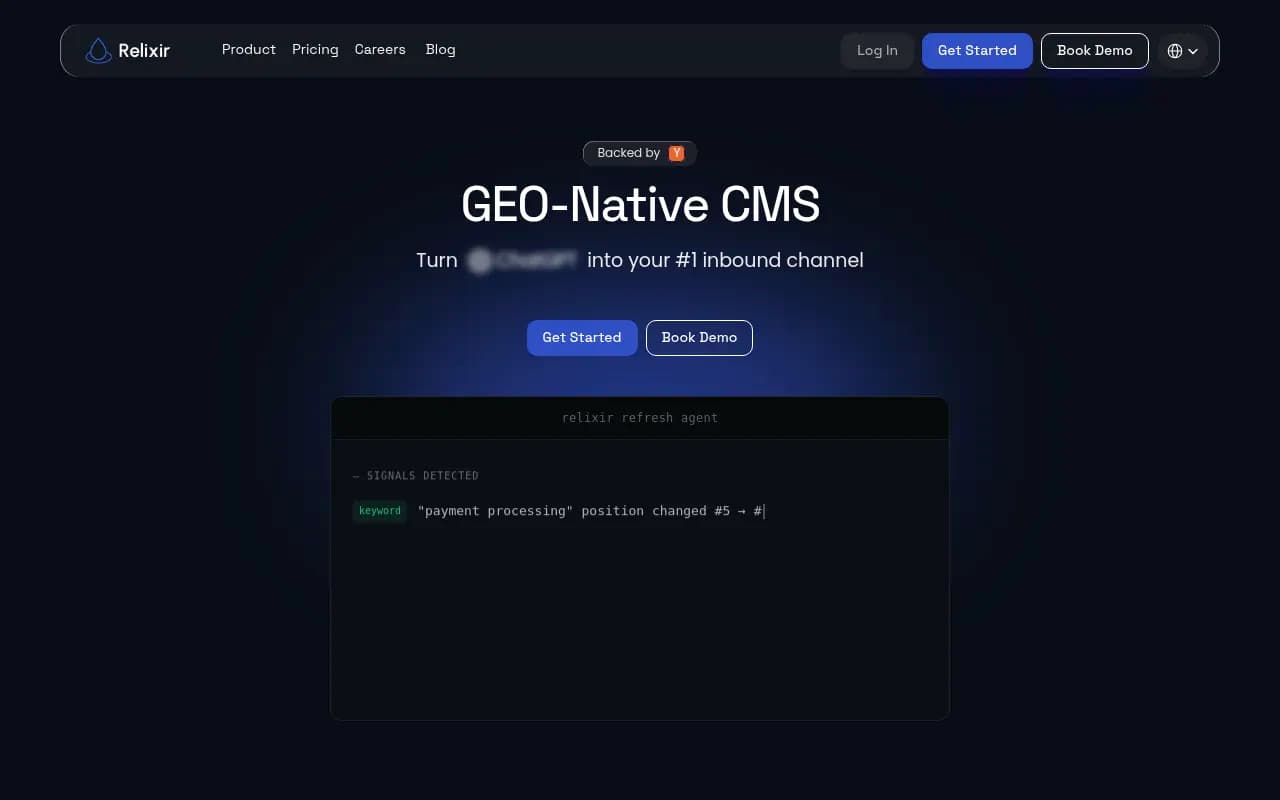
Relixir -- Building an end-to-end GEO engine with a strong focus on enterprise brands. Early but interesting.
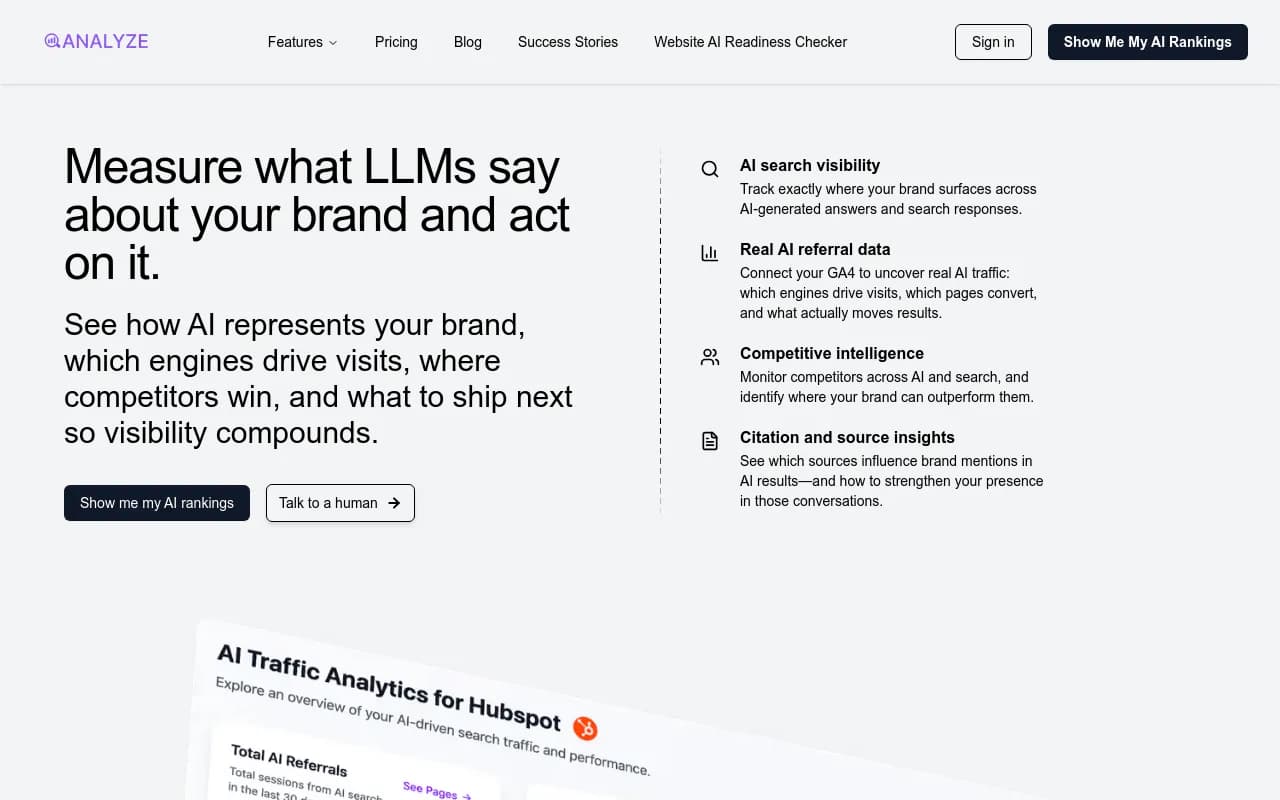
Analyze AI -- One of the few tools that explicitly tries to connect AI visibility to real traffic data.
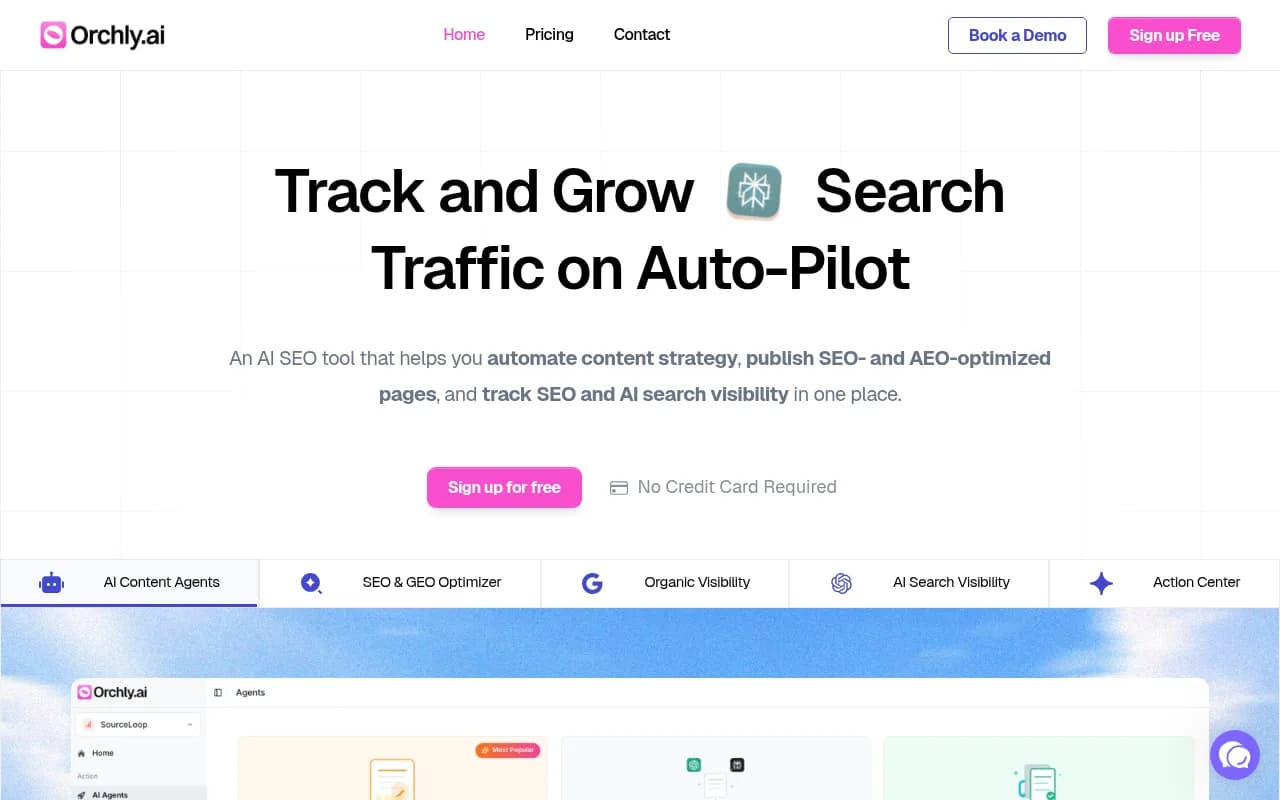
Orchly -- Multi-platform tracking with a clean interface. Good for teams that need broad model coverage without a lot of setup.
Peec AI -- Solid mid-market option with good prompt tracking features.

The category will consolidate over the next 12-18 months. The monitoring-only tools will either add optimization features or get acquired. The platforms that survive will be the ones that can demonstrate a clear path from "here's your visibility score" to "here's how we improved it."
Buy accordingly.