Key takeaways
- GeoGen is 4x cheaper at entry level (€20/mo vs $95/mo), making it the budget pick for solo marketers or small brands just starting with AI visibility tracking
- Gauge targets agencies and marketing teams with more comprehensive analytics, citation pattern analysis, and content gap identification -- GeoGen is positioned as a simpler monitoring tool
- Both platforms cover the same core LLMs (ChatGPT, Perplexity, Gemini, Grok, Copilot), so engine coverage is not a differentiator
- Gauge's Growth plan ($399/mo) is priced identically to GeoGen's Pro plan (€399/mo), but Gauge emphasizes actionable recommendations while GeoGen's feature depth at that tier is less clear
- Neither platform offers a free tier -- both require paid subscriptions from day one
- If you need basic "are we mentioned?" tracking on a budget, GeoGen wins. If you want deeper analytics and optimization guidance, Gauge is the better bet.
Overview
GeoGen
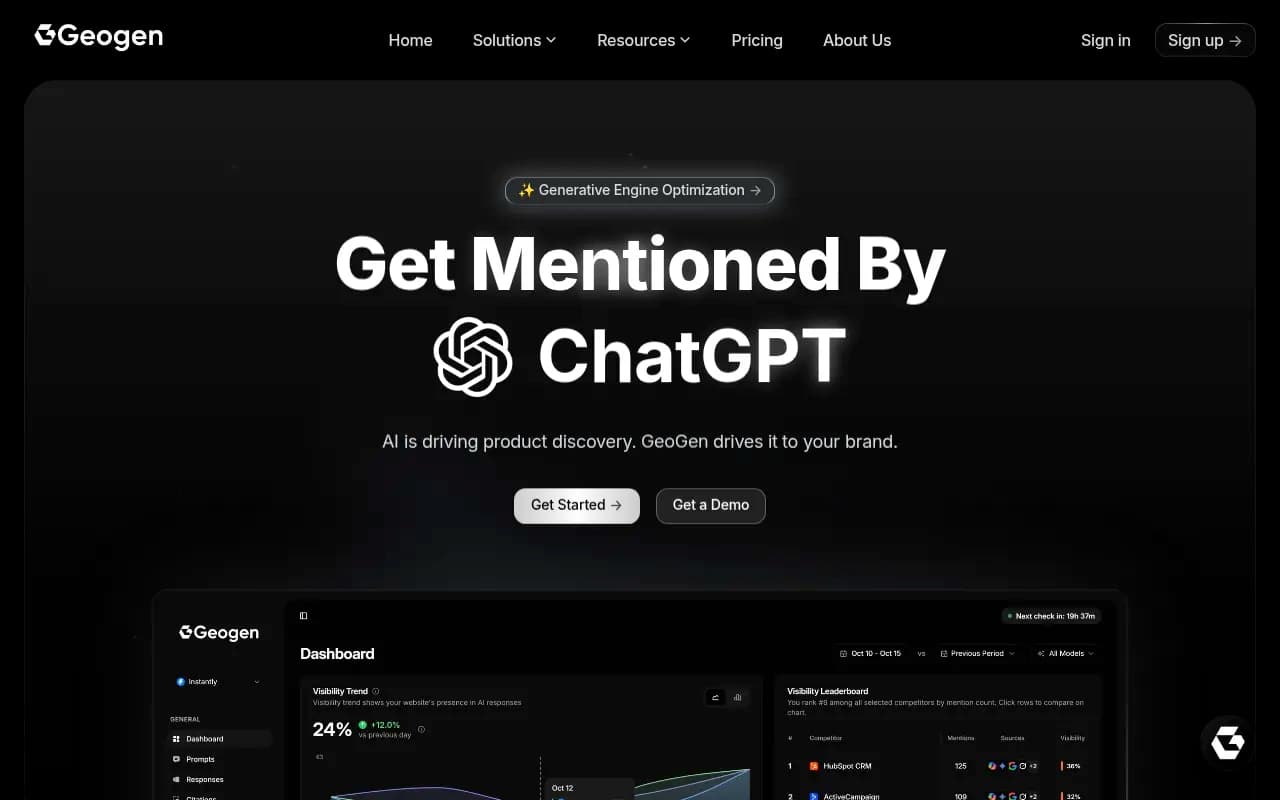
GeoGen is a Generative Engine Optimization platform that monitors brand visibility across AI search engines. It tracks mentions in ChatGPT, Perplexity, Gemini, Grok, and Microsoft Copilot, analyzes competitor rankings, and provides recommendations to improve AI search presence. The platform positions itself as best for small to mid-sized brands focused on basic AI visibility tracking. Pricing starts at €20/mo for the Micro plan and scales to €399/mo for Pro, with custom enterprise pricing available. Annual billing gets you a 20% discount.
GeoGen's website emphasizes getting your brand mentioned by AI engines and driving product discovery, with a dashboard interface that shows brand mentions and competitor comparisons. The company lists clients including CloudBlast, GdprWise, ProxyScrape, and TextBroker.
Gauge
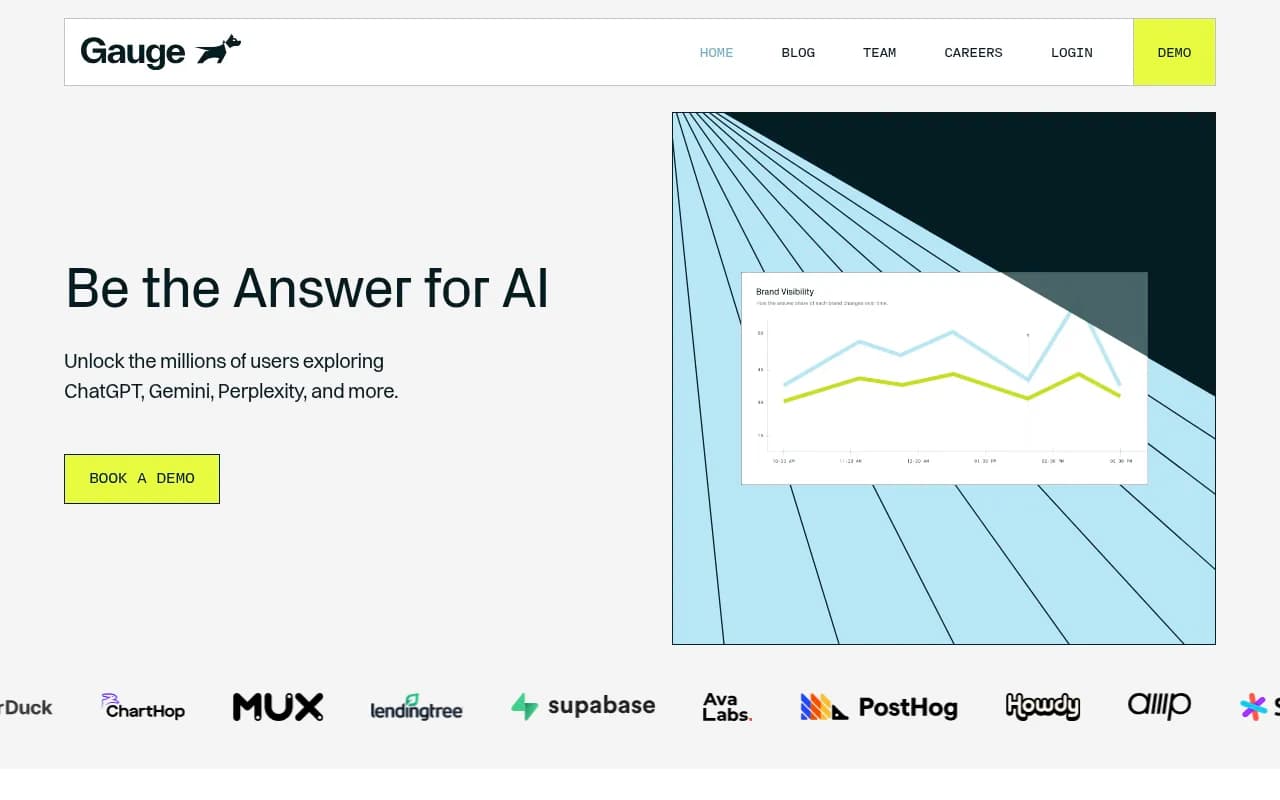
Gauge is an AI visibility platform that monitors brand appearances across ChatGPT, Claude, Gemini, Perplexity, and other LLMs. It tracks brand mentions, analyzes citation patterns, identifies content gaps, and provides actionable recommendations to improve AI search presence. Gauge is designed for marketing teams and agencies managing brand visibility in generative AI search results.
Pricing starts at $95/mo with annual billing, with a Growth plan at $399/mo and custom Enterprise pricing. The platform's website highlights clients like MotherDuck, Supabase, and Ava, suggesting traction with tech companies and SaaS brands. Gauge emphasizes "complete control over your AI presence" and positions itself as a comprehensive toolkit for AI visibility and GEO optimization.
Side-by-side comparison
| Feature | GeoGen | Gauge |
|---|---|---|
| Starting price | €20/mo (Micro) | $95/mo (annual billing) |
| Mid-tier price | €399/mo (Pro) | $399/mo (Growth) |
| Free tier | No | No |
| Target audience | Small to mid-sized brands | Marketing teams, agencies |
| AI engines covered | ChatGPT, Perplexity, Gemini, Grok, Copilot | ChatGPT, Claude, Gemini, Perplexity, other LLMs |
| Citation analysis | Basic mention tracking | Citation pattern analysis |
| Content gap identification | Not explicitly mentioned | Yes |
| Actionable recommendations | Basic recommendations | Emphasized as core feature |
| Competitor analysis | Yes | Not explicitly mentioned |
| Multi-client management | Unclear | Designed for agencies |
| Annual billing discount | 20% | Included in listed pricing |
| Enterprise tier | Custom pricing | Custom pricing |
Pricing breakdown
Both platforms use tiered subscription models, but GeoGen has a significantly lower entry point.
| Plan tier | GeoGen | Gauge |
|---|---|---|
| Entry level | €20/mo (Micro) | $95/mo (annual) |
| Mid-tier | €399/mo (Pro) | $399/mo (Growth) |
| Enterprise | Custom | Custom |
| Annual discount | 20% off | Pricing shown is annual |
GeoGen's Micro plan at €20/mo (roughly $21 USD) is the cheapest way into AI visibility tracking between these two platforms. That's about 78% cheaper than Gauge's entry point. For a solo marketer or small business just dipping toes into AI search monitoring, that price gap matters.
At the mid-tier, both platforms converge at €399/$399 per month. GeoGen calls this "Pro" while Gauge calls it "Growth." The feature differences at this tier are harder to compare because GeoGen's website doesn't detail what you get in Pro beyond the price point. Gauge explicitly mentions citation pattern analysis and content gap identification across all tiers, suggesting more depth.
Neither platform offers a free tier or free trial based on the available data. You're paying from day one.
Feature depth and analytics
This is where the platforms diverge most clearly.
Gauge positions itself as a comprehensive analytics platform. The website emphasizes citation pattern analysis, content gap identification, and actionable recommendations. The tagline "Complete Control Over Your AI Presence" suggests a more hands-on optimization approach. The client list (MotherDuck, Supabase, Ava) skews toward tech companies and SaaS brands that likely need detailed analytics and reporting.
GeoGen's website focuses on tracking and monitoring. You can see brand mentions, analyze competitor rankings, and get recommendations. But the depth of those recommendations isn't specified. The positioning as "best for small to mid-sized brands focused on basic AI visibility tracking" suggests a simpler, less feature-rich approach. That's not necessarily bad -- sometimes you just want to know "are we mentioned?" without drowning in data.
The difference shows up in how they describe their value prop. Gauge says "track, analyze, and improve" -- a three-step optimization loop. GeoGen says "get mentioned by ChatGPT" -- a single outcome focus.
AI engine coverage
Both platforms cover the major LLMs:
- ChatGPT: ✓ both
- Perplexity: ✓ both
- Gemini: ✓ both
- Grok: ✓ both
- Microsoft Copilot: ✓ both
- Claude: ✓ Gauge only (explicitly mentioned)
Gauge mentions Claude specifically, while GeoGen's website doesn't list it. That could be a meaningful gap if you care about Anthropic's models, or it could be an oversight in their marketing copy. Neither platform lists coverage for DeepSeek, Meta AI, or Mistral, though that doesn't mean they don't track them.
Engine coverage is table stakes at this point. The real question is what you do with the data once you have it.
Target audience and use cases
GeoGen explicitly says it's "best for small to mid-sized brands focused on basic AI visibility tracking." That's a clear signal about scope and complexity. If you're a solo marketer at a startup or a small business owner who wants to know if ChatGPT mentions your brand when people ask relevant questions, GeoGen is built for you. The €20/mo entry point reinforces this -- it's priced for individuals and small teams.
Gauge targets "marketing teams and agencies managing brand visibility." The emphasis on agencies suggests multi-client workflows, white-label reporting, or at least more robust team features. The $95/mo starting price is still accessible for small teams, but it's not pocket change for a solo operator.
If you're an agency managing AI visibility for 5-10 clients, Gauge is the obvious choice. If you're a bootstrapped SaaS founder trying to get mentioned in AI search results without breaking the bank, GeoGen makes more sense.
Content optimization and recommendations
This is where the platforms differ most in philosophy.
Gauge emphasizes "actionable recommendations" and "content gap identification" as core features. The website says it helps you "improve your brand's presence" -- active language suggesting you can take steps based on the data. Citation pattern analysis means you can see which sources AI engines are pulling from and potentially get your content into those citation pools.
GeoGen mentions "recommendations to improve your AI search presence" but doesn't elaborate on what those recommendations look like or how actionable they are. The focus is more on tracking and monitoring than optimization. That might be fine if you have an in-house content team that knows what to do with the data, but it's less helpful if you need the platform to tell you what to fix.
Worth noting: if you're serious about closing the loop from visibility tracking to content creation, Promptwatch offers an integrated approach with Answer Gap Analysis and an AI writing agent that generates content specifically designed to get cited by LLMs. That's a different category of tool -- more end-to-end optimization than pure monitoring.
Dashboard and usability
Both platforms show dashboard screenshots on their websites, but details are limited.
GeoGen's screenshots show a clean interface with brand mention tracking, competitor comparisons, and what looks like trend graphs over time. The design is straightforward -- you can probably figure it out without a manual.
Gauge's website is heavier on marketing copy and lighter on actual product screenshots, which makes it harder to evaluate the interface. The emphasis on "complete toolkit" suggests more features and potentially more complexity.
Neither platform offers a free trial (based on available data), so you can't test-drive before committing. That's a risk, especially at Gauge's $95/mo entry point.
Competitor analysis capabilities
GeoGen explicitly mentions "analyze competitor rankings" as a feature. You can see how your brand stacks up against competitors in AI search results. That's useful for benchmarking and identifying gaps.
Gauge doesn't explicitly mention competitor analysis on its website, though that doesn't mean it's absent. The focus is more on your own brand's visibility and optimization.
If head-to-head competitor tracking is a priority, GeoGen has the clearer messaging here.
Reporting and team features
Gauge's positioning as an agency tool suggests better team collaboration and reporting features, but specifics aren't detailed on the website. You'd expect things like client dashboards, white-label reports, and multi-user access at the Growth and Enterprise tiers.
GeoGen's website doesn't mention team features or reporting capabilities. That doesn't mean they don't exist, but it's not part of the pitch.
If you need to share reports with clients or stakeholders, ask both vendors about export formats, scheduled reports, and white-labeling before committing.
Integration and API access
Neither platform's website mentions API access, webhooks, or integrations with other tools. That's a gap for both. If you want to pipe AI visibility data into your existing analytics stack or trigger workflows based on mention changes, you'll need to ask the vendors directly.
This is an area where more mature platforms have an edge -- the ability to connect AI visibility data to your CRM, marketing automation, or BI tools makes it actionable at scale.
Pros and cons
GeoGen pros
- €20/mo entry point is the cheapest in the category
- Explicit competitor analysis feature
- Clean, straightforward interface (based on screenshots)
- 20% annual billing discount
- Positioned for simplicity and ease of use
GeoGen cons
- Feature depth unclear, especially at higher tiers
- Positioned as "basic" tracking, not comprehensive optimization
- No mention of team features or multi-client management
- Limited detail on what recommendations actually include
- No Claude coverage mentioned
Gauge pros
- Designed for agencies and marketing teams
- Emphasizes actionable recommendations and content gap identification
- Citation pattern analysis for deeper insights
- Covers Claude in addition to other major LLMs
- Positioned as a comprehensive toolkit, not just monitoring
Gauge cons
- $95/mo starting price is 4x more expensive than GeoGen's entry tier
- Less transparent about specific features at each pricing tier
- No competitor analysis explicitly mentioned
- Limited product screenshots make it harder to evaluate interface
- No free trial to test before buying
Who should pick which tool
Choose GeoGen if:
- You're a solo marketer, small business owner, or bootstrapped startup on a tight budget
- You want basic "are we mentioned?" tracking without complexity
- Competitor benchmarking is important to you
- You're comfortable with a simpler tool and don't need deep analytics
- €20-€399/mo fits your budget better than $95-$399/mo
Choose Gauge if:
- You're an agency managing AI visibility for multiple clients
- You need actionable recommendations and content gap analysis, not just raw data
- Citation pattern analysis matters for your optimization strategy
- You have a marketing team that will use the insights to drive content decisions
- You're willing to pay more for a more comprehensive platform
Consider alternatives if:
- You need an end-to-end platform that goes from tracking to content creation to optimization (not just monitoring)
- You want API access and integrations with your existing stack
- You need features like crawler log analysis, Reddit/YouTube tracking, or traffic attribution
- You're managing AI visibility at enterprise scale with complex multi-region, multi-language requirements
Final verdict
GeoGen wins on price, Gauge wins on depth.
If you're just getting started with AI visibility tracking and need to keep costs low, GeoGen's €20/mo Micro plan is the obvious entry point. You get basic mention tracking, competitor analysis, and a simple interface without breaking the bank. It's a monitoring tool, not an optimization platform, but sometimes that's all you need.
If you're serious about improving your AI search presence and have the budget for it, Gauge's emphasis on actionable recommendations and content gap identification makes it the better choice. The $95/mo starting price is steep compared to GeoGen, but you're paying for more comprehensive analytics and optimization guidance. For agencies managing multiple clients, Gauge is the clear pick.
At the €399/$399 mid-tier, the choice is less obvious because GeoGen doesn't detail what you get in the Pro plan. Gauge's Growth plan explicitly includes citation analysis and content gaps, which tips the scales in its favor if you're spending that much anyway.
Bottom line: GeoGen for budget-conscious basic tracking, Gauge for teams that need optimization depth. Neither is a complete solution if you want to close the loop from visibility to content creation to traffic attribution, but they both cover the monitoring piece competently at their respective price points.