Key Takeaways
- Zerply is an autonomous SEO platform with AI visibility tracking built in -- it monitors, plans, writes, and publishes content automatically. Gauge is a dedicated AI visibility tracker that monitors and analyzes but doesn't create content.
- Pricing: Zerply starts free (500 credits/mo) then $99/mo paid. Gauge starts at $95/mo annual billing, $399/mo for Growth. Zerply has a lower barrier to entry.
- Content generation: Zerply includes AI agents that draft and publish articles to WordPress. Gauge gives you recommendations and gap analysis but you handle content creation separately.
- Both platforms track the major AI engines (ChatGPT, Claude, Gemini, Perplexity, AI Overviews), but Gauge emphasizes deeper citation analysis and competitor benchmarking.
- Zerply is better if you want an all-in-one marketing automation tool. Gauge is better if you want pure AI visibility intelligence without the content automation layer.
- For agencies: Gauge's Growth/Enterprise tiers are purpose-built for multi-client management. Zerply's autonomous agents could scale content production but lack explicit agency features.
Overview: Two different approaches to AI visibility
Zerply: The autonomous SEO agent
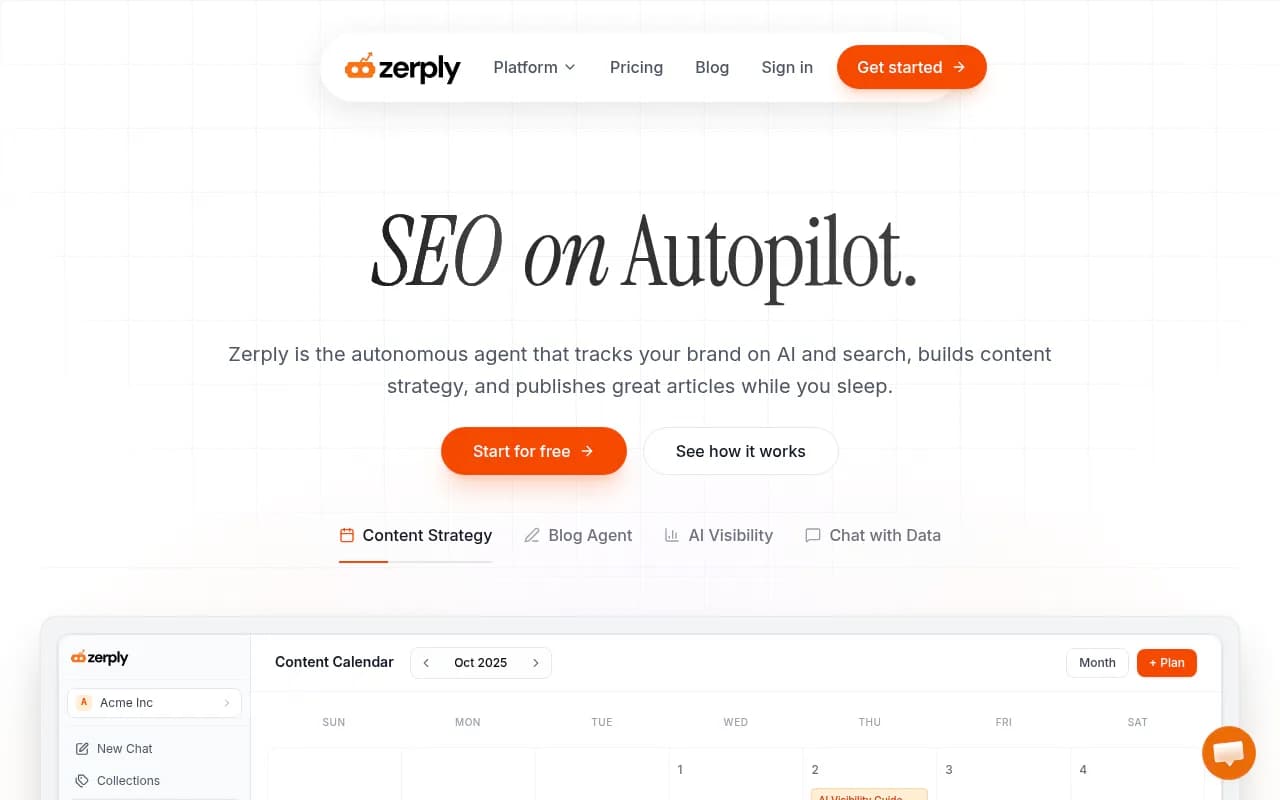
Zerply positions itself as an "agentic AI SEO platform" -- autonomous workers that monitor your site, detect content gaps, plan your editorial calendar, write articles, and publish them to WordPress while you sleep. AI visibility tracking is one pillar of a broader marketing automation system. The platform integrates with Google Search Console, allows you to chat with your data, and uses specialized AI agents to handle the entire content lifecycle from research to publication.
The pitch: stop gluing tools together. Zerply replaces your content strategist, your writer, and your visibility tracker with AI agents that run 24/7.
Gauge: Pure AI visibility intelligence
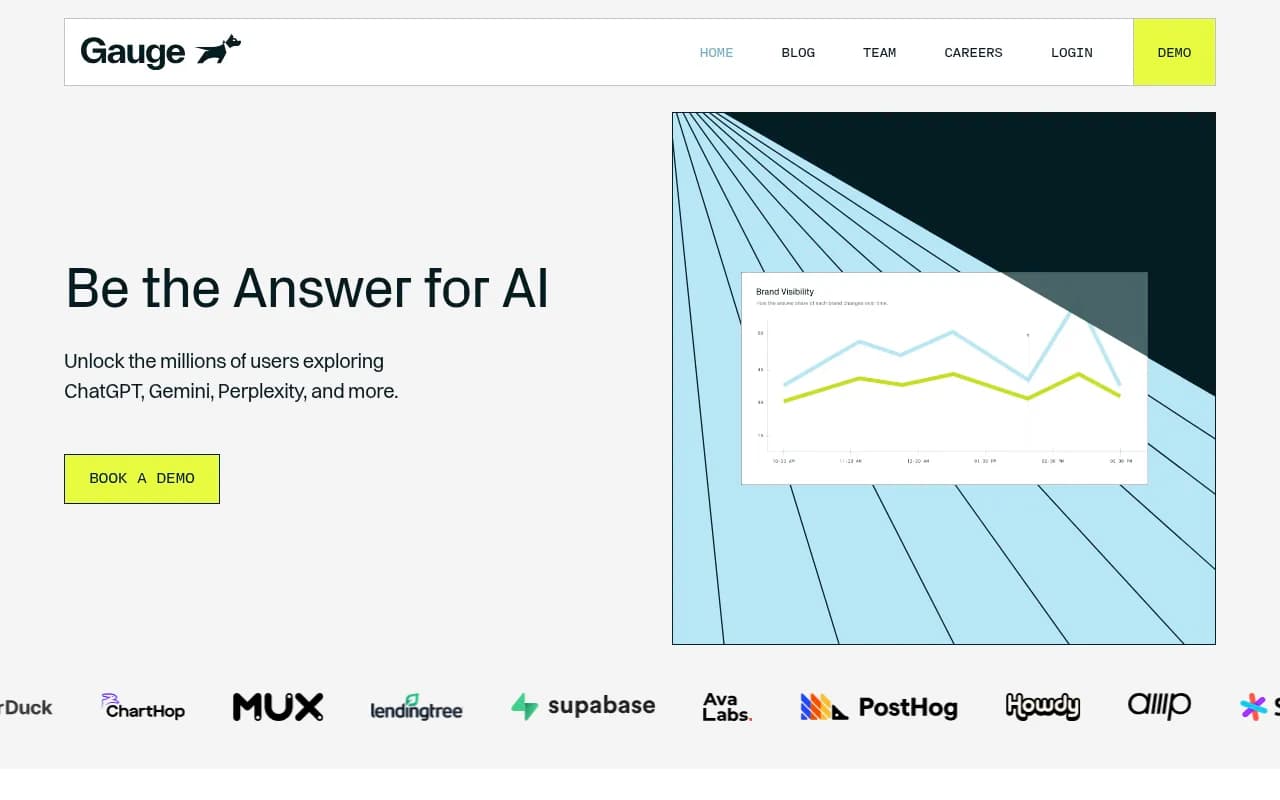
Gauge is a dedicated AI visibility platform. It tracks how your brand appears in ChatGPT, Claude, Gemini, Perplexity, Copilot, Google AI Mode, and AI Overviews. The focus is on monitoring, analyzing citation patterns, identifying what content is being cited (and what's missing), and benchmarking against competitors. Gauge gives you the data and recommendations -- you take action on your own or with other tools.
The pitch: complete control over your AI presence. Track, understand, act.
Side-by-Side Comparison
| Feature | Zerply | Gauge |
|---|---|---|
| Starting price | Free (500 credits/mo) | $95/mo (annual billing) |
| Paid plans from | $99/mo | $95/mo, $399/mo Growth |
| Free tier | Yes | Trial only |
| AI models tracked | ChatGPT, Claude, Perplexity, Gemini | ChatGPT, Claude, Gemini, Perplexity, Copilot, AI Mode, AI Overviews |
| Content generation | Yes (AI agents write & publish) | No |
| WordPress integration | Yes (auto-publish) | No |
| Citation analysis | Basic | Deep (sources, patterns, gaps) |
| Competitor benchmarking | Limited | Yes (Share of Voice) |
| GSC integration | Yes | Not mentioned |
| Multi-client management | Not emphasized | Yes (Growth/Enterprise) |
| Content calendar | Auto-generated by agents | No |
| SEO research chat | Yes (chat with data) | No |
| Sentiment analysis | Yes | Yes |
| Onsite/offsite recommendations | Via agents | Yes (manual action) |
Pricing Comparison
| Plan | Zerply | Gauge |
|---|---|---|
| Free | 500 credits/mo | Trial only |
| Starter | $99/mo | $95/mo (annual) |
| Growth | Not specified | $399/mo |
| Enterprise | Not specified | Custom pricing |
Zerply's free tier is a real differentiator -- 500 credits per month lets you test AI visibility tracking and limited agent features without paying. Gauge requires a paid plan after the trial ends. For teams just exploring AI visibility, Zerply's free plan is lower risk.
Gauge's Growth plan at $399/mo is aimed at agencies and larger teams managing multiple brands. Zerply doesn't break out agency-specific pricing publicly, which suggests it's more oriented toward individual brands or smaller teams.
Feature Deep-Dive: Where they differ
AI visibility tracking
Both platforms monitor how your brand appears in AI-generated responses, but the depth and presentation differ.
Zerply tracks mentions across ChatGPT, Perplexity, Claude, and Gemini. You get sentiment analysis, Share of Voice metrics, and a feed of recent mentions. The interface shows a percentage-based market share visualization and highlights specific quotes from each AI engine. It's clean and gives you the headline numbers quickly.
Gauge goes deeper on citation analysis. It tracks the same core engines plus Copilot, Google AI Mode, and AI Overviews. The focus is on understanding what content is being cited, what's missing, and how you compare to competitors. Gauge emphasizes gap analysis -- showing you where competitors are visible but you're not -- and provides onsite/offsite recommendations to close those gaps.
Verdict: Gauge wins on depth and actionability for pure visibility intelligence. Zerply gives you the overview but doesn't drill as deep into citation patterns or competitive gaps.
Content creation and automation
This is where the platforms diverge completely.
Zerply includes autonomous AI agents that:
- Monitor your site 24/7 for content gaps
- Automatically plan your editorial calendar
- Draft articles based on detected opportunities
- Publish directly to WordPress
You can visualize your entire month's content plan in a calendar view. Agents fill gaps automatically. The platform integrates with Google Search Console and lets you chat with your data to ask questions like "Which pages dropped traffic in the last 30 days?" -- then the agents can create content to address those drops.
Gauge does not create content. It tells you what's missing and what to fix, but you handle the writing and publishing yourself (or use another tool). Gauge provides recommendations -- "create content about X", "target this affiliate", "engage with this Reddit thread" -- but the execution is on you.
Verdict: Zerply wins decisively if you want content automation. Gauge isn't trying to compete here -- it's a pure intelligence platform.
Data integration and research
Zerply integrates with Google Search Console and allows you to upload documents. The SEO research chat feature lets you ask complex questions and get instant answers from connected sources. It's built around conversational intelligence -- you interact with your data through natural language queries.
Gauge doesn't emphasize integrations with other data sources. The focus is on AI visibility data -- mentions, citations, sentiment, Share of Voice. You can export data for reporting, but there's no chat interface or GSC integration mentioned.
Verdict: Zerply wins on data integration and conversational research. Gauge is more of a standalone tracker.
Competitor analysis
Zerply shows Share of Voice as a pie chart (you vs Competitor A vs Others) and displays recent mentions from each AI engine. It's a high-level competitive snapshot.
Gauge emphasizes competitor benchmarking as a core feature. You can see how your brand stacks up, identify where competitors are being cited and you're not, and get specific recommendations to close the gap. The platform is designed around understanding the competitive landscape in AI search.
Verdict: Gauge wins on competitive intelligence. It's built for deep competitor analysis, while Zerply gives you the basics.
Agency and multi-client use
Zerply doesn't highlight agency features. The platform seems oriented toward individual brands or in-house teams managing one site.
Gauge explicitly targets agencies with Growth and Enterprise plans. Multi-client management is a core use case. The platform is designed for teams managing brand visibility across multiple clients.
Verdict: Gauge wins for agencies. Zerply could work for an agency automating content production, but Gauge is purpose-built for multi-client visibility tracking.
User interface and workflow
Zerply uses a conversational, agent-driven interface. You interact with AI workers, view auto-generated calendars, and chat with your data. The workflow is: let the agents monitor, plan, and execute. You review and approve.
Gauge uses a traditional dashboard with tracking, analysis, and recommendations. The workflow is: monitor visibility, analyze gaps, take action manually (or with other tools).
Verdict: Depends on preference. Zerply is more hands-off and autonomous. Gauge gives you more control and transparency over the data.
Pros and Cons
Zerply
Pros:
- Free plan with 500 credits/mo -- lowest barrier to entry
- All-in-one platform: visibility tracking + content creation + publishing
- Autonomous agents handle the entire content lifecycle
- WordPress auto-publishing saves time
- GSC integration and conversational data chat
- Lower starting price ($99/mo vs $95/mo annual for Gauge)
Cons:
- Less depth on citation analysis and competitor gaps
- No explicit agency or multi-client features
- Autonomous agents mean less control over content quality
- Newer platform -- less proven in market
- Pricing details for higher tiers not transparent
Gauge
Pros:
- Deep citation and gap analysis -- shows exactly what's missing
- Strong competitor benchmarking and Share of Voice tracking
- Tracks more AI engines (includes Copilot, AI Mode, AI Overviews)
- Purpose-built for agencies with multi-client management
- Clear onsite/offsite recommendations
- Focused on one thing (visibility) and does it well
Cons:
- No free tier -- trial only
- No content generation -- you handle creation separately
- Higher price for Growth plan ($399/mo)
- Requires annual billing for $95/mo starter price
- Less integration with other data sources (no GSC, no chat)
Who Should Pick Which Tool?
Choose Zerply if:
- You want an all-in-one marketing automation platform, not just a tracker
- Content creation is a bottleneck and you want AI agents to handle drafting and publishing
- You're a small team or solo marketer managing one brand
- You want to test AI visibility tracking for free before committing
- You value conversational data interaction (chat with GSC data, ask questions)
- You're comfortable letting autonomous agents make content decisions
Choose Gauge if:
- You want pure AI visibility intelligence without content automation
- Deep citation analysis and competitor gap identification are priorities
- You're an agency managing multiple clients
- You already have a content creation workflow and just need visibility data
- You want to track the widest range of AI engines (Copilot, AI Mode, AI Overviews)
- You prefer control and transparency over automation
If you're also looking to track how your brand shows up in AI search results with a focus on actionable optimization (not just monitoring), Promptwatch is worth exploring as a complement to either platform.

Final Verdict
Zerply and Gauge solve different problems. Zerply is an autonomous marketing platform that happens to include AI visibility tracking. Gauge is a specialized AI visibility platform that gives you deep intelligence but leaves execution to you.
Pick Zerply if you want automation and an all-in-one system. The free tier, content agents, and WordPress publishing make it a compelling choice for small teams that want to move fast without hiring.
Pick Gauge if you want the deepest AI visibility intelligence available and you're willing to handle content creation separately. The citation analysis, competitor benchmarking, and agency features make it the better choice for teams that need data-driven recommendations and multi-client management.
Neither platform is objectively better -- they're built for different workflows. Zerply automates. Gauge informs.