Contently Review 2026
Content strategy and creation platform that connects brands with a freelance talent network and provides workflow, analytics, and performance measurement tools.
Key takeaways
- Contently is a full-service enterprise content marketing platform, not just a SaaS tool -- it combines software with a managed talent network of 165,000+ vetted freelance writers and editors.
- Pricing is enterprise-only with no self-serve option, making it a poor fit for small teams or anyone without a significant content budget.
- The platform has recently pivoted toward AI search optimization (LLMO consulting), but this is a consulting layer on top of content creation -- not a dedicated AI visibility tracking or GEO platform. It lacks the prompt monitoring, citation tracking, crawler logs, and gap analysis that purpose-built tools like Promptwatch provide.
- Best suited for large enterprise marketing teams (financial services, healthcare, insurance) that need to produce high volumes of polished, brand-safe content at scale.
- The talent network and editorial quality are genuinely strong differentiators -- this is where Contently earns its reputation.
Contently has been around since 2011, which in content marketing years makes it practically ancient. Founded in New York, the company started as a marketplace connecting brands with freelance journalists and writers, then evolved into a full content marketing platform with workflow, analytics, and strategy tools layered on top. Over the years it's attracted enterprise clients in financial services, healthcare, insurance, and consumer goods -- the kinds of companies that need content that's both high-quality and legally defensible.
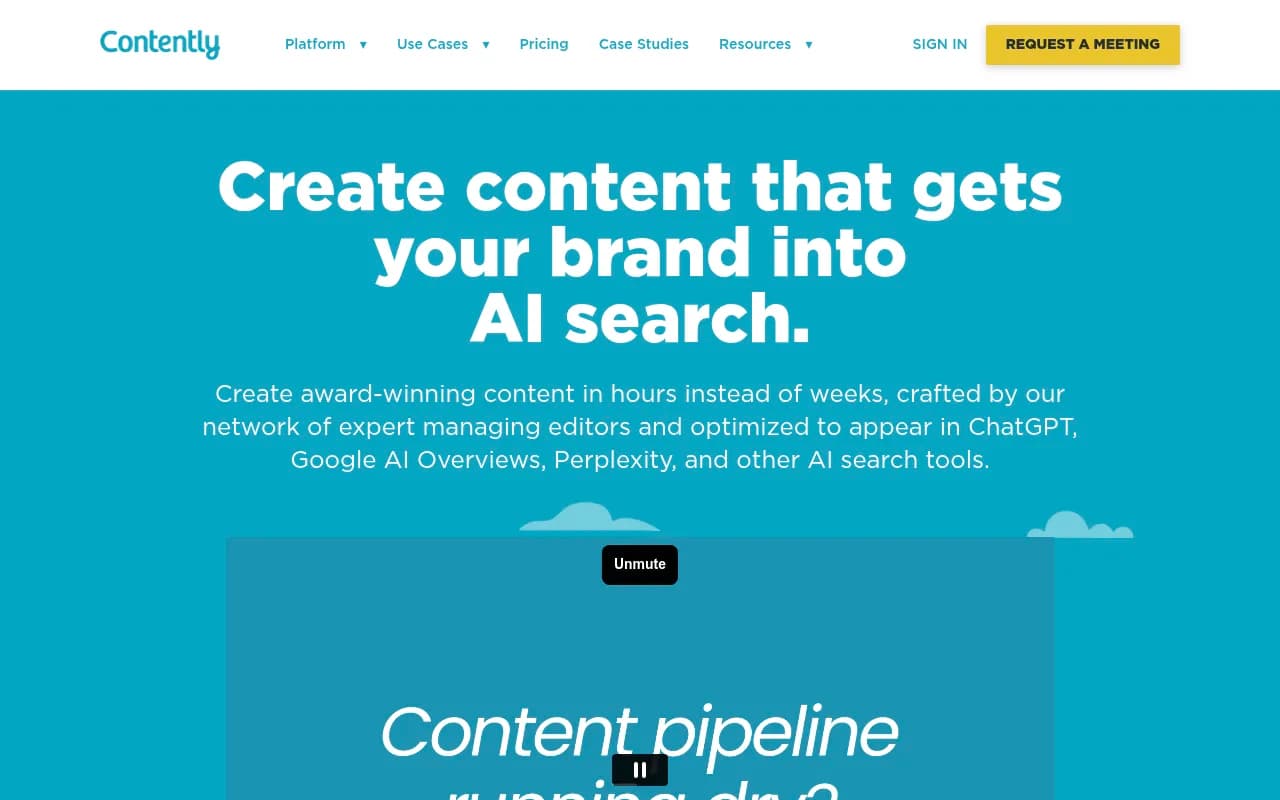
The platform's recent positioning shift is worth noting. Contently is now leaning hard into AI search optimization, with messaging around getting content to appear in ChatGPT, Google AI Overviews, and Perplexity. They've launched something called "AI Studio" and offer LLM Optimization (LLMO) consulting services. This is a smart move given where search is heading, but it's important to understand what this actually means in practice: Contently's core value is still content creation and editorial quality. The AI search angle is more about writing content that's structured to be cited by AI engines than about monitoring or tracking AI visibility in any systematic way.
The target audience is clearly enterprise. Every testimonial on the site comes from directors, VPs, and senior marketers at companies with 10,000+ employees. If you're a startup or a mid-market company, Contently probably isn't built for you -- and the pricing will confirm that quickly.
Key features
Freelance talent network (165,000+ creators)
This is Contently's most defensible asset. The network includes subject matter experts, industry journalists, graphic designers, and video producers -- not just generalist content writers. For regulated industries like financial services and healthcare, having access to writers who actually understand the subject matter (and can pass compliance review) is genuinely valuable. Contently vets its talent and provides portfolio visibility so brands can evaluate writers before engaging them. The network is global, though the strongest depth appears to be in English-language markets.
AI Studio and LLMO consulting
Contently's newest offering wraps AI-assisted content creation with human editorial oversight. The pitch is "agentic AI content creation together with award-winning editors" -- meaning AI drafts, humans refine, and the output is optimized for AI search discoverability. The LLMO consulting component helps organizations think through content strategy for LLM visibility: what topics to cover, how to structure content, what authority signals matter. This is useful strategic guidance, but it's consulting-led rather than data-driven in the way that dedicated AI visibility platforms work. There's no prompt monitoring dashboard, no citation tracking, no crawler log analysis.
Content workflow and editorial management
The workflow tooling is mature and genuinely enterprise-grade. Teams can build customized approval workflows for different lines of business, manage assignments across internal and external contributors, track content through ideation, drafting, editing, legal review, and publication. The platform supports high-volume, fast-paced publication schedules -- one reviewer from manufacturing noted it handles "high-volume, fast-paced digital publication" well. Workflow customization is a real strength here; most content platforms offer rigid pipelines, while Contently lets teams adapt the process to their actual organizational structure.
Brand voice and SEO analysis
Built into the editor is analysis that flags when content drifts from brand voice guidelines or when priority keywords aren't being integrated. This is the kind of guardrail that matters at enterprise scale, where dozens of writers across multiple business units need to sound like the same company. The keyword integration flagging is basic compared to dedicated SEO tools, but having it inline during the writing process is more useful than running a separate audit after the fact.
Analytics and performance measurement
Contently tracks content performance across engagement metrics, and the platform claims a 14X ROI benchmark for clients using it fully. The analytics cover story-level and publication-level data, with real-time reporting. For enterprise teams that need to justify content spend to CFOs, having performance data tied directly to the content production workflow (rather than stitched together from separate tools) is a real operational advantage.
ContentlyU and strategic resources
The platform includes an educational resource library called ContentlyU, with playbooks, research reports, webinars, and infographics aimed at content directors and marketing leaders. This isn't just marketing collateral -- it's genuinely useful strategic content for teams building or scaling content programs. The State of Content Marketing research is cited reasonably often in the industry.
Managed editorial services
Beyond the software, Contently offers managed services where their team of managing editors actively oversees content production. This is a meaningful differentiator for enterprise teams that are understaffed or that want a true outsourced content operation rather than just a platform to manage their own. The account team model (with low turnover, per multiple reviews) means clients often work with the same people for years -- which matters for brand consistency.
Who is it for
Contently is built for large enterprise marketing teams that produce content at significant volume and need both quality control and operational efficiency. The sweet spot is a content marketing team of 5-20 people at a company with 1,000+ employees, operating in a regulated or brand-sensitive industry. Financial services firms, healthcare companies, insurance brands, and large consumer goods companies show up repeatedly in the customer base. These are organizations where a single piece of off-brand or legally problematic content can cause real damage, so the combination of vetted talent, workflow controls, and editorial oversight justifies the premium pricing.
The platform also works well for enterprise brands that have tried to build content programs with generic freelance marketplaces (Upwork, Fiverr) and found the quality inconsistent. Contently's talent vetting and editorial layer solve that problem, though at a much higher price point. A VP of Digital Content at a $30B+ financial services firm is the archetypal Contently customer -- someone with budget, a real content operation to run, and accountability for results.
Who should not use Contently: small businesses, startups, and mid-market companies without dedicated content budgets. The platform is not self-serve, pricing is custom and enterprise-oriented, and the overhead of managing a platform this complex doesn't make sense below a certain scale. Similarly, teams looking specifically for AI search visibility monitoring and optimization -- tracking how their brand appears in ChatGPT, Perplexity, or Google AI Overviews -- will find Contently's LLMO offering too thin. It's content creation with an AI search angle, not an AI visibility platform.
Integrations and ecosystem
Contently integrates with major CMS platforms including WordPress, and connects to analytics tools for performance tracking. The platform has a GitHub presence (github.com/contently), suggesting some developer-facing tooling or open components, though the primary product is a managed SaaS platform rather than a developer tool.
The platform supports direct publishing workflows to connected content destinations, reducing the copy-paste overhead that plagues many content operations. For enterprise teams using Salesforce or Marketo for marketing automation, Contently's content can feed into those systems, though the depth of integration varies.
There's no prominent mention of a public API for custom integrations, which is a limitation for teams that want to build Contently data into custom reporting or BI tools. The analytics are available within the platform but exporting to external dashboards requires manual work or workarounds.
Mobile support exists but the platform is primarily designed for desktop use, which makes sense given the nature of the work (writing, editing, reviewing long-form content).
Pricing and value
Contently does not publish pricing publicly. All plans are custom-quoted, which is standard for enterprise content platforms but frustrating for anyone trying to do a quick evaluation. Based on market research and third-party sources, Contently contracts typically start in the range of $50,000-$100,000+ annually for enterprise clients, with pricing varying based on the number of users, content volume, and whether managed services are included.
There is no free tier and no self-serve trial. Prospective customers need to book a demo and go through a sales process. This is a deliberate positioning choice -- Contently is selling a premium, high-touch service, not a commodity SaaS tool.
For the right enterprise customer, the value proposition is real: the combination of vetted talent, workflow tooling, editorial oversight, and analytics in one platform can genuinely reduce the operational overhead of running a large content program. The 30% reduction in content-related tasks cited by one reviewer is plausible for teams that previously managed freelancers, workflows, and analytics across separate tools.
For anyone outside the enterprise segment, the pricing makes Contently a non-starter. There are capable alternatives at lower price points for mid-market teams.
Strengths and limitations
What Contently does well:
- The freelance talent network is genuinely deep and well-vetted, particularly for regulated industries. Finding a healthcare writer who can produce compliant, accurate content is hard; Contently makes it less hard.
- The workflow and editorial management tooling is mature and flexible. Customizable approval chains for different business units is a real operational need that Contently handles well.
- The account team model and managed services create real continuity for enterprise clients. Multiple reviewers mention working with the same Contently team for 3-5 years, which is unusual in this space.
- The inline brand voice and keyword analysis catches problems during writing rather than after publication.
Limitations and honest gaps:
- The LLMO/AI search optimization offering is thin compared to dedicated AI visibility platforms. Contently can help you create content that's structured for AI citation, but it cannot tell you which prompts your competitors are appearing for, track your brand's citation rate across AI models, show you AI crawler activity on your site, or identify specific content gaps based on prompt data. For systematic AI search visibility work, a purpose-built platform like Promptwatch is a much stronger choice -- it covers prompt monitoring, citation tracking, crawler logs, content gap analysis, and traffic attribution that Contently simply doesn't offer.
- No self-serve option and no transparent pricing creates friction for evaluation. Teams that want to trial a tool before committing to a six-figure contract will find this frustrating.
- The platform is heavily services-dependent. The software alone, without the talent network and account team, is less compelling than pure-play content management tools. This is a feature for some customers and a concern for others who want software they control.
- Limited API and export capabilities make it harder to integrate Contently data into custom reporting stacks.
Bottom line
Contently is the right choice for large enterprise marketing teams in regulated industries that need to produce high-quality, brand-safe content at scale and want a single platform that handles talent sourcing, workflow management, editorial oversight, and performance analytics. The talent network and managed editorial services are the real product; the software is the operational layer that makes it work at enterprise scale.
For teams specifically trying to improve their visibility in AI search engines -- tracking citations, monitoring brand mentions in ChatGPT or Perplexity, identifying content gaps based on prompt data -- Contently's LLMO consulting is a starting point at best. A dedicated AI visibility platform like Promptwatch provides the systematic monitoring, gap analysis, and optimization infrastructure that Contently's content-creation-first approach doesn't cover.
Best use case in one sentence: enterprise content teams at regulated-industry companies (financial services, healthcare, insurance) that need vetted freelance talent, customizable editorial workflows, and managed content production under one contract.
Frequently asked questions
What is Contently?
How much does Contently cost?
Who is Contently best suited for?
Does Contently help with AI search optimization?
How does Contently compare to dedicated AI visibility platforms?
Is there a free trial for Contently?
Similar and alternative tools to Contently