Key takeaways
- ChatGPT's citation behavior is driven more by off-site signals (referring domains, brand mentions, community presence) than by on-page content alone — on-page factors account for roughly 25% of the equation.
- Content freshness has the strongest single platform-specific effect on ChatGPT: 76.4% of ChatGPT citations come from pages published or updated within the past year.
- The content types with the highest citation rates share a common trait: they answer specific, factual questions in a structured, encyclopedic way.
- Comparison pages, listicles, and original research consistently outperform generic blog posts in AI citation rates.
- Tracking which content actually gets cited — and by which models — is the only way to know what's working.
If you've been optimizing content for Google and assuming that carries over to ChatGPT, you're in for a surprise. The two systems reward very different things. Google cares about backlinks, page authority, and click signals. ChatGPT cares about whether your content sounds like something a knowledgeable person would say in response to a direct question.
That distinction changes everything about what you should publish.
This guide draws on data from multiple large-scale citation studies — including an analysis of 680M+ citations across ChatGPT, Claude, Perplexity, Google AI Overviews, and Gemini — to rank the content types that actually earn AI recommendations. Not what sounds good in theory. What the data shows.
How ChatGPT actually decides what to cite
Before getting into content types, it helps to understand the mechanics. ChatGPT answers roughly 60% of queries from parametric knowledge — what it absorbed during training. The other 40% involve live web lookups through Bing's index. That split matters because it means established brands with long histories of press coverage and Wikipedia presence have a structural head start. They're already baked into the model's weights.
For the 40% that involves live retrieval, ConvertMate's analysis of 10,000+ domains found the citation factors break down roughly like this:
| Signal | Approximate weight |
|---|---|
| Referring domains | 30% |
| Brand search volume | 25% |
| Community presence (Reddit, Quora) | 20% |
| Content depth | 15% |
| Content freshness | 10% |
The uncomfortable implication: if you're only optimizing on-page content, you're addressing about 25% of the equation. The other 75% lives off your site.
That said, the 25% you can control through content choices still matters enormously — especially because content quality directly influences whether other sites link to you, whether communities discuss you, and whether your brand search volume grows. Content is the upstream input for most of those other signals.
Content types ranked by citation rate
1. Original research and data studies
Nothing gets cited like original data. When you publish a study with real numbers — survey results, proprietary analysis, benchmark data — you become the primary source. Other sites link to you. Journalists reference you. Reddit threads quote your findings. All of that off-site activity feeds directly into the citation signals ChatGPT weights most heavily.
A 2026 study of 34,234 AI responses found a 46-times difference in brand citation rates between platforms. The brands that appeared most consistently across all platforms tended to have one thing in common: they owned a data point that others needed to cite.
The format matters too. Studies that include a clear methodology, a headline number, and a downloadable dataset get cited far more than vague "reports" that summarize existing information. ChatGPT is trained to sound like an encyclopedia, and encyclopedias cite primary sources.
Practical formats that work:
- Annual benchmark reports ("State of X in 2026")
- Survey-based studies with sample sizes clearly stated
- Proprietary dataset analyses with methodology sections
- Longitudinal comparisons ("How X changed from 2024 to 2026")
2. Comparison and "best of" pages
Comparison content is the single most common content type cited in commercial AI responses. When someone asks ChatGPT "what's the best CRM for a 10-person sales team," it needs to compare options. If your page already does that work — with a structured comparison, clear criteria, and specific recommendations — you're giving the model exactly what it needs to cite.
The key is specificity. "Best CRM software" is too broad. "Best CRM for small B2B sales teams under $50/month" is the kind of specific framing that matches how people actually prompt AI systems.
What makes comparison content citation-worthy:
- Clear comparison criteria stated upfront
- Structured tables with consistent attributes
- Honest trade-offs (not just positives)
- A specific recommendation with reasoning
- Updated pricing and feature data (freshness matters here)
3. FAQ and question-answer content
ChatGPT is fundamentally a question-answering machine. Content structured as questions and answers maps directly to how the model processes and retrieves information. Pages that explicitly answer "What is X?", "How does X work?", "What's the difference between X and Y?" get pulled into responses at a disproportionate rate.
The Yotpo/GEO research makes this point bluntly: "ChatGPT is trained to sound like an encyclopedia. To increase your citation rate, your content should sound like one too. Remove subjective language."
That's not just about tone. It's about structure. FAQ sections with proper heading hierarchy, concise answers under each question, and schema markup (FAQ schema specifically) are significantly more likely to be retrieved and cited.
4. Listicles and ranked lists
Listicles have a bad reputation in traditional content marketing circles, but they perform well in AI citation contexts for a simple reason: they're easy to extract information from. When ChatGPT needs to answer "what are the best tools for X," a well-structured listicle gives it pre-formatted, extractable content.
The citation-worthy version of a listicle isn't a thin "10 tools you should know about" post. It's a detailed, opinionated ranking with:
- Specific criteria for the ranking
- Concrete details about each item (pricing, key features, who it's for)
- A clear point of view on which option wins for which use case
- Regular updates to keep the information current
Freshness is especially important for listicles because tools change, prices change, and new competitors emerge. A listicle that was accurate in 2024 but hasn't been touched since is a liability, not an asset.
5. How-to guides and tutorials
Step-by-step instructional content performs well in AI citations because it answers procedural questions directly. "How do I set up X?" is one of the most common prompt structures, and a well-organized tutorial with numbered steps, code blocks where relevant, and clear section headings gives ChatGPT a clean, citable source.
The depth threshold matters here. A 400-word how-to post won't get cited over a 2,000-word guide that actually walks through the process with screenshots, common errors, and troubleshooting tips. Content depth is one of the weighted citation factors, and tutorials are where depth is easiest to demonstrate.
6. Definition and explainer pages
"What is [concept]?" queries are extremely common in AI search. Brands that own the authoritative definition of a concept in their category have a significant citation advantage. This is especially true for technical or niche concepts where there's no obvious Wikipedia article.
If you're in fintech and nobody has written a clear, comprehensive explanation of a specific regulatory concept, writing that page makes you the default citation source. Same logic applies to any specialized domain.
These pages work best when they:
- Define the term clearly in the first paragraph
- Explain why it matters and how it's used
- Include examples
- Link to related concepts
- Are written without promotional language (the encyclopedic tone Yotpo mentions)
7. Product and category pages (with the right structure)
This one surprises people. Product pages can get cited, but only when they're structured more like reference documents than sales pages. A product page that leads with "Transform your workflow with our revolutionary platform!" will not get cited. A product page that clearly explains what the product does, who it's for, what it costs, and how it compares to alternatives has a real shot.
The Erlin AI research on ChatGPT search optimization notes that "ChatGPT retrieves far more pages than it cites" — the selection happens based on how well a page answers the implied question behind a prompt. Product pages that answer "what is this, who needs it, and how does it work" are citation candidates. Product pages that are primarily conversion-optimized are not.
The off-site factor you can't ignore
Here's the thing most content guides skip: even the best content on your site won't get cited if your off-site footprint is weak. The Ahrefs December 2025 study of 75,000 brands found that branded web mentions had a 0.664 correlation with AI Overview visibility — stronger than any on-site factor.
That means your content strategy needs to include:
- Getting your brand mentioned in third-party roundups and listicles
- Building a presence on Reddit in relevant subreddits (not spammy promotion — actual participation)
- Earning press coverage that includes your brand name and a link
- Being included in industry directories and comparison sites
Community presence on Reddit and Quora accounts for roughly 20% of the citation weight in the ConvertMate model. That's not a channel you can ignore.

The freshness factor
Content freshness has the strongest single platform-specific effect on ChatGPT. ConvertMate's analysis found 76.4% of ChatGPT citations come from pages published or updated within the past year. That number is striking. It means a well-written page from 2022 is competing at a serious disadvantage against a mediocre page from 2025.
The practical implication: updating existing content is often more valuable than publishing new content. A systematic refresh of your highest-traffic pages — updating statistics, adding new sections, revising outdated recommendations — can meaningfully improve citation rates without the overhead of creating from scratch.
What content structure ChatGPT prefers
Across all content types, certain structural patterns appear consistently in cited content:
- Clear H2/H3 heading hierarchy that signals document structure
- Short paragraphs (2-4 sentences) that are easy to extract
- Tables for comparative information
- Numbered lists for processes and rankings
- FAQ sections with explicit question headings
- Schema markup (FAQ, HowTo, Article) where applicable
- No fluff in the opening — the answer starts immediately
The Nick Lafferty research on ranking higher in ChatGPT makes a point worth repeating: content that sounds like it was written for a human expert audience, not for SEO, gets cited more. That means removing hedging language, removing promotional phrases, and writing with the confidence of someone who actually knows the subject.
Tracking what actually gets cited
Publishing the right content types is step one. Knowing whether your content is actually being cited — and by which models — is step two. Without that feedback loop, you're optimizing blind.
Tools like Promptwatch track exactly which pages are being cited by ChatGPT, Perplexity, Claude, Gemini, and other AI models, and show you the gap between what you're publishing and what AI models are actually pulling from competitors. That kind of page-level citation data is what lets you prioritize which content to update, which gaps to fill, and which content types are working for your specific category.

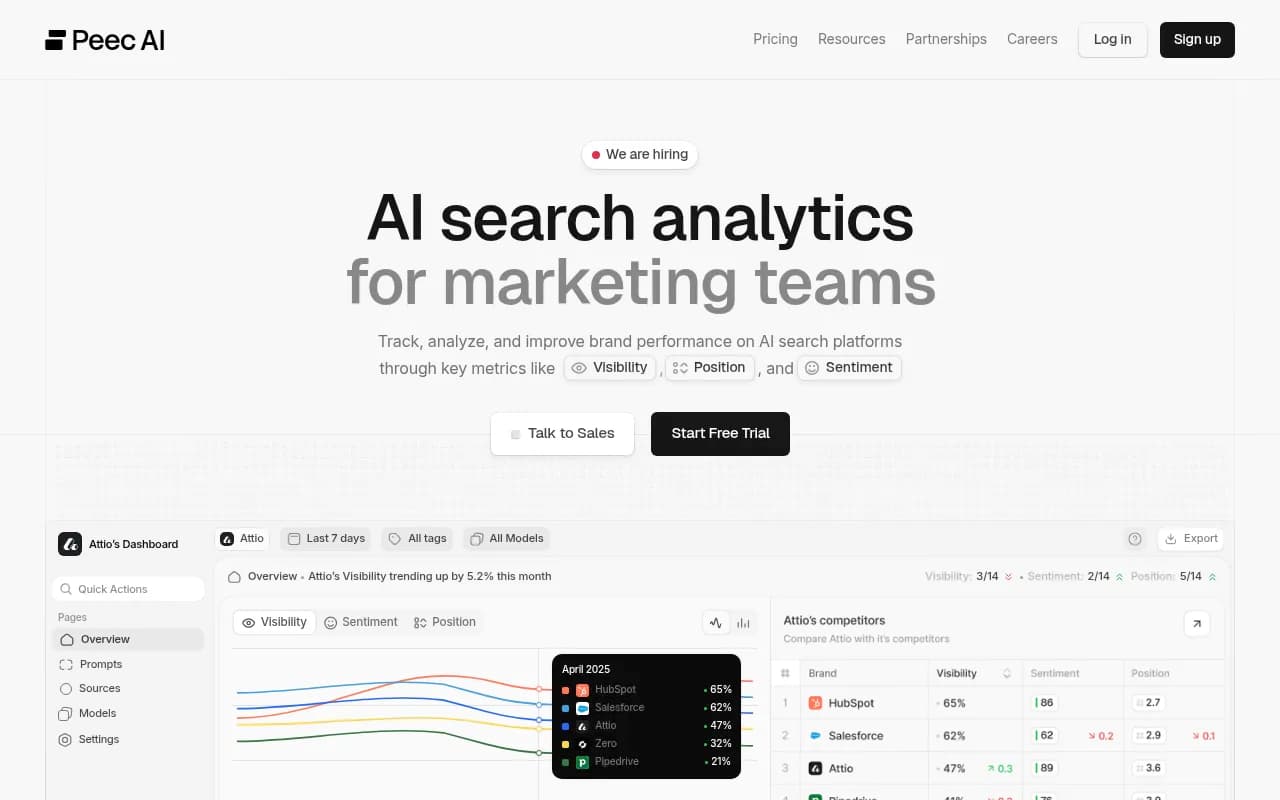
For broader AI visibility tracking without the content optimization layer, there are several monitoring tools worth knowing:
Otterly.AI

Profound
A comparison of content types by citation potential
| Content type | Citation rate | Freshness sensitivity | Effort to produce | Best for |
|---|---|---|---|---|
| Original research / data | Very high | Medium | High | Building brand authority |
| Comparison / "best of" pages | Very high | High | Medium | Commercial queries |
| FAQ / Q&A content | High | Low | Low | Informational queries |
| Listicles / ranked lists | High | High | Medium | Category-level visibility |
| How-to guides / tutorials | High | Medium | Medium | Procedural queries |
| Definition / explainer pages | Medium-high | Low | Low | Concept ownership |
| Product pages (structured) | Medium | High | Low | Brand-specific queries |
| Generic blog posts | Low | High | Medium | Limited citation value |
What to do with this
The ranking above isn't a reason to abandon your existing content strategy wholesale. It's a reason to audit it. Look at what you're currently publishing and ask: does this answer a specific question? Is it structured so a model can extract information cleanly? Has it been updated in the past year?
Most brands will find they have a lot of generic blog content and not enough comparison pages, original data, or well-structured FAQ content. Those are the gaps worth filling first.
The brands winning in AI search right now aren't necessarily the ones with the most content. They're the ones whose content is most useful to a model trying to answer a specific question. That's a different optimization target than traditional SEO, and the sooner you orient your content production around it, the better your citation rates will look.
For content creation tools that can help you produce the right formats at scale: