Key takeaways
- Most AI search visibility tools are monitoring dashboards — they show you where you're invisible but don't help you fix it.
- The gap between "we track AI mentions" and "we improve AI visibility" is where most platforms fall short in 2026.
- The teams seeing real results follow a loop: find content gaps, create targeted content, then track whether it worked.
- Prompt volume, difficulty scoring, crawler logs, and content generation are the features that separate optimization platforms from trackers.
- Choosing the right platform depends on your team's stage: pure monitoring tools work fine if you're just starting out, but you'll hit a ceiling fast.
There's a pattern playing out across marketing teams right now. A company buys an AI search visibility tool, gets a dashboard full of charts showing their brand mention rate across ChatGPT, Perplexity, and Google AI Overviews, and then... sits there. The data is interesting. The problem is obvious. But the path from "we're not showing up" to "we are showing up" isn't in the dashboard.
This is the core tension in the AI search platform market in 2026. There are a lot of tools that can tell you what's wrong. Very few that help you do anything about it.
Why "more data" became the wrong selling point
When AI search monitoring first emerged as a category, the pitch was simple: you need to know if ChatGPT is mentioning your brand. That was genuinely useful. Most companies had no idea what AI engines were saying about them, and the first step was visibility into the problem.
So platforms competed on coverage. How many AI models do you track? How many prompts? How many citations? The implicit assumption was that more data meant more value.
But here's what happened in practice: teams got the data, saw the gaps, and then had no idea what to do next. Knowing that a competitor gets cited for "best project management software for remote teams" and you don't is useful for about 30 seconds. After that, you need to know why, and what content you'd need to create to change it.
Data without a path to action is just a more expensive version of anxiety.
The three things that actually move the needle
The teams making real progress on AI visibility in 2026 are doing three things in sequence, and the tools they use support all three.
1. Finding the right gaps to close
Not all visibility gaps are worth chasing. Some prompts get asked by thousands of people every day. Others are niche edge cases that AI models rarely encounter. The difference between a high-value gap and a low-value one isn't obvious from a basic monitoring dashboard.
What you actually need is prompt-level data: estimated search volume for specific queries, difficulty scores that tell you how competitive a prompt is, and query fan-outs that show how one broad question branches into sub-questions. That's what lets you prioritize. Instead of trying to fix every gap at once, you work on the prompts where you have a realistic chance of winning and where winning actually matters.
This is where a lot of monitoring-only tools fall short. They show you the gap. They don't tell you whether it's worth closing.
2. Creating content that AI models actually cite
Once you know which gaps to target, you need content that answers those specific questions better than what's currently out there. This sounds obvious, but most teams approach it wrong.
They write content optimized for traditional SEO — keyword density, backlinks, meta descriptions — and then wonder why AI models still don't cite them. AI search engines don't rank pages the same way Google does. They're looking for content that directly and authoritatively answers a specific question, often in a format that can be extracted and summarized.
Content briefs built from real prompt data, citation analysis, and competitor responses look very different from standard SEO briefs. They're structured around the exact questions AI models are already trying to answer, with the specific angles and depth that citation patterns suggest are working.
3. Tracking whether it worked
This is where most teams have a blind spot. They publish new content and then check their overall brand mention rate a month later. That's too slow and too vague to be useful.
What you want is page-level tracking: which specific pages are being cited, by which AI models, how often, and when that citation behavior started. You also want to know when AI crawlers visited those pages — because there's a lag between publishing, crawling, and citation, and understanding that timeline helps you set realistic expectations and catch indexing issues early.
Without this feedback loop, you're flying blind. You don't know if your content strategy is working, which pieces are pulling their weight, or where to double down.
What separates optimization platforms from trackers
The monitoring-only tools in this space — and there are a lot of them — stop at step one. They're useful for awareness but not for improvement. The distinction matters more than most buyers realize when they're first evaluating options.
Here's a rough breakdown of where different types of platforms sit:
| Capability | Monitoring tools | Optimization platforms |
|---|---|---|
| Brand mention tracking | Yes | Yes |
| Multi-model coverage | Varies | Yes (typically 8-12 models) |
| Prompt volume & difficulty | Rarely | Yes |
| Content gap analysis | No | Yes |
| AI content generation | No | Yes |
| Crawler log access | No | Yes |
| Page-level citation tracking | No | Yes |
| Traffic attribution | No | Yes |
| Reddit/YouTube citation insights | No | Sometimes |
The tools that only do the left column aren't bad — they're just limited. If you're a small team that just wants to know whether your brand is showing up in AI answers, a basic tracker might be all you need right now. But if you're trying to actually improve your AI visibility, you need the right column.
A look at the current platform landscape
The market has fragmented into a few distinct categories. Here's how the main players break down.
Full optimization platforms
Promptwatch is the most complete option in this category. It covers the full loop: Answer Gap Analysis to find which prompts competitors rank for that you don't, Content Agents that generate articles and briefs grounded in real prompt data, and page-level tracking that connects published content to actual citation behavior. The crawler log feature is particularly useful — it shows you exactly when AI bots like GPTBot and ClaudeBot visit your pages, what errors they encounter, and how that crawl activity correlates with citations. It's used by 1,480+ brands including Booking.com and Center Parcs, and monitors 10 AI models including ChatGPT, Perplexity, Claude, Gemini, Grok, and Google AI Overviews.

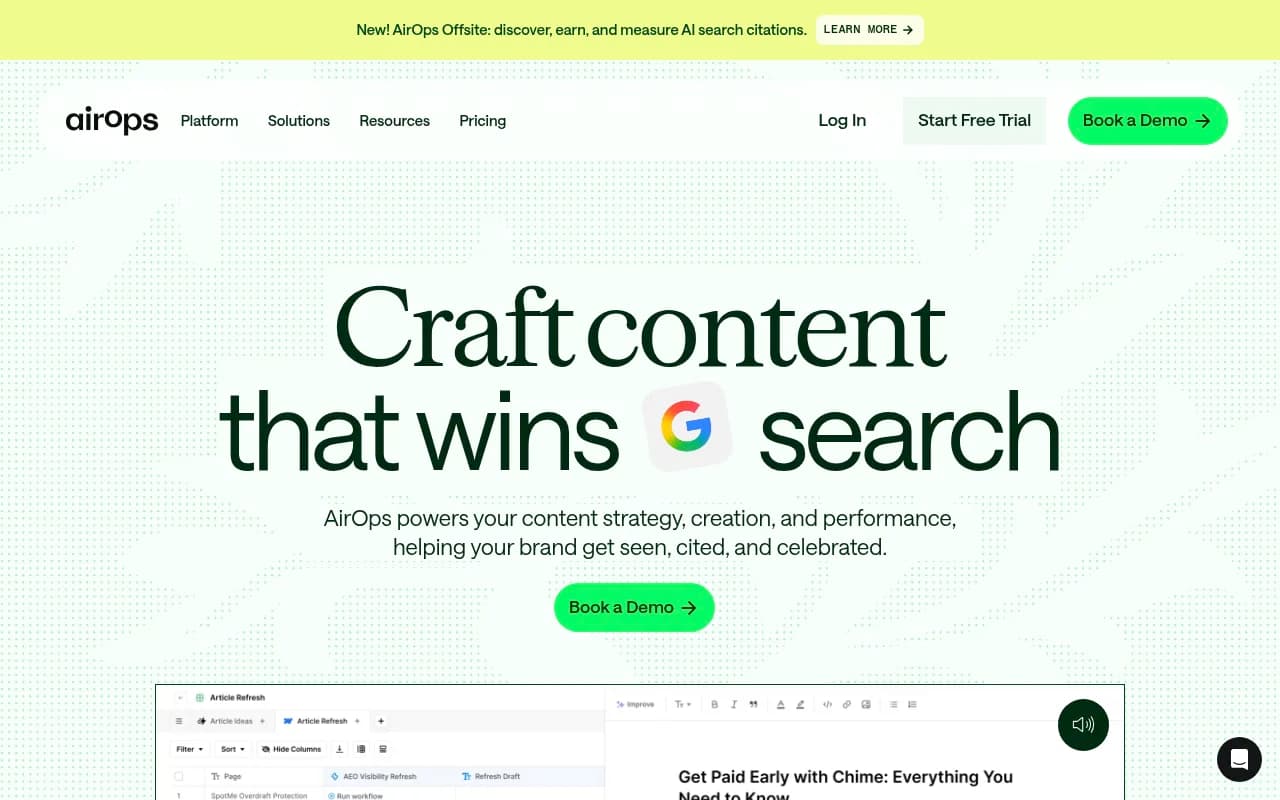
AirOps takes a content engineering angle, focusing on building content workflows optimized for AI search visibility. It's strong on the creation side but lighter on the monitoring and tracking end.
Search Atlas combines AI-powered SEO automation with some AI search tracking capabilities, though it's more traditional SEO-oriented than purpose-built for GEO.
Enterprise-focused trackers
Profound and AthenaHQ both have strong monitoring capabilities and are used by larger brands. They cover multiple AI models and give you solid visibility data. The gap is on the action side — they don't have content generation or the kind of gap analysis that tells you what to create.
Profound


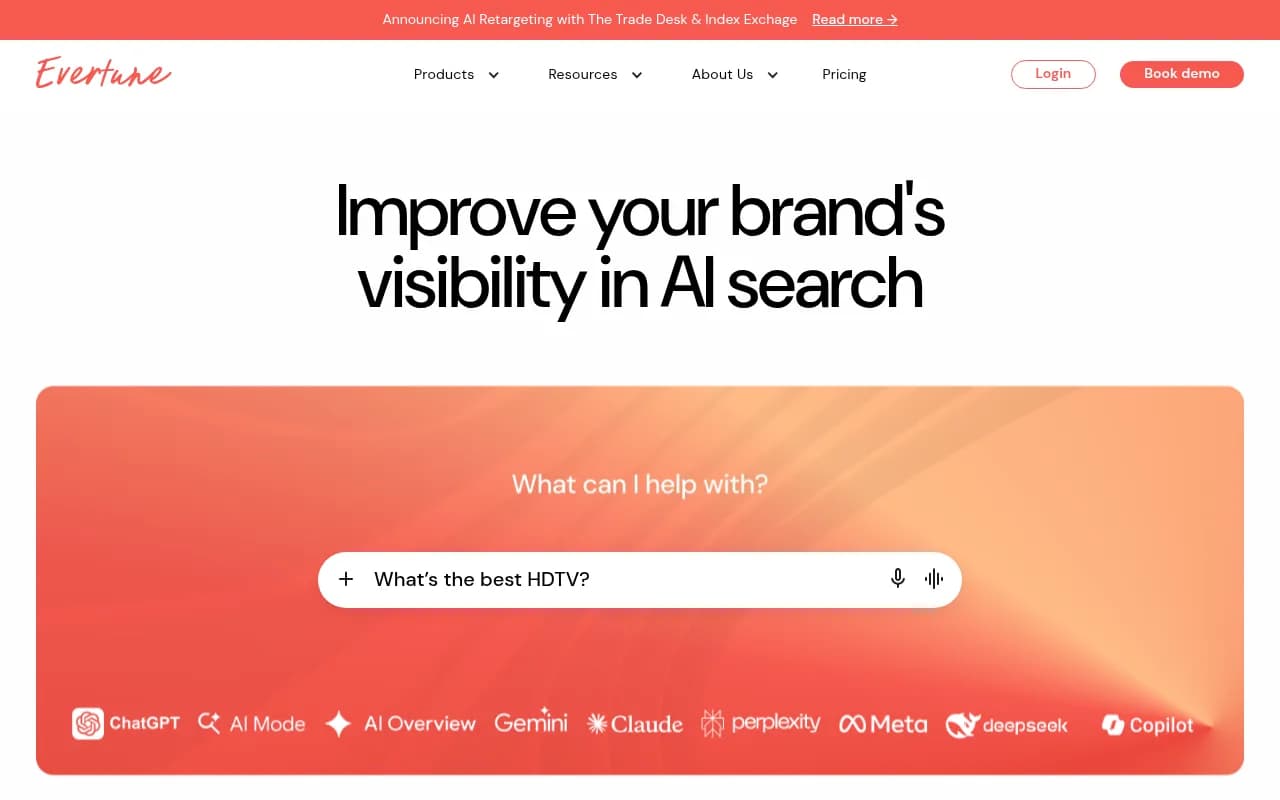
Evertune is positioned at the Fortune 500 end of the market, with enterprise pricing to match. Good for large organizations that need governance and reporting but have separate content teams to handle the optimization work.
Mid-market monitoring tools
Otterly.AI and Peec AI are solid entry points for teams that are just starting to track AI visibility. They cover the major models, give you brand mention data, and are priced accessibly. The ceiling is real though — once you want to do something with the data, you'll need to move to a more capable platform.
Otterly.AI


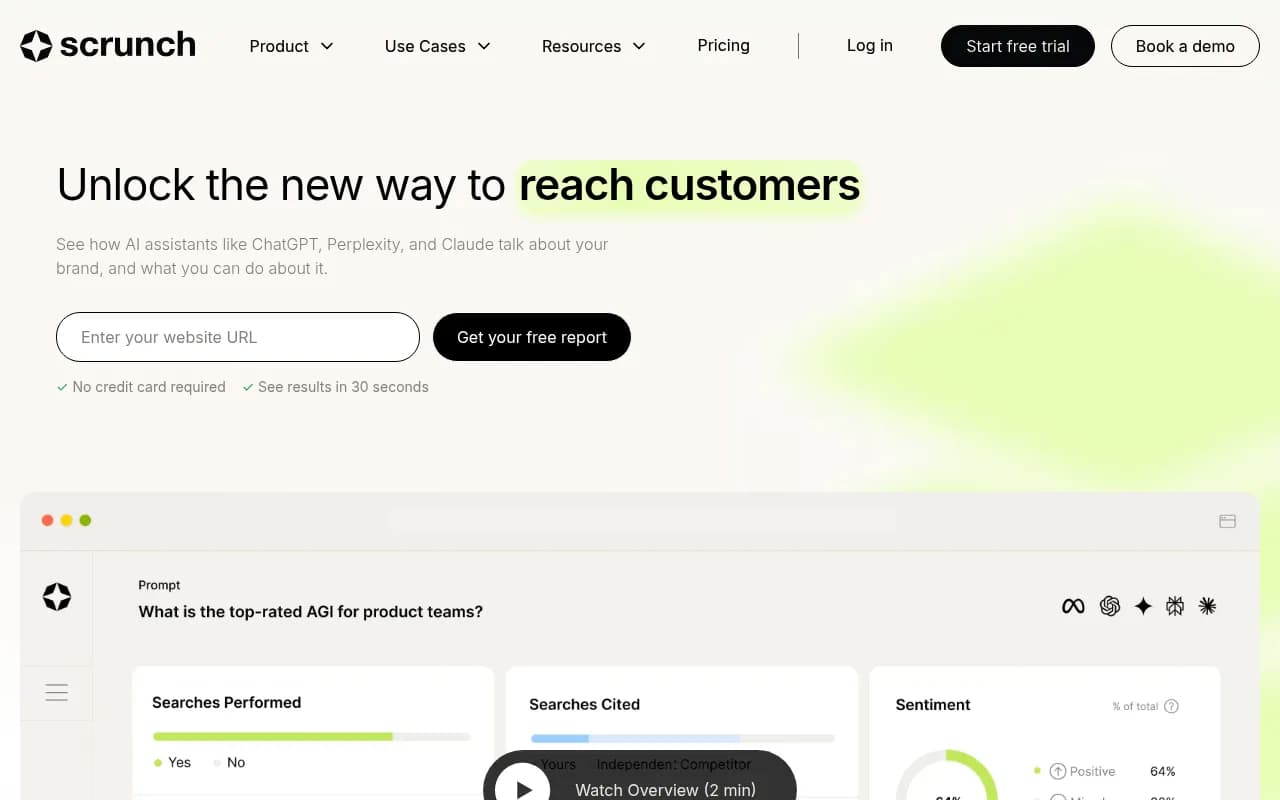
Scrunch AI and Rankshift are in similar territory — good for monitoring, limited for optimization.

Traditional SEO tools expanding into AI search
Semrush and Ahrefs have both added AI search features, but they're bolt-ons to platforms built for traditional search. Semrush uses fixed prompt sets rather than dynamic prompt tracking, and Ahrefs Brand Radar lacks AI traffic attribution. Useful if you're already paying for these platforms and want basic AI visibility data, but not purpose-built for GEO.
The questions to ask before you buy
When you're evaluating platforms, the feature list matters less than how the tool fits your actual workflow. A few questions worth asking:
Can it tell you which prompts are worth targeting? If the answer is just "here are all the prompts where you're not mentioned," that's not enough. You need volume estimates and some signal about difficulty or competition.
Does it help you create content, or just identify gaps? There's a meaningful difference between a tool that shows you a gap and one that helps you close it. If content creation is going to happen in a completely separate workflow with no connection to the visibility data, you're going to lose fidelity.
Can you see what AI crawlers are actually doing on your site? This is underrated. Knowing that your content isn't being cited is one thing. Knowing that GPTBot is hitting your pages but encountering errors, or that it's never visited a key page at all, is much more actionable.
Does it connect visibility to traffic and revenue? Brand mentions in AI answers are interesting. Clicks from those answers are what actually matter. A platform that can show you the path from AI citation to website visit to conversion is doing something fundamentally more useful than one that stops at the mention.
The teams that are winning
The honest reality is that AI search visibility is still early enough that most brands haven't figured it out. The ones that are pulling ahead aren't necessarily using the most sophisticated tools — they're using tools that support a consistent, repeatable process.
They pick a set of high-value prompts. They analyze what content is currently being cited for those prompts. They create something better. They track whether it gets picked up. They repeat.
That loop sounds simple, but it requires a platform that supports each step. A monitoring dashboard that shows you your mention rate once a week doesn't support that loop. A platform with gap analysis, content generation grounded in real citation data, and page-level tracking does.
The data isn't the product. The ability to act on it is.
Picking the right tool for your stage
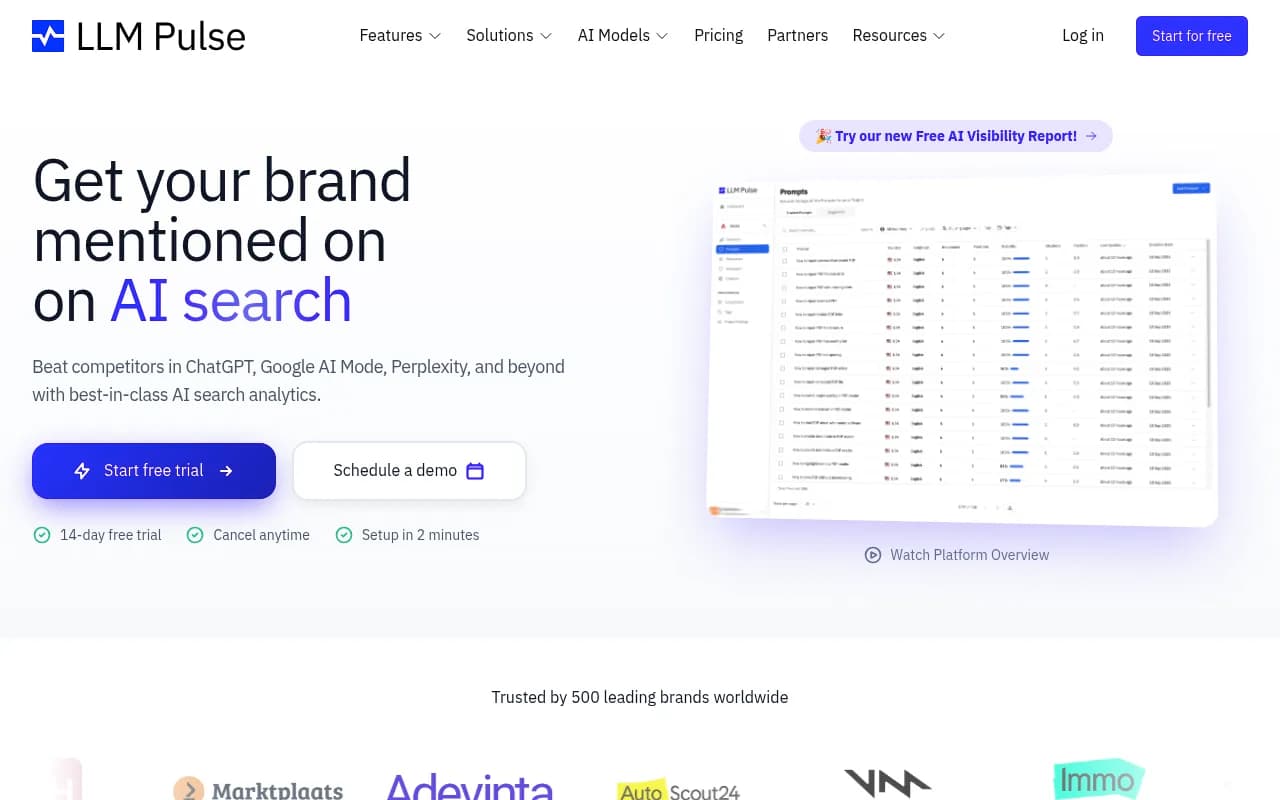
If you're just starting out and want to understand your current AI visibility before committing to a full platform, a lighter tool like Otterly.AI, Peec AI, or LLM Pulse can give you a baseline quickly and cheaply.
If you're ready to actually improve your visibility and want a platform that supports the full optimization loop, Promptwatch is the most complete option available. The gap analysis, content agents, and crawler logs together give you something none of the monitoring-only tools can match.
If you're at an enterprise with complex governance needs and a separate content team, Evertune or Profound might fit better organizationally, even if you'll need to build the content workflow separately.
The wrong move is buying the tool with the most impressive dashboard and then wondering why your AI visibility isn't improving six months later. Data is only as useful as what you do with it.