Key takeaways
- Most AI content generation tools write from generic prompts with no connection to what AI search engines are actually citing — producing content that looks polished but gets ignored by ChatGPT, Perplexity, and Gemini.
- Citation-grounded content agents pull from real data: live citation patterns, prompt volumes, competitor visibility gaps, and what AI models are already recommending.
- The gap between monitoring-only platforms and action-oriented platforms is widening. Monitoring tells you where you're invisible. Grounded content agents help you fix it.
- A handful of platforms now close the full loop: find the gap, generate the content, track the citation lift.
- Generic AI writers (Jasper, Copy.ai, Writesonic) are useful for volume, but they don't know what prompts AI engines are answering or which sources they're citing — so they can't target those gaps.
Why "AI-generated content" isn't the same as "AI-search-ready content"
There's a version of AI content that reads fine, passes a grammar check, and does absolutely nothing for your visibility in ChatGPT or Perplexity. That's most of what's being produced right now.
The problem isn't the writing quality. It's the input. When a content agent starts from a blank prompt — "write me a 1,500-word article about project management software" — it has no idea which prompts users are actually typing into AI search engines, which sources those engines are currently citing, or what your competitors are ranking for that you're not. It's writing into a void.
Citation-grounded content agents work differently. They start from data: real prompt volumes, actual citation patterns from AI engines, competitor visibility gaps, and what topics AI models want to answer but can't find good sources for. That's a fundamentally different starting point, and it produces fundamentally different output.
This distinction matters more in 2026 than it did two years ago. McKinsey reported that roughly half of consumers now use AI-powered tools as a meaningful input in purchase research. Seer Interactive has documented materially lower click-through rates on queries where Google AI Overviews appear. The implication: if you're not in the AI answer, you may not be in the consideration set at all.
So the question isn't "does this tool write content?" It's "does this tool write content that AI engines will actually cite?"
What citation-grounded generation actually requires
Before comparing platforms, it's worth being precise about what "citation-grounded" means in practice. A content agent needs at least three things to write content that AI engines will cite:
Real prompt data. Not keyword lists. Actual prompts that users are typing into ChatGPT, Perplexity, Gemini, and similar engines — with volume estimates and difficulty scores so you can prioritize. Without this, you're guessing at what questions AI models are trying to answer.
Citation and source analysis. Which pages, domains, Reddit threads, and YouTube videos are AI models currently citing in their responses? This tells you what kind of content earns citations and where you need to publish or optimize.
Competitor gap analysis. Which prompts are your competitors visible for that you're not? This is the most actionable input — it shows you exactly where to create content to close the gap.
A platform that has all three can generate content briefs and articles that are genuinely engineered to earn AI citations. A platform that has none of these is just an AI writer with a nice interface.
The two categories: monitoring tools vs action platforms
The AI search visibility market in 2026 has split into two fairly distinct groups.
Monitoring-only platforms track your brand mentions across AI engines, show you citation counts, and maybe give you a share-of-voice score. They're useful for understanding where you stand. But they stop there. You see the problem; you don't get help fixing it.
Action-oriented platforms do the monitoring and then help you do something about it. They identify content gaps, generate briefs or full articles grounded in citation data, and track whether the new content actually moves your visibility scores.
Most of the market is still in the first category. A few platforms have built genuine action loops.
Platform comparison: real data vs generic prompts
Here's how the main platforms stack up on the dimensions that matter for citation-grounded content generation:
| Platform | Prompt data | Citation analysis | Gap analysis | Content generation | Grounded in real data? |
|---|---|---|---|---|---|
| Promptwatch | Yes (volume + difficulty) | Yes (page-level) | Yes (answer gap) | Yes (Content Agents) | Yes |
| Profound | Yes | Yes | Partial | No | Partial |
| AthenaHQ | Partial | Partial | No | No | No |
| Otterly.AI | Basic | Basic | No | No | No |
| Peec AI | Basic | Basic | No | No | No |
| Search Party | Partial | No | No | No | No |
| Semrush | Fixed prompts | Partial | No | Yes (generic) | No |
| Ahrefs Brand Radar | Fixed prompts | No | No | No | No |
| Jasper | No | No | No | Yes | No |
| Writesonic | No | No | No | Yes | No |
| AirOps | No | No | No | Yes (workflow) | Partial |
| Searchable | Partial | Partial | Partial | Yes | Partial |
The table makes the gap obvious. Most platforms either monitor without generating, or generate without monitoring. Very few do both — and fewer still ground the generation in real citation and prompt data.
Platforms that write from real data
Promptwatch
Promptwatch is the clearest example of a platform built around the full action loop. It tracks how brands appear across 10 AI engines (ChatGPT, Perplexity, Gemini, Claude, Grok, DeepSeek, Copilot, Meta AI, Mistral, Google AI Overviews), then uses that data to drive content generation.
The Answer Gap Analysis shows exactly which prompts competitors are visible for that you're not — with prompt volume estimates and difficulty scores so you can prioritize. The Content Agents then generate articles, listicles, comparisons, and briefs grounded in that gap data, real citation patterns, competitor analysis, and brand guidance you upload. The output isn't generic SEO filler; it's content engineered to answer the specific questions AI models are already trying to answer.
What makes this different from just "AI writing" is the data layer underneath. The agents pull from 4.5 billion+ citations, clicks, and prompts processed, plus real-time crawler logs showing which pages AI engines are actually reading. When Promptwatch generates a content brief, it knows which pages are being cited, how often, and by which models.

AirOps
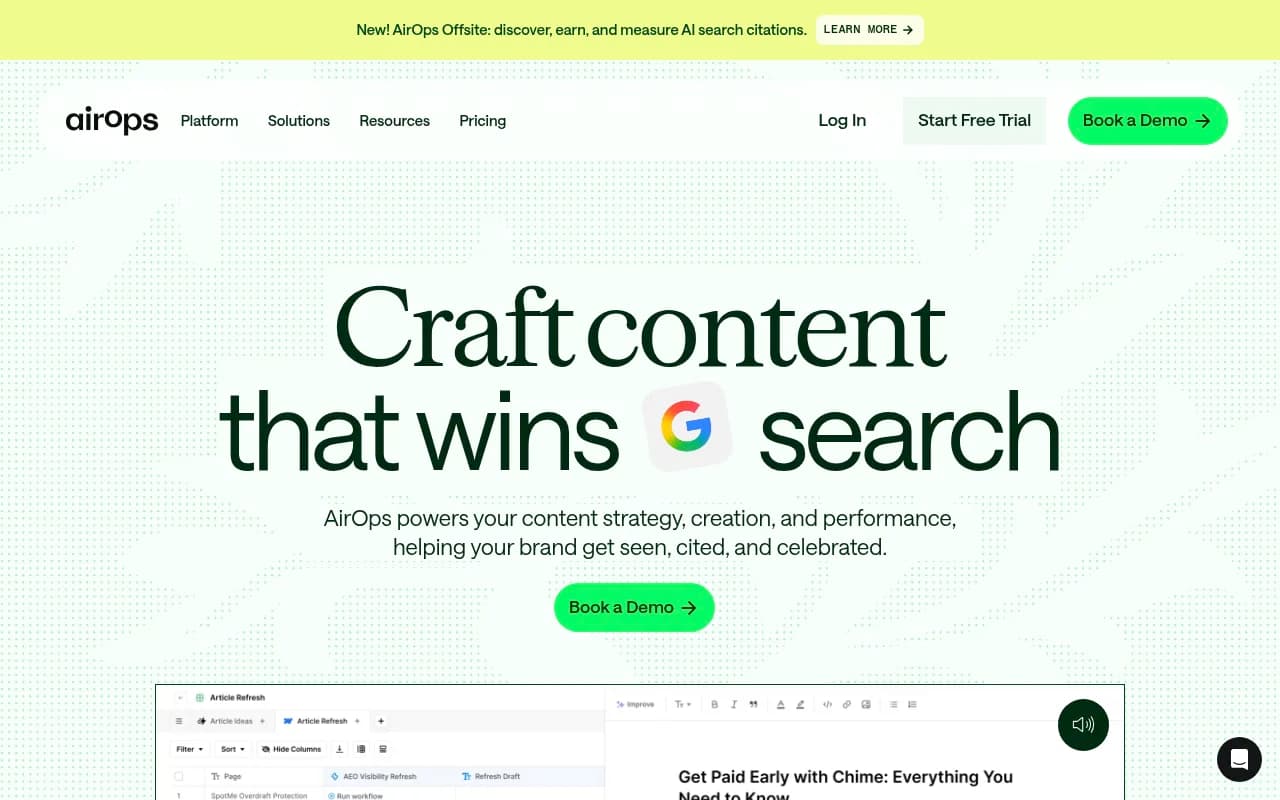
AirOps takes a workflow-automation approach to content generation. It's less focused on AI search visibility tracking and more on building content pipelines that can incorporate external data sources. Teams can wire in their own data feeds, search results, and brand guidelines to ground the output. It's more of a content engineering platform than a GEO tool, but worth knowing about if you're building custom workflows.
Searchable
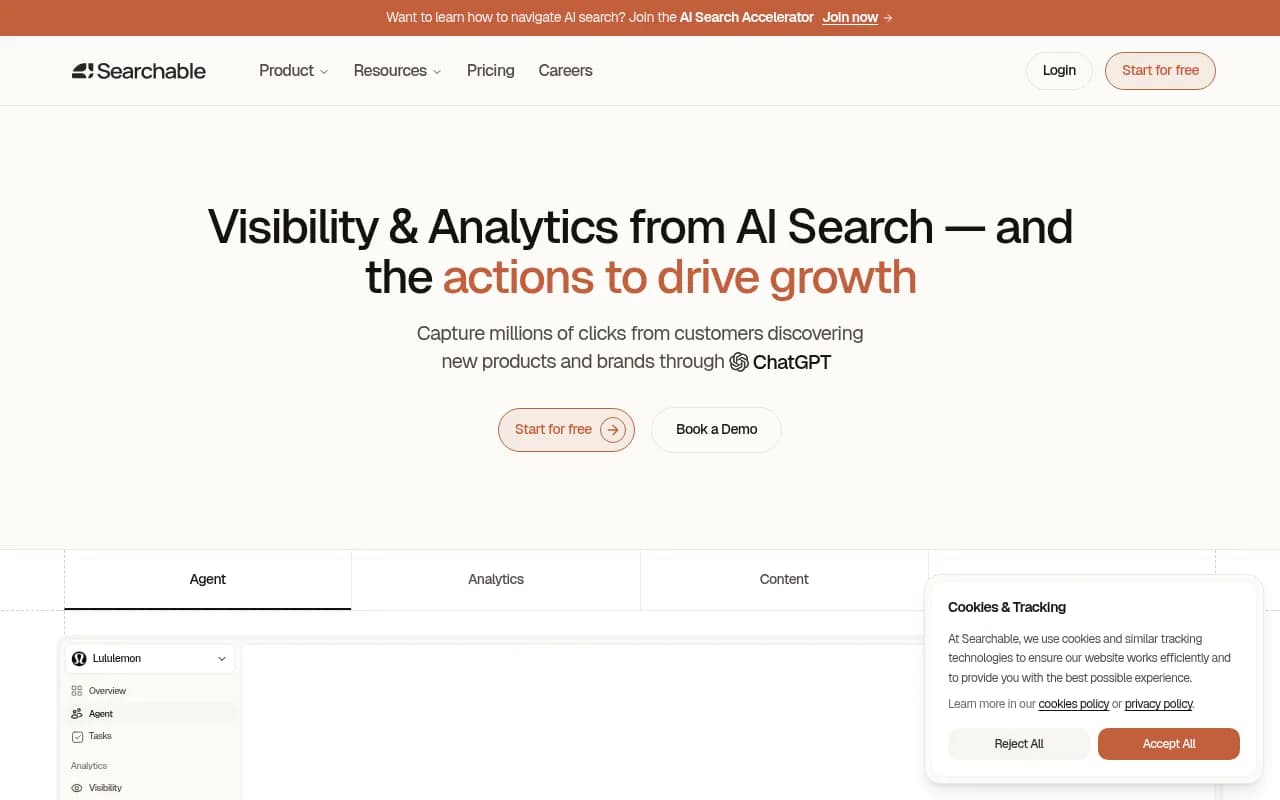
Searchable sits somewhere between a monitoring tool and an action platform. It has some content generation capabilities and partial gap analysis, but the grounding in real citation data is less deep than Promptwatch. It's a reasonable option for teams that want a single tool and don't need the full depth of prompt intelligence.
Platforms that monitor well but don't generate grounded content
Profound
Profound is a strong enterprise monitoring platform. It tracks brand mentions across 9+ AI engines with good coverage and reporting depth. The gap analysis is partial — you can see some competitive positioning data, but the content generation piece isn't there. For large teams that have separate content workflows and just need solid visibility data, it's a legitimate choice. But if you want the data to drive content creation, you'll need to export and work elsewhere.
Profound

AthenaHQ
AthenaHQ is monitoring-focused. It tracks brand mentions and gives you visibility scores, but it doesn't have content gap analysis or generation capabilities. Good for teams that want a clean dashboard and don't need the optimization workflow.

Otterly.AI
Otterly.AI covers the basics: brand mention tracking across ChatGPT, Perplexity, and Google AI Overviews. The interface is clean and it's one of the more accessible entry points for teams new to AI search monitoring. But it stops at monitoring — no gap analysis, no content generation, no crawler logs.
Otterly.AI

Peec AI
Similar positioning to Otterly. Peec AI tracks visibility across AI engines and gives you share-of-voice data. Useful for reporting, less useful for actually improving your position.

Generic AI writers: useful, but not citation-grounded
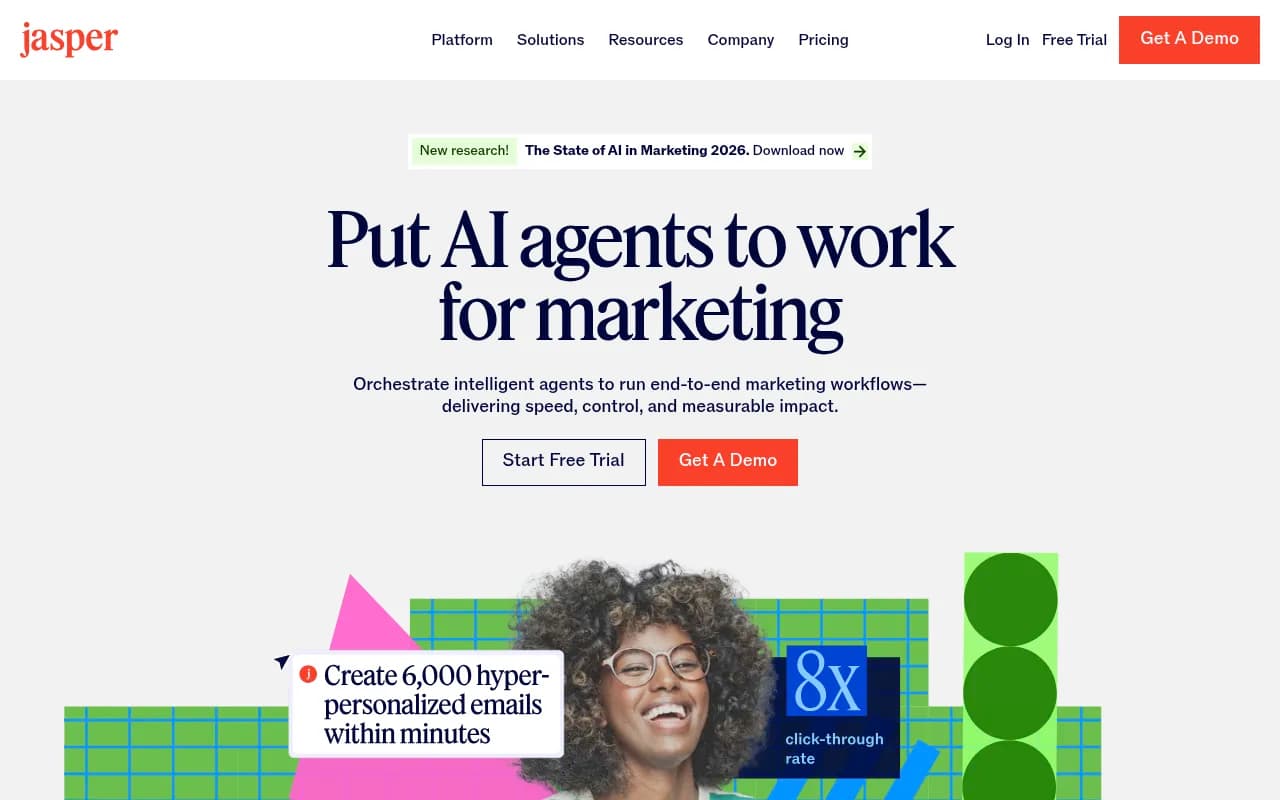
Tools like Jasper, Writesonic, and Copy.ai are genuinely good at producing content at scale. If you need 50 product descriptions or a batch of social posts, they're fast and capable. But they have no connection to what AI search engines are citing, what prompts users are typing, or where your competitors are visible that you're not.
Using a generic AI writer to improve your AI search visibility is like using a word processor to do SEO keyword research. The tool works fine; it's just not designed for that job.


That said, some teams use generic writers as a production layer on top of a GEO platform: they use Promptwatch (or similar) to identify the gaps and generate briefs, then use a faster writing tool to produce the actual content. That's a reasonable workflow if you're managing volume.
What the API layer looks like for developers
If you're building AI agents or RAG pipelines rather than using a SaaS platform, the grounding question is the same but the implementation is different. A good AI search API in 2026 needs to return structured, citation-ready results — not just snippets, but source URLs, publication dates, relevance scores, and full-text content where available.
The key features to look for in a search API for grounded content generation:
- Full-text content extraction (not just snippets)
- Structured output with titles, URLs, dates, and metadata
- Source filtering so you can whitelist or exclude domains
- Citation-ready result formatting
- Date range controls for freshness
- Per-query budget controls for cost management
Tools like Firecrawl are worth knowing about here — they handle the web crawling and content extraction layer that feeds into grounded generation pipelines.
How to evaluate whether a platform's content is actually grounded
When a vendor claims their content agents are "grounded in real data," here are the questions to ask:
Where does the prompt data come from? Is it real user queries from actual AI search interfaces, or is it keyword lists repurposed from traditional SEO? The difference matters because AI engines answer questions differently than search engines rank pages.
How fresh is the citation data? AI models update their behavior as they're retrained. Citation patterns from six months ago may not reflect what's being cited today. Ask how often the citation database is refreshed.
Can you see which specific pages are being cited? Page-level citation tracking is much more useful than domain-level. Knowing that "your site" gets cited is less useful than knowing that your pricing page gets cited by Perplexity but your comparison pages don't.
Does the content brief include competitor gap data? A brief that shows you what your competitors are ranking for that you're not is fundamentally more actionable than one that just tells you to "cover these topics."
Can you track the result? After publishing content generated by the platform, can you see whether it starts getting cited? Without a feedback loop, you're flying blind.
Promptwatch passes all five. Most monitoring-only tools fail at least three.
The workflow that actually works in 2026
Based on how the better-performing teams are operating right now, the workflow looks something like this:
- Run an answer gap analysis to find prompts where competitors are visible and you're not. Prioritize by volume and difficulty.
- Pull citation data for those prompts: which pages are being cited, what format they're in, what topics they cover.
- Generate a content brief that incorporates the gap data, citation patterns, competitor analysis, and your brand guidelines.
- Publish the content and monitor crawler logs to see when AI engines discover it.
- Track citation lift over the following weeks to see which pieces moved the needle.
This is the loop that Promptwatch is built around. It's also the loop that most monitoring-only platforms can't support, because they stop at step one.
The teams that are winning in AI search right now aren't the ones with the most content. They're the ones with the most targeted content — pieces written specifically to answer the questions AI engines are already trying to answer, in the format those engines prefer to cite.
Generic prompts produce generic content. Real citation data produces content that earns citations. That's the distinction that matters in 2026.