Key takeaways
- Most AI search monitoring tools show you where you're invisible but offer no path to fixing it — that's the core gap in the market right now.
- The real work starts after gap discovery: turning insight into content that AI engines actually cite requires prompt data, competitor analysis, and structured briefs.
- Platforms that combine gap detection, content generation, and citation tracking close the loop. Monitoring-only tools leave you stuck at step one.
- McKinsey estimates AI search could influence $750 billion in revenue by 2028 — the cost of staying invisible is no longer theoretical.
- Tracking results at the page level (which pages get cited, by which models, how often) is what separates optimization from guesswork.
The gap between finding a gap and fixing it
Here's a scenario that plays out constantly in marketing teams right now. You run an AI visibility audit. You discover that ChatGPT recommends three of your competitors when someone asks about your category — and you're not mentioned once. You have the insight. Now what?
For most teams, the honest answer is: they're not sure. They export a spreadsheet, schedule a meeting, maybe assign someone to "write some content." Three weeks later, nothing has shipped. The gap is still there.
This is the real problem with the current generation of AI search tools. Most of them are dashboards. They're good at showing you data. They're not built to help you do anything with it.
The shift happening in 2026 is that a small number of platforms are starting to close this loop — moving from "here's what's missing" to "here's how to fix it, here's the content, and here's proof it worked." That's a fundamentally different product category, even if it doesn't always look like one from the outside.
Why the gap matters more than it used to
Half of consumers are now using AI-powered search, according to McKinsey's 2026 research on the topic. That number has moved fast. A year ago it was a trend worth watching. Now it's a channel that's actively diverting purchase decisions away from traditional search.
The Yotpo team put it well in their 2026 content gap analysis guide: the modern content gap isn't a missing keyword. It's a missing perspective — a topic, angle, or question that AI models want to answer but can't find authoritative content for on your site. They call this "Information Gain": the unique data, expertise, or framing that AI engines rely on when building their responses.

This reframe matters because it changes what you're looking for. You're not hunting for keyword opportunities. You're hunting for questions that AI models are already answering for your competitors — and not for you.
What "monitoring only" actually means in practice
Before getting into what good looks like, it's worth being specific about what monitoring-only tools do and don't do.
A monitoring tool will tell you:
- Which AI engines mention your brand
- How often you appear vs. competitors
- Which prompts you're visible for
That's genuinely useful. But it stops there. You get a score, a chart, maybe a list of prompts where you're absent. The tool has done its job. The rest is on you.
The problem is that "the rest" is actually the hard part. Knowing you're invisible for "best project management software for remote teams" doesn't tell you what content to create, what angle to take, what competitors are doing that you're not, or whether the content you eventually publish actually gets crawled and cited.
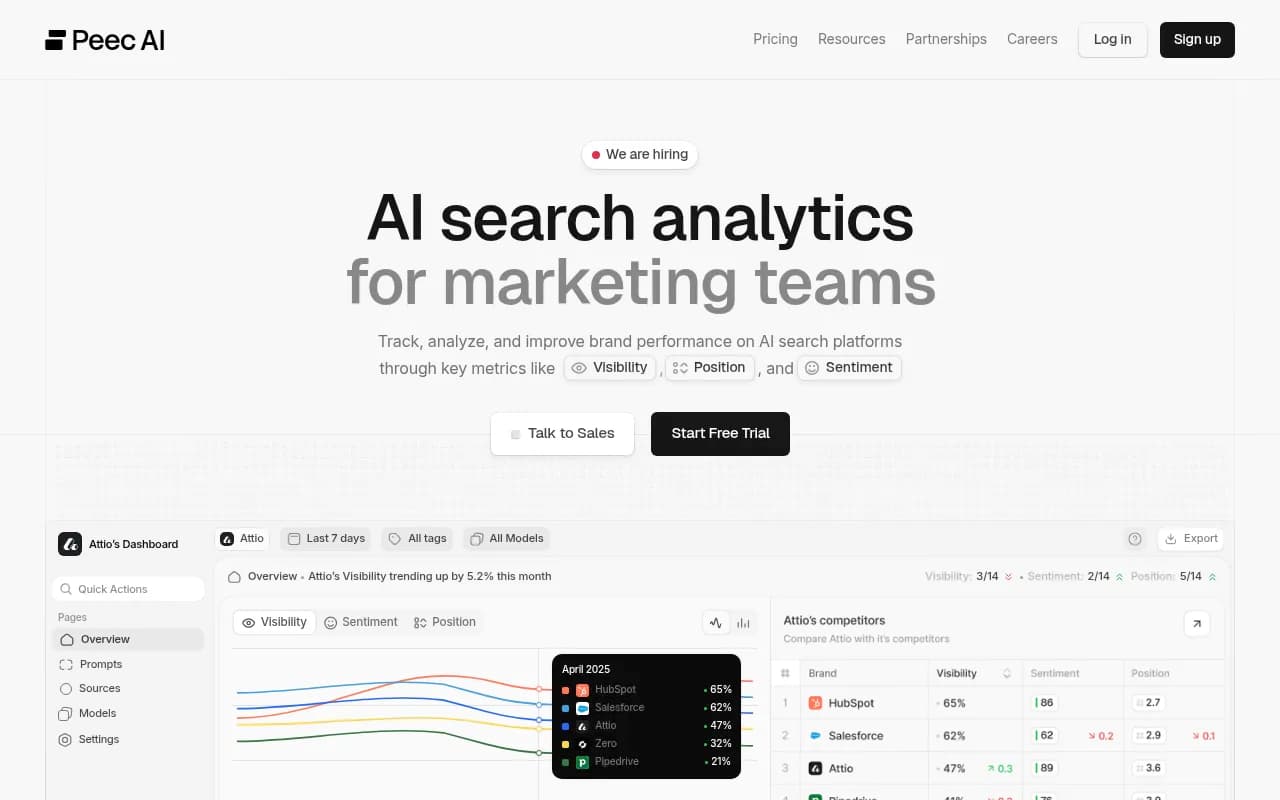
Tools like Otterly.AI, Peec.ai, and basic monitoring dashboards fall into this category. They're useful for awareness. They're not built for action.
Otterly.AI

The action loop: what platforms built for optimization actually do
The platforms worth paying attention to in 2026 are the ones that treat gap discovery as step one of three, not the finish line.
Step 1: Find the gaps with real prompt data
The starting point is answer gap analysis — specifically, identifying which prompts your competitors appear in that you don't. This sounds simple but the quality of the underlying data matters enormously.
Some tools run a fixed set of prompts on a schedule. That's fine for broad awareness but it misses the long tail of prompts where real purchase decisions happen. Better platforms track prompt volumes and difficulty scores, show you query fan-outs (how one prompt branches into sub-queries), and surface the specific content your site is missing.
There's also a technical nuance that most people overlook: AI search engines behave differently in their user-facing interfaces than they do through APIs. A platform that only queries the API may be showing you a different reality than what your actual customers see. Tracking real user interface behavior — the actual ChatGPT or Perplexity response someone gets when they type a question — produces more accurate gap data.
Step 2: Create content that's built to be cited
This is where most tools drop the ball entirely. Once you know what's missing, you need to create content that AI engines will actually cite. That's different from writing content that ranks in Google.
AI engines cite content that directly and authoritatively answers specific questions. They favor structured, factual content with clear entities, specific data points, and a perspective that adds something beyond what can be synthesized from existing sources. Generic SEO filler doesn't cut it.
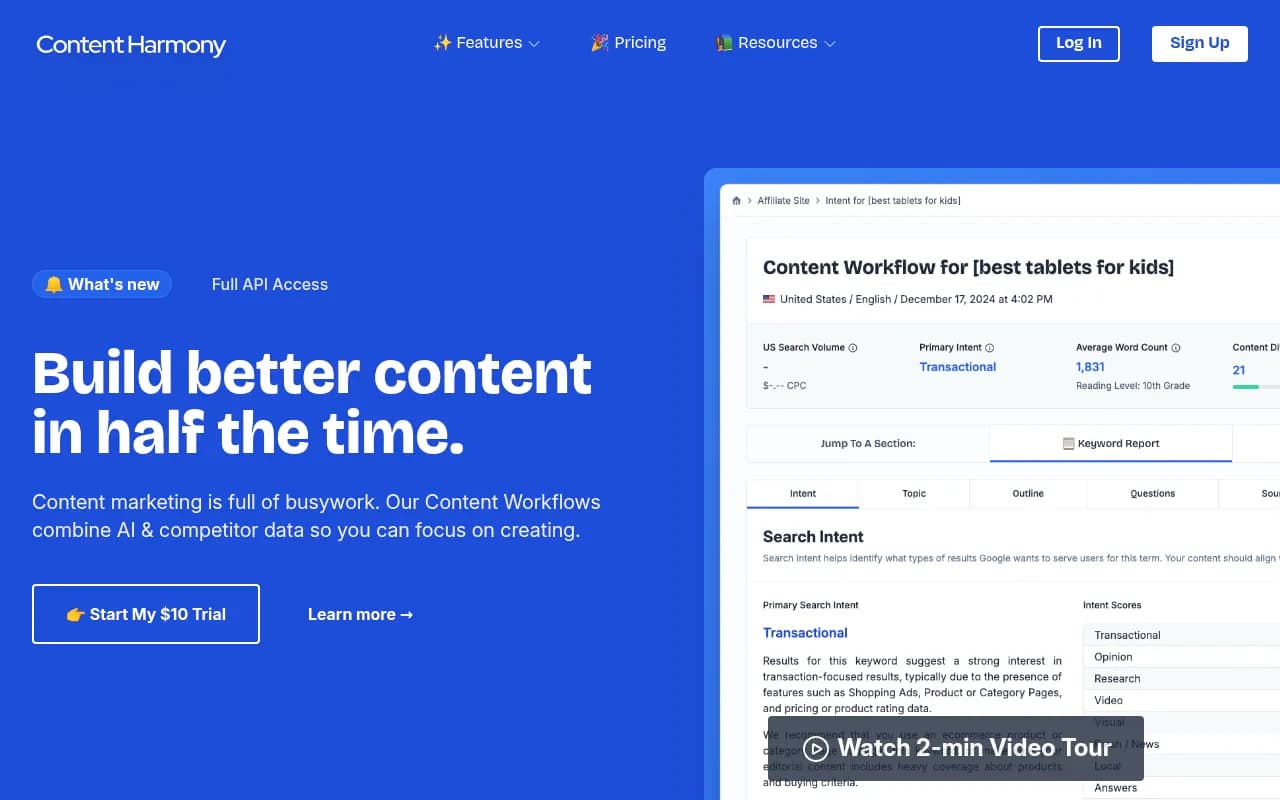
Content generation tools that are actually useful here aren't just AI writers. They're systems that ground the content in real prompt data, competitor citation analysis, persona targeting, and brand guidance. The output needs to be engineered to answer the exact gaps the analysis identified — not just well-written content on a vaguely related topic.
Step 3: Track whether it worked
Publishing content and hoping for the best isn't a strategy. The third part of the loop is tracking results at the page level: which specific pages are being cited, by which AI models, how often, and whether that's translating into actual traffic.
This is also where AI crawler logs become important. Knowing that GPTBot crawled a page is one thing. Knowing that it crawled the page, then started citing it in responses two weeks later, is the kind of feedback loop that lets you actually improve your process over time.
How the best platforms compare
Here's a direct comparison of what different platform types offer across the key capabilities that matter for turning gap analysis into results:
| Capability | Monitoring-only tools | Mid-tier platforms | Full optimization platforms |
|---|---|---|---|
| Brand mention tracking | Yes | Yes | Yes |
| Competitor gap analysis | Basic | Yes | Yes + prompt volumes |
| Content brief generation | No | Sometimes | Yes, grounded in prompt data |
| AI content generation | No | No | Yes |
| Crawler log analysis | No | Rarely | Yes |
| Page-level citation tracking | No | Sometimes | Yes |
| Traffic attribution | No | No | Yes |
| Reddit/YouTube insights | No | No | Yes (some) |
| Query fan-outs | No | No | Yes (some) |
| ChatGPT Shopping tracking | No | No | Yes (some) |
The gap between column one and column three isn't incremental. It's the difference between a reporting tool and an optimization platform.
Promptwatch sits firmly in the third column — it's built around the full action loop, from answer gap analysis through AI content generation to page-level citation tracking and traffic attribution. It's the only platform in a recent comparison of 12 GEO tools rated as a "Leader" across all categories.

For teams that want strong monitoring with some optimization features, platforms like AthenaHQ and Profound offer solid coverage across multiple AI engines.

Profound

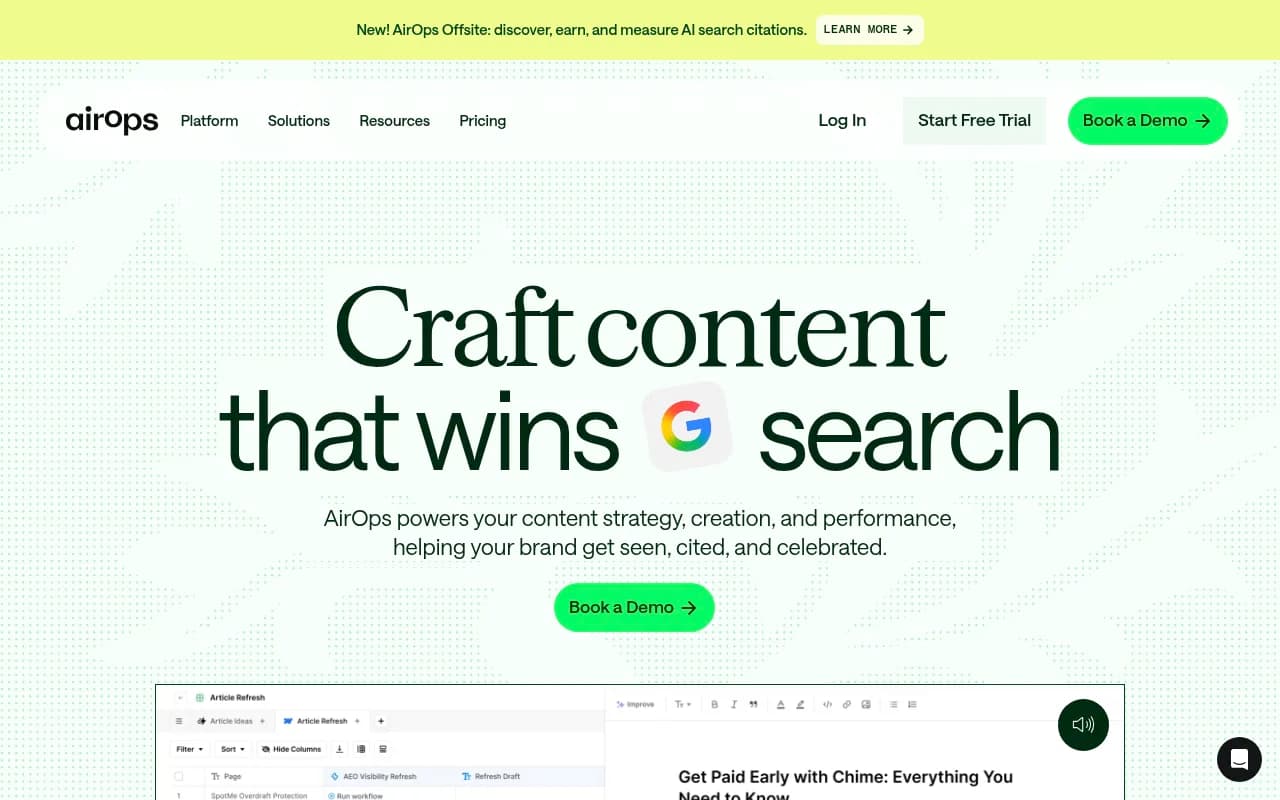
For content generation specifically, tools like AirOps and Search Atlas have built workflows that connect content creation to AI search optimization, though they approach the problem differently.
The content brief problem
One thing that doesn't get talked about enough: the quality of a content brief determines almost everything downstream.
A brief that says "write a 1,500-word article about project management software" will produce content that AI engines ignore. A brief that says "answer the specific question 'what project management software works best for distributed engineering teams' — here's what ChatGPT currently cites, here's what's missing from those sources, here's the competitor content that's getting cited, and here's the unique angle our brand can credibly take" — that brief produces content with a real chance of getting cited.
The difference is data. Good briefs are built from:
- The specific prompt and its variants
- Current AI responses and what sources they cite
- Competitor content analysis
- Prompt volume and difficulty estimates
- Brand voice and positioning guidance
Platforms that generate briefs without this grounding are essentially producing expensive guesswork. The brief needs to be specific enough that a writer (human or AI) can produce something genuinely more useful than what's already being cited.
Crawler logs: the underrated signal
Most marketing teams have never looked at an AI crawler log. That's a mistake.
AI crawlers like GPTBot (OpenAI), ClaudeBot (Anthropic), and PerplexityBot leave traces in your server logs every time they visit your site. These logs tell you which pages they're reading, how often they return, what errors they encounter, and — when correlated with citation data — when a page moves from "crawled" to "cited."
This matters for a few reasons. First, if a crawler is hitting your site but not citing your content, that's a signal that something is wrong with the content itself — it's being read but not deemed citable. Second, if a crawler isn't hitting your site at all, you have a discoverability problem that no amount of content creation will fix. Third, the timeline from publish to crawl to citation varies by model and by content type — understanding that timeline helps you set realistic expectations and iterate faster.
Most monitoring-only tools don't surface this data at all. It requires either direct server log access or integration with your CDN or edge network.
What "closing the loop" actually looks like
Here's a concrete example of what the full cycle looks like when it works:
-
Gap analysis reveals that Perplexity cites three competitors when users ask "how do mid-market SaaS companies handle customer onboarding at scale" — and your brand isn't mentioned.
-
Prompt data shows this query has meaningful volume and moderate difficulty. Query fan-out analysis shows it branches into sub-queries about onboarding software, onboarding checklists, and time-to-value benchmarks.
-
A content brief is generated that maps your existing content against the current Perplexity response, identifies what's missing (specific benchmark data, a comparison of approaches), and outlines a 1,200-word article that directly addresses the gap.
-
The article is published. Crawler logs show PerplexityBot visits the page within 10 days.
-
Three weeks after publication, citation tracking shows the page appearing in Perplexity responses for the target prompt. Visibility score improves. Traffic attribution connects the new citations to a measurable increase in referral visits.
That's the loop. Each step depends on the previous one. You can't do step 5 without step 1, and you can't do step 3 without the data from step 2.
Practical starting points for different team sizes
Not every team needs the full stack on day one. Here's a realistic breakdown:
Small teams or solo marketers: Start with a monitoring tool to establish a baseline. Understand which AI engines matter most for your category and which prompts are worth targeting. Tools like Rankshift or LLM Pulse can get you visibility data without a large investment.

Mid-size marketing teams: Add content brief generation and start tracking at the page level. The goal here is to build a repeatable process: gap analysis feeds briefs, briefs feed content, content gets tracked. MarketMuse or Clearscope can help with content optimization, but you'll want a GEO-specific platform for the AI visibility side.

Agencies and enterprise teams: You need the full loop — crawler logs, multi-site tracking, content generation grounded in prompt data, and traffic attribution. You also need multi-language and multi-region support if you're operating across markets. This is where platforms like Promptwatch, with its 10-model coverage and built-in content agents, become the right fit.
The measurement question
One thing that trips up a lot of teams: how do you know if your AI search optimization is working?
Visibility scores are a start, but they're not the end. The metrics that actually matter are:
- Citation rate: what percentage of tracked prompts result in your brand being cited?
- Page-level citation count: which specific pages are being cited, and how often?
- Citation-to-traffic conversion: are AI citations actually driving visits?
- Share of voice vs. competitors: are you gaining or losing ground relative to the brands you're competing with?
The last one is often the most motivating. Knowing your absolute visibility score is less useful than knowing you've gone from being cited in 12% of relevant prompts to 31% over six months — while a key competitor has dropped from 45% to 38%.
That kind of relative movement is what tells you whether your content strategy is working. It's also what makes the case internally for continued investment in GEO.
The bottom line
Finding a content gap is table stakes in 2026. Every halfway-decent AI search tool can show you where you're invisible. The question is what happens next.
The platforms that are actually moving the needle are the ones that treat gap discovery as the beginning of a workflow, not the end of one. They connect the insight to the content brief, the brief to the published article, the article to the crawler visit, and the crawler visit to the citation. That chain — when it works — is what turns AI search visibility from a vanity metric into a revenue channel.
If your current tool stops at the dashboard, you're doing half the job.