Key takeaways
- Most AI visibility platforms are monitoring-only dashboards -- they show you data but don't help you act on it
- The platforms that actually move the needle combine tracking with built-in content generation and gap analysis
- Promptwatch is the only platform rated "Leader" across all categories in a 2026 comparison of 12 GEO tools, largely because it closes the loop from gap detection to content creation to traffic attribution
- Content generated specifically for AI citation is structurally different from traditional SEO content -- generic blog posts won't cut it
- Pricing across these platforms ranges from ~$99/month to enterprise contracts, so there's a real option for every team size
There's a gap that's easy to miss when you first start looking at AI visibility tools. You sign up, connect your brand, run some prompts, and get a dashboard showing you where ChatGPT and Perplexity mention your competitors but not you. It feels useful. Then you close the tab and wonder: now what?
That's the problem with most of the market. Monitoring is the easy part. The hard part is actually doing something about what you find.
This guide focuses on the platforms that go further -- the ones with built-in content generation that's actually designed to get you cited in AI-generated answers, not just generic SEO copy dressed up in new packaging. There are five worth knowing about in 2026. Here's how they compare.
Why content generation inside a GEO platform matters
When an AI model like ChatGPT or Perplexity answers a question, it's drawing on content it has indexed and deemed authoritative for that topic. If your site doesn't have a page that clearly, specifically answers the question a user is asking, you won't get cited -- regardless of how strong your domain authority is.
This is different from traditional SEO. You can't just optimize existing pages with keywords and expect AI models to start recommending you. You need new content: articles, listicles, comparisons, and FAQs that directly address the prompts your target customers are typing into AI search engines.
The problem is that writing this content without data is guesswork. You don't know which prompts have volume. You don't know which topics your competitors are winning. You don't know what angle an AI model actually wants to see covered.
That's why the best platforms in this space have started building content generation directly into the workflow -- grounded in real citation data, prompt volumes, and competitor analysis. It's a fundamentally different product from a standalone AI writer.
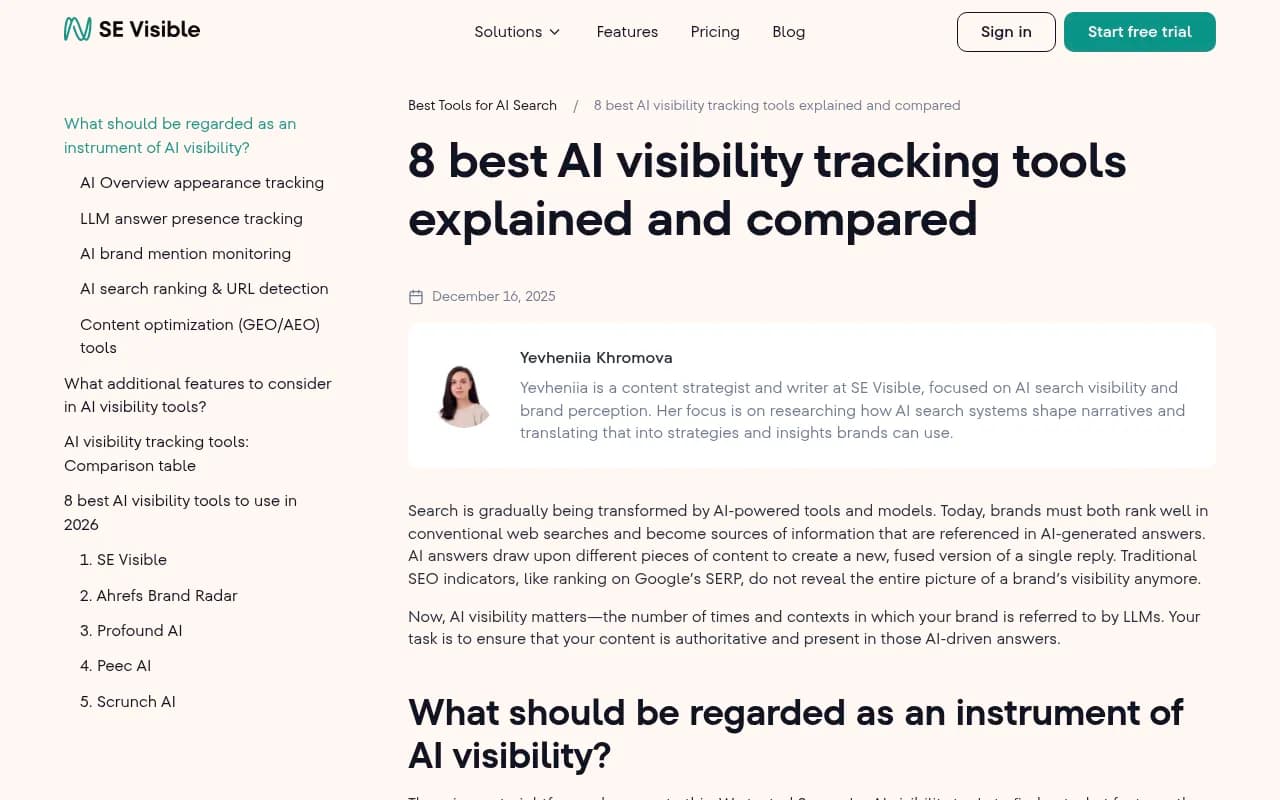
The 5 best platforms with built-in content generation
1. Promptwatch
Promptwatch is the most complete platform in this category, and it's not particularly close. Where most competitors stop at showing you a visibility score, Promptwatch is built around a three-step loop: find the gaps, create content that fixes them, then track whether it worked.

The Answer Gap Analysis is the starting point. It shows you exactly which prompts your competitors are appearing in that you're not -- not as a vague category, but as specific questions with volume estimates and difficulty scores. You see what's missing from your site and why.
From there, the built-in AI writing agent generates content grounded in that data. It analyzes 880M+ citations to understand what kind of content AI models actually cite for a given topic, then produces articles, listicles, and comparisons that match that pattern. This isn't a generic AI writer with a GEO skin on top -- the content strategy is driven by real citation behavior.
The tracking side closes the loop. Page-level monitoring shows which specific pages are being cited, by which AI models, and how often. Traffic attribution connects that visibility to actual sessions and revenue via a code snippet, Google Search Console integration, or server log analysis.
A few capabilities that set it apart from everything else on this list:
- AI Crawler Logs that show when ChatGPT, Claude, Perplexity, and others are crawling your site -- which pages they read, which they skip, and any errors they hit
- Reddit and YouTube tracking, which surfaces the discussions that directly influence AI recommendations (most platforms ignore this entirely)
- ChatGPT Shopping tracking for brands that appear in product carousels
- Query fan-outs that show how one prompt branches into sub-queries, so you can map content to the full intent cluster
- Monitoring across 10 AI models including Google AI Mode, DeepSeek, Grok, and Mistral
Pricing starts at $99/month for the Essential plan (1 site, 50 prompts, 5 articles). Professional is $249/month, Business $579/month. A free trial is available.
Used by 6,700+ brands and agencies including Booking.com and Center Parcs.
2. Search Atlas
Search Atlas takes a different approach -- it's primarily an SEO automation platform that has built AI search optimization into its workflow. The content generation is solid and the platform handles a lot of the technical lifting automatically.

Where it shines is in the breadth of traditional SEO capabilities alongside the AI visibility features. If your team needs one platform to handle both Google rankings and AI search presence, Search Atlas is worth a serious look. The content generation is more SEO-oriented than citation-optimized, which means it works well for teams whose primary goal is still Google but who want to start building AI visibility in parallel.
The gap analysis is less granular than Promptwatch's -- you get topic recommendations rather than specific prompt-level data with volume estimates. For teams that are just getting started with GEO, that's actually fine. For teams that want to prioritize specific high-value prompts, it's a limitation.
3. AirOps
AirOps describes itself as a content engineering platform, and that framing is accurate. It's built for teams that want to create content at scale for AI search visibility, with workflows that connect research, writing, and publishing in one place.
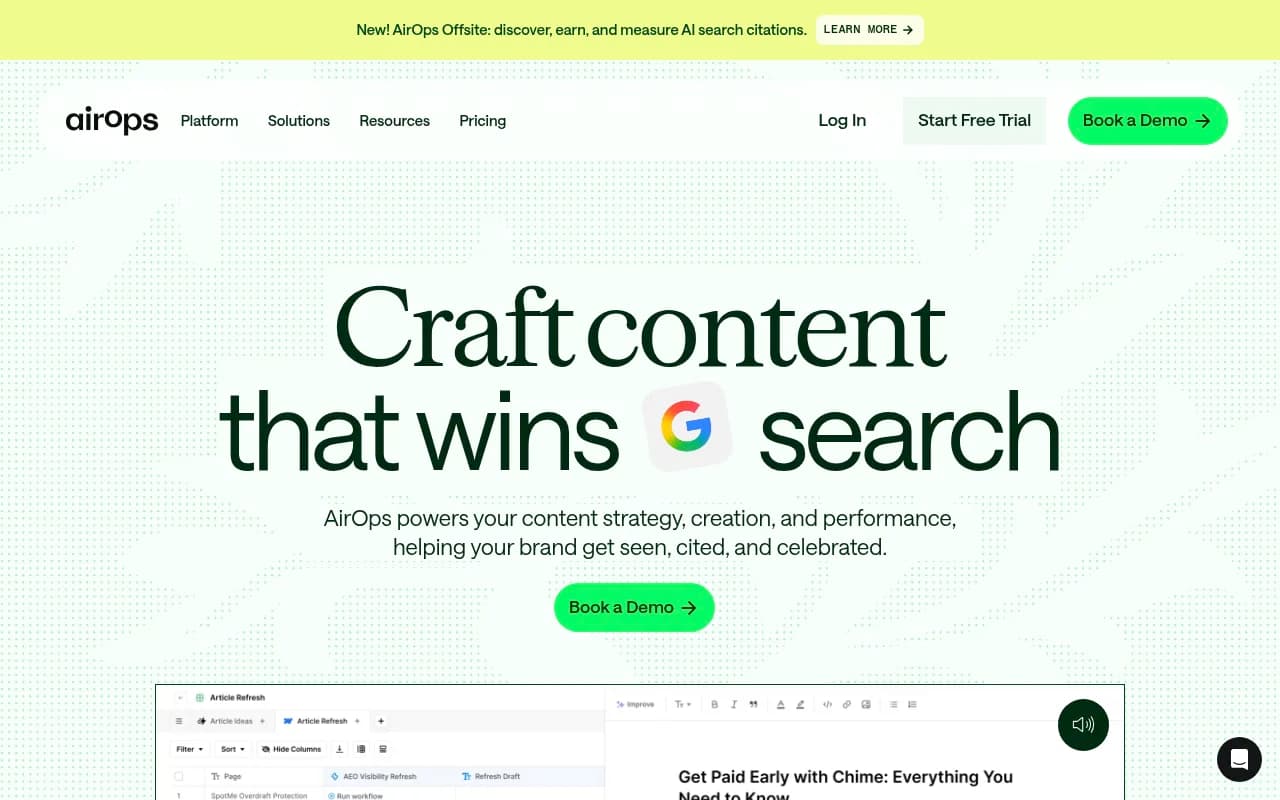
The platform is strong on the content production side. You can build custom workflows that pull in competitive data, generate drafts, and push content to your CMS. For content teams that need volume -- dozens or hundreds of pages targeting different prompts -- AirOps handles that better than most.
The monitoring side is thinner. AirOps is more of a content operations tool that's been adapted for GEO than a true end-to-end AI visibility platform. You'll likely need to pair it with a separate tracking tool to understand whether the content you're producing is actually getting cited.
4. Relixir
Relixir positions itself as an enterprise GEO engine, and it has genuine depth on the analysis side. The platform tracks brand visibility across AI models, identifies content gaps, and generates content designed to close them.
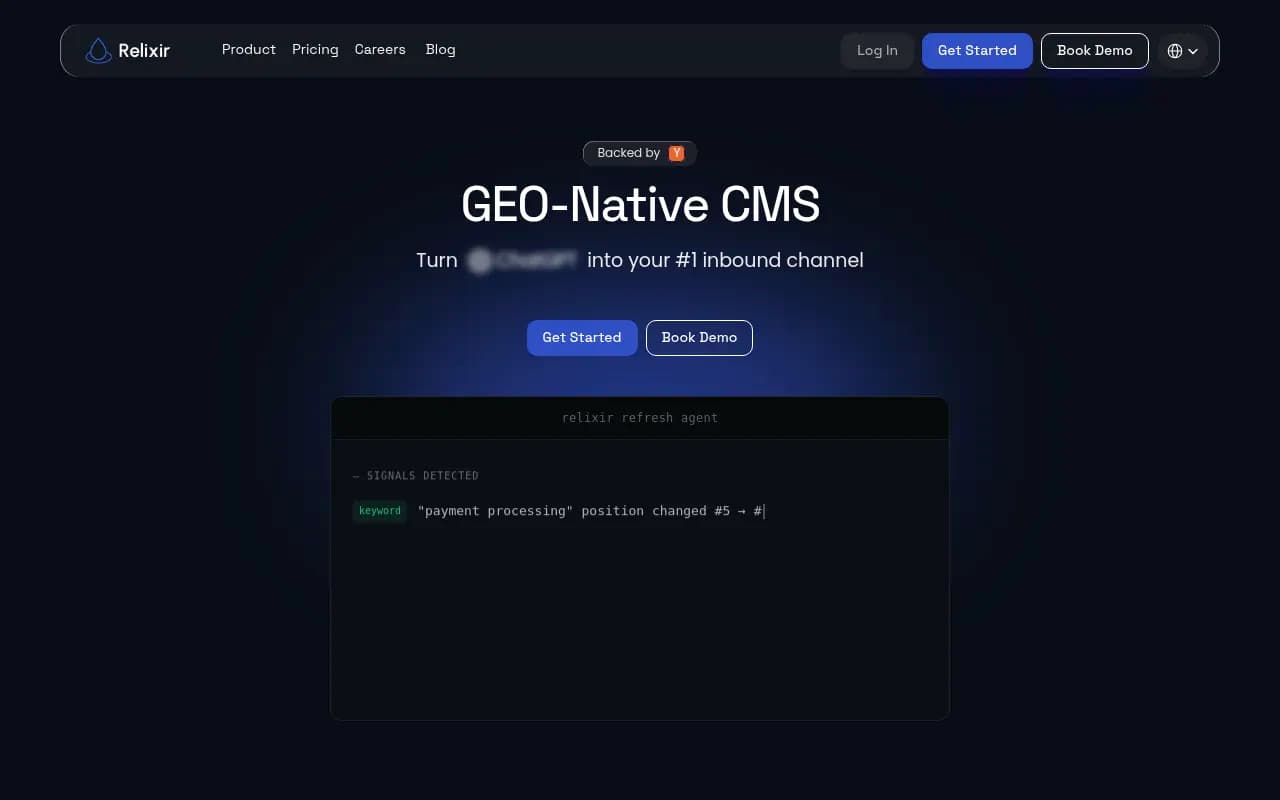
What makes Relixir interesting is its focus on the enterprise use case -- multi-brand management, team collaboration, and the kind of reporting that works for large organizations. If you're running GEO for a portfolio of brands or need to present AI visibility data to a C-suite audience, Relixir's reporting is well-suited to that.
The content generation is competent but less data-driven than Promptwatch's. The citation analysis that informs what gets written is less granular, which means the content strategy is more editorial than algorithmic. That's not necessarily a problem -- it depends on how your team works.
Pricing is enterprise-oriented, so expect a sales conversation rather than a self-serve signup.
5. Scrunch AI
Scrunch AI is a solid mid-market option that combines AI visibility tracking with content optimization features. It's not as deep as Promptwatch on the citation analysis side, but it's more accessible for teams that are earlier in their GEO journey.
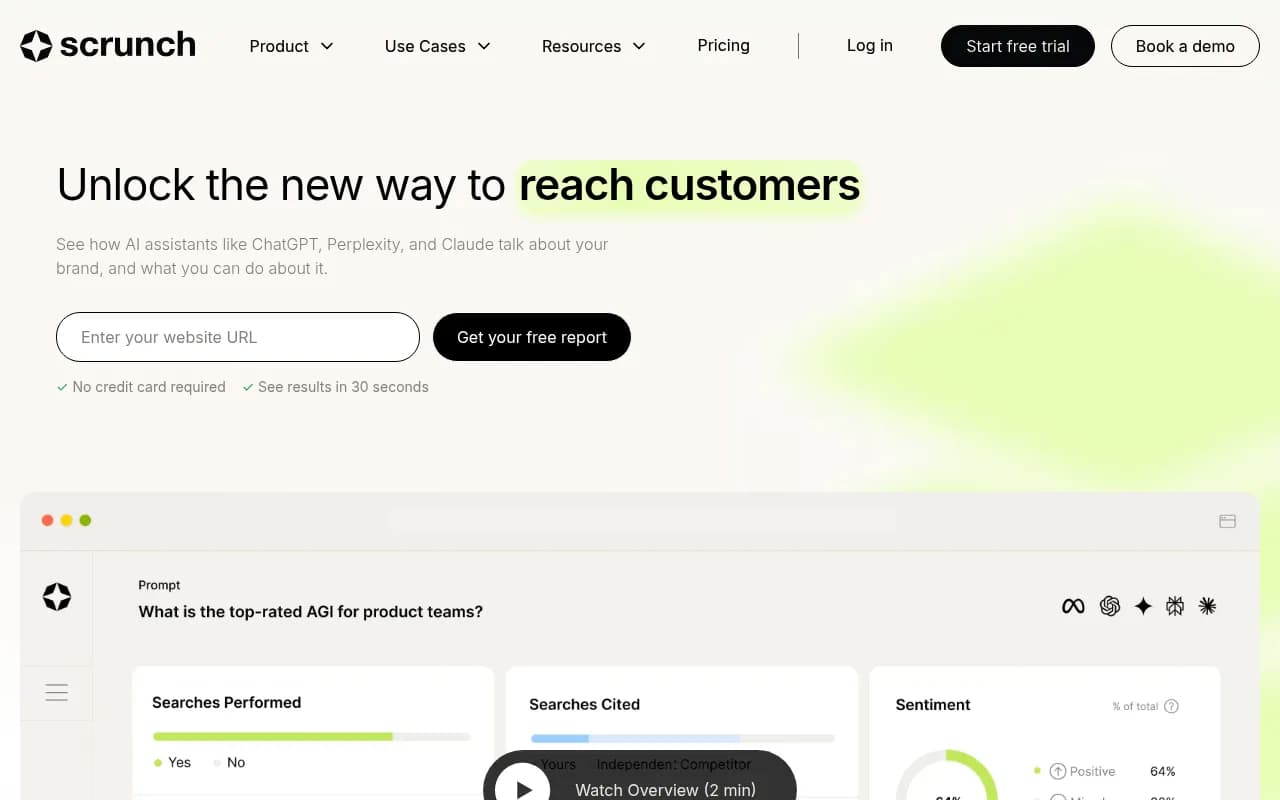
The content generation in Scrunch AI is more template-driven than insight-driven -- you get assistance writing content for specific topics, but the recommendations aren't grounded in the same depth of citation data. For teams that already know what topics they want to target and need help producing content efficiently, it works well.
Where Scrunch AI falls short is in the tracking loop. Connecting content output to visibility improvement to traffic attribution is harder to do in one place, which means you're stitching together data from multiple sources to understand what's actually working.
How these platforms compare
| Platform | Gap analysis | Content generation | Citation data depth | Traffic attribution | Crawler logs | Pricing |
|---|---|---|---|---|---|---|
| Promptwatch | Prompt-level with volume + difficulty | Built-in AI writing agent | 880M+ citations | Yes (code, GSC, logs) | Yes | From $99/mo |
| Search Atlas | Topic-level | Built-in, SEO-oriented | Moderate | Partial | No | Custom |
| AirOps | Moderate | Strong (workflow-based) | Moderate | No | No | Custom |
| Relixir | Strong | Built-in, editorial | Moderate | Partial | No | Enterprise |
| Scrunch AI | Basic | Template-assisted | Basic | No | No | Mid-market |
What to look for when evaluating these platforms
Prompt-level specificity vs. topic-level recommendations
There's a meaningful difference between a platform that tells you "you should write more about project management software" and one that tells you "the prompt 'best project management tool for remote teams' has 2,400 monthly queries and your three main competitors appear in 78% of responses but you appear in 0%."
The second version tells you exactly what to write and why it matters. The first version is a starting point at best.
Is the content generation grounded in citation data?
Generic AI writing tools can produce content quickly, but content that gets cited by AI models needs to match what those models have learned to trust. That means the writing needs to be informed by what's actually being cited -- which domains, which formats, which angles.
Platforms that analyze real citation data before generating content produce meaningfully better output for GEO purposes than those that don't.
Can you close the loop to revenue?
Visibility scores are interesting. Traffic is more interesting. Revenue is what matters.
The best platforms let you connect AI visibility improvements to actual website sessions and conversions. That might be through a JavaScript snippet, a Google Search Console integration, or server log analysis. Without this, you're optimizing for a metric that's one step removed from business impact.
Crawler log access
This one is underappreciated. Knowing that ChatGPT's crawler visited your site is useful. Knowing that it visited your homepage three times but never crawled your product comparison page -- and that the comparison page is returning a 404 -- is actionable.
Most platforms don't offer this. Promptwatch does, and it's one of the clearest examples of the difference between monitoring and optimization.
The monitoring-only trap
It's worth being direct about something: most AI visibility tools on the market right now are monitoring dashboards. They show you a visibility score, a list of prompts where you appear or don't appear, and maybe a competitor comparison. That's it.
Tools like Otterly.AI, Peec AI, and Goodie AI fall into this category. They're useful for understanding where you stand, but they leave you to figure out what to do about it.
Otterly.AI


That's a real limitation. The whole point of tracking AI visibility is to improve it. If the tool shows you the gap but doesn't help you close it, you're paying for a dashboard that generates to-do items rather than a platform that helps you execute.
The five platforms in this guide all have some form of content generation built in. Promptwatch goes furthest in making that generation data-driven and connecting it to measurable outcomes. The others offer varying degrees of the same idea.
Who should use which platform
If you're a marketing team or SEO team at a mid-size to large brand that wants to take AI visibility seriously and measure results: Promptwatch is the right choice. The combination of prompt-level gap analysis, citation-grounded content generation, and traffic attribution is the most complete workflow available.
If you're a content team that needs to produce GEO-optimized content at high volume and already have visibility tracking elsewhere: AirOps is worth evaluating for its workflow capabilities.
If you're an enterprise brand managing multiple properties and need strong reporting for internal stakeholders: Relixir is worth a conversation.
If you're earlier in your GEO journey and want something that handles both traditional SEO and AI visibility without switching tools: Search Atlas is a reasonable starting point.
If you're a smaller team that wants to dip into content optimization without a large commitment: Scrunch AI is the most accessible entry point.
The common thread across all five is that they recognize monitoring alone isn't enough. In 2026, the brands winning in AI search aren't just tracking their visibility -- they're systematically creating content that earns citations. The platforms that help you do both are the ones worth your time.