Key Takeaways
- Speed isn't the problem anymore—performance is. Most AI writing tools generate content quickly but don't help it rank in traditional search or get cited by AI engines like ChatGPT, Perplexity, and Claude.
- The best tools connect writing to search demand. Platforms like Jasper, Surfer SEO, and Frase align content with real keyword data, search intent, and SERP analysis—not just templates.
- AI search visibility requires different optimization. Tools like Promptwatch help you track and optimize for citations in AI Overviews, answer engines, and LLM responses—a channel most traditional SEO tools ignore.
- General-purpose AI (ChatGPT, Claude) works for drafting but lacks SEO context. You'll need dedicated platforms that integrate keyword research, content scoring, and performance tracking to actually rank.
- The right tool depends on your workflow. Freelancers need speed and simplicity (Rytr, Copy.ai), while enterprise teams benefit from workflow automation and brand voice controls (Jasper, Writer).
AI writing tools are everywhere in 2026. From general-purpose chatbots to enterprise content platforms, marketers and SEO teams have no shortage of options promising faster drafts and infinite output.
But speed isn't the bottleneck anymore. Performance is.
Search has evolved. Content now needs to work across traditional Google results, AI Overviews, and answer engines powered by LLMs like ChatGPT, Claude, Perplexity, and Gemini. Early AI content generators were built for speed—many modern tools still treat writing as the end goal, without helping teams understand whether content aligns with search intent or earns visibility once published.
This guide reviews 7 AI writing tools that go beyond drafting—platforms that connect content creation to real SEO outcomes, AI search visibility, and long-term performance. These aren't just text generators. They're tools that help you create content that actually ranks.
How We Evaluated These AI Writing Tools
We tested each platform against criteria that matter for content performance in 2026:
- SEO integration: Does the tool connect to keyword research, SERP analysis, or content scoring?
- AI search optimization: Can it help content get cited in ChatGPT, Perplexity, AI Overviews, or other LLM responses?
- Content quality: Does it produce human-like, contextually accurate drafts, or generic filler?
- Workflow efficiency: How well does it fit into existing content operations—collaboration, editing, publishing?
- Performance tracking: Can you measure whether the content actually ranks or drives traffic?
These aren't subjective preferences. According to Envato's 2026 report on AI in creative work, nearly 50% of content professionals now use AI tools daily—but adoption doesn't equal results. The gap between tools that generate content and tools that help it perform is widening.
1. Jasper: Best for Marketing Teams and Workflow Automation
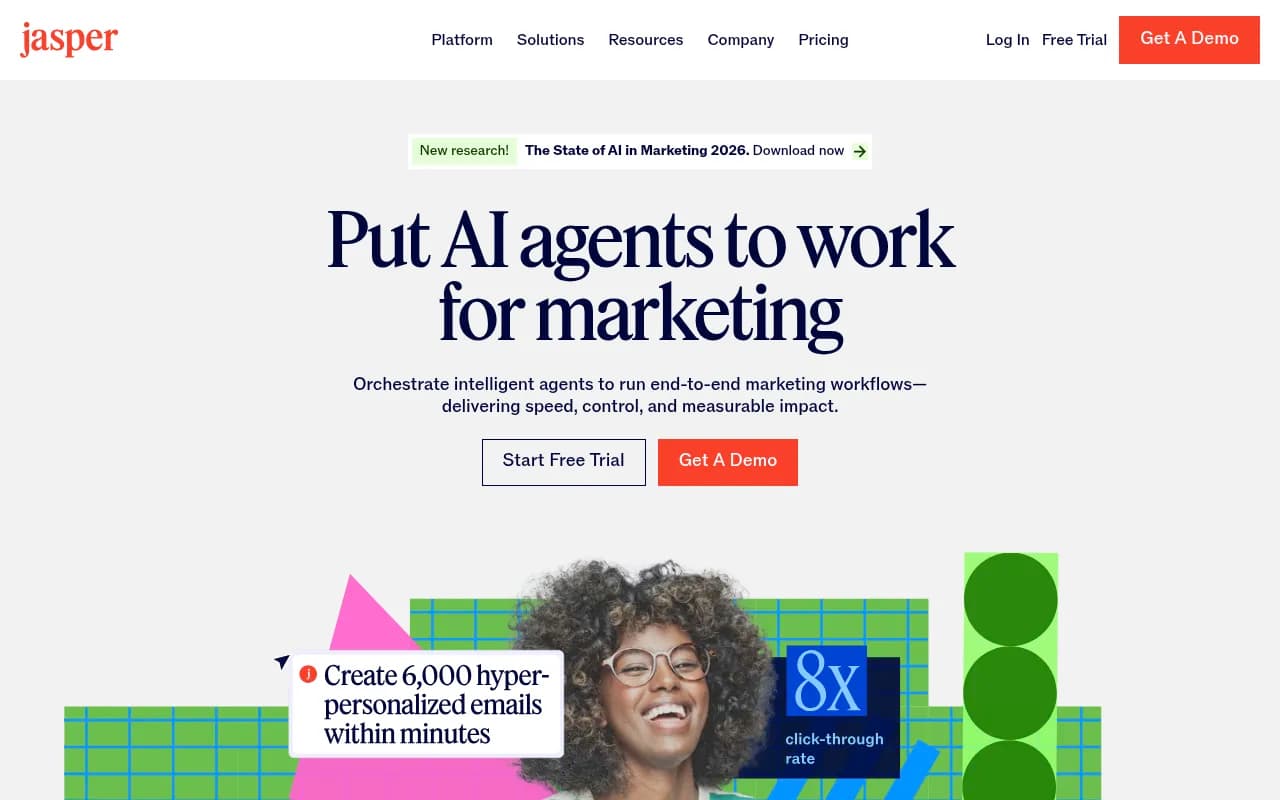
Jasper has evolved from a simple copywriting assistant into a full marketing platform with AI agents, content pipelines, and brand voice controls. It's built for teams that need to scale content production while maintaining consistency across campaigns, channels, and contributors.
Why Jasper Stands Out
Brand Voice and Style Controls: Jasper learns your brand's tone, terminology, and messaging guidelines. You can train it on existing content, style guides, and approved examples—then apply that voice across blog posts, ad copy, emails, and social posts. This is critical for enterprise teams where multiple writers need to sound like the same brand.
AI Agents and Workflows: Jasper's agent system automates multi-step content processes. You can set up workflows that research topics, generate outlines, draft sections, optimize for SEO, and route content for approval—all without manual handoffs. This turns Jasper into a content operations platform, not just a writing tool.
SEO Mode with SurferSEO Integration: Jasper integrates directly with Surfer SEO, pulling in keyword targets, content scores, and SERP analysis. You can write inside Jasper while watching real-time optimization feedback—word count, keyword density, headings, readability. It's not just generating content; it's generating content that's structured to rank.
What It's Missing
Jasper doesn't track AI search visibility. It won't tell you if your content gets cited in ChatGPT, Perplexity, or AI Overviews. For that, you'd need a platform like Promptwatch to monitor citations and optimize for LLM responses.
It's also expensive—starting at $49/month for individuals, scaling to custom enterprise pricing. Smaller teams or solo creators might find better value in Rytr or Copy.ai.
Best For
Marketing teams, agencies, and enterprise brands that need to produce high volumes of on-brand content with workflow automation and SEO integration.
2. Surfer SEO: Best for SEO-Optimized Content Creation
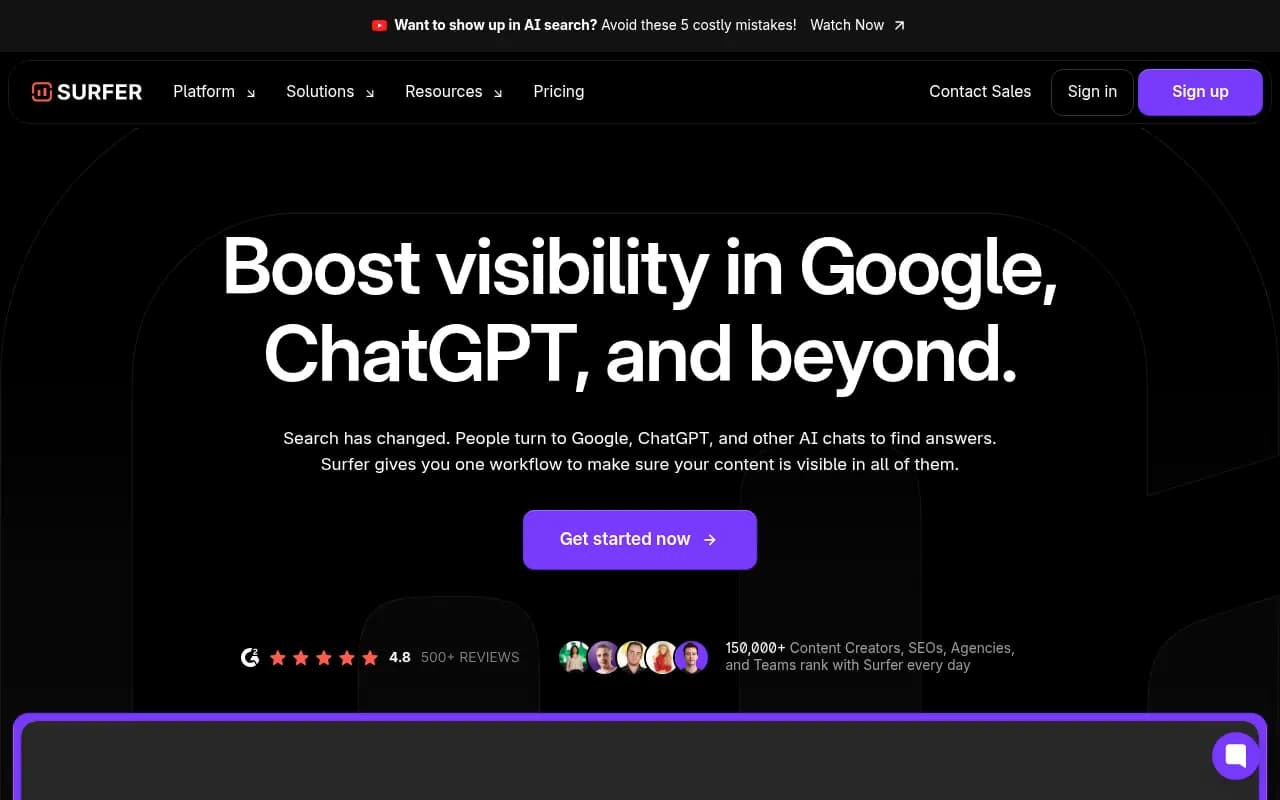
Surfer SEO is built around one core idea: content should be optimized for search from the first draft, not after publishing. It combines keyword research, SERP analysis, and real-time content scoring into a single editor—so you're not guessing what Google wants to see.
Why Surfer SEO Stands Out
Content Editor with Real-Time Scoring: Surfer analyzes the top-ranking pages for your target keyword and extracts patterns—word count, headings, keyword usage, semantic terms, readability. As you write, it scores your content in real time and suggests improvements. You're not writing blind; you're writing to a data-backed blueprint.
SERP Analyzer: Before you write, Surfer shows you exactly what's ranking—domain authority, word count, backlinks, content structure. You can see gaps in competitor coverage and opportunities to differentiate. This turns research into strategy.
AI Writing Assistant (Surfer AI): Surfer's AI writer generates full drafts based on your keyword and SERP data. It's not a generic text generator—it's trained on the actual ranking patterns for your query. The output is structured, optimized, and ready to edit.
What It's Missing
Surfer focuses exclusively on traditional SEO. It doesn't help with AI search visibility—tracking citations in ChatGPT, Perplexity, or AI Overviews. If you're optimizing for LLM responses, you'll need a separate platform.
It also doesn't handle content workflow or collaboration well. There's no built-in approval process, version control, or team roles. It's a writing and optimization tool, not a content operations platform.
Best For
SEO teams, content marketers, and agencies that prioritize Google rankings and need data-driven content optimization from the first draft.
3. Frase: Best for Content Research and Question-Based SEO
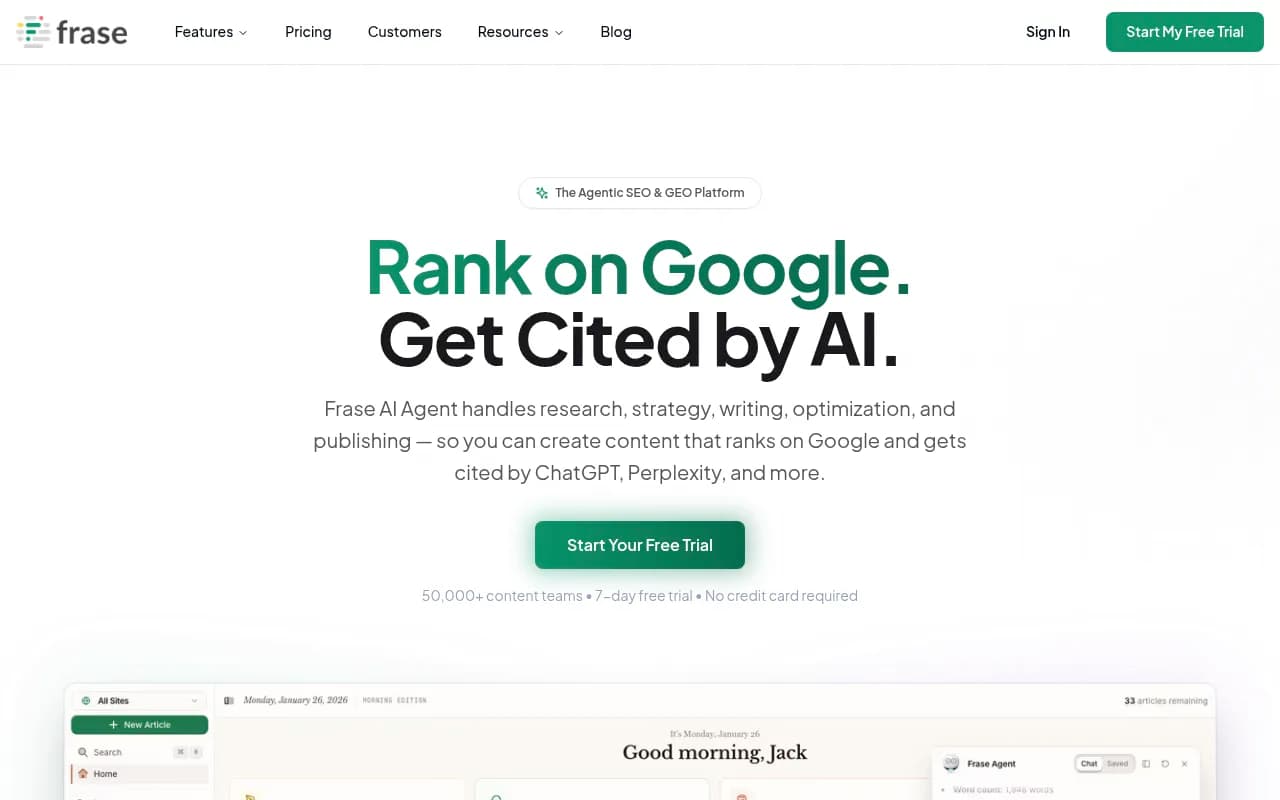
Frase is designed around answering questions. It analyzes search queries, extracts the questions people are asking, and helps you structure content that directly addresses those questions. This makes it particularly effective for informational content, how-to guides, and FAQ-style pages.
Why Frase Stands Out
Question Research and Clustering: Frase pulls questions from Google's "People Also Ask," Reddit, Quora, and other sources—then clusters them by topic. You can see exactly what your audience wants to know and structure content around those questions. This aligns perfectly with how AI models like ChatGPT and Perplexity surface answers.
Content Briefs with SERP Analysis: Frase generates content briefs by analyzing the top 20 results for your keyword. It extracts headings, topics, statistics, and semantic terms—giving you a roadmap before you write. You're not starting from scratch; you're starting with a data-backed outline.
AI Writing with Optimization: Frase's AI writer generates sections based on your brief and target keywords. It integrates optimization scoring so you can see how well your content matches SERP patterns. The output is structured, relevant, and ready to refine.
What It's Missing
Frase doesn't track AI search visibility or citations. It won't tell you if your content appears in ChatGPT responses or AI Overviews. For that, you'd need a platform like Promptwatch.
It also lacks advanced workflow features—no approval processes, limited collaboration tools, and no brand voice training. It's a research and writing tool, not a content operations platform.
Best For
Content creators, bloggers, and SEO teams focused on informational content, question-based queries, and FAQ optimization.
4. ChatGPT: Best for Versatile Drafting and Research
ChatGPT is the most widely used AI writing tool in 2026—and for good reason. It's versatile, fast, and accessible. But it's not built for SEO or content performance. It's a drafting assistant, not an optimization platform.
Why ChatGPT Stands Out
Projects and Custom Instructions: ChatGPT's Projects feature lets you organize writing into dedicated workspaces with custom instructions. You can set tone, style, and context for each project—making it easier to maintain consistency across clients or content types.
Custom GPTs: You can train specialized versions of ChatGPT for specific tasks—blog outlines, product descriptions, email sequences. These Custom GPTs act as reusable assistants tailored to your exact needs.
Canvas Mode: Canvas provides a collaborative workspace where you can request and implement changes in real time. It's like having a live document editor with AI assistance built in.
What It's Missing
ChatGPT has no SEO integration. It doesn't pull keyword data, analyze SERPs, or score content for optimization. You're writing in a vacuum—no feedback on whether your content will rank.
It also doesn't track performance. You won't know if your content gets cited in AI Overviews, ChatGPT responses, or other LLM outputs. For AI search visibility, you'd need a platform like Promptwatch.
Best For
Freelancers, writers, and teams that need fast drafting and research assistance but have separate tools for SEO and optimization.
5. Claude: Best for Natural, Human-Like Writing
Claude is known for producing the most natural, human-like prose of any AI writing tool. It's particularly strong at long-form content, nuanced tone, and contextual accuracy. If you're writing thought leadership, editorial content, or anything that needs to sound genuinely human, Claude is the best choice.
Why Claude Stands Out
Conversational and Contextual: Claude's writing feels less robotic than most AI tools. It handles tone shifts, maintains context across long documents, and avoids the repetitive phrasing that plagues other models.
Long-Form Capability: Claude can process and generate extremely long documents—up to 200,000 tokens in a single session. This makes it ideal for white papers, research reports, and comprehensive guides.
Ethical and Thoughtful Responses: Claude is trained to avoid harmful, biased, or misleading content. It's more cautious than ChatGPT, which can be an advantage for sensitive topics or brand-safe content.
What It's Missing
Like ChatGPT, Claude has no SEO integration. It doesn't pull keyword data, analyze competitors, or optimize for search. You're drafting without performance feedback.
It also doesn't track AI search visibility. You won't know if your content gets cited in AI Overviews or LLM responses. For that, you'd need a platform like Promptwatch.
Best For
Writers, editors, and content teams focused on editorial quality, thought leadership, and long-form content that needs to sound genuinely human.
6. Rytr: Best for Budget-Conscious Creators
Rytr is a structured, affordable AI writing assistant designed for freelancers, small businesses, and solo creators. It's not as advanced as Jasper or Surfer, but it's fast, simple, and costs a fraction of the price.
Why Rytr Stands Out
Template-Based Workflows: Rytr offers pre-built templates for blog posts, product descriptions, ad copy, emails, and more. You select a template, fill in the details, and get a draft in seconds. It's fast and predictable.
Tone and Style Controls: Rytr lets you set tone (casual, professional, persuasive) and style (formal, friendly, witty). The output adjusts accordingly, making it easy to match different content types without rewriting.
Affordable Pricing: Rytr starts at $9/month for unlimited characters. That's significantly cheaper than Jasper ($49+/month) or Surfer ($89+/month). For budget-conscious creators, it's hard to beat.
What It's Missing
Rytr has minimal SEO integration. It doesn't pull keyword data, analyze SERPs, or score content for optimization. You're drafting without performance feedback.
It also doesn't track AI search visibility or citations. For that, you'd need a platform like Promptwatch.
Best For
Freelancers, small businesses, and solo creators who need fast, affordable drafting without advanced SEO or workflow features.
7. Promptwatch: Best for AI Search Visibility and Citation Tracking

Most AI writing tools stop at content generation. Promptwatch is different—it's built around AI search visibility. It tracks how your content appears in ChatGPT, Claude, Perplexity, Gemini, and other LLM responses, then helps you optimize for citations.
This is the missing piece for most content teams. You can write great content with Jasper, optimize it with Surfer, and still have no idea if it's getting cited by AI models. Promptwatch closes that loop.
Why Promptwatch Stands Out
Answer Gap Analysis: Promptwatch shows you exactly which prompts your competitors are visible for but you're not. You see the specific content your website is missing—the topics, angles, and questions AI models want answers to but can't find on your site. This is the foundation of the action loop: find the gaps, create content, track results.
AI Content Generation Grounded in Citation Data: The built-in AI writing agent generates articles, listicles, and comparisons based on real citation data (880M+ citations analyzed), prompt volumes, persona targeting, and competitor analysis. This isn't generic SEO filler—it's content engineered to get cited by ChatGPT, Claude, Perplexity, and other AI models.
Page-Level Citation Tracking: See exactly which pages are being cited, how often, and by which models. Close the loop with traffic attribution (code snippet, GSC integration, or server log analysis) to connect visibility to actual revenue.
AI Crawler Logs: Real-time logs of AI crawlers (ChatGPT, Claude, Perplexity) hitting your website—which pages they read, errors they encounter, how often they return. Understand how AI engines discover your content and fix indexing issues. Most competitors lack this entirely.
What It's Missing
Promptwatch is not a traditional SEO tool. It doesn't replace keyword research, rank tracking, or backlink analysis. You'll still need platforms like Surfer, Ahrefs, or Semrush for Google optimization.
It's also focused on AI search visibility—if you're not optimizing for LLM citations, you won't need it.
Best For
Marketing teams, SEO teams, and brands that want to be visible and rank in AI search results—ChatGPT, Perplexity, Claude, Gemini, AI Overviews, and other LLM-powered engines.
How to Choose the Right AI Writing Tool
The best AI writing tool depends on your workflow, goals, and team structure:
- If you need workflow automation and brand voice controls: Use Jasper. It's built for marketing teams that need to scale content production while maintaining consistency.
- If you're optimizing for traditional SEO: Use Surfer SEO or Frase. They connect writing to keyword data, SERP analysis, and content scoring.
- If you're optimizing for AI search visibility: Use Promptwatch. It tracks citations in ChatGPT, Perplexity, and other LLMs, then helps you create content that gets cited.
- If you need fast, affordable drafting: Use Rytr or ChatGPT. They're versatile and budget-friendly, but lack SEO integration.
- If you need human-like, editorial-quality writing: Use Claude. It's the best choice for thought leadership and long-form content.
Most teams will use a combination. Jasper or Surfer for SEO-optimized drafting, ChatGPT or Claude for research and ideation, and Promptwatch for AI search visibility.
The Future of AI Writing Tools: Performance Over Speed
The AI writing tool market is maturing. Speed and output volume are no longer differentiators—every tool can generate content fast. The new competitive edge is performance: tools that help content rank, get cited, and drive measurable results.
This shift is accelerating as search evolves. Traditional Google rankings still matter, but AI Overviews, ChatGPT citations, and Perplexity recommendations are becoming equally important channels. Content teams need tools that optimize for both.
The platforms reviewed here represent that shift. They're not just text generators—they're performance engines that connect writing to search demand, citation data, and real traffic outcomes.
Choose the tool that fits your workflow. Then measure what matters: rankings, citations, and revenue.