Key takeaways
- AirOps is a solid content operations tool, but it doesn't track actual brand citations in ChatGPT, Perplexity, or other AI engines -- a critical gap for agencies doing GEO work in 2026
- Most alternatives specialize in either monitoring OR content generation, not both; the best picks for agencies combine both with white-label or multi-client support
- Promptwatch is the only platform in this comparison rated as a "Leader" across monitoring, content generation, and optimization -- making it the strongest all-in-one pick for agencies managing multiple clients
- Pricing ranges from free (n8n self-hosted) to $579+/month for full-featured platforms; agency needs typically land in the $249-$579/month range
- The tools that matter most in 2026 are the ones that close the loop: find visibility gaps, generate content to fix them, and track whether it worked
AirOps raised $40 million in Series B funding from Greylock in late 2025. That's a vote of confidence in the AI content operations space. But agencies searching for AirOps alternatives aren't doing it because they haven't heard of it -- they're doing it because they've run into its real limitations.
The core problem: AirOps is built for content production workflows. It evaluates content readiness for AI search, not whether your client's brand is actually being cited in ChatGPT or Perplexity today. For an agency managing five or ten clients, that distinction is enormous. You need to know if Client A is invisible in Google AI Overviews, why Client B's competitor keeps getting cited, and what content to create to fix both -- ideally in a single platform with white-label reporting you can send directly to the client.
This guide covers the seven best alternatives for agencies in 2026, evaluated specifically on multi-client management, GEO tracking depth, content generation capabilities, and reporting options.
What agencies actually need (that AirOps doesn't fully deliver)
Before getting into the tools, it's worth being specific about the gaps. AirOps frustrates agency teams for a few consistent reasons:
It has no real AI citation tracking. You can't see whether your client appears in a ChatGPT response to "best CRM for small business" -- you can only evaluate whether their content is structured to potentially appear. That's a meaningful difference when clients are asking "are we showing up in AI search?"
Multi-client management is clunky. AirOps wasn't designed as an agency platform. Managing separate workspaces, reporting, and workflows for multiple clients requires significant manual overhead.
There's no white-label reporting. Agencies need to send clients something that looks like it came from them, not from a third-party tool.
Content generation exists but isn't grounded in citation data. Writing content without knowing which prompts drive AI citations is essentially guessing.
With that in mind, here's what to look for in an alternative:
- Real-time monitoring of brand mentions across ChatGPT, Perplexity, Claude, Gemini, and Google AI Overviews
- Multi-client or multi-site workspace management
- Content generation tied to actual visibility gaps (not generic AI writing)
- White-label or client-ready reporting
- Prompt volume and difficulty data to prioritize what to work on
The 7 best AirOps alternatives for agencies in 2026
1. Promptwatch -- best all-in-one GEO platform for agencies
Promptwatch is the most complete option for agencies that want to move beyond monitoring into actual optimization. Where most tools show you a dashboard and leave you stuck, Promptwatch is built around a three-step loop: find the gaps, generate content to fill them, and track whether visibility improved.

For agencies, the multi-site support and the built-in AI writing agent are the two features that matter most. The Answer Gap Analysis shows exactly which prompts competitors are visible for but your client isn't -- not in the abstract, but with specific content recommendations grounded in 880M+ citations analyzed. The writing agent then generates articles, listicles, and comparisons engineered to get cited by AI models, not just to rank in Google.
On the monitoring side, Promptwatch tracks 10 AI engines (ChatGPT, Perplexity, Claude, Gemini, Google AI Overviews, Grok, DeepSeek, Copilot, Meta AI, Mistral), with AI crawler logs that show which pages each AI bot is reading, how often, and what errors they're hitting. Most competitors don't have this at all.
The Business plan at $579/month covers 5 sites, 350 prompts, and 30 articles per month -- reasonable for a small agency. Custom agency/enterprise pricing is available for larger teams.
What it lacks: dedicated white-label client portals (reporting is done via Looker Studio integration or API exports). For agencies that need a fully branded client experience, you'll need to build that layer yourself.
Best for: Agencies that want one platform to monitor, optimize, and generate content across multiple clients -- and are comfortable building their own reporting layer.
2. Rankability -- best for agencies focused on Google + AI search
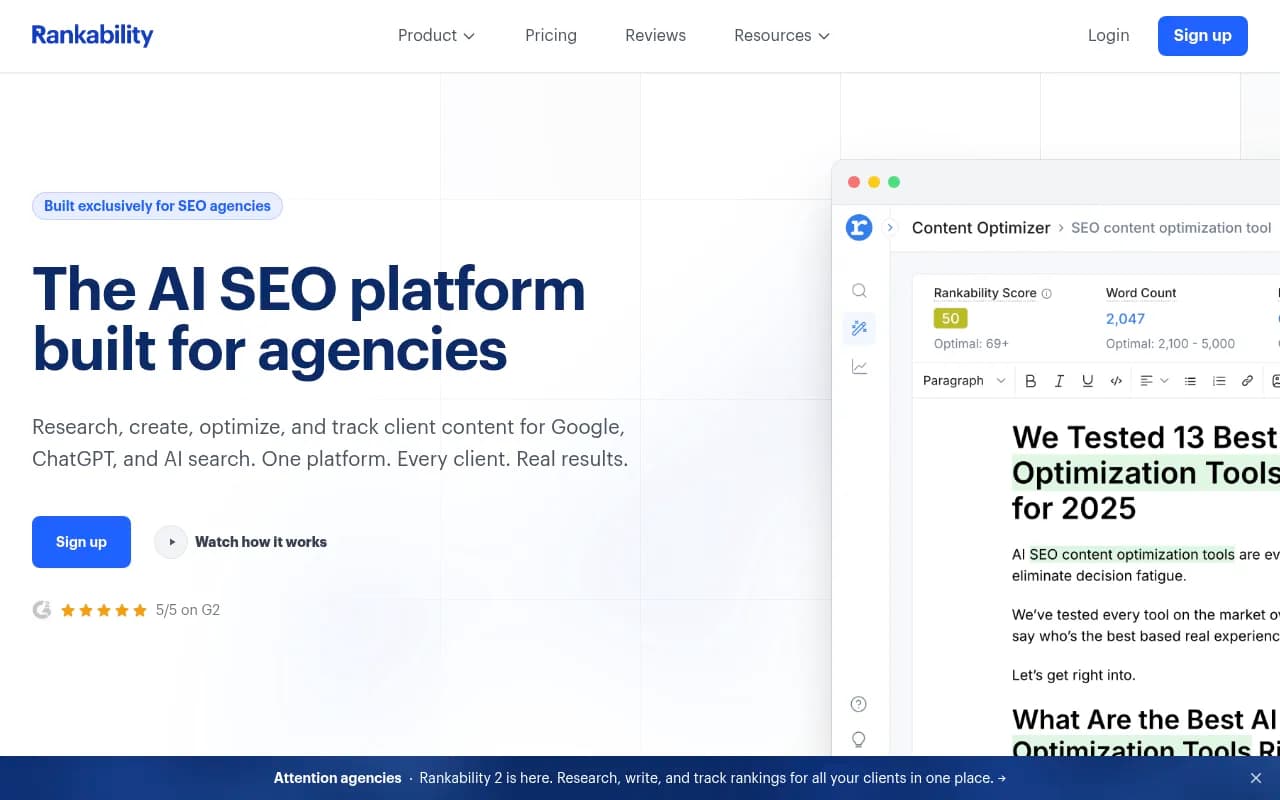
Rankability is built specifically for agencies and handles both traditional Google rankings and AI search visibility in one place. It's one of the few tools that treats GEO and SEO as connected rather than separate disciplines, which reflects how most agency clients actually think about search in 2026.
The platform includes white-label reporting, which is a genuine differentiator for agency use. You can send clients branded reports showing their AI visibility trends alongside traditional rank tracking -- without them ever seeing the Rankability name.
Where it falls short: content generation is limited compared to Promptwatch. Rankability will tell you what's missing, but you'll need to write the content elsewhere or use a separate tool.
Best for: Agencies that need white-label reporting and want to present AI search and traditional SEO in a unified client dashboard.
3. Search Atlas -- best for content-heavy agencies
Search Atlas takes a different angle: it's an AI-powered SEO automation platform that writes, optimizes, and publishes content at scale. For agencies managing high-volume content programs across multiple clients, the automation depth here is impressive.
The platform includes keyword research, content briefs, AI writing, and on-page optimization in one workflow. It's closer to AirOps in spirit -- content operations first -- but with stronger SEO grounding and better multi-client support.
The GEO tracking capabilities are present but not as deep as dedicated monitoring tools. If your agency's primary deliverable is content production rather than AI visibility reporting, Search Atlas is worth a serious look.
Best for: Content-first agencies producing high volumes of SEO and GEO content for multiple clients.
4. Jasper AI -- best for agencies that need marketing-grade content at scale
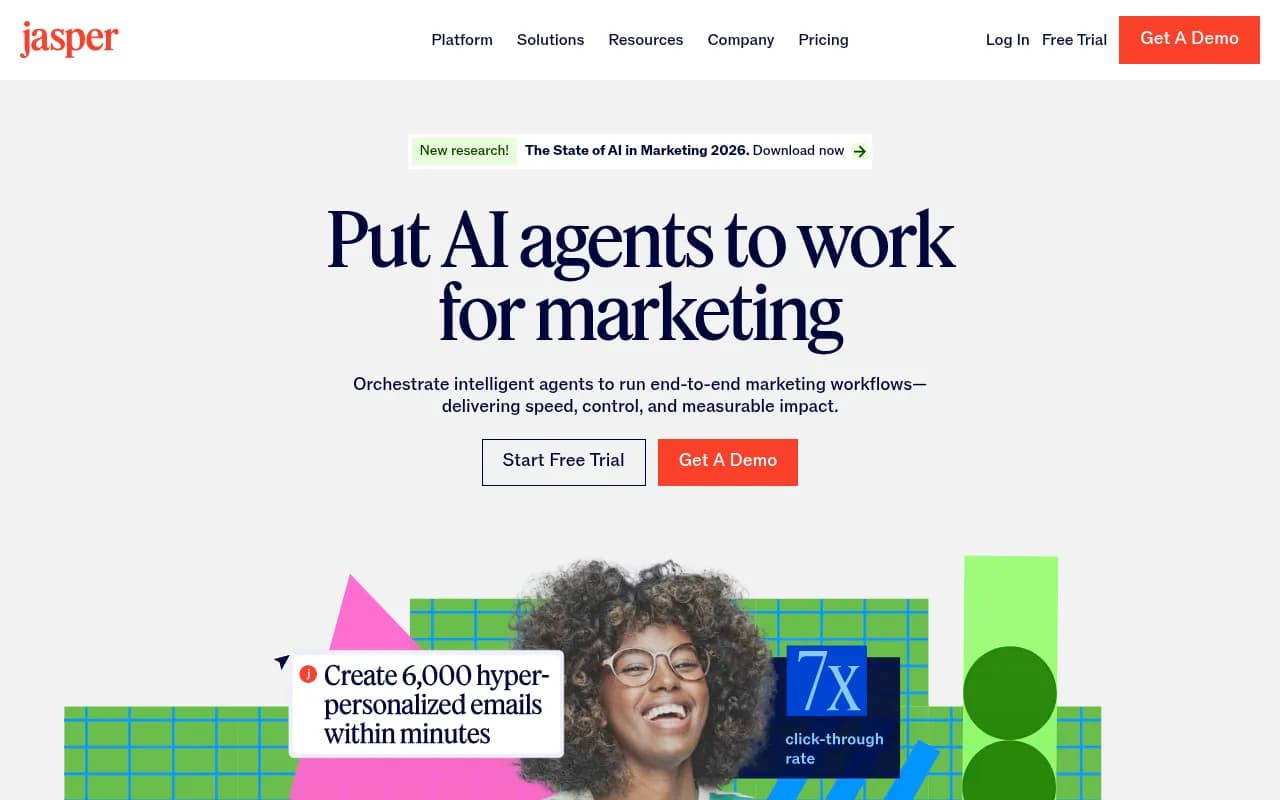
Jasper is the most established name in AI content generation, and the 2026 version is meaningfully different from the "AI copywriting tool" it started as. It now includes marketing agents, content pipelines, and brand voice controls that make it genuinely useful for agencies managing multiple client voices.
The 80+ marketing-specific templates cover everything from blog posts to ad copy to email sequences. Brand voice controls let you configure a distinct voice for each client, which solves one of the messiest problems in agency content production.
What Jasper doesn't do: track AI search visibility. It has no monitoring of whether your client appears in ChatGPT or Perplexity. It's purely a content creation tool. For agencies that already have a monitoring solution and just need better content output, Jasper fills that gap well. For agencies that want one platform to do both, it's not the answer.
Pricing starts at $49/month for individuals; agency plans run higher.
Best for: Agencies with a separate GEO monitoring tool that need high-quality, brand-consistent content generation at scale.
5. Scrunch AI -- best for agencies focused on AI search monitoring
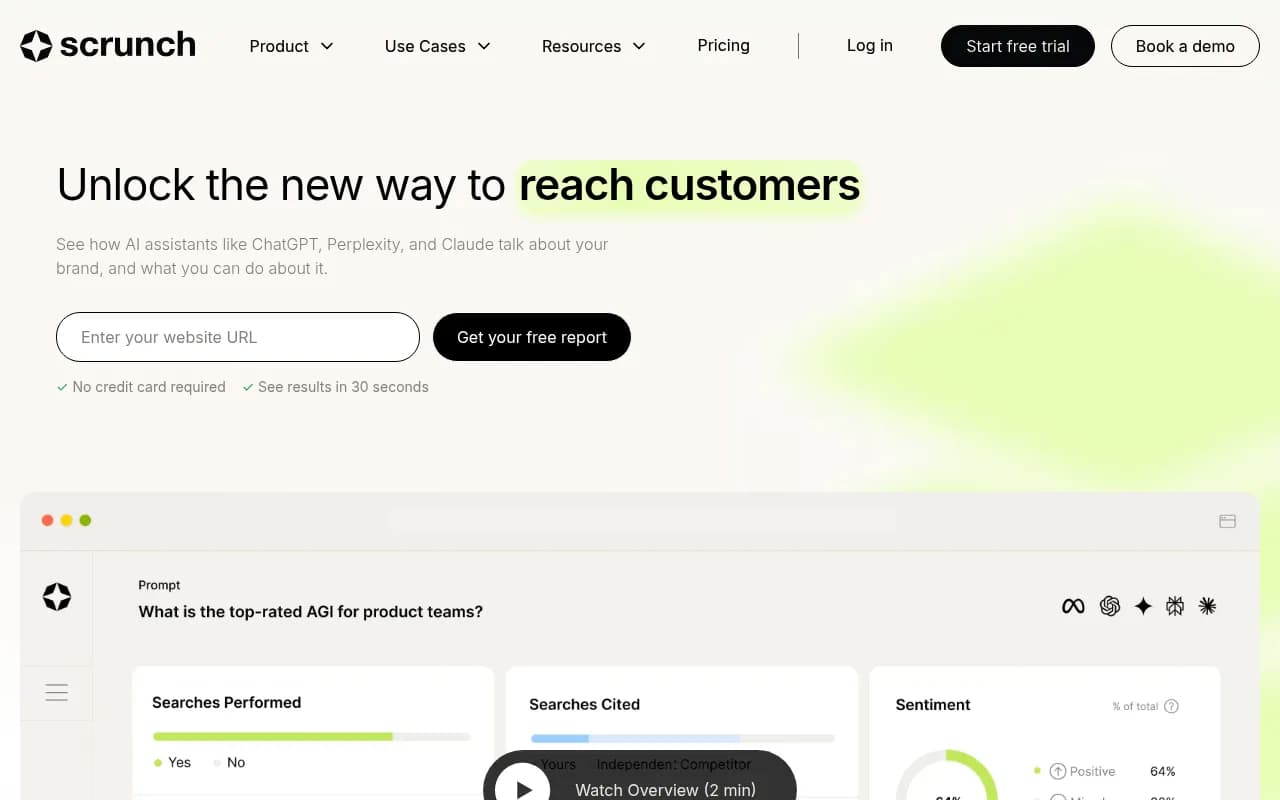
Scrunch AI is a monitoring-focused platform that tracks brand mentions across AI engines with solid depth. It's particularly strong on competitive analysis -- showing not just where your client appears but where competitors are winning and why.
For agencies, the multi-client workspace management is cleaner than most monitoring tools. You can switch between client accounts without the friction that plagues tools built for single-brand use.
The honest limitation: Scrunch is a monitoring tool. It shows you the problem but doesn't help you fix it. There's no content generation, no gap analysis that produces actionable content recommendations, no writing agent. You'll need to pair it with a content tool.
Best for: Agencies that want strong AI monitoring and competitive intelligence and are comfortable using a separate content tool.
6. Atomic AGI -- best for agencies that want monitoring + workflow automation
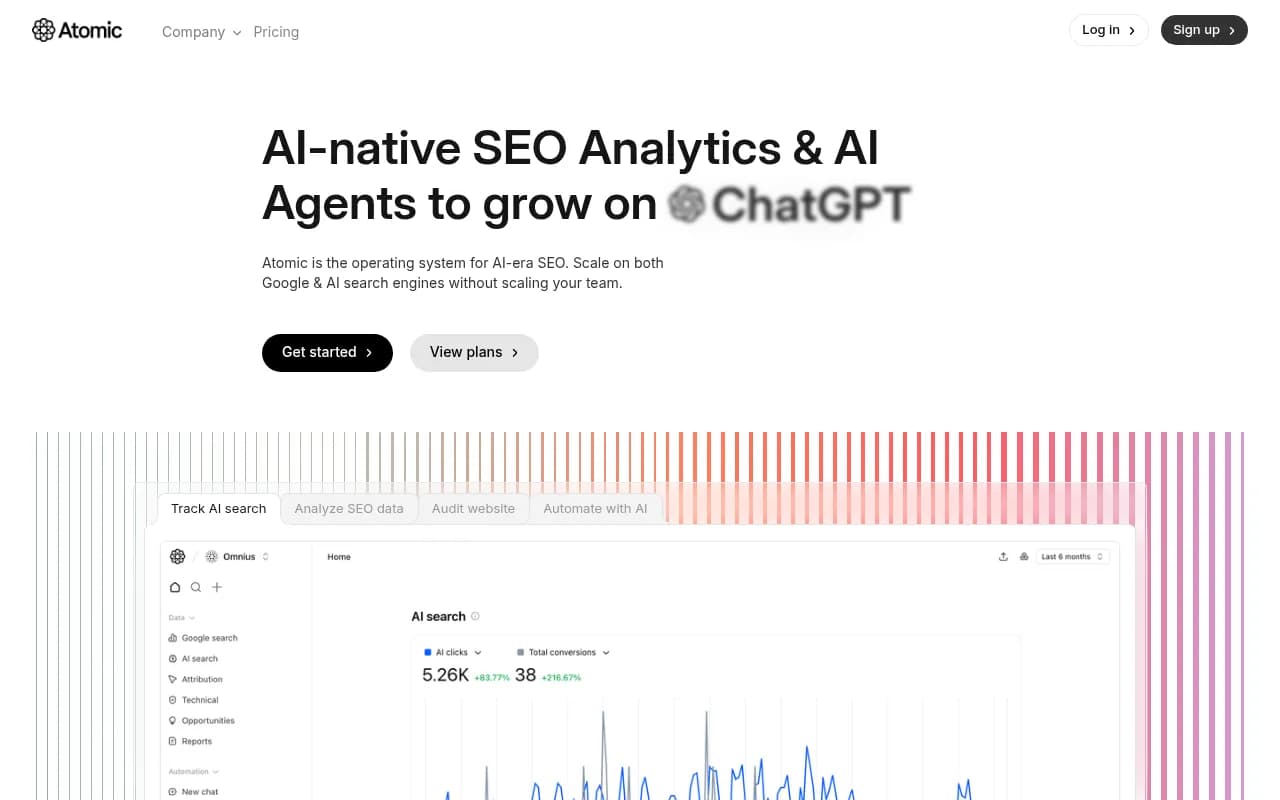
Atomic AGI sits at an interesting intersection: it combines AI search visibility tracking with workflow automation, which makes it feel closer to the original AirOps use case but with actual citation monitoring added.
The platform tracks brand mentions across major AI engines and then lets you build automated workflows around that data -- for example, triggering a content brief when visibility drops below a threshold, or automatically flagging competitor gains for client review.
For technically comfortable agency teams, this automation layer is genuinely useful. For teams that want a simpler interface, the workflow builder adds complexity that not everyone needs.
Best for: Agencies with technical capacity that want to automate GEO monitoring and response workflows across multiple clients.
7. n8n -- best for agencies that want full control and zero platform lock-in
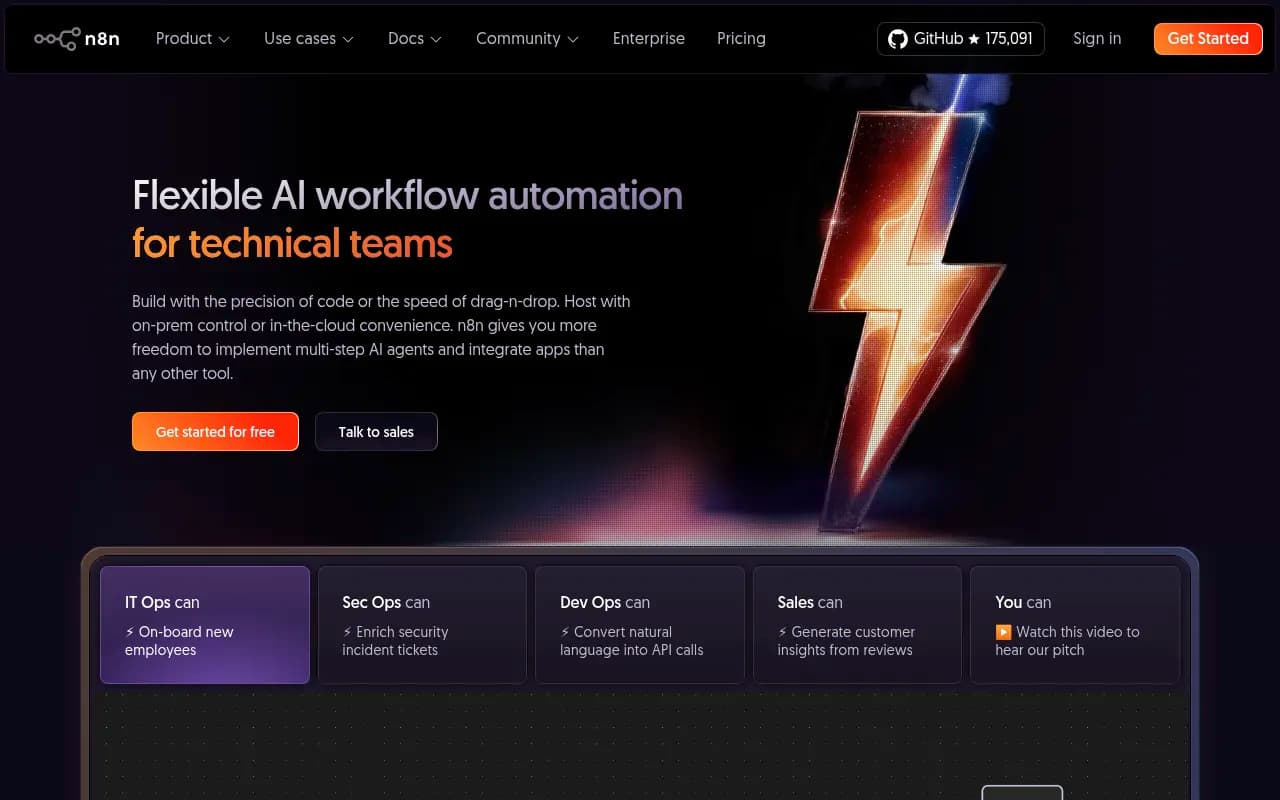
n8n is an open-source workflow automation platform that, in the right hands, can replicate much of what AirOps does -- and more. You can connect any AI model, any data source, and any content management system into custom workflows with no per-task pricing.
The appeal for agencies is cost and flexibility. The self-hosted version is free with unlimited workflows. You're not paying per task or per seat -- you're paying for your own infrastructure and the time to build and maintain workflows.
The catch is obvious: n8n requires technical resources. Building a GEO monitoring and content generation workflow from scratch takes real engineering time. There's no built-in AI visibility tracking -- you'd need to connect external APIs to pull citation data. For agencies with a developer on staff and a desire to own their stack, n8n is powerful. For everyone else, it's more trouble than it's worth.
Best for: Technical agencies that want maximum flexibility, zero platform lock-in, and are willing to invest in building custom workflows.
Comparison table
| Tool | AI visibility monitoring | Content generation | Multi-client support | White-label reporting | Best for |
|---|---|---|---|---|---|
| Promptwatch | 10 engines, deep | Built-in AI writing agent | Yes (Business plan) | Via Looker Studio / API | All-in-one GEO agencies |
| Rankability | Yes (AI + Google) | Limited | Yes | Yes (native) | Agencies needing white-label |
| Search Atlas | Limited | Strong, automated | Yes | Partial | Content-heavy agencies |
| Jasper AI | None | Excellent | Yes (brand voices) | No | Content-only agencies |
| Scrunch AI | Strong | None | Yes | Limited | Monitoring-focused agencies |
| Atomic AGI | Yes | Workflow-based | Yes | Limited | Technical automation agencies |
| n8n | Via API only | Via API only | Custom | Custom | Developer-led agencies |
How to choose
The right tool depends on what your agency's primary deliverable is.
If clients are paying you to improve their AI search visibility -- not just report on it -- you need a platform that closes the loop between monitoring and content. Promptwatch is the only tool in this list that does both natively, with citation-grounded content generation and page-level tracking to show clients what changed and why.
If clients primarily want reporting on where they stand, and you handle content separately, Rankability's white-label reporting and Scrunch AI's monitoring depth are both strong options.
If your agency's core value is content production and AI visibility is secondary, Jasper AI or Search Atlas will serve you better than a monitoring-first platform.
And if you have the technical team to build your own stack, n8n gives you flexibility that no SaaS platform can match -- at the cost of significant setup and maintenance time.
One thing worth noting: the agencies that are winning in AI search right now aren't just tracking visibility. They're using citation data to inform what content to create, publishing it, and watching their clients' mention rates climb. That cycle -- find gaps, create content, track results -- is what separates GEO optimization from GEO monitoring. Most tools in this list only do one half. Choose accordingly.
Frequently asked questions
Does AirOps track actual AI citations?
No. AirOps evaluates content readiness for AI search, not actual brand presence. It won't show you whether your client appears in a ChatGPT or Perplexity response today. For that, you need a dedicated GEO monitoring tool.
What's the best AirOps alternative for small agencies?
Promptwatch's Professional plan at $249/month covers 2 sites, 150 prompts, and 15 articles -- a reasonable starting point for a small agency with a handful of clients. Rankability is worth considering if white-label reporting is a priority from day one.
Can I use n8n to build a GEO monitoring system?
Technically yes, but it requires connecting external APIs for citation data and building custom dashboards for reporting. Most agencies are better served by a purpose-built platform unless they have dedicated engineering resources.
Which tools support Google AI Overviews tracking?
Promptwatch, Rankability, and Scrunch AI all track Google AI Overviews alongside other AI engines. Jasper AI and n8n do not -- they're not monitoring tools.