Key takeaways
- AI SEO tools now split into two distinct categories: traditional SEO accelerators (keyword research, content briefs, audits) and AI visibility platforms (tracking citations in ChatGPT, Perplexity, Gemini, etc.)
- Most platforms excel at one category but not both -- only a handful handle the full loop from gap analysis to content creation to citation tracking
- Content generation quality varies wildly; the tools grounded in real citation data and SERP analysis consistently outperform generic LLM wrappers
- If your goal is to appear in AI-generated answers, monitoring alone isn't enough -- you need a platform that helps you act on what you find
- The right choice depends on your team's maturity: traditional SEO teams should start with Surfer SEO or Frase, while brands serious about AI search visibility need a dedicated GEO platform
"AI SEO tool" means two different things in 2026. There are tools that use AI to speed up traditional SEO -- keyword clustering, content briefs, technical audits. And there's a newer category that tracks whether AI search engines actually cite your brand when someone asks a relevant question.
Both matter. But most buyers conflate them, end up with the wrong tool, and wonder why their rankings aren't improving. This guide separates the two categories clearly, ranks the best platforms in each, and tells you which ones actually close the loop between finding gaps and fixing them.
How we evaluated these platforms
Three criteria drove the rankings:
Content generation quality -- Does the tool produce content that's actually different from what you'd get from a $20 ChatGPT subscription? The bar is whether output is grounded in real SERP data, citation analysis, or competitor research rather than generic LLM output.
Gap analysis depth -- Can the tool show you specific prompts or queries where competitors appear but you don't? Vague "topic suggestions" don't count. We're looking for prompt-level or keyword-level specificity.
Citation tracking -- Can you see exactly which pages AI models are citing, how often, and in what context? Page-level tracking matters here, not just brand-level scores.
The 7 best platforms for AI SEO optimization in 2026
1. Promptwatch -- best for the full optimization loop
Promptwatch is the platform that comes closest to closing the full loop: find gaps, generate content, track results. Most competitors stop at step one.

The gap analysis is genuinely specific. Instead of telling you "you should write more about X topic," Promptwatch shows you the exact prompts where competitors are getting cited but you're not -- the specific questions AI models are answering with competitor content instead of yours. That level of specificity changes how you prioritize content work.
The built-in AI writing agent generates articles, listicles, and comparisons grounded in citation data from over 880 million citations analyzed. That's not a small distinction. Content built from real citation patterns performs differently than content built from keyword density formulas.
On the tracking side, page-level citation tracking shows which specific pages are being cited by which AI models, how often, and with what sentiment. The AI crawler logs are a feature most competitors don't have at all -- real-time logs of ChatGPT, Claude, and Perplexity crawlers hitting your site, which pages they read, and any errors they encounter.
Pricing starts at $99/month for the Essential plan (1 site, 50 prompts, 5 articles). Professional is $249/month and adds crawler logs, state/city tracking, and 15 articles per month.
Best for: Marketing teams and SEO agencies that want to improve AI search visibility, not just measure it.
2. Surfer SEO -- best for on-page content optimization
Surfer SEO has been the go-to content optimization tool for a few years now, and it still earns that reputation in 2026. The core product -- the Content Editor -- scores your content in real time against the top-ranking pages for a given keyword, flagging which terms to include, what word count to target, and how to structure headings.
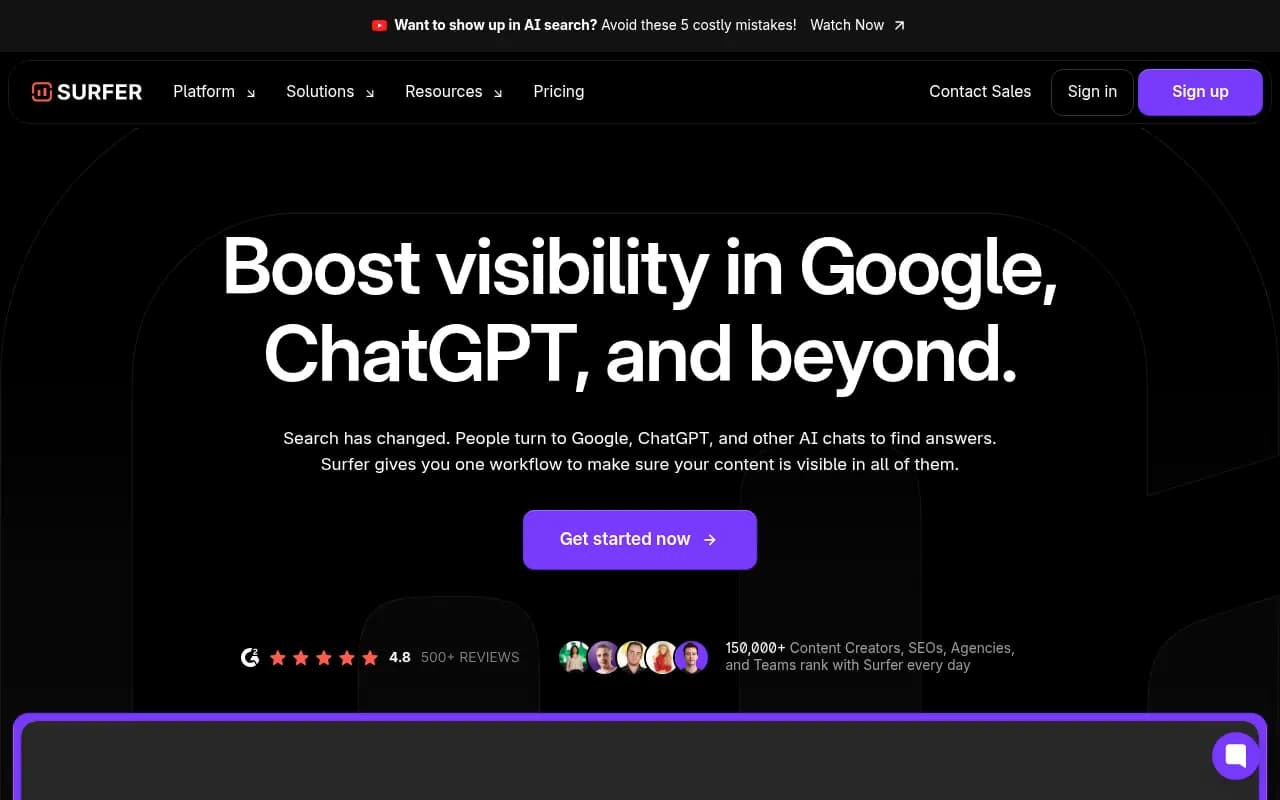
What makes Surfer worth paying for is that its recommendations come from actual SERP analysis, not LLM guesses. When it tells you to include a specific term 4-6 times, that's based on what the pages currently ranking for your target keyword actually do.
The AI writing features have improved significantly. Surfer can now generate full drafts that are pre-optimized for your target keyword, which cuts the editing cycle considerably. It's not the most creative writing, but it's structurally sound and usually accurate on SEO signals.
Where Surfer falls short: it's almost entirely focused on Google. There's no AI citation tracking, no prompt-level gap analysis for ChatGPT or Perplexity, and no visibility into how AI models are discovering your content. If traditional search is your primary channel, that's fine. If you're trying to appear in AI-generated answers, Surfer won't get you there alone.
Best for: Content teams optimizing for Google rankings who want data-driven briefs and real-time optimization scoring.
3. Semrush -- best all-in-one for traditional SEO teams
Semrush is the most complete traditional SEO platform on the market. Keyword research, competitor analysis, backlink auditing, site health monitoring, rank tracking -- it's all there, and the data quality is generally excellent.
The AI features have expanded in 2026. The ContentShake AI tool generates SEO-optimized drafts with built-in competitor analysis, and the Writing Assistant scores content in real time. For teams that already live in Semrush, these additions reduce the need for separate content tools.
Semrush has also added some AI search monitoring capabilities through its AI Toolkit, but it's worth being honest about the limitations: the prompts are fixed (you can't customize them to match how your actual customers search), and there's no AI traffic attribution to connect visibility to revenue. It's more of a "check the box" AI feature than a genuine GEO platform.
The pricing reflects its enterprise positioning -- plans start around $139/month and climb quickly for larger teams. For agencies managing multiple clients, the cost-per-seat model can get expensive.
Best for: SEO teams that need a comprehensive traditional SEO platform and want AI writing features baked in.
4. Frase -- best for research-driven content briefs
Frase has a specific, well-executed use case: it pulls together everything you need to write a well-researched article and packages it into a brief. It analyzes the top-ranking pages for your target query, extracts the questions people are asking, identifies the topics competitors cover that you don't, and generates an outline.
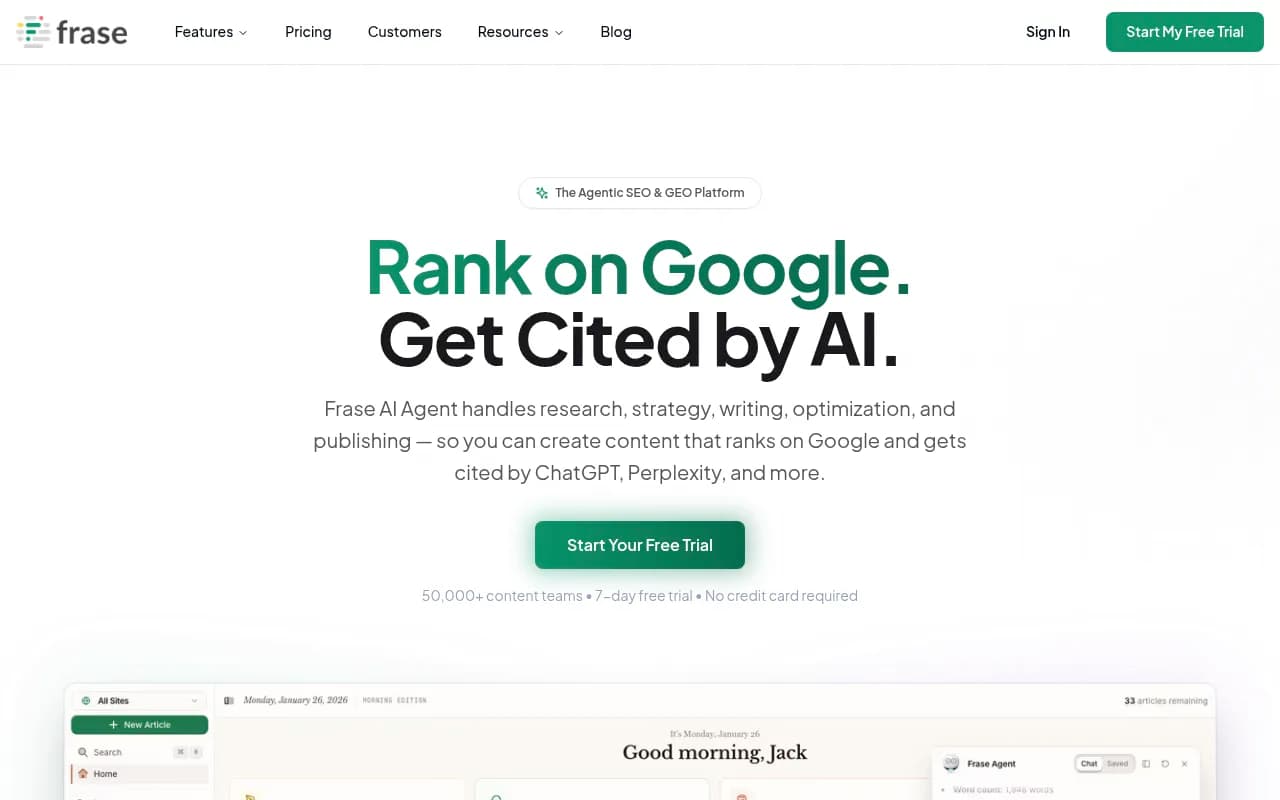
The AI writing quality is decent but not exceptional. Where Frase earns its place in a workflow is the research phase -- the time it saves on manual SERP analysis and question research is real. Teams that were spending 2-3 hours building content briefs manually can cut that to 30 minutes.
The gap analysis is keyword-focused rather than prompt-focused, which means it's oriented toward Google rather than AI search. For traditional content strategy, that's fine. For teams trying to appear in ChatGPT answers, Frase doesn't give you the prompt-level specificity you need.
Pricing is accessible -- plans start around $45/month, which makes it one of the more affordable options on this list for what it delivers.
Best for: Content writers and strategists who want faster, more thorough research and brief creation.
5. Ahrefs -- best for keyword research and competitive intelligence
Ahrefs remains the gold standard for backlink analysis and keyword research. The keyword data is comprehensive, the competitive analysis tools are genuinely useful, and the site audit features catch technical issues that other tools miss.
The AI features are more conservative than competitors -- Ahrefs has been deliberate about not bolting on AI for its own sake. The AI content helper is useful but not transformative. Where Ahrefs shines is still in its core data: keyword difficulty scores backed by real ranking analysis, backlink data from one of the largest indexes available, and content gap analysis that shows you which keywords competitors rank for that you don't.
Ahrefs Brand Radar is the company's entry into AI search monitoring, but it has notable limitations: fixed prompts (you can't customize them), no AI traffic attribution, and no content generation to act on what you find. It's a starting point for AI visibility, not a complete solution.
Best for: SEO professionals who need reliable keyword and backlink data as the foundation of their strategy.
6. MarketMuse -- best for content strategy at scale
MarketMuse takes a different approach than most content tools. Instead of optimizing individual articles, it analyzes your entire content library and identifies topical authority gaps -- the subjects where you have thin coverage relative to competitors.
The content briefs are detailed and the topic modeling is sophisticated. For larger sites with hundreds of existing articles, MarketMuse can surface opportunities that keyword-by-keyword analysis would miss entirely.
The downside is price. MarketMuse sits at the premium end of the market, and the value proposition is strongest for teams managing large content programs. Smaller teams or those just starting to build content will find the investment hard to justify.
Like most traditional content tools, MarketMuse is Google-focused. AI search visibility isn't part of the product.
Best for: Enterprise content teams managing large libraries who need systematic topical authority analysis.
7. SE Ranking -- best budget-friendly all-in-one
SE Ranking punches above its price point. For teams that need keyword tracking, site audits, competitor analysis, and content optimization without the Semrush price tag, it covers the basics well.
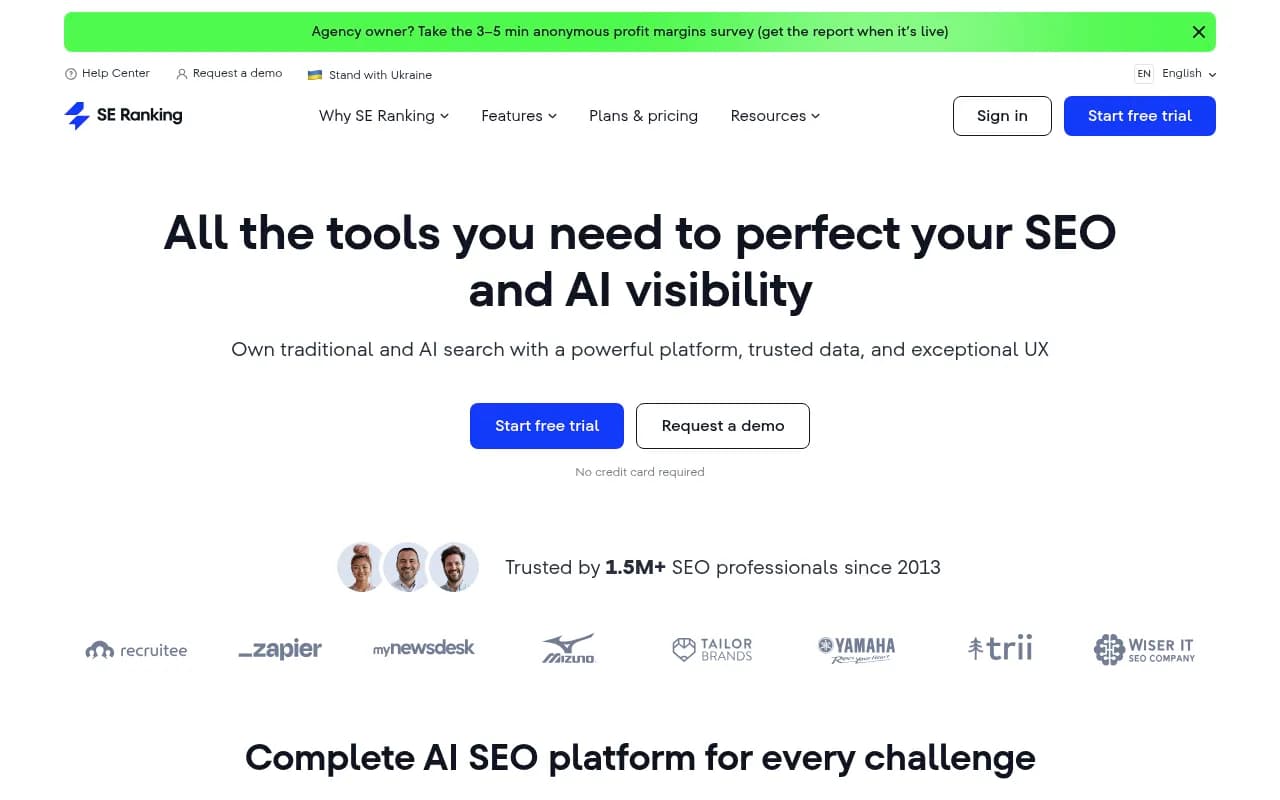
The AI content tools are functional -- brief generation, content scoring, and a writing assistant are all included. The data quality isn't quite at Semrush or Ahrefs levels, but for most small-to-mid-size teams, it's more than sufficient.
SE Ranking has also added AI search monitoring features (SE Visible), though like most traditional SEO platforms dipping into this space, it's monitoring-only -- you can see where you're visible, but there's no gap analysis or content generation to act on the data.
Best for: Small teams and growing businesses that need a solid all-in-one SEO platform without enterprise pricing.
How these platforms compare
| Platform | Content generation | Gap analysis | Citation tracking | AI search monitoring | Starting price |
|---|---|---|---|---|---|
| Promptwatch | Yes (citation-grounded) | Prompt-level | Page-level, multi-model | 10 AI models | $99/mo |
| Surfer SEO | Yes (SERP-grounded) | Keyword-level | No | No | ~$89/mo |
| Semrush | Yes (AI Toolkit) | Keyword-level | Limited | Fixed prompts only | ~$139/mo |
| Frase | Yes (research-based) | Keyword-level | No | No | ~$45/mo |
| Ahrefs | Limited | Keyword-level | No | Fixed prompts (Brand Radar) | ~$129/mo |
| MarketMuse | Yes (topic-based) | Topic-level | No | No | ~$149/mo |
| SE Ranking | Yes (basic) | Keyword-level | No | Monitoring only | ~$52/mo |
The real split: traditional SEO vs. AI search visibility
The table above makes something clear that most "best AI SEO tools" lists obscure: traditional SEO platforms and AI visibility platforms are solving different problems.
Surfer SEO, Frase, Ahrefs, Semrush, and MarketMuse are all built around Google. They help you rank in search results by optimizing content, building authority, and targeting the right keywords. That's still valuable -- Google isn't going anywhere.
But a growing share of search behavior is now happening in ChatGPT, Perplexity, Claude, and Google's own AI Overviews. When someone asks "what's the best project management tool for remote teams?" and ChatGPT answers without linking to a search results page, traditional SEO tools don't tell you whether your brand appeared in that answer or not.
That's the gap AI visibility platforms fill. And within that category, there's a further split: tools that only monitor (showing you data) vs. tools that help you act on what they find.
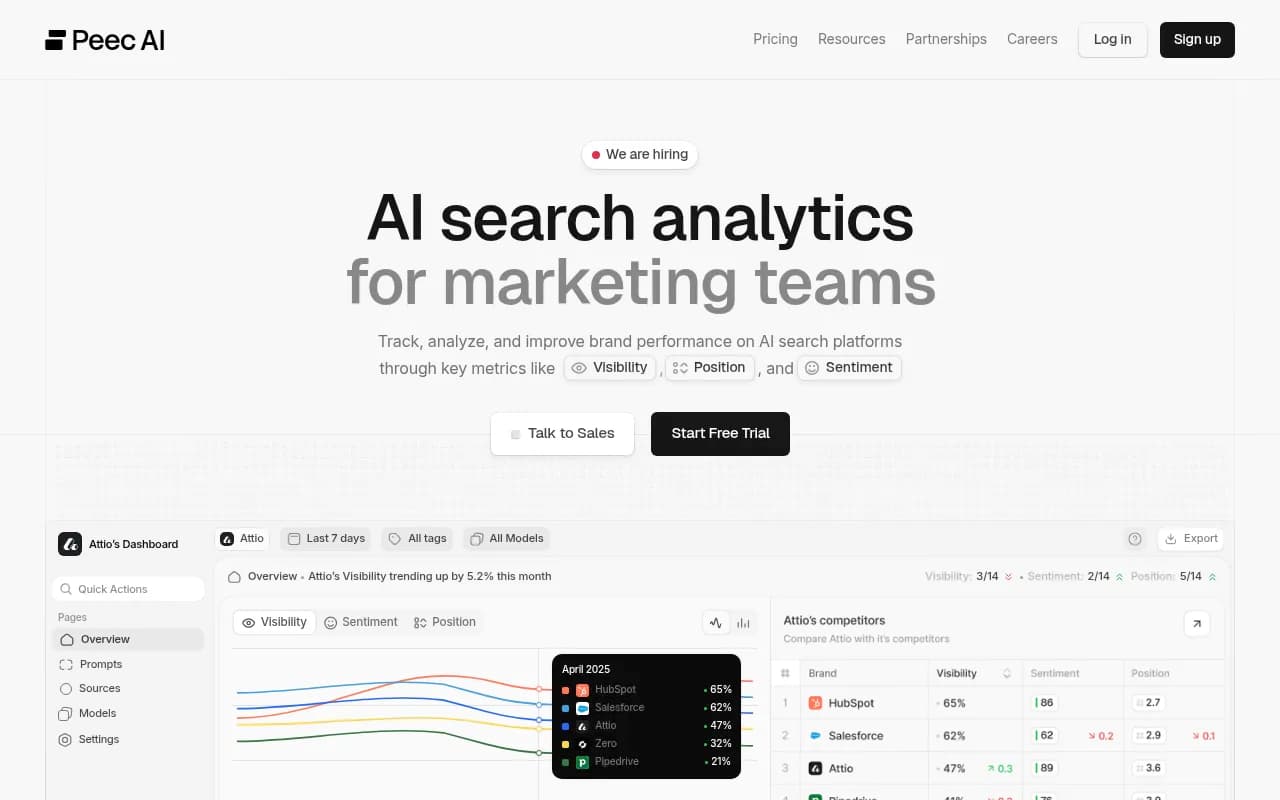
Platforms like Otterly.AI and Peec.AI track brand mentions across AI engines, which is useful. But they stop there. You can see you're invisible for certain prompts, but the platform doesn't help you figure out what content to create or how to create it.
Otterly.AI

Promptwatch is the clearest example of a platform built around the full cycle -- find the gaps, generate the content, track the improvement. The Answer Gap Analysis shows you specific prompts where competitors are cited and you're not. The writing agent creates content grounded in citation data. The tracking closes the loop by showing you whether the new content is getting picked up by AI models.
Which platform should you choose?
The honest answer depends on where you are and what you're trying to solve.
If you're primarily focused on Google rankings and need a content optimization tool, Surfer SEO or Frase will serve you well. If you need comprehensive keyword and competitive data, Ahrefs or Semrush are the standard choices. If you're managing a large content program and need topical authority analysis, MarketMuse is worth the investment.
If you're trying to appear in AI-generated answers -- in ChatGPT, Perplexity, Claude, Gemini, or Google AI Overviews -- you need a dedicated AI visibility platform. Most traditional SEO tools have bolted on monitoring features, but they're not built for this use case. A platform like Promptwatch, built specifically around the AI search visibility problem, will give you substantially more leverage.
The teams seeing the best results in 2026 are typically running both: a traditional SEO platform for Google optimization and a dedicated GEO platform for AI search visibility. The two categories complement each other more than they compete.
A note on content generation quality
One thing worth saying directly: most AI content generation tools produce similar output. They're all calling the same underlying models (GPT-4, Claude, Gemini), and without differentiated inputs, you get differentiated outputs.
The tools that produce genuinely better content are the ones that ground generation in real data. Surfer SEO grounds content in SERP analysis. Frase grounds it in competitor research. Promptwatch grounds it in citation data -- the actual sources AI models are currently citing when answering relevant questions.
That last input is particularly valuable for AI search optimization. If you're trying to create content that gets cited by ChatGPT, knowing what ChatGPT currently cites is more useful than knowing what ranks on Google page one. Those two things overlap significantly but not completely, and the gaps are where the opportunity is.
Bottom line
The AI SEO category is maturing fast, and the tool landscape is finally starting to reflect the actual complexity of the problem. Traditional SEO and AI search visibility are related but distinct challenges, and the best platforms in 2026 are the ones that are honest about which problem they're solving.
For teams serious about AI search visibility -- not just monitoring it but actually improving it -- the combination of prompt-level gap analysis, citation-grounded content generation, and page-level tracking is what separates a real optimization platform from a dashboard that shows you data you can't act on.