Key takeaways
- Profound is a solid AI visibility tracker, but its pricing starts at $499/month and it leaves most of the content work to you
- The best alternatives in 2026 combine monitoring with content generation, gap analysis, and optimization in one workflow
- Promptwatch is the only platform rated "Leader" across all GEO categories in a 2026 comparison of 12 platforms, and it's the strongest pick for teams that want to close the loop from tracking to publishing
- Tools like AirOps, Search Atlas, and Nightwatch each fill specific niches depending on your team's workflow
- If you're an agency or mid-market brand, you don't need to pay enterprise prices to get serious AI search visibility
Profound does a lot of things well. It tracks how your brand appears across ChatGPT, Perplexity, Gemini, and other AI engines. It surfaces prompt gaps. It shows citation data. For enterprise teams with a dedicated research budget and a separate content team to act on the insights, it works.
But here's the problem most teams run into: Profound shows you the gap, then leaves you standing in front of it. You still need to figure out what content to write, brief a writer, publish it somewhere, and then check back weeks later to see if it moved the needle. That's a lot of manual coordination for a category that moves fast.
And at $499/month for the entry-level "Lite" plan, you're paying enterprise prices before you've even generated a single piece of content.
This guide covers 7 alternatives that go further, either by combining tracking with content generation, offering better value at lower price points, or both.
Why teams are moving away from Profound
The most common complaints aren't about data quality. Profound's data is actually well-regarded. The issues are structural:
- The price-to-feature ratio is hard to justify for teams that aren't already at enterprise scale
- Content execution requires separate tools, separate budgets, and separate workflows
- There's no built-in content generation, so insights sit in dashboards while teams scramble to act on them
- Search engine tracking (traditional SEO) isn't included, so you're paying for a single-channel view
If your team needs to move from "we know we're invisible" to "we published content that fixed it," Profound alone won't get you there.
The 7 best Profound alternatives in 2026
1. Promptwatch
Promptwatch is the most complete option on this list if your goal is actually improving AI visibility, not just measuring it. Where most tools stop at the dashboard, Promptwatch runs a full loop: find the gaps, create the content, track the results.

The Answer Gap Analysis shows exactly which prompts your competitors rank for but you don't. That's not a generic "content opportunity" signal. It's the specific question an AI model is being asked, the answer it's giving, and the fact that your site isn't in it. From there, the built-in AI writing agent generates articles, listicles, and comparisons grounded in real citation data (880M+ citations analyzed), prompt volumes, and competitor positioning.
A few things that stand out compared to Profound specifically:
- AI Crawler Logs show which pages ChatGPT, Claude, and Perplexity are actually reading on your site, and where they're hitting errors. Profound doesn't have this.
- Reddit and YouTube tracking surfaces the discussions that directly influence AI recommendations. Most platforms ignore this channel entirely.
- ChatGPT Shopping tracking monitors when your brand appears in product recommendation carousels.
- Traffic attribution connects AI visibility to actual revenue via a code snippet, GSC integration, or server log analysis.
Pricing starts at $99/month (Essential: 1 site, 50 prompts, 5 articles), with Professional at $249/month and Business at $579/month. That's a meaningful step down from Profound's $499 entry point, with more functionality included.
In a 2026 comparison of 12 GEO platforms, Promptwatch was the only one rated "Leader" across all categories. It's the right pick for marketing and SEO teams that want to close the loop between visibility data and published content.
2. AirOps
AirOps takes a different angle. It's less of a monitoring platform and more of a content execution engine built specifically for AI search. If you already have visibility data from another source and you need to act on it at scale, AirOps is worth a serious look.
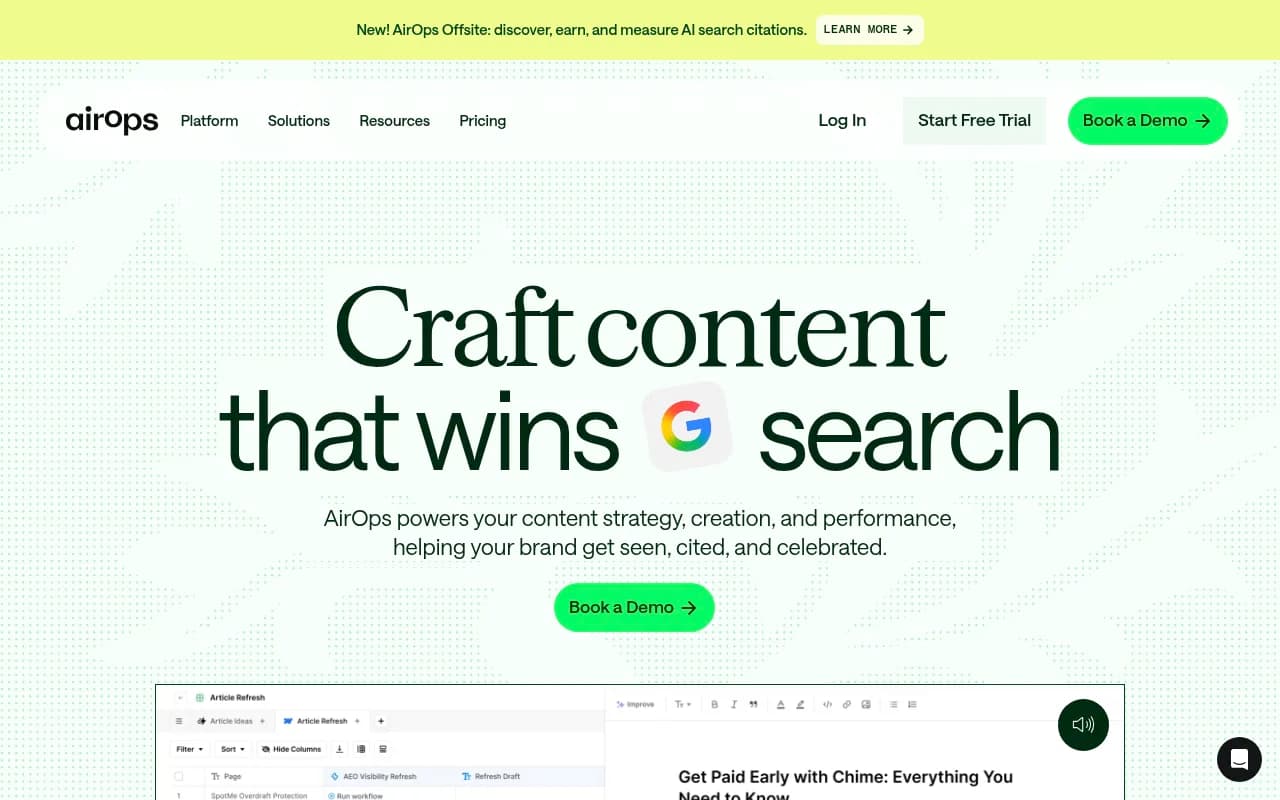
The platform is designed for teams running structured content workflows. You can build pipelines that take a prompt gap, research the topic, generate a draft, and push it to your CMS. It integrates with tools like Airtable, Notion, and various CMS platforms, so it fits into existing workflows rather than replacing them.
The tradeoff: AirOps doesn't do the monitoring side particularly well. You'll need to pair it with a tracking tool if you want to know which prompts to target in the first place. For teams that already have that data and just need execution at scale, it's a strong option.
3. Search Atlas
Search Atlas sits in an interesting position: it combines traditional SEO tools with AI search optimization in a single platform. If your team is still running both traditional and AI search programs in parallel (which most teams are in 2026), having them in one place reduces tool sprawl.

It includes content generation, rank tracking, site auditing, and AI visibility features. The content tools are genuinely useful, not just a bolt-on. You can generate briefs and full drafts with context from competitor analysis and SERP data.
The AI search monitoring isn't as deep as Profound or Promptwatch, but for teams that want a consolidated platform rather than a best-in-class specialist, it's a reasonable middle ground.
4. Nightwatch
Nightwatch has been building out its AI tracking features steadily, and in 2026 it's a credible option for teams that want solid monitoring without paying enterprise prices.
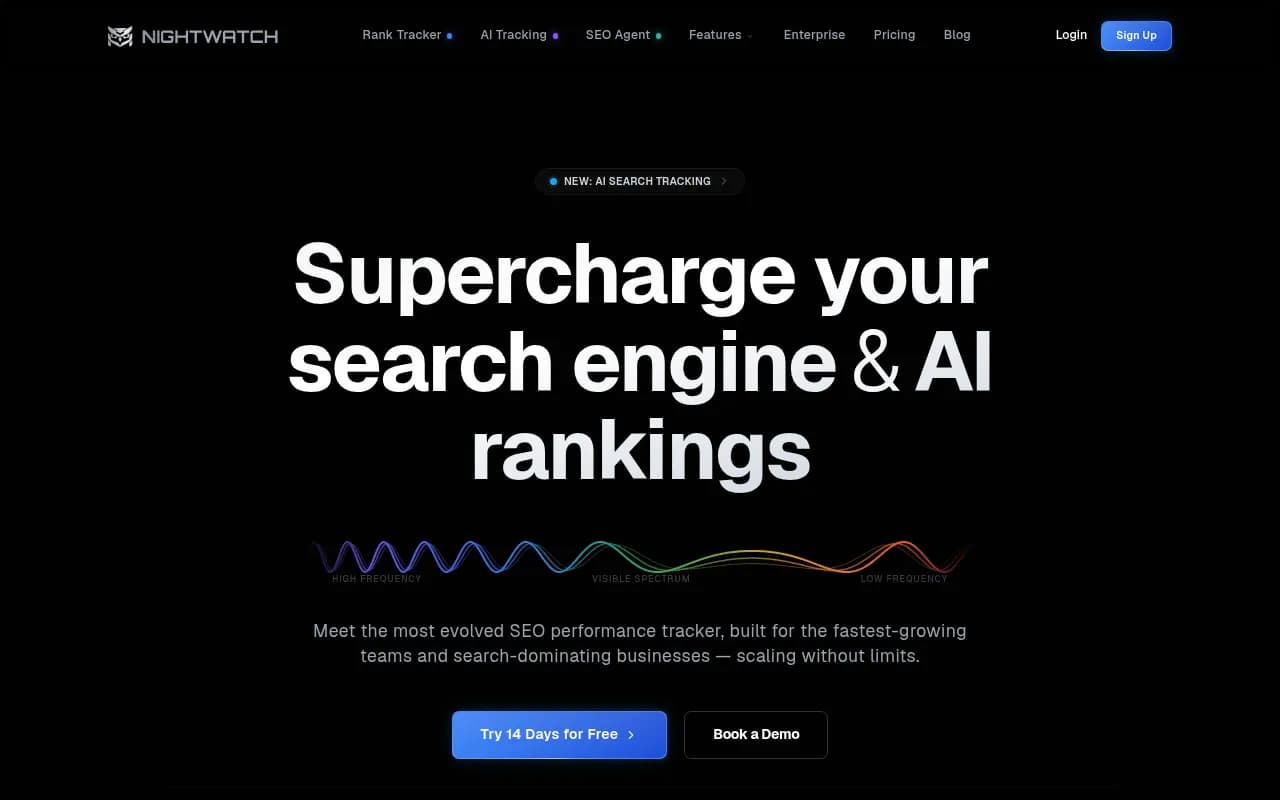
It covers AI Overview visibility, LLM tracking, and traditional rank tracking in one interface. The prompt research tools help you identify which questions to target. It's not a content generation platform, but the monitoring data is reliable and the pricing is significantly more accessible than Profound.
Where Nightwatch falls short: there's no built-in content creation, no crawler logs, and no Reddit/YouTube tracking. It's a monitoring tool that gives you good data, then leaves the execution to you. For teams with a content team ready to act on that data, it works well. For teams that need the full loop, it's only half the solution.
5. Scrunch AI
Scrunch AI focuses specifically on brand perception accuracy in AI responses, which is a slightly different problem than pure visibility tracking.

Its Knowledge Hub feature helps identify when AI models are saying inaccurate things about your brand and gives you a path to correct it. Persona journey maps show how different customer types encounter your brand across AI engines. If brand safety and accuracy are your primary concern (think regulated industries, brands with complex product lines, or companies that have been misrepresented by AI models), Scrunch AI addresses that problem more directly than most alternatives.
It's not a content generation platform. But for teams where the priority is "AI models are saying wrong things about us" rather than "AI models aren't mentioning us enough," it fills a real gap.
6. Goodie AI
Goodie AI positions itself as a one-stop shop for AEO and GEO, combining visibility tracking with content generation and optimization.
It's a more accessible entry point than Profound for teams that are earlier in their AI search journey. The content generation features are functional, and the tracking covers the major AI engines. The platform is less mature than some others on this list, and the data depth isn't at the level of Profound or Promptwatch, but for smaller teams or those just starting to formalize their AI visibility program, it's a reasonable starting point.
7. Gauge
Gauge focuses on competitive gap analysis and AI visibility roadmaps. It's particularly strong at showing you where competitors are winning in AI search and building a prioritized plan for closing those gaps.
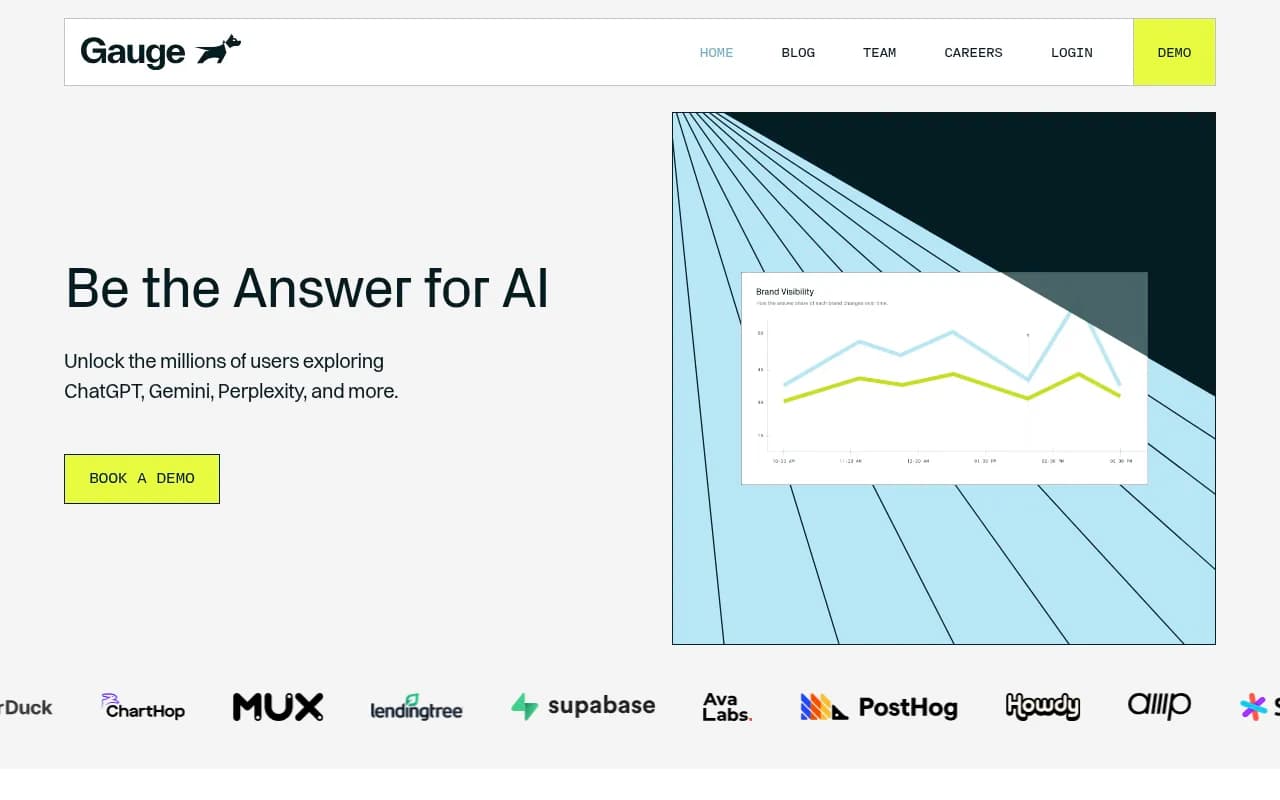
The roadmap features are genuinely useful for teams that need to present AI search strategy to stakeholders. Rather than just showing a dashboard of metrics, Gauge helps you build a narrative around what to fix and in what order. Content generation isn't its core strength, but the strategic framing it provides can help teams prioritize where to invest content resources.
How they compare
| Tool | AI monitoring | Content generation | Crawler logs | Reddit/YouTube tracking | Starting price |
|---|---|---|---|---|---|
| Promptwatch | Yes (10 models) | Yes (built-in AI writer) | Yes | Yes | $99/mo |
| Profound | Yes (9+ models) | Limited (Agents add-on) | Yes | No | $499/mo |
| AirOps | No | Yes (strong) | No | No | Custom |
| Search Atlas | Partial | Yes | No | No | ~$99/mo |
| Nightwatch | Yes | No | No | No | From ~$39/mo |
| Scrunch AI | Yes (perception focus) | No | No | No | Custom |
| Goodie AI | Yes (basic) | Yes (basic) | No | No | ~$49/mo |
| Gauge | Yes (competitive focus) | No | No | No | Custom |
Which tool should you actually use?
The honest answer depends on where your team is stuck.
If you're stuck at the monitoring stage and need to move to execution, Promptwatch is the clearest path. It's the only platform on this list that handles the full cycle from gap identification to content generation to traffic attribution, and it does it at a price point that doesn't require an enterprise budget.
If you already have monitoring data and need to scale content production, AirOps is worth evaluating. It's built for teams that want to run structured content pipelines and push output to CMSs at volume.
If you're running traditional SEO and AI search in parallel and want a single platform, Search Atlas is the most practical consolidation option.
If your primary concern is brand accuracy rather than visibility, Scrunch AI addresses that problem more directly than anything else on this list.
And if you're earlier in the journey and want to start without a large commitment, Goodie AI or Nightwatch give you a lower-stakes entry point.
The one thing worth being clear about: monitoring alone doesn't improve AI visibility. ChatGPT and Perplexity cite your content because it exists, it's authoritative, and it directly answers the questions people are asking. Knowing you're invisible is step one. Publishing content that fixes it is the actual work. The tools that help you do both are the ones worth paying for in 2026.