Key takeaways
- Social listening tools monitor human-generated content on social platforms, forums, and news sites — they do not track what AI search engines say about your brand in their responses.
- When ChatGPT, Perplexity, or Gemini recommend a competitor instead of you, Brand24 and Brandwatch will never alert you to that.
- AI search engines are now a primary discovery channel for many buyers, especially in B2B and high-consideration categories.
- The blind spots covered in this guide include: missing AI-generated responses, no citation tracking, no prompt volume data, no crawler log visibility, no AI traffic attribution, no content gap analysis for LLMs, and no multi-model comparison.
- Dedicated AI visibility platforms like Promptwatch are built specifically to close these gaps.
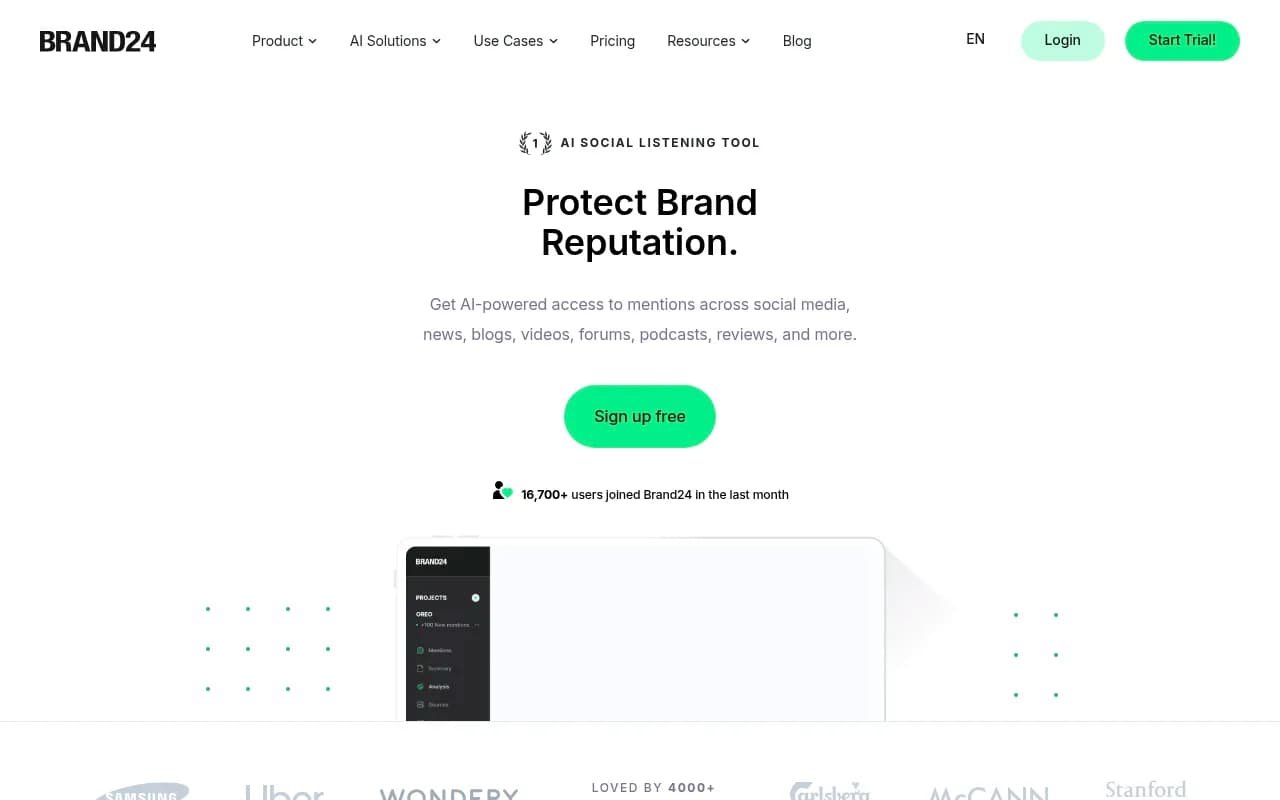
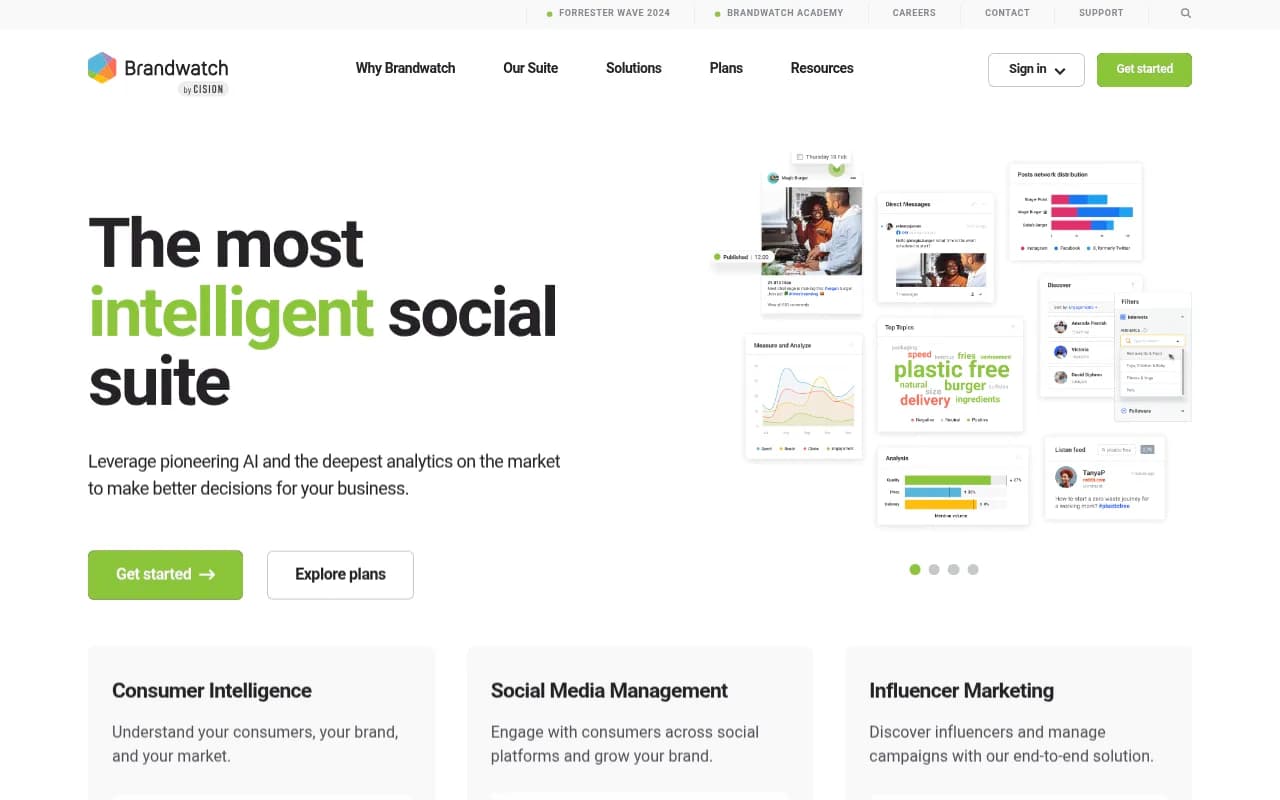
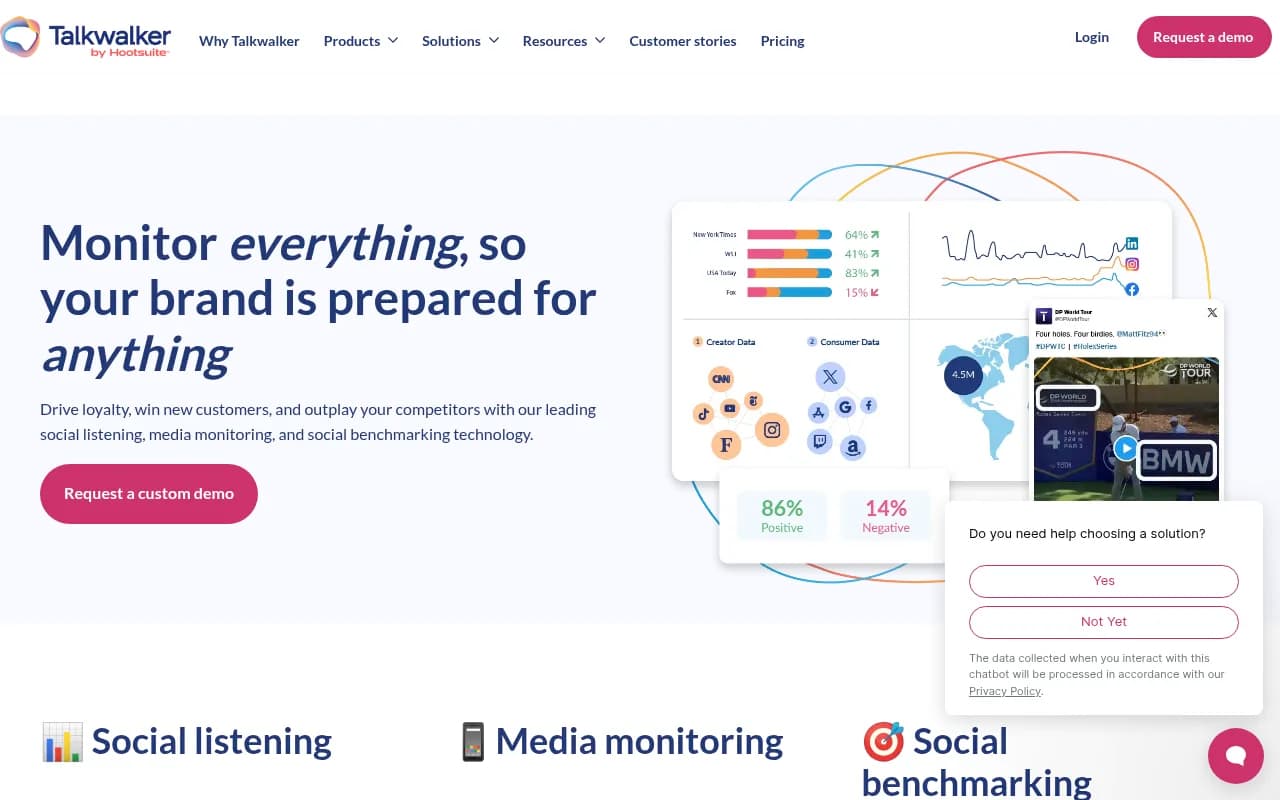
Social listening has been a marketing staple for years. You set up keyword alerts, watch for brand mentions, track sentiment spikes, and respond when something catches fire. Tools like Brand24, Talkwalker, and Brandwatch are genuinely good at this. They've built impressive infrastructure for monitoring what humans say about you across social platforms, news sites, forums, and blogs.
But there's a problem. A big one.
In 2026, a growing share of brand discovery doesn't happen on social media at all. It happens inside AI search engines. When someone asks ChatGPT "what's the best project management tool for remote teams?" or asks Perplexity "which CRM should I use for a small agency?", the answer they get shapes their purchasing decision. And your social listening tool has absolutely no idea what that answer said.
This isn't a minor gap. It's a structural blind spot that most marketing teams haven't fully reckoned with yet. Here's exactly where traditional social listening falls short.
1. They don't monitor AI-generated responses
The most obvious gap: social listening tools track what people say about you. They don't track what AI engines say about you.
When Brandwatch sends you an alert, it's because a human posted something somewhere. A tweet, a Reddit comment, a news article. That's the entire model. It's built around human-generated content.
But AI search engines generate their own content. When a user asks Perplexity a question, Perplexity writes a response. That response might mention your brand positively, negatively, or not at all. It might recommend a competitor. It might describe your product incorrectly. None of that appears in Brand24's dashboard.
This matters because AI search is now a real discovery channel. Perplexity reportedly serves over 100 million queries per month. ChatGPT's search feature is used by hundreds of millions of users. Google's AI Overviews appear at the top of search results for a huge range of queries. These systems are actively shaping what potential customers believe about your brand, and traditional social listening tools are completely blind to it.
2. They can't track which sources AI engines cite
Even if you know AI engines are talking about your brand, you need to know why they say what they say. AI models don't make things up from nowhere -- they draw on training data and real-time web sources. When Perplexity answers a question about your category, it cites specific pages. When ChatGPT recommends a competitor, there are reasons rooted in the content those models have indexed.
Social listening tools track mentions of your brand on the web. They don't tell you which pages AI engines are actually reading and citing when they generate responses.
This is a meaningful distinction. A page that gets zero social mentions might be heavily cited by AI engines. A viral Reddit thread might influence AI responses more than any press release. You can't know without actually querying the AI engines and analyzing their citations.
Knowing which sources AI engines cite tells you where to publish content, which third-party sites to target for coverage, and which existing pages on your site are already working. Without that data, you're optimizing blind.
3. They have no prompt volume or difficulty data
Traditional social listening tools are built around keywords and mentions. You track how often your brand name appears. You watch for spikes. You analyze sentiment trends.
But AI search works differently. The relevant unit isn't a keyword -- it's a prompt. "What's the best accounting software for freelancers?" is a prompt. "Compare HubSpot vs Salesforce for a 50-person team" is a prompt. These are the questions your potential customers are typing into ChatGPT and Perplexity, and the answers they get determine who wins the sale.
Social listening tools have no concept of prompt volume. They can't tell you which questions people are asking AI engines, how often those questions are asked, or how competitive it is to appear in the answers. That information simply doesn't exist in their data model.
Without prompt volume data, you can't prioritize. You don't know which AI search queries are worth targeting, which ones your competitors are winning, or where the highest-value opportunities are. You're essentially flying without instruments.
4. They don't show you AI crawler activity on your site
Here's something most marketers don't think about: AI engines crawl your website. GPTBot (OpenAI), ClaudeBot (Anthropic), PerplexityBot, and others regularly visit your pages to understand your content. What they find -- or don't find -- directly affects how they represent your brand in their responses.
Social listening tools don't touch this at all. They have no visibility into whether AI crawlers are visiting your site, which pages they're reading, how often they return, or whether they're encountering errors that prevent them from indexing your content.
If GPTBot is hitting a 404 on your most important product page, ChatGPT might not know that page exists. If ClaudeBot can't parse your JavaScript-heavy site, Claude might have outdated information about your offerings. These are fixable technical problems -- but only if you know they're happening.
This is a gap that goes beyond social listening. Most traditional SEO tools don't cover it either. It requires dedicated AI crawler log analysis.
5. They can't attribute website traffic from AI search
Let's say you run a social listening tool and you see that brand mentions are up 20% this month. Great. But are those mentions driving actual traffic? Are people clicking through from AI-generated responses to your site? Which AI engines are sending you visitors? Which pages are benefiting?
Social listening tools can't answer any of these questions. They track mentions, not traffic. They have no integration with your web analytics that would let you connect AI search visibility to actual business outcomes.
This matters because AI traffic behaves differently from organic search traffic. Users who arrive from an AI recommendation are often further along in the buying process -- they've already asked a specific question and gotten a recommendation. Understanding this traffic, attributing it correctly, and connecting it to revenue is essential for justifying investment in AI visibility work.
Without traffic attribution, you can't close the loop. You're monitoring brand mentions but you can't prove whether any of it translates to pipeline.
6. They don't identify content gaps for AI visibility
Social listening tools are reactive. They tell you what's already happening -- what people are saying, what's trending, where sentiment is shifting. They're not designed to tell you what content you should create to improve your position.
For AI search visibility, the most valuable insight is often: "What questions are AI engines answering where your competitors appear but you don't?" That's an answer gap. It tells you exactly what content your site is missing -- the specific topics, angles, and questions that AI models want to answer but can't find good information about on your site.
Brand24 and Talkwalker have no mechanism for this. They can tell you that your competitor got mentioned in a news article. They can't tell you that ChatGPT recommends your competitor for 47 specific prompts where you don't appear at all, and here's the content you'd need to create to change that.
This is the difference between monitoring and optimization. Monitoring shows you the score. Optimization tells you how to improve it.
7. They don't compare your visibility across multiple AI models
Different AI engines have different perspectives on your brand. ChatGPT might recommend you for certain use cases. Perplexity might favor a competitor. Gemini might not mention you at all. Claude might describe your product incorrectly. These aren't random -- they reflect the different training data, citation sources, and response patterns of each model.
Social listening tools treat all mentions as equivalent. They don't have a concept of "which AI engine said this" because they're not monitoring AI engines at all.
But if you're trying to improve your AI visibility, you need to know where you stand on each model separately. Winning on Perplexity requires different content signals than winning on ChatGPT. Google AI Overviews have their own logic. Without model-by-model comparison, you can't develop a targeted strategy.
What the comparison actually looks like
Here's a direct comparison of what social listening tools cover versus what AI visibility platforms cover:
| Capability | Brand24 / Talkwalker / Brandwatch | AI visibility platforms |
|---|---|---|
| Social media mention tracking | Yes | Limited |
| Sentiment analysis on social content | Yes | Partial |
| News and blog monitoring | Yes | Partial |
| AI-generated response monitoring | No | Yes |
| Citation source tracking | No | Yes |
| Prompt volume and difficulty data | No | Yes |
| AI crawler log analysis | No | Yes (some platforms) |
| AI traffic attribution | No | Yes (some platforms) |
| Content gap analysis for LLMs | No | Yes (some platforms) |
| Multi-model comparison | No | Yes |
| Content generation for AI visibility | No | Yes (some platforms) |
The tools are solving fundamentally different problems. Social listening tools are excellent at what they were built for. The issue is that what they were built for doesn't cover AI search.
Tools built for AI visibility
If you want to understand what AI engines are actually saying about your brand, you need a different category of tool. A few worth knowing:
Promptwatch covers the full loop: it tracks your brand across 10 AI models (ChatGPT, Perplexity, Claude, Gemini, Grok, DeepSeek, and more), shows you which prompts competitors appear for that you don't, analyzes AI crawler logs to surface technical indexing issues, and includes a built-in content generation tool that creates articles engineered to get cited by AI engines. It also connects visibility to actual traffic through GSC integration and server log analysis.

For teams that want simpler monitoring without the optimization layer, there are lighter options:
Otterly.AI


Profound

The key question is whether you need monitoring only or whether you need to actually improve your position. Most monitoring-only tools will show you that you're invisible in AI search -- they just won't help you fix it.
Should you replace your social listening tool?
No. Social listening and AI visibility monitoring solve different problems and you probably need both.
Social listening is still the right tool for crisis management, community monitoring, influencer tracking, and understanding human sentiment on social platforms. If a product complaint goes viral on TikTok, Brand24 will catch it. Brandwatch will give you the analytics to understand the scope. These are real capabilities with real value.
But if a potential customer asks ChatGPT which vendor to choose in your category and your name doesn't come up, no social listening tool will tell you that happened. And in 2026, that's a gap you can't afford to ignore.
The brands winning in AI search right now are the ones who recognized early that AI engines are a distinct channel with distinct rules. They're not waiting for social listening vendors to bolt on AI monitoring as an afterthought. They're using dedicated tools to understand, track, and improve how they appear in AI-generated responses.
The question isn't whether AI search matters for your category. For most B2B and high-consideration consumer categories, it already does. The question is whether you have visibility into what's happening there -- and a plan to improve it.
Social listening tools, as good as they are, can't give you that.