Key takeaways
- According to Apollo's 2026 B2B Buyer Journey report, 89% of B2B buyers now use generative AI as a primary research tool, and 74% of buying teams experience internal conflict during the process.
- Buyers are forming shortlists inside ChatGPT and Claude before they ever visit your website -- meaning your web traffic metrics are no longer a reliable signal of early-stage interest.
- ZoomInfo, Gong, and HubSpot data each tell a different part of the same story: the research phase has moved upstream, into AI engines, and sellers who aren't visible there are being filtered out before the first conversation.
- Traditional SEO still matters, but it no longer covers the full discovery surface. AI visibility has become a separate discipline that requires its own tracking and optimization.
- Tools like Promptwatch can show you exactly which AI-generated answers mention your competitors but not you -- and help you close those gaps with targeted content.
The buyer journey has moved upstream -- and most sellers haven't noticed
Here's something worth sitting with: if 89% of B2B buyers are using generative AI as a primary research tool (Apollo, January 2026), then the majority of your potential customers are forming opinions about your category, your competitors, and possibly your brand before they've touched a single piece of your content.
That's not a small shift. That's the research phase moving to a place where most marketing and sales teams have zero visibility.
The old model looked roughly like this: buyer feels a pain, searches Google, lands on a blog post or G2 review, clicks around, fills out a form. You could track all of that. You could optimize for it.
The new model looks like this: buyer feels a pain, opens ChatGPT or Perplexity, asks a few questions, gets a synthesized answer with a shortlist of vendors, and then -- maybe -- visits a website. By the time they hit your site, they've already decided whether you're worth talking to.
That gap between "AI answer" and "website visit" is where deals are being won and lost right now.
What ZoomInfo's data reveals about AI-era sales intelligence
ZoomInfo has spent the last year repositioning itself around what it calls the GTM Context Graph -- an AI layer that connects contact data, CRM history, and real-time intent signals. The underlying insight is that contact data alone isn't enough anymore.
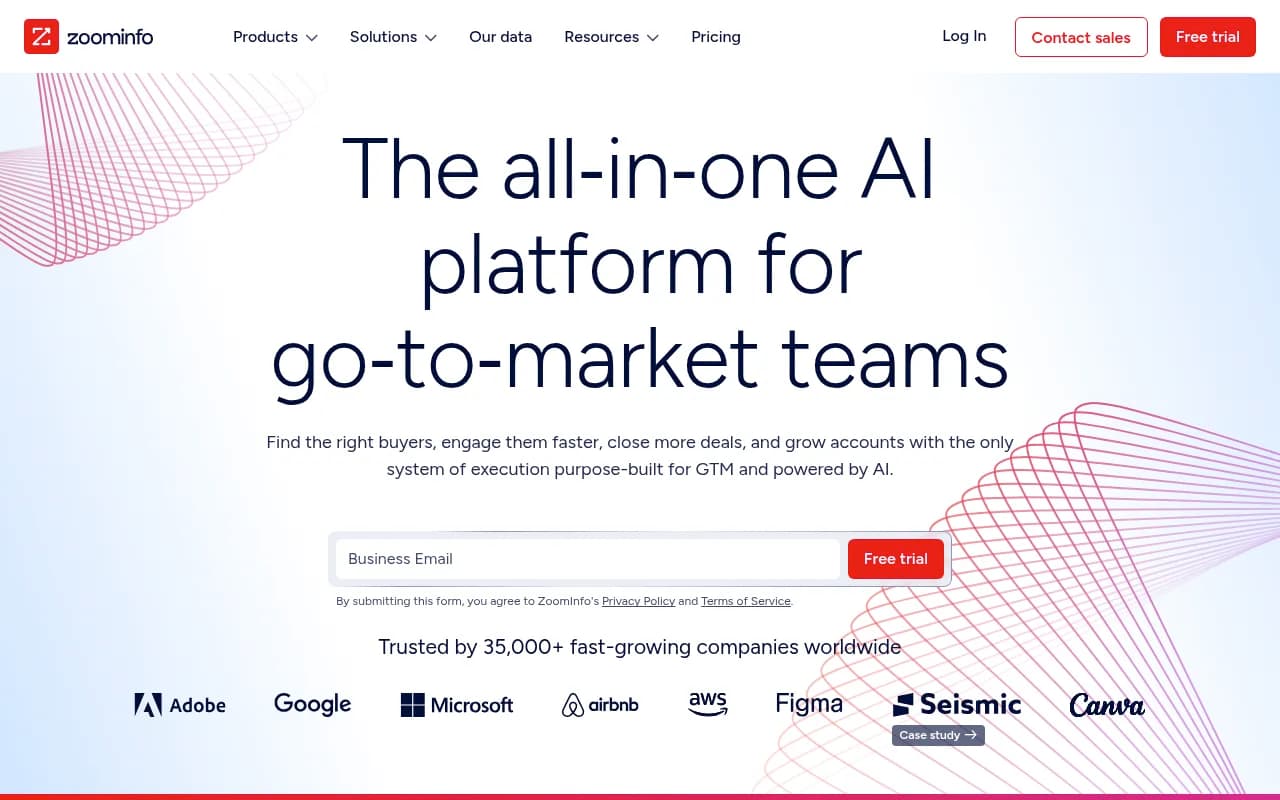
What ZoomInfo's platform captures is buyer intent: which companies are actively researching solutions like yours, based on their web behavior across thousands of sites. That signal has always been valuable, but in 2026 it's become more complicated. A buyer doing research inside ChatGPT doesn't generate the same web-crawlable footprint as a buyer reading blog posts. The intent signal is partially hidden.
This creates a gap in traditional intent data. If your prospect is asking Claude "what's the best contract intelligence platform for mid-market SaaS companies," ZoomInfo's intent tracking may not see that research happening. You get a weaker signal, or no signal at all, right at the moment when the buyer is most actively forming their shortlist.
ZoomInfo's response has been to layer in more AI-powered scoring and prediction -- essentially trying to infer intent from the signals that are still visible. That's a reasonable approach, but it's worth understanding the limitation: the earlier stages of the buyer journey are increasingly opaque to traditional intent data tools.
What Gong's conversation data shows about where deals actually start
Gong's value is in what happens after a buyer reaches out -- it records and analyzes sales calls, emails, and meetings to surface patterns in what works and what doesn't.
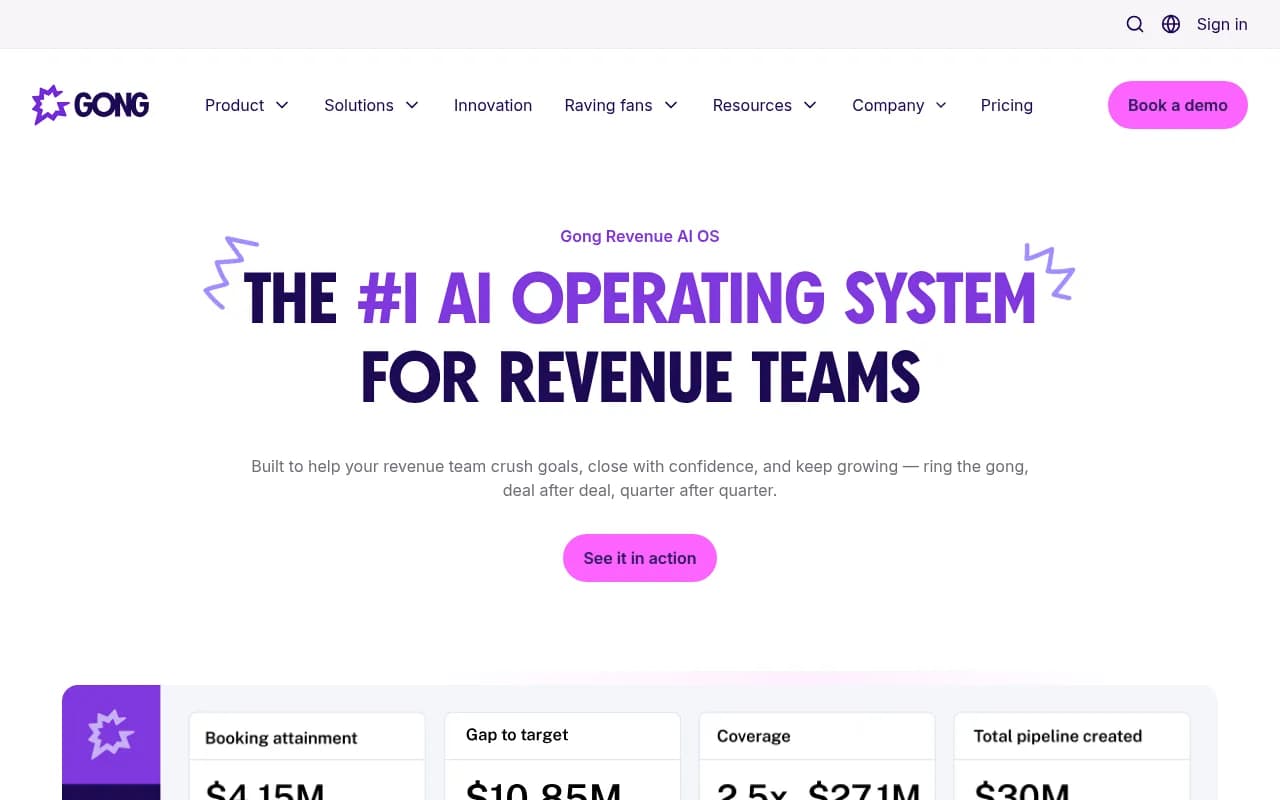
What Gong's data has consistently shown is that by the time a buyer gets on a discovery call, they're often more informed than the seller expects. They've already done the research. They know the category. They have specific questions about differentiators. They've heard of your competitors.
In 2026, that dynamic has intensified. Buyers who've used AI to research a category arrive at the first call with a mental model already formed. They're not asking "what does your product do?" -- they're asking "why should I choose you over [competitor]?" or "I heard you don't support [specific feature], is that true?"
This is a direct consequence of AI search. When ChatGPT answers a question about "best [category] software," it synthesizes a narrative. That narrative shapes how buyers frame their evaluation. If the AI's answer positions a competitor as the market leader and describes your product as a secondary option, that framing shows up in how buyers talk to your sales team.
Gong's conversation intelligence can surface these patterns -- you can see which competitor names come up most often, which objections are most common, which questions signal high intent. But it's a lagging indicator. By the time the conversation is happening, the AI-driven framing has already done its work.
The implication: if you want to influence how buyers think before they call you, you need to influence what AI engines say about you. That's a content and visibility problem, not a sales problem.
What HubSpot's SEO data shows about zero-click and AI-driven traffic shifts
HubSpot published its 2026 SEO trends report with a clear message: zero-click results are rising, AI Overviews are eating top-of-funnel traffic, and the traditional relationship between ranking and traffic is breaking down.
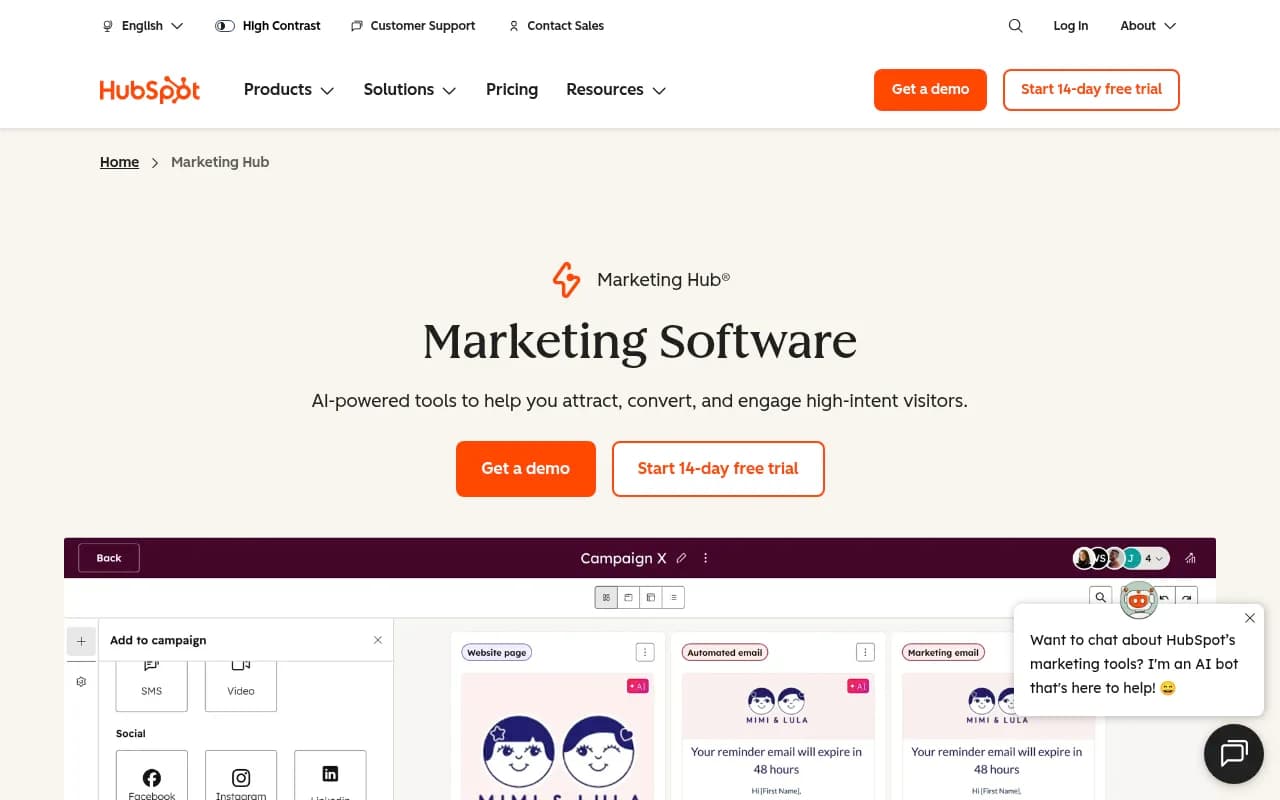
The specific dynamic HubSpot flags is that AI search engines synthesize answers rather than directing users to sources. A buyer who asks Perplexity "what CRM should a 50-person B2B company use?" gets a direct answer with a few citations -- but they don't necessarily click through to any of those sources. The research is complete inside the AI interface.
This has two consequences for B2B marketers:
First, organic traffic from top-of-funnel informational queries is declining for many brands, even when their content is being cited by AI engines. You can be "winning" in AI search (getting cited, getting mentioned) while simultaneously seeing less traffic from those queries. The metric that matters is no longer just clicks -- it's whether your brand appears in the AI-generated answer at all.
Second, the content that gets cited by AI engines is often different from the content that ranks well in traditional search. AI models tend to cite authoritative, specific, well-structured content that directly answers questions. Generic SEO content written to capture keyword volume often doesn't make the cut.
HubSpot's own data shows that EEAT signals (experience, expertise, authoritativeness, trustworthiness) have become more important -- which aligns with what we know about how AI models select sources to cite. They favor content from recognized experts, established publications, and sites with strong topical authority.
The shortlist problem: being visible when it matters most
Here's the practical problem that all of this creates for B2B sellers.
Buyers are forming shortlists inside AI engines. If your brand isn't mentioned in the AI's answer to "what are the best [category] tools for [use case]," you don't make the shortlist. You don't get the demo request. You don't get the chance to win the deal.
This is what Apollo's research calls the "Day One shortlist" problem. 74% of buying teams experience conflict during the purchase process -- meaning multiple stakeholders are involved, each doing their own research, each potentially using AI to form their own opinions. If AI engines consistently mention your competitors and not you, you're fighting an uphill battle before the first conversation starts.
The traditional response to this would be "publish more content, get more backlinks, rank higher." That still matters. But it's no longer sufficient. You need to specifically optimize for how AI engines discover, evaluate, and cite your content -- which is a different discipline from traditional SEO.
What the data actually shows about AI-cited content
A few patterns have emerged from research into what gets cited by AI engines in B2B contexts:
Specificity beats breadth. AI models prefer content that answers a specific question well over content that covers a broad topic shallowly. A detailed comparison of two products, a specific use-case guide, or a well-structured FAQ tends to get cited more often than a general overview.
Third-party validation matters. AI engines frequently cite G2 reviews, Reddit discussions, LinkedIn posts, and industry publications alongside vendor content. Your brand's presence in these channels influences how AI models describe you -- even when the AI isn't citing your own website.
Recency has weight. AI models are updated periodically, and more recent content tends to have an advantage in fast-moving categories. If your competitors published detailed content in Q1 2026 and you haven't updated your key pages since 2024, that gap shows up in AI responses.
Structured answers get pulled. Content formatted with clear headings, comparison tables, and direct answers to specific questions is easier for AI models to extract and synthesize. This is partly why HubSpot's SEO guidance has shifted toward content that answers questions directly rather than building up to the answer over several paragraphs.
The tools that matter for B2B visibility in AI search
Understanding the problem is one thing. Doing something about it requires the right tools.
For tracking whether your brand appears in AI-generated answers -- and which competitors are getting cited instead of you -- you need dedicated AI visibility monitoring. This is a different category from traditional rank tracking.
Promptwatch is the most complete option here. It monitors your brand's visibility across 10 AI engines (ChatGPT, Perplexity, Claude, Gemini, Google AI Overviews, and more), shows you which prompts your competitors appear for that you don't, and -- critically -- has built-in content generation tools to help you close those gaps. Most monitoring tools stop at showing you the data. Promptwatch connects the gap analysis to actual content creation.

For B2B teams specifically, the Answer Gap Analysis feature is worth paying attention to. It shows you the specific questions buyers are asking AI engines where your competitors are visible and you're not. That's a direct window into where your content strategy has holes.
Beyond Promptwatch, a few other tools are worth knowing:
For sales intelligence and intent data:
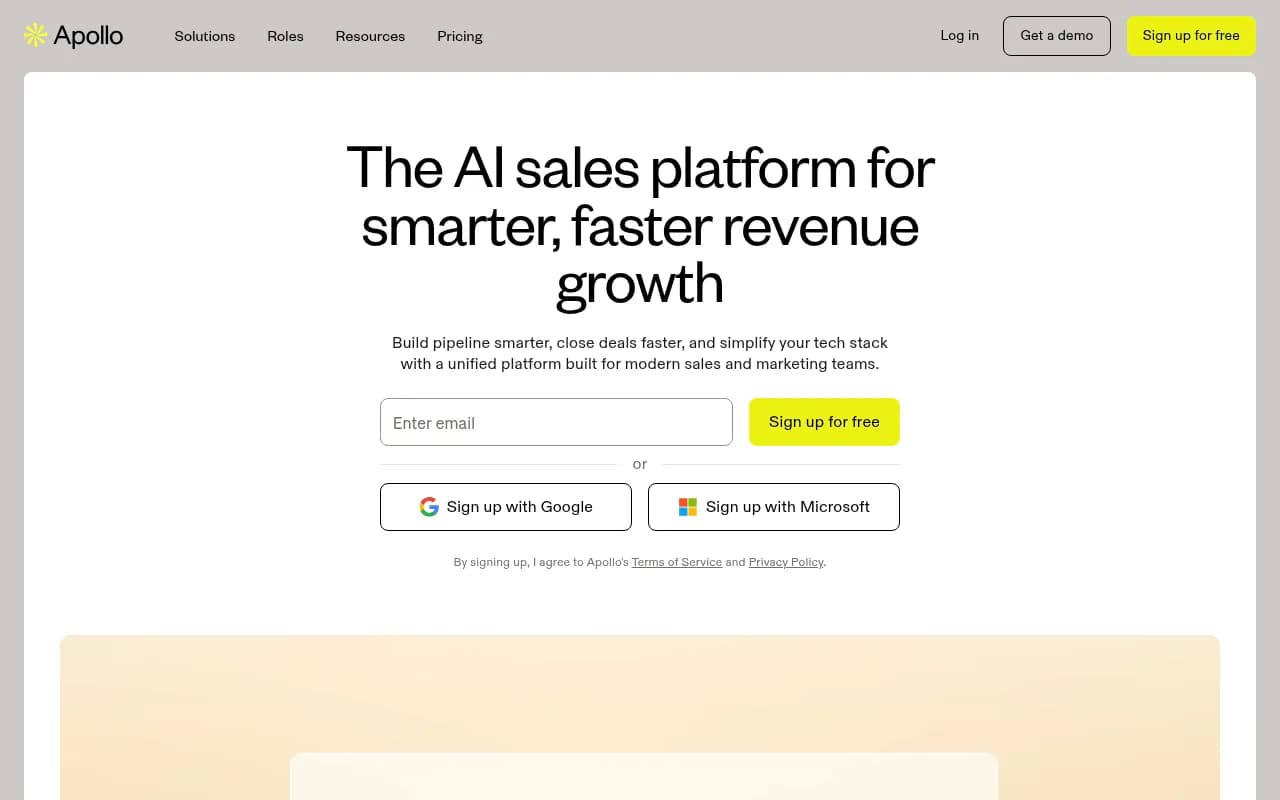
Apollo combines a large contact database with engagement tools and intent signals. It's particularly useful for mid-market teams that want prospecting and outreach in one place.
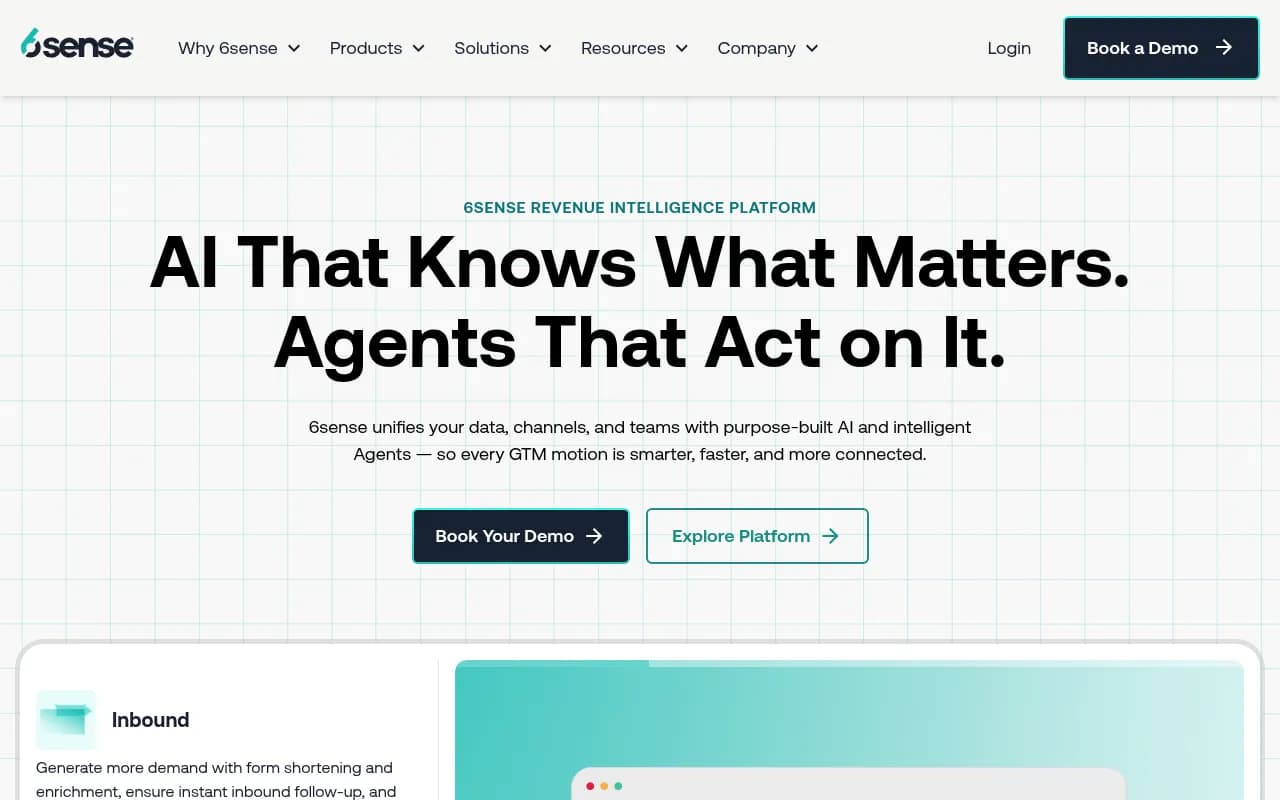
6sense focuses on predictive intent and anonymous visitor identification -- useful for understanding which accounts are in-market even when they haven't raised their hand.
For competitive intelligence:
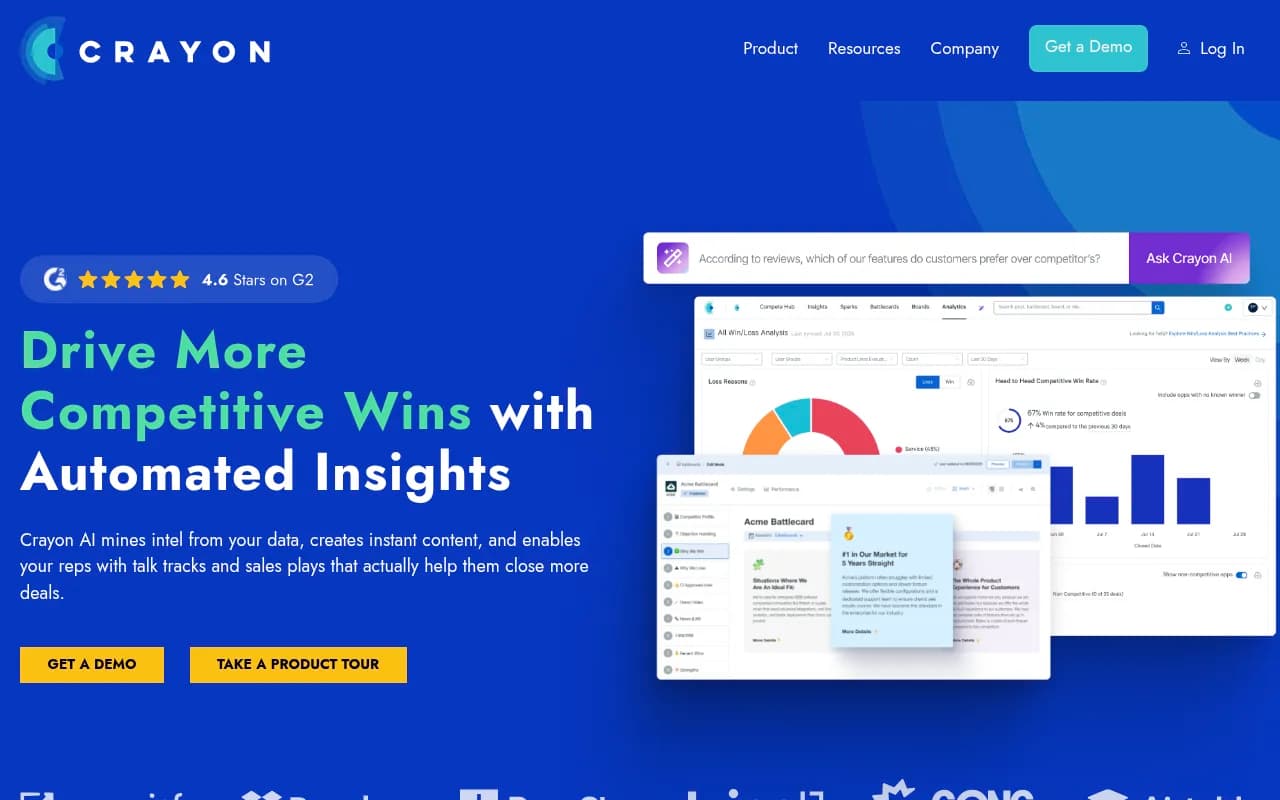
Crayon tracks competitor marketing moves in real time -- useful for understanding how competitors are positioning themselves in content that might be getting cited by AI engines.
For content optimization:
MarketMuse helps identify content gaps and optimize topical authority -- which directly supports the kind of deep, specific content that AI engines tend to cite.
A comparison of approaches to B2B AI visibility
| Approach | What it addresses | Limitation |
|---|---|---|
| Traditional SEO (rank tracking, backlinks) | Google search visibility | Doesn't capture AI-generated answers |
| Intent data (ZoomInfo, Bombora) | Identifying in-market accounts | Misses research happening inside AI interfaces |
| Conversation intelligence (Gong) | Understanding buyer framing post-contact | Lagging indicator -- framing already set by AI |
| AI visibility monitoring (Promptwatch) | Tracking brand mentions in AI answers | Requires separate workflow from traditional SEO |
| Content optimization for AI (MarketMuse, AirOps) | Creating content AI engines will cite | Needs to be paired with visibility tracking |
The honest answer is that none of these approaches works in isolation. B2B marketing teams in 2026 need to run traditional SEO and AI visibility in parallel -- they're complementary, not competing.
What to actually do about it
A few concrete steps that follow from the data:
Audit your AI visibility first. Before you change your content strategy, find out where you actually stand. Ask ChatGPT, Perplexity, and Claude the questions your buyers are likely asking. See who gets mentioned. See what framing gets used. This is a 30-minute exercise that will tell you more than most quarterly SEO reports.
Map your content to buyer questions, not keywords. The questions buyers ask AI engines are often more specific and conversational than the keywords you've been targeting. "What CRM should a 50-person B2B SaaS company use" is a different content target than "best CRM for B2B." Both matter, but the former is increasingly where AI-driven research happens.
Invest in third-party presence. AI engines cite G2, Reddit, LinkedIn, and industry publications heavily. If your brand has strong reviews on G2 but minimal presence in relevant Reddit communities or LinkedIn discussions, that's a gap worth closing. AI models synthesize from multiple sources -- your owned content is just one input.
Update your measurement framework. If you're only measuring organic traffic and form fills, you're missing the early-stage influence that AI search has on your pipeline. Tools like Promptwatch can track AI visibility scores over time, giving you a leading indicator of whether your brand is gaining or losing ground in the channels where buyers now do their initial research.
Align sales and marketing on AI-driven framing. Gong data can tell you what buyers are saying when they arrive on calls. If you're hearing consistent misconceptions or competitor comparisons that don't favor you, that's a signal that AI engines are framing your category in a way that needs to be addressed at the content level -- not just the sales script level.
The bottom line
The B2B buyer journey hasn't just gotten longer or more complex. It's moved to a channel that most sales and marketing teams aren't measuring, optimizing for, or even fully aware of.
ZoomInfo, Gong, and HubSpot are all responding to this shift in their own ways -- better intent signals, deeper conversation analytics, updated SEO guidance. But the core challenge is the same for everyone: buyers are forming opinions inside AI engines, and the brands that show up there with the right framing will have a structural advantage in every deal that follows.
The good news is that this is a solvable problem. The content and visibility work required to show up well in AI search is not fundamentally different from good content marketing -- it's just more specific, more structured, and more focused on answering real buyer questions rather than chasing keyword volume. The teams that figure this out in 2026 will be much better positioned when AI search becomes the default for every B2B research task, which at the current trajectory, is not far off.