Key takeaways
- Omnia measures brand presence in AI-generated answers but lacks the multi-client infrastructure, white-label reporting, and content optimization tools most agencies need at scale.
- The best alternatives depend on what you're missing: some agencies need deeper AI visibility tracking, others need white-label dashboards, and some need a platform that goes beyond monitoring to actually fix gaps.
- For agencies managing AI search visibility across multiple clients, Promptwatch is the only platform in this comparison rated as a leader across monitoring, content generation, and optimization -- not just tracking.
- Traditional SEO platforms like Semrush and SE Ranking cover rank tracking and reporting well but are still catching up on AI search depth.
- White-label reporting tools like AgencyAnalytics and Raven Tools solve the client-facing dashboard problem but don't address AI visibility at all.
Omnia does one thing reasonably well: it tells you whether your brand is showing up in AI-generated answers. For a solo brand manager, that's sometimes enough. For an agency running 10, 20, or 50 clients? It starts to fall apart fast.
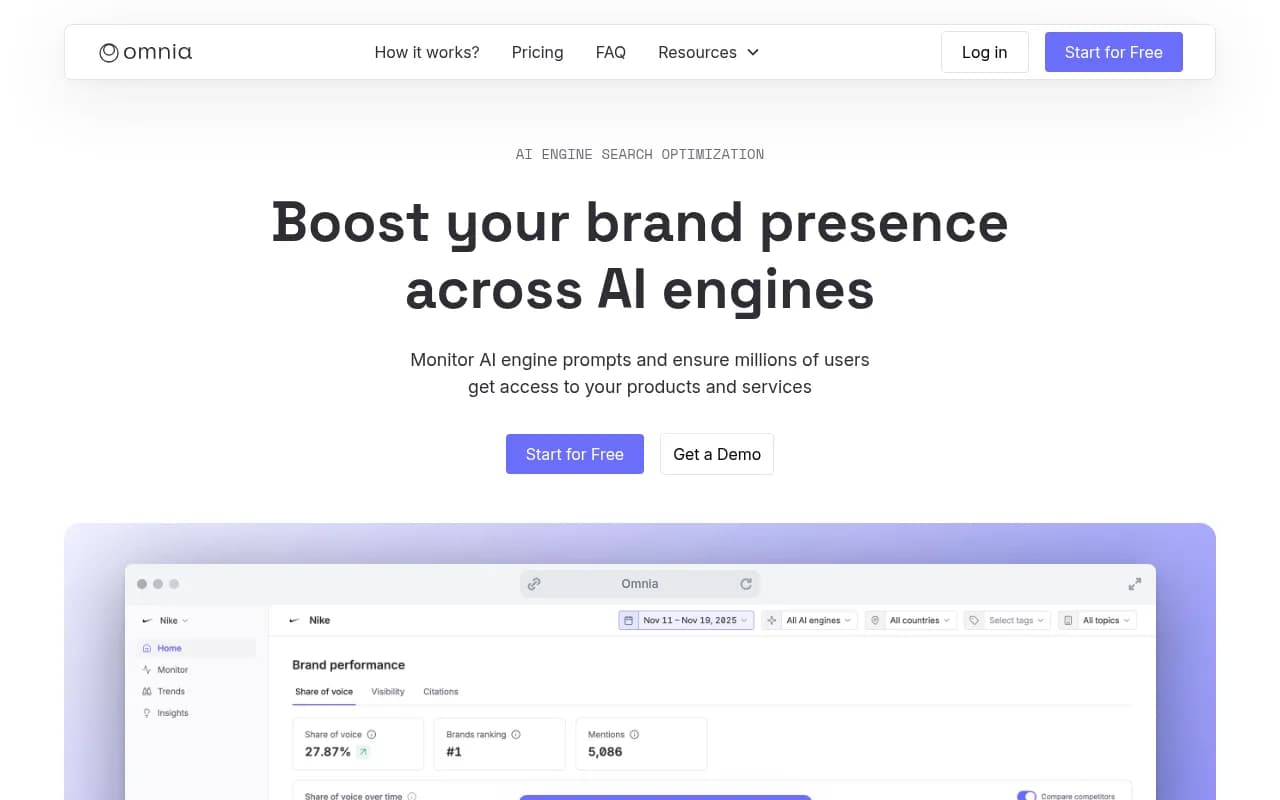
There's no multi-client workspace. White-label reporting is limited. And when a client asks "okay, so how do we fix this?" -- Omnia doesn't have a great answer. It shows you the problem. It doesn't help you solve it.
That gap is exactly why agencies are looking for alternatives. This guide covers 8 of the strongest options in 2026, organized by what they actually do well, so you can match the right tool to your situation.
What agencies actually need (that Omnia doesn't provide)
Before getting into the alternatives, it's worth being specific about what's missing. Agencies have different requirements than in-house teams:
- Multi-client management with separate workspaces, permissions, and billing
- White-label reporting so clients see your brand, not the tool's
- Enough prompt coverage to track visibility across different verticals and use cases
- Content optimization features -- not just "you're not visible here" but "here's what to create"
- Competitive intelligence across clients, not just one brand at a time
- Scalable pricing that doesn't punish you for growing
Omnia covers some of this at a surface level. The alternatives below cover it more completely.
The 8 best Omnia alternatives for agencies in 2026
1. Promptwatch -- best for agencies that want to actually fix AI visibility, not just track it
Most AI visibility tools are dashboards. They show you where you're invisible, then leave you to figure out what to do next. Promptwatch is built differently -- it's the only platform in this space that closes the loop from gap detection to content creation to citation tracking.
Promptwatch monitors 10 AI models (ChatGPT, Perplexity, Claude, Gemini, Google AI Overviews, DeepSeek, Grok, Copilot, Meta AI, and Mistral) and tracks how brands appear across all of them. For agencies, the multi-client setup is proper: separate workspaces, role-based access, and white-label reporting that removes every trace of Promptwatch from client-facing dashboards.

What separates it from monitoring-only tools is the action loop. Answer Gap Analysis shows exactly which prompts competitors rank for that your client doesn't -- with specific content recommendations, not vague advice. Content Agents then generate articles, listicles, and comparison pages grounded in real prompt data and citation analysis. Once content is published, AI Crawler Logs track when models crawl it, and page-level citation tracking shows when it starts getting cited and by which models.
For agencies, the practical value is clear: you can show clients a before/after story, not just a visibility score. The crawler logs also surface technical issues -- pages AI models can't read, crawl errors, indexing gaps -- that most competitors don't expose at all.
Pricing starts at $99/month for a single site (Essential), $249/month for the Professional plan with crawler logs and multi-location tracking, and $579/month for Business (5 sites). Agency and enterprise plans are available with custom pricing.
Best for: Agencies that want to offer AI search optimization as a service, not just reporting.
2. Semrush -- best for agencies already invested in the traditional SEO stack
Semrush is the most complete traditional SEO platform on the market, and it's been adding AI search features over the past year. Its agency toolkit includes white-label reporting, multi-client management, and a wide range of integrations that make it easy to fold into existing workflows.
The AI search tracking in Semrush uses fixed prompts rather than dynamic real-user query data, which means coverage is less granular than dedicated GEO platforms. But if your agency is already using Semrush for rank tracking, site audits, backlink analysis, and PPC research, adding AI visibility monitoring on top of an existing subscription is a reasonable move.
The My Reports feature handles white-label client reporting well, and the agency partner program gives access to co-marketing resources and lead generation tools. For agencies that need one platform to cover traditional SEO and a reasonable slice of AI search, Semrush is the most practical choice.
Best for: Full-service agencies that want AI search coverage without adding another platform to their stack.
3. SE Ranking -- best for mid-size agencies on a budget
SE Ranking has quietly become one of the better value options for agencies that need solid rank tracking, site audits, and client reporting without paying enterprise prices. It covers traditional SEO comprehensively and has been building out AI search features.
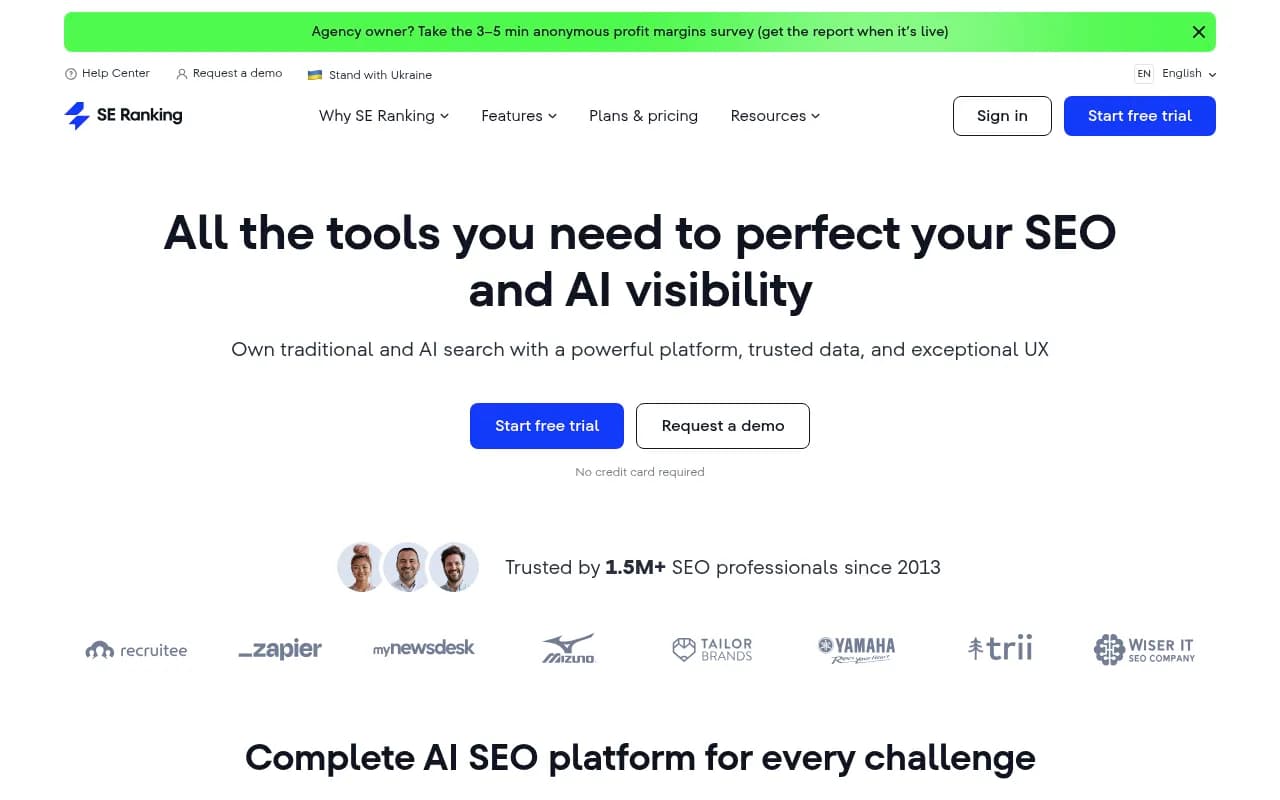
The white-label module is genuinely good: custom domains, branded dashboards, client portals, and automated report scheduling. For agencies managing 20-50 clients, the per-client pricing model is more predictable than some competitors.
It doesn't go as deep on AI visibility as dedicated platforms, but for agencies whose clients are primarily asking about Google rankings with AI search as a secondary concern, SE Ranking covers the bases without overcomplicating things.
Best for: Mid-size agencies that need affordable, reliable reporting with white-label support.
4. AccuRanker -- best for agencies that need fast, accurate rank tracking at scale
AccuRanker's core strength is speed. It offers on-demand rank updates (not just daily refreshes), which matters when clients want to see the immediate impact of a content change or a technical fix. The agency features are solid: multi-client management, white-label reporting, and API access for custom integrations.
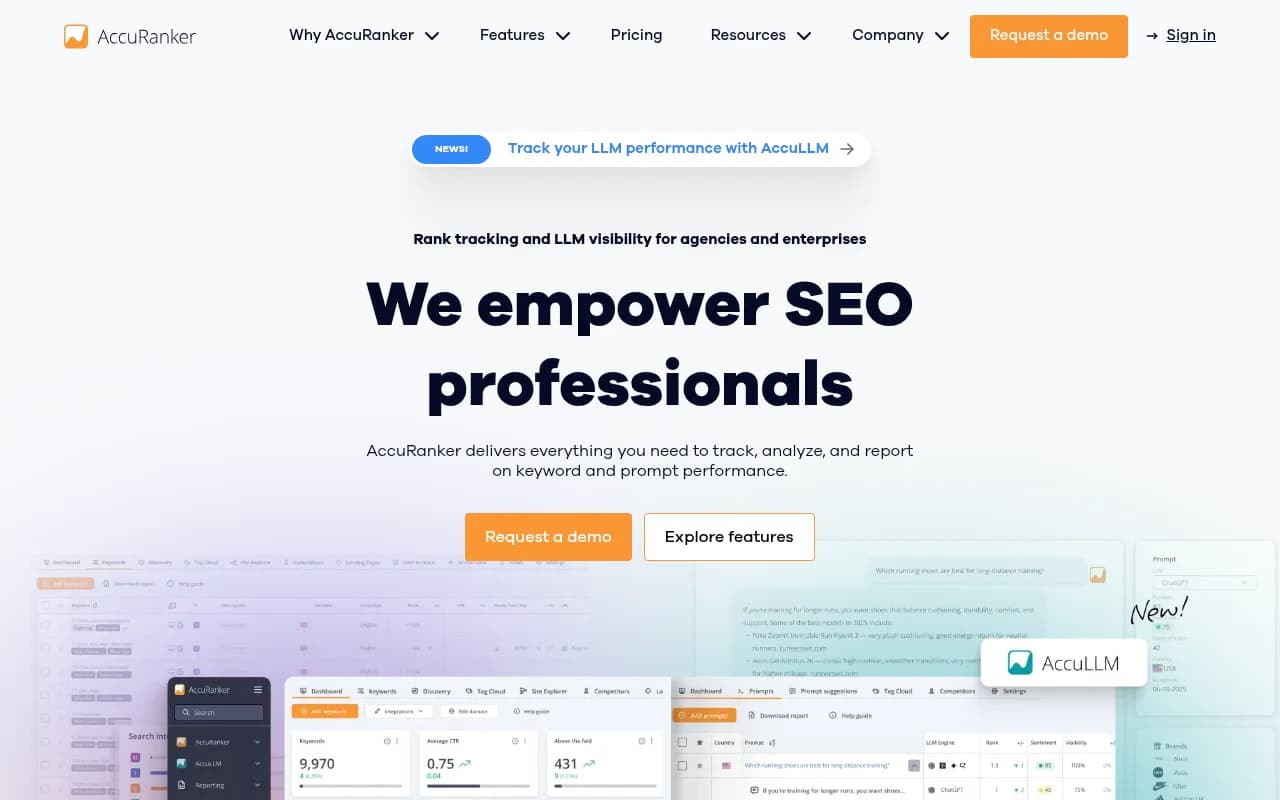
It's primarily a rank tracking tool for traditional search, not an AI visibility platform. But for agencies where rank tracking is the backbone of client reporting, AccuRanker is hard to beat on accuracy and update frequency. Pair it with a dedicated AI visibility tool and you have a complete picture.
Best for: Agencies where rank tracking speed and accuracy is the primary client deliverable.
5. Rankscale -- best for agencies focused specifically on AI search visibility
Rankscale is built specifically for AI search visibility tracking, with an agency-first design that includes multi-client management and white-label reporting. It tracks brand mentions across the major AI models and provides competitive benchmarking across clients.
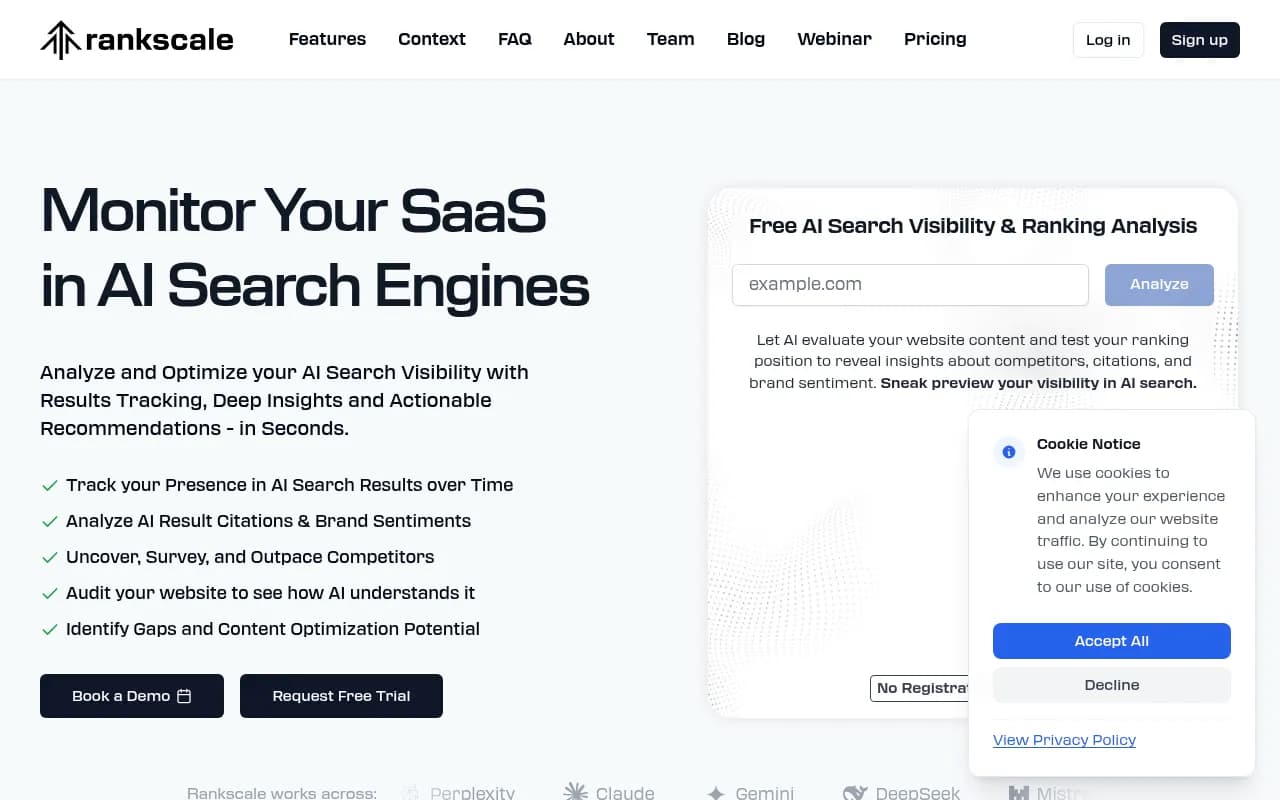
Compared to Omnia, it's more structured for agency workflows. Compared to Promptwatch, it's more monitoring-focused -- it shows you the data but doesn't generate content or close the optimization loop. For agencies that want a dedicated AI visibility tracker with proper client management, it's a cleaner option than Omnia.
Best for: Agencies that want a purpose-built AI visibility tracker with multi-client support.
6. Raven Tools -- best for agencies that need comprehensive white-label reporting across channels
Raven Tools has been an agency reporting staple for years. It pulls data from dozens of marketing channels -- Google Analytics, Search Console, social platforms, PPC -- and presents it in fully branded, white-label dashboards and PDF reports.

It doesn't do AI search visibility. That's a real gap in 2026. But for agencies whose clients are still primarily asking about traditional marketing performance, Raven Tools handles the reporting side extremely well. The drag-and-drop report builder, automated scheduling, and custom branding options are genuinely polished.
If you're running Raven Tools for traditional reporting and need to layer in AI visibility, you'd need a second tool. But as a white-label reporting platform, it's one of the most capable options available.
Best for: Agencies that need comprehensive white-label reporting across traditional marketing channels.
7. Improvado -- best for agencies managing complex, multi-brand data pipelines
Improvado sits in a different category from most tools on this list. It's a marketing intelligence and data platform designed for agencies that manage complex, multi-brand environments -- think enterprise clients with custom CRMs, proprietary ad platforms, and offline data sources that don't fit into standard integrations.
Where tools like AgencyAnalytics hit a ceiling on data depth and governance, Improvado is built to handle it. SOC 2 compliance, advanced role-based access controls, data transformation, and multi-touch attribution are all part of the platform. It's not cheap, and it's not the right choice for a 10-person agency managing SMB clients. But for agencies that have outgrown simpler reporting tools and need enterprise-grade data infrastructure, it's the most capable option.
It doesn't cover AI search visibility, so you'd still need a dedicated GEO tool alongside it.
Best for: Large agencies or those managing enterprise clients with complex data requirements.
8. Nightwatch -- best for agencies that want AI search monitoring alongside traditional rank tracking
Nightwatch has been expanding its AI search monitoring capabilities while keeping its core rank tracking product strong. The agency features include white-label reporting, sub-accounts for client separation, and API access.
It's a reasonable middle ground for agencies that want to cover both traditional SEO rankings and AI search visibility without managing two completely separate platforms. The AI monitoring is less deep than dedicated platforms, but the integration with rank tracking data makes it easier to tell a unified story to clients.
Best for: Agencies that want traditional rank tracking and basic AI search monitoring in one platform.
Side-by-side comparison
| Tool | AI search tracking | White-label reporting | Multi-client management | Content optimization | Best for |
|---|---|---|---|---|---|
| Promptwatch | Deep (10 models) | Yes, full | Yes, with roles | Yes (content agents) | Full AI visibility + optimization |
| Semrush | Basic (fixed prompts) | Yes | Yes | Limited | Full-service agencies on one platform |
| SE Ranking | Growing | Yes | Yes | Limited | Budget-conscious mid-size agencies |
| AccuRanker | No | Yes | Yes | No | Rank tracking speed and accuracy |
| Rankscale | Yes | Yes | Yes | No | Dedicated AI visibility tracking |
| Raven Tools | No | Yes, polished | Yes | No | Traditional channel reporting |
| Improvado | No | Yes (enterprise) | Yes (enterprise) | No | Complex multi-brand data pipelines |
| Nightwatch | Basic | Yes | Yes | No | Combined rank + AI monitoring |
How to choose
The right alternative depends on what Omnia is actually failing to deliver for your agency:
If the problem is "we can't track AI visibility across multiple clients properly" -- Promptwatch or Rankscale are the most purpose-built options. Promptwatch goes further with content generation and optimization; Rankscale is cleaner if you just need the tracking.
If the problem is "our clients want traditional SEO reporting with some AI coverage" -- Semrush or SE Ranking are the most practical. They cover the full traditional SEO stack with AI search as an add-on, and both have solid white-label reporting.
If the problem is "we need better white-label reporting across all marketing channels" -- Raven Tools handles this better than almost anything else, though you'll need a separate AI visibility tool.
If the problem is "our data infrastructure can't keep up with enterprise client demands" -- Improvado is in a different league for data governance and pipeline management.
If the problem is "we need to actually improve AI visibility, not just measure it" -- Promptwatch is the only option on this list that closes the full loop from gap detection to content creation to citation tracking. The others show you the problem. Promptwatch helps you fix it.
A note on the monitoring-only trap
One pattern worth calling out: a lot of agencies buy an AI visibility tracker, generate a report, show it to a client, and then... don't know what to do next. The tracker showed them they're invisible for 40 prompts. Great. Now what?
This is where most tools in this space fall short. They're dashboards, not optimization platforms. The data is real, but it doesn't translate into action without a lot of manual work -- figuring out which prompts to target, what content to create, whether the content actually got crawled, and whether it's being cited.
The agencies getting the most value from AI search in 2026 are the ones treating it as an optimization discipline, not a monitoring exercise. That means tracking gaps, creating content to fill them, watching how AI crawlers respond, and iterating. The tool you choose should support that cycle, not just the first step.
For most agencies, that means combining a strong AI visibility and optimization platform with whatever reporting tool already fits your workflow. The reporting side is largely a solved problem. The optimization side is where the real competitive advantage is being built right now.