Key takeaways
- Google Search Console now has a first-party generative AI performance report, which is the only place to see real impression data for AI Overviews, AI Mode, and Discover. If it has rolled out to your site, start there.
- Free checkers from Ahrefs, Semrush, SEO.com, Frase, and others answer a snapshot question: "Am I cited for this query right now?" They are not trackers, and a single check can go stale within days.
- Ahrefs' own research found AI Overviews change about 70% of the time between observations, with an average lifespan of roughly 2.15 days. One free check is a data point, not a baseline.
- What gets cited is shifting fast. Product pages overtook listicles as AI Overviews' top-cited format in July 2026, and YouTube now holds over 4% of AI Overview citations, so check what type of content wins in your niche, not just whether you won.
- If you need ongoing tracking across dozens or hundreds of prompts, free tools won't cut it. That is when a platform like Promptwatch earns its keep.
Why you should care, briefly
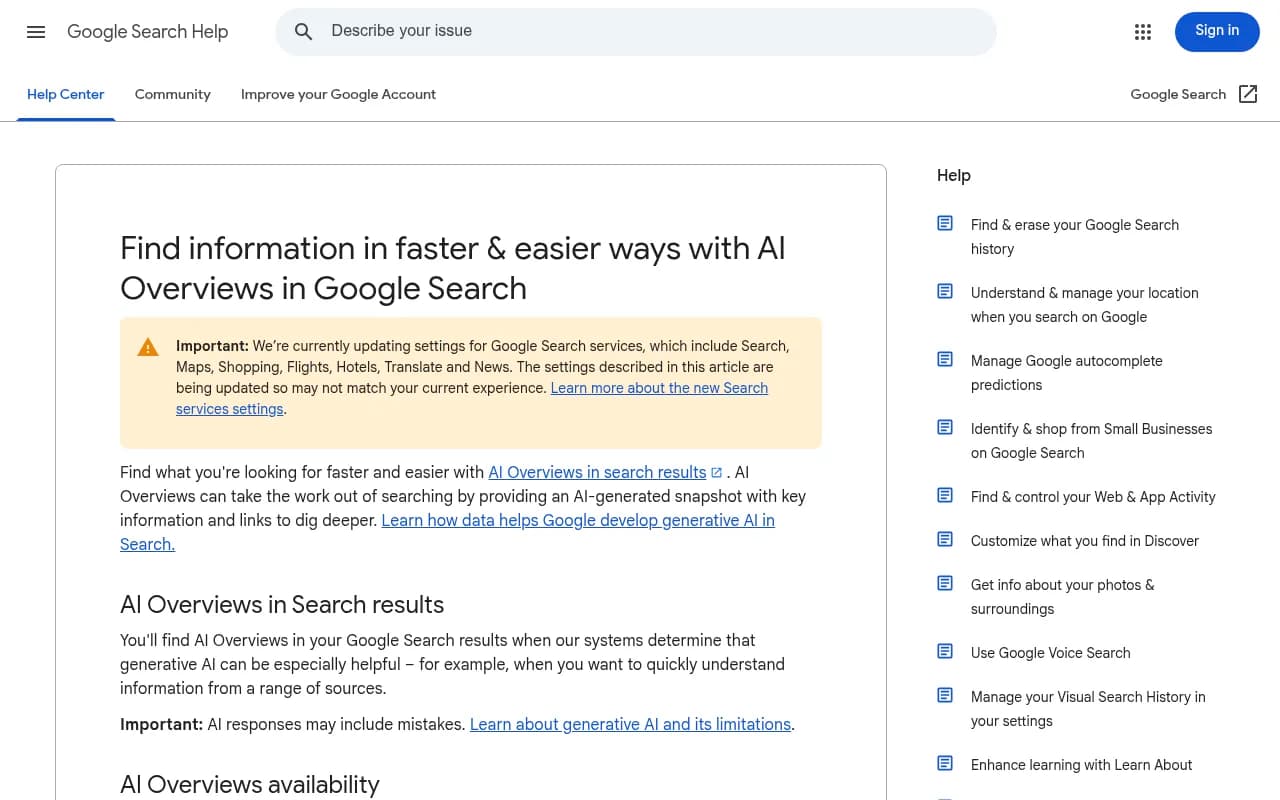
AI Overviews now appear in a big chunk of Google searches, and the estimates vary wildly depending on who you ask: Pew Research's panel study put it at 18% of searches, while vendor analyses based on Ahrefs' Brand Radar data have claimed anywhere from ~20% to over 50% of US queries. I would not bet on any single number. What is not disputed is the effect: when an AI Overview shows up, it sits above everything else, and being one of its cited sources is the closest thing to a top-of-page placement that still exists.
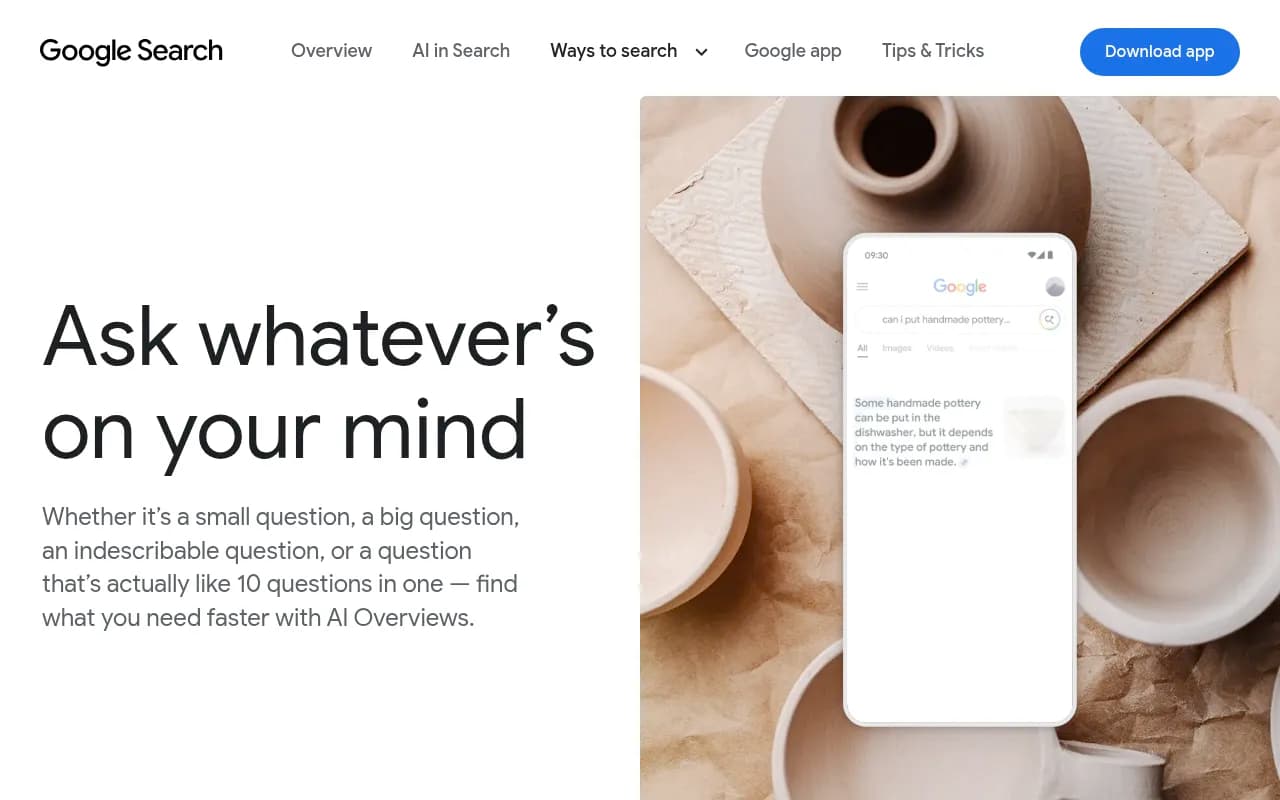
Google itself confirms AI Overviews run in over 120 countries and territories across 11 languages, with the full multimodal experience (text, voice, image) currently for English searches in the US. So this is not a US-only experiment anymore. If you have never checked whether your pages get cited, you are flying blind.
One thing worth knowing before you run any check: AI Overviews are unstable. Ahrefs analyzed 43,000+ keywords with 16+ recorded AI Overviews each and found the overview content changes 70% of the time between observations, 45.5% of citations change on each refresh, and the average lifespan of an AI Overview is about 2.15 days. The entities mentioned stay fairly consistent (a 0.95 semantic consistency score), but the specific cited URLs churn constantly. Keep that in mind as you use these tools.
The 9 free tools
1. Google Search Console (the only official source)
In June 2026, Google announced generative AI performance reports in Search Console, and this changes the game for free visibility checking. Every other tool on this list simulates queries and scrapes results. GSC shows you actual impression data from real Google users: how often your URLs appeared in AI Overviews, AI Mode, and generative AI features in Discover, broken down by page, country, device, and date.
The catch: it is rolling out gradually to a subset of websites first, so you may not have it yet. If you do, check the Performance section for the new AI-specific search type filters. A practical setup: enable clicks, impressions, CTR, and position, filter to web search, look at the last 28 days, and sort by CTR ascending with a minimum impression threshold. Pages with high impressions and collapsing CTR are where AI Overviews are eating your clicks.
If you run a website and have not verified it in Search Console, that is step zero. It is free, first-party, and increasingly the ground truth for AI search performance.
2. Ahrefs free AI Overviews Tracker
Ahrefs' free tracker (no signup, results in seconds) does one specific thing well: it tells you whether Google's AI Overviews mention and cite your brand for a set of prompts, and which sources they pull in instead of you. It is powered by Ahrefs Brand Radar, which tracks hundreds of millions of AI Overviews prompts monthly.
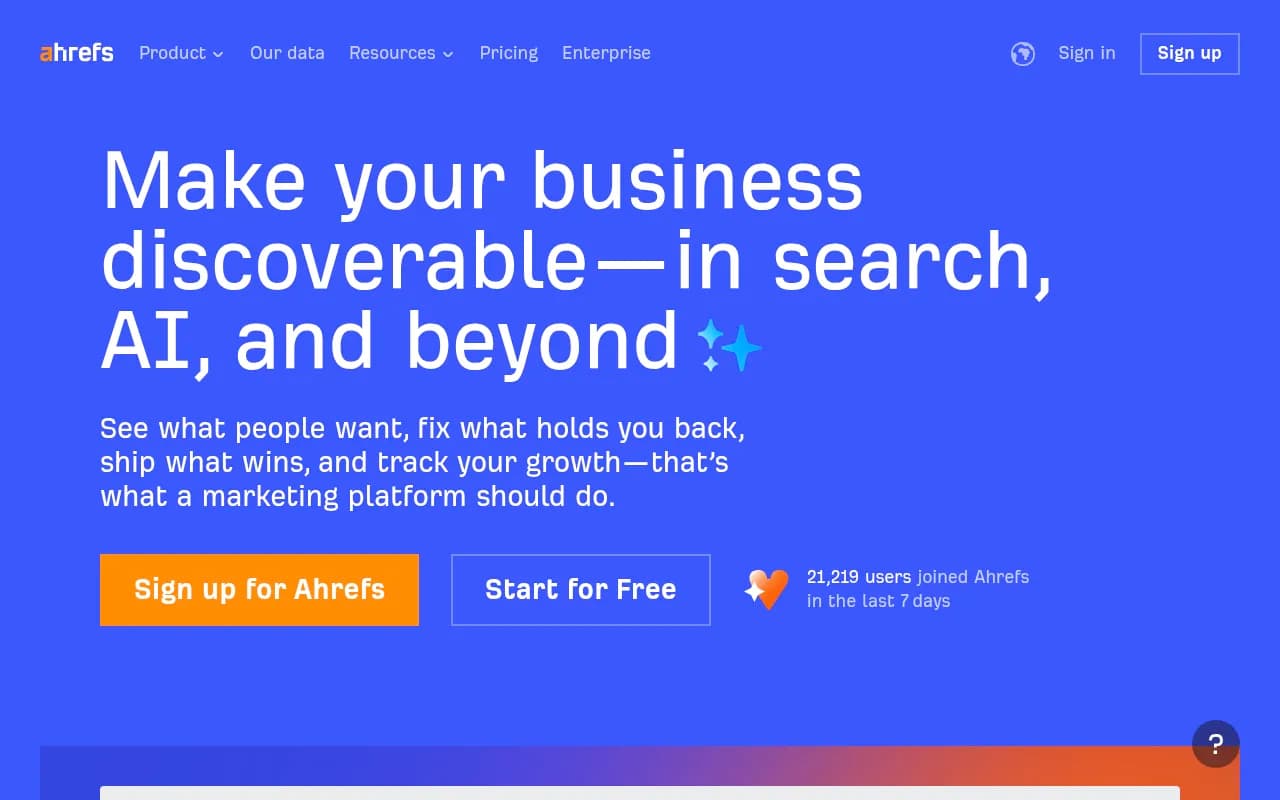
A detail I appreciate: Ahrefs separates its AI Overviews Tracker from its AI Mode Tracker, because the two surfaces cite different sources. A brand can rank in one and be invisible in the other, and most free tools do not make that distinction.
3. Ahrefs free AI Visibility Checker
Different tool, same company, and worth using alongside the tracker. The AI Visibility Checker looks beyond Google and checks whether ChatGPT, Gemini, Perplexity, Microsoft Copilot, and Google AI Overviews mention your brand, using what Ahrefs calls "search-backed prompts" (real questions derived from actual search query data rather than made-up prompts).
The report shows total AI mentions across platforms, the topics that trigger mentions, and which competing domains get cited alongside you. That last part is quietly the most useful: seeing who consistently appears when you do not is the beginning of a content strategy, not just a vanity check.
4. Semrush AI Overviews Visibility Checker
Semrush's free checker is a three-step flow: click, enter your domain, view report. You get a visibility score, the specific queries where your brand appears in AI Overviews, a competitor comparison, and "gap" queries where competitors show up and you do not.
Semrush maintains separate free tools for AI Overviews visibility, general AI visibility, and AI Mode, which is a bit confusing to navigate but means each surface gets its own data rather than one blended score. The gap analysis is the reason to use this one over a simpler checker.
5. SEO.com AI Overview Checker
The free tier here is more generous than it looks at first glance: 3 domain-level impact analyses per day plus 5 keyword-level checks per day, no login required for the basic check (an email unlocks the full analysis).
What makes it interesting is the depth of the report. You get the percentage of your top 100 keywords that trigger an AI Overview, estimated monthly visits lost to AI Overview presence, and ranking coverage, meaning how many of your top 5/10/20 organic results are also cited in the AI Overview. That last metric is the one most people never think to check. Ranking #1 organically while being absent from the AI Overview above you is the worst of both worlds, and this tool will show you exactly where that is happening.
6. SE Ranking AI visibility checker
SE Ranking offers a free AI visibility check that shows whether your site appears in AI answers, alongside its broader SEO platform. Community feedback on Reddit's r/seogrowth thread about free AI visibility tools describes it as more focused and straightforward than some alternatives, which is exactly what you want from a free tier.
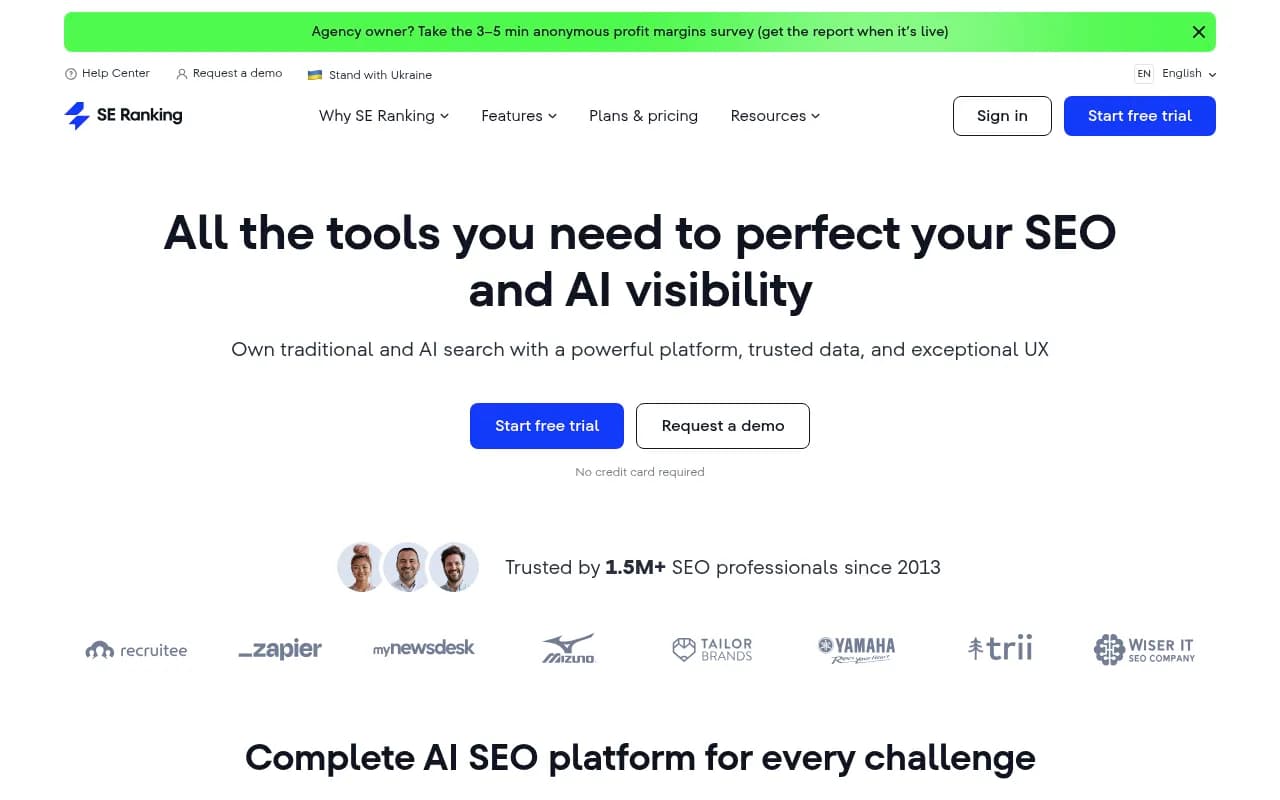
Good for a second opinion. Because every checker scrapes at slightly different times, from slightly different locations, with slightly different prompt sets, running the same domain through two or three free tools gives you a much more honest picture than any single one.
7. Frase GEO Score Checker and AI Visibility Checker
Frase offers three distinct free tools, and two of them matter here. The GEO Score Checker takes a URL and grades that page's readiness for AI citation across ChatGPT, Perplexity, and Claude, no signup for the first result. The AI Visibility Checker is domain-level and shows whether those engines cite your domain, though you will need an email to unlock results beyond ChatGPT.
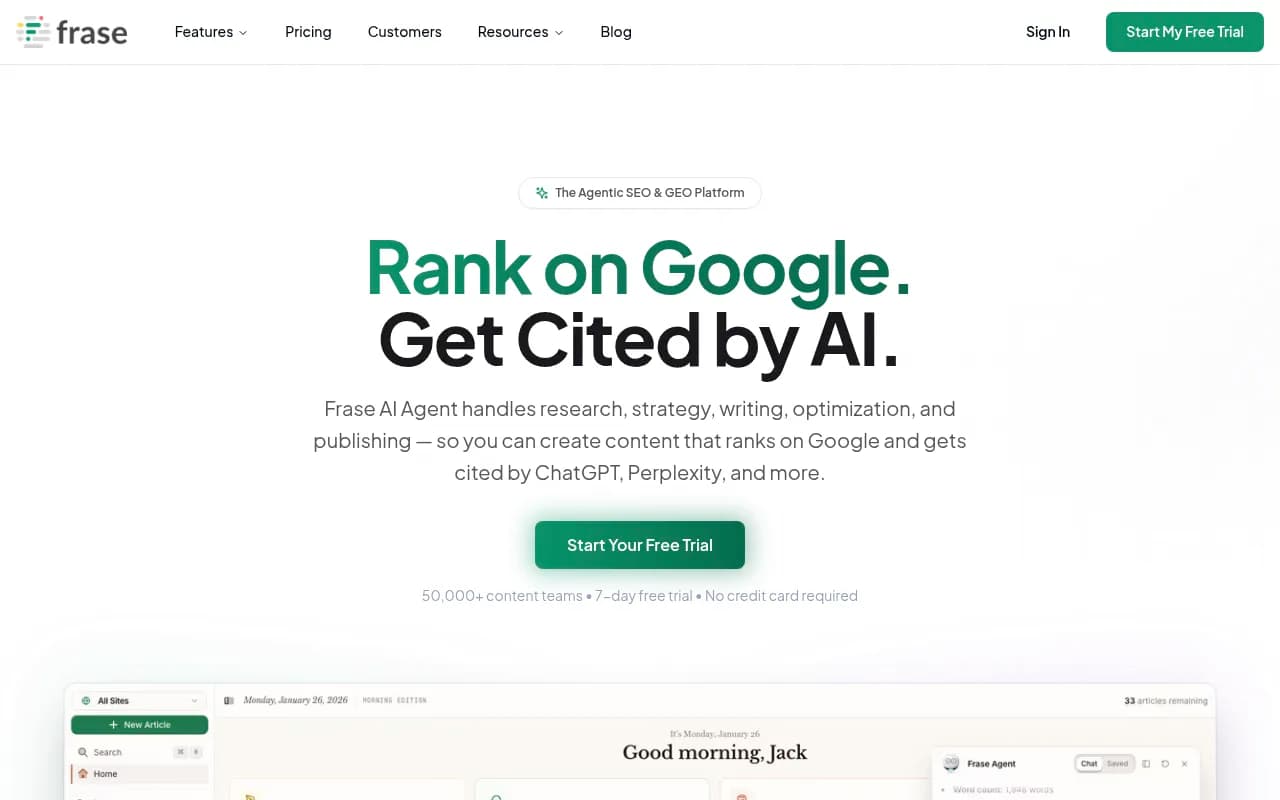
The page-level GEO score is the differentiator. Most free tools tell you whether you are visible; almost none tell you whether a specific page is built to be citable. If your domain check comes back empty, running your key pages through the GEO score helps you figure out whether the problem is the content or something structural.
8. HubSpot AI Search Grader
HubSpot's grader is free, requires no account, and scores your brand out of 100 across five weighted dimensions: sentiment (40 points), presence quality (20), brand recognition (20), share of voice (10), and market competition (10). You enter your company name, location, product, and industry, and it queries ChatGPT, Perplexity, and Gemini.
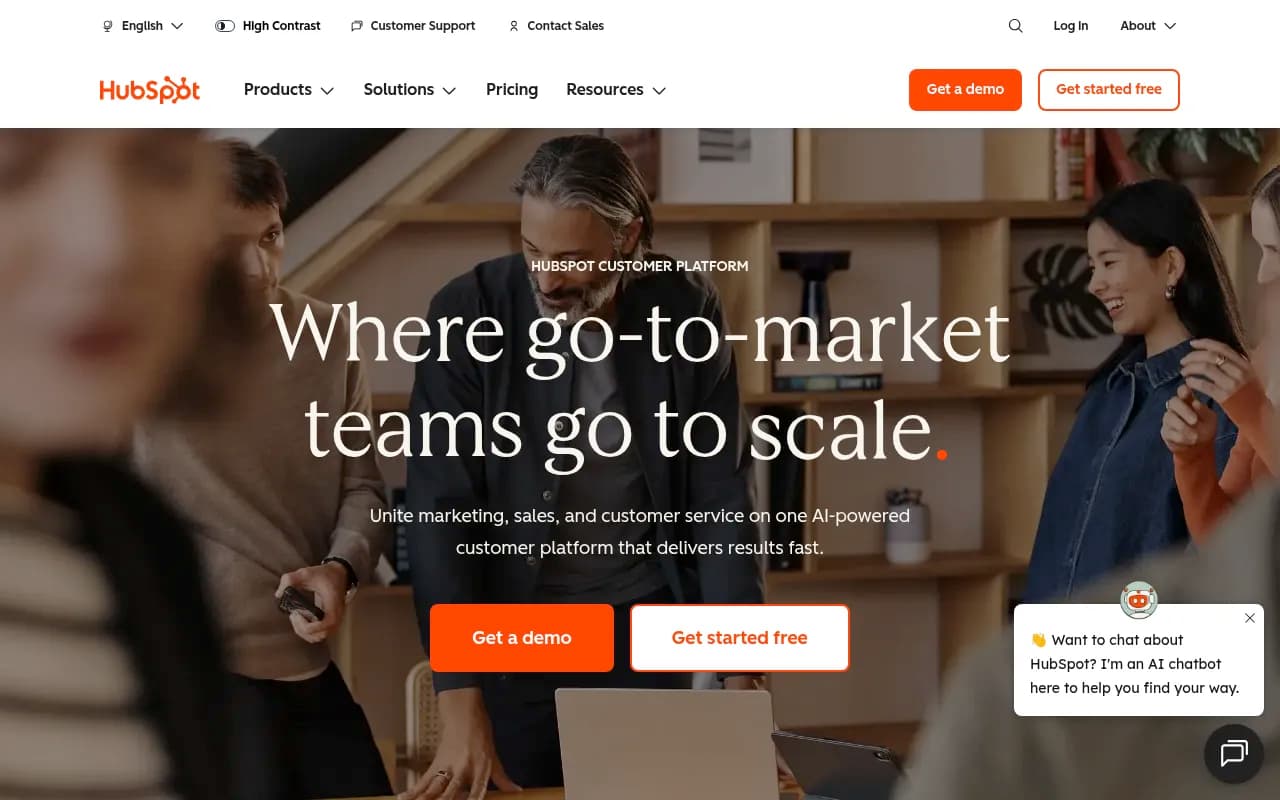
Important caveat: this checks brand perception in LLM training data and live AI answers, not Google AI Overviews citations specifically. It answers "what do AI assistants think of my brand" rather than "does Google cite my page." That makes it complementary to the AIO-specific tools above rather than a replacement. The sentiment score is genuinely useful and something most checkers ignore entirely.
9. Amsive's AI Visibility Grader (amivisibleonai.com)
Amsive's free grader delivers an instant AI visibility score in about 30 seconds, no signup. It checks whether ChatGPT, Claude, Perplexity, and Gemini can find and cite your site, and it scans for schema markup, FAQ structure, and other basic technical signals.
The honest assessment from the SEO community is that it is free but surface-level: it does not break scores down by layer and it is technical diagnosis only, no rank tracking. I would treat it as a five-minute smoke test for whether AI crawlers can even parse your site, not a visibility measurement.
Comparison table
| Tool | What it checks | Signup needed | Best for |
|---|---|---|---|
| Google Search Console | Real AI Overview/AI Mode impression data | Yes (site verification) | Ground-truth performance data |
| Ahrefs AI Overviews Tracker | AIO citations for your brand, plus who gets cited instead | No | Quick AIO-specific snapshot |
| Ahrefs AI Visibility Checker | Mentions across ChatGPT, Gemini, Perplexity, Copilot, AIOs | No | Cross-engine brand mentions |
| Semrush AIO Visibility Checker | AIO visibility score, queries, competitor gaps | No (email for full report) | Finding gap queries |
| SEO.com AI Overview Checker | AIO trigger rate, lost visits, ranking coverage | No (email for analysis) | Measuring AIO cannibalization |
| SE Ranking AI visibility check | Whether your site appears in AI answers | No | Quick second opinion |
| Frase GEO Score Checker | Page-level AI citation readiness | No (first result) | Diagnosing why a page is not cited |
| HubSpot AI Search Grader | Brand sentiment and perception in LLMs | No | Sentiment and brand perception |
| Amsive AI Visibility Grader | Technical extractability for AI crawlers | No | Smoke-testing crawlability |
What to look for once you find a citation
Finding out you are (or are not) cited is step one. The more valuable question is what Google is citing in your niche, because the answer has shifted a lot in 2026.
According to Promptwatch's data on AI Overviews citation types, product pages overtook listicles as the most-cited format in late July 2026, ending the month at 17.9% versus 16.2% for listicles. That is a real reversal: listicles averaged around 26% of citations in Q1 2026 and have fallen steadily since, while product pages have nearly doubled from about 9% in January. If your entire AI Overview strategy is "publish more listicles," that trend should make you nervous.
Video is the other quiet mover. Video citations climbed to roughly 6.3% of AI Overview citations by late July, up from about 2.7% in January, and most brands still have no competing video assets at all.
The domain concentration is also worth watching. Promptwatch's Google AI Overview citation share data for June 2026 shows YouTube reached 4.16% of all AI Overview citations (a year-to-date high), Reddit at 2.72%, and google.com itself at 2.30%. Google properties combined account for roughly 6.5% of all AI Overview citations, a level of self-referential concentration that has no equivalent in ChatGPT's citation mix. Practically: if you are competing in a niche where YouTube and Reddit dominate the citations, your content strategy needs to include YouTube and Reddit, not just your blog.
The limits of free checkers
I want to be blunt about this because the free tool roundups rarely are. Free checkers are snapshots. Ahrefs' research says the average AI Overview lives about 2.15 days before changing, and 45.5% of cited sources are entirely new on each refresh. A free check you run on Monday can be wrong by Thursday. That does not make these tools useless, it makes them a starting point. Run them, note where you stand, and re-run periodically rather than treating any single result as a verdict.
The other limit is scale. Free tiers typically allow a handful of checks per day on a handful of prompts. That is fine for "do I exist in AI Overviews at all." It is not fine for "which of my 200 money keywords trigger AI Overviews, who gets cited for each, and how is that trending month over month." That question requires recurring tracking infrastructure, which is why nearly every genuinely free tool is a checker and nearly every tracker is paid.
If you reach that point, Promptwatch is the platform I would point you at. Its free tier covers a handful of prompts to get a feel for it, and the paid plans add what free checkers structurally cannot: ongoing AI Overviews and AI Mode tracking across hundreds of prompts, citation trends classified by content type, AI crawler logs showing when Google's and other AI systems actually visit your pages, and content gap analysis that tells you what to publish to close the gap. It also has a free AI Brand Visibility Report if you want a no-cost starting snapshot.

For browsing the broader landscape of trackers before committing, the AI rank tracking tools directory at ai-rank-tools.com is a good next stop, and bestgeosoftware.com covers the wider GEO software category.
A sensible free workflow
If I were starting from zero with no budget, here is what I would do this week:
- Verify your site in Google Search Console and check whether the generative AI performance report has rolled out to you. If it has, that is your baseline.
- Run your domain through Ahrefs' AI Overviews Tracker and Semrush's checker. Compare the two. Where they disagree, note the queries.
- Run SEO.com's checker for the ranking coverage report. Find pages that rank top 10 organically but are missing from the AI Overview above them. Those are your fastest wins.
- Run your key pages through Frase's GEO Score Checker to see if the problem is page structure rather than authority.
- Check what content types and domains actually get cited in your niche, because the format Google favors is actively shifting under everyone's feet.
Then re-run the whole thing in two weeks. Because of that 2.15-day average lifespan, any single result is noise. The trend across repeated checks is the signal.