Key takeaways
- Most agency GEO plans look similar on the pricing page. The differences that matter are the response or credit budget, how many clients you can separate, where white-label reporting sits, and whether seats are unlimited.
- Divide the monthly price by the number of clients you will actually onboard in the next six months. A tier that costs $40 per client at 10 clients can cost $200 per client at 3.
- On Promptwatch's agency plans, Kick-off is $199/mo, Growth is $399/mo and Scale is $799/mo. All three include unlimited projects, prompts and team seats. The tiers differ mainly in response volume, Agent Credits, crawler log capacity and speed of tracking.
- White-label dashboards and client portals are usually a top-tier or enterprise feature across the market. Check which tier you need before promising branded portals in a pitch.
- Competitor prices change quickly and many published comparisons are written by vendors. Treat every number below as a starting point and confirm on the vendor's pricing page.
Why agency tiers are harder to read than brand plans
A brand plan answers a simple question: how many prompts do I want to track for one company? An agency plan has to answer a messier one. How many clients, how many markets per client, how often do I need fresh data, and who sees the dashboard?
Vendors answer it with three or four named tiers, and the names (Starter, Growth, Scale, Enterprise) tell you almost nothing. Two platforms can both call a tier "Growth" and mean a 3x difference in capacity. So the useful move is to ignore the labels and compare the underlying units.
There are five of them:
- The tracking budget (responses, credits or prompts)
- Client separation (projects, brands, workspaces)
- Seats
- White-label and client access
- Engines and tracking frequency
Everything else is detail.
The five units to compare
Tracking budget
Some platforms meter by prompts, some by credits, some by keywords, and some by responses. Responses are the most honest unit because they map to actual collected AI answers. A response is one prompt run on one model in one market on one run of the monitor. Multiply prompts by models by markets by days, and you get your real consumption.
Why this matters: AI answers are not stable. Promptwatch Data shows ChatGPT averaging about 2.15 query fan-outs per response in early December 2025 and about 1.84 by early March 2026, so what an engine searches for, and therefore cites, moves under your feet. A bigger response budget buys you steadier averages, not just more prompts.
Client separation
One project per client is the standard model. The question is whether the plan caps projects. Some cap at 10, some are unlimited, and some price per brand and add $50 for each extra one. If you expect to grow from 6 clients to 15 inside a year, a project cap is a tax on success.
Seats
Client viewers count as seats on some platforms. That quietly penalizes you for sharing dashboards. Unlimited seats are common now, but confirm before you assume it.
White-label
This is where tiers diverge most. Some tools brand the PDF report on every tier, some brand the dashboard only on the top tier, and some require a minimum client count first. Decide whether your clients need a branded login or whether a branded PDF each month is enough. For most retainers I have seen, the PDF is what gets forwarded to the CMO.
Engines and frequency
Check that the engines your clients actually care about are tracked from the real interface, not only an API, because user-facing answers and citations can differ from API output. Also check whether faster-than-daily tracking exists, which matters for launches and for reputation-sensitive clients.
Promptwatch's Kick-off, Growth and Scale tiers
Promptwatch is an AI search visibility and GEO platform that tracks, explains and then helps fix how brands show up in ChatGPT, Gemini, Claude, Perplexity, Google AI Overviews, Google AI Mode, Copilot and other engines. Its agency pricing has three tiers, and the structure is unusual in one useful way: the features stay the same, and the volumes change.

Every agency plan includes unlimited projects, pitch projects, prompts and team seats. It also includes all supported AI models, Agent Chat, country, state and city tracking, Brand Narrative, Ads Radar, crawler logs, visitor analytics, site audits, content gap analysis, custom reports, and MCP and API access. So the tier question is mostly about capacity.
| Kick-off | Growth | Scale | |
|---|---|---|---|
| Monthly price (USD) | $199 | $399 | $799 |
| Responses per month | 10,000 | 25,000 | 65,000 |
| Agent Credits per month | 1,000 | 2,500 | 6,500 |
| Visitor events | 500K | 2M | 15M |
| AI crawler logs | 10M | 25M | 100M |
| Audited pages | 10,000 | 25,000 | 75,000 |
| API requests per hour | 500 | 2,000 | 10,000 |
| Tracking frequency | Daily | Daily | Daily, or every 12, 6 or 1 hours |
| Local GEO/SEO targeting at exact coordinates | No | No | Yes |
| Fact Check and audit log | No | No | Yes |
Annual billing gives 12 months for the price of 10, and monthly billing starts with a 7-day free trial. Confirm current numbers at promptwatch.com/pricing before you build a margin model on them.
What the tiers do not include
Worth being direct about this. Agency plans do not include AEO articles, the Knowledge Base, the Content Agent, 360 Insights or ChatGPT Shopping. If you want the agency to generate and publish content through the platform, a white-label dashboard and client portal, or SSO, the route is Enterprise. Agencies that mostly want measurement and diagnosis across many clients will not miss those. Agencies that want to sell content production off the same tool should factor in the Enterprise conversation early.
Reading the response budget
Here is the rough math, and treat it as illustrative because your monitors will differ. Say a monitor runs daily for 30 days. One prompt on one model is about 30 responses a month. Run that prompt on eight models and it is about 240.
On that logic, Kick-off's 10,000 responses covers around 40 prompts across eight models. That is a fine fit for 4 or 5 smaller clients with 8 to 10 prompts each. Growth's 25,000 stretches to roughly 100 prompts at the same model count. Scale's 65,000 covers around 270, and also unlocks hourly tracking, which burns responses faster. If you plan to run faster monitors for a launch client, that budget disappears quickly.
So choose by your total prompt count across all clients and the number of markets, not by client count alone. A client with five countries is five monitors, since a monitor's language and location are fixed once created.
Per-client cost math
This is the arithmetic that decides whether GEO is a profit line or a loss leader. Divide the monthly platform cost by the number of paying clients using it.
| Tier | Price | At 3 clients | At 5 clients | At 10 clients | At 20 clients |
|---|---|---|---|---|---|
| Kick-off | $199 | $66 | $40 | $20 | n/a (capacity) |
| Growth | $399 | $133 | $80 | $40 | $20 |
| Scale | $799 | $266 | $160 | $80 | $40 |
The n/a is the point. Cheap per-client cost on paper does not matter if the response budget cannot carry that many clients. Use the table together with the prompt count above.
Now compare against what clients pay you. Demand Local's agency pricing research puts working retainers at $3,000 to $10,000+ a month for standalone GEO, a 20% to 30% uplift when added to an existing SEO retainer, and $1,500 to $5,000 for a one-time audit. First Page Sage's 2026 pricing report puts the median growth-tier GEO retainer at $7,400 a month in Q3 2026. Against numbers like that, tooling at $40 to $160 per client is not where margin is lost. The margin goes to analyst hours, so the tier should be judged on how much manual work it removes.
One caveat on those sources: both are published by agencies or vendors with something to sell, so read the figures as market signals, not benchmarks.
How other agency plans compare
The wider market uses a mix of pricing models, and the figures below come from each vendor's published pages as collected in research for this guide. Some come from vendor-authored comparison posts, and prices move often, so verify before you decide.
| Platform | Entry to agency pricing (published) | Multi-client model | White-label |
|---|---|---|---|
| Promptwatch | Kick-off $199, Growth $399, Scale $799 | Unlimited projects and seats on every agency tier | White-label dashboard and client portal on Enterprise |
| Peec AI | $89 Starter, $199 Pro, $499 Enterprise; agency tiers by credits | Unlimited seats on all plans | Reporting white-label |
| Otterly.AI | $29 Lite, $189 Standard, $489 Premium | Per-plan prompt limits; agency program | Via agency program |
| Rankscale | $99 Pro, $385 Growth, $780 Enterprise | Unlimited seats | White-label dashboards |
| Nightwatch | Agency at 399 EUR for 7,500 keywords | Keyword-priced, unlimited seats | White-label reporting |
| ReachLLM | Scale $999 for 10 projects; Enterprise Agencies $1,599 unlimited | One project per client | Included on Scale and above |

Otterly.AI

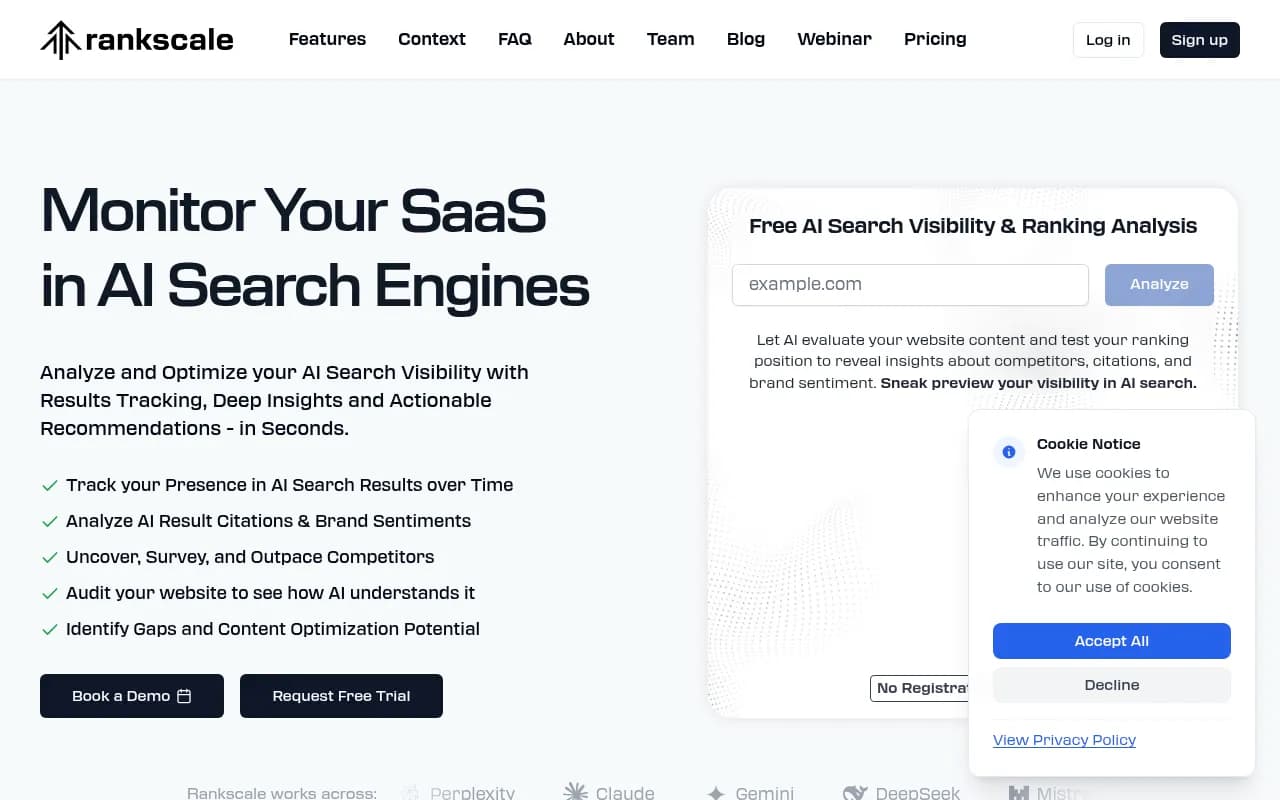
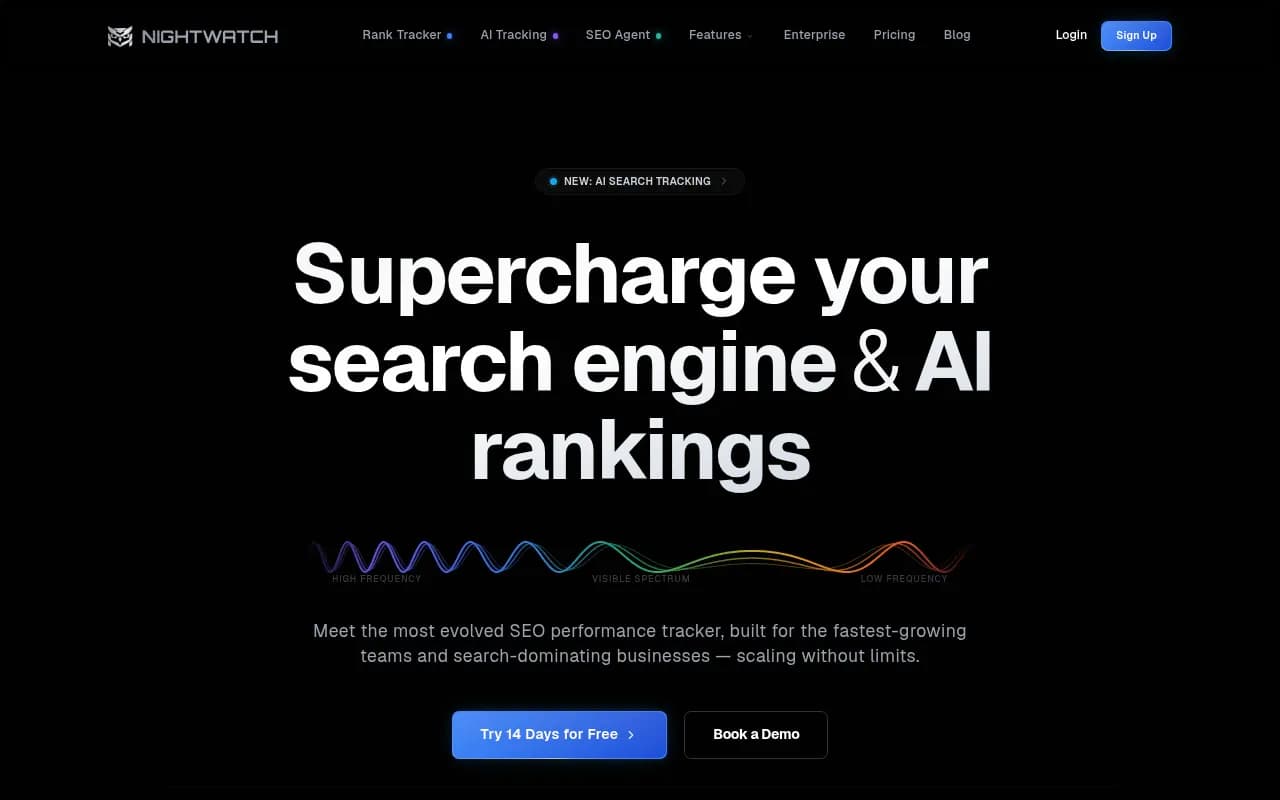
A few observations. Peec and Otterly are cheap entry points and work well for piloting GEO on one or two small clients. Rankscale and Nightwatch keep seat costs flat, which helps as you grow. ReachLLM's pricing is more expensive per project, and its own post puts it at $99.90 per client at 10 clients, with white-label bundled in.
Where Promptwatch differs is what sits behind the tracking. It has IP-verified AI crawler logs, visitor analytics, weekly site audits and Brand Narrative on every agency tier, so you can tell a client not only that they are invisible but whether AI bots can read the site and whether AI traffic converts. Most lower-priced trackers stop at "was the brand mentioned." For a head-to-head view, see Promptwatch vs Peec and Promptwatch vs Otterly, or the wider 2026 GEO platform comparison.
If you want to browse more options, the GEO software directory at bestgeosoftware.com lists a much longer set.
Which tier fits which agency
Boutique, 3 to 5 clients
Kick-off is the natural fit on Promptwatch. You get every analytical feature, and 10,000 responses covers a handful of small clients if you keep prompt sets disciplined. Peec's or Otterly's lower tiers are the cheaper pilots if you are still testing whether clients will pay for GEO at all.
Growing shop, 6 to 15 clients
Growth is where most agencies land. The 2,000 requests per hour on the API and the 2M visitor events matter once you start automating client reports through the API or MCP server, or when several clients install visitor analytics. Agent Credits at 2,500 per month also matter if you lean on Agent Chat for competitor gap analysis and scheduled briefings.
Established agency, 15+ clients or multi-market work
Scale makes sense when clients span many countries, when you need local GEO/SEO targeting at exact coordinates for multi-location brands, or when hourly tracking matters. Fact Check is useful for regulated sectors, where an AI model stating something wrong about a client is a reputational issue. The audit log is a small thing until a client asks who changed what.
Questions to ask before you commit
- Is white-label on the tier I need, and does it brand the dashboard, the PDF or both?
- What counts as one response, one credit or one prompt? Ask for a worked example with your own prompt count.
- Can I add a client in the middle of the month without a plan change?
- Are client viewers free?
- What happens if I exceed the limit: a hard stop, an overage, or a forced upgrade?
- Which engines are tracked from the real interface, and which from APIs?
- Does data continue to be collected if a payment is late? On Promptwatch it does, so there are no gaps.
That last one sounds minor until you lose a month of trend data on a client right before a QBR.
A note on citation volatility and test design
If you are attributing a visibility change to your own work, pick your engines carefully. Promptwatch Data shows Perplexity citing almost exactly 10 sources every day and Google AI Overviews about 10, while ChatGPT cites about 5 per web-search answer (data on a page dated September 2025, charts refreshed daily). Copilot's source count swung from under 2 to nearly 17 before settling. Fewer, steadier slots make Perplexity a cleaner test bench, and ChatGPT's smaller citation count makes each slot more contested. More recent data shows almost half of ChatGPT responses citing 10 or more unique domains in the week of Sep 28 to Oct 4, 2026, per Promptwatch's unique domains report, so check current figures before you set expectations in a client deck.
Using free tools to qualify prospects
Before you commit a client to a plan, run the free AI visibility report on the prospect. It gives you a baseline score and crawler access check without a login, which makes a decent opening slide for a pitch. The Agentic Readiness Check is useful for the technical conversation. On the agency plans, pitch projects let you build a demo workspace for a prospect before they sign.
Bottom line
Pick the tier by total prompts, markets and clients across your book, not by the name on the pricing page. At small scale, Kick-off covers measurement for a few clients at about $40 each. Growth fits most agencies with a real GEO line. Scale is for volume, hourly tracking, local targeting and compliance-flavored clients. If you need white-label portals, content generation in the platform or SSO, plan for Enterprise from the start. You can try Promptwatch free for 7 days on monthly billing, or book a demo and bring your actual client list to size the tier properly.