Key takeaways
- Social listening monitors human conversations on social platforms; AI brand mention monitoring tracks how large language models represent your brand in their responses
- These are fundamentally different data sources -- one is real-time human chatter, the other is synthesized AI output that influences millions of buying decisions
- Most brands in 2026 need both, but they serve different purposes and require different tools
- AI brand monitoring is the newer, less understood discipline -- and the one most brands are currently ignoring
- The gap between "being mentioned on Reddit" and "being recommended by ChatGPT" is widening fast
There's a conversation happening about your brand right now. Actually, there are two completely different conversations -- and most marketing teams are only listening to one of them.
The first is the one social listening tools were built for: humans talking to other humans on Twitter/X, Reddit, LinkedIn, review sites, and forums. Someone complains about your product. A micro-influencer recommends your service. A thread blows up with opinions about your pricing. Social listening tools catch this.
The second conversation is newer and, honestly, weirder. It's the one happening inside AI models. When someone asks ChatGPT "what's the best project management tool for remote teams?" or asks Perplexity "which CRM should a 50-person B2B company use?" -- those models generate answers. They recommend brands, describe products, and shape buying decisions. And most companies have no idea what those models are saying about them.
These are not the same thing. Treating them as interchangeable is a real mistake.
What social listening actually does
Social listening is the practice of monitoring online conversations to understand what people are saying about your brand, competitors, and industry. The core mechanics: tools connect to platform APIs, scan for keywords and brand mentions, and surface that data in a dashboard with sentiment analysis and trend tracking.
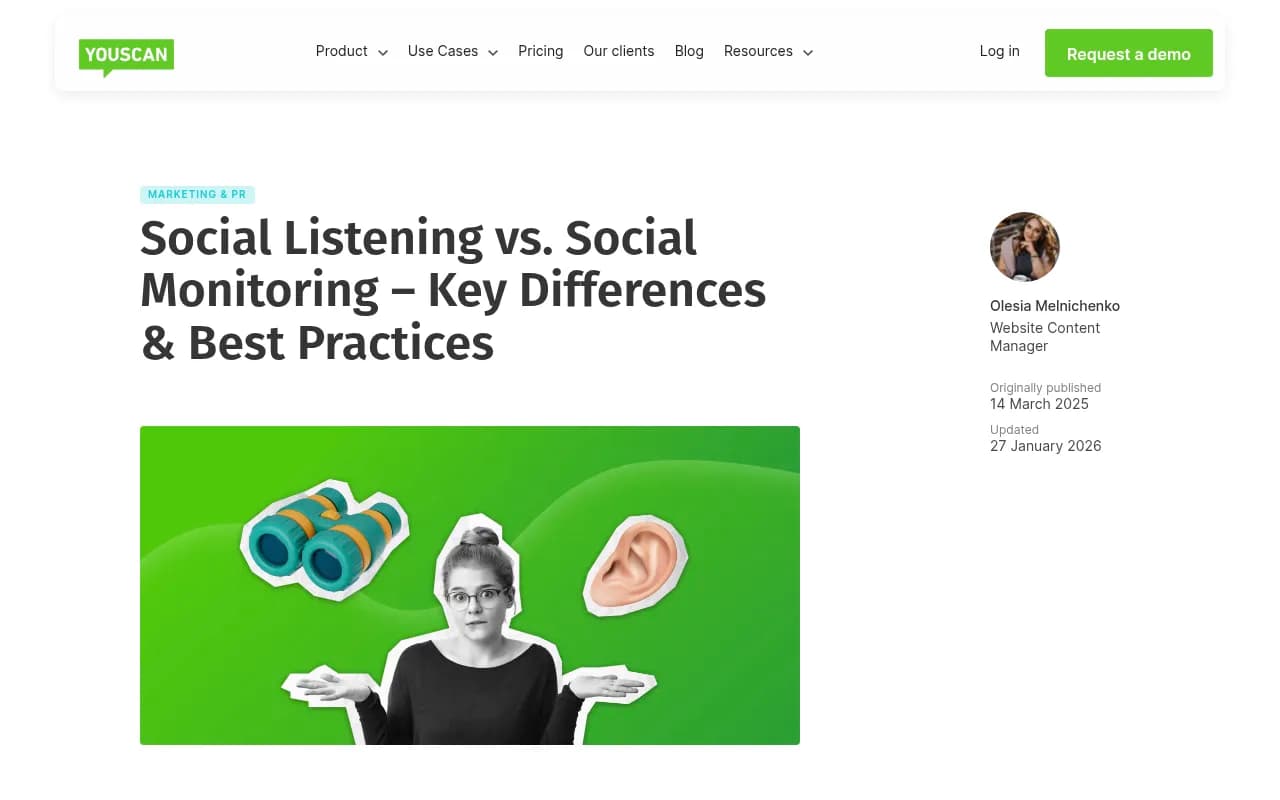
What it covers well:
- Direct brand mentions on Twitter/X, Facebook, LinkedIn, Instagram
- Reddit threads, forum discussions, blog comments
- News articles and press coverage
- Review sites like G2, Trustpilot, and Capterra
- Hashtag tracking and trend detection
- Sentiment analysis across large volumes of text
Social listening is genuinely useful. If a product issue is going viral on Reddit, you want to know. If a competitor just got hit with a wave of negative reviews, that's competitive intelligence. If your new campaign is landing badly with a specific audience segment, social listening surfaces that signal before it becomes a crisis.
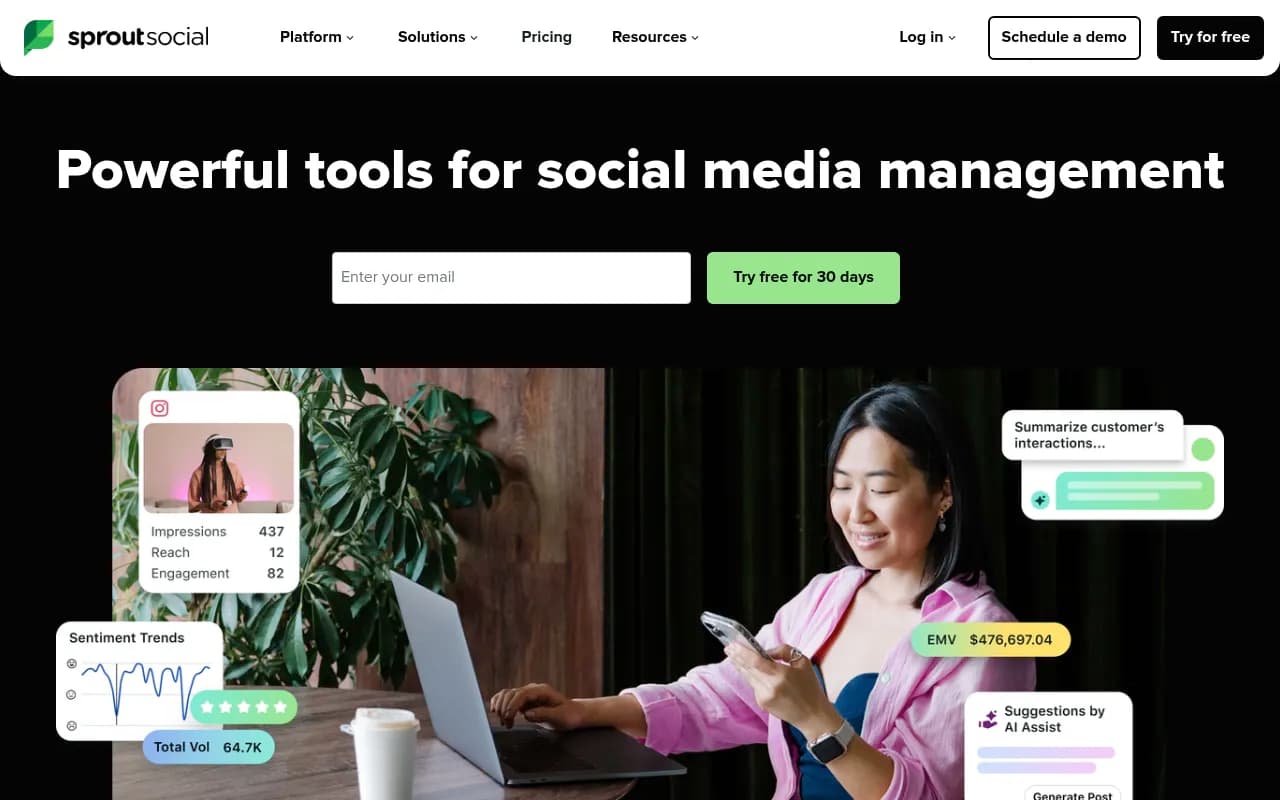
Tools like Brand24 and Sprout Social have been doing this well for years.
The limitation isn't that social listening is bad. It's that it was designed for a world where humans searched for information by typing into Google and talking to each other on social platforms. That world still exists -- but it's no longer the whole picture.
What AI brand mention monitoring does
AI brand mention monitoring is a different discipline entirely. Instead of tracking what humans say about you, it tracks what AI models say about you when users ask them questions.
Here's the practical difference. A social listening tool might tell you that 847 people mentioned your brand on Twitter this week, with 62% positive sentiment. An AI monitoring tool tells you that when someone asks ChatGPT "what are the best email marketing tools for ecommerce?" your brand appears in 23% of responses -- but a competitor appears in 71%.
That second number is the one that's going to affect your pipeline.

The mechanics work differently too. AI models don't just scrape the web in real time -- they synthesize information from their training data, real-time web access (in some models), and the sources they've learned to trust. Being mentioned on Reddit or in a well-cited article doesn't automatically translate to being recommended by ChatGPT. The relationship is indirect and often opaque.
What AI monitoring tools track:
- Whether your brand appears in AI responses to relevant queries
- How often you're cited vs competitors across different AI models (ChatGPT, Perplexity, Claude, Gemini, etc.)
- What the AI actually says about you -- accurate, inaccurate, positive, or missing entirely
- Which sources AI models are citing when they do mention you
- Which prompts trigger competitor mentions but not yours (the gap you need to close)
This is the core of what's now called Generative Engine Optimization (GEO) -- the discipline of making sure AI models know about you, understand you accurately, and recommend you when relevant.
Promptwatch is built specifically for this. It monitors your brand across 10 AI models, tracks which prompts you appear in vs competitors, and -- critically -- helps you actually fix the gaps rather than just stare at a dashboard showing you're invisible.

The key differences, side by side
| Dimension | Social listening | AI brand monitoring |
|---|---|---|
| What it monitors | Human conversations on social platforms | AI model responses to user queries |
| Data source | Twitter/X, Reddit, LinkedIn, news, forums | ChatGPT, Perplexity, Claude, Gemini, etc. |
| Real-time? | Yes, often within minutes | Depends on model -- some real-time, some periodic |
| Sentiment analysis | Yes, well-developed | Emerging -- more about presence and accuracy |
| Competitive insight | Who's being talked about and how | Who AI recommends and how often |
| Actionable output | Respond to mentions, spot crises, track campaigns | Fix content gaps, optimize for AI citation |
| Established tools | Brand24, Sprout Social, Hootsuite | Promptwatch, Profound, Otterly.AI, Peec.ai |
| Maturity | 15+ years, well-understood | 2-3 years old, rapidly evolving |
| Who needs it | Almost every brand with a social presence | Any brand where buying decisions involve AI queries |
The maturity gap matters. Social listening is a solved problem -- there are dozens of excellent tools, established best practices, and clear ROI models. AI brand monitoring is still being figured out. The tools are newer, the methodologies are less standardized, and most marketing teams are still in the "wait and see" phase.
That's exactly why it's an opportunity. The brands investing in AI visibility now are building a lead that will be hard to close in 18 months.
Why the confusion exists (and why it matters)
The conflation of these two disciplines isn't random. It comes from a reasonable assumption: if people are talking about you positively on social media, AI models will pick that up and recommend you. The logic seems sound.
It's mostly wrong.
AI models don't simply reflect social sentiment. They synthesize information from many sources -- including authoritative content, well-structured website pages, cited articles, and increasingly, real-time web data. A brand that dominates Twitter conversation but has thin, poorly structured website content may still be invisible in AI responses. Meanwhile, a smaller competitor with excellent documentation, clear positioning, and content that directly answers common buyer questions might get recommended constantly.
The feedback loop Buska describes is real: social signals do influence what AI models eventually learn and cite. But the relationship is indirect, delayed, and filtered through layers of model training and source weighting. You can't manage your AI visibility by managing your social presence alone.
There's also a coverage gap. Social listening tools were built for text on social platforms. They miss:
- Spoken mentions in podcasts and videos (though some newer tools address this)
- What AI models synthesize from multiple sources into a single recommendation
- The specific prompts and questions that trigger competitor recommendations
- Whether AI models are saying something inaccurate about you
That last point is underappreciated. AI models sometimes get things wrong -- outdated pricing, incorrect feature descriptions, confused product positioning. Social listening won't catch this. AI monitoring will.
The 2026 reality: you probably need both
This isn't an either/or question for most brands. Social listening and AI monitoring serve genuinely different purposes, and the brands that treat them as competing priorities are making a strategic mistake.
Think of it this way:
Social listening tells you what your market is saying right now. It's reactive intelligence -- great for crisis management, campaign feedback, competitive tracking, and customer service. If someone is complaining about your product on Reddit, you want to know today.
AI monitoring tells you how AI models are shaping buying decisions. It's structural intelligence -- great for understanding your long-term visibility, identifying content gaps, and optimizing for the channel where an increasing share of product discovery is happening.
The question isn't "which one?" It's "which one are you currently neglecting?" For most brands in 2026, the answer is AI monitoring. Social listening is already in the stack. AI visibility is the gap.
What to look for in each type of tool
For social listening
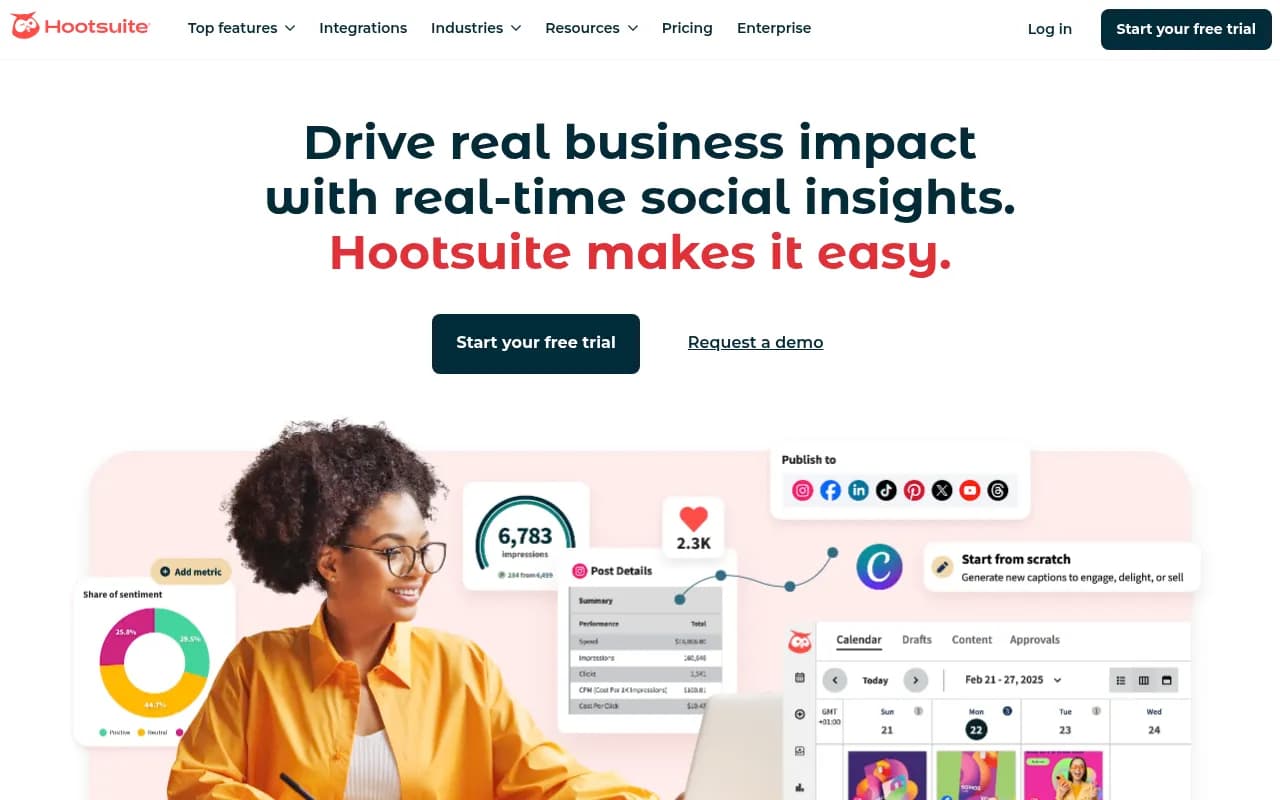
The market is mature. The main differentiators are platform coverage, sentiment accuracy, and how well the tool handles volume without burying you in noise. Brand24 is solid for mid-market. Sprout Social is better if you need social publishing alongside monitoring. Hootsuite covers both if you want an integrated platform.
The honest advice: if you already have a social listening tool that's working, you probably don't need to switch. The category is commoditized enough that the differences between the top tools are marginal.
For AI brand monitoring
This is where the choice matters more, because the tools vary significantly in what they actually help you do.
The basic tier -- tools that just show you whether you appear in AI responses -- is fine for getting started. Tools like Otterly.AI, Peec.ai, and Rankshift give you visibility data.
Otterly.AI



But monitoring-only tools leave you with a problem and no solution. You can see that you're invisible in 80% of relevant AI responses. Now what?
The more useful category is platforms that close the loop: show you the gaps, help you understand why they exist, and give you tools to actually fix them. That means content gap analysis (which prompts is your competitor winning that you're not?), content generation grounded in citation data, and tracking that shows whether your fixes are working.
Promptwatch sits in this category. The Answer Gap Analysis shows exactly which prompts competitors appear in but you don't. The built-in writing agent generates content designed to get cited by AI models -- not generic SEO filler. And page-level tracking shows which of your pages are actually being cited and by which models.
For enterprise brands with more complex needs, Profound and AthenaHQ are worth evaluating, though they tend toward monitoring over optimization.
Profound


A practical framework for deciding what you need
Answer these questions honestly:
Do you have an active social presence and a customer base that talks about you online? If yes, you need social listening. This is table stakes.
Do your customers use AI tools to research purchases in your category? If someone might ask ChatGPT "what's the best [your product category]?" before buying, you need AI monitoring. In 2026, this is most B2B and a growing share of B2C.
Do you know what ChatGPT currently says about your brand? Go ask it right now. Ask Perplexity too. If you don't like what you see -- or if you're not mentioned at all -- that's your answer.
Are you in a competitive category where visibility in AI responses could drive pipeline? Then the question isn't whether to invest in AI monitoring, it's how quickly.
The brands that will struggle in the next two years aren't the ones that ignored social listening (that ship sailed a decade ago). They're the ones that assumed their existing SEO and social strategy would automatically translate into AI visibility. It won't. The signals are different, the optimization levers are different, and the tools are different.
The bottom line
Social listening and AI brand monitoring are both legitimate, valuable disciplines. They just answer different questions.
Social listening answers: "What are humans saying about us right now?"
AI brand monitoring answers: "What are AI models telling humans about us when they ask for recommendations?"
In 2026, the second question is increasingly the one that determines whether a prospect ever finds you. The good news is that most of your competitors haven't figured this out yet. The window to build an AI visibility advantage is open -- but it won't stay open indefinitely.
Start by understanding where you stand. Ask the AI models your customers use. Then decide whether you need a tool that just shows you the problem, or one that helps you fix it.