
Key takeaways
- Tracking alone is becoming a commodity. In 2027 the buying question moves from "was I mentioned?" to "what did we change, and did it work?"
- The citation mix is splitting by engine. Reddit has collapsed in ChatGPT, YouTube is rising in Google AI Overviews, and review sites dominate ChatGPT's named sources.
- Ads inside AI answers, crawler access, and traffic attribution will be standard parts of the buying checklist.
- Plan for fewer, more specialized vendors. A platform that monitors, diagnoses, publishes, and measures will beat a stack of point tools.
- Budget decisions are being made now. Late-2026 data is the best evidence you have for what to ask vendors in Q1.
Why plan around platforms and not just tactics
Most 2027 prediction posts are written for marketers in general. AI Digital's Media Trends 2027, released November 18, 2026, pairs nine predictions with action plans for people setting budgets. eMarketer's 11 top trends for 2027 says AI will take a bigger role on both sides of the transaction, with consumers talking to ads and letting agents shop for them. Other 2027 roundups say AI visibility metrics will become standard KPIs.
Those are useful, but none of them tell you what to buy. This guide takes nine predictions and translates each into something you can ask a vendor. I'm anchoring on first-party numbers from Promptwatch Data wherever I can, because predictions without a baseline are just opinions. Where I'm guessing, I'll say so.
One caveat up front: I couldn't verify every prediction article that circulates, so I'm not repeating their numbers. Everything quantitative below comes from the cited Promptwatch Data reports.
Prediction 1: Monitoring becomes table stakes
The catalog of tools that track brand mentions across ChatGPT, Perplexity, and Google is enormous. Names like Otterly.AI, Peec AI, LLMrefs, and Rankshift all sell some version of "see how AI talks about you." When that many vendors sell the same thing, the price floor drops and the feature that justified the purchase stops being a differentiator.
Otterly.AI



My read: by mid-2027, a visibility score on its own will not justify a budget line. Buyers will ask what happens after the score. That means prioritized actions, content production, and proof that a fix moved the number.
What to ask vendors: if I see a gap, what does your product do about it? Does it write, publish, and re-measure, or does it export a CSV?
This is the gap Promptwatch built around: it monitors, traces where AI gets its answers, acts through the Action Board and Content Agent, and then measures whether the published page was crawled, cited, and clicked.

Prediction 2: Citation sources fragment by engine
In 2025, "get on Reddit" was a one-line GEO strategy. It no longer is. Promptwatch's data shows reddit.com's share of ChatGPT citations fell from about 4% to about 0.5% on August 14, 2026, and Google's surfaces declined more gradually.
The November picture is more specific. In Promptwatch's social media citations report (Oct 11 to Nov 9, 2026), social platforms earned 13.16% of Google AI Overviews citations, 1.94% of Perplexity's, and 0.64% of ChatGPT's. That makes AI Overviews roughly 20 times more social-heavy than ChatGPT. YouTube alone was 6.71% of AI Overviews citations, up from 4.28% the month before, more than the other six tracked platforms combined.
And ChatGPT? Its November citation share data (Nov 1 to 25, 2026) shows Reddit at 0.23% as the top tracked site, with G2 and LinkedIn at 0.18% each. Review sites hold five of the top 10 spots. The 20 tracked sites together earn under 2% of citations, so the long tail matters more than any single domain.
| Engine | Social share of citations (Oct 11 to Nov 9, 2026) | Where to focus |
|---|---|---|
| Google AI Overviews | 13.16% | YouTube first |
| Perplexity | 1.94% | Reddit and LinkedIn |
| ChatGPT | 0.64% | Own site and review sites |
Prediction: platforms will be judged on whether they break citation data out per engine, per content type, and per source type. A blended "AI visibility" number will hide the very differences that decide strategy.
What to ask vendors: can I see citations by engine and by source type, with Reddit, YouTube, LinkedIn, and review sites separated?
Prediction 3: Real interface data replaces API shortcuts
What a user sees in ChatGPT, Google AI Mode, or Gemini can differ from what the API returns. Citations, shopping carousels, and ad slots are the usual places the gap appears. I expect more buyers to ask how data is collected before they ask how many prompts are included.
The tell is simple. If a vendor can't say whether responses come from the actual product interface, in your country and language, treat the numbers as a model benchmark and not a measure of what customers see. Promptwatch documents its approach in its data collection guide.
What to ask vendors: interface or API? Which countries and languages? Is personalization off during collection?
Prediction 4: Ads inside AI answers get a line in the budget
This one is already happening. Promptwatch's ChatGPT ads data covers May 20 to August 17, 2026. ChatGPT served no ads until May 27, when they appeared in 1.69% of qualifying responses. Over the 90 days, ads appeared in 20.1% of web-search responses on average, passed 30% on July 1, and peaked at 43.9% on a single day.
Two cautions. That data is a few months old, so check the report for newer numbers before you plan. And the count only includes responses where ChatGPT searched the web, returned at least one citation, and completed ad extraction.
Prediction: AI ad monitoring (who bids on your prompts, what claims they make, which landing pages win) moves from a nice-to-have to a standard module. Platforms without it will look incomplete by the second half of 2027. Promptwatch's Ads Radar is one example, available on Business and agency plans.
What to ask vendors: can I see which advertisers appear on my tracked prompts and what copy they run?
Prediction 5: Crawler logs separate access problems from content problems
If AI bots can't read your page, no amount of content work will get it cited. Yet most trackers can't tell you whether a bot ever visited.
The crawler picture is also shifting fast. Promptwatch Data on Meta-WebIndexer shows it growing from about 2% to nearly 38% of tracked AI crawler requests between mid-July and August 9, 2026. If your logs or vendor only watch GPTBot and ClaudeBot, you're missing a large share of what's happening.
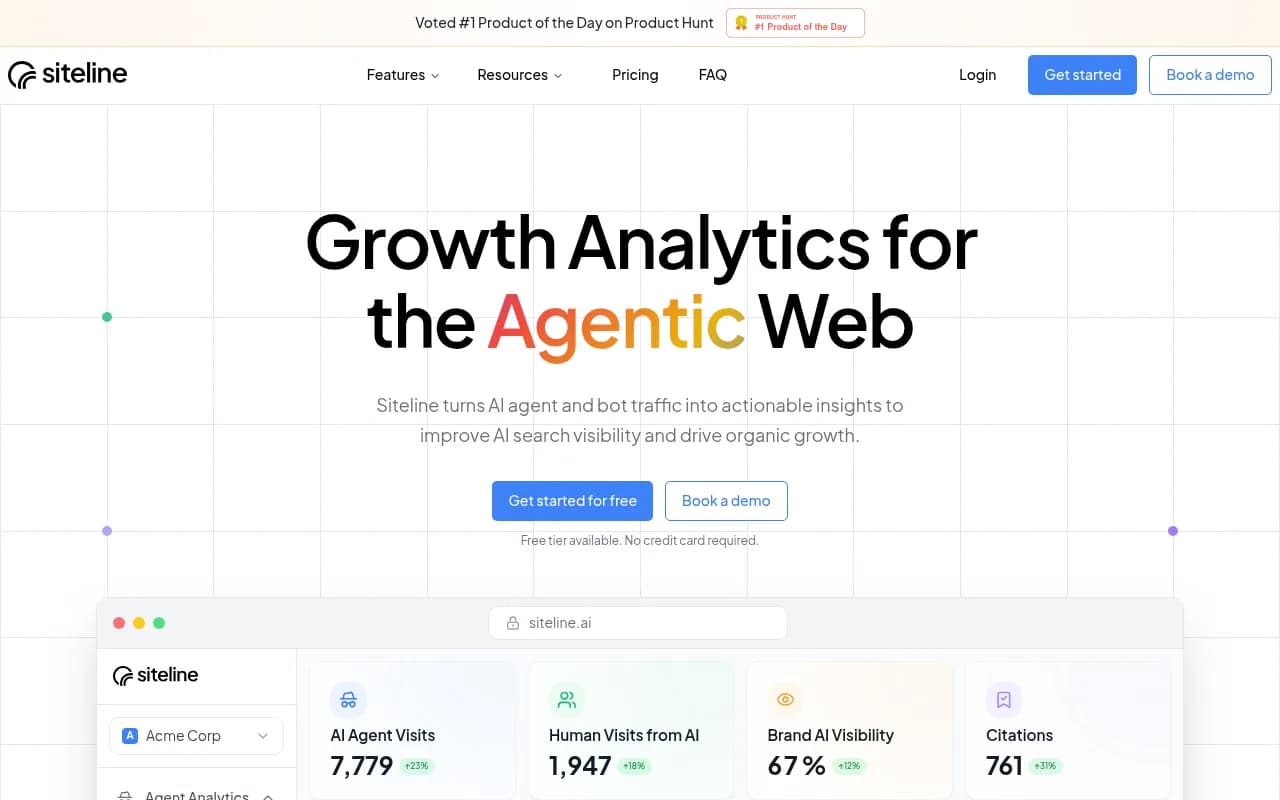
Prediction: IP-verified crawler logs become a procurement checkbox for mid-market and enterprise buyers, the same way server log analysis became standard in technical SEO. Cheaper entrants such as Scriptbee, xSeek, and Siteline AI already center on crawler or agent traffic, which tells you where the market is heading.
What to ask vendors: are bot visits verified against published IP ranges? Can I see the path from crawl to citation per page? You can also check your own site for free with Promptwatch's Agentic Readiness Check.
Prediction 6: Traffic attribution decides who keeps the budget
CMOs will stop accepting "we were mentioned 40% more." They'll want sessions and conversions. That's hard because referrers are unreliable. ChatGPT stopped sending a referrer on October 8, 2026, which means platforms need a workaround such as counting visits tagged with utm_source=chatgpt.com.
There is useful early evidence that the traffic is worth chasing. Crisp reported 2x higher conversion rates from AI traffic than from traditional channels, and TreeHouse (Pararius) reported AI search reaching about 25% of organic conversions, per its case study. Those are vendor-published results, so treat them as directional, not guaranteed.
What to ask vendors: how do you attribute AI-referred visits after the referrer loss? Do you connect to Search Console and Bing? The attribution guide in Promptwatch's Academy is a decent primer on the problem.
Prediction 7: Content gets generated against gaps, with a freshness clock
Content production tools and visibility tools are converging. Standalone writers like Jasper, Copy.ai, and AirOps write without knowing what AI cites. Trackers know what AI cites but don't write. Expect that wall to come down in 2027.
The data suggests what to produce and how often to refresh it. Product pages were the most cited content type in ChatGPT at 22.4% (Sep 28 to Oct 4, 2026), followed by landing pages and listicles. In the content half-life report, landing pages and docs stayed cited longest, while news lost half its pages within 36 days. Almost half of ChatGPT responses cite 10 or more unique domains, so there's room for more than one winner per prompt.
Prediction: the winning platforms will pair gap analysis with publishing to a CMS and a refresh loop, and will report decay. A one-off article is a depreciating asset.
What to ask vendors: do you publish to WordPress, Webflow, or Framer, or do I paste from a dashboard? Do you flag pages that lost citations?
Prediction 8: Authority rules loosen, and mid-tier sites benefit
The old assumption was that only giants get cited. The numbers don't back that up uniformly. In Promptwatch's domain rank distribution report (Nov 3 to Nov 16, 2026), the median cited domain was DR 57 in ChatGPT and Perplexity and DR 56 in AI Overviews and AI Mode. But DR 100 sites earned 13.7% of AI Overviews citations against 0.3% for ChatGPT.
Earlier, August data on ChatGPT showed domains with DR 46 to 75 earning almost half of citations while DR 91 to 100 fell to about 3%.
Prediction: strategy will diverge by engine. Smaller brands can compete in ChatGPT with focused, answer-first content, while Google's AI surfaces reward established domains more. Platforms that show citations by domain rank bucket will help you decide where to spend.
What to ask vendors: can I see which engines cite sites like mine?
Prediction 9: Agents and managed optimization absorb the busywork
The last shift is about who does the work. Two years ago, GEO meant a human reading a dashboard. In 2027 I expect most teams to hand a chunk of the routine to agents: prioritizing actions, drafting pages, queuing refreshes, and answering questions about the data in chat.
The risk is obvious. An agent that publishes without guardrails can damage a brand. The useful pattern is a review inbox with approve, edit, or decline, plus a Brand Book and Knowledge Base so output stays on message. Promptwatch's Agentic AI Search Optimization is built this way, with a hands-off option for teams that trust the setup.
Also expect more MCP-based workflows, where analysts query visibility data from Claude, ChatGPT, or Cursor instead of logging in. If a vendor has no API or MCP server, that's a warning sign for 2027.
What to ask vendors: can I run this hands-off with approvals? Is there an API or MCP server so my team can query data in the tools they already use?
Where the platform categories land
Here is how I'd sort the market for a 2027 budget. These are generalizations from the tool descriptions in our catalog, so check each vendor's current feature list.
| Category | Examples | Strength | Gap to probe |
|---|---|---|---|
| Prompt trackers | Otterly.AI, Peec AI, Rankshift, LLM Pulse | Cheap, quick setup | Crawler logs, attribution, content |
| Enterprise monitoring | Profound, Scrunch, Evertune, Bluefish | Depth and reporting | Price, execution |
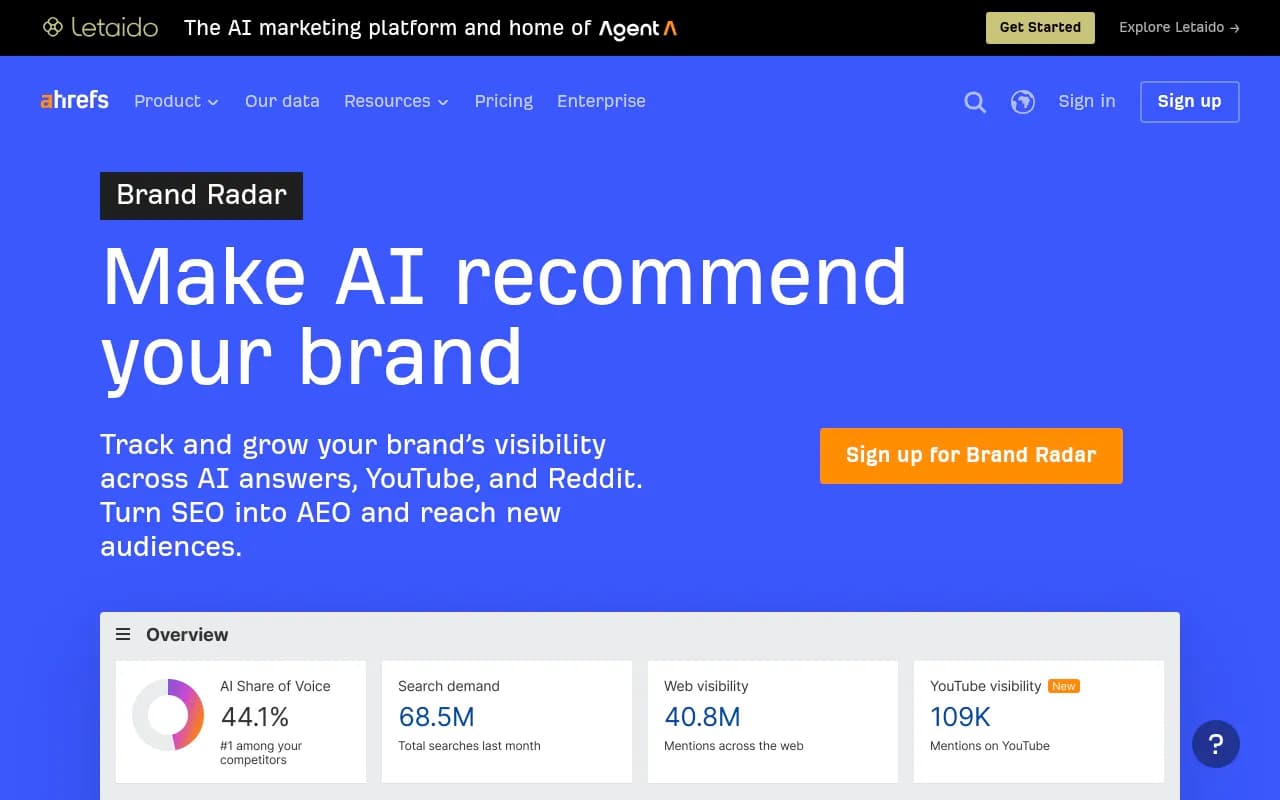
| SEO suite add-ons | Semrush, Ahrefs Brand Radar, Conductor | One login for SEO and AI | Fixed prompt sets, shallower AI data |
| Content engines | AirOps, Jasper, Copy.ai | Production volume | No visibility data to ground content |
| End-to-end platforms | Promptwatch | Monitor, trace, act, measure in one loop | Best features start on Business plan |
Profound

The honest caveat on Promptwatch: its Content Agent, Fact Check, local targeting, faster-than-daily tracking, Shopping, and Ads Radar start at the Business plan ($579/month at the time of writing). Essential ($95) and Professional ($245) get you monitoring, Agent Chat, visitor analytics, and (from Professional) crawler logs. Confirm current numbers at promptwatch.com/pricing. For a side-by-side of the field, see the 2026 GEO platform comparison, and for more directory-style browsing, the GEO software directory lists many of these tools.
A buying checklist for Q1 2027
If you're choosing or renewing in the next quarter, use this order:
- Confirm data comes from real interfaces in your markets.
- Check citations by engine and by source type.
- Ask for IP-verified crawler logs and a crawl-to-citation view.
- Ask how AI traffic is attributed after the ChatGPT referrer change.
- Test whether the platform can publish to your CMS and track the live page.
- Look for ad monitoring if you sell anything competitive.
- Check API and MCP access, and what the agent can change without approval.
- Pilot with a 7-day trial before committing annually.
For agencies, the checklist adds white-label reporting and per-client projects. GEO for agencies in the Academy covers that setup, and teams that would rather hire out the whole job can talk to an agency such as 1001 SEO Media, which uses Promptwatch for AI visibility work.
What I'm less sure about
A few predictions floating around deserve skepticism. One is that AI visibility replaces SEO budgets outright. The data doesn't support that: AI Overviews still draw heavily from established domains, and Search Console and Bing data remain useful signals for which pages might get cited. Another is that a single score will become a universal KPI. Engines behave too differently for one number to carry the strategy.
I'm also cautious about any 2027 forecast built on one month of citation data. Ratios swung hard in 2026: Reddit down about 8x in ChatGPT in a single day, Meta's crawler share up almost 19x in weeks, markdown files at just 0.05% of AI search citations. Pick vendors who track these shifts as they happen, because the numbers above will be out of date by spring.
FAQ
Will AI visibility platforms consolidate in 2027?
I expect so. Prompt-tracking-only vendors face pricing pressure, and SEO suites keep adding AI modules. Buyers should favor platforms with execution and measurement, since those are harder to copy than a dashboard.
Should I still invest in Reddit for AI visibility?
It depends on the engine. Reddit is 0.40% of ChatGPT citations and 0.82% of Perplexity's in the November report, but 2.10% of AI Overviews'. For Google, YouTube matters more. For ChatGPT, own-site content and review-site presence matter more.
How do I measure AI traffic if referrers disappear?
Use UTM tagging where you control links, a visitor analytics script that recognizes AI sources, and server-side crawler logs to connect bot visits to citations. No single method is complete.
What's the cheapest way to start?
Run a free scan first, such as Promptwatch's free AI visibility report, then move to a trial once you know which engines and prompts matter.