
Key takeaways
- Ads in AI answers are no longer a forecast. Promptwatch Data shows ChatGPT served no ads until May 27, 2026, then averaged 20.1% of web-searching responses over the next 90 days, with a 7-day average of 32.4% by mid-August.
- Most AI visibility tools were built to answer "was my brand mentioned?" Very few track which advertisers show up on your prompts, so ad tracking is the feature to test first.
- Entry plans usually cover three or four AI engines, and cost per tracked prompt on entry plans runs from about $1.19 to $3.96 according to one vendor roundup, so compare per-prompt cost, not just the monthly sticker price.
- Three of the nine tools in a recent roundup were reportedly acquired since April 2026. If you are signing for 2027, ownership and roadmap stability are legitimate questions.
- Reporting-only dashboards will be fine for small teams. If you need to fix gaps and measure the result, look for content workflows, crawler data and traffic attribution in the same product.
Why ads change what you need from a tool
For the past two years, buying an AI visibility tool meant buying a way to see whether ChatGPT, Perplexity or Google AI Overviews named your brand. That job is still necessary. But it is now only half the picture.
ChatGPT started showing ads in late May 2026. According to Promptwatch's report on ChatGPT ads over time (May 20 to Aug 17, 2026), the rate went from 1.69% of responses on May 27 to above 30% on July 1, with a daily peak of 43.9%. The 30-day average was 29.6%. One caveat from the report itself: the count only includes responses where ChatGPT searched the web, returned at least one citation and completed ad extraction, so it is not the share of all ChatGPT chats.
Another third-party forecast, from a 2027 trends piece by Position Digital, says ads will be a normal part of commercial AI answers in both ChatGPT and Google's AI Mode by the end of 2027. It also cites a jump in US desktop ChatGPT chats showing an ad from 14% to 26% in a single month. I would treat any forecast with some salt. The measured data above is more useful than a prediction.
The prompt mix matters too. In the same report, about 73% of ad-bearing responses came from organic prompts, 18% from brand-specific prompts and roughly 9% from competitor comparison prompts. That is a volume mix, not an ad probability by prompt type, so adding more organic prompts to a monitor will raise their share. Still, it tells you something practical: a competitor can appear next to your brand name in a response you thought you owned.
So the questions to ask any vendor for 2027 are different from the 2025 ones:
- Can the tool show which advertisers appear on my tracked prompts, with their copy and landing pages?
- Does it separate organic citations from sponsored placements?
- Can I tell whether my work changed anything, through crawler data, citations and traffic?
What an AI visibility platform should do at a minimum
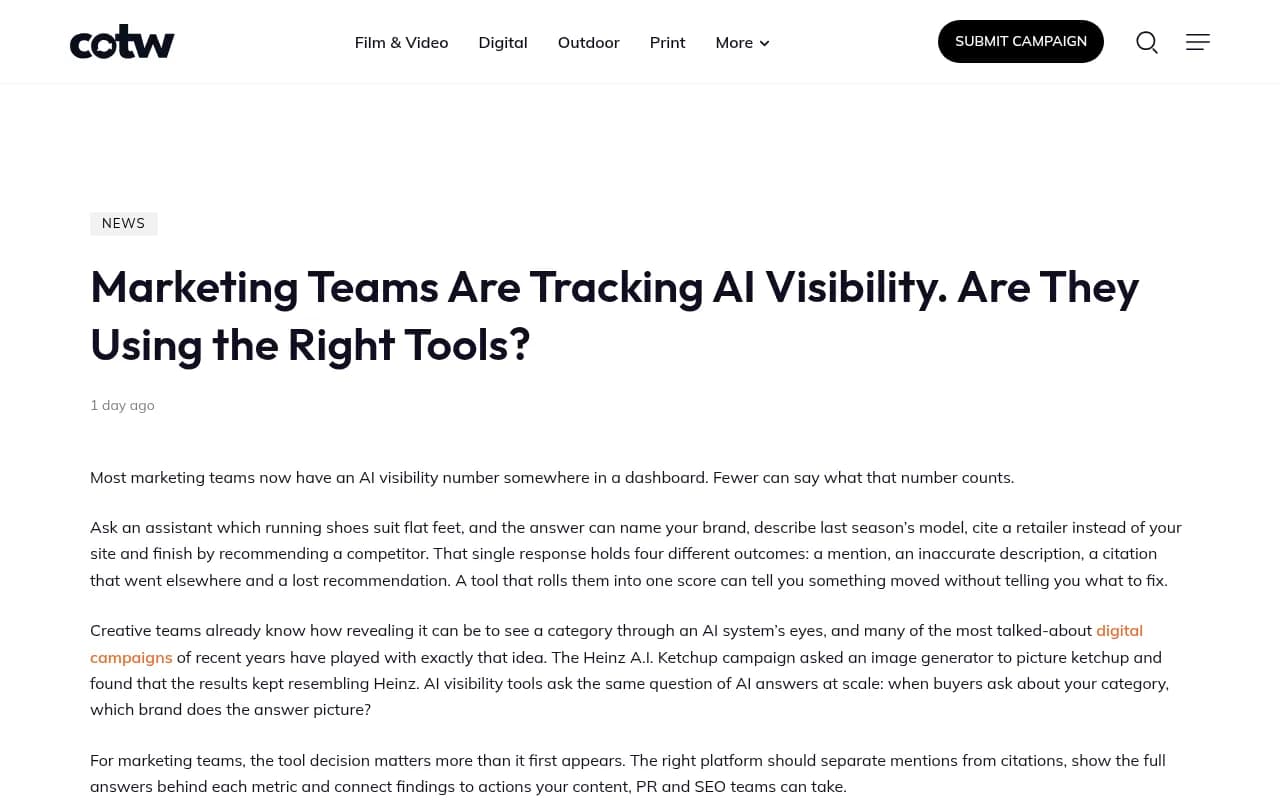
One comparison from Sorank lists the basics well. A platform should track a fixed prompt list on a fixed schedule, record the full answer, show the cited sources, keep history and export the data. I would add one more: separate mentions from citations. A Campaigns of the World piece makes the case clearly. A single response can contain a mention, an inaccurate description, a citation that went to a retailer instead of your site, and a lost recommendation. A tool that rolls those into one score tells you something moved without telling you what to fix.
Native reports help but are narrow. Google Search Console now has a generative AI performance report showing impressions in AI Overviews and AI Mode by page, country, device and date, with no click data. Bing Webmaster Tools has an AI Performance report covering Copilot and AI-generated Bing summaries. Both are free, and both are worth connecting. Neither compares you with competitors or shows ads.
The tools, compared
The table below pulls from vendor roundups (several are written by vendors who rank themselves first, so read the rankings with that in mind) and from the platforms' own descriptions. Prices change often. Confirm everything on the vendor's pricing page before buying. The ad tracking column reflects what I could verify; "not confirmed" means I found no evidence either way, not that the feature is absent.
| Tool | Entry price (as reported) | Best for | Tracks ads in AI answers | Acts on gaps (content, fixes) |
|---|---|---|---|---|
| Promptwatch | $95/mo Essential (Ads Radar on Business and agency plans) | Teams that want to monitor, fix and measure in one place | Yes, Ads Radar | Yes, Content Agent, Action Board |
| Searchable | $125/mo, 14-day trial | Self-serve tracking plus content generation | Not confirmed | Yes, Content Studio |
| Profound | Not published | Enterprise contracts, wide engine list | Not confirmed | Limited |
| Semrush AI Visibility Toolkit | Varies by plan | Teams already living in Semrush | Not confirmed | Via the wider SEO toolkit |
| Ahrefs Brand Radar | Custom prompts from $50/mo | Researching any brand's AI visibility | Not confirmed | No |
| Otterly.AI | Lowest-cost entry | Solo marketers testing the waters | Not confirmed | Basic GEO audits |
| SE Visible | Entry-level, unlimited seats | Agencies wanting API and MCP access | Not confirmed | Source and topic gap analysis |
| Peec AI | Short list of core metrics | Teams that want simple dashboards | Not confirmed | Limited |
| Scrunch | Enterprise | Agent-friendly page serving | Not confirmed | Partly |
| AthenaHQ | Self-serve | Many engines on a self-serve plan | Not confirmed | Limited |
Promptwatch
Promptwatch is the one I would put first on the ads question, because it is the only platform in this list where I could confirm a dedicated feature. Its Ads Radar shows which advertisers bid on your tracked prompts, their ad copy and claims, and where the ads send visitors, viewable by ad or by prompt. Beyond that it is a full loop product: it monitors real ChatGPT, Gemini, Perplexity, AI Overviews and AI Mode interfaces, logs AI crawlers by IP-verified visits, attributes AI-referred traffic, and has a Content Agent that writes and publishes pages to WordPress, Webflow or Framer.
The catch is plan structure. Ads Radar and the Content Agent sit on Business ($579/mo), and agency plans start at $199/mo for Kick-off. Essential at $95/mo gives you tracking, Agent Chat and visitor analytics but not crawler logs. There is a 7-day free trial on paid plans. Verify current pricing at promptwatch.com/pricing. If you are an agency, see how it compares in Promptwatch vs Profound and Promptwatch vs Peec.

Searchable
Searchable sits at the top of its own roundup, citing a 4.7 G2 rating from 140 reviews. That is a vendor-authored ranking, so discount accordingly, but the product is genuine: tracking, prompt intelligence, a content studio, MCP and an AI shopping feature. Entry is $125/month for 100 prompts, about $1.25 per prompt. I could not confirm ad tracking.
Profound
Profound is the enterprise pick, with custom prompt volumes across up to 10 answer engines and unpublished pricing. Fine if you are buying through procurement. Frustrating if you want to test it on a card.
Profound

Semrush and Ahrefs Brand Radar
Both are SEO suites that bolted on AI tracking, and both do it well within limits. Semrush keeps metrics separate (visibility, mentions, owned sources, topic volume, average position), adds sentiment and share of voice, and its Site Audit checks whether AI crawlers such as OAI-SearchBot are blocked. Ahrefs Brand Radar covers six platforms including Copilot and tracks YouTube and Reddit mentions, with custom prompts from $50/month, sold separately from a main Ahrefs subscription.
If your team already pays for either, start there. I would not pick them specifically for an ads strategy.
Otterly.AI, SE Visible, Peec AI
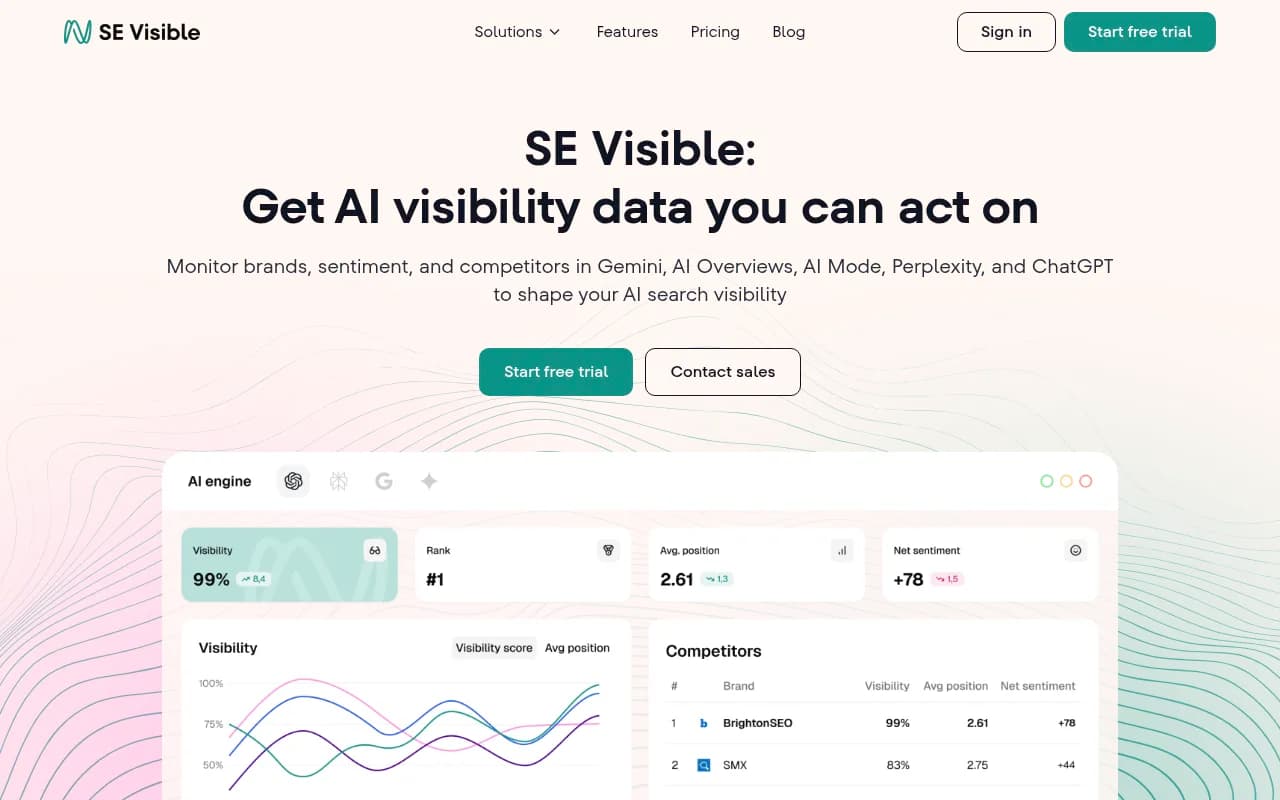
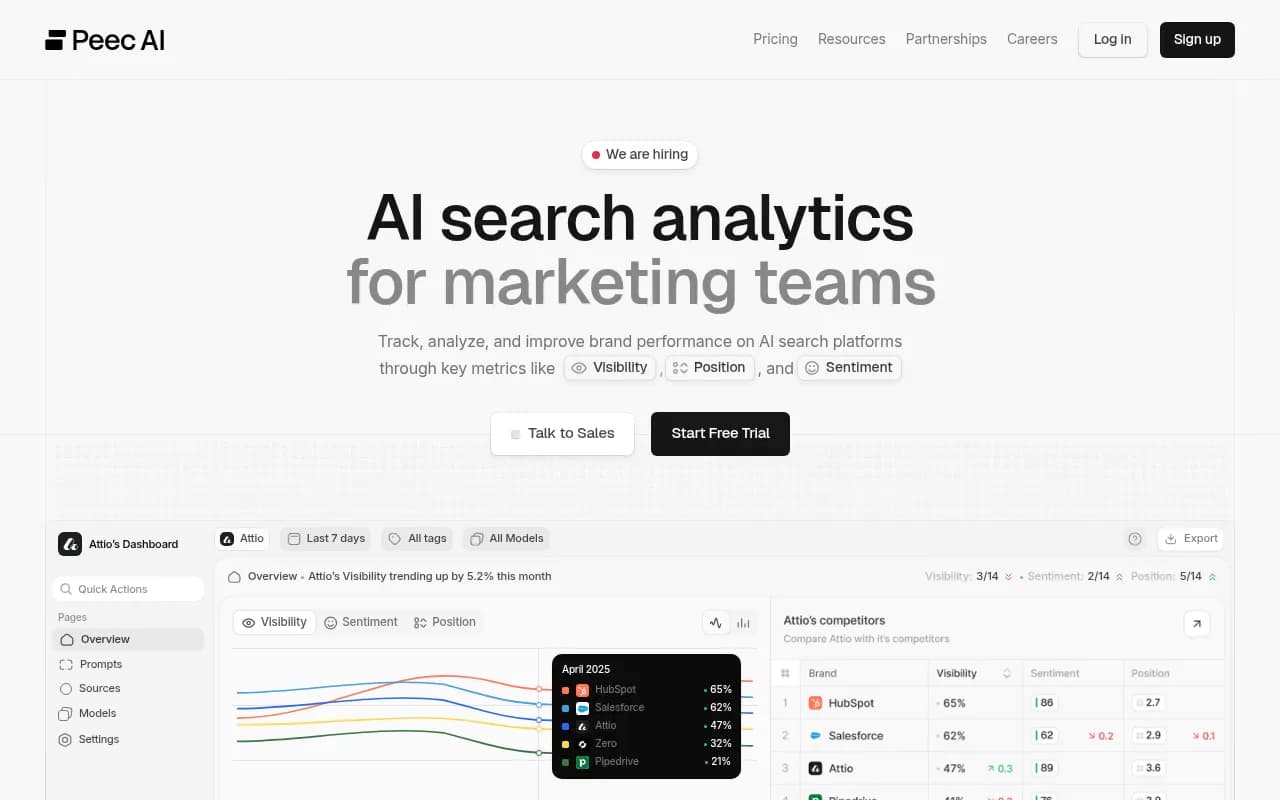
Otterly.AI is the budget way in: daily tracking, brand reports and GEO audits for individual URLs. SE Visible collects real responses through a browser interface instead of simulated answers and includes API and MCP access with unlimited seats; Basic tracks 75 prompts, Core 200 and Agency 1,000. Peec AI keeps to a short list of core metrics. All three are monitoring-first, which is fine when monitoring is the job.
Otterly.AI

Scrunch and AthenaHQ
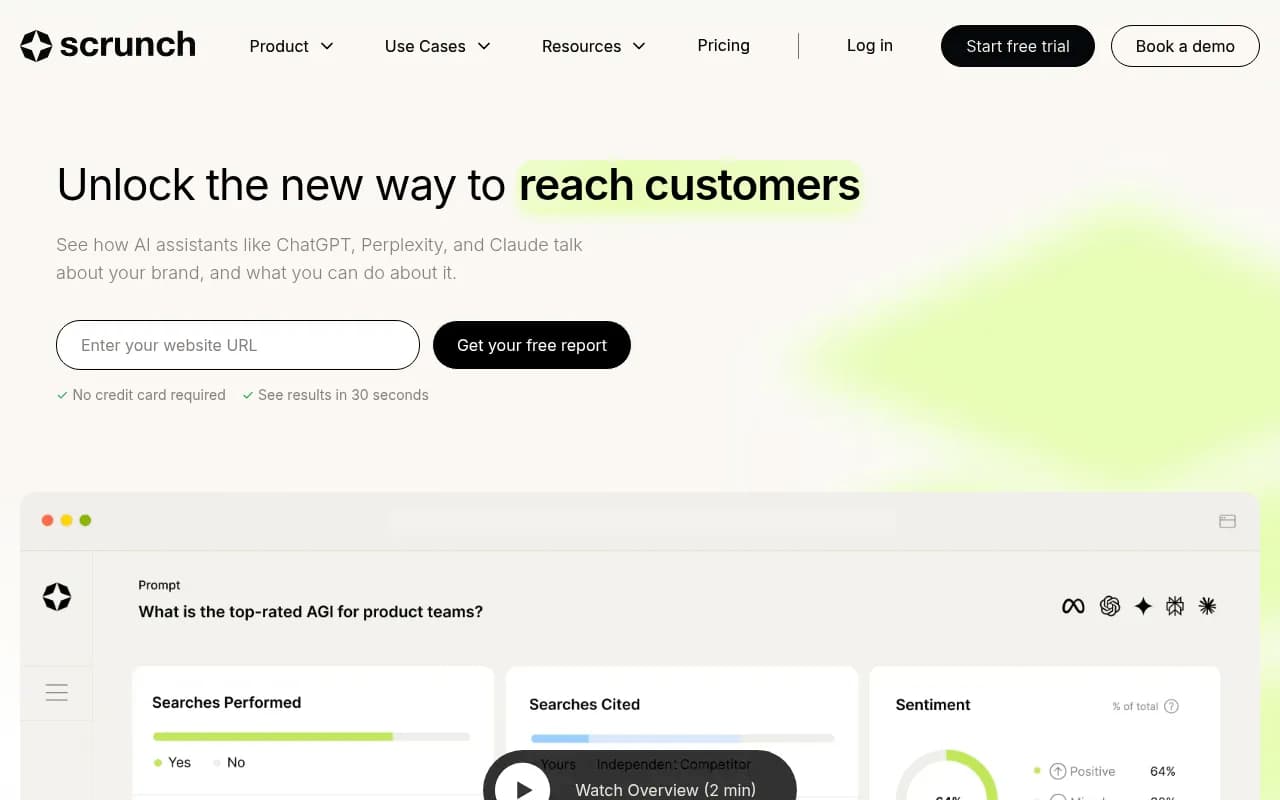
Scrunch is aimed at enterprises and agent-friendly page serving. AthenaHQ's pitch is the most engines on a self-serve plan.

For a wider scan of the category, the GEO software directory at bestgeosoftware.com lists far more options than fit here.
What the citation data says you should be doing
Ads are one lever. Organic citations are still where most of the work is. Promptwatch's ChatGPT citation share for November 2026 (Nov 1 to 25) found a few things I did not expect:
- Reddit is still the most cited of the popular sites, but at only 0.23% of ChatGPT citations, against 3.71% in June. A separate report on Reddit citations dropping in ChatGPT dates the collapse to August 14, 2026.
- Wikipedia fell from 0.56% to 0.03% and left the top 20.
- Review sites hold five of the top 10 spots: G2, Gartner, BBB, Capterra and Trustpilot.
- The 20 sites in the chart together earn under 2% of citations. The rest is spread across hundreds of thousands of domains.
The practical read: get reviewed on the sites ChatGPT actually cites, publish direct answers on your own domain, and do not build a ChatGPT plan around Reddit. The long tail also means no single listing wins it for you.
On the content side, Promptwatch Data on content types shows product pages as ChatGPT's most cited type (22.4%, Sep 28 to Oct 4, 2026), and the content half-life report says news loses half its cited pages within 36 days while landing pages and docs last longest. Position Digital's own traffic study points the same way: assistants mostly read the pages that get updated most often. Add dated figures and review key pages quarterly.
How to evaluate a tool for 2027
Run a two-week test with your own prompts
Pick 30 to 50 prompts across discovery, comparison and branded questions. Run them daily. Record whether each response names you, where, and which URLs it cites. The Sorank guide suggests a plain CSV log (date, prompt, assistant, brand named, position, cited URLs) as a sanity check against whatever tool you buy. I like this because it keeps you honest about whether the dashboard matches reality.
Questions to put to every vendor
- Does it collect responses from the real user interface or from an API? Answers can differ.
- Which engines are on the entry plan, and what do extra ones cost?
- Does it detect sponsored placements, and can I see the advertiser and landing page?
- Is there AI crawler data, so I can tell an access problem from a content problem?
- Can it attribute traffic and conversions from AI sources?
- Who owns the company, and has it been acquired recently?
- What does cost per tracked prompt look like once I add the engines I need?
Match the tool to the job
| If you need | Look at |
|---|---|
| Ad tracking plus monitoring and content fixes | Promptwatch |
| Lowest cost to start | Otterly.AI |
| Enterprise contract, widest engines | Profound |
| Existing SEO suite, add AI tracking | Semrush or Ahrefs Brand Radar |
| Agency API and MCP access, low entry price | SE Visible |
| Tracking with built-in content generation | Searchable |
For free first steps, Promptwatch's free AI visibility report scans how ChatGPT, Gemini and Perplexity talk about your brand, and its Agentic Readiness Check shows which AI crawlers can read your site.
What to do before the end of the year
- Check whether ads appear on your top 20 commercial prompts. Even a manual check across several days beats guessing, since a single run can land on an outlier day.
- Connect Google Search Console and Bing Webmaster Tools for their AI reports. They are free.
- Confirm AI crawlers are not blocked in robots.txt or at your CDN.
- Pick a tool using the two-week test above, not the vendor's own ranking.
- Plan for B2B reality: the 2027 trends write-up expects ChatGPT ads to start as more of a consumer channel, with Google AI Mode ads sitting next to real search intent as the bigger B2B opportunity. Budget attention accordingly.
If you would rather hand the work to people, an agency like 1001 SEO Media covers GEO and AI search alongside technical SEO and content, and it uses Promptwatch for its own AI visibility work.
FAQ
Do all AI visibility tools track ads in AI answers?
No. Most started as prompt trackers for mentions and citations. In my research I could confirm ad tracking for Promptwatch only. Ask every other vendor directly and request a demo on your own prompts.
How often does ChatGPT show ads?
Promptwatch Data measured ads in an average of 20.1% of web-searching ChatGPT responses over May 20 to Aug 17, 2026, with a 7-day average of 32.4% at the end of that window. The rate moves day to day, so check several days before drawing conclusions.
Can Google Search Console replace an AI visibility tool?
No. It shows impressions in AI Overviews and AI Mode by page, but no clicks, no competitors and no ChatGPT or Perplexity data. Use it alongside a cross-platform tool.
Is a cheaper plan enough?
For a solo marketer testing the category, yes. Once you need crawler logs, traffic attribution, ad tracking or content workflows, you will outgrow a monitoring-only plan. Check the engines included at entry price, since adding more usually costs extra.
Should I worry about tools being acquired?
A little. One roundup reports three of nine listed tools were acquired since April 2026. Avoid long prepaid contracts until you have used the product for a quarter.