Key takeaways
- AirOps is a content engineering platform built around AI workflows -- strong for scaling production, but its AI search visibility features are secondary to its core use case.
- MarketMuse is a content intelligence tool focused on topical authority and content planning -- excellent for traditional SEO strategy, but not built for AI search monitoring or GEO.
- Promptwatch is the only platform of the three designed specifically for AI search visibility end-to-end: it tracks how AI models cite your brand, identifies content gaps, generates content to fill them, and connects visibility back to traffic and revenue.
- If your goal is to rank in ChatGPT, Perplexity, Google AI Overviews, and other AI engines -- not just Google -- Promptwatch is the most complete option.
- All three tools can coexist in a mature content stack, but they don't compete on the same problem.
The content intelligence space has fractured in 2026. You've got traditional SEO platforms that bolted on AI tracking as an afterthought, content generation tools that pivoted to call themselves GEO platforms, and a handful of purpose-built AI search visibility tools that actually understand what it means to rank in an LLM response.
AirOps, MarketMuse, and Promptwatch sit at three very different points in this spectrum. Comparing them requires being honest about what problem each one actually solves -- because the marketing copy for all three will happily tell you they do everything.
They don't. Here's what's actually going on.
What each platform is actually built for
AirOps: content engineering at scale
AirOps started as an AI workflow builder and has evolved into what it calls a "content engineering platform." The May 2026 launch of its Quill agent was a meaningful update -- Quill handles content briefs, drafts, and optimization steps inside a single automated workflow.
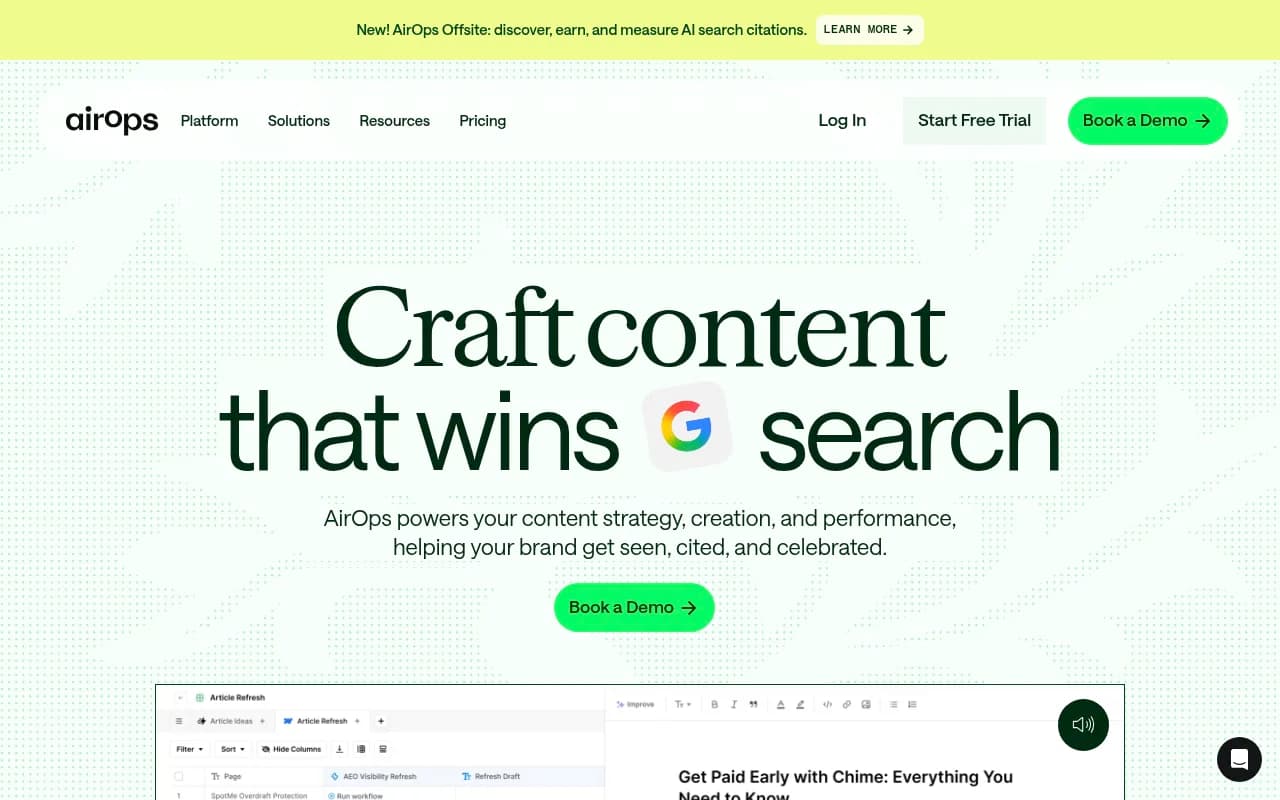
The core value proposition is operational: AirOps helps content teams produce more pages faster by automating the research-to-draft pipeline. It connects to your existing data sources, runs LLM workflows, and outputs content at scale. For teams managing hundreds of programmatic pages or running large content operations, that's genuinely useful.
Where it gets complicated is the AI search angle. AirOps has added features around AI search optimization -- structured data recommendations, content formatting for LLM readability -- but these are outputs of the content workflow, not a monitoring or measurement layer. You can't see whether your pages are being cited in ChatGPT. You can't track which prompts your competitors are winning. There's no crawler log showing you when GPTBot or ClaudeBot visited your site.
AirOps is a production tool. It helps you make content. Whether that content actually gets cited by AI engines is a separate question it doesn't answer.
MarketMuse: content intelligence for topical authority
MarketMuse has been around since before AI search was a thing, and its core strength is still content planning and topical authority analysis. It analyzes your existing content, identifies topic gaps, scores pages for content quality, and helps you build out subject matter coverage systematically.
In 2026, MarketMuse has added some AI search-adjacent features -- content briefs that reference how AI models might interpret topics, and some guidance around structured answers. But the platform's DNA is traditional SEO: keyword clustering, content scoring against competitors, and building topical depth to rank on Google.
That's not a criticism. MarketMuse does that well. But if you're asking "why isn't my brand appearing in Perplexity's answers about project management software?" -- MarketMuse won't tell you. It doesn't monitor AI engines, doesn't track citations, and doesn't have visibility into which prompts are driving AI search traffic.
It's a content strategy tool. A good one. Just not a GEO platform.
Promptwatch: AI search visibility with a built-in action loop
Promptwatch was built from the ground up for AI search -- not as an add-on to an existing SEO tool, but as a purpose-built platform for tracking, understanding, and improving how AI engines cite your brand.

The difference that matters most: Promptwatch doesn't just show you data. It connects monitoring to action. You can see which prompts your competitors are winning, generate content specifically designed to fill those gaps, and then watch as AI crawlers index your new pages and start citing them. That full loop -- find gaps, create content, track results -- is what separates it from tools that only do one piece.
It monitors 10 AI models (ChatGPT, Perplexity, Google AI Overviews, Claude, Gemini, Grok, DeepSeek, Copilot, Meta AI, Mistral), tracks real crawler activity through AI Crawler Logs, and includes Reddit and YouTube insights that most competitors ignore entirely.
Feature comparison
Here's how the three platforms stack up across the features that actually matter for AI search in 2026:
| Feature | AirOps | MarketMuse | Promptwatch |
|---|---|---|---|
| AI search monitoring (ChatGPT, Perplexity, etc.) | Partial | No | Yes (10 models) |
| Citation tracking | No | No | Yes |
| AI crawler logs | No | No | Yes |
| Content gap analysis (vs AI responses) | No | Partial (vs Google) | Yes |
| AI-powered content generation | Yes (core feature) | Partial | Yes |
| Prompt volume & difficulty scoring | No | No | Yes |
| Traffic attribution from AI search | No | No | Yes |
| Reddit & YouTube insights | No | No | Yes |
| ChatGPT Shopping tracking | No | No | Yes |
| Competitor visibility heatmaps | No | Partial | Yes |
| Page-level AI citation tracking | No | No | Yes |
| Traditional SEO content scoring | Partial | Yes (core feature) | No |
| Topical authority mapping | No | Yes (core feature) | No |
| Programmatic content at scale | Yes (core feature) | No | No |
The table tells the story pretty clearly. AirOps and MarketMuse are strong where Promptwatch isn't (large-scale content production and traditional SEO strategy, respectively), and Promptwatch covers the AI search monitoring and optimization layer that neither of them touch.
Where each tool wins
AirOps wins when you need content production at scale
If you're running a content operation that needs to produce 50+ articles a month, build programmatic landing pages, or automate research-to-draft workflows across multiple product lines -- AirOps is genuinely good at that. The Quill agent in particular handles multi-step content workflows in a way that reduces the manual overhead significantly.
It's also worth noting that AirOps integrates well with other tools. You can feed it data from your SEO platform, your CMS, and your analytics stack, and it'll incorporate that context into its outputs. For teams that already have a monitoring solution and just need to scale production, AirOps fits cleanly into that stack.
MarketMuse wins when you're building topical authority for Google
MarketMuse's content scoring and topic modeling is still some of the best in the industry for traditional SEO. If you're trying to systematically own a topic cluster on Google -- mapping out which subtopics you're missing, which pages need to be expanded, which competitors are outranking you on depth -- MarketMuse gives you a structured way to do that.
It's particularly strong for content teams that operate with editorial rigor. The content briefs are detailed, the scoring is defensible, and the platform has years of data behind its recommendations. For SEO-led content strategies targeting Google rankings, it's a solid choice.
Promptwatch wins when AI search visibility is the goal
This is the specific scenario where Promptwatch has no real competition from the other two: you want to know how your brand appears in AI-generated answers, why you're being cited (or not), and what to do about it.
The Answer Gap Analysis shows you exactly which prompts competitors are winning that you're not. The Content Agents generate articles grounded in real prompt data -- not generic SEO content, but pieces specifically designed to answer the questions AI models are already asking. And the crawler logs show you when GPTBot or PerplexityBot visits your pages, what they read, and when those visits translate into citations.
For brands where AI search is becoming a meaningful traffic and revenue channel -- which, in 2026, is most brands -- that closed loop from monitoring to content to attribution is what makes Promptwatch different from everything else in this comparison.
Pricing reality check
Pricing is another area where these tools diverge significantly.
MarketMuse starts around $149/month for its Optimize plan, but the plans that include full content briefs, topic modeling, and competitive analysis run considerably higher. Enterprise pricing is custom and typically runs into four figures monthly for larger teams.
AirOps pricing is workflow-based and scales with usage. It's positioned as an enterprise content operations tool, and the pricing reflects that -- expect to budget accordingly if you're running high-volume workflows.
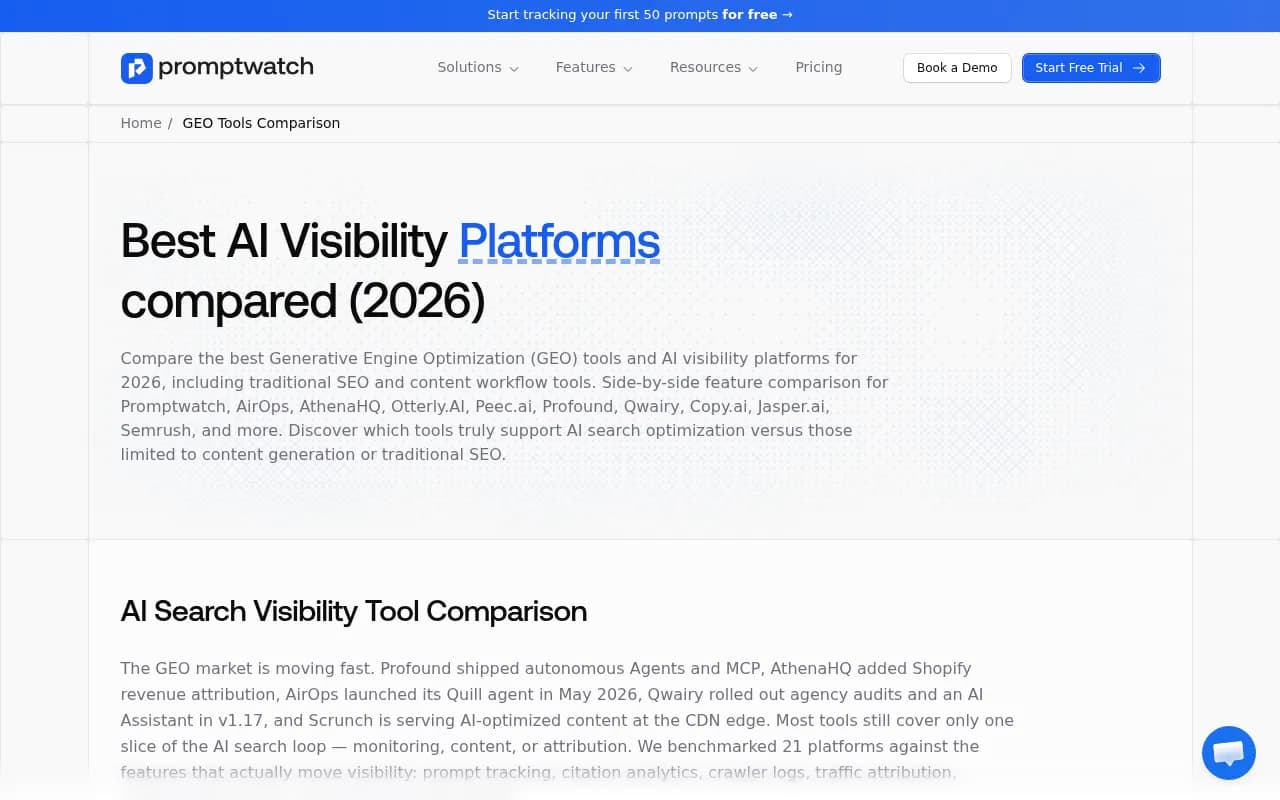
Promptwatch starts at $99/month for the Essential plan (1 site, 50 prompts, 5 articles), $249/month for Professional (2 sites, 150 prompts, 15 articles, crawler logs), and $579/month for Business (5 sites, 350 prompts, 30 articles). Agency and enterprise pricing is available on request. There's a free trial.
For teams specifically focused on AI search visibility, Promptwatch's pricing is notably more accessible than the enterprise-tier alternatives in the GEO space.
How they work together
These three tools aren't really competing for the same budget line. A mature content and AI search strategy in 2026 might reasonably use all three:
- MarketMuse to plan topical coverage and prioritize which content gaps to fill for Google
- Promptwatch to identify which prompts AI models are responding to, generate content targeting those gaps, and track whether AI engines start citing the new pages
- AirOps to scale production once the strategy is defined -- particularly for programmatic content or high-volume editorial workflows
The key is understanding which problem each tool solves. Buying AirOps because you want to improve your Perplexity citations won't work. Buying MarketMuse because you want to track what ChatGPT says about your brand won't work either.
If AI search visibility is the primary objective, Promptwatch is the starting point -- not because it does everything, but because it's the only one of the three that actually measures and improves your position in AI-generated answers.
The broader AI visibility landscape
It's worth noting that this three-way comparison exists in a larger market. There are now dozens of tools claiming to help with AI search visibility, and the quality varies enormously.
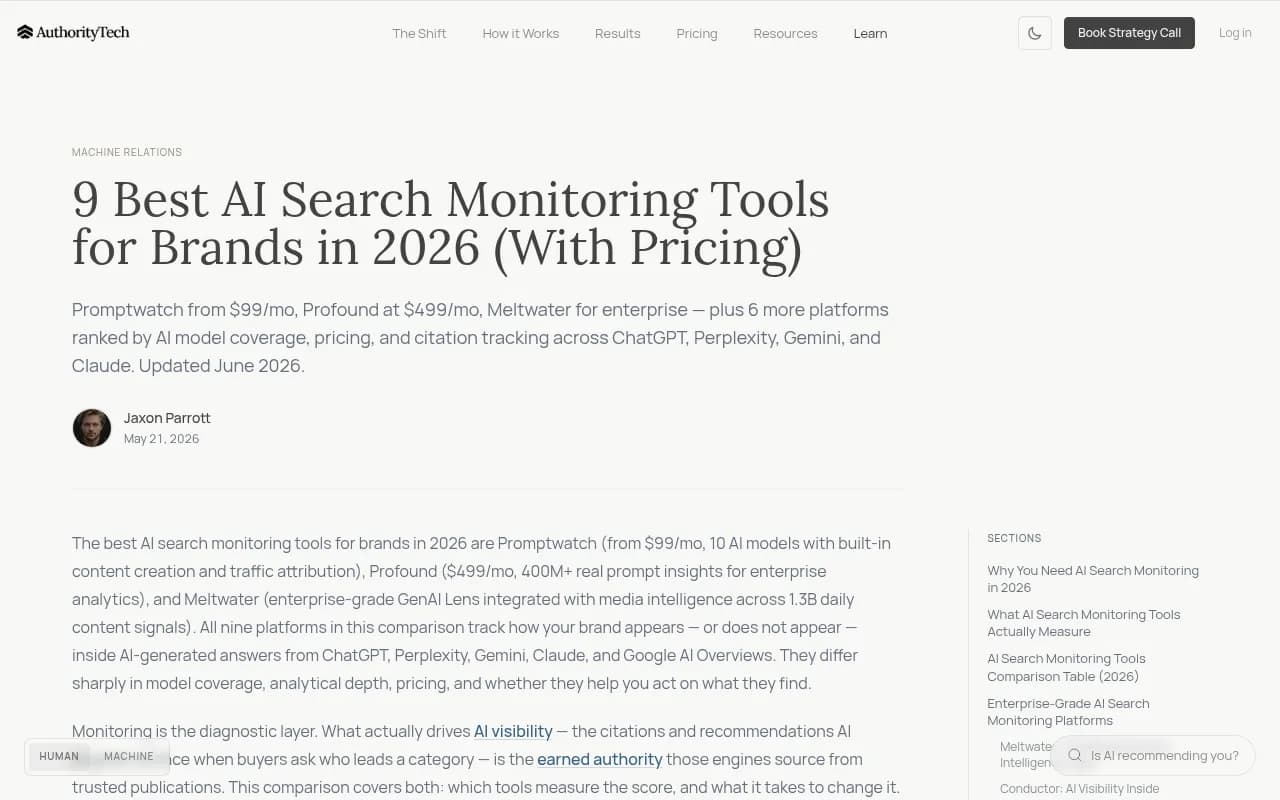
Most monitoring-only tools (Otterly.AI, Peec.ai, and similar) show you data but leave you stuck when it comes to acting on it. They'll tell you that you're not appearing in ChatGPT's answers for a given query, but they won't tell you why or what to do about it.
The tools that have moved beyond pure monitoring -- Promptwatch being the most complete example -- are the ones worth investing in if you're serious about AI search as a channel. Tracking without optimization is just an expensive way to watch competitors win.
For teams evaluating the broader landscape, a few other tools worth knowing about:
Profound

Profound has a strong enterprise feature set and recently shipped autonomous agents and MCP support. It's a credible option for large organizations, though it comes at a higher price point and lacks some of the content generation and Reddit tracking capabilities that Promptwatch includes.

AthenaHQ added Shopify revenue attribution in 2026, which is useful for ecommerce brands. It's monitoring-focused, though, and doesn't have content generation built in.
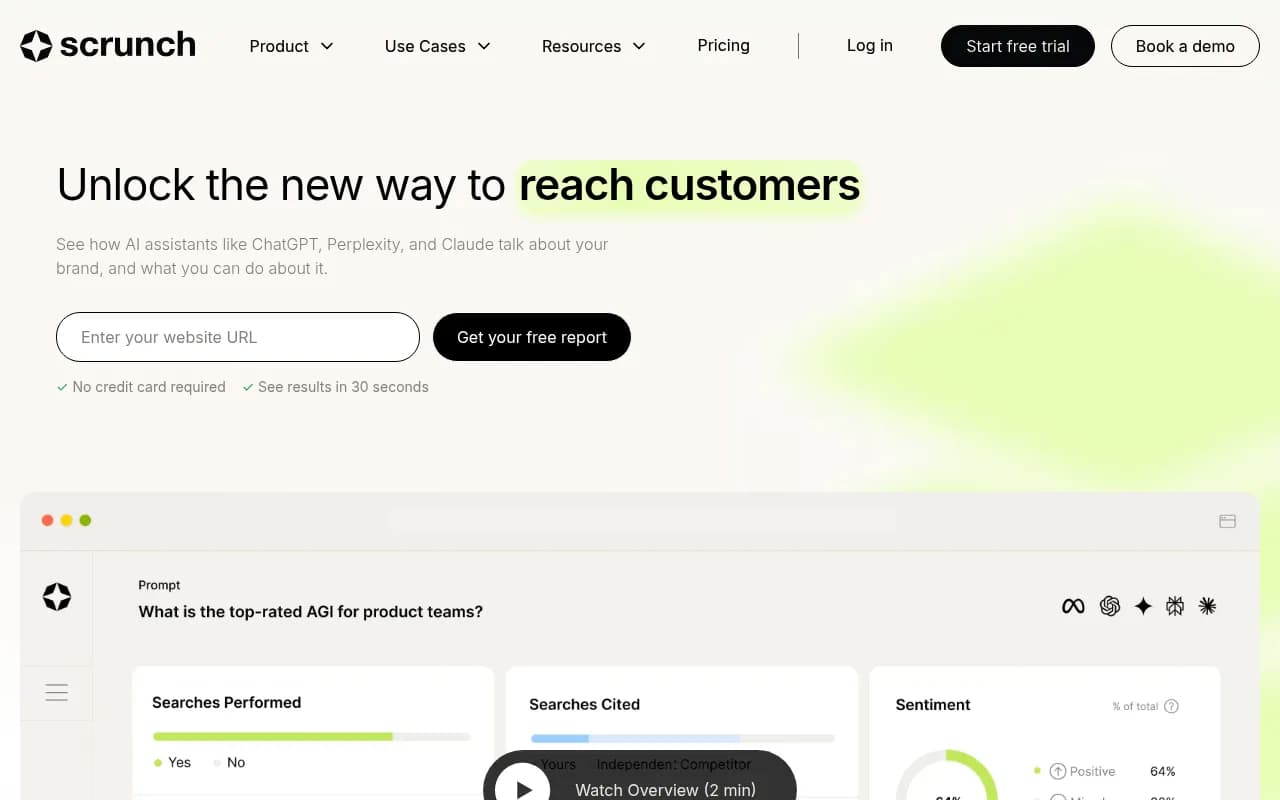
Scrunch is doing interesting work at the CDN edge -- serving AI-optimized content directly -- which is a different architectural approach to the problem. Worth watching.
Which tool should you choose?
The honest answer depends entirely on what you're trying to accomplish:
If you need to produce more content faster and already have a visibility monitoring solution, look at AirOps. It's built for content operations at scale.
If you're running a traditional SEO program and need to build topical authority on Google, MarketMuse is still one of the better tools for that specific job.
If you want to understand and improve how your brand appears in AI-generated answers -- across ChatGPT, Perplexity, Google AI Overviews, and nine other models -- Promptwatch is the most complete platform available. It's the only one that takes you from "I don't know why I'm not being cited" to "I published content that fixed it" to "I can see the traffic it generated."
In 2026, that last capability is the one that's actually moving the needle for brands that take AI search seriously.