Key takeaways
- Most AI content platforms (including Jasper) are built for writing, not for proving that writing gets cited by AI engines
- AirOps and Searchable both try to bridge content creation and visibility, but each has meaningful gaps
- Only Promptwatch connects content generation directly to crawler logs, page-level citation tracking, and revenue attribution
- The "closed loop" -- create content, watch AI crawlers pick it up, tie citations to traffic -- is the thing most teams are missing in 2026
- If you're running a serious GEO program, the platform you choose determines whether you can prove ROI or just guess
There's a question that keeps coming up in marketing team conversations right now: "We're publishing content for AI search -- but how do we know it's actually working?"
It's a fair question. The problem is that most platforms were designed to answer half of it. Some help you write content. Some help you track citations. Very few do both, and almost none of them connect those two things to actual traffic and revenue.
This comparison looks at four platforms that are all, in different ways, trying to solve the AI content-to-citation problem: AirOps, Searchable, Jasper AI, and Promptwatch. They're not all the same type of tool -- which is kind of the point. Understanding what each one actually does (and where it stops) is what determines whether you end up with a closed loop or just another dashboard.
What "closing the loop" actually means
Before comparing tools, it's worth being precise about what the loop is.
In traditional SEO, the loop was: research keywords, publish content, check rankings, iterate. Slow, but traceable.
In AI search, the loop is messier. You need to know which prompts your brand should appear in, whether your content is being cited in those prompts, whether AI crawlers are actually reading your pages, and whether those citations are driving real traffic. That's four distinct problems, and most platforms only solve one or two.
A 2026 audit by AuthorityTech found that ChatGPT and Perplexity share only 11% of cited sources -- meaning visibility on one platform doesn't transfer to another. That alone makes multi-model tracking non-negotiable, and it raises the stakes for content that's engineered to be cited rather than just written.
The platforms below sit at different points in this loop. Here's where each one lives.
AirOps: strong on content engineering, growing on the tracking side
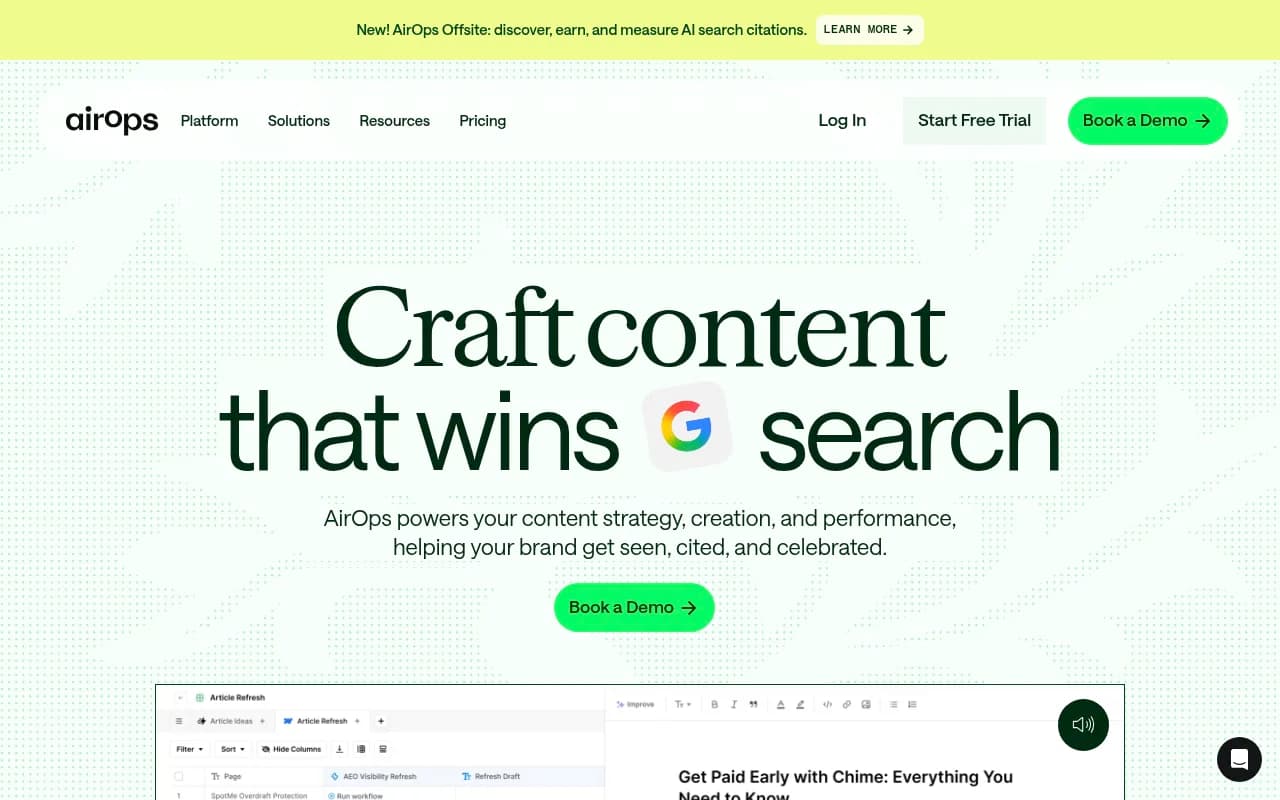
AirOps launched its Quill agent in May 2026, and it's genuinely interesting. The pitch is "content engineering for AI search" -- the idea that content needs to be structured specifically to earn citations, not just written to rank in Google.
What AirOps does well: it helps teams build content workflows grounded in real prompt data, competitor analysis, and citation patterns. The Quill agent can produce articles, comparison pages, and structured content designed to answer the specific questions AI engines are already responding to. That's meaningfully different from generic AI writing tools.
On the tracking side, AirOps tracks brand citations across ChatGPT, Perplexity, and Google, and shows which pages are earning citations over time. The mention-citation gap concept -- where AI knows your brand but doesn't trust your content enough to cite it -- is something AirOps surfaces well.
Where it gets thinner: AirOps doesn't have the crawler log depth that shows you why a page moved from crawled to cited, and the attribution back to revenue is limited. It's a strong content-first platform with visibility features layered on, rather than a full-stack GEO platform.
Best for: content teams that want to build AI-optimized content pipelines and track citation share at a brand level.
Searchable: built-in content generation with visibility tracking
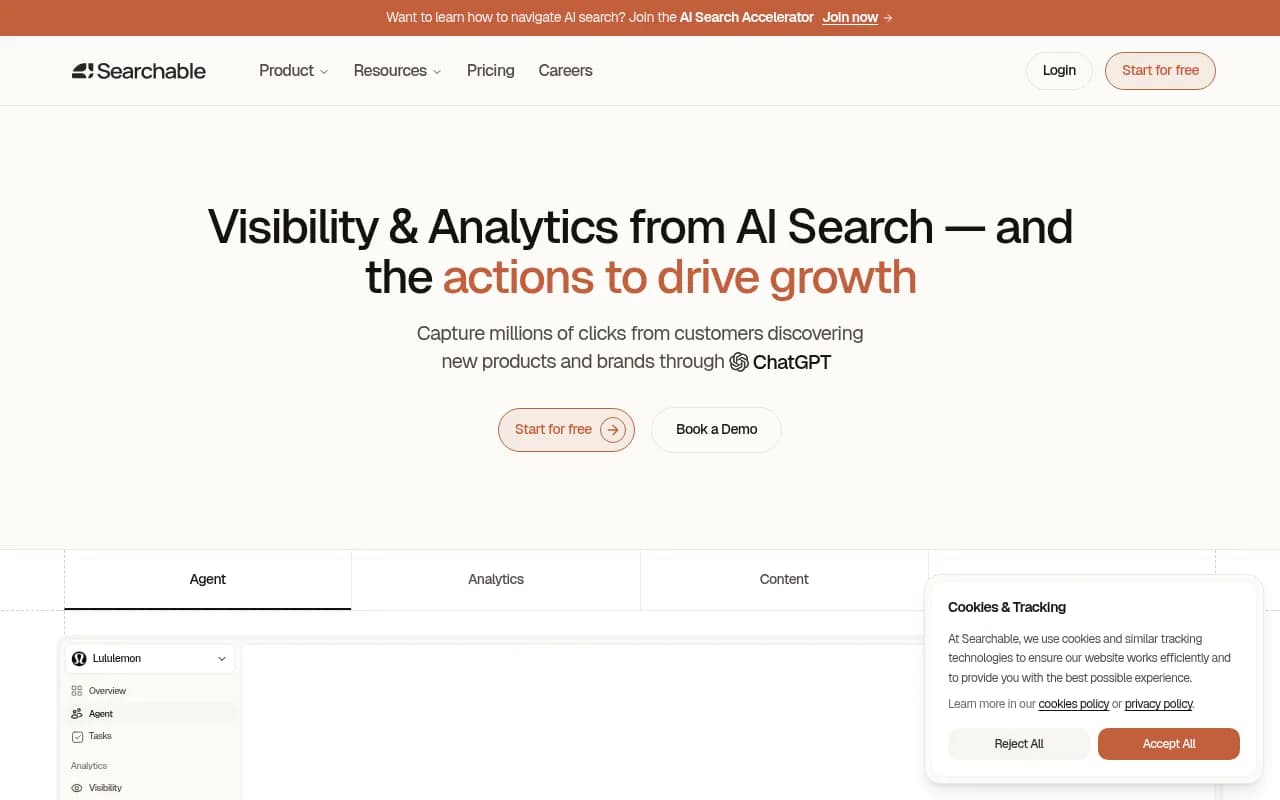
Searchable positions itself as an AI search visibility platform with built-in content generation -- which puts it closer to the full-loop vision than pure content tools. The combination of monitoring and content creation in one place is genuinely useful for smaller teams that don't want to stitch together multiple tools.
The platform tracks brand mentions and citations across major AI engines and provides content recommendations based on visibility gaps. The content generation side is functional and tied to the visibility data, which is the right architecture.
The honest limitation: Searchable is a newer entrant, and the depth of its citation analytics, crawler log access, and prompt intelligence doesn't yet match what more established platforms offer. For teams doing light-to-moderate GEO work, it's a reasonable option. For teams that need granular page-level tracking, query fan-outs, or multi-language monitoring, it starts to feel thin.
Best for: smaller teams or brands just starting GEO work who want a single tool that does both content and monitoring without a steep learning curve.
Jasper AI: excellent at writing, not built for AI visibility
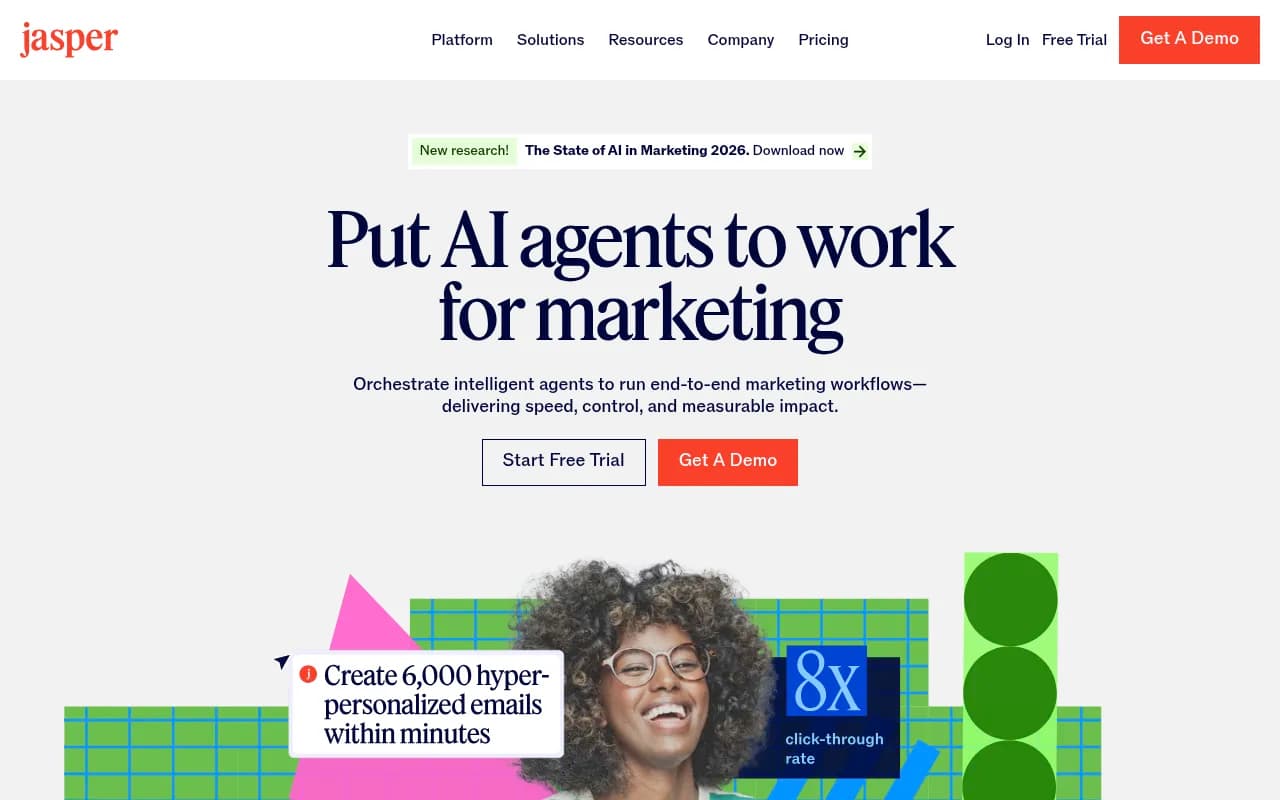
Jasper is one of the most capable AI writing platforms available, and it's genuinely good at what it does. The marketing content it produces is polished, on-brand, and fast. Its agent workflows can handle content at scale.
But Jasper was built for content creation, not for AI search visibility. It doesn't track whether your content gets cited by ChatGPT or Perplexity. It doesn't show you which prompts you're missing. It has no crawler log access, no citation analytics, and no way to connect content output to AI traffic attribution.
That's not a criticism -- it's just a different product category. If you're using Jasper to write blog posts and marketing copy, it's excellent. If you're trying to build a GEO program and prove that your content is driving AI citations and traffic, Jasper alone won't get you there. You'd need to pair it with a dedicated visibility platform.
Best for: marketing teams that need high-volume, high-quality content production and are handling AI visibility tracking separately.
Promptwatch: the only platform that closes the full loop
Promptwatch is built differently from the other three tools in this comparison. Where AirOps and Searchable approach the problem from the content side and add visibility features, Promptwatch was designed as an end-to-end GEO platform -- tracking, content generation, crawler logs, and revenue attribution all in one place.

The core workflow is what makes it different. It starts with Answer Gap Analysis, which shows exactly which prompts competitors are appearing in that you're not. Not vague topic suggestions -- specific prompts, with visibility scores, prompt volumes, and difficulty ratings. From there, Content Agents generate articles, comparisons, and listicles grounded in that gap data, real citation patterns, competitor analysis, and brand guidance. Then AI Crawler Logs show when ChatGPT, Claude, Perplexity, and other engines crawl your new pages, which errors they hit, and when pages move from crawled to cited. Finally, traffic attribution connects those citations to actual revenue.
That sequence -- find gaps, create content, watch crawlers, measure revenue -- is the closed loop. Most platforms cover one or two steps. Promptwatch covers all four.
A few specific capabilities worth noting:
- Page-level citation tracking shows exactly which pages are being cited, by which models, and how often
- Reddit and YouTube insights surface the discussions that influence AI recommendations (a channel most platforms ignore)
- ChatGPT Shopping tracking monitors when your brand appears in product recommendations and carousels
- Multi-model coverage spans 10 AI engines including Google AI Mode, Grok, DeepSeek, and Mistral
- Prompt Intelligence includes volume estimates, difficulty scores, and query fan-outs that show how one prompt branches into sub-queries
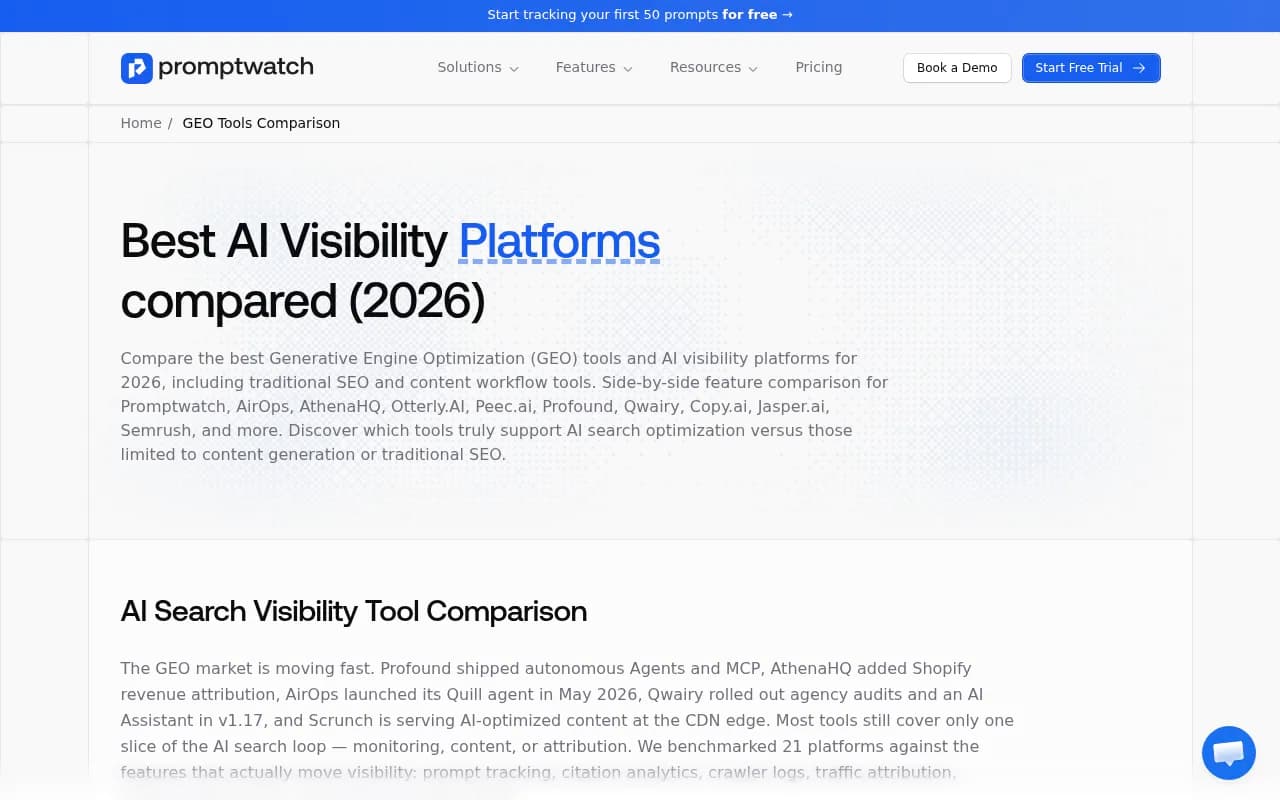
The Promptwatch comparison page notes that AirOps' Quill and AthenaHQ's Content Agents close part of the loop, but only Promptwatch ties content execution back to crawler logs and AI visitor attribution. That's an accurate description of where the gap is.
Best for: marketing teams, SEO teams, and agencies that need to prove GEO ROI -- not just track mentions, but connect content investment to citations to traffic to revenue.
Feature comparison
| Feature | AirOps | Searchable | Jasper AI | Promptwatch |
|---|---|---|---|---|
| AI content generation | Yes (Quill agent) | Yes | Yes (core product) | Yes (Content Agents) |
| Brand citation tracking | Yes | Yes | No | Yes |
| Multi-model coverage | Partial | Partial | No | 10 models |
| AI crawler logs | No | No | No | Yes |
| Page-level citation tracking | No | No | No | Yes |
| Answer gap analysis | Partial | Partial | No | Yes |
| Prompt volume & difficulty | No | No | No | Yes |
| Query fan-outs | No | No | No | Yes |
| Reddit & YouTube insights | No | No | No | Yes |
| ChatGPT Shopping tracking | No | No | No | Yes |
| Traffic & revenue attribution | Limited | Limited | No | Yes |
| Multi-language / multi-region | Partial | No | Yes | Yes |
| Free trial | Yes | Yes | Yes | Yes |
| Starting price | Custom | Custom | $49/mo | $99/mo |
How to choose
The right tool depends on where you are in your GEO journey and what "closing the loop" means for your team right now.
If you're primarily a content team that wants to start producing AI-optimized content and track citation share at a brand level, AirOps is a serious option. The Quill agent is purpose-built for AI search content, and the citation tracking gives you enough signal to iterate.
If you're a smaller team or just starting out and want one tool that handles both content and basic monitoring without complexity, Searchable is worth evaluating. It won't give you the depth of a full GEO platform, but the integrated approach is practical.
If you're already using Jasper for content production and love it, keep using it -- but pair it with a dedicated visibility platform. Jasper doesn't track AI citations, and you need something that does.
If you need the full loop -- gaps to content to crawler data to revenue -- Promptwatch is the only platform in this comparison that delivers all of it. The crawler logs alone are something most teams don't realize they need until they're trying to debug why a page isn't getting cited despite being published weeks ago.
The part most teams skip
Here's what gets missed in most tool comparisons: the hardest part of GEO isn't picking a platform. It's building the habit of actually using the loop.
Most teams publish content and then check a dashboard occasionally. What actually moves visibility is a tighter cycle: identify a gap, publish content targeting that gap, watch whether AI crawlers pick it up, see whether citations follow, check whether traffic changes. That cycle, run consistently, is what compounds over time.
The reason crawler logs matter so much is that they make the invisible visible. You can see that GPTBot crawled your page three days after publishing, hit a JavaScript rendering error, and never came back. Without that data, you'd assume the content just wasn't good enough. With it, you fix the technical issue and the page starts getting cited.
That's the difference between monitoring and optimization. Most platforms give you the former. The question is whether you need the latter.
Bottom line
In 2026, the gap between "we publish content for AI search" and "we can prove our content drives AI citations and traffic" is still wide. Most platforms help you narrow it partway.
AirOps is the strongest content-first option with real citation tracking. Searchable is a practical choice for teams that want simplicity. Jasper is excellent at writing but isn't a GEO platform. Promptwatch is the only tool here that closes the full loop from gap identification to content creation to crawler monitoring to revenue attribution.
If you're serious about GEO and need to show results, that full loop is what you're actually buying.