
Key takeaways
- Only a handful of AEO tools have a permanent free plan. AthenaHQ's Essential tier (300 credits) is the clearest one. Most others give you a 7 to 14 day trial.
- The cheapest credible paid entry points are Otterly.AI Lite at $29/mo, HubSpot AEO at $50/mo, Writesonic GEO and LLMrefs at $79/mo, and a cluster of tools at $95 to $99/mo.
- Cheap tiers cap prompts and engines hard. Otterly's Lite plan tracks 15 prompts, Peec's Starter tracks 50 prompts on 3 models. Check which engines you actually need before you buy.
- Tracking alone does not grow anything. Pick a tool that also tells you what to publish, or budget time to do that part yourself.
- Prices below come from vendor pages and third-party roundups checked in October and November 2026. Vendors change them often, and the sources disagree in places, so confirm on the pricing page before you pay.
What startups actually need from an AEO tool
AEO tools, also called AI visibility or GEO tools, sample answer engines like ChatGPT, Perplexity, Gemini, Google AI Overviews, AI Mode, and Copilot. They run your prompts repeatedly and report how often your brand is mentioned or cited. That is the core job.
A startup has a narrower version of that problem. You probably have one brand, a handful of competitors, a few dozen buying questions you care about, and no spare analyst. So the useful questions are these:
- Can I try it without a sales call or a long contract?
- Does the entry tier cover the engines my buyers use?
- Is there a path from "here is your score" to "here is what to write next"?
- What happens when I outgrow the cheap plan?
The engine question matters more than most roundups admit. Promptwatch's data on average sources per response shows ChatGPT cites roughly 5 sources per web-search answer, while Google AI Overviews and Perplexity cite about 10. The number of citation slots varies by engine, so a tool that only covers one of them can mislead you. At a minimum, look for ChatGPT, AI Overviews, and Perplexity. That is what the entry tiers of Otterly, Peec, and HubSpot AEO roughly cover.
Free plans and free trials at a glance
Here is the honest picture. A true free plan is rare. Trials are common, and their length is inconsistent across sources.
| Tool | Free option | Cheapest paid tier | Engines at entry level | Main catch |
|---|---|---|---|---|
| AthenaHQ | Free Essential plan, 300 credits | $295/mo (Starter) | 5 engines free, 11 on Starter | 1 credit = 1 AI response, so credits drain fast |
| Otterly.AI | Free trial (7 days per some sources, 14 per others) | $29/mo Lite ($25 annual) | ChatGPT, AI Overviews, Perplexity, Copilot | Only 15 prompts on Lite; Gemini, AI Mode, Claude cost extra |
| HubSpot AEO | 25 prompts free, no card | $50/mo (beta) | ChatGPT, Gemini, Perplexity | Labeled beta; best if you already use HubSpot |
| Peec AI | Free trial on self-serve plans | $95/mo Starter (listed as EUR 85 elsewhere) | 3 models of your choice | Extra models are add-ons; no content creation |
| Writesonic GEO | Free trial | $79/mo Starter | ChatGPT, Gemini, AI Overviews | No Perplexity on self-serve plans |
| LLMrefs | 7-day trial | $79/mo | 9 engines incl. ChatGPT, Gemini, Claude, Perplexity | Tracking focus |
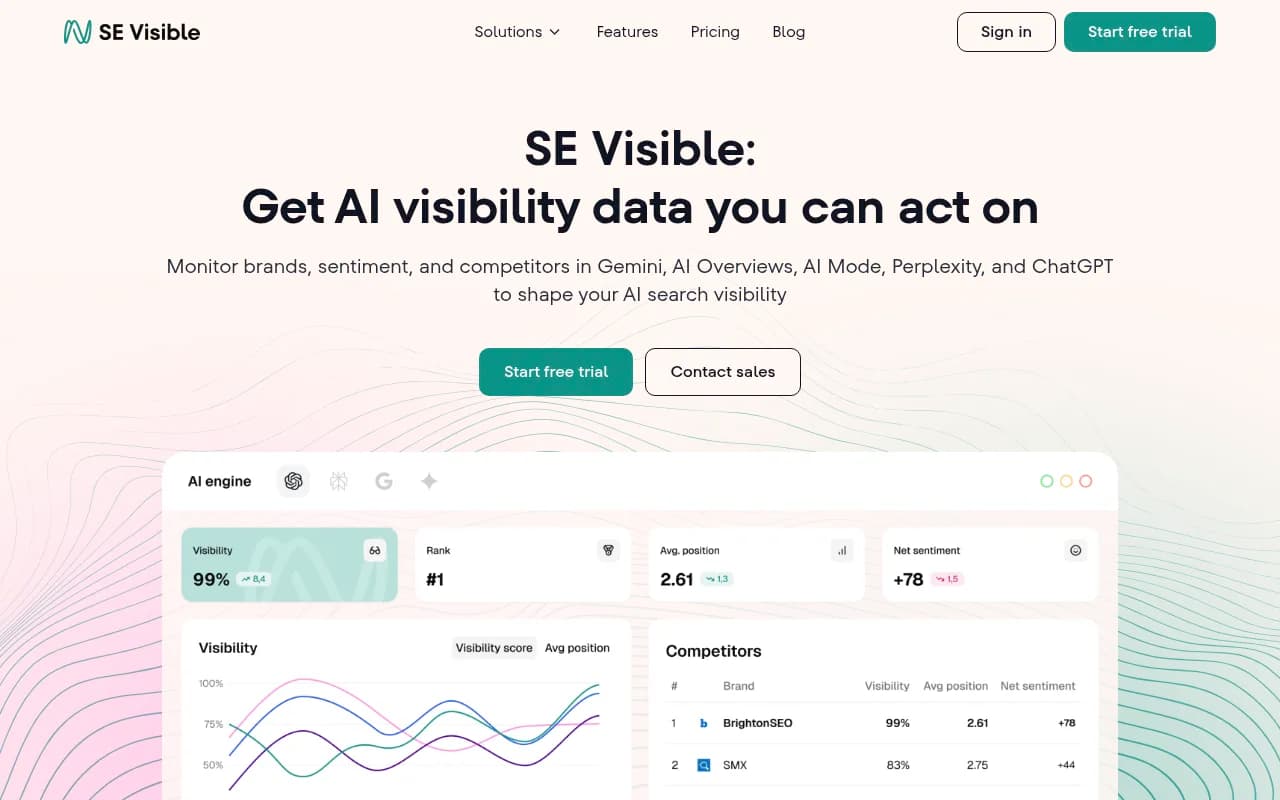
| SE Visible | 10 to 14 day trial | $89 to $99/mo | ChatGPT, Gemini, AI Mode, Perplexity, AI Overviews | No Claude or Copilot yet |
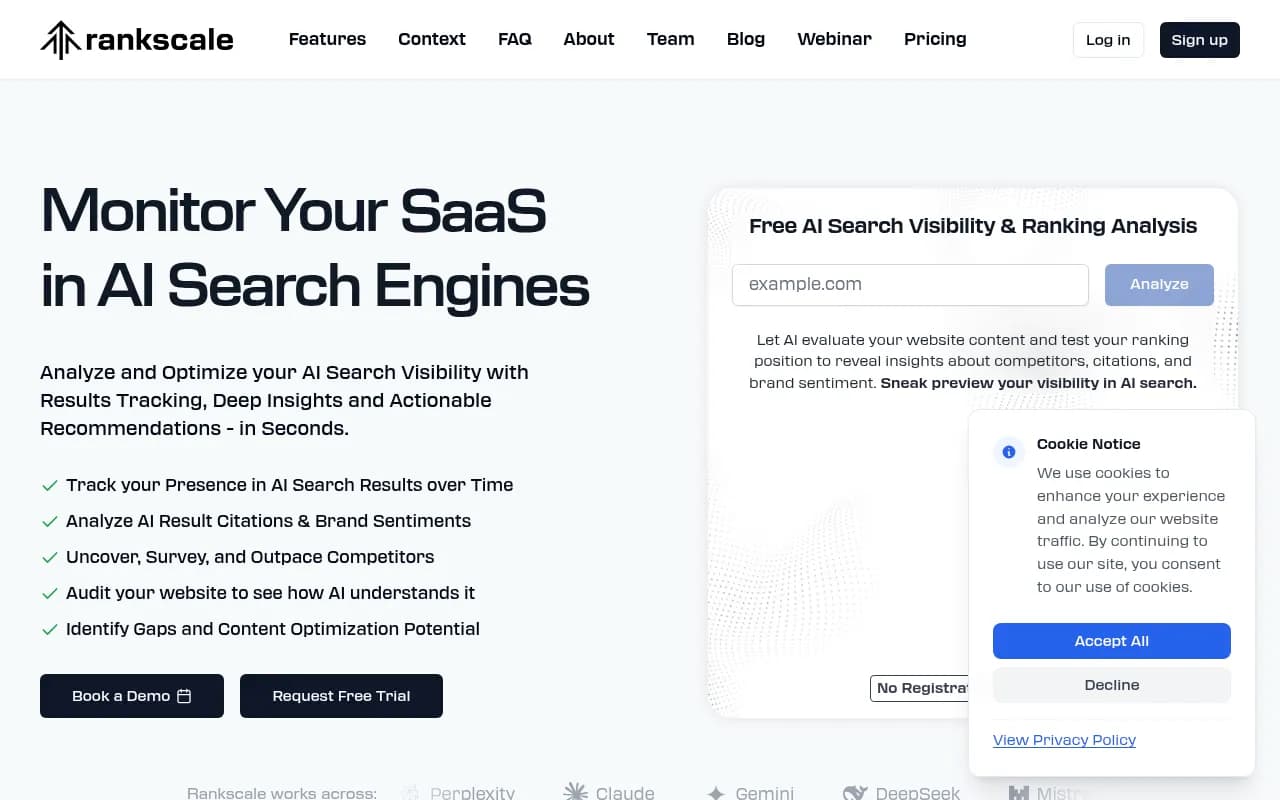
| Rankscale | 7-day trial of Pro | $20/mo Essentials (annual only), $99/mo Pro | 17+ engines, credit-based | Credits expire on Essentials; GUI capture still beta |
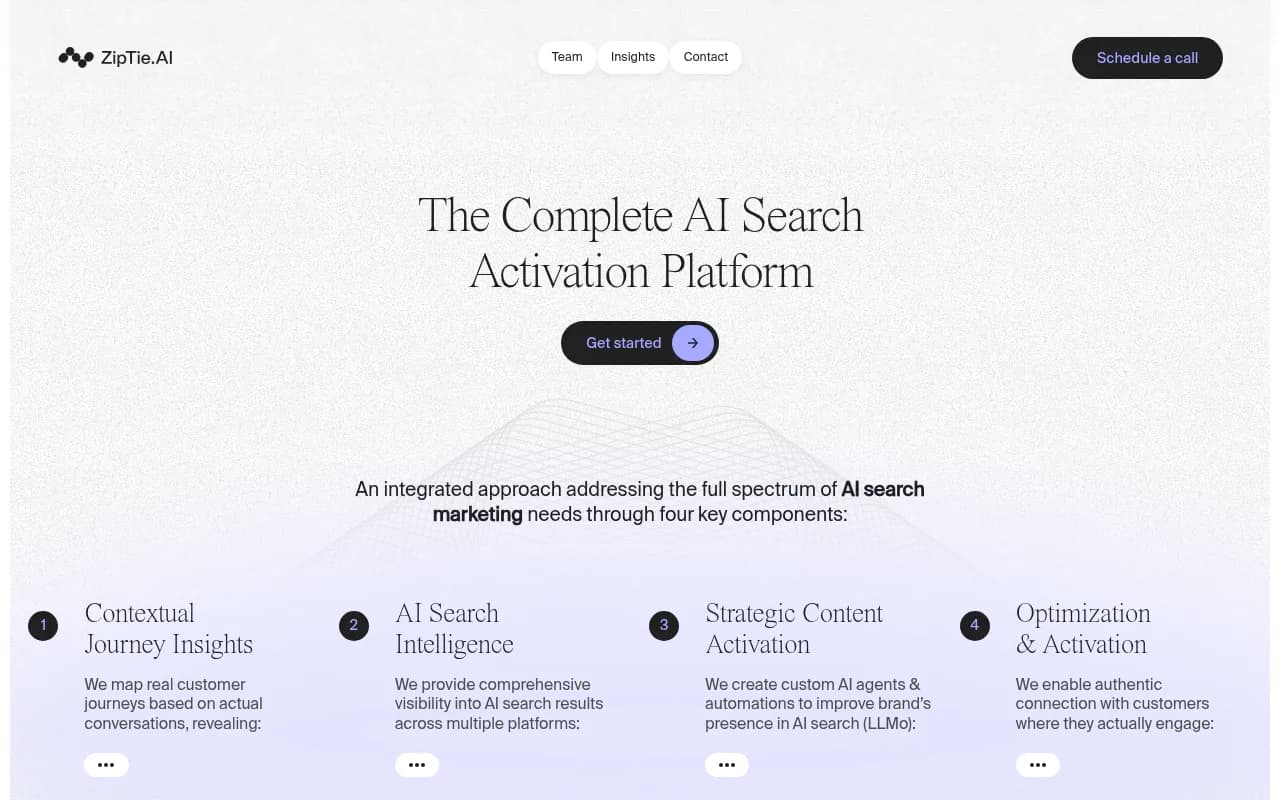
| ZipTie | 7-day trial, 25 daily prompts, no card | From $42.75/mo | Google AI Overviews, AI Mode, ChatGPT, Perplexity, Copilot, Gemini | Usage-based, pricing jumps between presets |
| Promptwatch | 7-day free trial on monthly billing; free Explore plan | $95/mo Essential | All supported models on every paid plan | Content Agent starts at Business ($579/mo) |
One caution. Sources disagree on trial lengths for several of these, including Otterly, Scrunch, and Semrush. Treat the table as a starting point and check the vendor's own pricing page.
The budget picks, one by one
Otterly.AI: cheapest way to start
Otterly's Lite plan is $29/mo, or about $25 billed annually. You get 15 prompts, daily tracking, and four engines: ChatGPT, Google AI Overviews, Perplexity, and Copilot. That is enough to baseline where you stand on a short list of buying questions.
Otterly.AI

The limits show up fast. Gemini, AI Mode, and Claude are paid add-ons, and extra prompts come in packs of 100 for $99/mo, available on the Standard and Premium tiers. If you outgrow Lite, the next step is $189/mo, which is a big jump. I would treat Otterly as the place to learn how this category works, not necessarily where you stay.
HubSpot AEO: free start if you live in HubSpot
HubSpot AEO tracks 25 prompts free with no card, then costs $50/mo standalone. It covers ChatGPT, Gemini, and Perplexity and is labeled beta. If your CRM and marketing already sit in HubSpot, this is the low-friction option. If they do not, there is little reason to pick it over the others.
AthenaHQ: the free plan with the widest coverage
AthenaHQ is the only tool in this group with a real free tier. The Essential plan gives you 300 credits across ChatGPT, Perplexity, AI Overviews, Gemini, and Copilot. Because one credit equals one AI response, 300 credits is a baseline measurement, not an ongoing program.

Then comes the cliff. Starter is $295/mo for 3,600 credits and 11 models, and one competitor review says teams can burn through a month of credits in a week. Use the free plan to measure, and think hard before the upgrade.
Peec AI: daily tracking, clean reporting
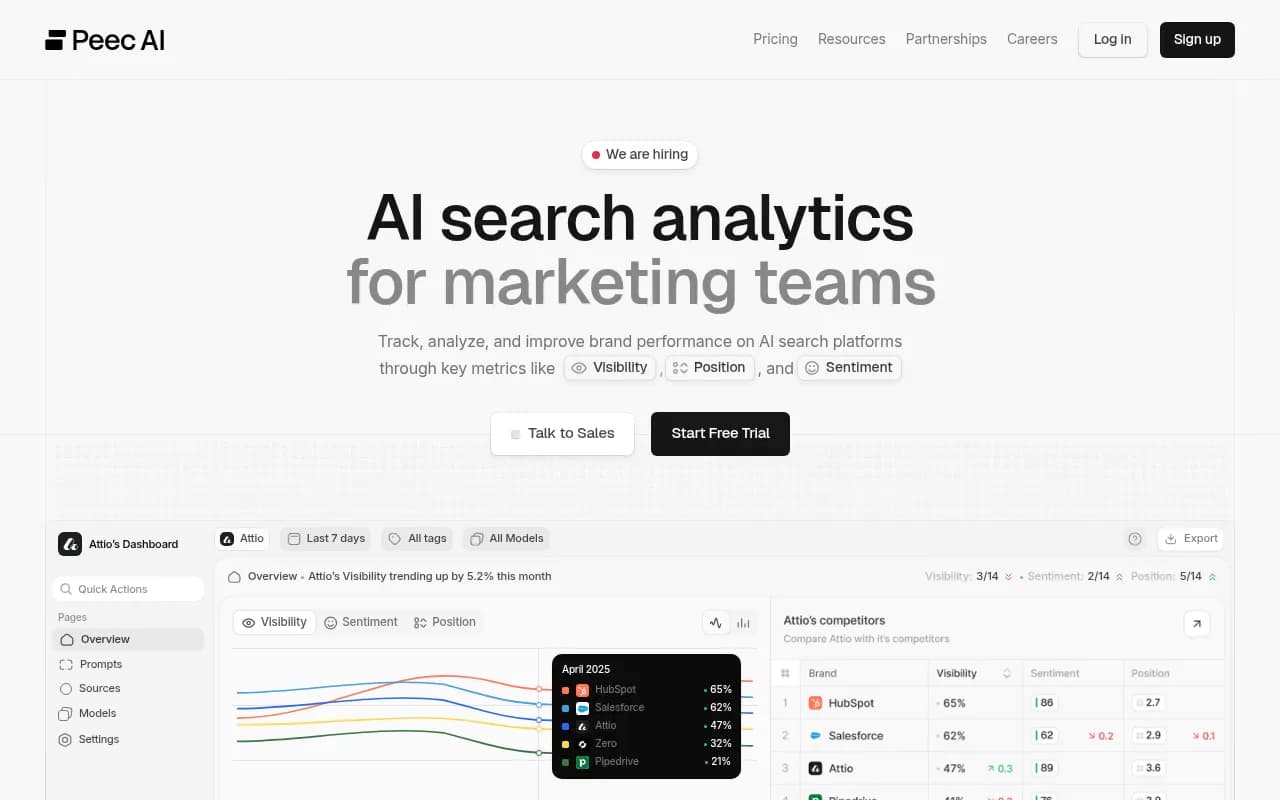
Peec AI's Starter plan is listed at $95/mo on its dollar pricing (other sources quote EUR 85 or EUR 89). It gives you 50 prompts, 3 models of your choice, 1 project, and 1 country, with unlimited seats. It is a good monitoring product. It does not write content, so action stops at recommendations, and Claude, Grok, and several other models cost extra.
Writesonic GEO: tracking bolted onto an AI writer
Starter is $79/mo for 50 daily prompts across ChatGPT, Gemini, and AI Overviews, plus 15 articles a month. If you already pay for Writesonic's writer, adding GEO tracking is cheap. The ratings you see for Writesonic mostly review the writer, not the GEO product, and some Trustpilot reviewers report charges after cancelling, so cancel carefully.

LLMrefs: broad engine coverage at one price
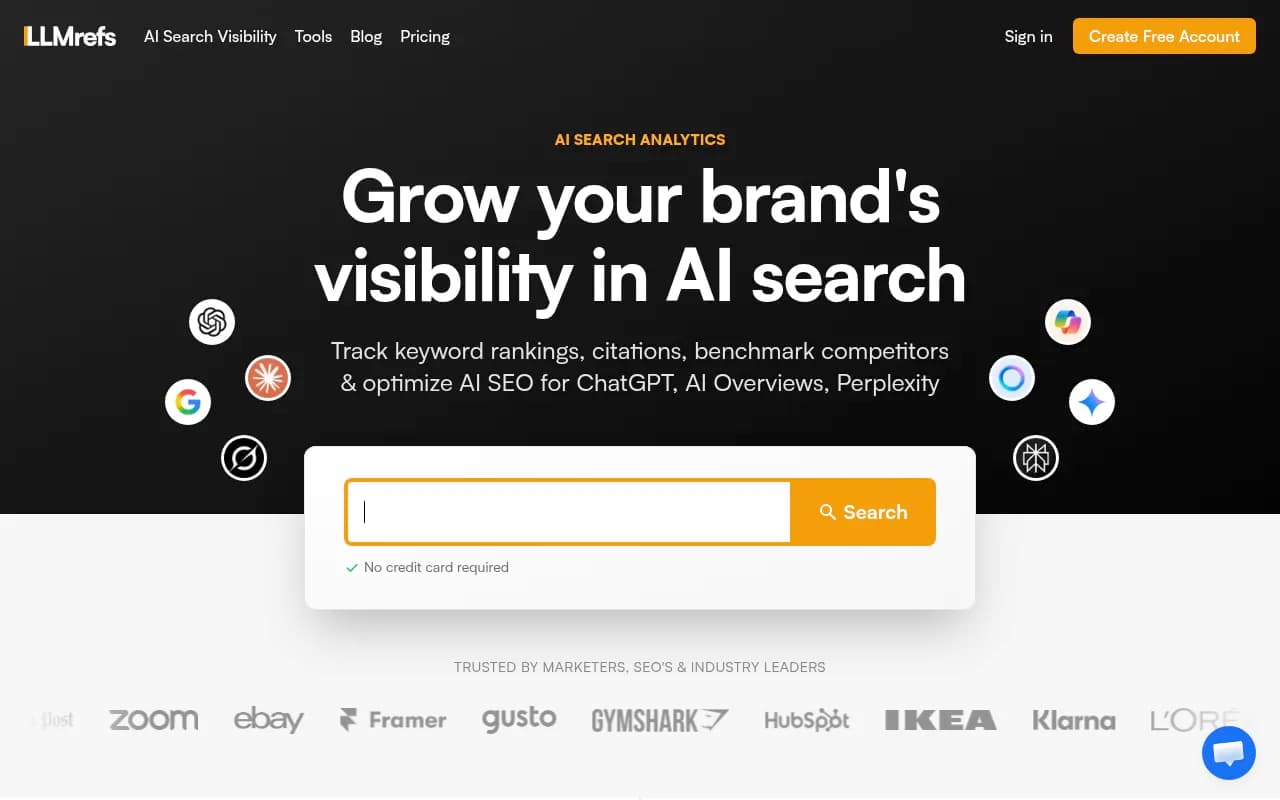
LLMrefs starts at $79/mo with a 7-day trial and covers nine engines, including Claude. If your buyers are developers or technical users who lean on Claude, that coverage matters more than a prettier dashboard.
LLMrefs
SE Visible: most prompts per dollar
SE Visible's Basic plan runs about $99/mo ($79 annually) for 200 prompts, roughly 30,000 answers a month, across ChatGPT, Gemini, AI Mode, Perplexity, and AI Overviews. Third-party sources quote 150 prompts for the same plan, so verify. It has no content or crawler features, but for pure tracking volume at this price it is hard to beat.
Rankscale and ZipTie: credit and usage-based options
Rankscale starts at $20/mo (annual billing only, credits expire monthly) and moves to $99/mo for Pro with a 7-day trial. It covers 17+ engines but charges in credits, and Claude runs cost more. ZipTie is usage-based from $42.75/mo, saves a screenshot of each AI answer as proof, and gives unlimited seats. Both reward people who like tuning a meter and punish people who do not.
Promptwatch: the one that goes past tracking
Promptwatch is an AI visibility platform rather than a prompt tracker, and its Essential plan costs $95/mo (EUR 85) with a 7-day free trial on monthly billing. That gets you 50 prompts, 6,000 responses, daily tracking, country tracking, visitor analytics, and 500 Agent Credits, and every paid plan tracks all supported AI models. The tradeoffs are plain: crawler logs start at Professional ($245/mo), and the automated Content Agent, which plans, writes, and publishes pages against your visibility gaps, starts at Business ($579/mo).

Why a startup might still choose it early: most tools at this price show a score and stop. Promptwatch's content gap analysis maps your pages against the prompts AI answers, and the Action Board turns that into a prioritized to-do list you can work through with a small team. There is also a free Explore plan (1 project, 10 prompts, ChatGPT only), but it is for evaluation, not a real program. For the full product, use the free trial. Promptwatch is also running a Black Friday banner at 30% off through Nov 30, though I did not verify how it applies to each plan, so check the pricing page.
If you want a no-cost check first, the free AI visibility report scans how ChatGPT, Gemini, and Perplexity talk about your brand with no login.
Picks that are cheap but not for most startups
A few tools show up in budget lists but need a caveat.
- Semrush AI Visibility Toolkit is $99/mo for 25 prompts and 1 domain, with extra domains and users at $99 each. It makes sense if you already live in Semrush.
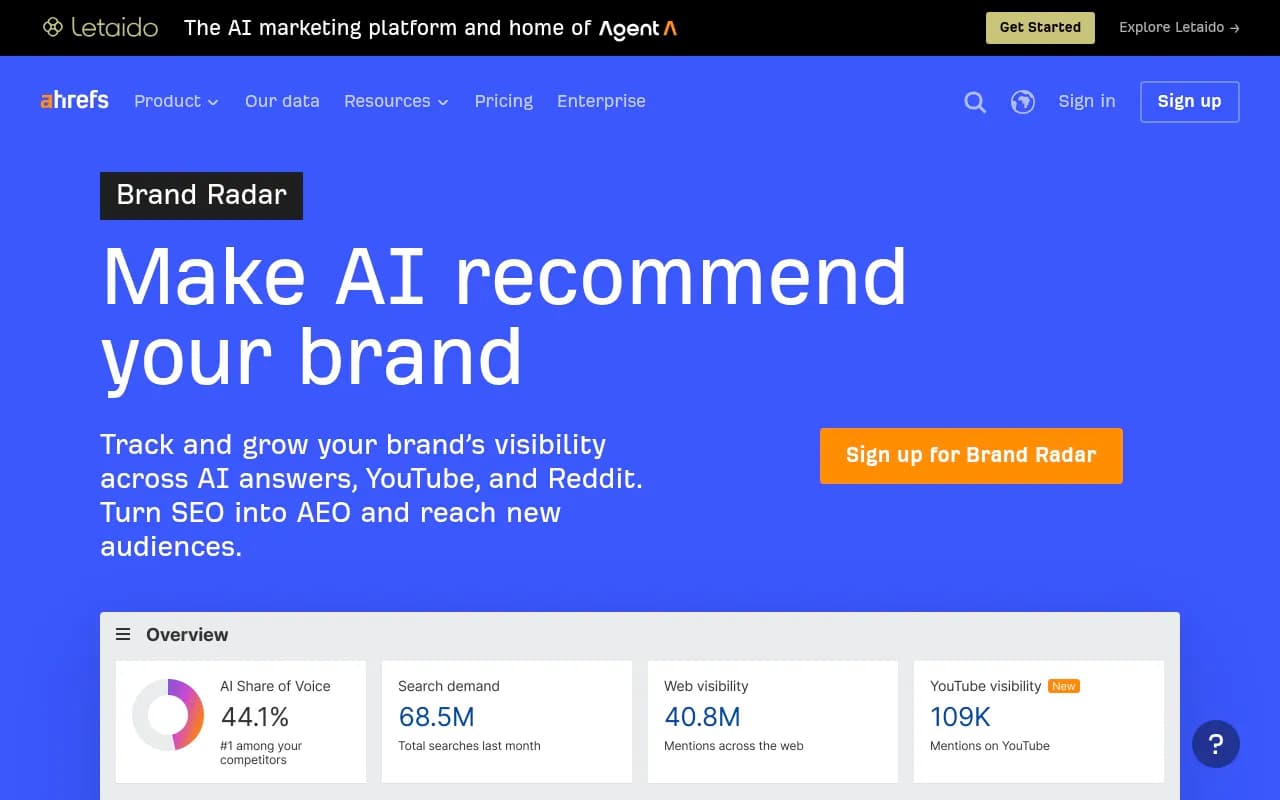
- Ahrefs Brand Radar starts at $199/mo for the index, or $50/mo for custom prompts on top of an Ahrefs plan. Index data refreshes monthly, so you will not see daily movement.
- Scrunch starts around $250 to $300/mo and AirOps does not publish prices, so both sit above most seed-stage budgets.
- Profound has moved to custom pricing for brands, with only a 7-day trial (50 prompts a day) visible publicly. Third-party reports of $99 and $399 tiers no longer match the live page.
Profound

How to choose by stage
| Your situation | Sensible starting point | Why |
|---|---|---|
| Pre-revenue, want a baseline for free | AthenaHQ Essential, HubSpot AEO free 25 prompts | No card, enough for a first snapshot |
| Under $50/mo, tracking only | Otterly Lite | Cheapest credible entry on the big four engines |
| $80 to $100/mo, tracking volume matters | SE Visible, LLMrefs, Peec | More prompts or engines per dollar |
| Already using Writesonic or HubSpot | Their built-in GEO add-ons | Fewer tools to manage |
| Need tracking plus a way to fix gaps | Promptwatch Essential, then step up | Content gap analysis and Action Board included early |
A realistic first 30 days
Spend money slowly. Here is the sequence I would follow.
- Write 20 to 30 prompts your buyers genuinely ask: category questions, "best X for Y" questions, and comparison questions against two or three competitors.
- Run a free baseline in AthenaHQ's free plan or a trial of Otterly or Peec. Note your mention rate and which domains get cited instead of you.
- Look at what gets cited. Promptwatch's ChatGPT citation share by content type report (Sep 28 to Oct 4, 2026) found product pages were 22.4% of ChatGPT citations, landing pages 16.8%, and listicles 13.6%. For commercial prompts, product pages hit 26.0%. So complete pricing and positioning on your product pages comes first, then getting listed in the roundups that already get cited.
- Publish a comparison page, an FAQ, and keep documentation crawlable. These are the same fixes that report recommends.
- Re-run at day 30. If your mention rate has not moved, the problem is content or crawlability, not the tool.
If you outgrow a basic tracker, browse the GEO software directory at bestgeosoftware.com for more options.
Mistakes that waste a startup's money
- Buying for engine count instead of engine fit. Nine engines is irrelevant if your buyers only use ChatGPT and AI Overviews.
- Ignoring prompt caps. Fifteen prompts covers one narrow topic. You cannot track a category with it.
- Trusting a single sampled run. Answers vary, so look at trends over weeks.
- Skipping the cancellation terms. A few of these vendors draw complaints about post-cancellation charges.
- Treating a visibility score as the outcome. The outcome is pipeline. Tools that tie AI traffic to conversions are worth more than ones that only score mentions.
Bottom line
If you have no budget, start with AthenaHQ's free plan and HubSpot AEO's free 25 prompts to get a baseline. If you have $30 to $100 a month, Otterly, SE Visible, LLMrefs, or Peec are reasonable trackers. If you want the tool to also help you act on the gaps, try Promptwatch's 7-day trial at $95/mo on Essential and see whether the Action Board and content gap analysis fit how your team works. Verify prices and trial terms on each vendor's page first, since several sources conflict.