Key takeaways
- Offsite citations -- Reddit threads, YouTube videos, third-party listicles, and external brand mentions -- are a major driver of how AI engines decide who to recommend. Most platforms barely track them.
- Promptwatch is the only platform in this comparison that tracks offsite citations, Reddit insights, and YouTube alongside onsite page-level data in the same dashboard.
- Profound is the strongest pure-monitoring option for enterprises that need deep reporting and don't mind a higher price tag.
- Peec AI is a capable entry-level tracker but stops at monitoring -- no content generation, no Reddit tracking, no crawler logs.
- Conductor adds AI visibility on top of an existing enterprise SEO platform, which is useful if you're already a customer but not a reason to switch from a dedicated GEO tool.
- The platforms that only show you where you're invisible are only half the solution. The ones that help you fix it are worth paying more for.
Why offsite citations matter more than most teams realize
When ChatGPT recommends a product or Perplexity cites a source, it's rarely pulling from a single brand's website. AI models synthesize answers from dozens of signals -- including Reddit discussions, YouTube reviews, third-party comparison articles, industry listicles, and news coverage. Your own website is just one input.
That creates a problem for most AI visibility tools. They track whether your brand appears in AI responses, but they don't tell you why you appear (or why you don't). If a Reddit thread is driving Perplexity to recommend a competitor, or a YouTube review is influencing ChatGPT's product recommendations, a monitoring-only dashboard won't surface that. You'll see the gap but have no idea where it's coming from.
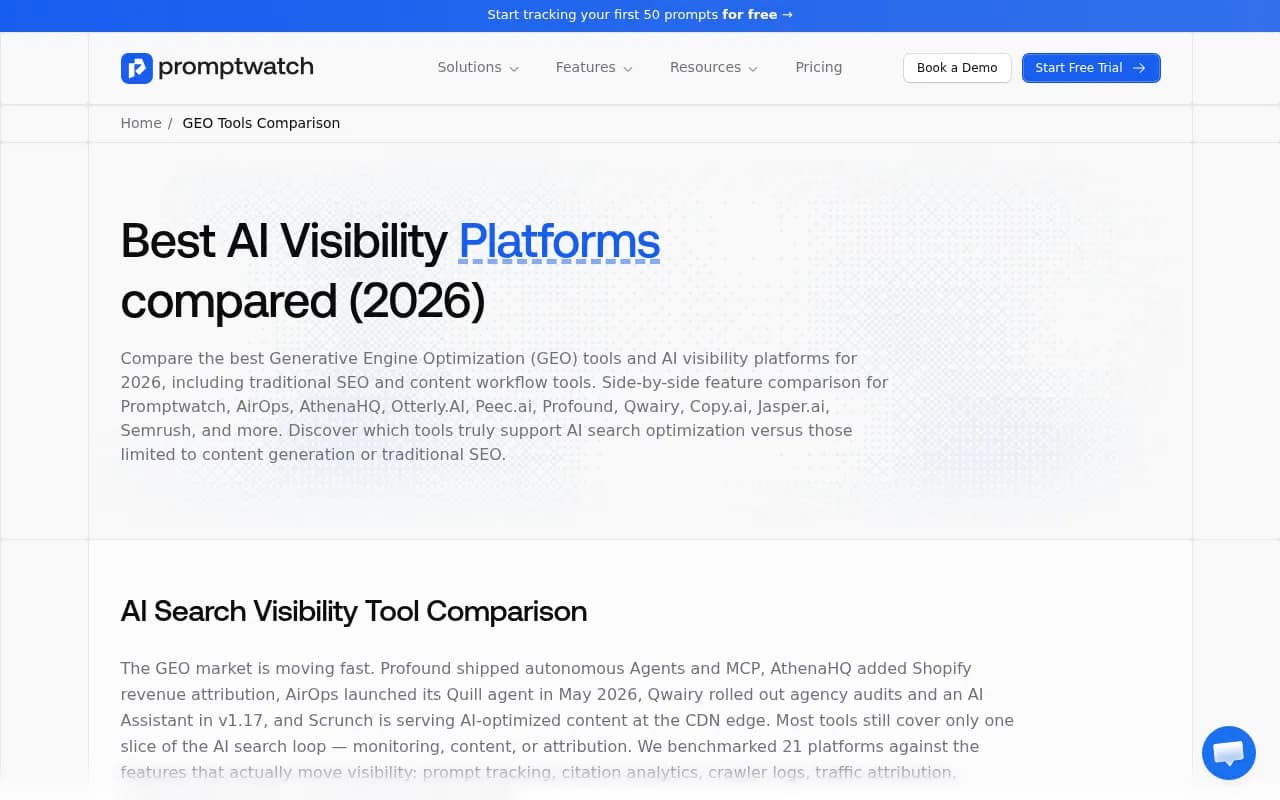
This is the specific capability gap this guide is designed to address. We're comparing four platforms -- Promptwatch, Profound, Peec AI, and Conductor -- specifically on how well they handle offsite citation tracking and third-party brand mention intelligence.
The four platforms at a glance
Before going deep on each tool, here's a quick orientation.
| Platform | Primary focus | Offsite citation tracking | Reddit/YouTube insights | Content generation | Pricing starts at |
|---|---|---|---|---|---|
| Promptwatch | Full GEO stack | Yes (offsite + onsite) | Yes | Yes (Content Agents) | $99/mo |
| Profound | Enterprise monitoring | Partial (source analysis) | No | No | ~$500+/mo (est.) |
| Peec AI | AI visibility monitoring | Limited | No | No | Freemium / ~$49/mo |
| Conductor | Enterprise SEO + AI visibility | Limited | No | Limited | Enterprise pricing |
Promptwatch
Promptwatch is the most complete platform in this comparison for teams that care about offsite citations specifically. It tracks not just whether your brand appears in AI responses, but which sources AI models are citing -- including external pages, Reddit threads, YouTube videos, and third-party listicles.

The offsite citation analysis is genuinely useful in practice. You can see which Reddit posts are influencing Perplexity's recommendations in your category, which YouTube reviews are shaping ChatGPT's product suggestions, and which competitor comparison articles are getting cited instead of your own content. That's actionable in a way that a simple visibility score isn't.
A few things stand out compared to the other tools here:
The Reddit and YouTube insights are unique. No other platform in this comparison tracks these channels. Given that Reddit content is heavily indexed by AI models (and Reddit's deal with OpenAI has only deepened that relationship), ignoring it means you're flying blind on one of the biggest citation drivers in most B2C and SaaS categories.
The AI Crawler Logs (Agent Analytics) show you in real time when ChatGPT, Perplexity, Claude, and other crawlers are hitting your pages -- which pages they read, how often they return, and when a page moves from crawled to cited. This is the only way to understand the actual mechanics of how AI engines discover your content.
The Content Agents close the loop. Once you've identified which offsite sources are driving competitor visibility, you can generate content designed to fill those gaps -- articles, listicles, comparison pages -- grounded in real prompt data and citation analysis. Most platforms stop at "here's the gap." Promptwatch helps you do something about it.
Pricing starts at $99/month for the Essential plan (1 site, 50 prompts, 5 articles). The Professional plan at $249/month adds crawler logs, state/city tracking, and 15 articles per month. For teams serious about offsite citation intelligence, Professional is where the relevant features live.
One honest caveat: the prompt caps scale steeply. If you're tracking a large number of queries across multiple sites, costs add up quickly. That's worth modeling before you commit.
Profound
Profound is the strongest dedicated monitoring platform for enterprise teams. It covers 9+ AI search engines, has solid source analysis that shows which pages AI models are citing, and produces detailed reports that work well for executive stakeholders.
Profound

On offsite citations specifically, Profound does surface which sources are appearing in AI responses -- you can see competitor domains, news articles, and third-party pages that AI models are pulling from. That's more than Peec AI offers. But it doesn't go as deep as Promptwatch on the "why" layer. There's no Reddit tracking, no YouTube insights, and no crawler logs showing how AI agents are actually interacting with your site.
The platform launched autonomous Agents and MCP support in 2026, which is genuinely interesting for enterprise workflows -- you can automate monitoring and pipe data into existing reporting stacks. For large organizations with complex reporting requirements, that's a real advantage.
Where Profound falls short for this specific use case is on the action side. It's a monitoring and reporting tool. When it surfaces a gap -- say, a competitor is getting cited in ChatGPT responses because a major industry blog is recommending them -- Profound shows you the data but doesn't help you create the content or build the presence that would close that gap. You're left to figure out the fix yourself.
Pricing isn't publicly listed but is generally estimated in the $500-$1,000+/month range for meaningful usage, making it a harder sell for mid-market teams.
Peec AI
Peec AI is a focused AI visibility tracker that treats prompts as the core tracking unit. It's clean, relatively easy to set up, and covers the major AI models. For teams just getting started with AI visibility monitoring, it's a reasonable entry point.

On offsite citations, Peec AI is limited. It tracks whether your brand appears in AI responses and can show you which competitors are appearing instead, but it doesn't surface the underlying citation sources driving those results. You won't see which Reddit threads, YouTube videos, or third-party articles are influencing the AI models you're tracking.
That's a meaningful gap for the specific use case this guide covers. If your goal is to understand why a competitor is getting recommended and what external content is driving that, Peec AI doesn't give you that picture.
The platform also lacks content generation, crawler logs, and traffic attribution. It's a monitoring dashboard -- useful for tracking visibility scores over time, but not built for teams that want to actively improve their position.
The freemium entry point is genuinely accessible, and the paid tiers are more affordable than Profound. For small teams that just want to know whether they're appearing in ChatGPT and Perplexity, it does the job. For teams that want to understand and act on offsite citation dynamics, it's not the right tool.
Conductor
Conductor is an enterprise SEO platform that added AI visibility tracking as an extension of its existing capabilities. If your team is already using Conductor for traditional SEO, the AI visibility layer is a natural addition -- you get brand mention tracking across AI engines alongside your existing rank tracking and content performance data.
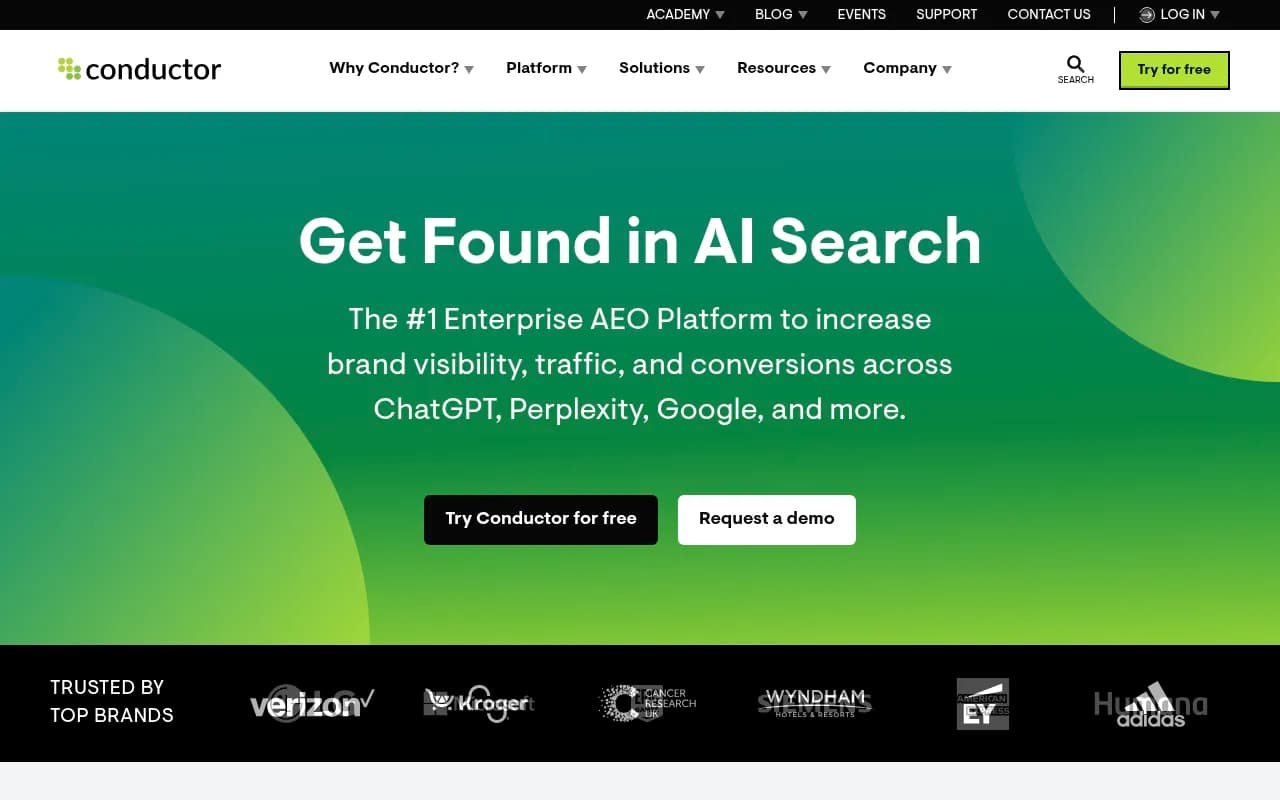
For offsite citation tracking specifically, Conductor's coverage is limited. It can show you where your brand is appearing in AI responses and track citation trends over time, but it doesn't surface the external sources driving those citations at the granularity that Promptwatch does. Reddit and YouTube are not tracked. Crawler logs are not available.
The platform's strength is integration with existing enterprise SEO workflows. If you have a large team already standardized on Conductor, adding AI visibility monitoring without switching tools has real operational value. But if you're evaluating from scratch specifically for offsite citation intelligence, Conductor isn't purpose-built for that use case.
Pricing is enterprise-tier and requires a sales conversation.
Head-to-head: offsite citation capabilities
This is the specific dimension that most comparisons gloss over. Here's how the four platforms stack up on the features that actually matter for understanding third-party brand mentions and external citation sources.
| Capability | Promptwatch | Profound | Peec AI | Conductor |
|---|---|---|---|---|
| Tracks which external sources AI cites | Yes (detailed) | Partial | No | Limited |
| Reddit discussion tracking | Yes | No | No | No |
| YouTube citation tracking | Yes | No | No | No |
| Third-party listicle/comparison tracking | Yes | Partial | No | No |
| AI crawler logs (which pages bots visit) | Yes | No | No | No |
| Offsite brand mention analysis | Yes | Partial | No | Limited |
| Content generation to close gaps | Yes | No | No | Limited |
| ChatGPT Shopping tracking | Yes | No | No | No |
| Traffic attribution from AI visibility | Yes | No | No | Limited |
The pattern is clear. Promptwatch is the only platform in this group built specifically to answer the question "what external content is driving AI recommendations in my category?" The others can tell you that you're not being cited -- they can't tell you why, or what to do about it.
Which platform fits which team
The right choice depends on what you actually need to do with the data.
If you need to understand and act on offsite citations: Promptwatch is the only real option here. The Reddit and YouTube tracking, combined with Content Agents that help you create content to fill gaps, is a combination none of the other platforms offer.
If you're an enterprise team that needs deep reporting and already has content resources: Profound is worth evaluating. The monitoring depth is strong, and the enterprise integrations are genuinely useful. You'll need to bring your own content strategy to act on what you find.
If you're just starting out and want basic AI visibility monitoring on a budget: Peec AI is a reasonable starting point. Understand that you're getting a monitoring dashboard, not a full GEO platform.
If your team is already on Conductor for traditional SEO: The AI visibility layer is worth activating. Don't expect it to replace a dedicated GEO platform if offsite citation intelligence is a priority.
What most teams get wrong about offsite citations
The instinct when you see a competitor getting recommended by ChatGPT is to optimize your own website -- add more content, improve your structured data, update your FAQ pages. That's not wrong, but it often misses the actual driver.
In many categories, the content that's influencing AI recommendations isn't on anyone's website. It's a Reddit thread from 18 months ago where someone asked "what's the best [category] tool" and got 40 upvotes on a response that mentions your competitor. It's a YouTube review that Perplexity keeps citing. It's a comparison article on a third-party blog that ranks for the exact prompt your customers are using.
You can't fix that by updating your homepage. You fix it by knowing it exists, understanding why it's being cited, and either creating better content that competes for the same citation slot or building a presence on the platforms where that content lives.
That's the core argument for taking offsite citation tracking seriously -- and why the platform you choose for this work matters more than most teams initially assume.
A practical starting point
If you're evaluating these platforms, the most useful thing you can do before committing is run a manual audit first. Pick 5-10 prompts that represent how your customers search in AI engines. Run them in ChatGPT, Perplexity, and Google AI Overviews. Note which sources are being cited -- not just which brands, but which specific pages, Reddit threads, and external articles. That gives you a baseline to test against when you trial any of these tools.
Promptwatch's free trial covers 50 prompts, which is enough to see whether its offsite citation data matches what you found manually. If it does -- and in most cases it will, plus surface sources you missed -- that's a strong signal you're looking at the right tool for this specific job.
The platforms that only tell you where you're invisible are useful. The ones that tell you why and help you fix it are the ones worth building a program around.