Key takeaways
- These five platforms sit at very different points on the monitoring-to-optimization spectrum. Botify and Profound lean heavily toward tracking and reporting; Relixir, Evertune, and Bluefish AI each make different bets on what "action" means.
- AI citation drift is real and significant. Research shows 40-60% of cited domains change monthly across major AI platforms, which means a quarterly monitoring cadence is essentially useless.
- Bluefish AI is purpose-built for brand protection and PR crisis response, not content optimization. If your primary concern is what AI says about you rather than whether AI mentions you at all, that distinction matters.
- Profound has the strongest enterprise reporting layer of the group, but stops short of helping you close the gaps it finds.
- For teams that need to both track and fix AI visibility, Promptwatch is worth evaluating alongside these five — it's the only platform in a recent 12-tool comparison rated a "Leader" across all categories, including content generation.
The Fortune 500 marketing team's AI visibility problem is not a data problem. Most of these platforms will give you dashboards, scores, and charts showing exactly where your brand is invisible in ChatGPT, Perplexity, or Google AI Overviews. The harder problem is: what do you do about it?
That's the lens through which this comparison is written. We're looking at five platforms that all claim to serve enterprise brands: Relixir, Evertune, Bluefish AI, Profound, and Botify. They're not interchangeable. Some are monitoring tools dressed up as optimization platforms. Some are genuinely built to help you fix the gaps they find. And one (Botify) comes at this from a completely different angle — technical SEO infrastructure rather than AI visibility measurement.
Here's what each actually does, who it's for, and where it falls short.
The competitive landscape in 2026
Before getting into the tools, a quick note on why this category exists and why it's moving so fast.
About 68% of Google searches ended without a click in early 2026, according to SparkToro's analysis of Similarweb clickstream data. ChatGPT reached roughly 900 million weekly active users in February 2026. Google's AI Overviews reach an estimated 2 billion people monthly. When the answer is the destination, being cited inside it is the new front page.
Traditional rank trackers don't measure any of this. They tell you where you sit on a results page. They say nothing about whether Perplexity recommends you when someone asks "what's the best [your category] tool?" That gap is what GEO platforms are built to close.
The citation drift data makes this even more urgent: 59.3% of domains cited in Google AI Overviews change month-over-month. ChatGPT shows 54.1% drift. If you're not actively monitoring and optimizing, you're not just standing still — you're likely losing ground.
Platform-by-platform breakdown
Relixir
Relixir positions itself as an end-to-end GEO engine for enterprise brands. The pitch is that it goes beyond monitoring to actually help teams create content that improves AI visibility — which puts it in a smaller category of platforms that try to close the full loop from gap identification to content production to tracking.
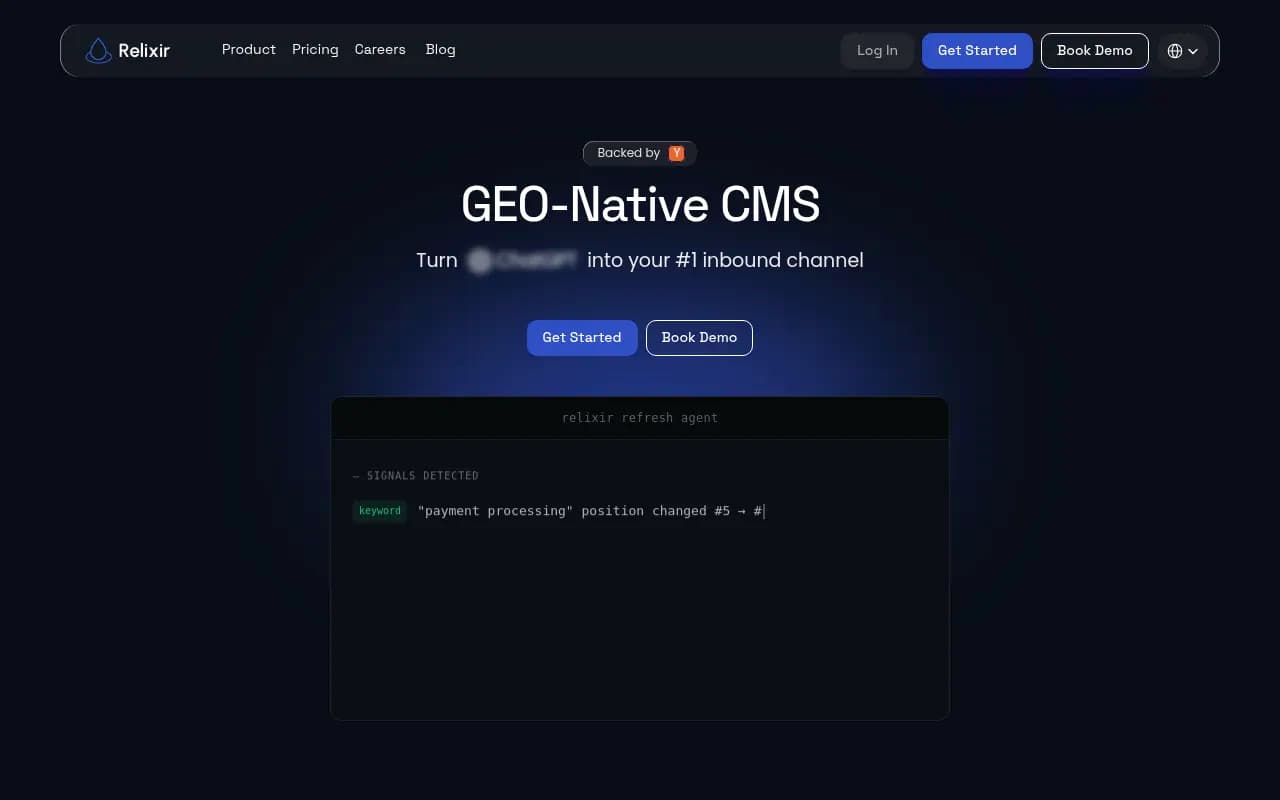
The platform covers AI model monitoring across the major engines and includes competitive analysis to show where rivals are getting cited and you're not. Where Relixir differentiates is in its content workflow: it's designed to take the gap data and turn it into actionable content briefs or drafts, rather than leaving that step to the marketing team.
For Fortune 500 teams, the relevant question is whether the content generation is genuinely grounded in real prompt data or just AI-generated filler. The answer varies by platform, and it's worth testing with your own category prompts before committing.
Evertune
Evertune is the GEO platform backed by The Trade Desk, which gives it a credibility signal that most competitors in this space lack. It covers 11 AI platforms and uses a panel of 25 million real internet users (EverPanel) to measure AI's actual influence on audience behavior — not just API outputs.
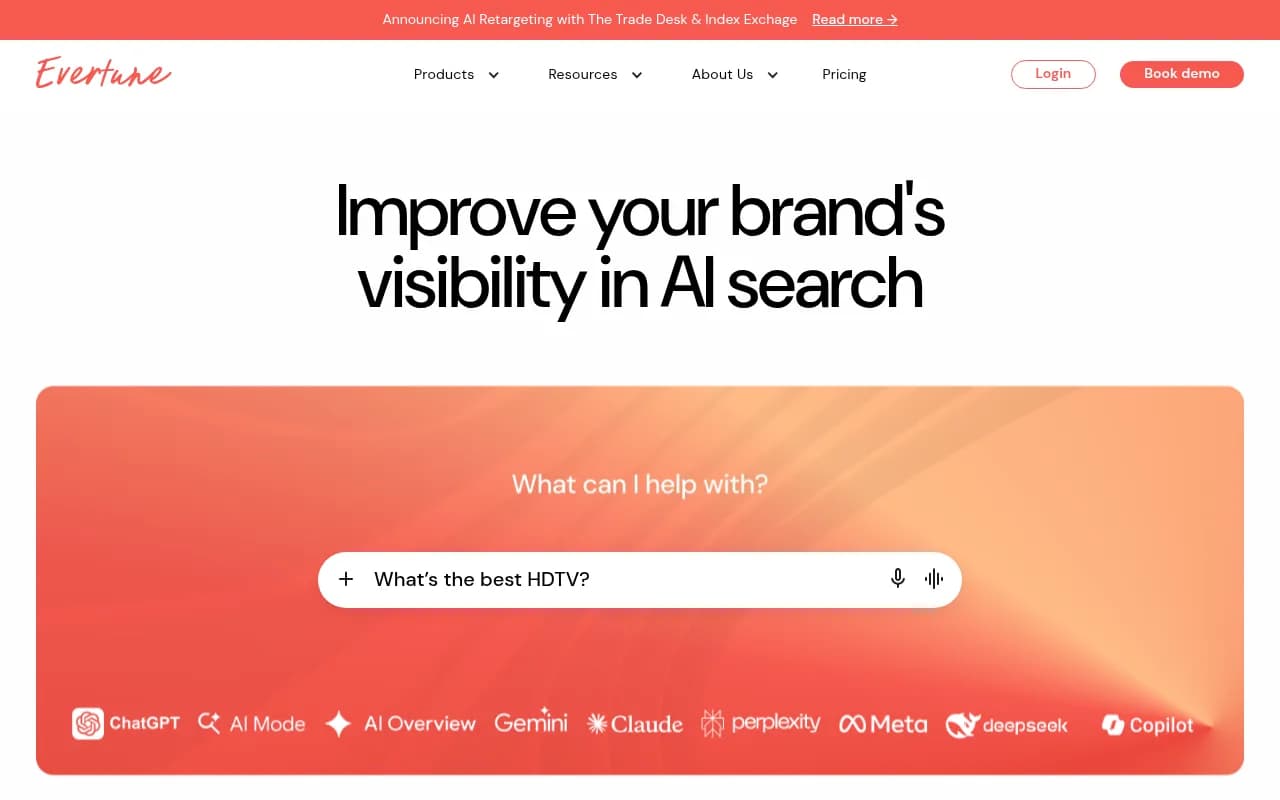
The platform's AI Brand Score (0-100 scale) weights both frequency of mentions and position in AI responses, which is more nuanced than simple mention counting. Its Consumer Preferences module tests brands against dozens of buyer preference topics to find competitive gaps, and the Word Association feature shows which terms AI models associate with your brand along with sentiment.
What Evertune does particularly well is source influence analysis — identifying which URLs and domains are driving AI citations in your category, including opportunity URLs that influence AI responses but don't mention your brand yet. That's genuinely useful intelligence for a content team.
The Content Studio generates blog copy designed for AI visibility, though like all AI content tools, the quality depends heavily on how well you configure the inputs.
Where Evertune is less strong: it's primarily a measurement and intelligence platform. The content generation is a feature, not the core product. Teams that need deep crawler log analysis or page-level citation tracking will find gaps.
Bluefish AI
Bluefish AI is the most narrowly focused of the five. It's built for brand protection and crisis monitoring in AI environments — specifically, catching cases where AI models misrepresent your brand, spread incorrect information, or generate responses that could damage your reputation.
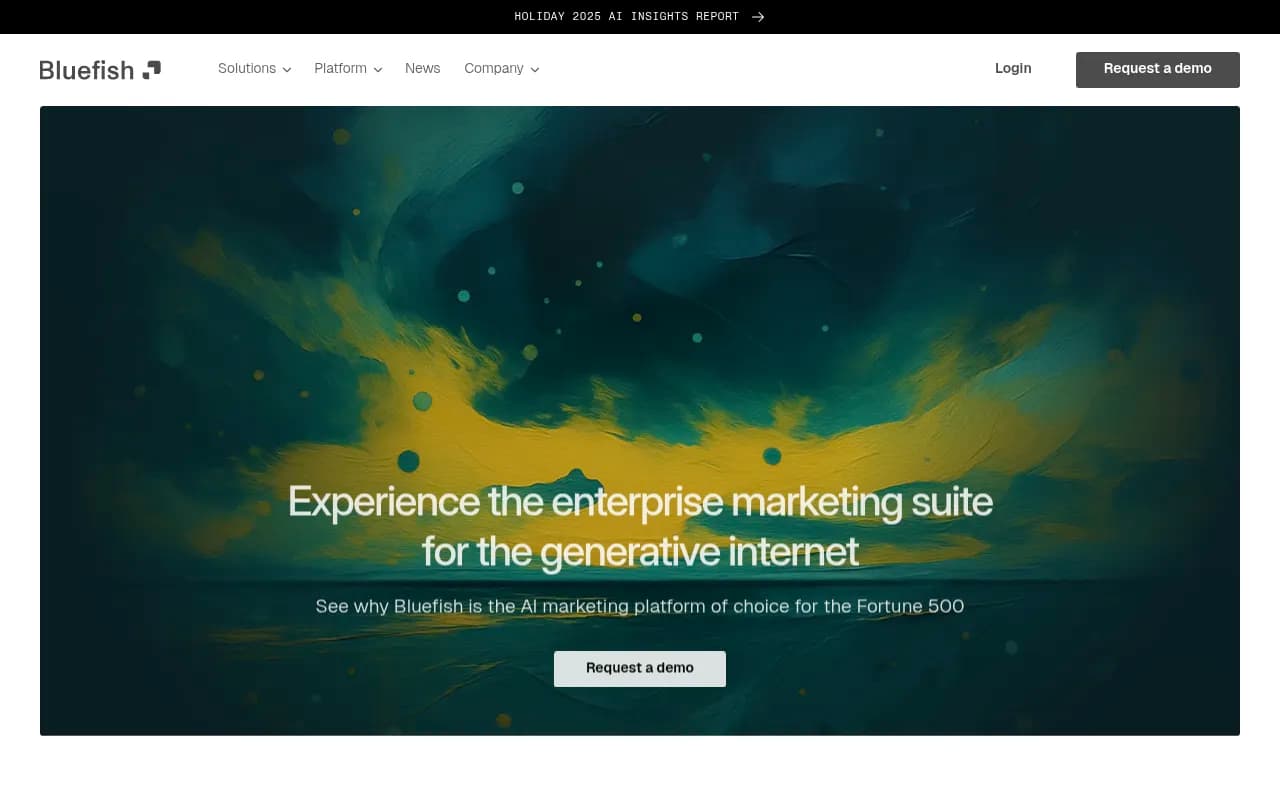
The platform integrates with PR tools like Cision, which signals its intended user: communications and PR teams, not SEO or content teams. Citation alerts for brand misrepresentation are the core value proposition.
This is a legitimate use case, especially for regulated industries, financial services, or brands that have been burned by AI hallucinations. But it's a different problem than "how do we get AI to mention us more often in purchase-intent queries." If your primary concern is the latter, Bluefish AI is probably not your tool.
The Profound vs Bluefish comparison from Nick Lafferty's blog puts it well: Profound delivers enterprise-grade AI visibility analytics while Bluefish AI focuses on brand protection and crisis monitoring. They're solving different problems.
Profound
Profound is the most mature enterprise monitoring platform in this group. It covers 9+ AI search engines, has a spreadsheet-like interface (Profound Sheets) for running AEO orchestration at scale, and recently added Custom Dashboards for building tailored reporting views.
Profound

The platform's strength is depth of measurement. It tracks citation patterns, competitor visibility, and how AI responses change over time across multiple models. For a Fortune 500 brand that needs to report AI visibility metrics to a CMO or board, Profound's reporting layer is probably the most polished of the five.
The limitation is the same one that affects most monitoring-first platforms: Profound shows you the problem but doesn't help you fix it. There's no content generation, no crawler log analysis, no page-level tracking of which specific pages are being cited. The gap analysis tells you what's missing; closing that gap is left to the team.
For large enterprises with dedicated content teams and the resources to act on data independently, that's fine. For teams that need the full loop in one tool, it's a meaningful gap.
Botify
Botify is the odd one out in this comparison. It's not primarily a GEO monitoring platform — it's an enterprise technical SEO platform that has added AI search optimization capabilities on top of a decade of crawl intelligence and log file analysis.
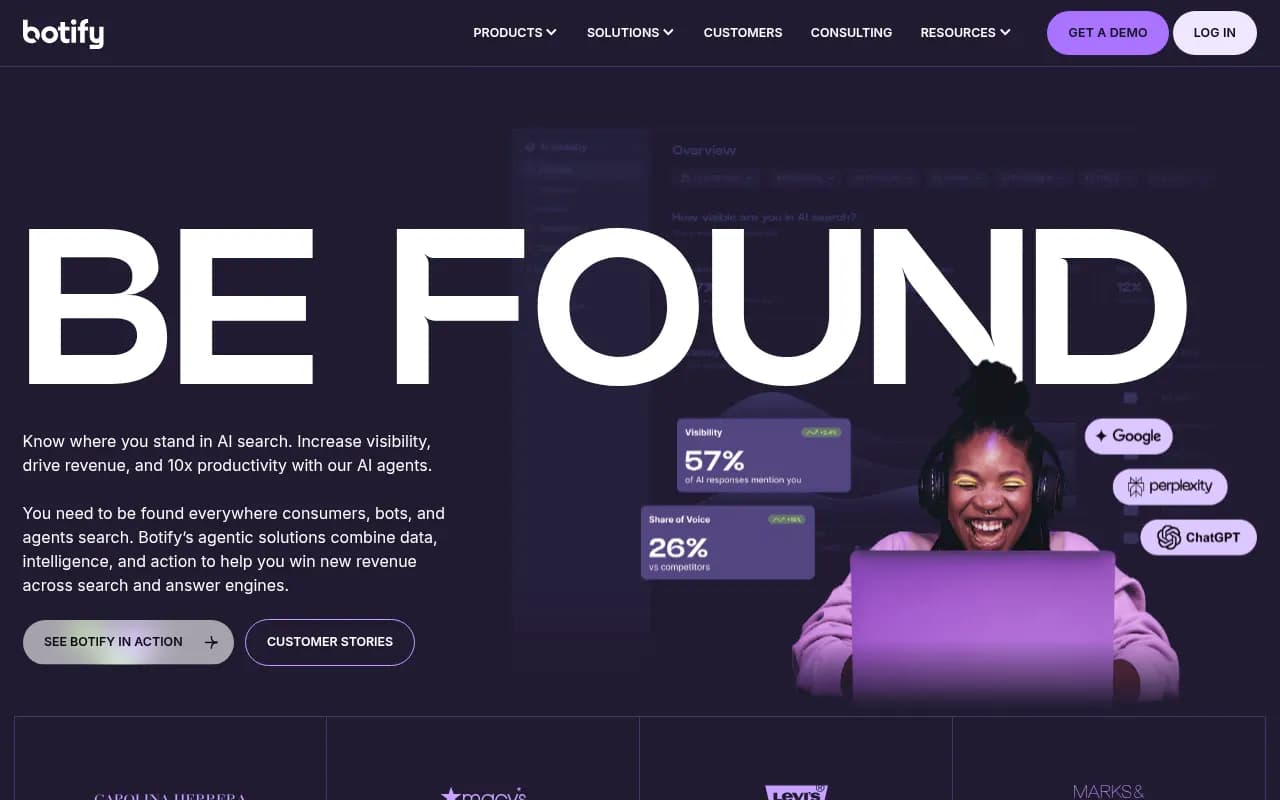
The core Botify product is built around making large, complex websites crawlable and indexable. Its log file analysis shows which pages search engines (and increasingly, AI crawlers) are actually visiting, how often, and whether they're encountering errors. For enterprise sites with hundreds of thousands of pages, this kind of infrastructure-level intelligence is genuinely hard to replicate.
Where Botify fits in the GEO conversation: if your AI visibility problem is partly a technical one — AI crawlers can't access your content, your JavaScript rendering is broken, your most important pages are being ignored by bots — Botify addresses that layer better than any of the other four platforms here.
What it doesn't do well: it's not a brand monitoring tool. It won't tell you whether ChatGPT mentions you in response to a specific prompt, or how your brand sentiment compares to competitors in AI responses. It's infrastructure, not intelligence.
Feature comparison table
| Feature | Relixir | Evertune | Bluefish AI | Profound | Botify |
|---|---|---|---|---|---|
| AI model monitoring | Yes | 11 models | Yes (brand focus) | 9+ models | Limited |
| Content generation | Yes | Yes (Content Studio) | No | No | No |
| Brand protection / crisis alerts | No | No | Yes (core feature) | No | No |
| Crawler log analysis | No | No | No | No | Yes (core feature) |
| Source / citation analysis | Yes | Yes | No | Yes | No |
| Competitive gap analysis | Yes | Yes | No | Yes | No |
| PR tool integrations | No | No | Yes (Cision) | No | No |
| Page-level citation tracking | No | No | No | Limited | No |
| Real user panel data | No | Yes (25M users) | No | No | No |
| Enterprise reporting / dashboards | Yes | Yes | Limited | Yes (strong) | Yes |
| Prompt volume data | No | Yes | No | No | No |
| Technical SEO / crawl health | No | No | No | No | Yes (core feature) |
| Best for | GEO content teams | Brand measurement | PR / comms teams | Enterprise analytics | Technical SEO |
Who each platform actually serves
This is where the comparison gets practical. These platforms are not competing for the same buyer.
Relixir fits marketing and SEO teams that want to close the full loop — find gaps, create content, track results — without stitching together multiple tools. It's the most direct competitor to platforms like Promptwatch in terms of ambition.
Evertune fits enterprise brand teams that need rigorous, statistically significant measurement of AI visibility across many models, with the Trade Desk's credibility behind the data. It's best for teams where measurement accuracy and executive reporting are the primary requirements.
Bluefish AI fits communications and PR teams at large brands where the risk of AI misrepresentation is a board-level concern. If your legal team is worried about what AI says about your brand, this is the tool. If your growth team is worried about whether AI recommends your brand, it's not.
Profound fits enterprise analytics teams that need the deepest monitoring data and the most flexible reporting layer. It's the right choice when you have a separate content team that can act on the data Profound surfaces.
Botify fits enterprise SEO and technical teams at large, complex sites where crawl efficiency and AI crawler access are the bottleneck. If your content is good but AI crawlers aren't reading it, Botify addresses that problem at the infrastructure level.
The gap none of them fully close
Here's the honest assessment: most of these platforms are still primarily monitoring tools. They measure the problem with varying degrees of sophistication, but the step from "here's where you're invisible" to "here's the content that will fix it, grounded in real prompt data" is where most fall short.
Evertune and Relixir make the most serious attempts at content generation, but neither has the depth of prompt intelligence — volume estimates, difficulty scores, query fan-outs, page-level citation tracking — that makes content generation genuinely targeted rather than directionally correct.
For teams that want the full loop, it's worth looking at platforms built specifically around the optimization cycle rather than monitoring with content features bolted on.
Promptwatch is one platform that takes a different approach: its Answer Gap Analysis shows exactly which prompts competitors rank for that you don't, its Content Agents generate articles grounded in real prompt data and citation patterns, and its AI Crawler Logs show which pages AI engines are actually reading and when they move from crawl to citation. That's a more complete loop than any of the five platforms in this comparison currently offer.

Pricing reality for enterprise teams
None of these platforms publish transparent pricing at the enterprise tier, which is standard for this market segment. What we know:
- Profound and Evertune both position as enterprise-first and price accordingly. Expect five-figure annual contracts for meaningful prompt coverage.
- Bluefish AI pricing reflects its PR tool positioning — it's sold alongside tools like Cision, which suggests similar enterprise pricing structures.
- Botify is one of the more expensive technical SEO platforms on the market, with pricing that scales with site size and crawl volume.
- Relixir is newer and may have more flexible entry points, but enterprise tier pricing is custom.
For context, platforms with transparent pricing in this space (like Promptwatch at $99-$579/month for self-serve tiers) give a sense of what the category costs at smaller scale. Enterprise contracts for the platforms in this comparison typically run significantly higher.
How to choose
A few questions that should drive the decision:
Is your primary problem measurement or optimization? If you need to report AI visibility metrics to leadership and have a separate team to act on them, Profound or Evertune fit better. If you need to close the gap yourself, look for platforms with content generation built into the workflow.
Is brand protection a separate concern from brand visibility? If yes, Bluefish AI might be a second tool alongside a monitoring platform, not a replacement for one.
Is your AI visibility problem partly technical? If AI crawlers aren't reading your content because of JavaScript rendering issues, crawl budget problems, or site architecture, Botify addresses that layer. The other four don't.
How many AI models do you need to cover? Evertune's 11-model coverage is the broadest in this group. If you need visibility across ChatGPT, Perplexity, Claude, Gemini, Grok, DeepSeek, and others simultaneously, that breadth matters.
Do you need real user data or API-based data? Evertune's EverPanel (25 million real users) is unique in this group. API-based monitoring can miss differences between how AI models behave in real user interfaces versus API calls — a meaningful gap for brands where the shopping or recommendation experience matters.
The right answer for most Fortune 500 teams is probably not one of these five platforms in isolation. A combination of deep monitoring (Profound or Evertune) plus a platform with genuine content optimization capabilities is closer to what the problem actually requires.
Bottom line
These five platforms represent genuinely different approaches to a real problem. Evertune is the most rigorous measurement tool. Profound has the best enterprise reporting. Bluefish AI is the right choice if brand protection is the primary concern. Botify solves a different problem entirely — technical crawl access rather than brand visibility. Relixir is the most ambitious in trying to close the full loop.
None of them are interchangeable. The mistake most enterprise teams make is evaluating them all on the same criteria when they're built for different jobs.
Pick the one that matches the job you actually need done — and be honest about whether "monitoring" is the job, or whether "fixing" is.