Key takeaways
- Bombora is a pure intent data provider, not a full ABM platform -- it's best used as a data layer inside another tool
- 6sense has the deepest AI and the broadest signal set, but costs $80K-$1M+/year and needs a mature RevOps team to get value from it
- Demandbase is the strongest all-in-one ABM platform for mid-market and enterprise Salesforce shops, with a cleaner UI than 6sense
- Factors.ai is the most cost-effective option for B2B SaaS teams that want account-level intent without a six-figure commitment
- RollWorks is the right entry point for HubSpot-native teams under $50M ARR running 1:many ABM programs
B2B intent data has a dirty secret: most of it is the same data, resold through different interfaces.
Bombora runs the largest third-party intent cooperative on the internet -- a network of 5,000+ B2B publisher sites that pool behavioral data. 6sense buys Bombora data. Demandbase resells Bombora data. ZoomInfo runs on Bombora data. So when vendors promise "proprietary intent signals," it's worth asking exactly what that means.
That said, the platforms built on top of that data are genuinely different. The AI models, the activation workflows, the CRM integrations, the advertising capabilities -- these vary a lot. And in 2026, with AI-assisted buying journeys getting longer and more complex, the platform layer matters as much as the raw data underneath.
This guide compares five platforms that GTM teams are actively evaluating: Bombora, 6sense, Demandbase, Factors.ai, and RollWorks. The goal is to help you figure out which one actually fits your team, your stack, and your budget.
What "intent data" actually means in 2026
Before comparing platforms, it helps to be precise about what's being measured.
First-party intent is behavior on your own properties: page visits, pricing page views, demo requests, email opens, product usage signals. You own this data. It's high-fidelity because you know exactly who did what.
Third-party intent is behavior happening elsewhere on the internet -- industry publications, review sites like G2, competitor websites, forums. You don't own this data; you buy access to it. Bombora is the dominant supplier. The signal is noisier because you're inferring intent from topic consumption patterns rather than direct engagement with your brand.
Predictive intent is what 6sense and Demandbase layer on top: AI models that combine first-party and third-party signals with firmographic data to score accounts on buying stage. This is useful but also where the black-box problem starts -- it can be hard to understand why an account is scored the way it is.
Most teams need all three. The question is which platform assembles them most usefully for your specific motion.
The five platforms at a glance
| Platform | Primary data type | Best for | Pricing (approx.) | CRM fit |
|---|---|---|---|---|
| Bombora | Third-party topic surge | Adding intent to an existing stack | $25K-$75K/year | API/integrations |
| 6sense | Aggregated 3P + AI predictions | Enterprise ABM with dedicated RevOps | $80K-$1M+/year | Salesforce, HubSpot |
| Demandbase | 3P (Bombora) + ABM orchestration | Mid-market/enterprise on Salesforce | $40K-$250K/year | Salesforce-first |
| Factors.ai | First-party + G2 + LinkedIn signals | B2B SaaS teams wanting pipeline analytics | $12K-$60K/year | HubSpot, Salesforce |
| RollWorks | 3P intent + ABM advertising | HubSpot-native teams under $50M ARR | $13K-$120K/year | HubSpot-first |
Bombora: the infrastructure layer
Bombora is not really an ABM platform. It's a data business. Understanding this distinction saves a lot of confusion.
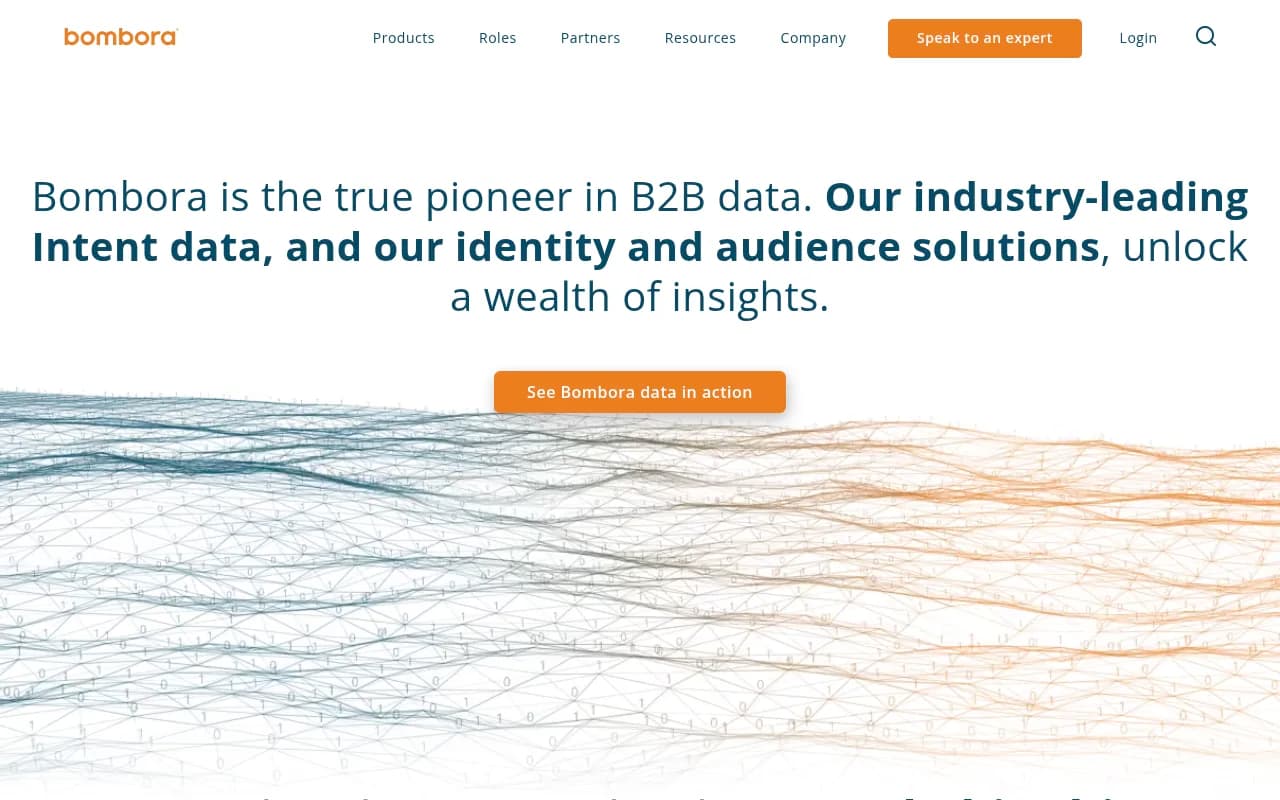
Bombora's "Company Surge" product tracks when a company's employees are consuming content about specific topics at a rate significantly above their baseline. If a company's team suddenly reads 40 articles about "data loss prevention" in a week when they normally read two, that's a surge signal. Bombora covers around 10,000 topics and draws from its cooperative network of 5,000+ B2B publisher sites.
What Bombora does well:
- Broadest third-party intent network in B2B
- Topic taxonomy is the most mature in the category
- Integrates into almost every major platform (Salesforce, HubSpot, Marketo, Outreach, and most ABM tools)
- Useful as a standalone data feed if you have the infrastructure to act on it
What it doesn't do:
- No advertising activation (you need another platform)
- No account scoring or AI predictions natively
- No CRM workflow automation
- No website visitor identification
Bombora makes most sense for teams that already have a MAP and CRM set up and want to add intent signals to their existing scoring model. If you're buying Bombora data through 6sense or Demandbase, you're getting the same underlying signals -- just with more activation tooling on top.
Pricing runs $25K-$75K/year depending on the number of topics, seats, and integrations. There's no self-serve option.
6sense: the enterprise-grade prediction machine
6sense is the most technically sophisticated platform in this comparison. It combines Bombora's third-party data with G2 intent, first-party website signals, and its own AI models to produce a "buying stage" prediction for each account (Awareness, Consideration, Decision, Purchase).
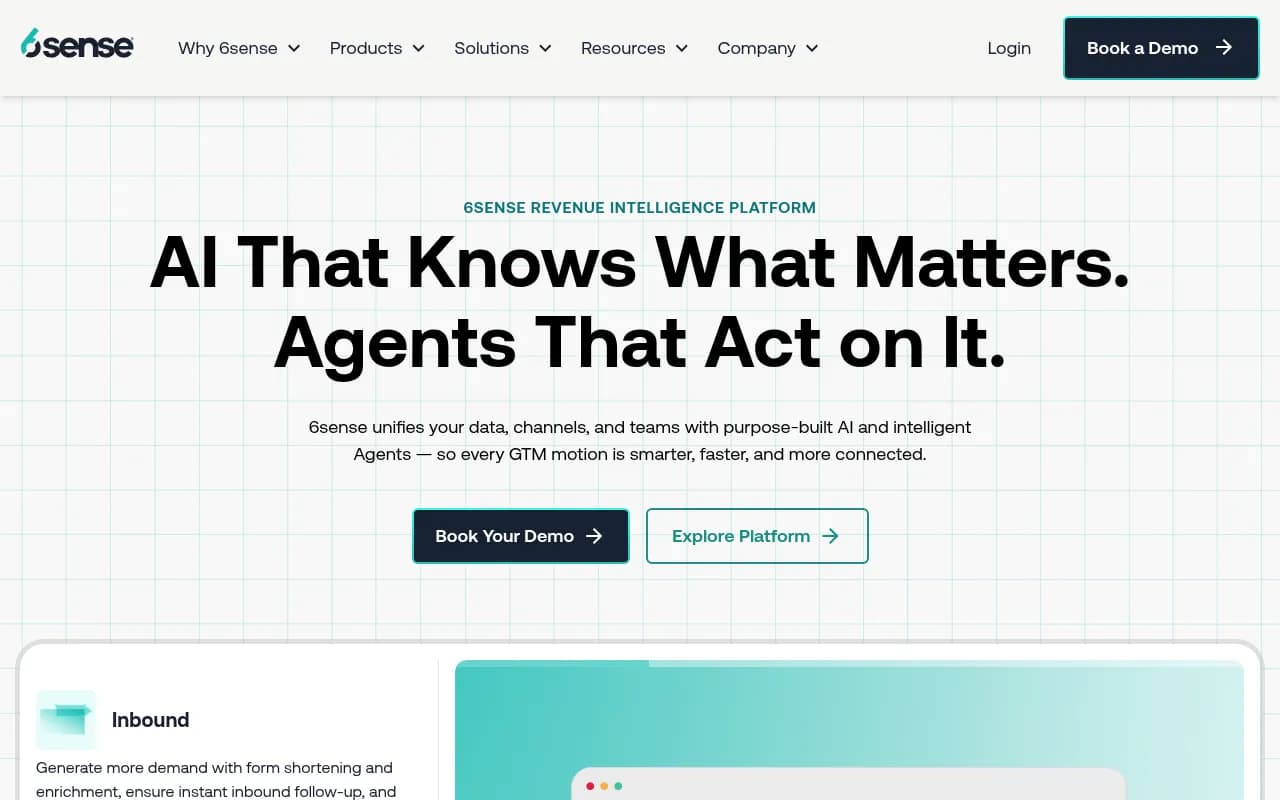
The core premise is that most B2B buying happens anonymously -- 70%+ of the research process occurs before a prospect ever fills out a form. 6sense tries to surface those anonymous accounts before they raise their hand.
What 6sense does well:
- Deepest intent signal set of any platform here
- Buying stage predictions are genuinely useful for prioritizing outreach
- Strong advertising activation (display, LinkedIn, programmatic)
- Revenue AI for Sales gives reps account-level intelligence directly in Salesforce
- Solid reporting on pipeline influenced by intent signals
Where it struggles:
- Implementation takes 3-6 months to get meaningful data
- Requires dedicated RevOps to configure and maintain
- Pricing is opaque and negotiation-heavy -- $80K is the floor, enterprise contracts go much higher
- The AI predictions are a black box; it's hard to explain to a sales rep why an account is flagged
- HubSpot integration exists but Salesforce is clearly the primary CRM
The honest verdict from the research: 6sense is right for B2B companies above $100M ARR with mature RevOps teams and enterprise sales motions. Below that threshold, you're paying for complexity you won't use.
Demandbase: the commercial ABM platform
Demandbase One is what you get when you want 6sense-level capabilities with a cleaner interface and a stronger advertising product. It acquired Engagio (account engagement) and DemandMatrix (technographic data), which gives it a more complete picture than pure intent data alone.
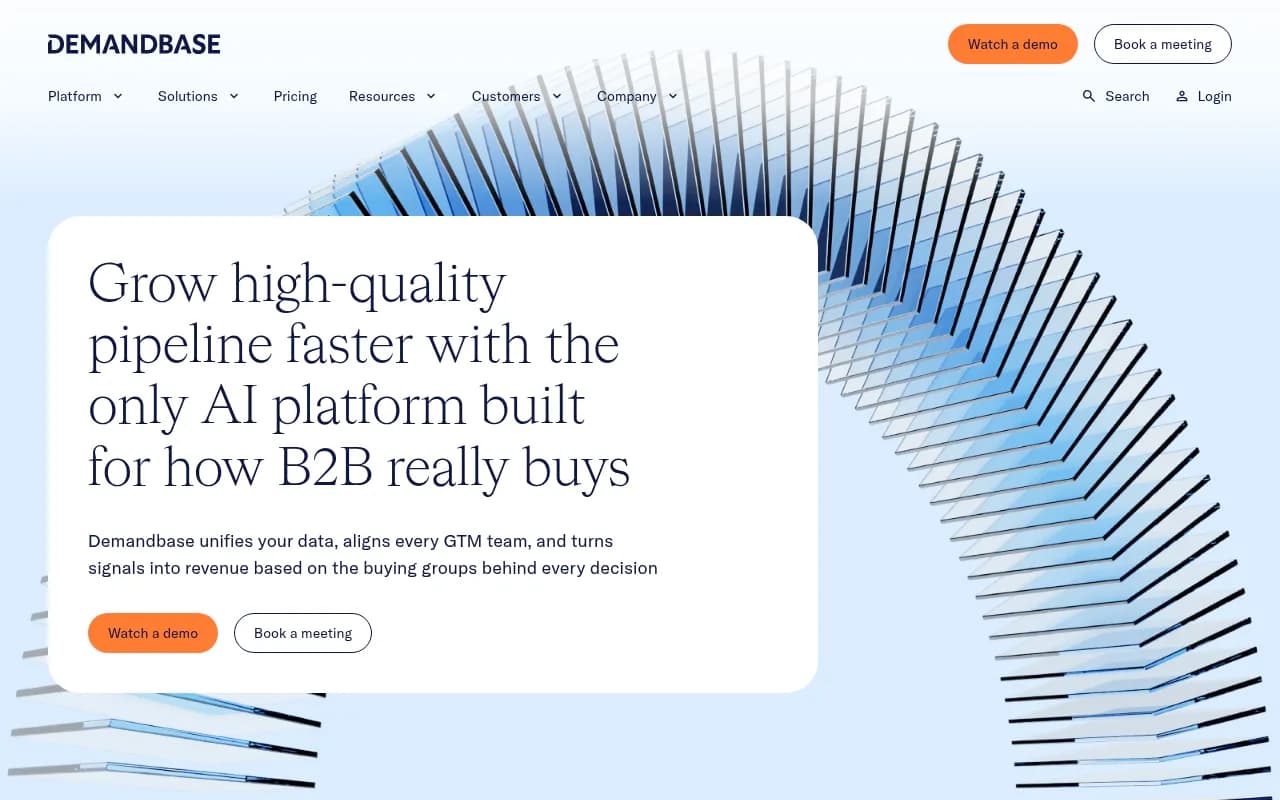
Demandbase resells Bombora intent data but layers its own account intelligence on top: technographics, firmographics, account engagement scoring, and a display advertising network specifically built for B2B account targeting.
What Demandbase does well:
- Best commercial UI in the enterprise ABM category -- sales teams actually use it
- Strong display advertising with B2B-specific targeting
- Account Journey Analytics shows where accounts are in the funnel
- Smarter GTM platform connects advertising, account intelligence, and sales plays in one view
- Better documentation and onboarding than 6sense
Where it struggles:
- Intent data is Bombora-sourced, so no differentiation there
- Less predictive AI depth than 6sense
- Salesforce-first; HubSpot users get a degraded experience
- Pricing ($40K-$250K/year) puts it out of reach for most sub-$50M ARR companies
Demandbase fits best at $50M-$250M ARR, on Salesforce, running multi-product ABM programs where the sales team needs to see account intelligence without digging through dashboards.
Factors.ai: the pipeline analytics play
Factors.ai takes a different approach. Rather than starting with third-party intent data, it starts with your first-party signals -- website visits, product usage, CRM data -- and enriches them with G2 intent, LinkedIn engagement, and account-level analytics.
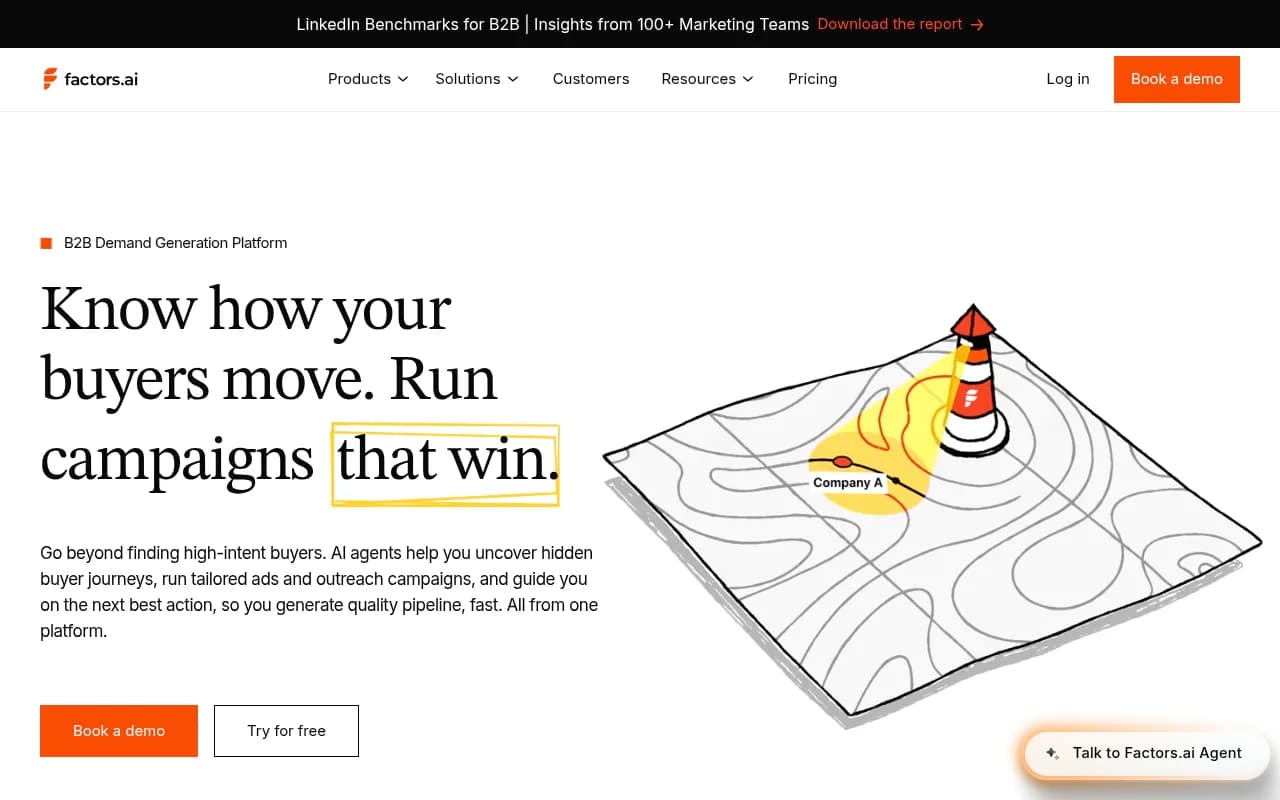
The result is a platform that feels less like a data vendor and more like a pipeline analytics tool that happens to include intent signals. It's built for teams that want to understand which accounts are engaging, why, and what to do about it -- without needing a dedicated RevOps team to operate it.
What Factors.ai does well:
- Account-level website analytics that de-anonymizes visitors (similar to Clearbit Reveal)
- G2 intent integration shows which accounts are researching you on review sites
- LinkedIn engagement tracking connects ad exposure to account behavior
- Pipeline analytics that tie intent signals to actual revenue outcomes
- Much faster time-to-value than 6sense or Demandbase -- weeks, not months
- Pricing is accessible: $12K-$60K/year depending on tier
Where it struggles:
- Third-party intent coverage is narrower than Bombora or 6sense
- No native display advertising activation
- Smaller ecosystem of integrations compared to the enterprise platforms
- Less brand recognition, which matters when selling internally
Factors.ai is the right choice for B2B SaaS teams at $5M-$50M ARR that want intent-informed pipeline analytics without a six-figure platform commitment. It's also a good complement to LinkedIn Sales Navigator for teams running outbound-heavy motions.
RollWorks: the HubSpot-native ABM platform
RollWorks is the most accessible full ABM platform in this comparison. It's built for teams that are HubSpot-native, running 1:many or 1:few ABM programs, and don't have the budget or RevOps maturity for 6sense or Demandbase.
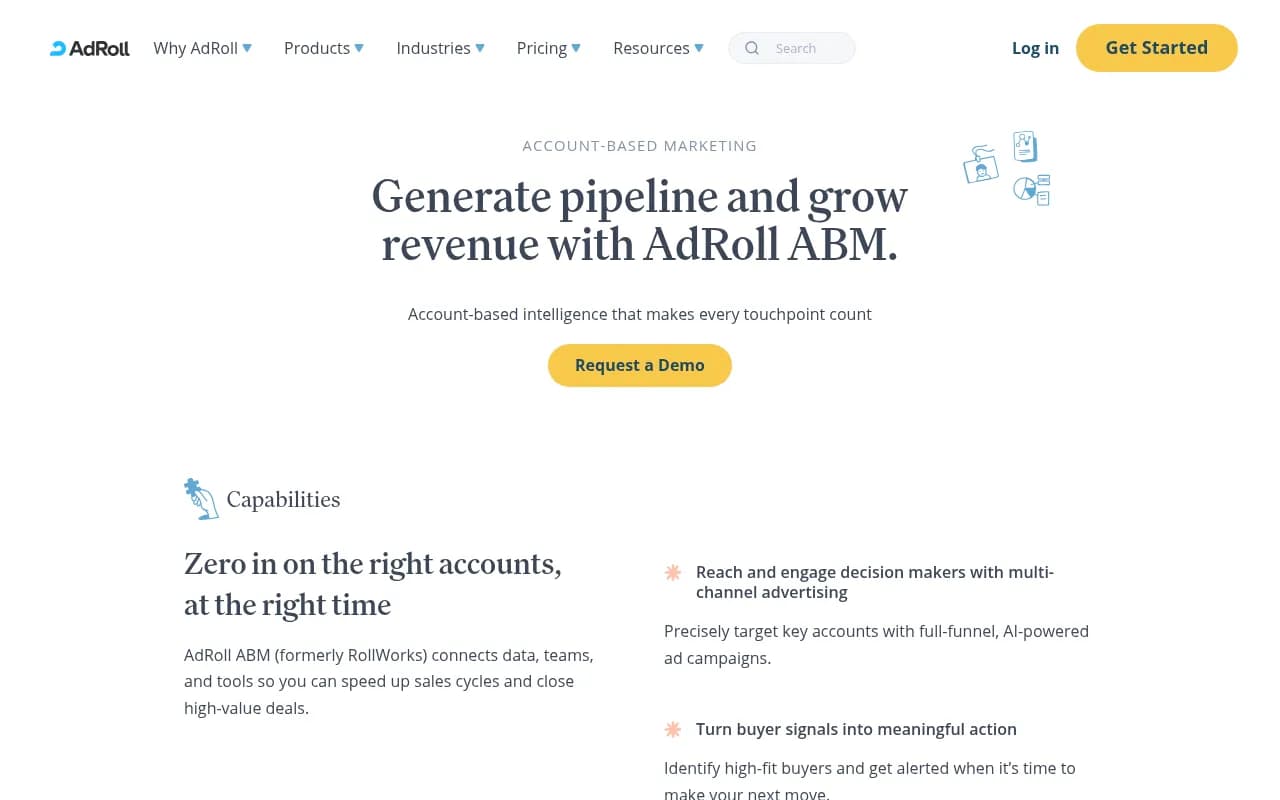
RollWorks uses Bombora intent data (like most platforms here), combines it with its own account identification technology, and wraps it in a display advertising platform that integrates cleanly with HubSpot. The key differentiator is the HubSpot integration -- it's the tightest in the category, which matters a lot when your marketing team lives in HubSpot.
What RollWorks does well:
- Cleanest HubSpot integration of any ABM platform
- Operational in 4-6 weeks (vs. 3-6 months for 6sense)
- Pricing starts at $13K/year (Starter), which is genuinely accessible
- Account Journey Stages give a simplified version of 6sense's buying stage model
- Display advertising activation is solid for 1:many programs
Where it struggles:
- Intent signal depth is less than 6sense or Demandbase
- AI predictions are less sophisticated
- Salesforce integration exists but HubSpot is clearly the primary use case
- Doesn't scale well above 500 target accounts without getting expensive
The research from GrowthSpree puts it plainly: RollWorks covers 85-90% of the ABM playbook for sub-$100K ACV deals at one-third the price of 6sense. That's a compelling value proposition for the right team.
Head-to-head: key capability comparison
| Capability | Bombora | 6sense | Demandbase | Factors.ai | RollWorks |
|---|---|---|---|---|---|
| Third-party intent | Native (co-op) | Bombora + G2 | Bombora | G2 + limited | Bombora |
| First-party intent | No | Yes | Yes | Yes (core) | Yes |
| AI buying stage | No | Yes (deep) | Yes (moderate) | Moderate | Basic |
| Display advertising | No | Yes | Yes (strong) | No | Yes |
| Account identification | No | Yes | Yes | Yes | Yes |
| HubSpot integration | API | Good | Limited | Good | Native |
| Salesforce integration | API | Native | Native | Good | Good |
| Time to value | Weeks | 3-6 months | 2-4 months | Weeks | 4-6 weeks |
| Pricing floor | ~$25K/yr | ~$80K/yr | ~$40K/yr | ~$12K/yr | ~$13K/yr |
| Best ARR range | Any | $100M+ | $50M-$250M | $5M-$50M | $5M-$50M |
How to choose: a decision framework
The right platform depends on four variables: your ARR, your CRM, your sales motion, and your RevOps maturity.
If you're on HubSpot with under $50M ARR and running 1:many ABM: RollWorks. It's the fastest path to a working ABM program without overbuilding.
If you're on Salesforce at $50M-$250M ARR with multi-product complexity: Demandbase One. The UI is better than 6sense for sales adoption, and the advertising product is strong.
If you're above $100M ARR with a dedicated RevOps team and enterprise sales cycles: 6sense. The predictive depth is worth the complexity and cost at that scale.
If you're a B2B SaaS team that wants pipeline analytics and intent signals without a six-figure commitment: Factors.ai. It's the most accessible way to get account-level intelligence that connects to revenue.
If you already have an ABM platform and want to add intent data to your scoring model: Bombora directly. You're probably already getting it through your existing platform, but buying direct gives you more topic coverage and flexibility.
One thing worth noting: none of these platforms replace the need for good content. Intent data tells you who's in-market; it doesn't tell you what to say to them. Teams that combine intent signals with a strong content strategy consistently outperform those that treat intent data as a silver bullet.
Complementary tools worth knowing
A few tools that work alongside these platforms:
For contact data and enrichment: ZoomInfo and Cognism are the two dominant options. ZoomInfo has the largest database; Cognism has better GDPR compliance for European markets.
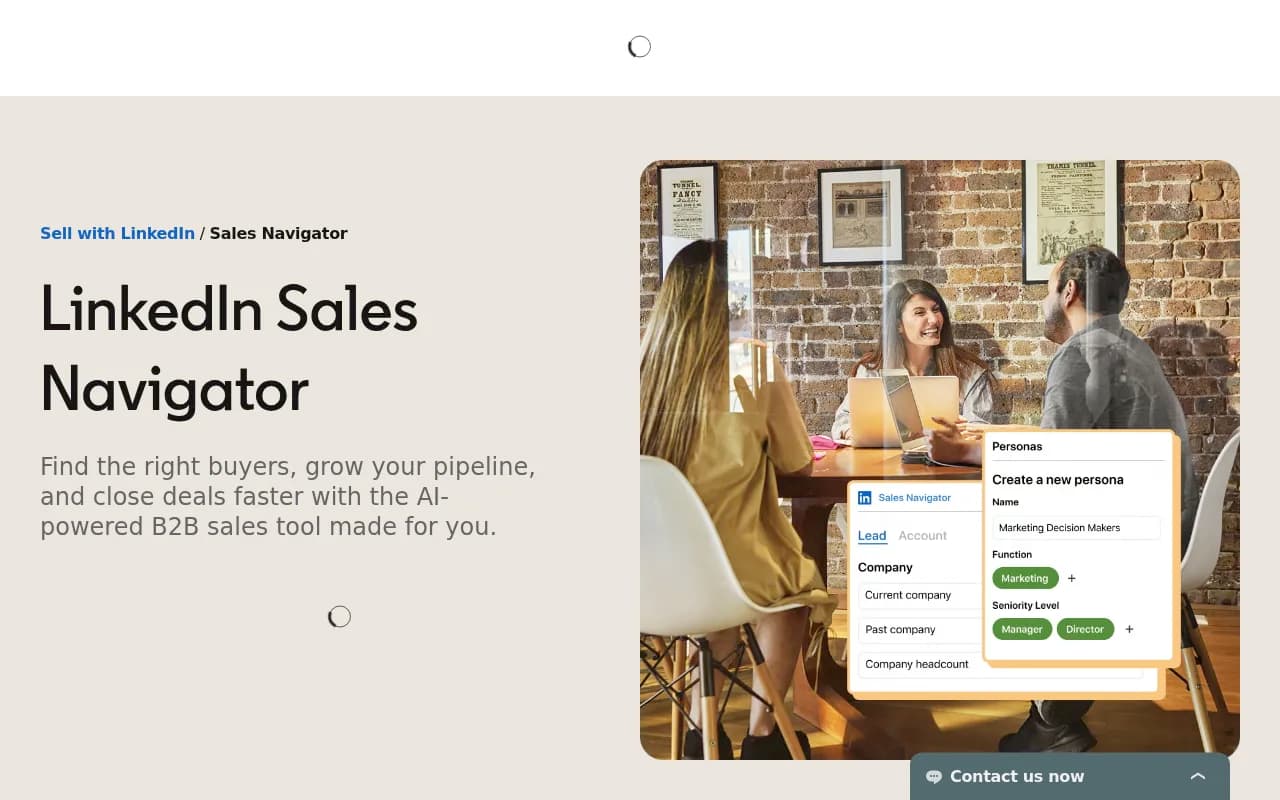
For LinkedIn-based prospecting: LinkedIn Sales Navigator remains the most reliable way to reach decision-makers once intent signals identify an account.
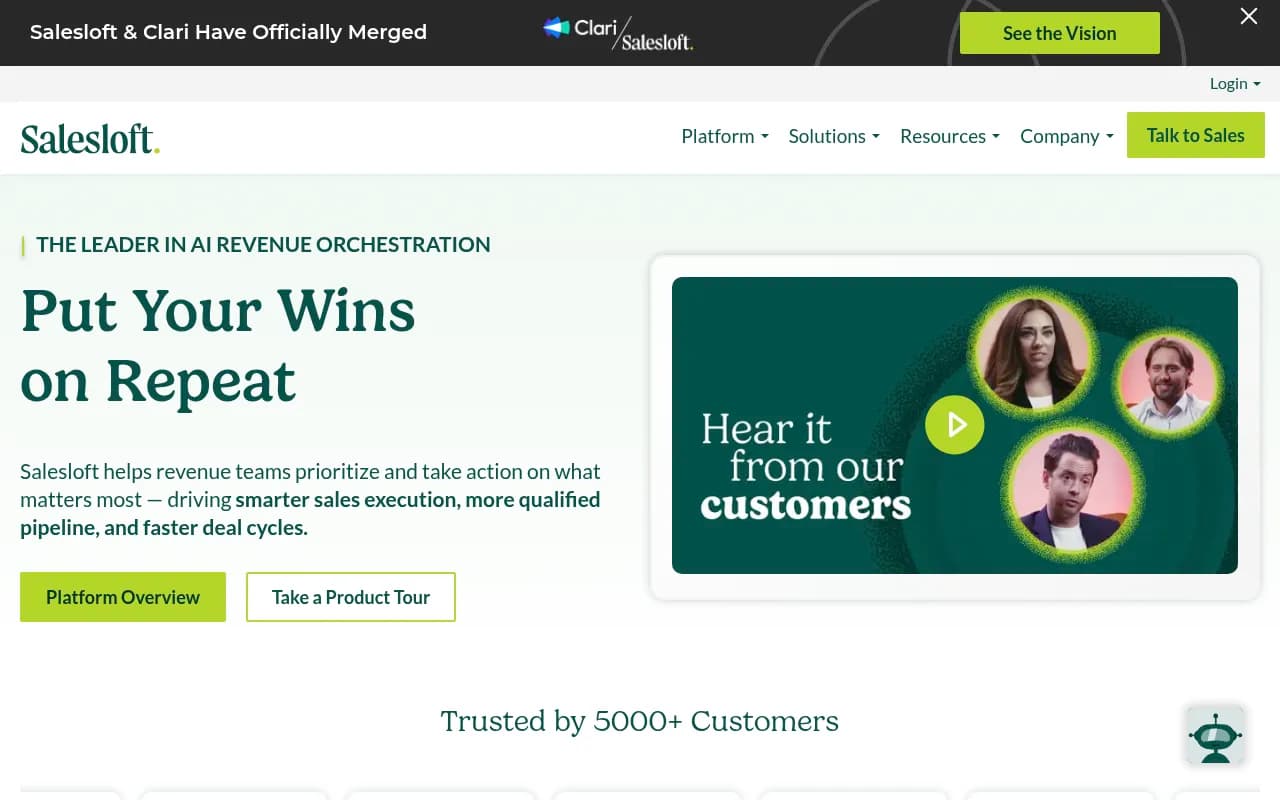
For sales engagement once accounts are identified: Salesloft handles the sequencing and outreach automation that intent platforms don't cover.
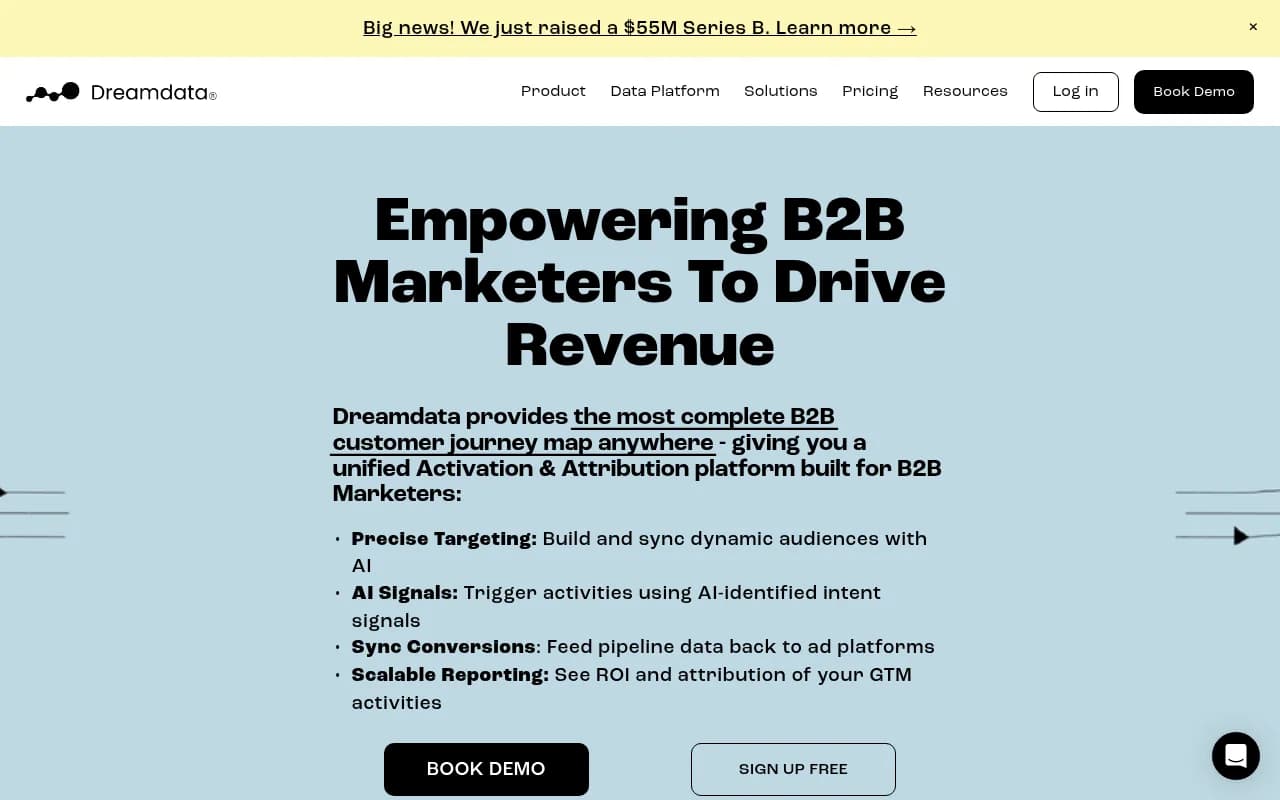
For B2B attribution (connecting intent spend to revenue): Dreamdata is the most rigorous B2B attribution platform for understanding which touchpoints actually influenced closed deals.
For account list building: Keyplay uses AI to build and score target account lists, which is a useful input before you start running intent data against them.
The AI angle: what changes in 2026
The platforms in this comparison are all adding AI features, but the substance varies.
6sense's AI is the most mature -- its buying stage model has been trained on years of B2B pipeline data and is genuinely predictive when configured correctly. Demandbase's AI is solid but more rule-based in practice. RollWorks and Factors.ai are adding AI features but they're earlier in that journey.
The more interesting AI development is happening at the intersection of intent data and content. AI buying journeys are changing how B2B research happens -- more of it is now mediated by AI assistants like ChatGPT and Perplexity rather than direct Google searches and publisher content. This has two implications for intent data:
First, the publisher network that Bombora relies on may see reduced traffic as buyers shift to AI-assisted research. The signal quality of third-party intent data could degrade over time if buyers stop visiting the B2B publications that feed the cooperative.
Second, brands that appear in AI search results when buyers ask questions about their category gain a form of visibility that none of these intent platforms currently measure. That's a separate problem -- tracking and optimizing for AI search visibility -- that tools like Promptwatch are built to address.

The point isn't that intent data becomes irrelevant -- it doesn't. But GTM teams in 2026 need to think about both behavioral intent signals (who's researching) and AI search visibility (whether your brand appears when they ask AI assistants for recommendations). These are complementary, not competing, concerns.
Bottom line
The intent data market has consolidated around a few clear winners for different segments. There's no universally "best" platform -- the right answer depends almost entirely on your company stage, CRM, and how much RevOps capacity you have to operate a complex platform.
For most B2B SaaS teams reading this, the practical starting point is either Factors.ai (if you want pipeline analytics with intent signals) or RollWorks (if you want ABM advertising with HubSpot integration). Both get you to value faster and cheaper than the enterprise platforms.
6sense and Demandbase are genuinely powerful, but they require the organizational maturity to match. Buying 6sense at $30M ARR with one marketing ops person is a recipe for an expensive dashboard that nobody looks at.
And Bombora? It's the infrastructure. If you're buying any of the other platforms, you're already getting Bombora data. The question is just whether the platform on top is the right one for your motion.