Key takeaways
- All five platforms track traditional Google rankings well -- the real differences show up in AI Overview coverage, LLM visibility, and what you can actually do with the data.
- AccuRanker is the fastest and most accurate for pure rank tracking; Advanced Web Ranking has the deepest reporting history and white-label options for agencies.
- SE Ranking is the best all-rounder for teams that want keyword research, site audits, and rank tracking in one budget-friendly package.
- Nightwatch has the cleanest UI and the most honest approach to AI search monitoring among the five.
- Rankscale is the newest entrant, built specifically for agencies tracking AI visibility -- it's thin on traditional SEO features but fills a real gap.
- If AI search visibility (ChatGPT, Perplexity, Gemini, Claude) is your primary concern, none of these five fully replace a dedicated GEO platform.
Rank tracking used to be simple. You pick your keywords, connect to Google, and watch the numbers move. In 2026, that workflow still matters -- but it tells you less and less of the story.
AI Overviews now appear in nearly 19% of Google search results according to SE Ranking's own research. A Seer Interactive study found AI Overviews drive a 61% drop in organic click-through rates for informational queries. You can sit at position one and still lose the majority of your traffic to an AI-generated answer box that doesn't cite you at all.
So the question when evaluating rank trackers in 2026 isn't just "how accurate are the rankings?" It's also "can this tool tell me what's happening in AI search?" The five platforms in this comparison -- AccuRanker, Advanced Web Ranking, SE Ranking, Nightwatch, and Rankscale -- answer that second question very differently.
Let's get into it.
Quick comparison table
| Platform | Best for | Daily updates | AI Overview tracking | LLM tracking | Starting price |
|---|---|---|---|---|---|
| AccuRanker | Agencies needing speed and accuracy | Yes (on-demand) | Yes | No | ~$129/mo |
| Advanced Web Ranking | Enterprise reporting and white-label | Yes | Limited | No | $49/mo |
| SE Ranking | All-in-one SEO on a budget | Yes | Yes | Via SE Visible add-on | $65/mo |
| Nightwatch | Clean UI, local SEO, AI monitoring | Yes | Yes | Basic | $39/mo |
| Rankscale | Agency AI visibility tracking | Yes | Yes | Yes | Custom |
AccuRanker
AccuRanker built its reputation on one thing: speed. On-demand rank updates -- meaning you can refresh a keyword's position right now, not tomorrow -- is still a differentiator in 2026. Most rank trackers update daily at best; AccuRanker lets you pull fresh data whenever you need it, which matters when you're reacting to a Google update or presenting to a client in two hours.
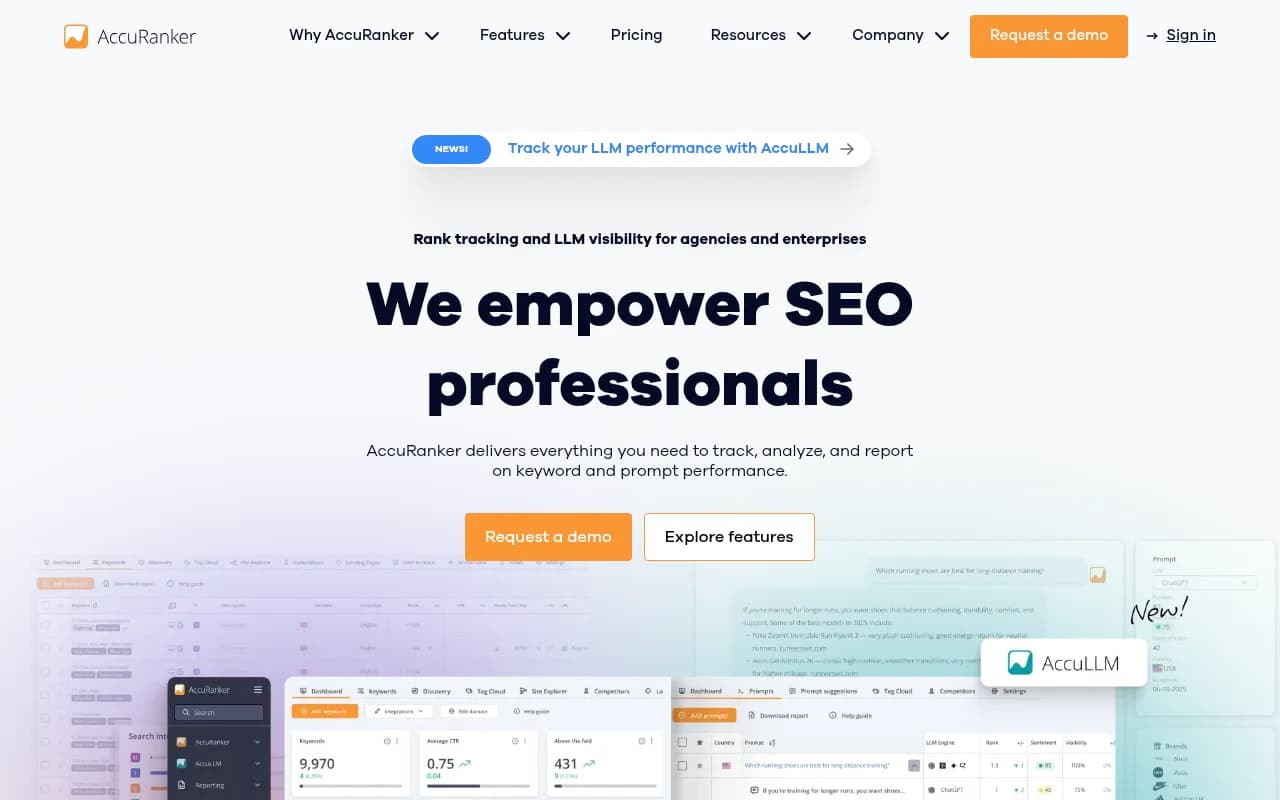
The platform tracks Google and Bing rankings across desktop and mobile, with solid local tracking by city and region. SERP feature tracking is mature -- you can see whether you're winning or losing featured snippets, PAA boxes, image packs, and local packs. The reporting is clean and agency-friendly, with white-label PDF exports and Looker Studio integration.
Where AccuRanker starts to show its age is AI search. It added Google AI Overview tracking, which is genuinely useful, but it doesn't track LLM-based search engines like ChatGPT, Perplexity, or Claude. If a significant chunk of your traffic is starting to come from (or disappear into) those channels, AccuRanker won't tell you why.
Who AccuRanker is for
Agencies running large keyword sets that need reliable, fast data. If you're managing 50,000+ keywords across multiple clients and accuracy is non-negotiable, AccuRanker is hard to beat. It's not the cheapest option, but the cost-per-keyword at scale is competitive, and the on-demand refresh feature alone saves hours of guesswork.
Advanced Web Ranking
Advanced Web Ranking has been around for over 20 years, and that longevity shows in the depth of its historical data and reporting capabilities. If you need to show a client a ranking trend going back three years, AWR can do it. The platform tracks rankings across Google, Bing, Yahoo, and several regional search engines -- useful for international SEO work.
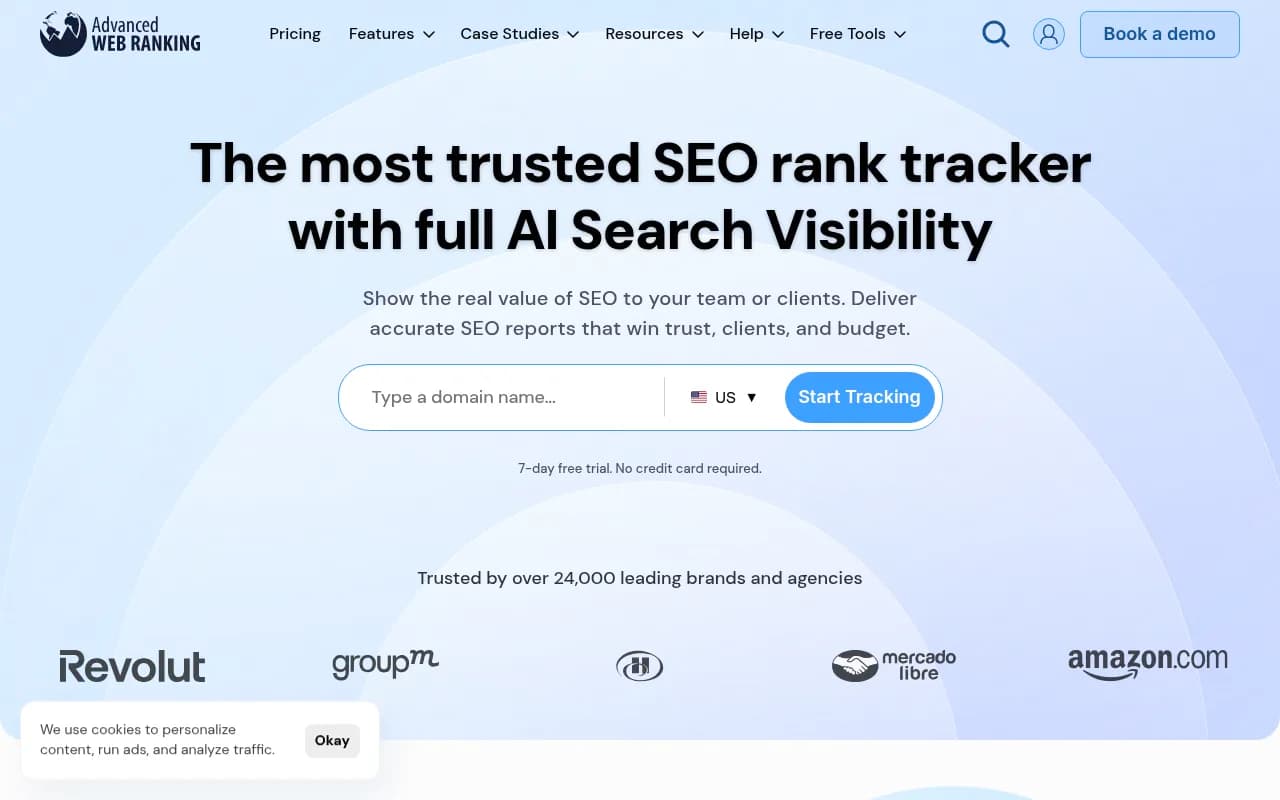
The white-label reporting is genuinely strong. Agencies can build fully branded dashboards and automated reports that go out to clients on a schedule, with custom domains and logos. The Looker Studio connector and API give technical teams flexibility to build custom workflows on top of the data.
AWR's AI coverage is more limited than its traditional SEO depth. It tracks some SERP features including AI Overviews, but the coverage isn't as granular as SE Ranking or Nightwatch. There's no LLM tracking. The interface feels more dated than the newer entrants in this comparison -- functional, but not something you'd describe as enjoyable to use.
Pricing is notably more accessible than AccuRanker at the entry level, starting around $49/month, though the keyword limits on lower tiers can feel restrictive for agencies.
Who AWR is for
Enterprise teams and agencies that prioritize reporting depth, historical data, and white-label client deliverables over cutting-edge AI features. It's also a good fit for international SEO work given the breadth of search engines it covers.
SE Ranking
SE Ranking has quietly become one of the most complete mid-market SEO platforms available. It's not just a rank tracker -- it includes keyword research, competitor analysis, backlink monitoring, site audits, and content optimization tools. For teams that want to consolidate tools without paying Semrush or Ahrefs prices, SE Ranking makes a strong case.
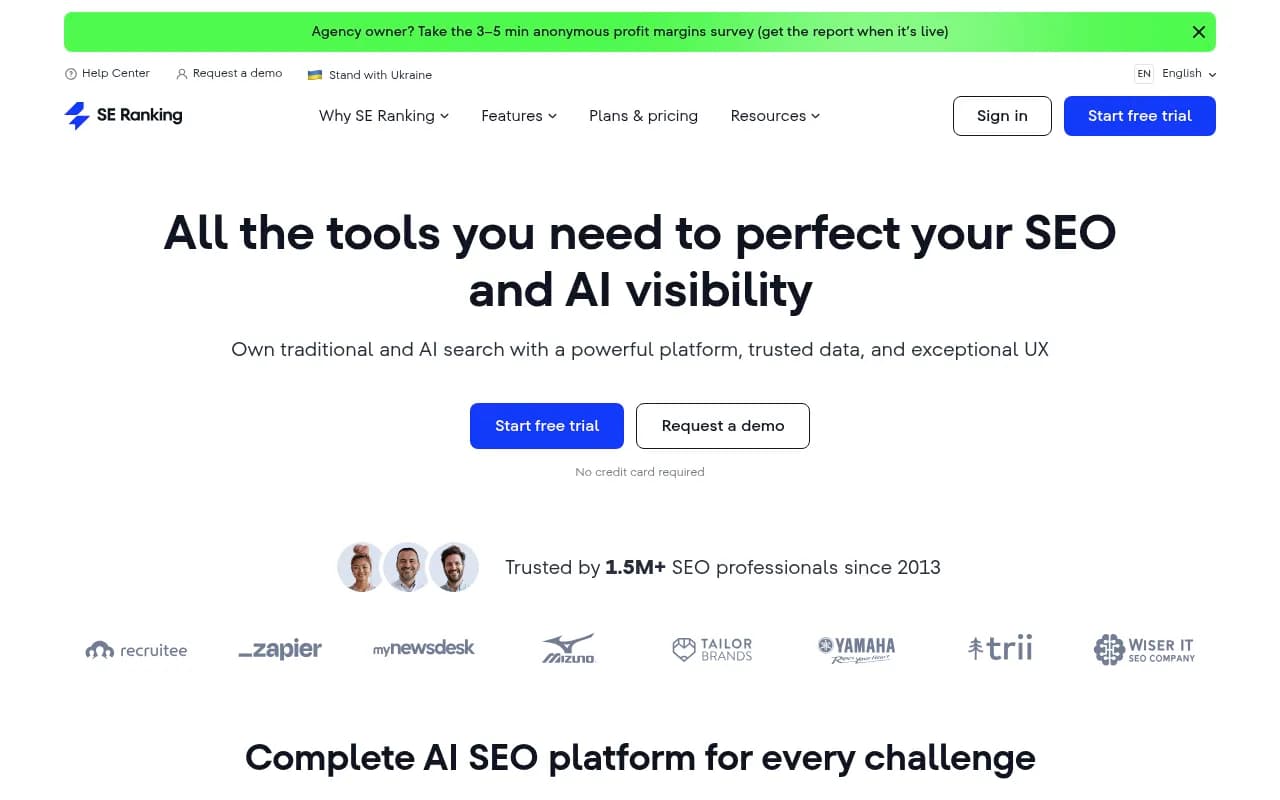
On rank tracking specifically, SE Ranking offers daily updates, solid local tracking, and one of the better AI Overview monitoring setups among traditional rank trackers. Their own research data (the 18.76% AI Overview trigger rate cited earlier) comes from their platform's SERP monitoring, which gives you a sense of how seriously they take this data.
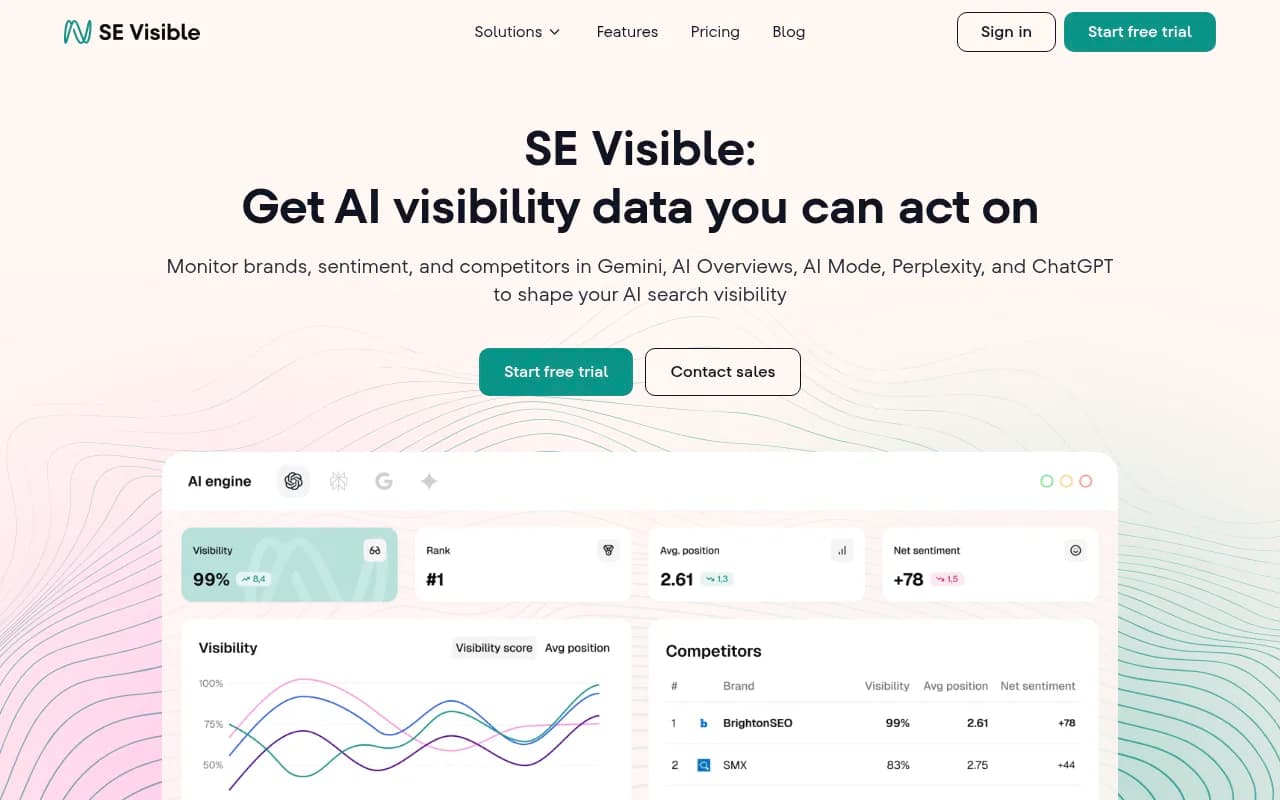
The platform recently launched SE Visible, a separate product focused on AI search visibility -- tracking brand mentions across ChatGPT, Perplexity, and other LLMs. It's a monitoring-only tool at this stage, which means you can see where you appear in AI answers but you don't get guidance on how to improve that visibility.
Pricing is genuinely competitive. The Essential plan starts around $65/month and includes daily rank tracking for up to 250 keywords. The interface has improved significantly over the past two years and is now genuinely pleasant to use.
Who SE Ranking is for
In-house SEO teams and smaller agencies that want an all-in-one platform without the enterprise price tag. It's particularly strong for teams doing content marketing alongside rank tracking -- the content tools and rank data work well together.
Nightwatch
Nightwatch takes a different approach to design than most rank trackers. The interface is genuinely clean -- almost minimal -- and the onboarding is fast. You can be tracking keywords within minutes of signing up, which sounds obvious but isn't always the case with more complex platforms.
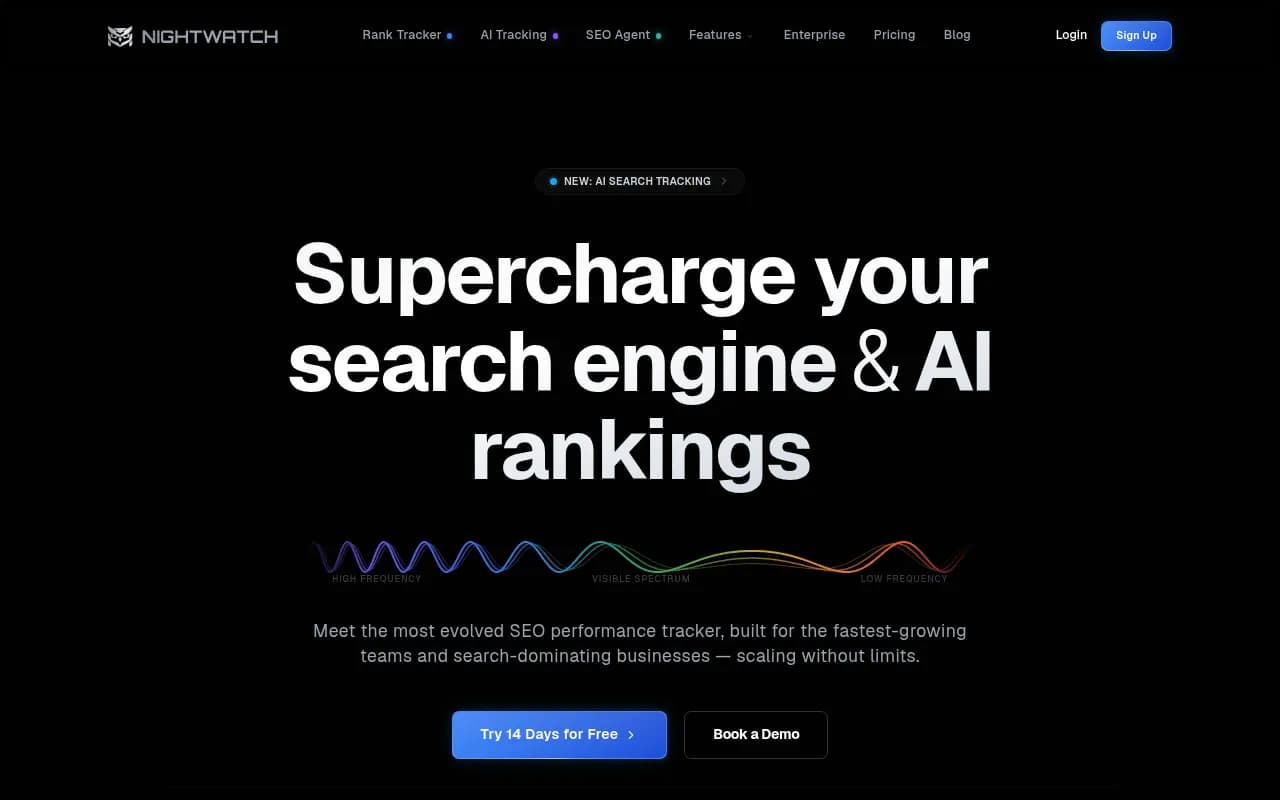
The platform covers Google and Bing rankings, local tracking by city and zip code, and SERP feature monitoring including AI Overviews. The AI search monitoring is more transparent than most: Nightwatch shows you when AI Overviews appear for your tracked keywords and whether your content is cited in them. It's not full LLM tracking, but it's honest about what it does and doesn't cover.
The reporting is solid for agencies -- white-label reports, scheduled delivery, and a Looker Studio connector. Pricing starts at $39/month, making it the most accessible option in this comparison for teams just getting started.
One limitation worth noting: Nightwatch is primarily a rank tracker with some AI monitoring bolted on. If you need keyword research, backlink analysis, or site auditing, you'll need other tools alongside it. That's a deliberate product choice, not an oversight -- they've stayed focused on tracking rather than becoming an all-in-one platform.
Who Nightwatch is for
Freelancers, small agencies, and in-house teams that want clean, reliable rank tracking with honest AI Overview coverage and don't want to pay for features they won't use. Also a good fit for local SEO work given the granular location tracking.
Rankscale
Rankscale is the newest platform in this comparison and the most explicitly built for the AI search era. Where the other four tools started as traditional rank trackers and added AI features over time, Rankscale was designed from the start to track visibility across both traditional search and AI search engines.
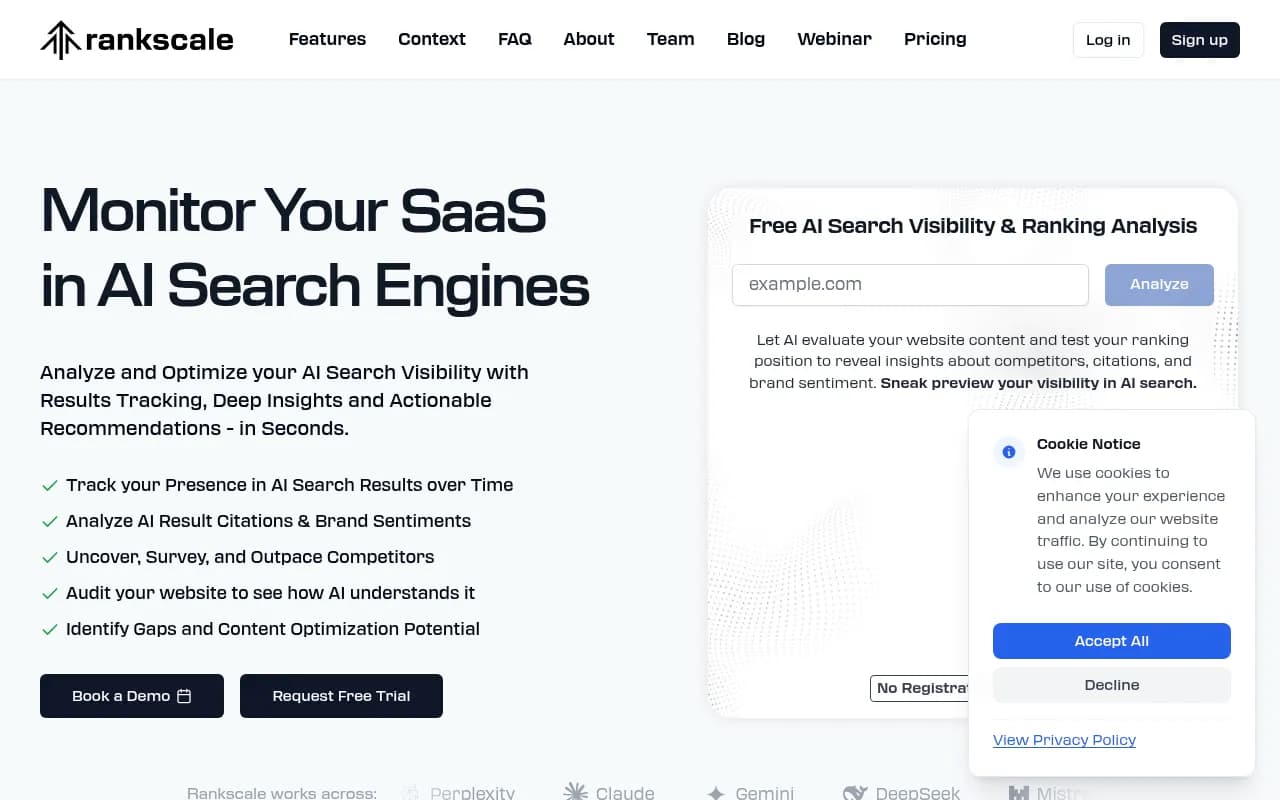
The platform tracks rankings in Google and Bing alongside brand mentions and citations in AI engines including ChatGPT, Perplexity, and Google AI Overviews. The agency-focused positioning means the reporting and white-label features are a priority. For agencies that need to show clients a unified view of traditional and AI search performance, Rankscale is one of the few tools that attempts to do this in a single dashboard.
The trade-off is maturity. Rankscale doesn't have the years of historical data that AWR has, the on-demand refresh speed of AccuRanker, or the all-in-one SEO depth of SE Ranking. It's a focused tool doing a specific job, and it does that job reasonably well for a platform that's still relatively young.
Pricing is custom/enterprise-oriented, which makes it harder to evaluate for smaller teams. Worth requesting a demo if AI visibility reporting for clients is your primary need.
Who Rankscale is for
Agencies that are already having conversations with clients about AI search visibility and need a tool that packages both traditional and AI rank data into client-ready reports.
The AI search gap all five tools share
Here's the honest assessment: all five platforms do a reasonable job tracking traditional Google rankings. The differences in accuracy, speed, and reporting are real but incremental. Where they all fall short -- to varying degrees -- is in the deeper AI search visibility question.
Tracking whether your site appears in a Google AI Overview is useful. But it's only one AI surface. ChatGPT, Perplexity, Claude, Gemini, Grok, DeepSeek -- these are increasingly where users go for recommendations, comparisons, and product research. None of the five platforms in this comparison give you full visibility into all of those channels, and none of them help you actually improve your visibility in those channels.
That's a different category of tool entirely. Platforms like Promptwatch are built specifically for this -- tracking brand mentions and citations across 10+ AI models, identifying which prompts competitors are visible for that you're not, and generating content designed to close those gaps.

The distinction matters because monitoring and optimization are different problems. Knowing you don't appear in ChatGPT's answer to "best [your category] tools" is useful. Knowing exactly what content you need to create to change that is more useful. Most rank trackers, including the five in this comparison, stop at the first part.
Feature comparison: AI search capabilities
| Feature | AccuRanker | AWR | SE Ranking | Nightwatch | Rankscale |
|---|---|---|---|---|---|
| Google AI Overview tracking | Yes | Limited | Yes | Yes | Yes |
| ChatGPT visibility | No | No | Via SE Visible | No | Yes |
| Perplexity tracking | No | No | Via SE Visible | No | Yes |
| Gemini tracking | No | No | No | No | Partial |
| Content gap analysis for AI | No | No | No | No | No |
| AI content generation | No | No | No | No | No |
| Crawler/bot analytics | No | No | No | No | No |
Pricing comparison
| Platform | Entry plan | Mid-tier | Notes |
|---|---|---|---|
| AccuRanker | ~$129/mo | ~$259/mo | Scales by keyword volume |
| Advanced Web Ranking | $49/mo | $99/mo | Lower keyword limits at entry |
| SE Ranking | $65/mo | $119/mo | Best value for all-in-one features |
| Nightwatch | $39/mo | $79/mo | Most affordable in this group |
| Rankscale | Custom | Custom | Agency/enterprise pricing |
Prices are approximate based on publicly available information as of mid-2026. Annual billing typically reduces costs by 15-20% across all platforms.
How to choose
The right tool depends on what problem you're actually trying to solve.
If you need the fastest, most accurate traditional rank tracking for a large keyword set, AccuRanker is the answer. The on-demand refresh feature is genuinely useful and the accuracy reputation is well-earned.
If you need deep historical data and white-label reporting for enterprise clients, Advanced Web Ranking has 20+ years of infrastructure behind it. The AI features are limited but the core tracking is solid.
If you want one platform for rank tracking, keyword research, site audits, and content tools without paying enterprise prices, SE Ranking is the strongest all-rounder in this group. The AI Overview tracking is decent and SE Visible adds some LLM monitoring if you need it.
If you want clean, honest rank tracking with good local SEO features and don't need an all-in-one suite, Nightwatch is the most approachable option. The pricing is fair and the interface won't frustrate you.
If you're an agency that needs to report on both traditional and AI search visibility in a single dashboard, Rankscale is worth evaluating -- just go in knowing it's a younger platform with less historical depth than the others.
And if AI search visibility is your primary concern -- not just monitoring, but actually improving how often ChatGPT, Perplexity, and other AI engines recommend your brand -- you'll want a dedicated GEO platform alongside whichever rank tracker you choose. The traditional rank trackers in this comparison weren't built for that problem, and adding AI Overview tracking doesn't change their fundamental architecture.
The two categories of tools are complementary, not interchangeable. Most serious SEO teams in 2026 are running both.