Key takeaways
- Synthesia and HeyGen are purpose-built for presenter-led marketing video — think product explainers, onboarding, and localized campaigns. Runway and Sora are cinematic generation tools aimed at creative production.
- D-ID is the most developer-friendly of the avatar platforms, with a strong API and real-time interactive avatar capability, but it lags behind HeyGen and Synthesia on polish and template depth.
- HeyGen has the edge for marketing teams that need scale and localization: 175+ language translation, 4K output on Business plans, and a fast-improving avatar quality.
- Runway Gen-4 is the best choice if you need high-quality generative footage for ads, brand films, or social content — but it won't give you a talking head or a scripted presenter.
- Sora (OpenAI) is still maturing as a product in 2026. Impressive for creative experimentation, less reliable for production workflows.
- Pricing ranges from free tiers to $29-$99/month depending on output volume and features needed.
Picking an AI video tool in 2026 is genuinely confusing. The category has exploded: there are now tools optimized for cinematic generation, tools built for talking-head business video, tools aimed at social media creators, and tools that try to do everything and end up doing nothing particularly well.
The five platforms in this guide — Synthesia, HeyGen, D-ID, Runway, and Sora — represent the most common choices marketing teams are evaluating right now. But they're not really competing with each other. They solve different problems. Understanding that distinction is the most useful thing this guide can do for you.
Let's break them down.
The two categories you need to understand first
Before comparing features and pricing, it helps to know that these five tools split into two fundamentally different categories:
Avatar/presenter video platforms (Synthesia, HeyGen, D-ID): You write a script, pick an AI avatar, and the platform generates a talking-head video. No camera, no studio, no actor. These are built for marketing teams producing product demos, training content, localized campaigns, and sales enablement videos at scale.
Generative video platforms (Runway, Sora): You describe a scene in a text prompt (or provide an image/video clip), and the model generates footage. These are built for creative production — brand films, social ads, visual storytelling. No avatars, no scripts, no presenters.
Most marketing teams actually need both types at different points. The mistake is trying to force one tool to do the other's job.
Synthesia — best for enterprise teams
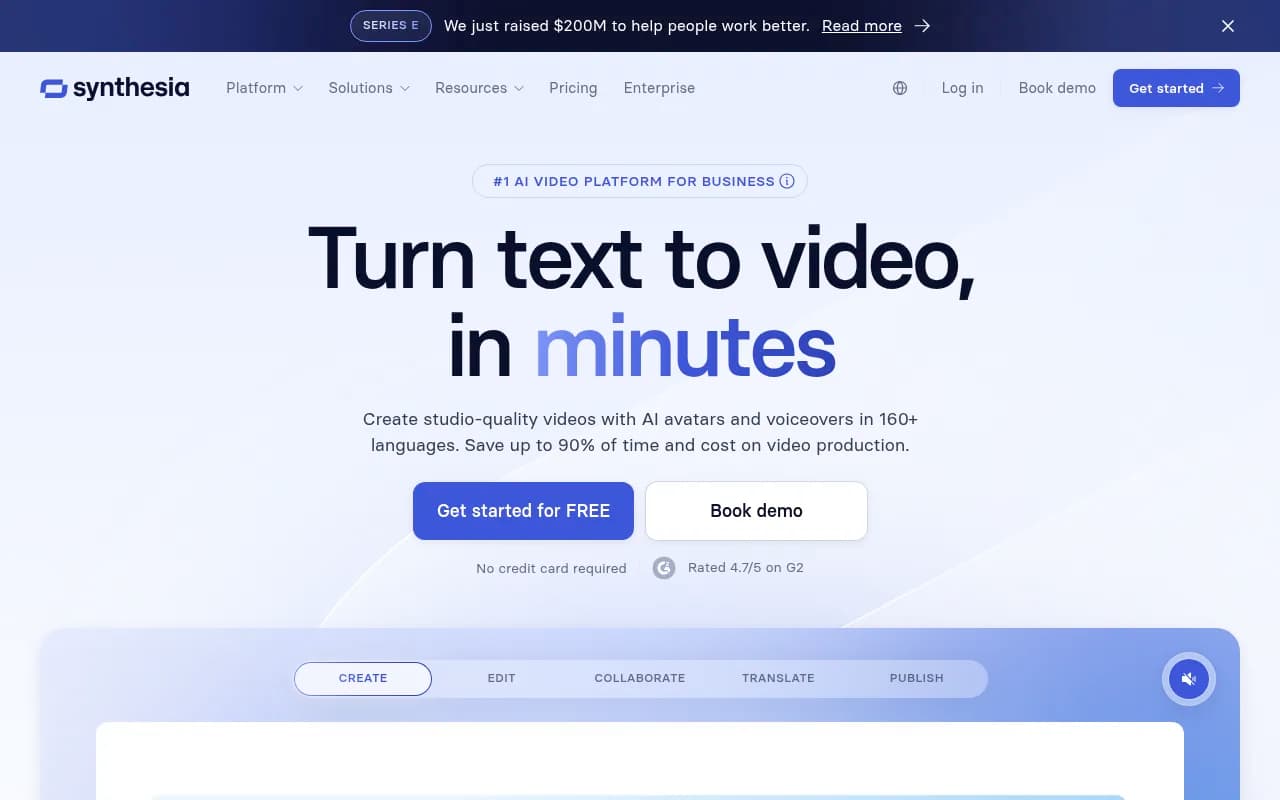
Synthesia has been around since 2017 and has the most mature enterprise offering in the avatar video space. As of 2026, it offers 240+ AI avatars, 1080p output, and a clean template-based editor that non-video people can actually use without training.
The platform's strength is consistency and compliance. Enterprise customers get custom avatar creation (so your video features a digital version of your own spokesperson), brand kit controls, team collaboration, and SSO. The content moderation layer is more robust than competitors, which matters for regulated industries like finance and healthcare.
Where Synthesia falls short: it's not the fastest-moving platform. HeyGen has been shipping features at a faster clip, and Synthesia's avatar quality, while solid, isn't always the most natural-looking. The free plan is limited to 3 minutes of video per month, and meaningful output requires the $18/month Starter plan or higher.
Best for: Enterprise marketing teams, L&D departments, regulated industries, teams that need custom brand avatars and compliance controls.
Pricing: Free (3 min/month), Starter $18/month, Creator $64/month, Enterprise custom.
HeyGen — best for marketing teams that need scale
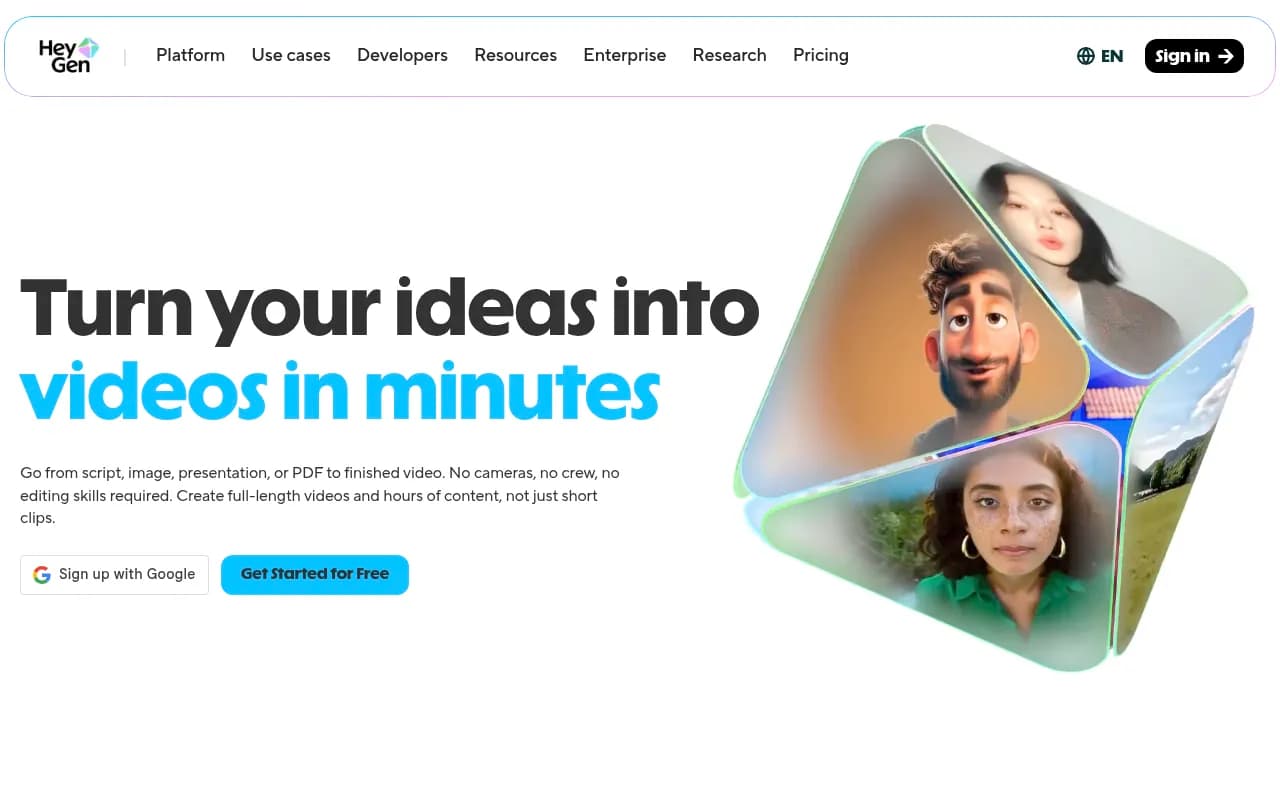
HeyGen has moved fast. It started as a simpler avatar tool and has grown into one of the most capable platforms for marketing-specific video production. The headline feature is video translation: you can take an existing video and re-lip-sync it into 175+ languages, with the avatar's mouth movements matching the new audio. For global marketing teams, that's a significant time and cost reduction.
Other standout features: 4K output on Business plans, a photo avatar feature (upload a photo and generate a video from it), and a video personalization pipeline that lets you generate hundreds of customized videos from a single template — useful for outbound sales sequences or event invitations.
Avatar quality is competitive with Synthesia and, in some tests, slightly more natural for casual business content. The interface is more modern and creator-friendly than Synthesia's, which can be a plus or minus depending on your team's preference for structure.
The free plan gives you 3 videos per month at 720p. Paid plans start at $29/month.
Best for: Marketing teams running localized campaigns, sales teams needing personalized video at scale, content teams that want a fast, modern workflow.
Pricing: Free (3 videos/month), Creator $29/month, Business $89/month, Enterprise custom.
D-ID — best for developers and interactive use cases
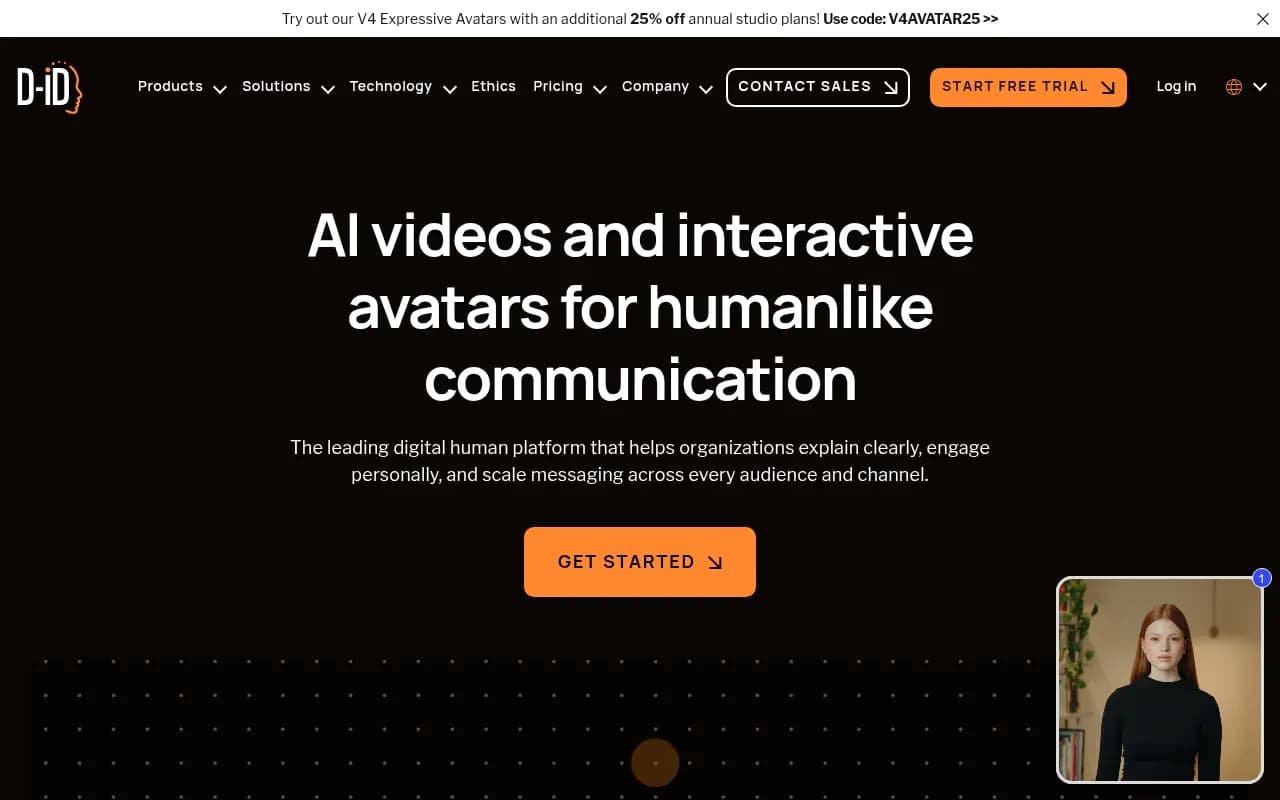
D-ID occupies a slightly different niche. Its core product is similar to Synthesia and HeyGen — text-to-avatar video — but its differentiator is the real-time interactive avatar capability. You can build a conversational AI agent that uses a D-ID avatar as its face, which opens up use cases like interactive product demos, AI-powered customer service, and live event presentations.
The API is well-documented and flexible, making D-ID the go-to choice for teams that want to embed AI video into their own products or workflows rather than just using a standalone editor.
The downside: the standard video creation interface is less polished than HeyGen or Synthesia. Template depth is shallower, and the avatar quality, while good, doesn't consistently match the top-tier outputs from the other two. For straightforward marketing video production, D-ID isn't the first choice.
Best for: Developers building interactive AI experiences, teams that need API access, use cases involving real-time conversational avatars.
Pricing: Free trial available, plans from $16/month. API pricing is usage-based.
Runway Gen-4 — best for cinematic and creative production
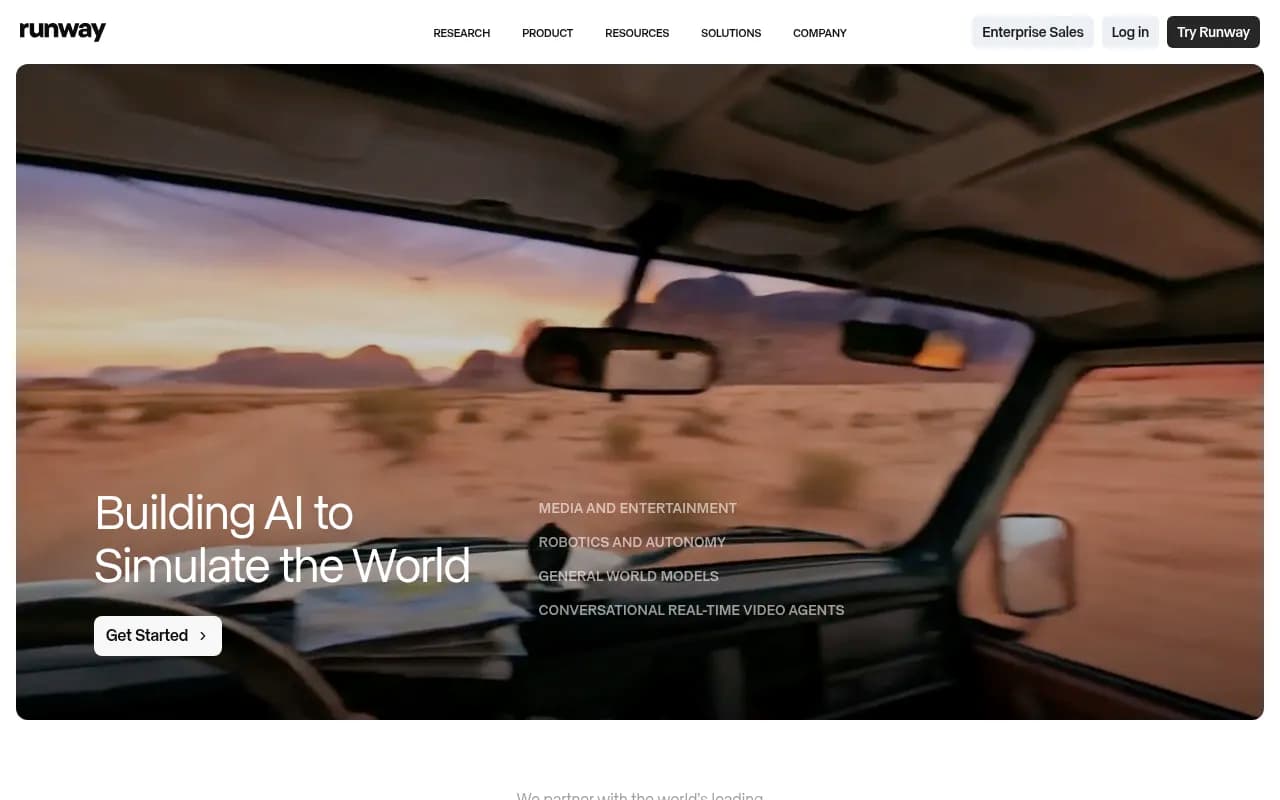
Runway is a different beast entirely. Gen-4 (the current model as of mid-2026) produces some of the most temporally consistent AI video available — meaning objects and people stay coherent across frames rather than morphing or flickering. That's been one of the hardest problems in generative video, and Runway has made real progress on it.
The platform supports text-to-video, image-to-video, and video-to-video generation. You can extend clips, remove objects, apply motion effects, and chain generations together into longer sequences. For marketing teams producing brand films, social ads, or product visualization content, Runway gives you creative control that avatar platforms simply don't offer.
The tradeoff: Runway requires more creative skill to use well. Prompt engineering matters. Results can vary significantly based on how you describe a scene. And at $12/month for the Standard plan (with limited credits), costs scale up quickly if you're generating a lot of content. 4K output requires the Pro+ plan.
Runway is also not a complete video production tool — you'll likely need to combine it with an editor like Adobe Premiere Pro for final output.
Best for: Creative teams producing brand films, social ads, visual content; designers and video producers who want AI-generated footage as raw material.
Pricing: Free (limited), Standard $12/month, Pro $28/month, Unlimited $76/month.
Sora — best for experimentation, not yet for production
OpenAI's Sora had a dramatic 2025: it launched to significant fanfare, produced genuinely stunning cinematic outputs, and then went through a period of restricted access and product uncertainty. As of 2026, Sora is available again and has improved, but it still feels more like a creative experimentation tool than a reliable production platform.
The quality ceiling is high. Sora can generate footage that looks genuinely cinematic — complex lighting, realistic motion, coherent scenes. But consistency is still an issue. You might generate 10 clips from the same prompt and get wildly different results. For a marketing team with a deadline, that unpredictability is a real problem.
Sora is included in ChatGPT Plus ($20/month) and Pro ($200/month) subscriptions, which makes it accessible. But the output resolution and generation limits on Plus are restrictive for professional use.
The honest assessment: Sora is worth having in your toolkit for ideation and creative exploration. It's not where you'd build a repeatable marketing video workflow in 2026.
Best for: Creative exploration, concept visualization, teams that want to experiment with AI video without a separate subscription.
Pricing: Included with ChatGPT Plus ($20/month) and Pro ($200/month).
Head-to-head comparison
| Synthesia | HeyGen | D-ID | Runway Gen-4 | Sora | |
|---|---|---|---|---|---|
| Type | Avatar/presenter | Avatar/presenter | Avatar/interactive | Generative | Generative |
| Best use case | Enterprise training & marketing | Localized marketing at scale | Developer/interactive | Brand films, ads | Creative exploration |
| Avatar quality | Very good | Very good | Good | N/A | N/A |
| Max resolution | 1080p | 4K (Business) | 1080p | 4K (Pro+) | Up to 1080p |
| Languages | 140+ | 175+ | 100+ | N/A | N/A |
| Video translation | No | Yes | No | No | No |
| API access | Yes | Yes | Yes (strong) | Yes | Limited |
| Free tier | Yes (3 min/mo) | Yes (3 videos/mo) | Yes (trial) | Yes (limited) | Via ChatGPT Plus |
| Starting price | $18/month | $29/month | $16/month | $12/month | $20/month (ChatGPT) |
| Best for teams | Enterprise | Marketing/sales | Developers | Creative/production | Experimentation |
Which tool should your marketing team actually use?
The answer depends on what you're making.
If you're producing product explainers, onboarding videos, or localized campaigns: HeyGen is the strongest choice for most marketing teams in 2026. The video translation feature alone can save significant budget if you're running multilingual campaigns. Synthesia is the better pick if you're in a regulated industry or need enterprise-grade compliance controls.
If you're building interactive AI experiences or embedding video into your product: D-ID's API and real-time avatar capability make it the right tool. It's not the best standalone video editor, but it's the most flexible for custom integrations.
If you're producing brand films, social ads, or creative content that needs to look cinematic: Runway Gen-4 is the clear choice. It won't give you a presenter, but for visual storytelling and ad creative, it's the most capable generative tool available right now.
If you want to experiment without committing to a new subscription: Sora via ChatGPT Plus is a reasonable starting point. Just don't plan a campaign around it until you've tested whether the output consistency meets your standards.
Many marketing teams end up using two tools: an avatar platform for scripted presenter content and a generative tool for creative footage. HeyGen + Runway is a common combination.
A few things worth knowing before you commit
Credits and limits matter more than headline pricing. Most of these platforms have free tiers that sound generous until you realize how quickly you hit the limits. Generate a few test videos before assuming a plan will cover your actual volume.
Avatar quality varies by skin tone and language. This is improving across all platforms, but it's worth testing with your specific use case before committing to a platform. Some avatars perform significantly better in certain languages than others.
Generation time is still a factor. Runway and Sora can take several minutes per clip. For high-volume production workflows, that adds up. Avatar platforms like HeyGen and Synthesia are generally faster for scripted content.
The market is moving fast. Google Veo 3.1 is currently rated as the best overall AI video generator by most independent tests, and it's not even in this comparison because it's primarily a developer/API tool rather than a marketing platform. Kling 3.0 is another strong generative option worth watching. The competitive landscape six months from now will look different.
Other tools worth considering
If none of the five above feel quite right, a few other platforms are worth a look:
Pika is strong for stylized and creative social content, with a good free tier and a distinctive visual aesthetic.
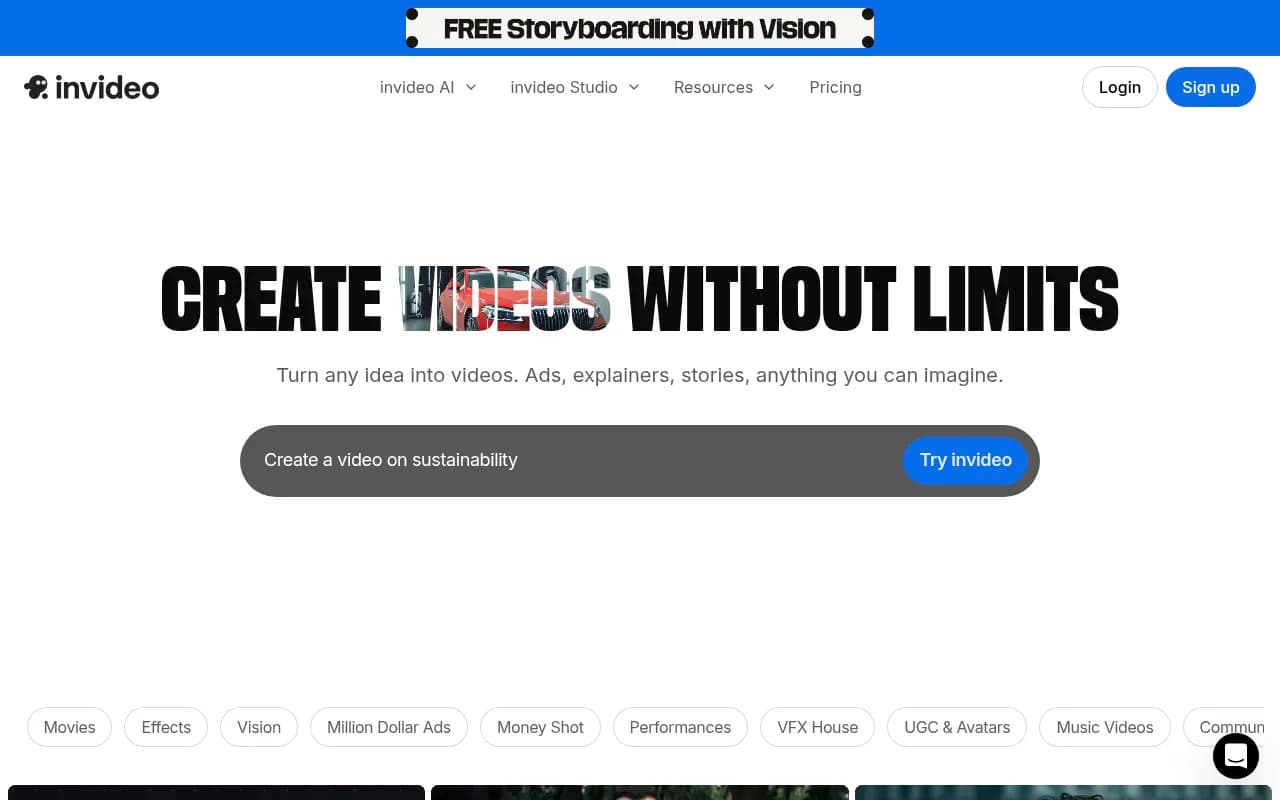
InVideo takes a different approach — it's more of an end-to-end video production tool that combines AI generation with templates and editing, aimed at teams that want to go from script to finished video without touching a separate editor.
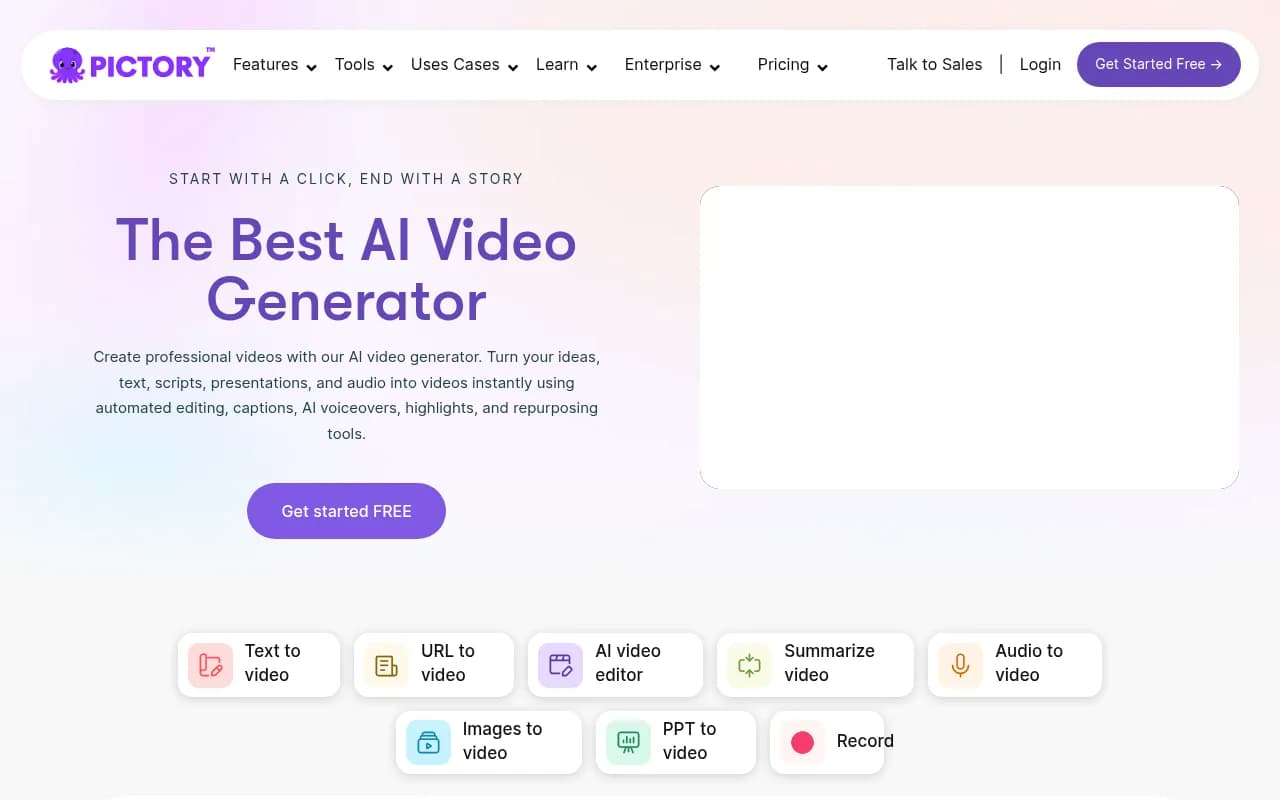
Pictory is worth considering if your primary use case is repurposing long-form content (blog posts, webinars, podcasts) into short video clips.
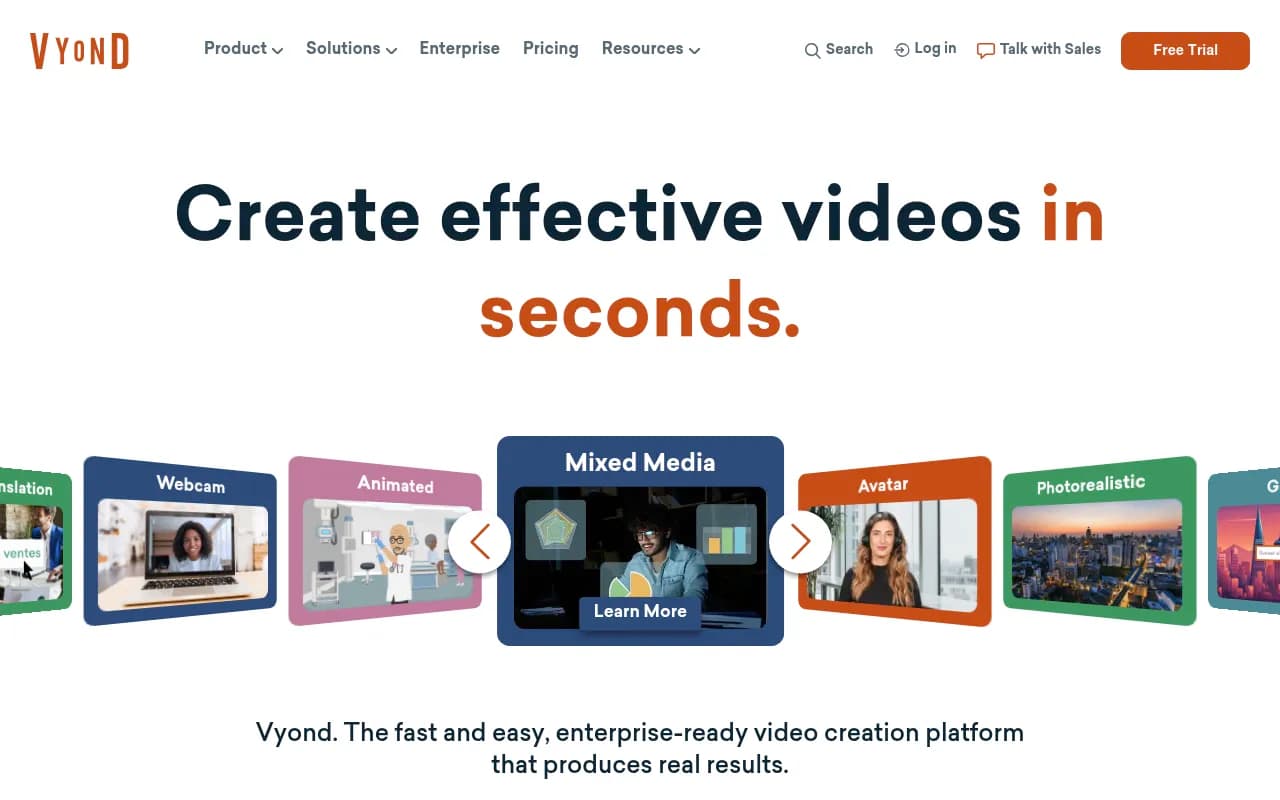
Vyond is a solid option for animated explainer videos — a different visual style from the photorealistic avatar tools, but often more appropriate for certain B2B and training contexts.
The AI video space has genuinely matured in 2026. Production costs are down, quality is up, and the tools are more usable than they were even a year ago. The main decision isn't whether to use AI video — it's which tool fits the specific type of content your team produces most.
Start with a free trial, generate 5-10 test videos with your actual scripts and use cases, and make the call based on output quality rather than feature lists.