Key takeaways
- Yext and Rio SEO are the strongest choices for large enterprise brands with complex location footprints and governance needs
- BrightLocal and Moz Local are better fits for smaller teams, agencies, and businesses that want solid local SEO without enterprise pricing
- SOCi leads on AI-powered social and reputation automation at scale, making it a strong pick for franchise networks
- Uberall sits in the middle ground: more capable than BrightLocal for multi-location brands, less expensive than Yext
- No single platform wins every category -- the right choice depends on your location count, budget, and whether listings, reviews, or local pages are your primary pain point
Managing local SEO across dozens or hundreds of locations is genuinely hard. You're dealing with inconsistent listing data, review management at scale, local page quality, and increasingly, how your brand shows up in AI-generated answers. The platforms in this comparison all claim to solve that problem -- but they solve it in very different ways, for very different types of businesses.
This guide breaks down six of the most-evaluated platforms in 2026: Yext, Uberall, SOCi, BrightLocal, Moz Local, and Rio SEO. The goal isn't to declare a single winner. It's to help you figure out which one actually fits your situation.
What these platforms actually do
Before getting into the comparison, it's worth being clear about what "local SEO platform" means in 2026, because the category has stretched considerably.
At the core, all six platforms handle some version of listings management -- pushing your business name, address, phone number, and hours to directories, maps, and data aggregators. Beyond that, they diverge significantly. Some add review management, some build local landing pages, some automate social posting, and some are now positioning themselves around AI search visibility.
The question isn't which platform has the longest feature list. It's which features you'll actually use, and whether the platform is built for your scale.
The platforms at a glance
Head-to-head comparison table
| Platform | Best for | Location scale | Listings management | Review management | Local pages | AI/social automation | Starting price |
|---|---|---|---|---|---|---|---|
| Yext | Enterprise brands | 50 to 10,000+ | Excellent | Good | Excellent | Moderate | ~$199/mo (SMB); enterprise custom |
| Rio SEO | Large enterprise | 500+ | Excellent | Good | Excellent | Moderate | Enterprise custom |
| SOCi | Franchise/multi-location | 50 to 10,000+ | Good | Excellent | Good | Excellent | Enterprise custom |
| Uberall | Mid-market to enterprise | 10 to 5,000+ | Excellent | Good | Good | Moderate | Custom |
| BrightLocal | Agencies and SMBs | 1 to 100 | Good | Good | Limited | Limited | From $39/mo |
| Moz Local | SMBs and small agencies | 1 to 50 | Good | Basic | None | None | From $14/mo per location |
Yext
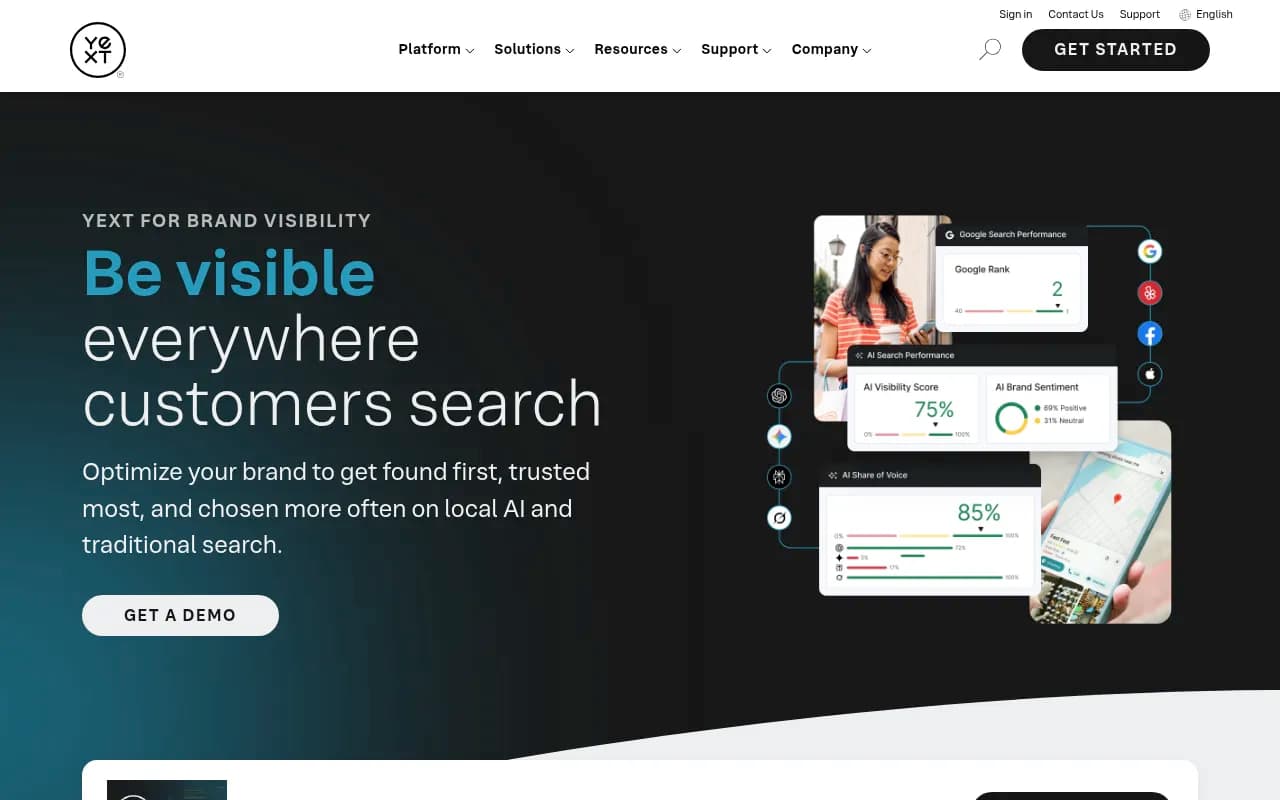
Yext is the most recognized name in this space, and for good reason. Its Knowledge Graph -- a structured data layer that syncs your location data across 200+ publishers -- is genuinely powerful. When you update a location's hours in Yext, it propagates quickly and accurately. That's the core value proposition, and it holds up.
Where Yext has expanded significantly is local pages. Its Pages product lets enterprise brands build templated, SEO-optimized location pages at scale, which matters a lot for organic search. If you have 500 locations and each one needs a unique, crawlable landing page, Yext handles that well.
Yext also now has a "Yext AI" layer that's positioning the platform around AI search visibility -- how your brand appears in ChatGPT, Perplexity, and similar tools. It's early-stage relative to dedicated GEO platforms, but it's there.
The honest downside: Yext is expensive, and the pricing model (you pay for the publisher network, and listings revert when you leave) makes some teams uncomfortable. It's also more complex to implement than BrightLocal or Moz Local, which means you need internal resources or an agency partner to get full value.
Yext is a G2 Leader in Local SEO with high satisfaction scores, and it's the right call if you're an enterprise or mid-market brand with a large location footprint and the budget to match.
Rio SEO
Rio SEO is the platform that comes up most often when enterprise brands are evaluating Yext alternatives at scale. It's built specifically for large multi-location operations -- think national retailers, hotel chains, healthcare networks -- and it shows in the feature depth.
The platform's local pages capability is particularly strong. Rio SEO's Store Pages product generates location-specific landing pages with schema markup, and the platform has invested heavily in making those pages perform in organic search. For brands where local organic traffic is a significant revenue driver, this matters.
Rio SEO also has solid local rank tracking and reporting, which gives enterprise teams the data they need to justify the investment internally.
The tradeoff is that Rio SEO isn't a self-serve tool. It's sold as a managed or semi-managed platform, which means implementation takes time and the learning curve is real. If you're a 20-location business, it's probably overkill. If you're managing 500+ locations and need enterprise-grade governance, it's worth a serious look.
SOCi
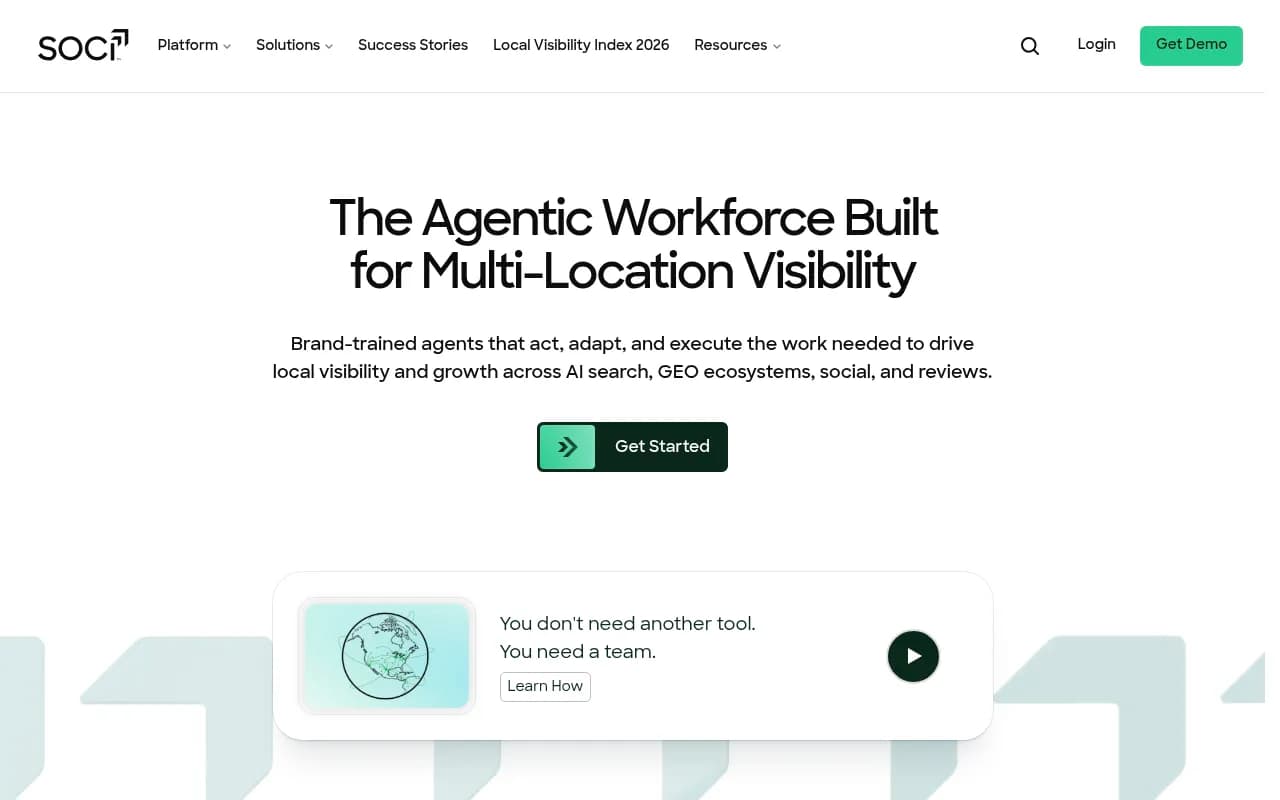
SOCi takes a different angle than Yext or Rio SEO. Where those platforms lead with listings accuracy and local pages, SOCi leads with AI-powered social and reputation automation. The platform is built around the idea that multi-location brands need to be active and consistent across social media, reviews, and local search simultaneously -- and that doing that manually at scale is impossible.
SOCi's "Genius" AI layer automates review responses, generates localized social content, and surfaces insights across locations. For franchise networks where individual franchisees are expected to maintain their own social presence but corporate needs consistency, SOCi's model makes a lot of sense.
Listings management is solid but not the platform's primary strength. If your main pain point is review volume and social presence across hundreds of locations, SOCi is probably the strongest option in this comparison. If your main pain point is listings accuracy and local page quality, Yext or Rio SEO will serve you better.
SOCi is also enterprise-priced and enterprise-scoped. It's not the right tool for a 10-location regional business.
Uberall
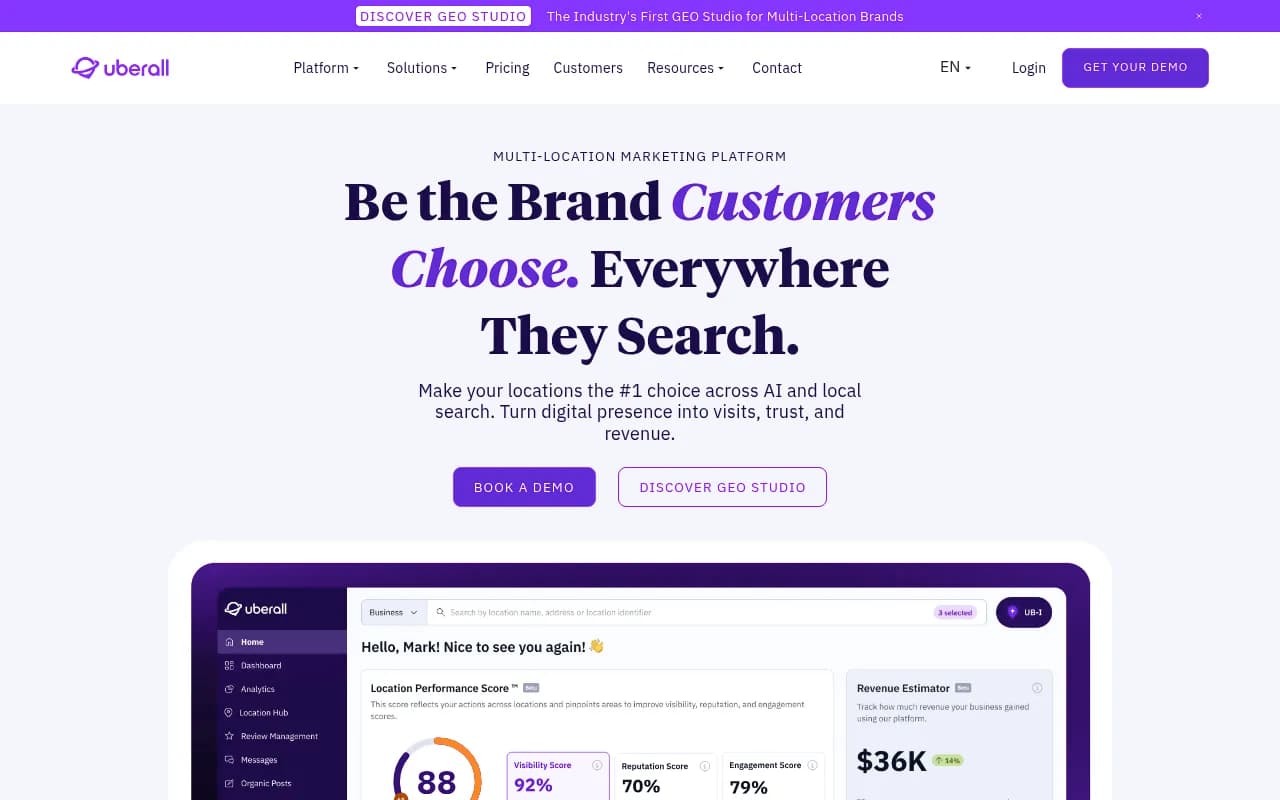
Uberall sits in an interesting position: more capable than BrightLocal or Moz Local for multi-location brands, but less expensive and complex than Yext or Rio SEO. It's a genuine mid-market option.
The platform's listings management is strong, with good publisher coverage and a clean interface for managing location data. Uberall has also built out review management and basic local analytics. In 2026, the platform has been positioning itself around "Near Me" brand experience -- the idea that your listings, reviews, and local pages need to work together to convert customers who are actively searching nearby.
Uberall's pricing is custom and generally scales with location count, which makes it accessible for brands with 10 to a few hundred locations. It's worth evaluating if you've outgrown BrightLocal but aren't ready for Yext's complexity or cost.
BrightLocal
BrightLocal is the most agency-friendly platform in this comparison. It's built for search marketing agencies and SMBs that need solid local SEO tooling without the overhead of an enterprise platform.
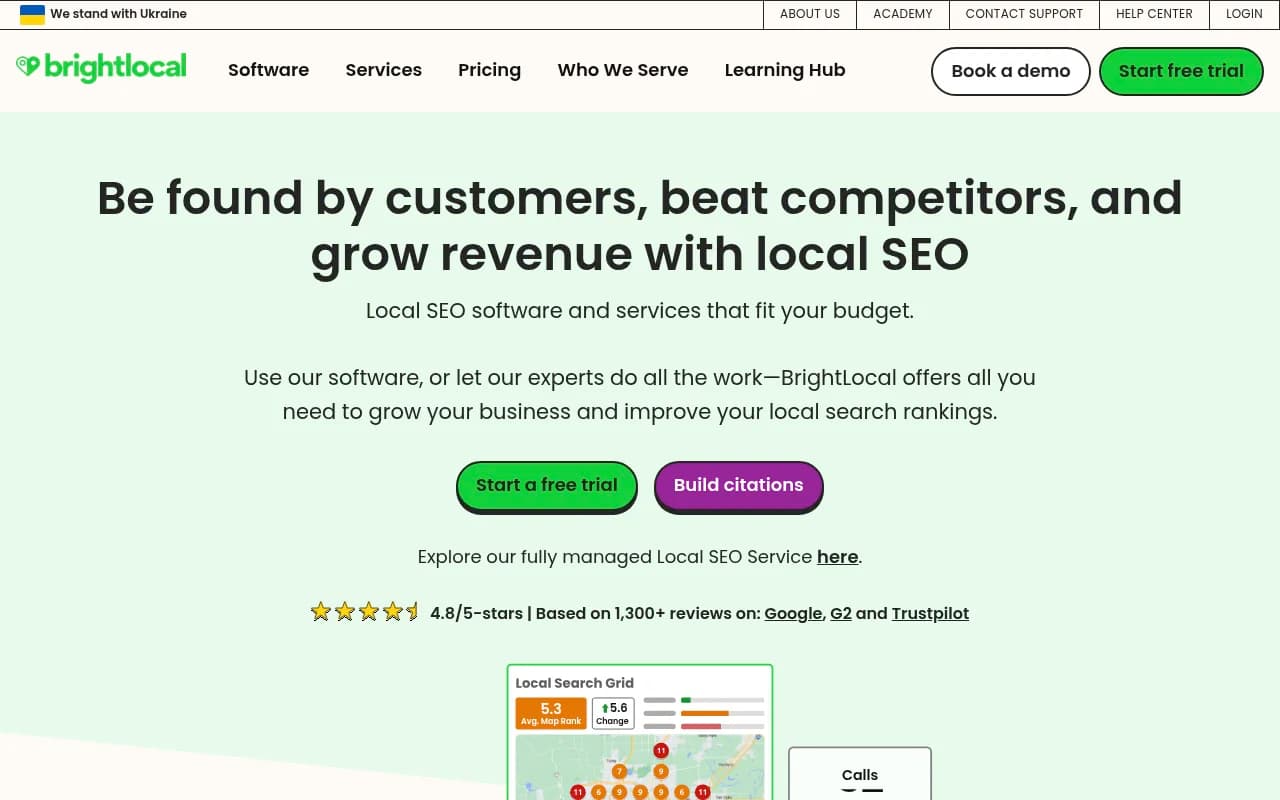
The platform covers the core local SEO workflow well: citation building and auditing, rank tracking (including local grid/heatmap tracking), Google Business Profile management, and review monitoring. The reporting is clean and white-labelable, which agencies appreciate.
What BrightLocal doesn't do well is scale. If you're managing 200+ locations, the platform starts to feel manual. There's no AI-powered content generation, no sophisticated local pages product, and the automation capabilities are limited compared to SOCi or Yext.
Pricing starts around $39/month, which makes it genuinely accessible for smaller teams. For agencies managing a portfolio of local SMB clients, or for a business with fewer than 50 locations that wants a capable local SEO toolkit, BrightLocal is hard to beat on value.
Moz Local
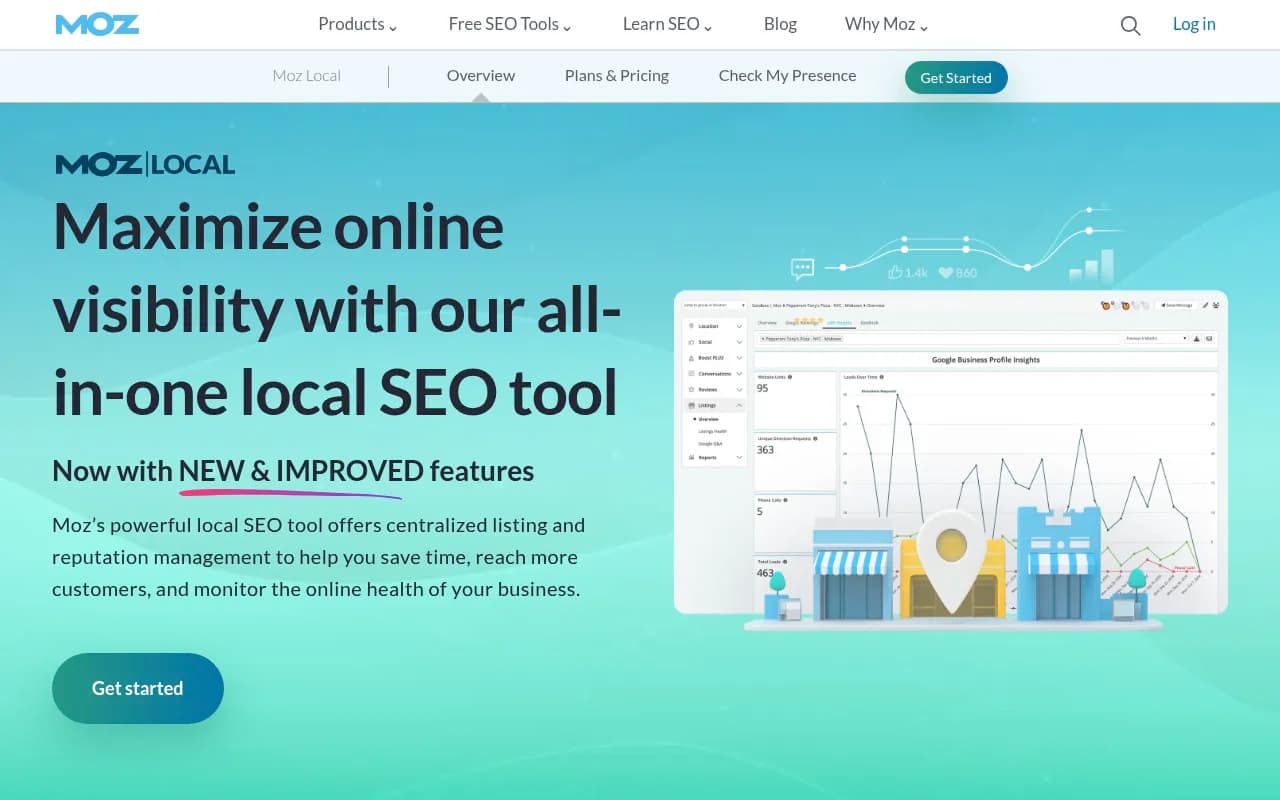
Moz Local is the most straightforward option in this comparison. It does one thing -- listing distribution and monitoring -- and it does it cleanly. You submit your location data, Moz pushes it to the major data aggregators and directories, and you get alerts when inconsistencies appear.
The pricing is per-location and starts around $14/month per location, which is the lowest entry point in this comparison. For a single-location business or a small business with a handful of locations, Moz Local is a reasonable and affordable way to get listing consistency without a lot of complexity.
The honest limitation: Moz Local doesn't have review management worth mentioning, no local pages capability, no social automation, and no AI features. It's a listings tool, not a full local marketing platform. If you're comparing it to Yext or SOCi, you're comparing different categories.
Moz Local makes sense as a starting point or as a complement to other tools. It doesn't make sense as your primary platform if you're managing more than 20 locations or if you need anything beyond basic listing distribution.
How to choose: matching platform to use case
The comparison table above gives you a quick overview, but the real decision comes down to a few specific questions.
How many locations do you manage?
Under 20 locations: Moz Local or BrightLocal will cover your needs at a fraction of the cost of enterprise platforms.
20 to 200 locations: BrightLocal (if you're agency-focused or budget-conscious) or Uberall (if you need more automation and publisher coverage).
200+ locations: Yext, SOCi, or Rio SEO. At this scale, the complexity and governance features of enterprise platforms start to pay for themselves.
What's your primary pain point?
Listings accuracy and data consistency: Yext or Uberall. Both have strong publisher networks and sync reliability.
Review management and reputation at scale: SOCi is the strongest here, with Birdeye also worth considering if reviews are your primary focus.
Local pages and organic search performance: Yext or Rio SEO. Both have invested heavily in location page products that perform in organic search.
Social presence and content automation across locations: SOCi.
Affordable local SEO reporting for agency clients: BrightLocal.
What's your budget?
The pricing reality in 2026 looks roughly like this:
- Moz Local: $14-$33/month per location
- BrightLocal: $39-$82/month (flat, not per location)
- Uberall: Custom, typically mid-four figures annually for 50+ locations
- Yext: SMB plans start around $199/month; enterprise is custom and can reach five to six figures annually
- SOCi: Enterprise custom, typically similar range to Yext
- Rio SEO: Enterprise custom, often the highest price point in this comparison
A note on AI search visibility
One thing worth flagging: all six platforms are now making some claim about AI search visibility -- how your brand appears in ChatGPT, Perplexity, Google AI Overviews, and similar tools. This is a real and growing concern for multi-location brands, but it's a different problem than traditional local SEO.
Yext has the most developed positioning here among the six, but it's still primarily a local listings and pages platform. For brands that want dedicated tracking and optimization of AI search visibility, purpose-built platforms like Promptwatch are worth evaluating alongside your local SEO stack. Promptwatch tracks how your brand appears across 10 AI models, identifies content gaps, and helps you create content that gets cited in AI responses -- which is a different workflow than managing listing data.

The two categories (local SEO platforms and AI visibility platforms) are increasingly complementary rather than competitive. Your Yext or BrightLocal subscription handles your listing distribution and local pages; a GEO platform handles your visibility in AI-generated answers.
Comparison summary
The honest summary: there's no single best platform in this comparison. Yext is the most capable all-around enterprise option. Rio SEO is the strongest for large brands where local pages and organic search performance are the priority. SOCi wins on social and reputation automation for franchise networks. Uberall is the best mid-market option. BrightLocal is the right call for agencies and SMBs. Moz Local is the simplest and cheapest entry point for basic listing distribution.
The worst outcome is choosing a platform based on feature lists rather than your actual use case. A 15-location regional chain doesn't need Yext's complexity. A 2,000-location franchise network will outgrow BrightLocal in months.
Start with your location count, your primary pain point, and your budget. Those three variables will narrow the field considerably, and the right answer usually becomes clear from there.
Additional tools worth knowing
If you're building a complete local marketing stack, a few other platforms are worth knowing about:
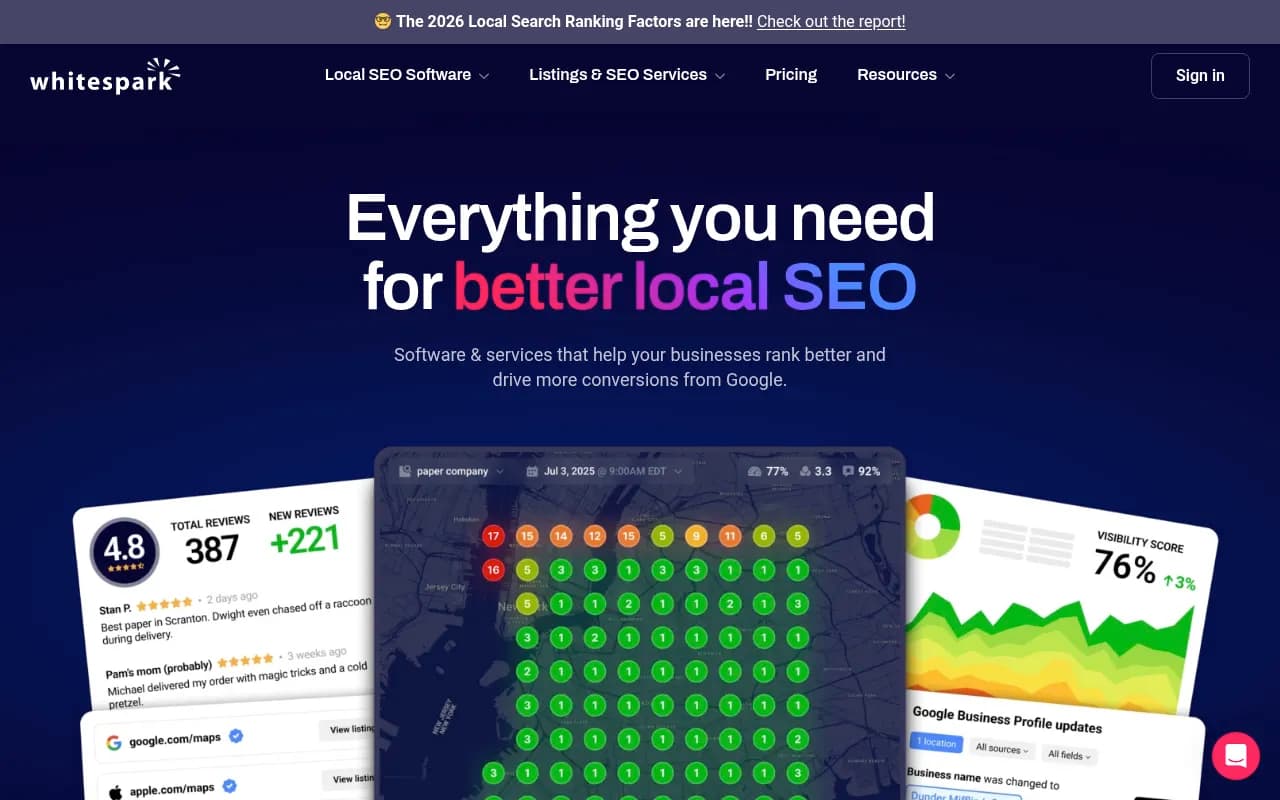
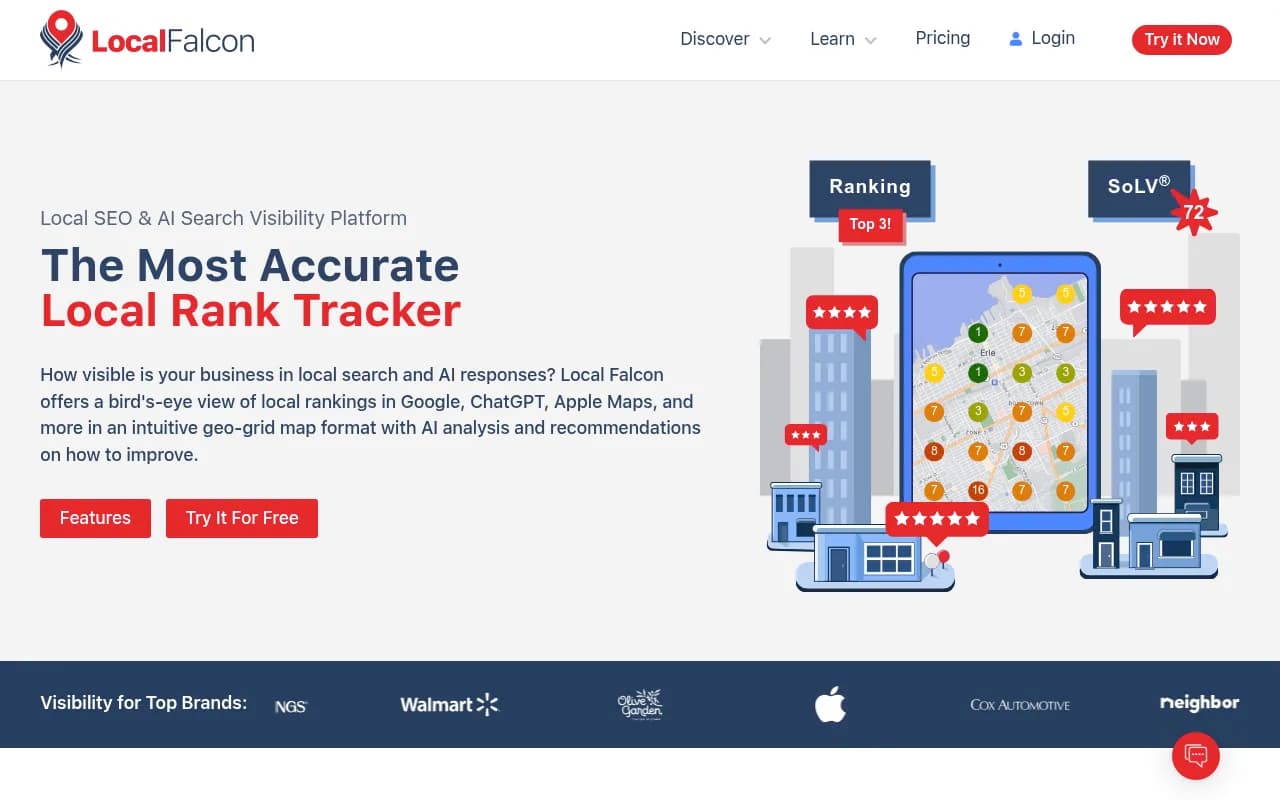
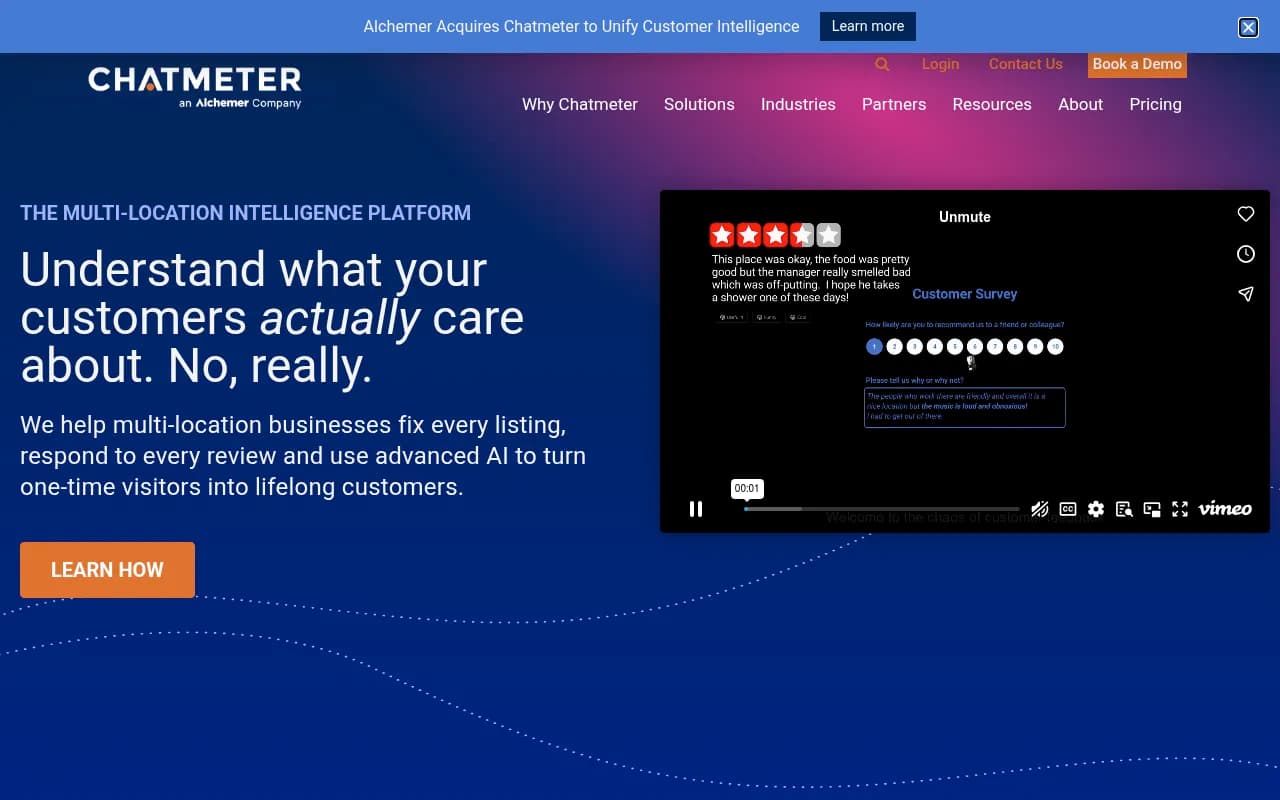
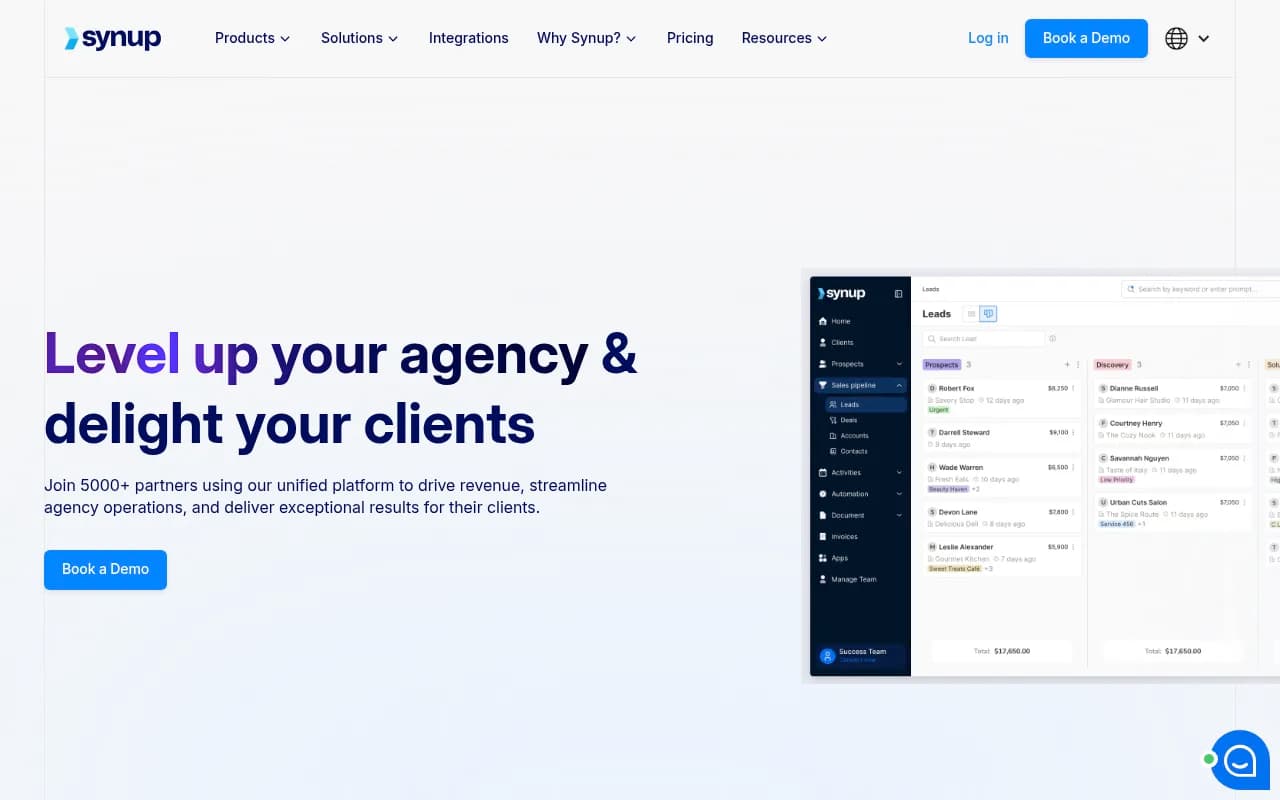

Whitespark is particularly strong for citation building and local link acquisition. Local Falcon's visual geo-grid rank tracking is useful for understanding how your rankings vary across a city or region. Chatmeter is worth evaluating if you're in retail or hospitality and need deep review analytics. Synup is a solid agency-focused alternative to BrightLocal with strong white-label capabilities.
The local SEO platform market in 2026 is mature enough that you don't have to compromise -- there's a well-suited option at every price point and scale. The key is being honest about where you are now and where you expect to be in 18 months, then choosing accordingly.